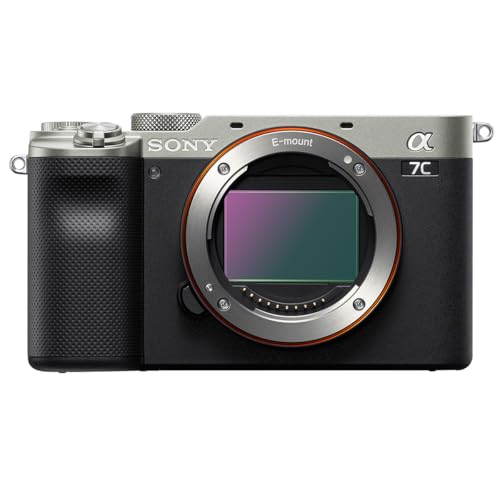
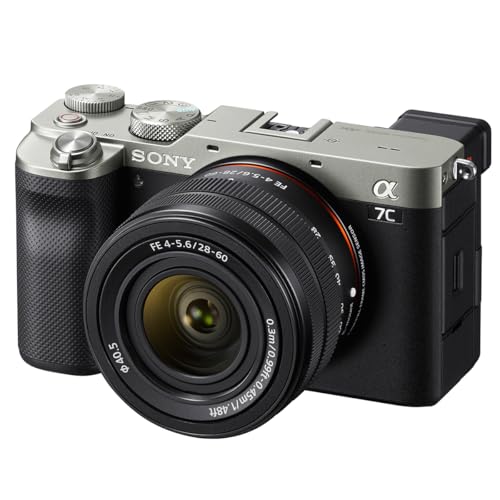
Sony A7C review. Compare 108 technical specifications and user reviews to see how it ranks among cameras and if it is worth buying.
Overall score
What it is: An overall evaluation of the camera's quality, based on technical analyses and user reviews.
When it matters: When you need a quick reference to identify the best cameras on the market.
Score components:
90.0%
Technical Score
10.0%
User score
Technical Score
What it is: An assessment of the camera's technical performance, covering eight key areas: image quality, autofocus, video features, stabilization, lens compatibility, connectivity, battery, and design.
When it matters: When you want to compare cameras based on technical performance and available features.
Score components:
28.0%
Sensor & Image
25.0%
Photo Features
18.0%
Video & Audio
14.0%
Display & Design
8.0%
Battery & Power
7.0%
Connectivity & Storage
User score
What it is: A rating that combines user reviews and the total number of reviews received by the camera.
When it matters: When real-world owner satisfaction and review volume matter to your decision.
Score components:
70.0%
User reviews
30.0%
Popularity
Score components:
25.0%
Sensor size
20.0%
Main camera megapixels
20.0%
Dual card slots
15.0%
N. of focus points
10.0%
RAW photo capture
10.0%
Phase-detection autofocus (photos)
Score components:
35.0%
Weight
30.0%
Battery life (CIPA)
20.0%
Sensor-shift stabilization
15.0%
GPS
Score components:
30.0%
Price
20.0%
Weight
20.0%
AF tracking
20.0%
Battery life (CIPA)
10.0%
Touchscreen
Score components:
30.0%
Main camera megapixels
25.0%
Sensor size
20.0%
Main camera pixel size
15.0%
Sensor-shift stabilization
10.0%
RAW photo capture
Score components:
30.0%
Weight
25.0%
Thickness
20.0%
AF low-light sensitivity
15.0%
Sensor-shift stabilization
10.0%
Eye detection AF (human)
Score components:
30.0%
Sensor size
25.0%
Main camera pixel size
20.0%
Eye detection AF (human)
15.0%
Main camera megapixels
10.0%
Sensor-shift stabilization
Score components:
30.0%
Weight
25.0%
Battery life (CIPA)
20.0%
Min operating temperature
15.0%
Sensor-shift stabilization
10.0%
GPS
Available: ranking among products currently available (including other versions of this product).
All: ranking among all products in the database.
#8 in Best Sony Cameras
#10 in Best Travel Cameras
#17 in Best Low Light Cameras
#17 in Best Vlogging Cameras
#17 in Best Cameras for YouTube
#18 in Best Full-Frame Cameras
#19 in Best Cameras for Hiking
What it is: An assessment of the camera's technical performance, covering eight key areas: image quality, autofocus, video features, stabilization, lens compatibility, connectivity, battery, and design.
When it matters: When you want to compare cameras based on technical performance and available features.
Score components:
28.0%
Sensor & Image
25.0%
Photo Features
18.0%
Video & Audio
14.0%
Display & Design
8.0%
Battery & Power
7.0%
Connectivity & Storage
What it is: A rating that combines user reviews and the total number of reviews received by the camera.
When it matters: When real-world owner satisfaction and review volume matter to your decision.
Score components:
70.0%
User reviews
30.0%
Popularity
What it is: An indicator that combines the camera's overall rating with its cost.
When it matters: When you want to know how much overall quality you get for the price.
Score components:
60.0%
Overall score
40.0%
Price
Importance: HIGH
Good value: Full frame or larger
Importance: HIGH
Good value: At least 20 MP
Importance: HIGH
Good value: At least 3.5 µm
Importance: LOW
Importance: MEDIUM
Good value: At least ISO 25,600
Importance: MEDIUM
Importance: MEDIUM
Good value: At least 14-bit
Importance: LOW
Importance: LOW
Importance: LOW
Importance: LOW
Importance: LOW
Importance: LOW
Importance: LOW
Importance: LOW
Importance: MEDIUM
Importance: LOW
Importance: LOW
Importance: LOW
Importance: LOW
Importance: LOW
Importance: HIGH
Good value: At least 200 points
Importance: HIGH
Importance: MEDIUM
Importance: LOW
Importance: LOW
Importance: MEDIUM
Importance: MEDIUM
Importance: HIGH
Good value: At least 5 stops
Importance: LOW
Importance: MEDIUM
Good value: At least 10 fps
Importance: LOW
Importance: LOW
Importance: LOW
Importance: LOW
Importance: LOW
Importance: LOW
Importance: LOW
Importance: LOW
Importance: LOW
Importance: LOW
Importance: LOW
Importance: LOW
Importance: LOW
Importance: LOW
Importance: LOW
Importance: LOW
Good value: At least 200,000 actuations
Importance: LOW
Good value: At least 10x
Importance: HIGH
Good value: At least 3840 px
Importance: MEDIUM
Good value: At least 200 Mbps
Importance: MEDIUM
Good value: At least 10-bit
Importance: LOW
Importance: LOW
Importance: LOW
Importance: LOW
Importance: LOW
Importance: LOW
Importance: LOW
Good value: At least 30 min
Importance: LOW
Importance: LOW
Importance: LOW
Importance: LOW
Importance: LOW
Good value: At least 2 microphones
Importance: LOW
Importance: LOW
Importance: LOW
Importance: LOW
Importance: MEDIUM
Good value: 500 g or less
Importance: LOW
Importance: LOW
Importance: LOW
Importance: MEDIUM
Importance: MEDIUM
Good value: At least 2.36 million dots
Importance: LOW
Good value: 100%
Importance: LOW
Importance: LOW
Good value: At least 120 Hz
Importance: MEDIUM
Good value: At least 3 in
Importance: LOW
Importance: LOW
Importance: LOW
Importance: LOW
Importance: LOW
Importance: LOW
Importance: LOW
Good value: At least 10 m
Importance: LOW
Importance: LOW
Importance: LOW
Importance: LOW
Importance: MEDIUM
Good value: At least 400 shots
Importance: LOW
Good value: At least 1,500 mAh
Importance: LOW
Importance: LOW
Importance: LOW
Importance: LOW
Importance: LOW
Importance: LOW
Importance: LOW
Importance: LOW
Importance: LOW
Importance: LOW
Importance: LOW
Importance: LOW
Importance: LOW
Importance: LOW
Importance: LOW
Importance: LOW
Importance: LOW
Importance: LOW
Importance: HIGH
Good value: At least 200 points
Importance: MEDIUM
Importance: HIGH
Importance: MEDIUM
Good value: At least ISO 25,600
Importance: HIGH
Good value: At least 3.5 µm
Importance: LOW
Importance: MEDIUM
Importance: MEDIUM
Importance: LOW
Importance: MEDIUM
Good value: 500 g or less
Importance: LOW
(Reviews last updated: July 2026)
The Sony a7C, as reviewed by DPReview, delivers the 24MP full-frame image quality and top-tier autofocus performance of the a7 III in a compact, travel-friendly, rangefinder-style body. Key strengths include excellent dynamic range, an industry-leading 740-shot battery life, and a fully articulating touchscreen ideal for vlogging. However, the camera sacrifices usability, featuring a small, low-resolution viewfinder and lacking a dedicated AF joystick. Further limitations noted in the review include 8-bit video, noticeable rolling shutter, and an outdated menu system. DPReview
The Sony a7C offers exceptional full-frame, 24-megapixel image quality and a highly efficient autofocus system within a compact, travel-friendly body, noted by. The camera boasts a robust battery life and versatile 4K video capabilities, including S-Log/HLG profiles and a dedicated headphone jack. Conversely, the small, rangefinder-style design leads to an cramped, uncomfortable grip for some users and a notably tiny, hard-to-use viewfinder. Additional limitations include a clunky menu system lacking a dedicated AF joystick, 8-bit only video recording, and a single SD card slot that limits professional backup options.
The Sony Alpha 7C, as reviewed by Amateur Photographer, is a highly portable, compact full-frame camera offering outstanding 24.2MP raw image quality, top-tier autofocus, and a fully articulating touchscreen. It serves as a travel-friendly option that delivers large-sensor performance, despite its reduced, non-SLR-styled body size. However, the review highlights significant compromises in handling, citing a small, uncomfortable handgrip, a cramped electronic viewfinder, and an awkward control layout. Furthermore, the accompanying 28-60mm kit lens is described as uninspiring and fails to fully leverage the camera's potential, according to Amateur Photographer.
Sony A7C Review Summary The Sony A7C is a highly compact, 24-megapixel full-frame mirrorless camera designed primarily for consumers, vloggers, and casual photographers who want high-quality images in a lightweight, travel-friendly body. It excels with an industry-leading fourth-generation hybrid autofocus system featuring precise, "sticky" Real-Time Tracking for both human and animal eyes. Its robust, weather-sealed metal frame houses 5-axis in-body image stabilization (IBIS) and a fully-articulating touchscreen LCD, making it the lightest full-frame camera on the market to offer IBIS—a standout feature for handheld videography. Furthermore, its sensor delivers exceptional dynamic range, low noise levels at high ISOs (up to 12,800), and beautiful JPEG and RAW color science, backed by a massive selection of compatible E-mount lenses. However, the camera's compact entry-level design introduces significant ergonomic and technical compromises that may frustrate advanced hobbyists or working professionals. On the downside, the A7C completely lacks dual card slots—a critical omission for professional backup—and omits a front command dial, an autofocus joystick, and dedicated custom buttons (C1/C2). The physical electronic viewfinder (EVF) and touchscreen LCD both feel distinctly cheap and small, while...
The Australian Photography Review highlights the Sony A7C as a highly capable, portable full-frame camera that successfully packs a stabilized 24MP sensor into a compact, APS-C-sized body. A major standout feature is its 5-axis in-body image stabilization (IBIS), which allowed handheld shooting at speeds up to 1/8s, alongside an outstanding 5-star autofocus system that tracks fast-moving subjects tenaciously, even in low light. Image quality is excellent, leveraging the BSI-illuminated sensor from the proven A7 III to deliver clean JPEGs and robust RAW files with low noise up to ISO 6400. Additionally, its industry-leading battery life (CIPA rated for 740 shots) and a fully responsive, multi-functional rear touchscreen make it a joy to shoot on the move. However, downsizing the camera body introduces notable compromises in handling and physical features. The camera omits a front control dial and a rear joystick, making adjustments in manual mode cumbersome, and it completely lacks programmable top custom buttons and a second SD card slot. Reviewers from DPReview and SLR Lounge similarly criticize its small, cramped 2.4-million-dot electronic viewfinder (EVF), which falls behind competitors like...
The Wavelength Focus Camera review highlights the Sony a7C as a highly portable, rugged 24.2MP full-frame camera designed for content creators, featuring a 15-stop dynamic range and a 100-51200 ISO range. Key strengths include advanced AI-driven eye autofocus and 5-axis in-body image stabilization for superior handheld video, all housed in a compact, weather-sealed magnesium alloy body. Focus Camera However, the compact design forces compromises, including a cramped electronic viewfinder (EVF) and reduced ergonomics, such as the absence of a front command dial and a dedicated focus joystick. While the flip-out screen is ideal for vlogging, the bundled 28-60mm lens restricts low-light performance and bokeh capabilities compared to larger, faster lenses.
Light & Matter's review highlights the Sony A7C as a compact, lightweight full-frame option for DSLR users, featuring a 24 MP sensor, robust weather sealing, and superior autofocus tracking. However, the camera presents usability drawbacks, including a narrow grip, reliance on focus-by-wire, and inefficient menu-driven focus switching.
The Sony A7C remains a highly capable, budget-friendly full-frame entry camera in 2026, prized especially by photographers and hybrid creators who value a compact, lightweight body for travel, street photography, and gimbal use. Its standout strengths include a 24.2MP full-frame sensor that produces excellent RAW recovery and clean low-light performance up to ISO 16,000, paired with rapid, highly reliable Real-time Eye AF and Tracking. For video, it offers uncropped 4K recording at 24p/25p with no recording time limits, a sharp 1080p 120fps slow-motion mode, and exceptional out-of-camera colors using the "No Picture Profile" setting. Additionally, it features long battery life from its NP-FZ100 battery, 14+ stops of dynamic range, and dedicated S&Q dials for fast frame-rate switching. However, the camera suffers from notable physical and technical compromises, beginning with poor ergonomics featuring a restrictive, small grip and a heavily criticized, left-offset electronic viewfinder (EVF) that is small and distorted. On the technical side, it lacks modern 10-bit video codecs and 4K 60p capabilities, features a single SD card slot that limits data redundancy for professional work, and displays prominent rolling...
The Sony a7C is highlighted as a travel-friendly, compact camera featuring a 24.2-megapixel full-frame sensor that delivers outstanding low-noise image quality and high-ISO performance identical to the a7 III. Key advantages include robust Real-time Tracking and Eye AF, a 740-shot battery life, a side-opening vari-angle touchscreen, and improved 5-axis IBIS, all within a 19% smaller and 22% lighter body than its predecessor. However, the ultra-compact design compromises functionality by omitting a front command dial and focus joystick, reducing the Electronic Viewfinder (EVF) to a smaller 0.39-inch size with 0.59x magnification, and providing only one memory card slot. Other noted disadvantages include fewer custom buttons, an outdated menu system, and a lack of lighting flicker reduction.
Dustin Abbott’s review highlights the Sony a7CGo to product viewer dialogue for this item. as a highly capable, rangefinder-style full-frame camera that successfully packs the core strengths of the Sony a7 IIIGo to product viewer dialogue for this item. into a compact chassis with a fully articulating screen. Key strengths include excellent dynamic range, superior high ISO performance, robust real-time Eye AF, and a side-mounted SD card slot. However, the smaller design necessitates compromises, such as the omission of a front control dial and a traditional joystick for autofocus point selection. Additionally, the camera features a notably small, tight electronic viewfinder and is limited to a single UHS-II SD card slot. YouTube
The Sony A7C is a mid-range full-frame mirrorless camera that packs a 24-megapixel sensor, 4K video up to 30p, 10fps burst shooting, and a 5-axis built-in image stabilisation system into an ultra-compact body. Designed with a flat-topped, rangefinder-style aesthetic similar to the A6000 APS-C series, it is Sony's smallest and lightest full-frame camera. Key advantages of this weather-sealed camera include a side-hinged, fully-articulated touchscreen display that is perfect for vlogging, unlimited video recording times that bypass the older 30-minute limit, an updated autofocus software with real-time animal tracking, a digital audio interface on the hotshoe, and the ability to record gyro data for post-production software stabilisation. However, the camera's compact footprint requires several design trade-offs. Down sides include a downsized electronic viewfinder image compared to the A7 III and the removal of secondary ports, leaving the body with only a single SD card slot (UHS-II) and a single USB Type-C port. Performance-wise, it lacks 4K video at 60p, and its underlying photo and movie quality is identical to the older A7 III since it shares the exact same 24-megapixel sensor...
Compact Powerhouse with Stellar Image Quality The Sony Alpha 7C stands out as an exceptionally compact, full-frame mirrorless camera (DSLM) that packs advanced engineering into a body similar to its APS-C counterparts. Weighing just over 500 grams and featuring a built-in 5-axis image stabilizer, it delivers outstanding image quality using a 24-megapixel sensor derived from the Alpha 7 III. Lab testing highlights its impressive low-light performance, maintaining excellent sharpness and over 90% detail retention even at high ISO values like 12.800. Videographers benefit from uncropped 4K video recording at 30 fps, advanced autofocus tracking with real-time eye recognition, and an articulate 3-inch flip-out touchscreen that is perfect for vlogging. Additionally, its massive battery life delivers over 1,300 shots per charge, ensuring exceptional endurance in the field. Notable Drawbacks and Practical Compromises Despite its stellar performance, the ultra-compact form factor requires several practical compromises. A primary limitation is the single SD card slot (UHS-II), which lacks the backup security required by many professionals. The handling suffers from a notably small 0.39-inch electronic viewfinder with a modest 0.59x magnification, making framing less...
The digitalkamera.de review highlights the Sony Alpha 7C as a capable, compact full-frame camera offering excellent image quality, a 24-megapixel sensor with low noise at high ISO, and a faster hybrid autofocus system compared to the Alpha 7 III. While praising its performance and build, the report identifies significant ergonomic drawbacks, including an overly small handgrip and the omission of a front control dial. Additionally, the camera is criticized for having a small electronic viewfinder (EVF) and lacking thorough weather sealing.
The Sony Alpha 7C successfully packs the impressive full-frame performance of the larger Alpha 7 III into a highly compact, 506g body tailored for content creators. Equipped with a 24-megapixel sensor, the camera delivers excellent image quality and low noise levels, providing clean results up to ISO 3,200 and highly usable images at ISO 6,400. Its internal performance is robust, featuring a fast 5-axis sensor-shift image stabilisation system providing around three stops of compensation, an exceptionally quick autofocus system (0.20 seconds), and a high continuous shooting speed of up to 9.8 frames per second backed by a massive buffer. Video features are equally strong, boasting excellent 4K video quality, Full HD at 120 fps for slow-motion, and dual 3.5mm headphone and microphone jacks. However, the ultra-compact form factor forces several design and ergonomic compromises. The camera suffers from a flat, less ergonomic grip and lacks key physical controls like a joystick or a front control dial, which noticeably reduces operating comfort. The electronic viewfinder is a major weak point, offering a very small 0.59x magnification that makes checking focus difficult,...
The Sony Alpha 7C successfully packages a full-frame sensor into a highly compact body, delivering outstanding image quality with low noise, excellent dynamic range, and reliable automatic white balance, even up to ISO 6400. Its AI-based real-time tracking system, including face and eye detection for both humans and animals, operates exceptionally fast and precise, making the camera highly capable for continuous shooting at up to 10 frames per second. Additionally, users benefit from a side-flipping, fully articulating touchscreen display and extensive button-customisation options, including the ability to store up to four complete camera configurations on a memory card. However, the compact form factor introduces severe ergonomic and handling compromises, particularly for users with larger hands who will find the shallow handgrip too close to the lens and lacking in grip. The physical layout feels stripped down compared to the Alpha 7 III; it completely lacks a joystick and the front control dial under the shutter button, which complicates manual shooting adjustments. Furthermore, the review criticises the tiny, fixed electronic viewfinder and the screen's limited touch functionality. Finally, Sony’s notoriously complex...
The Sony Alpha 7C is widely reviewed by the community as an excellent, compact all-rounder that provides an affordable entry point into full-frame photography. According to professional and user feedback highlighted by photographer Stephan Wiesner, the camera’s standout strengths include its exceptional full-frame sensor quality and a highly reliable, fast autofocus system that consistently locks onto targets. Reviewers appreciate its space-saving monocoque design and its fully articulating, rotatable touch display, which make it a highly capable, "always-with-you" companion for travel, street, and landscape photography. However, achieving such a portable form factor introduces notable compromises. The most prominent drawbacks frequently cited are its poorly sized, low-resolution electronic viewfinder (EVF) and highly restrictive ergonomics. Users complain about awkward control placements—specifically the absence of a physical joystick to manually shift focus points and the lack of a front dial—which makes manual adjustments straining, especially for those with larger hands. Furthermore, the interface utilizes Sony's outdated menu layout rather than the modern, refreshed variant found on newer systems. The camera also lacks technical features such as in-camera focus bracketing/stacking, and its physical handling degrades...
Sony Alpha 7S III Review The Sony Alpha 7S III is a highly capable, low-light and video-focused mirrorless camera featuring a 12-megapixel sensor. A major highlight is its completely overhauled user experience, which introduces a fully articulating side-flip touchscreen, an intuitive vertical menu system, and exceptional touch-control implementation. It features a market-leading 9.44-million-dot OLED electronic viewfinder and dual card slots supporting both UHS-II SD and ultra-fast CFexpress Type A cards. For video, it offers impressive uncropped 4K recording at up to 60p (and up to 120p with a minor 1.1x crop) at 10-bit 4:2:2 internally, maintaining excellent heat dissipation and a low-noise profile up to ISO 12,800. However, the camera falls short for pure high-resolution photography due to its low 12-megapixel resolution, has a slightly smaller 3-0-inch screen size compared to some premium rivals, and completely lacks an in-camera RAW converter or built-in multiple exposure modes. Sony Alpha 7C Review The Sony Alpha 7C offers an incredibly lightweight (509g) and flat form factor, mimicking the style of APS-C camera bodies while housing a powerful 24-megapixel full-frame sensor. Key advantages include...
The Sony Alpha 7C (A7C) is a highly compact, lightweight full-frame mirrorless camera that integrates premium technology into an APS-C-sized body weighing just over 500 grams. Built as an accessible entry point for street photographers and vloggers, it inherits many internal features from the popular A7 III, featuring a stabilized 24.2-megapixel BSI CMOS sensor that delivers excellent low-light performance up to ISO 3,200 and a high dynamic range. The review highlights its exceptionally effective real-time autofocus tracking for human and animal eyes in both photo and video modes, alongside its dust and moisture-resistant magnesium build and a side-opening vari-angle touchscreen, which is a major benefit for self-filming. Additionally, it supports unlimited video recording times and allows users to shoot while powering the device via USB-C.
The Sony A7C is a highly compact, lightweight full-frame mirrorless camera that marries the high-tier performance of the Sony A7 III with the rectangular, portable form factor of the APS-C Sony A6600. On the positive side, the review praises the camera's exceptional image quality, massive 15-stop dynamic range, and top-tier high ISO performance powered by its 24.2 MP back-illuminated sensor and BIONZ X processor. Additionally, it boasts a highly responsive 693-point hybrid autofocus system with real-time tracking for faces and eyes (including animals), a fully articulating side-opening touchscreen, excellent burst depth due to a larger buffer, unlimited video recording time in 4K, and record-breaking battery life using the NP-FZ100 battery. However, this aggressive down-sizing introduces notable ergonomic compromises. Chief among the drawbacks are a frustratingly small and tight 0.59x electronic viewfinder, a shallow and slippery handgrip, the complete omission of a front control dial or focus joystick, and poorly positioned physical controls like the centered Menu button. Reviewers also critique the older, convoluted Sony menu architecture, the under-utilised touch interface, and the inclusion of only a single SD card slot....
The Sony A7C is a highly compact, robust full-frame mirrorless camera that successfully packs the image quality and performance of a larger 24-megapixel 35mm sensor into an APS-C-sized metallic, weather-sealed body. On the positive side, it features an excellent hybrid autofocus system with 693 phase-detection points, highly reliable real-time eye tracking, and a fast 10 frames-per-second burst rate. Its 5-axis image stabilization performs wonderfully, gaining over three stops of stability for sharp handheld shooting. Users will also appreciate its robust battery life powered by the NP-FZ100 battery, clean high-ISO performance usable up to ISO 12,800, and a fully articulating touchscreen. However, the camera's quest for extreme portability forces several ergonomic and hardware compromises. Its primary drawbacks include a cramped electronic viewfinder with a small 0.59x magnification that feels restrictive, especially for spectacle wearers. Physical control options are limited due to the missing second control dial for manual exposure tuning and the lack of an AF selection joystick. Additionally, Sony's cluttered and unorganized user interface is exacerbated by restricted touch functionality that forbids menu navigation. For video creators, it lacks 4K...
The Sony Alpha 7C (A7C) is a highly compact, full-frame hybrid camera that mirrors many features of the popular Alpha 7 III, packing a 24.2-megapixel sensor into a pocket-sized body. In lab testing, the sensor exhibits an excellent exposure latitude and dynamic range, particularly when shooting in RAW. It handles underexposure remarkably well, allowing users to easily recover details down to -4 EV with minimal grain, and outperforms rivals like the Panasonic Lumix S5 in highlight recovery, maintaining detail EV without image degradation.
The Sony A7C is a mid-range full-frame mirrorless camera built on the same core performance architecture as the highly successful Sony A7 III, but re-engineered into a much smaller body. Its primary advantages are its highly compact, lightweight design and the inclusion of a fully articulating screen, which allows for versatile shooting angles and easy self-framing. Furthermore, the camera benefits from an updated processor that delivers improved skin tone color science and an advanced autofocus system featuring real-time eye tracking in both photo and video modes. Video capabilities are further enhanced by gyro-stabilisation metadata that can be refined in post-processing, and the removal of recording time limits without causing overheating issues. However, achieving this compact form factor required several critical compromises. On the downside, the camera features a significantly smaller, microscopic viewfinder that is practically unusable for glasses wearers. Physical control drops significantly with the total omission of the joystick, front dial, and the C1/C2 custom buttons. Additionally, the camera is limited to a single SD card slot—a major drawback for professional event photographers—and its maximum mechanical shutter speed drops...
The Sony Alpha 7C (A7C) is an ultra-compact full-frame mirrorless camera that effectively packs the internal powerhouse of the larger A7 III into a highly portable body similar in size to the APS-C Sony A6600. Weighing just 509g, it delivers exceptional image quality and a 15-stop dynamic range thanks to its 24.2 MP BSI CMOS sensor, matching the low-light high-ISO performance of standard-sized full-frame options. It boasts a highly responsive 693-point phase-detection autofocus system with stellar real-time tracking for eyes and faces, alongside a 10 fps burst rate. For videographers, the A7C offers sharp 4K UHD video, a side-opening vari-angle touchscreen, and excellent battery life using the NP-FZ100 battery. However, the pursuit of extreme portability introduces notable ergonomic compromises. The camera features a frustratingly small 2.36 Mpx OLED viewfinder (0.59x magnification) and lacks dedicated controls like an AF joystick, a front command dial, and a dual SD card setup. Its handgrip is shallow and provides poor balance with heavier lenses, while the body lacks full weather sealing, offering only basic dust and moisture resistance. Furthermore, its 5-axis mechanical stabilization falls...
The Les Numériques review awards the Sony Alpha 7C (A7C) a 3.5 out of 5 stars rating, highlighting it as one of the smallest 24-megapixel stabilized full-frame mirrorless cameras on the market. The French tech publication notes that its form factor closely mirrors an APS-C sensor camera like the Alpha 6600, offering a lightweight and weather-sealed build. Key pros praised in the review include its highly efficient Real-time Eye AF and face tracking for both photo and video, excellent high ISO sensitivity management, and a fully articulating touchscreen. Furthermore, it offers unlimited video recording times, built-in 5-axis sensor stabilization, comprehensive connectivity (Wi-Fi, Bluetooth, NFC, USB-C, and dedicated headphone/mic jacks), and the ability to operate while receiving external power. However, the downsized design introduced significant cons that impacted its final rating. The review explicitly critiqued the camera's ergonomics, pointing to a severe lack of physical customisation options, complex menus, a slow startup time, and the complete absence of an autofocus joystick—forcing users onto an under-utilised touchscreen. Hardcore shooters will also find limitations in the single SD card slot, low-resolution electronic viewfinder...
The Sony A7C is reviewed by Xataka Foto as an elegant, two-tone hybrid camera that successfully merges the powerful 24.2 MP full-frame internals of the Sony A7 III into the ultra-compact body layout of the APS-C Sony A6600. The reviewer praises its outstanding image quality, exceptional low-noise rendering at high ISO values (up to ISO 12,800), wide dynamic range, and effective 5-axis in-body image stabilization. Furthermore, the Sony A7C delivers high burst speeds up to 10 FPS, incredibly fast and quiet autofocus, an upgraded side-facing SD card compartment, and impressive battery longevity, reaching around 1,500 shots over two partial charges during testing. However, the review points out several significant layout and usability compromises required to achieve this miniaturised form factor. The most prominent flaws are its poor ergonomics and lack of physical controls, notably the deletion of several direct-access buttons found on other models and the omission of a front control dial on the handgrip. Additionally, the electronic viewfinder is notably small, the touch-screen functionality remains highly restricted, and the main Menu button is awkwardly positioned dead-center above the screen,...
The Photolari review by Iker Morán outlines the Sony A7C as a highly capable but deeply compromised "mini" full-frame camera. On paper, the concept of fitting a full-frame sensor into a more compact, lightweight, and weather-sealed body is brilliant. The review notes that the camera excels in its core photography performance, boasting the identical 24-megapixel sensor of the Sony A7 III, which guarantees outstanding image quality and dynamic range. Additionally, its autofocus capabilities are highly praised, offering an imbatible (unbeatable) real-time face and eye-tracking system that is incredibly fast and precise. Content creators and vloggers will also heavily appreciate the inclusion of a fully articulated flip-out screen. However, the review heavily criticizes the severe design cutbacks and a confusing market positioning. To achieve its smaller footprint, Sony removed essential physical controls, such as the joystick for focus point selection and the front control dial. The camera also loses the dual card slot, forcing users into a single SD card configuration, and surprisingly retains Sony’s older, convoluted menu system instead of the updated layout found in the A7S III. The biggest...
The Sony A7C is a compact, full-frame camera with interchangeable lenses designed to be a lightweight entry point for content creators. Its biggest advantages include a powerful 24.2-megapixel sensor that performs great in low light, and a built-in 5-axis image stabilisation system to keep shots steady. Users will also love the bright, fully articulating touchscreen that smoothly rotates to any position, and the clever placement of the microphone ports, which do not block the screen when plugged in. Additionally, it features a highly accurate real-time autofocus system, a long-lasting battery that supports charging via USB-C while shooting, and a fully sealed body for durability. However, the camera has several drawbacks, starting with its high price tag of around $1,800. One major flaw is the menu system, which is notoriously difficult to navigate and does not support touch controls, leaving the touchscreen useful only for focusing. The physical design also presents issues: the menu button sits too close to the top-center of the screen, causing the user's hand to accidentally trigger the proximity sensor and shut off the main display. Furthermore,...
The Sony Alpha 7C is a compact full-frame interchangeable lens camera that functions as a hybrid between the A7III and A6600 models, aiming to offer a highly portable yet powerful experience for content creators and those new to the brand. Weighing approximately 509 grams with dimensions of 124 mm x 71.1 mm x 59.7 mm, it features a 24.2-megapixel Exmor R CMOS sensor, a Bionz X processor, and a 5-axis image stabilisation mechanism. Key advantages highlighted in the review include its highly efficient real-time AI tracking and autofocus for humans and animals, lack of video recording time limits in 4K, and excellent battery life using the NP-FZ100 battery. It also provides solid low-light performance, crisp image quality with strong background bokeh using the bundled FE 28-60mm lens, and an articulated vari-angle LCD screen that assists with versatile shooting angles. However, the camera makes several physical compromises to achieve its compact form factor, including the complete removal of the front control dial, fewer physical buttons, and a reduced grip size. Reviewers noted that the reorganisation of controls—such as placing the menu...
The Root-Nation review highlights the Sony A7C as a highly portable 509-gram full-frame camera that balances high-end capabilities with a compact rangefinder-style design. It offers excellent 24.2MP image quality, superior AI autofocus, 5-axis IBIS, a fully articulating screen, and 4K video, making it a strong choice for travel and hybrid shooters. Conversely, the compact design limits ergonomics, as the small grip feels front-heavy with larger lenses and lacks a focus joystick. Additional downsides noted are the small, low-resolution EVF, a single SD card slot, and 8-bit video restrictions.
The Sony A7C represents a significant full-frame upgrade for landscape and travel photographers seeking maximum image quality in a highly compact form factor. Evaluated by a photographer transitioning after six years with the APS-C Sony A5100, the A7C enables a lighter overall gear setup by eliminating the need for multiple heavy crop-sensor lenses. It pairs excellently with lightweight full-frame glass like the Samyang 18mm f/2.8 to deliver impeccable edge-to-edge sharpness and clean RAW files with outstanding dynamic range and low-light performance up to ISO 12800. Additionally, users benefit from an incredibly fast, precise autofocus system featuring impressionable eye-tracking, a fully articulating rear screen, built-in sensor stabilization, and a robust 16Wh battery capable of lasting a full day of shooting. However, the camera comes with notable downsides, particularly regarding its interface and hardware design. The rear touchscreen functionality is heavily criticised as being laggy and nearly useless, while the LCD screen and the small, cramped electronic viewfinder feature outdated, low-resolution panels. While the inclusion of modern USB-C charging is praised for streamlining travel gear, the camera lacks fast-charging capabilities and tops...
The Sony A7C is a versatile full-frame mirrorless camera that packs the exact core performance of the popular A7 III into a significantly smaller, lighter body reminiscent of the APS-C A6600, weighing just 509 grams. It shares the same 24-megapixel sensor, 693-phase-detection autofocus points, 10 frames-per-second burst rate, and 4K video capabilities. The camera features an elegant, modernized aesthetic with a silver-grey top plate and a textured grip, making it a highly discreet and portable choice tailored for street and travel photographers. It also introduces a fully articulating side-opening touchscreen, an updated shutter mechanism, and improved real-time tracking reactivity for video capture. However, the compact form factor requires specific trade-offs in usability and features. On the positive side (pros), it delivers uncompromised full-frame image quality, a superior autofocus system compared to older APS-C models, a handy dedicated exposure compensation dial, and uses the long-lasting Z-type battery. Conversely (cons), the camera removes the dedicated "C" custom shortcut buttons and the AF joystick found on standard full-frame bodies, making physical settings adjustments slower and more awkward on the field. Furthermore, it drops...
The reviewed Sony Alpha 7C is a compact full-frame mirrorless camera that packs the advanced power and image quality of the Sony A7 series into a lightweight body reminiscent of the smaller APS-C A6*** lineup. Designed for versatility, it is highly praised for its light build—weighing only 509g with the battery included—which challenges the traditional notion that professional image quality requires a heavy camera setup. A key feature highlighted by the reviewer is the fully articulating, multi-angle screen, a major departure from the tilting screens found on other A7 models. This flexible screen is particularly useful for niche applications like food photography, as it allows photographers to shoot comfortably from extreme high or low angles. On the downside, the reviewer identifies exactly one significant flaw: the camera features only a single memory card slot. This design compromise was necessary to achieve the camera's ultra-compact, travel-friendly dimensions. While the article celebrates the camera as an innovative and lightweight alternative to the Sony A7III, user feedback in the comments section adds further critique, pointing out that its small electronic viewfinder might be...
In this review, photographer Marco Bisogni evaluates the Sony A7C after two years of personal use as his primary hybrid tool for travel and casual content creation. He characterises the camera as a repackaging of the older Sony A7 III into a smaller, lighter APS-C sized body, utilising a proven 24-megapixel full-frame sensor and the BIONZ X processor. While he commends its highly reliable real-time tracking autofocus, long-lasting NP-FZ100 battery life, and the addition of a fully articulating flip screen, Bisogni notes that the camera didn't bring major internal or technological innovations at launch. He highlights specific, overlooked quality-of-life upgrades, such as an improved custom white balance setup and an autofocus tracking system that remains fully functional when outputting video over HDMI.
The Sony A7C is reviewed as a highly compact, full-frame mirrorless camera that blends the structural form factor of the APS-C Sony a6000 series with professional-grade capabilities. The reviewer notes that its lightweight build makes it an excellent tool for sports, outdoor activities, street photography, and vlogging, as well as an efficient second body for event photographers. Key operational strengths highlighted in the text include a highly articulating flip screen, an improved continuous autofocus tracking system that outperforms the older A7III, and seamless compatibility with third-party and studio flash systems. Furthermore, the camera benefits from gyro data stabilization via post-processing software and a surprisingly capable 28-60mm kit lens that delivers impressive resolution and color rendering despite its basic design.
In his field review for Fotografia.it, Francesco Carlini characterizes the Sony A7C as a compact clone of the Sony A7 III. He highlights its identity as a versatile, all-rounder model designed specifically for users who refuse to sacrifice high-end photographic quality but want a smaller form factor. Carlini considers it an ideal bridging option for APS-C users (like A6600 owners) looking to transition into a full-frame sensor without taking on massive bulk. The primary pro highlighted in the review is that the camera fully inherits the stellar photographic quality and performance of the proven A7 III. However, the core con centers around video limitations; Carlini notes that to achieve this compact size, users must be willing to make compromises regarding video recording. Ultimately, it is positioned as a highly capable, travel-friendly tool for photographers rather than a pure videography hybrid.
The Sony Alpha a7C (ILCE-7C) is a highly compact, lightweight full-frame mirrorless camera featuring a 24.2-megapixel Exmor R CMOS sensor and BIONZ X image processor, delivering high-end imaging performance in a small form factor. Key features include 5-axis in-body image stabilization (IBIS), advanced real-time tracking autofocus for humans and animals, and 4K video recording, all housed in a rugged, weather-sealed magnesium alloy body with a fully-articulating screen. Pros include excellent portability, high dynamic range, and a long-lasting NP-FZ100 battery. Conversely, the camera's compact design introduces cons such as a single SD card slot, fewer physical controls/dials, a small 0.59x magnification electronic viewfinder (EVF), and video limitations maxing out at 4K/30fps.
Compare