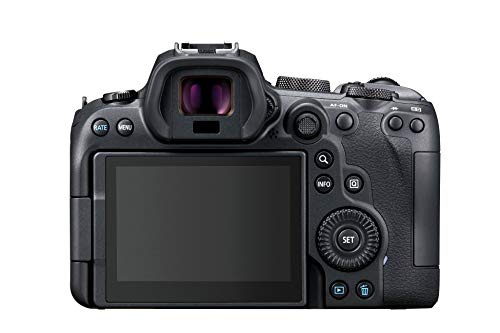
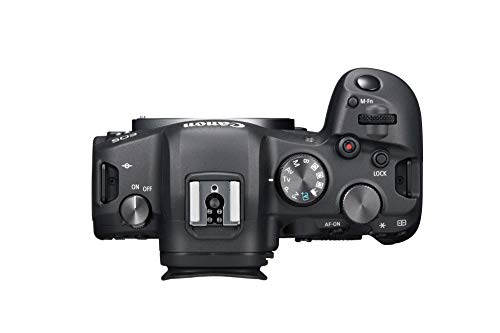
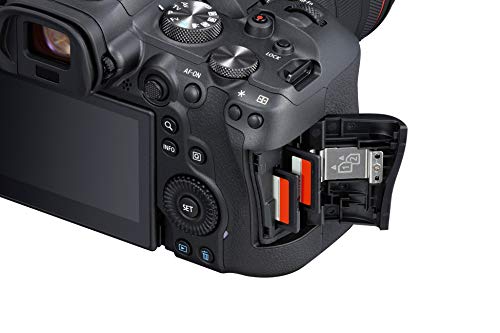
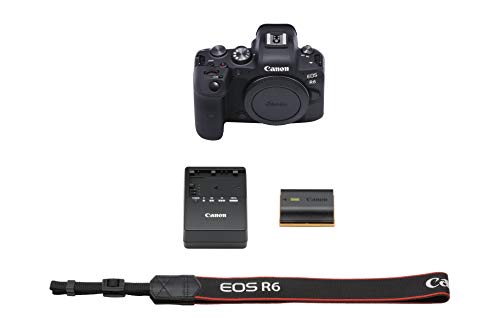
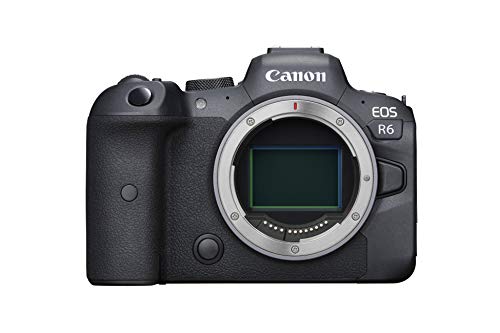
Canon EOS R6 review. Compare 108 technical specifications and user reviews to see how it ranks among cameras and if it is worth buying.
Overall score
What it is: An overall evaluation of the camera's quality, based on technical analyses and user reviews.
When it matters: When you need a quick reference to identify the best cameras on the market.
Score components:
90.0%
Technical Score
10.0%
User score
Technical Score
What it is: An assessment of the camera's technical performance, covering eight key areas: image quality, autofocus, video features, stabilization, lens compatibility, connectivity, battery, and design.
When it matters: When you want to compare cameras based on technical performance and available features.
Score components:
28.0%
Sensor & Image
25.0%
Photo Features
18.0%
Video & Audio
14.0%
Display & Design
8.0%
Battery & Power
7.0%
Connectivity & Storage
User score
What it is: A rating that combines user reviews and the total number of reviews received by the camera.
When it matters: When real-world owner satisfaction and review volume matter to your decision.
Score components:
70.0%
User reviews
30.0%
Popularity
Score components:
25.0%
Sensor size
20.0%
Main camera megapixels
20.0%
Dual card slots
15.0%
N. of focus points
10.0%
RAW photo capture
10.0%
Phase-detection autofocus (photos)
Score components:
35.0%
Weight
30.0%
Battery life (CIPA)
20.0%
Sensor-shift stabilization
15.0%
GPS
Score components:
30.0%
Price
20.0%
Weight
20.0%
AF tracking
20.0%
Battery life (CIPA)
10.0%
Touchscreen
Score components:
30.0%
Main camera megapixels
25.0%
Sensor size
20.0%
Main camera pixel size
15.0%
Sensor-shift stabilization
10.0%
RAW photo capture
Score components:
30.0%
Weight
25.0%
Thickness
20.0%
AF low-light sensitivity
15.0%
Sensor-shift stabilization
10.0%
Eye detection AF (human)
Score components:
30.0%
Sensor size
25.0%
Main camera pixel size
20.0%
Eye detection AF (human)
15.0%
Main camera megapixels
10.0%
Sensor-shift stabilization
Score components:
30.0%
Weight
25.0%
Battery life (CIPA)
20.0%
Min operating temperature
15.0%
Sensor-shift stabilization
10.0%
GPS
Available: ranking among products currently available (including other versions of this product).
All: ranking among all products in the database.
#5 in Best Canon EOS Cameras
#9 in Best Vlogging Cameras
#9 in Best Cameras for YouTube
#10 in Best Low Light Cameras
#11 in Best Cameras
#11 in Best Digital Cameras
#11 in Best Mirrorless Cameras
#11 in Best 4K Cameras
What it is: An assessment of the camera's technical performance, covering eight key areas: image quality, autofocus, video features, stabilization, lens compatibility, connectivity, battery, and design.
When it matters: When you want to compare cameras based on technical performance and available features.
Score components:
28.0%
Sensor & Image
25.0%
Photo Features
18.0%
Video & Audio
14.0%
Display & Design
8.0%
Battery & Power
7.0%
Connectivity & Storage
What it is: A rating that combines user reviews and the total number of reviews received by the camera.
When it matters: When real-world owner satisfaction and review volume matter to your decision.
Score components:
70.0%
User reviews
30.0%
Popularity
What it is: An indicator that combines the camera's overall rating with its cost.
When it matters: When you want to know how much overall quality you get for the price.
Score components:
60.0%
Overall score
40.0%
Price
Importance: HIGH
Good value: Full frame or larger
Importance: HIGH
Good value: At least 20 MP
Importance: HIGH
Good value: At least 3.5 µm
Importance: LOW
Importance: MEDIUM
Good value: At least ISO 25,600
Importance: MEDIUM
Importance: MEDIUM
Good value: At least 14-bit
Importance: LOW
Importance: LOW
Importance: LOW
Importance: LOW
Importance: LOW
Importance: LOW
Importance: LOW
Importance: LOW
Importance: MEDIUM
Importance: LOW
Importance: LOW
Importance: LOW
Importance: LOW
Importance: LOW
Importance: HIGH
Good value: At least 200 points
Importance: HIGH
Importance: MEDIUM
Importance: LOW
Importance: LOW
Importance: MEDIUM
Importance: MEDIUM
Importance: HIGH
Good value: At least 5 stops
Importance: LOW
Importance: MEDIUM
Good value: At least 10 fps
Importance: LOW
Importance: LOW
Importance: LOW
Importance: LOW
Importance: LOW
Importance: LOW
Importance: LOW
Importance: LOW
Importance: LOW
Importance: LOW
Importance: LOW
Importance: LOW
Importance: LOW
Importance: LOW
Importance: LOW
Importance: LOW
Good value: At least 200,000 actuations
Importance: LOW
Good value: At least 10x
Importance: HIGH
Good value: At least 3840 px
Importance: MEDIUM
Good value: At least 200 Mbps
Importance: MEDIUM
Good value: At least 10-bit
Importance: LOW
Importance: LOW
Importance: LOW
Importance: LOW
Importance: LOW
Importance: LOW
Importance: LOW
Good value: At least 30 min
Importance: LOW
Importance: LOW
Importance: LOW
Importance: LOW
Importance: LOW
Good value: At least 2 microphones
Importance: LOW
Importance: LOW
Importance: LOW
Importance: LOW
Importance: MEDIUM
Good value: 500 g or less
Importance: LOW
Importance: LOW
Importance: LOW
Importance: MEDIUM
Importance: MEDIUM
Good value: At least 2.36 million dots
Importance: LOW
Good value: 100%
Importance: LOW
Importance: LOW
Good value: At least 120 Hz
Importance: MEDIUM
Good value: At least 3 in
Importance: LOW
Importance: LOW
Importance: LOW
Importance: LOW
Importance: LOW
Importance: LOW
Importance: LOW
Good value: At least 10 m
Importance: LOW
Importance: LOW
Importance: LOW
Importance: LOW
Importance: MEDIUM
Good value: At least 400 shots
Importance: LOW
Good value: At least 1,500 mAh
Importance: LOW
Importance: LOW
Importance: LOW
Importance: LOW
Importance: LOW
Importance: LOW
Importance: LOW
Importance: LOW
Importance: LOW
Importance: LOW
Importance: LOW
Importance: LOW
Importance: LOW
Importance: LOW
Importance: LOW
Importance: LOW
Importance: LOW
Importance: LOW
Importance: HIGH
Good value: At least 200 points
Importance: MEDIUM
Importance: HIGH
Importance: MEDIUM
Good value: At least ISO 25,600
Importance: HIGH
Good value: At least 5 stops
Importance: HIGH
Good value: At least 3.5 µm
Importance: MEDIUM
Good value: At least 200 Mbps
Importance: MEDIUM
Good value: At least 10 fps
Importance: MEDIUM
Good value: 500 g or less
Importance: LOW
Importance: LOW
Importance: LOW
Importance: LOW
(Reviews last updated: July 2026)
The Canon EOS R6 is a highly versatile, full-frame mirrorless camera that balances flagship performance with manageable 20.1MP resolution file sizes, making it an excellent all-rounder for sports, wildlife, and hybrid shooters. It shares several premium features with the flagship EOS-1D X Mark III, including the Digic X processor and blistering burst speeds of 12fps with the mechanical shutter and 20fps electronically. Its "world-class" autofocus system utilizes Dual Pixel AF II and AI Deep Learning to track human heads, faces, and eyes, while also offering Animal AF capable of tracking birds in flight. Furthermore, it debuts Canon's best-in-class 5-axis in-body image stabilization (IBIS) offering up to 8 stops of correction, alongside dual UHS-II SD card slots and an expanded ISO range up to 102,400 for exceptional low-light autofocus down to -6EV. Despite its high-end performance, the camera faces scrutiny regarding whether its 20.1MP resolution is sufficient, as it falls short of the detail-resolving power of 24MP rivals like the Nikon Z6, Panasonic S1, and Sony A7 III in lab tests. For video, the R6 captures oversampled 4K UHD up to...
The Canon EOS R6 is a well-rounded, weather-sealed camera praised for exceptional low-light noise management, high-speed burst shooting, and a deep buffer for action, according to RTINGS.com. Its autofocus system is noted for its ability to track humans and animals seamlessly, making it highly effective for photography in challenging conditions. RTINGS.com However, the R6 is limited by a 20-megapixel sensor, which restricts significant cropping compared to higher-resolution rivals. The review also cites potential overheating during extended 4K video recording, a bulky form factor, and rolling shutter artifacts, say RTINGS.com.
The Canon EOS R6 is a highly versatile, upper mid-range full-frame mirrorless camera that inherits the robust 20-megapixel sensor from the flagship 1Dx Mark III DSLR, offering remarkable image quality and improved high ISO noise performance in low-light conditions. It shares key premium features with the more expensive R5, including a robust built-in sensor-shift stabilisation (IBIS) system providing up to 8 stops of compensation, uncropped 4k video recording up to 60p with 10-bit internal depth, and dual card slots. Crucially, photographers and videographers benefit from an advanced Dual Pixel AF II autofocus tracking system that reliably locks onto human or animal faces and eyes, maintaining full tracking capabilities during high-speed mechanical shutter bursts of 12fps or silent electronic bursts up to 20fps. However, the R6 introduces a few distinct compromises to meet its lower price point, starting with a simpler, entry-level plastic poly-carbonate exterior and mode dial rather than the tougher magnesium alloy top pane and status screen of the R5. While the absence of high bit-rate recording allows both memory card slots to use more affordable SD UHS II...
The Canon EOS R6 is described as a highly capable full-frame mirrorless camera, boasting excellent video quality, reliable automatic exposure, and highly pleasing color reproduction. Performance highlights include a rapid, accurate autofocus system for humans and animals, alongside an effective in-body image stabilization (IBIS) system that works well with lenses. While the 20-megapixel sensor provides great noise performance, the review notes that some minor exposure compensation is occasionally required, and using the mechanical shutter at high speeds may limit real-time viewfinder updates. The camera is ultimately praised as a mature, dependable option for transitioning from DSLRs.
The Canon EOS R6 is an "almost perfect" full-frame mirrorless camera that balances a DSLR-like ergonomic feel with advanced performance, making it highly effective for real-world enthusiasts despite its modest 20-megapixel sensor. The reviewer, who transitioned back to Canon from a Sony A7III, highlights the body's exceptional image quality, clean high-ISO performance up to 12,800, and standard-setting dynamic range. Its most notable strengths include a 1DX Mark III-level autofocus tracking system, dual UHS-II card slots, a built-in bulb timer that eliminates the need for remote triggers, and seamless compatibility with older EF lenses via an adapter. However, the camera comes with specific limitations, particularly its relatively high price compared to previous 6-series models and a battery life that drains quickly when using the high-refresh-rate EVF. While the 20-megapixel count is sufficient for online publishing, it restricts heavy image cropping. Additionally, the reviewer notes minor firmware omissions, such as the lack of live "zebra stripes" for highlight warnings while shooting and an automatic image rotation feature during playback when tilting the camera vertically.
Page 2 of the Photography Life review highlights the Canon EOS R6's superior ergonomics, featuring a comfortable, deeply contoured grip, though it utilizes a lightweight polycarbonate shell rather than metal, which makes it feel less rugged than professional DSLRs. Despite the plastic construction, the body offers solid weather-sealing and is designed for all-day shooting comfort, representing a significant positive in handling over competitors. The review praises the improved control layout, specifically the removal of the M-Fn bar in favor of a responsive rear joystick and three distinct control dials for improved handling. While the top-left power switch restricts one-handed operation, the high-resolution electronic viewfinder (EVF) and articulating touchscreen contribute to a highly positive field experience, as noted in the analysis of the camera's design.
The Canon EOS R6 is a high-performance US$2,500 full-frame mirrorless camera that inherits its 20MP sensor, image processor, and exceptional autofocus capabilities directly from the flagship 1DX Mark III DSLR. Key strengths include a highly reliable Dual Pixel AF II system that easily tracks human and animal eyes, blazing continuous shooting speeds of 12 fps with the mechanical shutter and 20 fps with the electronic shutter, and an outstanding 5-axis sensor-based image stabilization system that delivers up to 8 stops of correction with certain lenses. Furthermore, its sensor yields excellent low-light image quality with up to 11 stops of useful dynamic range at base ISO, while its JPEG buffer is practically limitless. However, the R6 is not without its drawbacks, most notably "HeatGate," where severe overheating issues prematurely cut off 4K video recording to roughly 30 minutes in normal conditions, requiring a lengthy cool-down period due to tightly sealed weatherproofing. The electronic shutter also suffers from a reduced 12-bit dynamic range in deep shadows and potential banding under frequency-based lighting. Ergonomically, the UI layout requires shifting fingers away from the...
The Photo Review assessment positions the Canon EOS R6 as a top-tier mirrorless all-rounder, highlighting its 20-megapixel sensor's exceptional sharpness and modern technology. Key pros noted include a comfortable control layout, durable weather-sealing, an excellent electronic viewfinder, and an intuitive touchscreen interface. However, the 20-megapixel resolution may limit heavy cropping, and the camera faces restrictions in professional video applications due to potential overheating issues. Despite these cons, it remains a strong choice for stills-focused enthusiasts.
The Photography Life review highlights the Canon EOS R6 as a significant ergonomic and performance leap, featuring exceptional handling, a deep grip, and a highly praised autofocus system that delivers fast, accurate subject tracking. The 20-megapixel sensor is lauded for producing excellent image quality with superior high-ISO performance and dynamic range, alongside the brand's renowned color science. Conversely, the review notes the 20-megapixel resolution as a limitation compared to 24-megapixel competitors, offering less flexibility for cropping. Furthermore, while the camera is capable of high-quality 4K 60p video, it is hindered by potential overheating issues during extended recording, making it less suitable for intensive, long-form video production.
of the Canon EOS R6, focusing on its performance parameters for astrophotography applications: The Canon EOS R6 Technical Review evaluates the full-frame mirrorless camera using a quantitative testing protocol to assess its viability for astrophotography. A key pro highlighted in the review is the camera's exceptional dynamic range, which maxes out at a high 82.6 dB at 100 ISO, matching top competitors like the Sony A7s. Additionally, the camera boasts an impressive, ultra-low readout noise profile that drops to just 1.26 e- at 12800 ISO, allowing for highly efficient low-noise imaging. Crucially for astrophotographers who rely on pure data processing, the R6 preserves Canon’s tradition of outputting "true raw" files, meaning the camera applies no destructive background artifacts or forced noise reduction to the raw image histograms. Emmanuele Sordini However, the review also notes a few specific cons and inherent limitations of the camera system. Like most un-modded digital daytime cameras, the R6 is relatively blind to hydrogen-alpha emission nebulae (at the 656.3 nm wavelength) unless users perform invasive, warranty-voiding IR-cut filter modifications. From a hardware standpoint, its 6.54 µm...
Despite its high-end performance, the camera has notable limitations, especially regarding its lower 20.1MP resolution sensor, which restricts massive cropping capabilities and large-scale printing options compared to higher-resolution rivals. Core Strengths & Limitations Pros: Features highly accurate, best-in-class autofocus tracking; boasts an outstanding 5-axis in-body image stabilization (IBIS) system offering up to 8 stops of compensation; and supports 10-bit HEIF file capture for superior tonal range. Cons: Includes frustrating recording limits and a lack of DCI format options when shooting 4K video; demonstrates flat, disappointing dynamic range in standard JPEGs under bright sunlight; and carries an expensive upper-midrange price tag for an enthusiast-tier camera.
The Canon EOS R6 is recognized by Amateur Photographer as a highly versatile full-frame mirrorless camera, boasting excellent image quality, superb high-ISO performance, and effective in-body image stabilization. Its 20 fps continuous shooting, intelligent subject-detection AF, and comfortable ergonomics make it an excellent choice for action photography and existing DSLR users transitioning to the system. However, the camera faces limitations, specifically regarding potential overheating issues during extended video recording. Furthermore, users may find the 20.1-megapixel resolution lower than competitors, along with a somewhat underwhelming battery life of 360 shots per charge.
Performance and Image Quality The Canon EOS R6 is an exceptional mirrorless full-frame camera that delivers high-speed performance and professional features at an attractive price point. Equipped with a 20-megapixel sensor, it excels in low-light environments, producing clean, sharp images with virtually no image noise even at high sensitivities like ISO 12,800. Its core strengths lie in its blazing speed and precision, offering a rapid continuous shooting rate of up to 20 frames per second in both JPEG and RAW formats. This speed is perfectly paired with a powerful second-generation Dual Pixel autofocus system that includes advanced face and animal eye detection, making it an ideal choice for sports and wildlife photography. Furthermore, a highly effective 5-axis in-body image stabilization system provides up to five to six stops of stabilization, heavily reducing motion blur when shooting handheld. Design, Video Capabilities, and Drawbacks While the camera borrows premium features from its higher-end sibling, the EOS R5, it introduces specific design changes and technical trade-offs. For handling, it opts for a traditional mode dial instead of a top shoulder display, and replaces...
The digitalkamera.de comparison review highlights the Canon EOS R6 as a capable, balanced full-frame mirrorless camera featuring a powerful in-body image stabilization (IBIS) system for, fast autofocus, and the high-capacity LP-E6NH battery. While praised for its performance, the camera faces limitations due to its approximately €2,500 body price, rising to over €2,800 with the RF 24-105 mm kit lens. Furthermore, the review notes a lack of third-party lens support for the RF mount compared to competitors, with few native autofocus options available outside of Canon's own lineup.
The Canon EOS R6 is an advanced 20.1 MP full-frame mirrorless camera designed primarily for demanding photography amateurs, sport enthusiasts, and solo videographers. On the positive side, it features an exceptionally fast DIGIC X processor and next-generation Dual Pixel AF II, which delivers highly accurate eye, face, and animal tracking. Photographers benefit from incredible burst speeds of up to 12 frames per second (fps) mechanically and 20 fps electronically, paired with a massive image buffer. Additionally, its 5-axis In-Body Image Stabilization (IBIS) provides up to 8 stops of shake correction when paired with stabilized RF lenses. For video creators, it stands out by offering oversampled uncropped 4K UHD recording at up to 60p with 10-bit Canon Log support. However, the camera possesses distinct limitations and downsides depending on the use case. Its 20.1 MP sensor falls behind competitors offering 24 MP or more in this price range, which restricts aggressive cropping. Furthermore, the physical build relies on dual SD cards rather than faster CFexpress formats, omits a top status display, and positions the joystick slightly awkwardly for some hand sizes....
The Canon EOS R6 is a highly capable full-frame mirrorless camera that offers an exceptional balance of performance and value, especially compared to the pricier EOS R5. Equipped with a 20-megapixel full-frame sensor, it delivers excellent image quality and upper-class detail reproduction. Its low-light performance is outstanding, showing virtually no noise up to ISO 1,600 and remaining highly usable even at ISO 6,400 and 12,800. The camera shines in shooting speed, achieving up to 12 frames per second (fps) with the mechanical shutter and an impressive 20 fps with the electronic shutter. It pairs this speed with a top-tier, precise autofocus system that matches the EOS R5 with a 0.09-second focus time, robust subject tracking, and a built-in 5-axis image stabilization system that provides 4 to 5 stops of compensation. For videographers, it offers robust 4K recording up to 60fps and Full HD up to 120fps with full manual controls and audio jacks. Despite its strengths, the camera has a few notable drawbacks. The primary limitation is its modest 20-megapixel resolution, which limits the flexibility for heavy cropping compared to...
However, the camera comes with notable downsides, particularly regarding its sensor type and workflow limitations. The new 24-megapixel sensor is a standard CMOS rather than a BSI or stacked variant, which limits the dynamic range; utilizing the electronic shutter drops the raw files from 14-bit to 12-bit, causing noticeable shadow noise and a lower usable dynamic range compared to competitors like the Sony Alpha 7 IV. Furthermore, the innovative "RAW Burst" mode packs entire bursts into a single CR3 file, complicating workflows because users cannot import individual images directly into Adobe Lightroom without first exporting them via the camera or proprietary software. Hardware design choices also draw criticism: the dual memory slots remain limited to standard SD cards instead of adopting a faster CFexpress slot to alleviate the 3-to-4-second buffer bottleneck at 40fps, the power switch has moved to a potentially confusing location on the right side, and the external video output still relies on a fragile micro-HDMI port.
The Digitalkamera.de review highlights the Canon EOS R6 as a successful, ergonomic full-frame mirrorless camera offering excellent image quality with superior high ISO noise performance and a flexible, articulating screen. Key advantages include its fast, enduring continuous shooting and intuitive control layout, representing a significant technical leap over its predecessor. Conversely, the review notes the camera's polycarbonate construction feels less premium than expected for its segment and lacks the optimal heat dissipation of a metal chassis. Additionally, the rear screen’s 535 cd/m² brightness can hinder visibility in direct sunlight, marking a notable limitation in its physical design.
The Canon EOS R6 is a highly versatile 24x36 full-frame mirrorless camera that stands out for its blazing speed and class-leading autofocus capabilities, inheriting the advanced Dual Pixel AF II system and the 20.1 MP sensor from the flagship EOS-1D X Mark III. It is a powerhouse for sports and action photography, boasting impressive burst rates of up to 12 frames per second (fps) with the mechanical shutter and a stunning 21 fps with the electronic shutter. The review highly praises its exceptionally responsive autofocus, which features incredibly accurate subject, face, and eye tracking for both humans and animals (including dogs, cats, and birds) across photos and video. Additional major pros include the welcome introduction of highly effective 5-axis in-body image stabilization (IBIS), reliable weather-sealing against dust and moisture, dual UHS-II SD card slots, a fully articulating touchscreen, and high-quality internal 10-bit 4:2:2 video recording capabilities. However, the camera is not without its limitations, receiving a downgraded 3.5 out of 5 stars over time due to an elevated price tag relative to its competition and a few notable design compromises....
Canon EOS R6 Review Summary This comprehensive field test evaluates the Canon EOS R6, positioning it as a highly capable, "well-born" full-frame mirrorless camera tailored for advanced amateur and expert photographers. Tested extensively alongside unique telephoto gear like the RF 600mm f/11 IS STM, the R6 is praised for its exceptional ergonomics, which brings back a traditional rear control dial and an autofocus joystick while shedding the controversial touch-bar of the original EOS R. A major technical highlight is the introduction of In-Body Image Stabilization (IBIS) that can deliver up to 8 stops of stabilization when combined with stabilized RF lenses. Additionally, the reviewer highlights the camera's blazing continuous shooting speeds—up to 12 frames per second (fps) with the mechanical shutter and 20 fps under a 100% silent electronic shutter—paired with an incredibly robust Dual Pixel autofocus system that easily tracks human and animal eyes. Despite receiving a stellar 90.2% overall rating, the review identifies several notable drawbacks. The most debated aspect is its modest 20-megapixel sensor resolution, which limits heavy cropping options for wildlife photography compared to higher-end models...
In this laboratory test, Les Numériques evaluates the real-world performance of the Canon EOS R6's 5-axis In-Body Image Stabilization (IBIS). The reviewer, Louis Royer, addresses Canon's marketing claim that combining the body's mechanical sensor stabilization with an optically stabilized lens can yield up to an 8-stop advantage during handheld shooting. To test this, the lab compared the Canon EOS R6 paired with a stabilized kit lens—the RF 24-105mm f/4-7.1 IS USM—against the unstabilized, wide-aperture Canon RF 50mm f/1.2L USM lens. They also benchmarked the camera against the Fujifilm X-T4 paired with a Fujinon XF 16-55mm f/2.8 lens. The review highlights several pros and cons regarding the camera's stabilization system: Pro: The Canon EOS R6 delivers a highly effective, updated stabilization system that finally brings Canon on par with its competitors. Pro: Combining the IBIS with an optically stabilized lens produces an additional gain of nearly 1 stop compared to using an unstabilized lens. Pro: The camera outperforms the Fujifilm X-T4 in stabilization efficiency during their side-by-side comparison. Con: The lab results failed to replicate the promised 8-stop improvement under normal...
Here is a specific summary of the review: The Canon EOS R6 marks a significant upgrade in Canon’s mirrorless lineup, featuring an ergonomic magnesium-alloy body that feels familiar and comfortable to traditional DSLR users. Its biggest triumphs are the innovative eye-tracking autofocus system—which effortlessly locks onto animals or humans in 80% of situations—and a highly customizable 120 fps electronic viewfinder. It delivers excellent image quality, reliable auto-white balance, and a strong dynamic range with the ability to confidently push low-light shooting up to 10,000 ISO. Performance is bolstered by in-body image stabilization (IBIS) for sharp handheld shots, micro-adjustment-free shooting, a large 90-image buffer, and rapid continuous shooting speeds of up to 12 fps mechanically and 20 fps electronically. However, the reviewer noted several drawbacks, starting with a 20% failure rate where the autofocus unpredictably refused to lock onto clear subjects. Additionally, the lack of an upper LCD screen makes quick setting checks annoying, and the electronic shutter is capped at a 1/8000s speed while also causing an artificial "rolling shutter" background distortion during fast panning. Battery life, though surprisingly exceeding...
The Canon EOS R6 review by Xataka Foto highlights it as a highly complete full-frame mirrorless camera that inherits the exceptional 20-megapixel sensor from the flagship EOS 1Dx Mark III. The review strongly praises the camera's photography-centric features, noting excellent image and color quality, minimal noise at high ISO sensitivities, and a robust build with weather sealing. Its standout feature is an incredibly fast and precise Dual Pixel CMOS AF II autofocus system capable of flawlessly tracking human and animal eyes. Additionally, the reviewer was highly impressed by the real-world battery performance, which significantly exceeded official ratings by delivering over 1,000 shots on a single charge.
The provided article by professional photographer Sergi Albir offers a practical review of the mirrorless Canon EOS R6, drawing direct comparisons from his years of experience using the DSLR Canon EOS 5D Mark III. The author concludes that the camera is an eminently practical and cost-effective tool for professional work, offering a cheaper alternative to the more expensive R5, which provides features (like 45 megapixels and 8K video) that are not strictly necessary for his day-to-day workflow. Pros and Cons Identified in the Review Pros: Exceptional Autofocus: The mirrorless sensor offers lightning-fast, highly accurate focus with excellent real-time eye tracking. Excellent In-Body Image Stabilization (IBIS): The 5-axis body stabilization reduces camera shake across all optics, effortlessly allowing manual or autofocus tracking even at slow shutter speeds like 1/6 of a second with a 135mm lens. Lens & Accessory Compatibility: Seamlessly integrates with older EF lenses via an adapter, and works flawlessly with third-party Nissin flashes, M42 objectives, and Kenko multipliers. High-Quality JPEGs & Noise Management: Out-of-camera JPEGs are exceptionally clean with great noise management, making it viable to skip RAW...
The Canon EOS R6 is an advanced mirrorless camera featuring a 20-megapixel full-frame sensor inherited from the flagship EOS 1D-X Mark III, making it a highly reliable tool for both advanced amateurs and professionals. Designed with a familiar EOS layout, it incorporates an electronic OLED viewfinder with 3.69 million points of resolution and a fully articulated 3-inch touchscreen. Performance highlights include an exceptional Dual Pixel CMOS II autofocus system with deep learning that tracks human and animal eyes seamlessly, even down to -6,5 EV. Furthermore, its sensor delivers a high dynamic range and superb high-ISO noise management up to 102,400 natively. This is accompanied by an effective in-body image stabilizer (IBIS) and burst shooting speeds of up to 12 fps with the mechanical shutter and 20 fps with the electronic shutter. For video, it supports uncropped 4K UHD recording at 60p in 10-bit H.265 using Canon Log. The camera possesses clear strengths, but it also has noticeable drawbacks. On the positive side (pros), it provides outstanding low-light autofocus tracking, a highly efficient image stabilization system, and dual SD UHS-II card...
The Canon EOS R6 features a 20.1-megapixel full-frame sensor that records internal 10-bit 4:2:2 video using C-LOG, delivering a visually pleasing image and fine-grained noise that helps maintain a cinematic look. In terms of performance pros, the camera's built-in image stabilisation (IBIS) helps alleviate camera shake, and testing shows that its files remain highly usable up to 3 stops of under-exposure, stretching to 4 stops if post-production noise reduction is applied. Furthermore, its noise grain behaves predictably, which helps mask artifacts when recovering darker areas of a shot. Conversely, the camera suffers from significant technical drawbacks, registering a severe rolling shutter readout of 30.6ms in full-frame UHD at 25fps, which marks one of the highest latency values recorded in CineD's laboratory. Its dynamic range is also surprisingly low for a modern full-frame sensor, yielding only 10.5 stops at a signal-to-noise ratio of 2 (SNR=2) due to early clipping in the lower steps. Pushing beyond 4 stops of sub-exposure introduces destructive horizontal banding, fading colours, and heavy noise, establishing the sensor as a weaker performer in low-light shadow latitude compared to...
Canon EOS R6 Review Summary The Canon EOS R6 is an exceptional hybrid mirrorless camera that integrates core features from the flagship EOS 1D X Mark III reflex into a lighter, compact, and ergonomic chassis. Built around a 20.1-megapixel full-frame sensor and the DIGIC X processor, it excels in speed and responsiveness, catering heavily to sports and action photographers. The camera delivers a continuous shooting rate of up to 20 fps alongside a highly reliable Dual Pixel CMOS AF II system enhanced by Deep Learning for precise tracking of eyes, faces, and animals. Additionally, it features an outstanding 5-axis in-body image stabilization system that provides up to 8 stops of compensation, enabling stable handheld shooting for both stills and oversampled 4K video recording at up to 60fps. Pros and Cons Breakdown Despite its strengths, the reviewer notes specific limitations during real-world testing. Pros: Incredible Autofocus: Highly accurate and swift tracking that recovers subjects quickly. Powerful Stabilization: Offers up to 8 stops of compensation, effectively eliminating the need for a gimbal in many video scenarios. Superior Ergonomics: Deep, secure handgrip design...
In this technical review, Emmanuele Sordini evaluates the 20-megapixel, 14-bit full-frame Canon EOS R6 specifically for astrophotography by utilizing a quantitative testing protocol developed alongside Lorenzo Comolli. The evaluation highlights substantial technical advantages, including an impressive maximum dynamic range of 82.6 dB achieved at 100 ISO, which matches the highly-regarded Sony A7S and vastly outperforms older DSLRs like the Canon 6D. Additionally, the camera displays exceptional noise control, with a remarkably low readout noise floor of 1.26 e- at 12800 ISO and a unity gain threshold reached at 705 ISO. Crucially for astrophotographers who rely on heavy post-processing, the R6 preserves a genuinely unaltered raw file structure, showing perfectly regular histograms free of software artifacts or hidden, in-camera noise reduction filters. Despite its strengths, the review notes a couple of specific constraints for astrophotography. Its highest recommended sensitivity setting tops out between 6400 and 12800 ISO to maintain dynamic range, which falls short of the Sony A7S's recommended 25200 to 51200 ISO limits. Furthermore, like most standard consumer mirrorless cameras, its factory infrared-blocking filter restricts native sensitivity to hydrogen-alpha emission...
The Canon EOS R6 is a robust, weather-sealed mirrorless camera that packs professional speed and exceptional low-light performance into a compact, affordable body. Inheriting its 20MP full-frame sensor and DIGIC X processor from the flagship 1D X Mark III, the camera delivers an impressive burst rate of up to 12 fps with a mechanical shutter and 20 fps with an electronic shutter, supported by a deep buffer that clears rapidly using UHS-II SD cards. Its ergonomic build introduces physical controls like a dedicated mode dial, an AF joystick, and a third parameter wheel, drastically improving the handling compared to previous models. Furthermore, its Dual Pixel CMOS AF II tracking system sets an industry benchmark—working flawlessly down to -6.5EV—and features highly reliable eye and face detection for both humans and animals. Users will also benefit from its highly effective 5-axis in-body image stabilisation (IBIS) that offers up to 8 stops of compensation, an articulated touchscreen, and excellent wireless FTP and cloud connectivity. However, the reviewer highlights several critical compromises, particularly for creators who shoot video alongside photos. While the R6 captures...
The TVtech review of the Canon EOS R6 frames this mirrorless camera as a high-quality powerhouse inheriting a sports-oriented DNA. Positioned by Canon as the spiritual mirrorless successor to the popular DSLR 7D Mark II, the camera boasts an impressive technical spec sheet that yields exceptional real-world performance on the field. The core strength highlighted in the review is its overall exceptional quality and capability, making it a highly respectable and high-performing tool for action and sports photography. However, the review notes that the camera stops just short of absolute perfection for all users. The primary criticism points out that certain minor design details and specific nuances might hold back some veteran photographers from making a seamless transition from their trusted 7D DSLRs to this mirrorless system. Despite these small drawbacks, the definitive consensus from TVtech is that the EOS R6 delivers an immense level of overall quality that easily justifies its status as a robust sporting camera.
The provided review by Roberto Dacci highly praises the Canon EOS R6, positioning it as a powerful, performance-driven mirrorless camera built around the "heart" of the professional 1D Mark III. The author emphasizes that it serves as an excellent 360-degree tool capable of delivering high-quality results for both sports photography and filmmaking. Its 20-megapixel sensor provides exceptional performance with wide dynamic range and low noise, while the physical design offers immediate familiarity and comfort for users transitioning from Canon's traditional DSLR series. Furthermore, the review highlights the inclusion of dual UHS-II SD card slots, a fully articulating LCD screen, and a comprehensive connectivity suite including USB-C power delivery. In terms of specific pros, the review champions its extraordinary autofocus system, calling it one of the best—if not the absolute best—currently available on the market. Additional advantages include an infinite/massive shooting buffer, incredible burst rates, excellent in-body image stabilization, and an intuitive menu layout that benefits from Canon's extensive industry experience. On the downside, the primary con noted is the limited battery life, though the author mentions a thousand shots can...
The review by Ivan Redaelli highlights the Canon EOS R6 as a highly capable, professional mirrorless camera that is particularly well-suited for wedding and reportage photography. The reviewer notes that its 20-megapixel full-frame sensor hits an ideal sweet spot for event photographers; it keeps image file sizes manageable to ensure fluid post-production, while providing exceptional low-light performance with minimal digital noise at high ISO settings. Standout positive features include a dual memory card slot for immediate image backup, a remarkable in-body image stabilization (IBIS) system that enables sharp handheld shots at 1/4 of a second, and a lightning-fast autofocus that can seamlessly lock onto subjects in near-total darkness. Additionally, the silent electronic shutter and the fully articulating LCD screen provide excellent discretion and flexibility when shooting in quiet environments like churches. Despite the overwhelming praise, the review points out a few specific drawbacks to consider. On the video front, the R6 is limited to a maximum resolution of 4K, unlike its sister model, the EOS R5, which offers 8K recording. When utilizing the electronic shutter to shoot silently, the camera...
summary of the Canon EOS R6 review: Summary of the Canon EOS R6 Review The Canon EOS R6 is highly praised as a highly capable and mature camera, acting as a sister model to the high-resolution EOS R5 rather than a lesser counterpart. During real-world testing in nature and real estate photography, the R6 demonstrated identical autofocus speed and overall performance to the R5. A major benefit is its 20-megapixel sensor resolution, which is completely sufficient for most photographic applications and provides excellent image quality, even when compared to professional sports cameras like the 1DX series. Additionally, the physical interface includes a convenient physical PSAM mode dial, which is notably missing on the EOS R5. However, the R6 has a few drawbacks, particularly for creators who rely heavily on video production. It features fewer, less advanced video functions than the R5, making it a better fit for casual videographers who only need standard Full HD and 4K video recording. Furthermore, to accommodate its lower price point, the camera completely lacks the top OLED status screen found on the R5. It...
The Canon EOS R6 is a 20-megapixel full-frame mirrorless camera tailored for enthusiast photographers and videographers, positioning itself as a more affordable alternative to the premium EOS R5. Shared strengths between the two bodies include a class-leading 8-stop image stabilization system (combining in-body and lens stabilization), continuous shooting speeds of up to 20 frames per second using the electronic shutter, and an advanced Dual Pixel CMOS AF II tracking system. Additionally, the R6 edges out the R5 in extreme low-light environments, boasting a higher native ISO range up to 102,400 (expandable to 204,800), slightly more selectable autofocus points (6,072 points), and the ability to focus down to -6.5EV. While the R6 excels in buffer processing times during burst shooting and produces highly manageable file sizes that require less computer processing power, it does carry notable trade-offs compared to its sibling. Its primary drawback is the lower 20-megapixel resolution, which limits aggressive cropping capabilities for wildlife photography when compared to the R5's 45-megapixel sensor. Video features are also less robust; the R6 maxes out at 4K recording at 60fps and 1080p...
The Canon EOS R6 is an exceptionally popular full-frame mirrorless camera that shares the exact same high-speed autofocus system and impressive 20 frames-per-second electronic shutter tracking capabilities as the premium EOS R5, but at a significantly lower price point. Designed for enthusiasts and semi-professionals, the camera features a lightweight 598g magnesium alloy body that is completely dust and splash-proof, paired with a fully articulating touchscreen and dual SD card slots. Performance highlights include an incredibly reliable animal eye-detection autofocus that locks onto fast subjects like birds and mice, a silent shooting mode that prevents startling wildlife, and a powerful 5-axis in-body image stabilisation (IBIS) system that provides up to 8 stops of compensation when using native RF lenses. The review notes excellent compatibility with older EF lenses via an adapter, maintaining full autofocus speeds and image quality. Pros and Cons Cons: The 20.1-megapixel resolution limits the ability to heavily crop photos compared to higher-resolution models like the R5; image noise becomes quite noticeable when shooting at or above ISO 6,400; and video resolution maxes out at 4K rather than 8K....
In his practical review on Smit in Beeld, photographer Jan Smit evaluates the Canon EOS R6 mirrorless camera by comparing it directly to the older Canon EOS R mirrorless system and the Canon EOS 5D Mark IV DSLR. He highlights several major advantages, particularly the fantastic autofocus system and its highly responsive tracking functionality, calling it a massive leap forward from the original EOS R. Additionally, he praises the In-Body Image Stabilization (IBIS) for working flawlessly not only with native RF lenses but also via adapters with older EF and EF-S glass. Despite having a modest 20-megapixel sensor, he notes that it delivers beautiful, clean images with minimal noise, making it an excellent all-round camera choice. On the downside, Smit explicitly notes the sensor’s resolution limits as a potential drawback for specialized photographers, stating that the Canon EOS R5 would be a better choice if you primarily shoot landscapes, need to aggressively crop photos, or require massive prints. Finally, a notable limitation of the review itself is that it is strictly focused on photography; the author explicitly mentions he did...
Compare