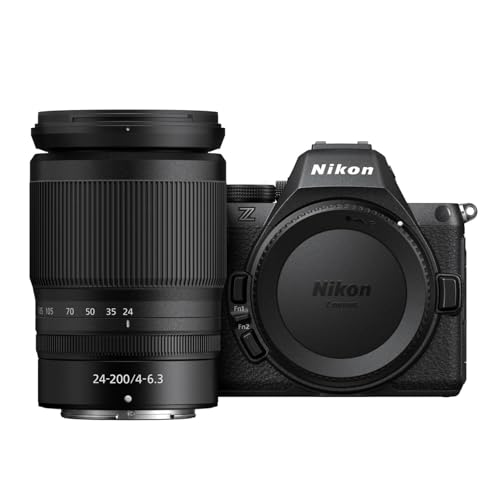
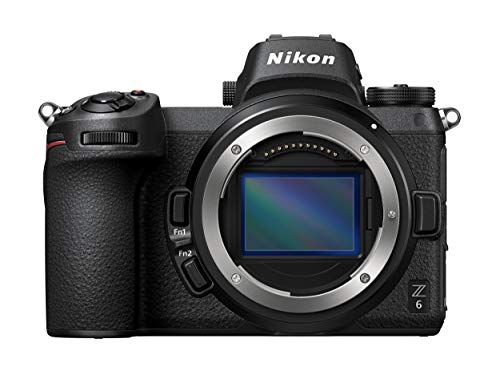
Nikon Z6 review. Compare 108 technical specifications and user reviews to see how it ranks among cameras and if it is worth buying.
Overall score
What it is: An overall evaluation of the camera's quality, based on technical analyses and user reviews.
When it matters: When you need a quick reference to identify the best cameras on the market.
Score components:
90.0%
Technical Score
10.0%
User score
Technical Score
What it is: An assessment of the camera's technical performance, covering eight key areas: image quality, autofocus, video features, stabilization, lens compatibility, connectivity, battery, and design.
When it matters: When you want to compare cameras based on technical performance and available features.
Score components:
28.0%
Sensor & Image
25.0%
Photo Features
18.0%
Video & Audio
14.0%
Display & Design
8.0%
Battery & Power
7.0%
Connectivity & Storage
User score
What it is: A rating that combines user reviews and the total number of reviews received by the camera.
When it matters: When real-world owner satisfaction and review volume matter to your decision.
Score components:
70.0%
User reviews
30.0%
Popularity
Score components:
25.0%
Sensor size
20.0%
Main camera megapixels
20.0%
Dual card slots
15.0%
N. of focus points
10.0%
RAW photo capture
10.0%
Phase-detection autofocus (photos)
Score components:
35.0%
Weight
30.0%
Battery life (CIPA)
20.0%
Sensor-shift stabilization
15.0%
GPS
Score components:
30.0%
Price
20.0%
Weight
20.0%
AF tracking
20.0%
Battery life (CIPA)
10.0%
Touchscreen
Score components:
30.0%
Main camera megapixels
25.0%
Sensor size
20.0%
Main camera pixel size
15.0%
Sensor-shift stabilization
10.0%
RAW photo capture
Score components:
30.0%
Weight
25.0%
Thickness
20.0%
AF low-light sensitivity
15.0%
Sensor-shift stabilization
10.0%
Eye detection AF (human)
Score components:
30.0%
Sensor size
25.0%
Main camera pixel size
20.0%
Eye detection AF (human)
15.0%
Main camera megapixels
10.0%
Sensor-shift stabilization
Score components:
30.0%
Weight
25.0%
Battery life (CIPA)
20.0%
Min operating temperature
15.0%
Sensor-shift stabilization
10.0%
GPS
Available: ranking among products currently available (including other versions of this product).
All: ranking among all products in the database.
#6 in Best Nikon Cameras
#20 in Best Low Light Cameras
#22 in Best Full-Frame Cameras
#26 in Best Cameras
#26 in Best Digital Cameras
#26 in Best Mirrorless Cameras
#26 in Best 4K Cameras
#26 in Best Cameras for Portraits
#183 in Best Travel Cameras
#228 in Best Cameras for Hiking
What it is: An assessment of the camera's technical performance, covering eight key areas: image quality, autofocus, video features, stabilization, lens compatibility, connectivity, battery, and design.
When it matters: When you want to compare cameras based on technical performance and available features.
Score components:
28.0%
Sensor & Image
25.0%
Photo Features
18.0%
Video & Audio
14.0%
Display & Design
8.0%
Battery & Power
7.0%
Connectivity & Storage
What it is: A rating that combines user reviews and the total number of reviews received by the camera.
When it matters: When real-world owner satisfaction and review volume matter to your decision.
Score components:
70.0%
User reviews
30.0%
Popularity
What it is: An indicator that combines the camera's overall rating with its cost.
When it matters: When you want to know how much overall quality you get for the price.
Score components:
60.0%
Overall score
40.0%
Price
Importance: HIGH
Good value: Full frame or larger
Importance: HIGH
Good value: At least 20 MP
Importance: HIGH
Good value: At least 3.5 µm
Importance: LOW
Importance: MEDIUM
Good value: At least ISO 25,600
Importance: MEDIUM
Importance: MEDIUM
Good value: At least 14-bit
Importance: LOW
Importance: LOW
Importance: LOW
Importance: LOW
Importance: LOW
Importance: LOW
Importance: LOW
Importance: LOW
Importance: MEDIUM
Importance: LOW
Importance: LOW
Importance: LOW
Importance: LOW
Importance: LOW
Importance: HIGH
Good value: At least 200 points
Importance: HIGH
Importance: MEDIUM
Importance: LOW
Importance: LOW
Importance: MEDIUM
Importance: MEDIUM
Importance: HIGH
Good value: At least 5 stops
Importance: LOW
Importance: MEDIUM
Good value: At least 10 fps
Importance: LOW
Importance: LOW
Importance: LOW
Importance: LOW
Importance: LOW
Importance: LOW
Importance: LOW
Importance: LOW
Importance: LOW
Importance: LOW
Importance: LOW
Importance: LOW
Importance: LOW
Importance: LOW
Importance: LOW
Importance: LOW
Good value: At least 200,000 actuations
Importance: LOW
Good value: At least 10x
Importance: HIGH
Good value: At least 3840 px
Importance: MEDIUM
Good value: At least 200 Mbps
Importance: MEDIUM
Good value: At least 10-bit
Importance: LOW
Importance: LOW
Importance: LOW
Importance: LOW
Importance: LOW
Importance: LOW
Importance: LOW
Good value: At least 30 min
Importance: LOW
Importance: LOW
Importance: LOW
Importance: LOW
Importance: LOW
Good value: At least 2 microphones
Importance: LOW
Importance: LOW
Importance: LOW
Importance: LOW
Importance: MEDIUM
Good value: 500 g or less
Importance: LOW
Importance: LOW
Importance: LOW
Importance: MEDIUM
Importance: MEDIUM
Good value: At least 2.36 million dots
Importance: LOW
Good value: 100%
Importance: LOW
Importance: LOW
Good value: At least 120 Hz
Importance: MEDIUM
Good value: At least 3 in
Importance: LOW
Importance: LOW
Importance: LOW
Importance: LOW
Importance: LOW
Importance: LOW
Importance: LOW
Good value: At least 10 m
Importance: LOW
Importance: LOW
Importance: LOW
Importance: LOW
Importance: MEDIUM
Good value: At least 400 shots
Importance: LOW
Good value: At least 1,500 mAh
Importance: LOW
Importance: LOW
Importance: LOW
Importance: LOW
Importance: LOW
Importance: LOW
Importance: LOW
Importance: LOW
Importance: LOW
Importance: LOW
Importance: LOW
Importance: LOW
Importance: LOW
Importance: LOW
Importance: LOW
Importance: LOW
Importance: LOW
Importance: LOW
Importance: HIGH
Good value: At least 200 points
Importance: MEDIUM
Importance: HIGH
Importance: MEDIUM
Good value: At least ISO 25,600
Importance: MEDIUM
Good value: At least 10 fps
Importance: HIGH
Good value: At least 3.5 µm
Importance: LOW
Importance: MEDIUM
Good value: At least 200 Mbps
Importance: MEDIUM
Importance: MEDIUM
Good value: 500 g or less
Importance: LOW
Importance: LOW
Importance: MEDIUM
Good value: At least 14-bit
Importance: LOW
Importance: MEDIUM
Good value: At least 400 shots
(Reviews last updated: July 2026)
The Amateur Photographer review highlights the Nikon Z6 as a versatile, comfortable full-frame mirrorless camera featuring excellent 5-axis in-body stabilization, a 273-point hybrid AF system, and high-quality, oversampled 4K video capabilities. Its robust, weather-sealed construction and 12fps shooting speed are noted as significant pros for both stills and video users. However, the review lists the inclusion of only a single XQD card slot as a major disadvantage, limiting backup options and increasing media costs. Additional drawbacks include restrictions on maximum shutter speed when using the electronic first-curtain shutter and minor, subtle electronic viewfinder lag during high-speed, fast-action tracking. Amateur Photographer
The DPReview evaluation concludes that the Nikon Z6 is an exceptionally versatile full-frame mirrorless camera, boasting an excellent 24.5-megapixel sensor with superb low-light performance and effective 5-axis in-body image stabilization. Its robust, weather-sealed construction, comfortable ergonomic grip, and high-resolution electronic viewfinder are paired with strong video capabilities, including oversampled, full-width 4K/30p capture and 10-bit N-Log output. Conversely, the review notes significant limitations, including a clumsy subject tracking interface and noticeable viewfinder blackout during high-speed shooting, making it less ideal for action. Additional drawbacks include the inclusion of only a single XQD card slot, a slight risk of sensor banding in extreme shadow recovery, and less-than-stellar battery life.
The Nikon Z 6 is characterized by The Digital Picture as a versatile, lightweight 24.5-megapixel full-frame mirrorless camera featuring exceptional image quality, high-ISO performance, and effective 5-axis in-body image stabilization. Its robust, weather-sealed magnesium alloy body boasts excellent ergonomics and a high-quality 3.69-million-dot electronic viewfinder. Conversely, the review highlights the limitation of a single XQD memory card slot and notes potential user interface issues with the tilting screen, where the EVF sensor can cause accidental blackouts. While offering a 12 fps burst rate, exposure locks after the first frame, and the battery life is relatively low compared to competitors.
from Professional Photo Online: The Nikon Z6 is evaluated as a highly capable, entry-level, full-frame mirrorless camera that serves as an appealing crossover option for both professional still photographers and videographers. Key pros of the camera include its ergonomic design, featuring a comfortable, well-sculpted grip and an intuitive button layout similar to high-end Nikon DSLRs. Additionally, the review praises the camera's generous 12fps burst mode (when shooting 12-bit Raws), a bright and clear electronic viewfinder (EVF), and strong video capabilities, including full-frame 4K UHD video and 10-bit N-Log output to external devices. The autofocus system is highly rated as snappy and accurate for most tracking situations, outperforming standard DSLRs. Professional Photo Online. On the downside, the reviewer highlights several cons, such as a slight operational lag when the EVF switches on, as well as a stuttering, staccato viewfinder display during continuous high-speed shooting that makes tracking fast subjects difficult. The review notes that utilizing the digital control rings on native S lenses can lead to accidental settings changes. Finally, the camera lacks an industry-standard "eye" focus setting for close-ups, has...
The ProVideo Coalition review positions the Nikon Z6 as a highly capable, lightweight, and versatile full-frame mirrorless camera optimized primarily for UHD 4K video production. A major strength is the 16mm short flange distance of the Z-mount, which facilitates the adaptation of virtually any lens, including medium format optics via focal reducers. For videographers, the standout feature is the ability to output 10-bit N-Log footage externally via HDMI, delivering solid dynamic range comparable to higher-end cinema cameras. Additional video-centric advantages include a highly effective 5-axis In-Body Image Stabilization (IBIS) system, professional tools like focus peaking and zebra stripes, a crisp electronic viewfinder (EVF), and a responsive 3.2-inch tilting touchscreen. However, the reviewer highlights several notable drawbacks and missing features. A key limitation is the lack of higher frame rate options in 4K, as the camera tops out at UHD 4K at 30p, 25p, and 24p, requiring users to drop down to 1080p for 120 fps shooting. The camera also lacks full Cinema 4K resolution (4096 x 2160) and specialized anamorphic crop modes. While the autofocus functions reliably under standard conditions,...
The Nikon Z6 is a highly versatile full-frame mirrorless camera that offers incredible performance, build quality, and value for money. It features a 24.5-megapixel sensor and an EXPEED 6 processor that deliver stellar image quality and excellent corner-to-corner sharpness. It is an exceptional tool for low-light shooting due to its wider ISO range and helpful in-body image stabilization. Photographers will appreciate the fast 12fps continuous shooting burst rate. Filmmakers will love its ability to shoot full-frame uncropped 4K video, output 10-bit N-Log, and upgrade to 12-bit ProRes RAW video. Additionally, firmware updates have expanded its capabilities by adding animal eye AF, improved tracking, and compatibility with fast CFexpress memory cards. Despite its stellar performance, the camera does have a few distinct limitations. The most notable cons are its weak 310-shot battery life, some electronic viewfinder lag between burst frames, and an average buffer capacity that limits continuous raw shooting to 37 files. It also only features a single memory card slot, which may disappoint users looking for a backup option. On the positive side, the prominent pros include its amazing...
Ken Rockwell hails the Nikon Z6 as a monumental milestone, praising its superior color, dynamic range, and effective 5-stop image stabilization. The camera is noted for its excellent build quality, ergonomic grip, useful user presets, and extensive adaptability via a short flange distance. Conversely, the review highlights critical flaws, including confusing autofocus color coding in continuous mode and unreliable face detection. Other drawbacks include the restriction to a single XQD card slot and limited autofocus support for older lenses via the FTZ adapter.
The PPA Magazine review identifies the Nikon Z6 as a versatile full-frame mirrorless camera, boasting superior 4K video oversampled from 6K, robust 5-axis in-body image stabilization, and effective backward compatibility with older batteries. Key pros also include high-performance, silent autofocus lenses and superior noise reduction when utilizing native Nikon Capture NX-D software. PPA | Professional Conversely, the review notes significant cons for professional users, particularly poor battery performance, which required two batteries to capture only 700 shots during a three-hour event. Further limitations include the requirement of an external recorder for 10-bit N-Log video and restricted in-camera USB charging capabilities.
Nikon Z6 Review Summary The Nikon Z6 is a versatile 24.5MP full-frame mirrorless camera that serves as a strong competitor to Sony's Alpha A7 III. Built with an all-new wider Z lens mount and a short 16mm flange distance, it optimizes light transmission directly to the corners of its back-illuminated CMOS sensor. Performance-driven features include a 5-axis in-body image stabilization system effective for up to five stops, 12fps burst shooting, and sharp 4K UHD video capture up to 30p. For existing DSLR users, Nikon offers an optional FTZ mount adapter to maintain compatibility with hundreds of legacy F-mount lenses. The camera also features a high-resolution, 3.6 million-dot electronic viewfinder (EVF) alongside a 3.2-inch tilt-angle touchscreen for refined and intuitive handling. However, the camera does feature a few notable design limitations. A major drawback for many users is the single memory card slot that relies exclusively on the premium, limited-support XQD card format rather than standard SD cards. Additionally, the camera suffers from a relatively limited buffer depth during high-speed shooting and a native lens ecosystem that remains somewhat sparse compared...
The Photography Life review deems the Nikon Z6 a high-value, 24.5-megapixel full-frame mirrorless camera offering excellent low-light performance, impressive dynamic range, and effective 5-axis IBIS. Key advantages highlighted include a robust, weather-sealed magnesium body, a high-resolution EVF, and advanced video capabilities, with firmware updates enhancing its autofocus capabilities. Conversely, the review notes ergonomic drawbacks, such as the repositioned rear control dial lacking a premium feel and a lack of dedicated physical buttons for certain functions. Other mentioned weaknesses include a slight green color cast in high-noise scenarios and occasional Eye AF precision issues, particularly in close-up portraits.
The Nikon Z6 is a 24-megapixel full-frame mirrorless camera that successfully integrates Nikon's DSLR heritage into a smaller, more nimble body reminiscent of the D7500. It features an impressive, natural-looking 3.69m-dot electronic viewfinder (EVF), excellent ergonomics, a highly competent backside-illuminated (BSI) sensor with strong low-light performance, and a robust 5-stop on-sensor vibration reduction (VR) system. For videographers, the camera serves as a powerful tool, providing exceptional, full-frame 4K video signal integrity with support for 10-bit N-Log output and 12-bit ProRes RAW when paired with an external Atomos Ninja V recorder. Additionally, it maintains excellent backward compatibility with manual and autofocus F-mount lenses via the FTZ adapter. However, as a first-generation platform, the camera suffers from some notable handling and feature limitations. It contains only a single XQD/CFExpress card slot, which draws criticism from dual-slot users, and entirely lacks autofocus support for older screw-drive F-mount lenses. Customization feels restricted due to an insufficient number of physical buttons, forcing users into frequent menu diving for basic functions like card formatting and exposure bracketing. While firmware updates significantly improved the tracking capabilities—adding helpful...
The Nikon Z6 review highlights the author’s transition from Fujifilm APS-C cameras to Nikon’s full-frame system, praising the camera for its exceptional image quality, superior dynamic range, and robust handling. Key pros emphasized in the review include its excellent high-ISO noise control (remaining clean up to ISO 6400), an effective in-body image stabilization (IBIS) system that facilitates low-light photography, and highly responsive 100% touch-compatible menus. The reviewer also celebrates the ergonomics—noting a far better physical grip than the Fujifilm X-T3—as well as the ultra-fast XQD/CFexpress single card slot, an excellent electronic viewfinder (EVF), and a complete lack of the irritating sensor grid artifacts when shooting directly into the sun. Conversely, the review notes several distinct cons, particularly when compared to the author's previous Fujifilm setup. A primary drawback is the single memory card slot, which may deter professional photographers who require immediate, dual-slot back-ups. Additionally, the camera produces more color noise than the Fujifilm X-T3 (though it is easily correctable in post-processing), lacks built-in film simulations out of the box, and features an overly complicated interval timer shooter mode. From...
The Nikon Z6 is a highly capable full-frame mirrorless camera that delivers exceptional image quality from its 24-megapixel sensor, making it a stellar choice for both enthusiast and professional photographers. It stands out with a remarkably fast autofocus system, an impressive 12.9 frames-per-second continuous shooting speed (9 fps in RAW), and a high-performing video mode that utilizes the entire sensor for sharp 4K recording. Filming is further enhanced by built-in 5-axis sensor stabilization, Ultra-HD 10-bit HDMI output, and dedicated headphone and microphone jacks. The camera body boasts an incredibly sharp 3.69-million-pixel electronic viewfinder with a massive 0.8x magnification, an ergonomic magnesium alloy build with weather-sealing, and a practical top status display. Additionally, it adapts legacy Nikon F-mount DSLR lenses flawlessly using the included FTZ adapter. Despite its extensive strengths, the camera suffers from a few notable drawbacks. The most prominent point of criticism is Nikon's reliance on a single, expensive, and somewhat obscure XQD memory card slot, which requires a costly card and dedicated reader to establish an efficient workflow. Furthermore, its battery life is only average, yielding up to...
The Nikon Z 6 is a full-frame mirrorless camera that delivers exceptional image quality, earning a "SUPER" rating with a 92% score in lab testing. Built with a robust, weather-sealed magnesium alloy body, it features a 24.5-megapixel CMOS sensor, an integrated 5-axis image stabilizer that offers up to five stops of compensation, and a powerful Expeed 6 processor. Photographers will benefit from a rapid 273-point autofocus system with face detection, continuous shooting speeds of up to 11.3 frames per second, and clean, noise-free images up to ISO 3200. Additional hardware highlights include a sharp 3.69 million-dot OLED electronic viewfinder, a 3.2-inch tilting touchscreen, a top-deck status LCD, and extensive connectivity options including USB-C and open Wi-Fi. In comparison to its competitors, the €2,299 Nikon Z 6 ties for first place with the Sony Alpha 7 III, outperforming the Canon EOS R. The primary drawback of the Z 6 is its reliance on a single XQD memory card slot without a secondary SD card backup, which is a significant disadvantage for professional event and reportage photographers who require instant redundancy. While...
The fotoMAGAZIN review evaluates the Nikon Z6 as a highly capable, fast, and competitively priced mid-range full-frame mirrorless camera. The camera stands out for its excellent magnesium-alloy build quality with dust and splash protection, outstanding ergonomics that maintain a familiar Nikon feel, and a top-tier 3.69-million-dot electronic OLED viewfinder. Image performance is highly praised, offering very good overall resolution and exceptional high-ISO quality up to ISO 6400 from its 24.5-megapixel sensor. Furthermore, its continuous burst rates are impressive—reaching 12 fps (with exposure locked)—while its 5-axis in-body image stabilization (IBIS) allows for sharp, long exposures during handheld shooting. It also serves as an exceptional video tool, capturing full-width, oversampled 4K video with zero crop and supporting 10-bit N-Log output via HDMI. However, the reviewer highlights several notable drawbacks, particularly regarding functionality and card configuration. The camera features only a single XQD card slot, which lacks the widespread availability and lower cost of standard SD formats. Another major criticism is its short battery life, which is rated for only 310 shots with the viewfinder—failing to compete with rivals like Sony's third-generation models....
The digitalkamera.de comparison review highlights the Nikon Z 6 as a versatile full-frame mirrorless camera featuring an exceptional 24.5-megapixel sensor with excellent high-ISO performance and a robust, weather-sealed magnesium alloy body. Key advantages include the sharp 24-70mm f/4 S kit lens, fast 9-12 fps continuous shooting, and high-quality, uncropped 4K video capabilities. Conversely, the review identifies significant limitations, including a restrictive buffer that hinders continuous shooting after 31-42 frames and the requirement for a single, costly XQD card. Furthermore, the camera exhibits poor, oversaturated color accuracy in warm tones, and the autofocus system struggles with low-contrast subjects, despite its overall solid performance. For the full, detailed review, visit digitalkamera.de.
The reviewer evaluates the Nikon Z6 mirrorless camera as a compelling, compact addition to their gear, serving as a highly effective upgrade over older DSLRs like the D800 for specific shooting conditions. The camera excels in low-light environments, showcasing a bright, clear electronic viewfinder and an impressive sensor that retains natural color accuracy and delivers clean high-ISO performance up to 6,400. Its 5-axis in-body image stabilisation allows for longer handheld exposures, which helps keep ISO levels lower. Key ergonomic advantages include a comfortable, high-quality grip, a fully functional touch screen that simplifies menu navigation, and the introduction of silent shooting—a massive advantage for quiet venues like school theatres. Furthermore, the newer Z-mount lenses are highly praised for delivering exceptional sharpness and edge-to-edge optical performance. Despite these strengths, the reviewer notes several compromises, particularly regarding action photography and battery life. The continuous autofocus (AF-C) and tracking capabilities fall short of dedicated sports bodies like the D500, struggling with fast, erratic subjects like aquarium fish, even after the Firmware 3.0 update. The camera's battery life is significantly shorter than that of equivalent...
In a long-term review by Der Lichtrebell, the Nikon Z6 is praised for its exceptional 24-megapixel sensor, delivering superb image quality, deep colors, and excellent high ISO performance, alongside top-tier Z-mount S-line lens sharpness. The camera is noted for its ergonomics, sharp electronic viewfinder, and strong 4K video capabilities, making it a reliable tool for varied photography genres. However, the review identifies significant limitations, particularly with inconsistent continuous autofocus (AF-C) performance during fast-paced action or wildlife tracking. Other cons include the reliance on a single XQD card slot for storage, a vulnerable, exposed sensor during lens changes, and occasionally unreliable auto white balance, say Der Lichtrebell.
The TechRadar review highlights the Nikon Z6 as a highly capable and robust full-frame mirrorless camera that provides serious competition to rivals like the Sony Alpha A7 III. A major strength is its excellent physical design, which features a large, comfortable handgrip, high-quality rubber surfaces, and a strong aluminum alloy chassis. It shares the same premium level of weather sealing as Nikons flagship D850 DSLR, ensuring a highly durable build. Additionally, existing Nikon DSLR users will appreciate the seamless transition due to a very familiar button layout, including an intuitive top LCD status display and an effective joystick sub-selector for shifting focus points. However, the review also notes clear weaknesses, particularly when evaluating its 273-point hybrid autofocus system. While the system delivers 90% frame coverage and works exceptionally well for static, everyday photography, its continuous tracking performance (AF-C) falls short when compared to the superior 693-point autofocus mechanism of the Sony Alpha A7 III. The camera's focus tracking response slows down noticeably in dim environments, though a built-in AF assist light helps compensate. Finally, the design is strictly functional rather...
The Calumet Magazin review identifies the Nikon Z6 as a versatile, weather-sealed full-frame mirrorless camera featuring a 24.5-megapixel sensor, EXPEED 6 processor, and 5-axis stabilization, excelling in both low-light photography and 4K video. Key advantages include its compact, robust build and extensive video capabilities, such as 10-bit N-Log, while the Z-mount provides access to advanced lenses and the FTZ adapter enables F-mount compatibility. While praised as a top hybrid tool, the Z6’s primary trade-offs compared to the Z7 include lower resolution (24.5 MP vs 45.7 MP) and fewer autofocus points, with early feedback highlighting the need for firmware updates to optimize tracking, according to the review and related analysis. The wide Z-mount is a key structural highlight, allowing for improved lens performance and design.
The Nikon Z 6 is a compact, robust full-frame mirrorless camera built from a weather-sealed magnesium alloy that offers excellent handling through its deep, comfortable grip and an intuitive layout familiar to Nikon DSLR users. The camera's 24.5 MP back-illuminated sensor produces outstanding image quality with deep details, warm colours, and impressive dynamic range, while its 5-axis in-body image stabilization effectively recovers up to 5 stops of light with native Z-mount lenses. Key hardware highlights include an exceptionally clear 3.69 million-dot Quad VGA OLED electronic viewfinder, a highly responsive 3.2-inch tilting touchscreen, and a practical top-facing OLED control panel. Performance in low light is superb, yielding very clean files up to ISO 3,200 and highly acceptable results up to ISO 6,400 with very fine, non-disruptive digital grain.
The Nikon Z6 is a highly versatile full-frame mirrorless camera that balances a compact, weather-sealed plastic and metal chassis with a deep, secure grip. It features a 24.4 MP stabilized BSI CMOS sensor that provides excellent image quality, strong low-light performance up to ISO 51,200, and standard 5-axis stabilization for both photography and 4K video at 30 fps. Standout advantages include an exceptionally high-quality 0.5-inch OLED viewfinder, a responsive tilting touchscreen, a fast 12 fps burst mode, a highly effective silent shutter, long-lasting battery life capable of shooting roughly 800 RAW images on a single charge, and seamless smartphone connectivity via the SnapBridge app. However, the camera has notable drawbacks, starting with an un-intuitive, cluttered menu system and a single-axis tilting screen that limits flexibility for vertical shots near the ground or video vlogging. The automatic viewfinder sensor is overly sensitive, frequently cutting off the main LCD display unexpectedly. Storage is restricted to a single XQD memory card slot, forcing users into expensive initial card investments. Finally, the Z-mount lens ecosystem remains relatively small, and while the bundled Nikkor Z...
However, the reviewer identified several critical design and performance omissions. A major frustration was the complete absence of a battery grip connector on the base plate, eliminating portrait-orientation controls and limiting future battery expansions to power-only solutions. Battery life itself proved to be a notable "Achilles' heel," draining completely during a single three-hour concert shoot due to the energy demands of the live EVF. Minor quirks were also noted in the camera's operation, such as a single XQD card slot and an AF-C mode behavior where the focus point oddly remains red instead of turning green to confirm continuous focus tracking.
The Digitec review of the Nikon Z6, tested against community questions, highlights superior low-light autofocus, wider AF coverage, and excellent high ISO performance compared to traditional SLRs. Pros include a silent shutter, compact form factor with the 24-70mm lens, and improved focus on low-contrast surfaces. Conversely, the review notes that while superior overall, the mirrorless AF mechanics present different operational experiences than the D750, and it evaluates the adaptation of F-mount lenses and the electronic viewfinder. The evaluation emphasizes the transition from SLR to mirrorless, outlining specific scenarios where performance differs.
The Nikon Z6 mirrorless full-frame camera delivers exceptionally strong video performance, defying the brand's historically mediocre reputation in film making. The camera shoots high-quality, sharp, and color-accurate 4K video up to 30fps without sensor cropping, and features a 120fps Full HD slow-motion mode. Its built-in 5-axis sensor stabilization allows for smooth handheld filming while walking, expanding options for non-stabilized lenses. Furthermore, the camera shows almost no rolling shutter distortion during fast panning shots and exhibits remarkable capabilities in poorly lit environments, yielding clean imagery even when relying on a slow f/4 kit lens. It also provides comprehensive physical connectivity, including dedicated microphone and headphone jacks, micro HDMI, USB 3.1, Wi-Fi, and Bluetooth. Despite these capabilities, the Z6 suffers from restrictive design choices that hamper its appeal to dedicated videographers. The most notable drawback is that its N-Log profile (necessary for 10-bit 4:2:2 color grading) cannot be recorded internally; it strictly requires an external recorder hooked up via HDMI. Additionally, the body features only a single memory card slot limited to the expensive XQD format, offering zero built-in redundancy or cheaper...
The Photolari review highlights the Nikon Z6 as a highly balanced, well-built first-generation full-frame mirrorless camera, positioning it as a more practical and affordable alternative to its higher-resolution sibling, the Z7. Testers heavily praised its physical build, noting its excellent ergonomics, comfortable handgrip, intuitive menu system, and a market-leading electronic viewfinder. Photographically, the 24-megapixel sensor delivers stellar image quality with great color reproduction, strong high-ISO performance up to 25,600, and standard-setting burst speeds of up to 12 frames per second (with specific limitations on exposure metering and bit depth). Additionally, the new Z-mount adaptation mechanism is highly commended, as the FTZ adapter integrates older F-mount lenses smoothly while adding body-based image stabilization. On the downside, the review exposes several key limitations where the camera falls short of its main competitor, the Sony A7 III. The autofocus tracking performance is noticeably weaker, particularly when dealing with fast-moving action scenes. Storage design is another major pain point; Nikon opted for a single XQD memory card slot, which forces users to buy expensive new cards and compatible readers instead of utilizing common SD...
Based on the Wedio review, the Nikon Z6 is highlighted as a feature-rich, full-frame enthusiast camera packaged into a surprisingly small, durable, and weather-sealed body. It stands out for its class-leading image quality, exceptional high-ISO noise handling, and a flexible dynamic range that allows for heavy post-processing recovery. For videographers, it delivers full-width, oversampled 4K UHD video at 30 fps without any crop factor, paired with an effective 5-axis in-body image stabilization system that allows photographers to shoot at shutter speeds as slow as 1/8 of a second. Reviewers also praised the camera's ergonomics, featuring a deep grip, custom exposure profiles that automatically shift between photo and video modes, and a crisp 3.69-million-dot electronic viewfinder (EVF). However, the review details several notable drawbacks, particularly when compared to its market rivals. While its 273-point hybrid autofocus system tracks moving subjects and faces well, it falls behind competitors like the Sony A7 III, which features a vastly superior 693-point autofocus system. Video performance, while sharp, isn't strong enough to lead the class if video is your absolute primary focus. Additionally, despite its...
The Nikonistas Club review highlights the Nikon Z 6 as a highly capable and versatile full-frame mirrorless camera, praising its lightweight, discreet, and ergonomic design that remains familiar to traditional DSLR users. Experts and sports photographers testing the device noted excellent overall performance, particularly highlighting the outstanding image quality, superb sharpness, and highly efficient noise handling during low-light and night scenes. The camera's built-in five-axis optical VR stabilization received major acclaim for its ability to allow shooting at exceptionally low shutter speeds while maintaining clarity. Additionally, its high-speed burst mode of 12 fps makes it a standout choice for high-speed action, and the 3.69-million-dot electronic OLED viewfinder is regarded as one of the best on the market, offering a completely immersive and lifelike experience. Despite its strong performance, the review points out several practical limitations and disadvantages. A primary complaint from sports photographers is the absence of an available battery grip, which compromises ergonomics and comfort during vertical shooting—a major handicap for sports like basketball. Users also expressed frustration with the single XQD memory card slot, pointing out that these...
The Nikon Z 6 outperforms the entry-level Z 5 due to superior BSI sensor performance, a faster 12 fps continuous shooting speed, and cleaner, uncropped 4K video capability. While the Z 6 offers a top-plate display and faster CFexpress/XQD cards, it is hampered by shorter battery life and a single card slot. Conversely, the Nikon Z 5 serves as an economical alternative, featuring robust dual SD card slots, superior battery life, and similar 5-axis stabilization to the Z 6. However, the Z 5 is limited by a slower 4.5 fps burst rate, significant 4K video cropping, and a non-BSI sensor that performs less effectively in low-light situations. For the full, detailed comparison, visit RTINGS.com.
The long-term review published on Nikonland.it compiles the 12-to-18-month field experiences of four senior photographers evaluating the first-generation Nikon Z6 and Nikon Z7 mirrorless systems. The reviewers praise both cameras for their exceptional build quality, outstanding electronic viewfinders, and excellent sensor performance, highlighting features like built-in image stabilization (IBIS), helpful automated tools like focus stacking, and the game-changing firmware updates that added highly accurate human and animal Eye-AF. Reviewers note that the 24MP Z6 serves as a highly versatile, responsive tool for reportage and street photography with superior buffer capabilities, while the 45.7MP Z7 excels at delivering high-resolution files for studio or landscape work. The optical performance of native Nikkor Z lenses, especially the 50mm f/1.8S and 24-70mm f/2.8S, receives universal acclaim for easily outperforming older F-mount equivalents. Nikonland.it Conversely, the review highlights several shared ergonomic and technical shortcomings that prevent these first-generation bodies from feeling like true professional replacements for top-tier DSLRs like the D5 or D850. A prominent critique is directed at the small physical dimensions of the camera bodies, which cramp the hand during extended tracking sessions...
The Nikon Z6 and Z7 mirrorless cameras feature identical bodies, controls, menus, electronic viewfinders, and in-body image stabilization (IBIS), yet they target completely different photographic needs based on their sensors. The Nikon Z6 is highly versatile and serves as a balanced, "all-around" option, offering a 24-megapixel sensor that excels in low-light environments with exceptional high ISO performance up to 12,800 or higher. Its smaller file sizes allow for a fast, responsive burst mode with a quickly clearing buffer, making it superior for reportage, street photography, weddings, and video production. However, its primary con is lower resolution compared to its sibling, and both cameras share a slower continuous autofocus (AF-C) system that can struggle to track fast-moving objects during action photography. In contrast, the Nikon Z7 acts as a mirrorless equivalent to the D850, utilizing a 45.7-megapixel sensor to capture extreme, ultra-sharp details, making it the ideal choice for studio work, macro, still-life, and landscape photography. The main pros of the Z7 are its massive resolution and exceptional dynamic range at its lowest native ISO settings. On the downside, the large...
The Nikon Z6 is a highly versatile full-frame mirrorless camera that balances professional photography with high-end cinema capabilities. Featuring a 24.5 MP BSI CMOS sensor and an Expeed 6 processor, it stands out for its exceptional performance in low-light conditions, maintaining real image resolution all the way up to 12,800 ISO. The camera offers an incredibly fast readout that nearly eliminates rolling shutter distortions, which drastically improves handheld video capture alongside its effective 5-axis in-body image stabilization (IBIS). Furthermore, its oversampled 4K video utilizing the full FX sensor width delivers pristine, artifact-free footage that outperforms its higher-resolution sibling, the Z7, in video clarity. Despite its strengths, the Z6 has a few limitations that potential buyers should consider before purchasing. Pros & Cons Pros: Excellent body ergonomics, a highly efficient 273-point hybrid autofocus system, a premium electronic viewfinder featuring glass lenses, and exceptional 5-axis image stabilization. It also boasts limited rolling shutter effects, excellent low-light/high-ISO image quality, and external RAW video recording support via HDMI. Cons: The absence of internal 4K recording at 50/60p frame rates, a single XQD memory card...
The reviewed article evaluates close-up photography capabilities on a Nikon Z6 using the Nikkor 300mm f/4E PF ED VR lens combined with three different types of accessories: a teleconverter, an extension tube, and an achromatic close-up lens. The primary focus of the test is to compare the reproduction ratios and minimal working distances achieved by each accessory setup. Pros & Cons of Each Setup Nikon TC-14E III Teleconverter: Pros: Successfully increases magnification, preserves excellent image quality without noticeable degradation, and uniquely retains the ability to focus at infinity. Cons: Slightly reduces the working distance by about 2 cm. Fotodiox 35mm Extension Tube (Nikon Z mount): Pros: Shortens the minimum working distance down to approximately 98 cm to yield a much higher magnification ratio. Unlike older F-mount variants, this native Z-mount tube fully maintains autofocus and lens image stabilization (VR). Light loss is minimal and easy for the camera sensor to manage. Cons: Sacrifices infinity focus, meaning it can only be used for macro distances. Sigma 0.72 Close-up Lens (1.8 diopters): Pros: Delivers respectable image quality and high magnification at a...
The Nikon Z6 is highlighted as a highly versatile and cost-effective mid-range full-frame mirrorless camera, positioning itself as a strong competitor to the Sony A7 III. It shares the exact same premium build quality, weather resistance, and high-end ergonomics as the more expensive Z7, providing an excellent full-handed grip while remaining lightweight. Equipped with a 24.5MP full-frame CMOS sensor and an EXPEED 6 processor, it delivers exceptional image quality with impressive low-light performance and low digital noise, outperforming the Z7 in high-ISO scenarios. The camera also features a robust 273-point hybrid autofocus system with 90% frame coverage, an incredibly detailed 3.69-million-dot electronic viewfinder (EVF), and a sharp 3.2-inch tilting touchscreen. For videographers, it stands out by offering oversampled uncropped 4K recording up to 30 fps, dedicated audio jacks, and advanced 10-bit N-Log external recording capability supported by a 5-stop in-body image stabilization (IBIS) system. Despite its stellar versatility, the review points out a few notable limitations for professional and high-speed usage. A major drawback is its inclusion of only one XQD memory card slot, missing the dual-slot backup capability preferred...
The Nikon Z6 is praised for its robust DSLR-like ergonomics, sharp OLED viewfinder, and reliable autofocus, with the review highlighting a complete lack of overheating issues during extended video sessions. The camera is noted for its high-performance 24.5-megapixel sensor and capability to output ProRes RAW via HDMI, making it a versatile tool for videographers. However, the review identifies significant drawbacks, including the high cost of CFexpress/XQD memory cards for the single slot and, most notably, mediocre battery life that necessitates carrying spares. Despite these limitations, it is recommended as a responsive, well-built hybrid mirrorless camera.
The Nikon Z6 is a robust mirrorless camera that successfully bridges the gap between advanced amateur and professional photography, offering a high-quality build paired with an exceptionally flexible and future-proof Z-mount design. The reviewer heavily praises its electronic viewfinder (EVF) for its low-light performance and real-time histogram utility, alongside an excellent in-body image stabilisation (IBIS) system and an outstanding mechanical shutter capable of 12 fps tracking without rolling shutter artifacts. In terms of optics, the accompanying Nikkor 35mm f/1.8S lens receives flawless marks for its total lack of chromatic aberrations at maximum aperture, while the 24-70mm f/4S lens is lauded as a compact, sharp, and high-value kit option. Furthermore, the FTZ adapter provides seamless mechanical and electronic compatibility for F-mount lenses, and the Snapbridge integration proves highly useful for instant GPS time synchronisation across multiple camera bodies. However, the camera introduces a few notable operational compromises that may frustrate strict professional workflows. The reviewer's primary criticism is an ergonomic firmware flaw: switching between AF-S and AF-C requires multiple tedious steps to manually change the focus area mode (such as moving...
Nikon Z6 Review Overview The Nikon Z6 is a versatile, all-round 24.5MP full-frame mirrorless camera designed to challenge the dominant Sony Alpha A7 III. It introduces Nikon's wide Z-lens mount, engineered to maximize light distribution across the sensor for more evenly exposed images. Key advantages of the Z6 include its highly sharp, high-resolution electronic viewfinder (EVF) with 3.6 million pixels, a fast 12fps continuous shooting speed, and a highly responsive 3.2-inch tilting touchscreen. Video shooters benefit from crisp 4K UHD video capture up to 30p, electronic vibration reduction, and a built-in 5-axis sensor-shift image stabilization system that offers up to 5 stops of stabilization. Reviewers also praised its familiar, intuitive DSLR-style handling and a planned firmware update to introduce Eye-Detection autofocus. Despite its excellent performance, the camera has notable limitations regarding its storage and power. A major drawback is the inclusion of only a single XQD card slot, which limits storage backup options and requires expensive, less widely available media. The camera's buffer depth is also relatively limited during high-speed bursts. Battery life is another low point, officially rated at...
The Tweakers user reviews present the Nikon Z 6 full-frame mirrorless camera as a highly capable and ergonomic choice. Users frequently praise its outstanding image quality, excellent low-light sensitivity, and the effectiveness of the 5-axis in-body image stabilization. Reviewers find the camera's body robust yet relatively compact compared to traditional DSLRs, featuring an intuitive touchscreen and a high-quality electronic viewfinder. The camera is also highly regarded for its versatility in handling both sharp photography and video recording, especially when paired with the sharp 24-70mm f/4 kit lens or the FTZ adapter to utilize existing F-mount lenses. However, several recurring complaints emerge across the community feedback. The most prominent drawbacks are the camera's reliance on a single memory card slot and the high cost of the required XQD memory cards, which even requires a separate card reader just to perform firmware updates. Battery life is a common concern, draining quickly under heavy menu usage or when keeping Wi-Fi and Bluetooth connections active. Furthermore, users note that the autofocus system can occasionally struggle or miss in very dim light conditions, making it...
Overview of the Nikon Z6 Review The Nikon Z6 is highly praised as a top-tier, versatile full-frame mirrorless camera that offers exceptional value, particularly for photographers moving from a Nikon DSLR and those shooting in low-light environments or recording video. With its 24.5-megapixel sensor, the camera produces excellent image quality with rich colors and sharp details while remaining remarkably noise-free at high ISO settings up to 6400. Reviewers consistently highlight its robust, weather-sealed magnesium alloy build, intuitive handling, and brilliant 3.6-million-dot electronic viewfinder. It also stands out as a strong hybrid contender against the Sony A7 III, boasting a fast continuous burst rate of 12 frames per second, a highly reliable 273-point autofocus system, and professional-grade oversampled 4K video capabilities with 10-bit Log output. Pros and Cons Despite its widespread acclaim, the review points out several distinct trade-offs to consider before purchasing: Pros Superb Low-Light Performance: The lower pixel density keeps noise exceptionally low at high sensitivities. Effective Stabilization: Built-in 5-axis image stabilization delivers a 5-stop advantage, even for lenses without native VR. Excellent Video Quality: High-quality 4K video at...
Compare