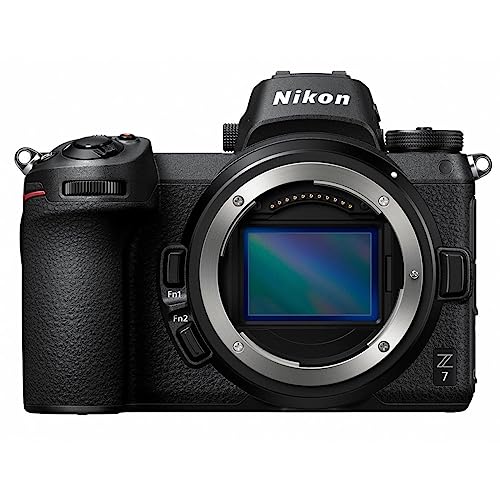
Nikon Z7 review. Compare 108 technical specifications and user reviews to see how it ranks among cameras and if it is worth buying.
Overall score
What it is: An overall evaluation of the camera's quality, based on technical analyses and user reviews.
When it matters: When you need a quick reference to identify the best cameras on the market.
Score components:
90.0%
Technical Score
10.0%
User score
Technical Score
What it is: An assessment of the camera's technical performance, covering eight key areas: image quality, autofocus, video features, stabilization, lens compatibility, connectivity, battery, and design.
When it matters: When you want to compare cameras based on technical performance and available features.
Score components:
28.0%
Sensor & Image
25.0%
Photo Features
18.0%
Video & Audio
14.0%
Display & Design
8.0%
Battery & Power
7.0%
Connectivity & Storage
User score
What it is: A rating that combines user reviews and the total number of reviews received by the camera.
When it matters: When real-world owner satisfaction and review volume matter to your decision.
Score components:
70.0%
User reviews
30.0%
Popularity
Score components:
25.0%
Sensor size
20.0%
Main camera megapixels
20.0%
Dual card slots
15.0%
N. of focus points
10.0%
RAW photo capture
10.0%
Phase-detection autofocus (photos)
Score components:
35.0%
Weight
30.0%
Battery life (CIPA)
20.0%
Sensor-shift stabilization
15.0%
GPS
Score components:
30.0%
Price
20.0%
Weight
20.0%
AF tracking
20.0%
Battery life (CIPA)
10.0%
Touchscreen
Score components:
30.0%
Main camera megapixels
25.0%
Sensor size
20.0%
Main camera pixel size
15.0%
Sensor-shift stabilization
10.0%
RAW photo capture
Score components:
30.0%
Weight
25.0%
Thickness
20.0%
AF low-light sensitivity
15.0%
Sensor-shift stabilization
10.0%
Eye detection AF (human)
Score components:
30.0%
Sensor size
25.0%
Main camera pixel size
20.0%
Eye detection AF (human)
15.0%
Main camera megapixels
10.0%
Sensor-shift stabilization
Score components:
30.0%
Weight
25.0%
Battery life (CIPA)
20.0%
Min operating temperature
15.0%
Sensor-shift stabilization
10.0%
GPS
Available: ranking among products currently available (including other versions of this product).
All: ranking among all products in the database.
#7 in Best Nikon Cameras
#21 in Best Low Light Cameras
#23 in Best Full-Frame Cameras
#27 in Best Cameras
#27 in Best Digital Cameras
#27 in Best Mirrorless Cameras
#27 in Best 4K Cameras
#27 in Best Cameras for Portraits
#160 in Best Travel Cameras
#198 in Best Cameras for Hiking
What it is: An assessment of the camera's technical performance, covering eight key areas: image quality, autofocus, video features, stabilization, lens compatibility, connectivity, battery, and design.
When it matters: When you want to compare cameras based on technical performance and available features.
Score components:
28.0%
Sensor & Image
25.0%
Photo Features
18.0%
Video & Audio
14.0%
Display & Design
8.0%
Battery & Power
7.0%
Connectivity & Storage
What it is: A rating that combines user reviews and the total number of reviews received by the camera.
When it matters: When real-world owner satisfaction and review volume matter to your decision.
Score components:
70.0%
User reviews
30.0%
Popularity
What it is: An indicator that combines the camera's overall rating with its cost.
When it matters: When you want to know how much overall quality you get for the price.
Score components:
60.0%
Overall score
40.0%
Price
Importance: HIGH
Good value: Full frame or larger
Importance: HIGH
Good value: At least 20 MP
Importance: HIGH
Good value: At least 3.5 µm
Importance: LOW
Importance: MEDIUM
Good value: At least ISO 25,600
Importance: MEDIUM
Importance: MEDIUM
Good value: At least 14-bit
Importance: LOW
Importance: LOW
Importance: LOW
Importance: LOW
Importance: LOW
Importance: LOW
Importance: LOW
Importance: LOW
Importance: MEDIUM
Importance: LOW
Importance: LOW
Importance: LOW
Importance: LOW
Importance: LOW
Importance: HIGH
Good value: At least 200 points
Importance: HIGH
Importance: MEDIUM
Importance: LOW
Importance: LOW
Importance: MEDIUM
Importance: MEDIUM
Importance: HIGH
Good value: At least 5 stops
Importance: LOW
Importance: MEDIUM
Good value: At least 10 fps
Importance: LOW
Importance: LOW
Importance: LOW
Importance: LOW
Importance: LOW
Importance: LOW
Importance: LOW
Importance: LOW
Importance: LOW
Importance: LOW
Importance: LOW
Importance: LOW
Importance: LOW
Importance: LOW
Importance: LOW
Importance: LOW
Good value: At least 200,000 actuations
Importance: LOW
Good value: At least 10x
Importance: HIGH
Good value: At least 3840 px
Importance: MEDIUM
Good value: At least 200 Mbps
Importance: MEDIUM
Good value: At least 10-bit
Importance: LOW
Importance: LOW
Importance: LOW
Importance: LOW
Importance: LOW
Importance: LOW
Importance: LOW
Good value: At least 30 min
Importance: LOW
Importance: LOW
Importance: LOW
Importance: LOW
Importance: LOW
Good value: At least 2 microphones
Importance: LOW
Importance: LOW
Importance: LOW
Importance: LOW
Importance: MEDIUM
Good value: 500 g or less
Importance: LOW
Importance: LOW
Importance: LOW
Importance: MEDIUM
Importance: MEDIUM
Good value: At least 2.36 million dots
Importance: LOW
Good value: 100%
Importance: LOW
Importance: LOW
Good value: At least 120 Hz
Importance: MEDIUM
Good value: At least 3 in
Importance: LOW
Importance: LOW
Importance: LOW
Importance: LOW
Importance: LOW
Importance: LOW
Importance: LOW
Good value: At least 10 m
Importance: LOW
Importance: LOW
Importance: LOW
Importance: LOW
Importance: MEDIUM
Good value: At least 400 shots
Importance: LOW
Good value: At least 1,500 mAh
Importance: LOW
Importance: LOW
Importance: LOW
Importance: LOW
Importance: LOW
Importance: LOW
Importance: LOW
Importance: LOW
Importance: LOW
Importance: LOW
Importance: LOW
Importance: LOW
Importance: LOW
Importance: LOW
Importance: LOW
Importance: LOW
Importance: LOW
Importance: LOW
Importance: HIGH
Good value: At least 200 points
Importance: MEDIUM
Importance: HIGH
Importance: HIGH
Good value: At least 20 MP
Importance: MEDIUM
Good value: At least ISO 25,600
Importance: LOW
Importance: MEDIUM
Good value: At least 200 Mbps
Importance: MEDIUM
Importance: MEDIUM
Importance: MEDIUM
Good value: 500 g or less
Importance: LOW
Importance: LOW
Importance: MEDIUM
Good value: At least 14-bit
Importance: LOW
Importance: LOW
(Reviews last updated: July 2026)
The DPReview review highlights the Nikon Z7 as a highly capable, weather-sealed, full-frame mirrorless camera featuring a 45.7-megapixel BSI-CMOS sensor and class-leading dynamic range. It is praised for excellent ergonomics, effective in-body image stabilization (IBIS), and strong 4K video capabilities, making it a competitive choice for photographers and videographers. Key pros include exceptional image quality comparable to the D850 and an intuitive interface for Nikon users. However, as a first-generation product, the Z7's autofocus system lags behind competitors, particularly in tracking and low-light scenarios. Additional drawbacks include limited buffer depth, a single XQD card slot, and potential banding in pushed shadows. Despite these issues, it remains a robust, well-rounded tool, particularly for landscapes and general shooting.
The Photography Life review of the Nikon Z7 highlights the 45.7-megapixel mirrorless camera for its exceptional image quality, 64 base ISO, and dynamic range that rivals the Nikon D850, paired with an ergonomic design and effective IBIS. Key strengths include a high-resolution electronic viewfinder, robust weather-sealing, and impressive performance from Z-mount lenses. Conversely, the review notes significant limitations, specifically a less reliable autofocus system for fast-moving subjects compared to DSLRs. Other cons include the reliance on a single XQD card slot, a shallow buffer during high-speed shooting, and minor sensor banding in deeply underexposed shadows.
The Nikon Z7 is a highly capable full-frame mirrorless camera that shares a 45.7MP resolution sensor, outstanding dynamic range, and a magnesium alloy body with its DSLR cousin, the D850. Landscape photographer Ross Hoddinott highlights several pros from his year of testing, including a significant reduction in kit weight for long treks, excellent weather sealing, and a remarkably clear 3.6-million dot electronic viewfinder (EVF). The EVF transforms the shooting workflow by allowing real-time views of exposure, focus peaking, histograms, and playback right through the eyepiece. Furthermore, the large 55mm Z-mount provides access to dedicated, high-performing Z-mount wide-angle lenses that outperform older optics, while a built-in 5-axis image stabilisation system natively benefits both new and adapted F-mount lenses. Despite its strengths, the reviewer outlines clear cons that may affect specific workflows. The most prominent drawback is the single XQD memory card slot. While XQD cards are physically robust and fast, the lack of a secondary slot removes the real-time backup security that event, wedding, and travel photographers typically rely on. Additionally, the camera's autofocus tracking and face detection can struggle in...
Ken Rockwell’s review highlights the Nikon Z7 as delivering exceptional, high-resolution 45.7-megapixel image quality and superior color rendition, often matching the D850 DSLR in a lighter, more ergonomic, and stabilized body. Key advantages include its effective in-body image stabilization, 90% AF frame coverage, and familiar Nikon handling. Conversely, the review notes significant drawbacks, particularly the confusing, color-coded AF-C system and inconsistent face-detection performance, which often locks onto the wrong subject. Further disadvantages mentioned include slow wake-up times and limited functionality with older manual-focus lenses via the FTZ adapter.
The Nikon Z7 is a highly capable 45-megapixel full-frame mirrorless camera that brings Nikon’s legacy DSLR strengths into a smaller, lighter body. Its standout features include an exceptionally sharp, natural-looking electronic viewfinder (EVF), excellent 5-stop on-sensor vibration reduction (VR), and impressive 4K video recording options with 10-bit output capabilities. Furthermore, it serves as a dream platform for legacy lenses; it delivers superb manual focus aids and offers near-seamless autofocus performance when pairing native AF-S/AF-P lenses with the optional FTZ adapter. The camera also inherits the celebrated high-end build quality, weather sealing, and ergonomic feel of Nikon’s pro DSLRs. However, as a first-generation product, the Z7 exhibits several notable limitations. Its single XQD/CFexpress card slot remains a polarizing design choice for users seeking instant redundancy. While autofocus acquisition is remarkably fast and consistently accurate for static subjects, the camera struggles with continuous tracking during high-speed action due to a laggy "slide show" viewfinder update sequence and a lack of refined focus area modes. Additional cons include a shallow buffer depth of around 20 raw frames, an awkward workflow requiring menus for...
The Nikon Z7 is highly praised for its excellent image features, including superior color accuracy, automatic lens distortion correction, and a real-time electronic viewfinder. Additionally, the camera is noted for its lightweight body and familiar button layout, which improves usability during, for example, car show photography compared to heavier DSLR systems. Machines With Souls However, the review highlights that the auto-focus system struggles to lock onto subjects in low-light conditions, causing frustration. Furthermore, maximizing the benefits of the mirrorless system required replacing existing lenses, which may be a drawback for some users. Machines With Souls
The Nikon Z7 mirrorless camera offers excellent lightweight ergonomics and a comfortable grip similar to the D850, making it ideal for street, travel, and casual photography. Key strengths include its high-magnification Electronic Viewfinder (EVF), which supports full menu access, image playback, and useful tools like focus peaking, a live histogram, and accurate Picture Control previews. Additionally, an Adobe collaboration allows Lightroom to natively read and apply the camera's XMP data, including profile, sharpening, and ISO-dependent noise reduction settings. However, the camera has some notable drawbacks. Its touch screen only tilts rather than featuring a full side-swing articulation, limiting its flexibility. Reaching the Exposure Compensation (EV) and Sub-command dials requires pulling the index finger back, occasionally forcing hand-position shifts on the grip. Furthermore, users noted that certain Adobe integrations—such as reading Clarity, Midrange Sharpening, and Active D-Lighting (ADL)—are currently ignored or operate in a slightly "wonky" manner.
The Nikon Z7 mirrorless camera excels as a lightweight travel and landscape companion, offering identical image quality to the D850 without any visible phase-detection autofocus (PDAF) banding in heavily pushed shadows. Its built-in sensor stabilization (IBIS) paired with the electronic first curtain shutter provides a critical 3-to-4 stop advantage over non-stabilized DSLRs, drastically reducing the author's reliance on tripods for handheld shots at slow speeds like 1/20s. The camera's advanced user interface includes highly responsive, configurable touch-sensitive fields via the "i"-button and a joystick configured for back-button focusing. Furthermore, its electronic viewfinder (EVF) provides invaluable aids like focus peaking, a live histogram, and a bubble level, while the USB-C port allows for efficient laptop and iPad charging and fast file transfers over high-speed XQD cards. However, the Z7 suffers from significant performance limitations, most notably a continuous autofocus and focus tracking system that the author describes as poor compared to the D850, causing noticeable micro-hunting due to lens motor feedback loops. The camera relies on heavy software-based distortion correction to fix the native lens flaws of the Z-mount system—such as...
Shutterbug praises the Nikon Z7 as a well-designed, lightweight full-frame mirrorless camera offering exceptional ergonomics and a premium build similar to the D850 DSLR. Key strengths include a high-resolution 3.7M-dot OLED viewfinder, an intuitive 3.2-inch tilting screen, and capable 9 fps burst shooting for varied photography styles. However, the review notes drawbacks, such as sluggish autofocus in low-light environments and potential for high-contrast scenes to appear overexposed in the electronic viewfinder. Additionally, the high-resolution, 45.7MP Z7 is considered less versatile and slower than its 24.5MP counterpart, the Z6.
Overview The Nikon Z7 is a 45-megapixel full-frame mirrorless camera that shares its underlying high-resolution sensor and exceptional image quality with the D850 DSLR, featuring outstanding dynamic range and base ISO 64 capabilities. Built into a durable, weather-sealed body comparable in size to the compact D7500, it successfully translates Nikon's traditional ergonomic DNA into a lighter, nimbler design. The camera excels for static subjects, landscape, and travel photography, offering an incredibly sharp, natural-looking 3.69m-dot electronic viewfinder (EVF) and highly accurate autofocus (AF). Additionally, its 5-axis on-sensor vibration reduction (VR) breathes new life into legacy lenses, turning it into a dream body for adapted manual focus Nikkor glass. For videographers, it stands out by introducing 10-bit uncompressed 4:2:2 output via HDMI alongside smooth continuous video autofocus. Pros and Cons Pros Superb Image Quality: Delivers D850-level sharpness, base ISO 64 clarity, and massive dynamic range for post-processing recovery. Excellent Ergonomics & Build: Retains deep grips and professional weather sealing within a much smaller, highly portable footprint. Legacy Glass Integration: On-sensor VR and advanced manual focus aids (peaking, digital rangefinder) optimize adapted F-mount...
The Nikon Z7 successfully packages the high-end performance of the D850 DSLR into a lighter, weather-sealed magnesium alloy body weighing just 675 grams. It introduces the wide Z-mount with a short 16mm flange distance that opens up new possibilities for advanced wide-angle lens designs. Reviewer Anthony McKee praised the exceptionally clear 3.69-million dot OLED electronic viewfinder (EVF), which handles low-light environments with minimal noise and automatically adapts well to studio flash triggers. Additional highlights include an intuitive control layout with a top OLED panel, effective 5-axis in-body image stabilization that permits sharp handheld shooting at slow shutter speeds, silent motor technology on native lenses, and surprisingly strong battery endurance during mixed photo and video use. However, the camera has notable limitations that make it less ideal for fast-paced documentary work. Its 493-point autofocus system struggles in dynamic, fast-moving environments and lacks a quick center-reset shortcut via the joystick. The highly debated single XQD memory card slot poses a risk for photographers demanding immediate data redundancy. Additionally, the silent shutter mode is prone to rolling shutter artifacts under artificial LED or...
The Amateur Photographer review praises the Nikon Z7 for its comfortable, lightweight ergonomics and superior electronic viewfinder. It highlights the camera's high-performance 493-point autofocus, excellent image quality, and the high-quality Z-mount lenses combined with the versatile FTZ adapter for F-mount compatibility. The main drawback is the single XQD memory card slot, which is criticized for its slow, awkward design. The review notes concern that the, flimsy, hard-to-open latch could break under consistent pressure, flagging this as a significant, although singular, design flaw.
The Nikon Z7 is a highly impressive 45.44-megapixel full-frame mirrorless camera that sets a remarkably high bar for image quality. Its newly designed sensor features 493 autofocus points, delivering an incredibly rapid response time of 0.10 seconds to focus and shoot in daylight, which sets a full-frame record. The camera excels with its exceptionally sharp and detailed photos, superb 4K video quality, and a large, high-resolution electronic shutter view (3.69 million pixels) that positions telemetry details outside the frame to offer an unobstructed view. Additionally, its bright, tilting 2.1-million-pixel display and robust, ergonomically oversized grip ensure stable handling and a user-friendly experience, while its open ac-standard Wi-Fi and built-in body image stabilization effectively complement new Z-mount lenses. Despite these stellar features, the Nikon Z7 has noticeable shortcomings when it comes to speed and endurance. Its continuous burst shooting is mediocre at just 6.48 frames per second, and the camera slows down noticeably after capturing around 25 consecutive shots due to a relatively small buffer. It is also limited by a single XQD memory card slot, which lacks the redundancy typically...
The Nikon Z7 marks a highly successful full-frame mirrorless debut for the manufacturer, offering exceptional 45-megapixel resolution and an autofocus system that rivals the D850 DSLR. In testing, its advanced signal processing and high-quality 35mm f/1,8 lens produced some of the sharpest, most detail-rich images ever recorded by a Nikon camera, maintaining this stellar performance up to ISO 3,200. Photographers will benefit heavily from the built-in 5-axis image stabilization (IBIS), seamless adaptation of over 300 F-mount lenses via the FTZ adapter, and high-quality Ultra HD video functionality that utilizes sensor-wide supersampling. Additionally, the body features a sharp 3.2-inch tilting touchscreen, a massive OLED viewfinder, and a rugged design protected against dust and splash water. Despite its impressive features, the camera has notable drawbacks that might impact high-speed or extensive shooting sessions. The Z7 is hindered by a relatively short battery life—lasting only 500 to 600 shots per charge—and a limited burst buffer that stutters after only 19 continuous 14-bit RAW frames. From a usability standpoint, users may struggle with occasionally cryptic menu naming conventions and a lack of traditional dedicated...
The Nikon Z7 is a highly impressive mirrorless camera that offers stellar image quality and an exceptionally deep grip for comfortable handling, even for those with larger hands. Its 45.7-megapixel sensor resolves fine details beautifully and delivers excellent low-light performance with high ISO choices. The standout feature is its 3.7-million-dot electronic viewfinder (EVF), which provides a natural, real-time preview of exposure adjustments without the lag typical of older mirrorless models. Additionally, the camera benefits from a powerful 5-axis in-body image stabilization (IBIS) system, a responsive tilting touchscreen, built-in Wi-Fi, and seamless compatibility with older F-mount lenses using the FTZ adapter. Despite these strengths, the reviewer rated the camera a 7 out of 10 due to several notable limitations. A major complaint is the single XQD storage slot, which forces buyers into extra expenses and lacks the dual-card backup security that professional photographers prefer. The camera body is also slightly too short, leaving the little finger dangling at the bottom, and it initially lacked an eye-detection autofocus feature. Furthermore, the live exposure preview (WYSIWYG) stops working when lenses are stopped down...
The Calumet Photo Video magazine review highlights the Nikon Z7 as a highly capable, high-resolution full-frame mirrorless camera suited for both advanced photographers and videographers. Built with a rugged yet lightweight magnesium alloy chassis, the camera excels in capturing immaculate detail and delivering natural, accurate colour reproduction. Its core strengths include a massive 45.7-megapixel CMOS sensor, a highly effective built-in 5-axis image stabilization system that minimizes handheld camera shake, and a sharp 3.69-million-dot electronic viewfinder with a clear 0.8x magnification. On the video side, it proves to be a flexible tool by capturing 4K UHD footage at 30 fps and Full HD at 60 fps, complemented by a dedicated microphone input to capture high-quality audio. However, the review details specific performance limits that users should consider based on their shooting style. While its 493-point autofocus system operates at lightning speed for standard targeting, the sensor's high pixel density forces a trade-off in processing speed, making it noticeably slower and less suited for fast-action photography compared to its lower-resolution sibling, the Nikon Z6. Additionally, the review notes a storage limitation that...
The Nikon Z7 is a highly capable full-frame mirrorless camera that successfully transitions the brand into the mirrorless era, offering excellent handling and elite image performance. Drawing heavy inspiration from Nikon's DSLR lineage, it features a deep, comfortable grip and an intuitive top LCD status screen that sets it apart from more compact competitors like the Sony Alpha 7 series. Image quality is an absolute standout, earning top marks for its superb 45.7-megapixel resolution, impressive dynamic range, and strong electronic noise management up to ISO 6400. Additionally, its highly effective built-in 5-axis mechanical image stabilization reliably delivers a gain of 3 to 4 stops in real-world environments, while the SnapBridge system allows for seamless wireless photo transfers via Bluetooth. Despite these strengths, the Z7 exhibits several limitations, particularly regarding speed, data storage, and video production. The camera feels limited by its single XQD memory card slot at a time when the format remains rare and expensive. For action and sports photography, its burst shooting speed drops to a modest 5 fps when full continuous autofocus and auto-exposure tracking are engaged,...
Executive Summary The Nikon Z7 delivers equivalent image quality, dynamic range, and high-ISO performance to the expert-pro D850 reflex camera, but within a significantly lighter and more compact weather-sealed magnesium alloy chassis. Key strengths highlighted in the field test include an exceptional high-resolution electronic viewfinder (EVF) that provides a lag-free, real-time exposure preview, highly efficient 5-axis in-body image stabilization (IBIS), and a vastly superior real-world battery life capable of reaching 700 to 900 shots per charge—well beyond its conservative theoretical rating. Furthermore, the new native S-line lenses (such as the 24-70mm f/4 and 35mm f/1.8) produce remarkable sharpness with minimal distortion, while the FTZ adapter ensures seamless autofocus and exposure compatibility with older F-mount reflex lenses. However, the camera possesses several limitations that may deter specialized action or studio photographers. Its autofocus system lacks 3D tracking, struggles with subject tracking in low-light environments, and is not yet reactive enough to completely replace professional reflex systems for fast-paced sports photography. Ergonomically, the physical layout sacrifices dedicated reflex controls like the physical AF mode selector switch and light metering button to preserve...
This review of the Nikon Z7 highlights it as a technically successful first foray into the full-frame mirrorless market, designed to directly compete with Sony's alpha series. The author praises the camera's superb 45.7-megapixel image quality and excellent low-light performance up to 25,600 ISO, which matches the quality of the D850 DSLR. Additionally, the review commends the solid and robust metallic build with a comfortable, prominent grip, as well as a highly responsive 5-axis image stabilization system that delivers a 4.5-stop advantage in real-world testing. The 3.6-million-dot OLED electronic viewfinder is celebrated as the most pleasant in its category, while the camera's dual shutter system offers useful silent electronic shooting and seamless 4K video functionality complete with microphone and headphone jacks. Conversely, the review identifies significant drawbacks, particularly in fast-action photography where the autofocus struggles to track moving subjects away from the center of the frame and frequently lags when shooting consecutive bursts. Furthermore, critics target the camera's storage design, which features only a single slot restricted exclusively to the expensive and less common XQD card format, rather than including...
The Nikon Z7 is a highly capable mirrorless camera that smoothly transitions DSLR users into mirrorless systems by retaining signature design elements, excellent weather sealing, and a robust grip suitable for larger hands. The camera excels with its impressive 45.7 MP full-frame sensor and an integrated 5-axis image stabilization system that allows for sharp handheld shots at exposure times up to 1.3 seconds. Combined with the versatile FTZ adapter, it successfully breathes new life into legacy F-mount lenses without losing autofocus responsiveness. Furthermore, despite conservative CIPA ratings, real-world battery performance yields a respectable 400 to 450 shots per charge when managing the display and viewfinder effectively. However, the reviewer points out several design and performance drawbacks, notably a slightly sluggish startup time and an electronic viewfinder capped at a 60 fps refresh rate, lagging behind market standards. Ergonomically, the placement of the exposure correction button forces the user to awkwardly stretch their index finger away from the shutter, and the 3.2-inch tilting rear screen lacks a wider range of motion, often getting blocked by the viewfinder eyepiece. Performance limits include...
The reviewer praises the Nikon Z7 as a remarkable and lightweight full-frame mirrorless camera that serves as an excellent companion for travel and video creation. A major pro is its compact and highly portable design; weighing only 1.1kg when paired with the 24-70mm f/4S lens, it is significantly lighter than older DSLR setups like the D800. Additionally, its handling is enhanced by a deep, secure handgrip and a highly responsive, large tilting touchscreen that effortlessly hosts the camera's controls. Performance-wise, the reviewer highlights the exceptional clarity of the electronic viewfinder (EVF), seamless autofocus in video mode, and highly intuitive wireless connectivity via the Snapbridge application. Furthermore, the camera boasts excellent battery longevity, delivering over 400 photos per charge in freezing Arctic conditions while supporting convenient USB-C power bank charging. However, the review notes a few notable cons regarding usability and lens compatibility. The physical button layout lacks the traditional "clover" control dial and extensive dedicated buttons familiar to long-time Nikon DSLR users, which can initially feel disorienting and forces heavy reliance on the touchscreen. While the included FTZ mount adapter...
Nikon Z7 Review Summary The Nikon Z7 is a highly ambitious 45.7-megapixel full-frame mirrorless camera that delivers exceptional, sharp image quality and excellent color reproduction matching the high standards of the D850 DSLR. Built with a solid, weather-sealed yet lightweight body, it features an outstanding electronic OLED viewfinder that offers seamless adaptation for traditional DSLR users. Its standout internal addition is a highly effective 5-axis sensor-shift stabilization system, which performs brilliantly for handheld low-speed shooting and video recording. Additionally, the camera supports the convenience of charging its EN-EL15b battery directly via USB. However, the Z7 faces notable limitations, primarily its controversial single memory card slot that strictly mandates the use of expensive and less accessible XQD cards. The newly implemented 493-point hybrid autofocus system shows room for improvement, lagging behind advanced DSLRs in demanding action scenarios and lacking advanced tracking features like eye-autofocus priority. Reviewers also noted that the native lens catalog remains quite limited at launch, requiring an FTZ adapter for older F-mount glass. Lastly, the retractable mechanism of the standard 24-70mm f/4 kit zoom lens feels cumbersome to...
summary of the Nikon Z 7 review: This field review of the full-frame mirrorless Nikon Z 7 reveals a highly capable camera whose exceptional image quality won over a previously skeptical professional photographer. The reviewer praises the camera's 45.7 MP CMOS sensor, noting that its edge-to-edge resolution and dynamic range surpass the Nikon D850 and approach medium-format quality. Key design advantages include a 20% narrower and lighter magnesium-alloy body compared to DSLRs, a highly responsive EXPEED 6 processor that handles noise well up to ISO 12,800, and an impressive 3.69-million-dot electronic viewfinder that excels in low-light composition. Additionally, the 493-point autofocus system provides extensive 90% frame coverage—perfect for macro photography—while the integrated 5-axis vibration reduction (VR) system works flawlessly for handheld shooting, even when using older F-mount lenses via the FTZ adapter. Despite the high praise, the reviewer highlights several notable limitations. A major drawback is the lack of a dual memory card slot, as the camera features only a single XQD slot, preventing real-time backups. The camera's tracking autofocus relies heavily on contrast, causing it to sometimes focus on...
The Nikon Z7 is a highly capable full-frame mirrorless camera that offers a compact body and excellent viewfinder quality. It features SnapBridge technology, which seamlessly copies lower-resolution versions of all your photographs directly to your mobile phone in the background. Despite these strengths, it represents an expensive investment at 3,700 euros for the body alone. The camera is held back by several notable downsides, including a poor battery life and a limited selection of native Z-mount lenses. It is also incompatible with standard SD cards, forcing users to rely on a single XQD memory card slot. Furthermore, users looking to use older F-mount lenses will face compatibility issues without adding extra gear. While it serves as a promising stepping stone for Nikon's future, the reviewer concludes that it is currently not the best full-frame mirrorless option on the market.
This review of the Nikon Z7 provides a field evaluation focused on the camera's high ISO noise performance under low-light conditions, specifically tested using a series of handheld RAW and JPEG images taken inside the F. Marés Museum. Paired with the Z 24-70mm f/4 S zoom lens, the real-world test explores how the body handles low-illumination environments where high sensitivity is mandatory to maintain stable exposures without a tripod. The testing matrix spans a broad sensitivity range, systematically evaluating sample photos captured at sensitivities including ISO 800, 1600, 3200, 6400, and a maximum of 12,800. The core pros highlighted by this test center on the camera’s effective in-body Vibration Reduction (VR) mechanism, which functions alongside the lens to ensure sharp, blur-free handheld photos even at slower shutter speeds like 1/20s and 1/40s. Additionally, the camera demonstrates great flexibility when pulling clean details from RAW (.NEF) files processed directly into JPEGs. Conversely, the primary cons pertain to the inevitable degradation of image clarity at extreme sensitivities; as the settings climb to ISO 6400 and ISO 12,800, digital noise and grain become...
Review Overview The reviewer evaluated the Nikon Z7 mirrorless camera over two weeks for landscape, night, and long-exposure photography. A major highlight is the camera’s ergonomic build, which features a deep grip that comfortably accommodates large hands despite its smaller body size. The electronic viewfinder (EVF) is highly praised for allowing comfortable framing directly into the sun without blinding the user, while also providing a highly accurate preview of the final RAW image. For long-exposure night photography, the Z7 delivered outstanding performance; a single continuous exposure of over one hour at ISO 100 produced zero hot pixels and minimal noise, matching or outperforming DSLR equivalents like the D850. Additionally, the 46-megapixel resolution allows for deep cropping without noticeable quality loss, and the camera seamlessly integrates older F-mount lenses using the FTZ adapter without sacrificing image quality. Pros and Cons Pros: Key advantages include deep ergonomics for larger hands, an exceptional electronic viewfinder for direct-sun composition, excellent high-ISO performance, and outstanding long-exposure noise management. The 46MP sensor facilitates excellent crop flexibility, and the FTZ adapter maintains flawless optical quality with older...
In his review on DennisBerti.com, photographer Dennis Berti praises the Nikon Z7 for its excellent ergonomics, lightweight build, and high-quality 45.7-megapixel sensor, which offers impressive dynamic range and color. The camera's bright, responsive electronic viewfinder and effective 5-axis in-body image stabilization are also highlighted as key, user-friendly features for professionals. However, the review notes significant drawbacks for professional use, including sluggish autofocus in low-light, a single XQD card slot, and limited native lens options at the time. The Z7 also suffers from inferior battery life compared to traditional DSLRs, making it less ideal for full-day event shooting.
The Nikon Z7 marks a major shift for the brand as it moves from traditional DSLR cameras to a mirrorless system. A key strength highlighted in the review is the design of the new Z mount, which features a massive 65.4mm diameter and a very short 16mm flange distance. This architectural change gives lens designers incredible freedom to create high-performing optics. For example, when paired with lenses like the Nikkor Z 50mm f/1.8 S, the system achieves excellent light transmission and a highly telecentric light path, which means light hits the sensor straight-on to improve sharpness right out to the edges of the frame. However, the review points out a significant downside regarding the physical size of the system. Even though the mirrorless camera body itself is noticeably smaller and slimmer, the total size of the setup does not actually shrink. Because of the short flange distance and complex optical designs, the new Z-mount lenses are often considerably longer, bulkier, and heavier than older DSLR lenses. Therefore, while users get a major jump in image quality, they do not get...
Nikon Z7 Microscopy Review Summary The Nikon Z7 is a high-performing 45.7 MP mirrorless camera that integrates seamlessly into professional laboratory and studio microscopy systems. Key advantages include its next-generation full-frame sensor which provides a wide dynamic range, high light sensitivity, and clear 4K Ultra HD video capabilities at 30 fps. The camera can be easily attached to a microscope's phototube or a 23.2/30 mm eyepiece tube using LM wide-field adapters without requiring the original Nikon FTZ adapter. Useful features for scientific microscopy include a high-contrast HDR mode to emphasize small color shifts, a "silent photography" option to avoid shutter vibration, an adjustable 3-level image size configuration, and the ability to completely disable the Live View standby timer for uninterrupted monitor presentations via its HDMI 2 interface. Workflow is further optimized through remote control options via USB-C or Wi-Fi using either Nikon Camera Control Pro 2 software or the free Nikon SnapBridge app. Despite its stellar laboratory performance, the camera has notable limitations regarding thermal management and video capture length. While the Nikon Z7 handles passive cooling reasonably well—reaching a...
This review outlines a hands-on, real-world testing experience with the Nikon Z7 mirrorless camera, heavily comparing it to its direct competitor, the Sony A7RIII. The reviewer praises the camera's high-build quality and the seamless transition it offers to existing Nikon DSLR users due to its familiar menu system and button layout. Key ergonomic highlights include a slightly larger body than the Sony, which allows for a more comfortable grip for average-sized hands, a highly responsive "spring-loaded" control dial, and a gorgeous electronic viewfinder locked at a stable 60 fps refresh rate. Additionally, the rear touchscreen functions fully across all menus, the real-world battery life vastly outperforms official specifications by delivering roughly 1,000 shots per charge, and the robust XQD memory card slot offers excellent physical durability. Conversely, the reviewer highlights several design shortcomings and a prohibitive price point. A major ergonomic flaw is the placement of the viewfinder zoom button in the lower right corner, making it highly awkward to reach without taking your left hand away from the lens. The small top LCD panel is deemed entirely useless, the...
This review explores using vintage, manual-focus pre-AI Nikkor F-mount lenses (such as the 85mm f/1.8, 105mm f/2.5, and 135mm f/2.8) on the mirrorless Nikon Z7 via the Nikon FTZ adapter. To ensure optimal performance, users must manually log the lens's focal length and maximum aperture in the "Non-CPU lens data" menu, allowing the camera to properly configure its built-in image stabilisation. A major standout feature of this setup is the electronic viewfinder (EVF) and rear display, which provide real-time exposure pre-visualisation that immediately adjusts as you change shutter speed, ISO, or the manual aperture ring. Additionally, the reviewer highlights that manual focusing becomes incredibly precise and engaging thanks to built-in assists like customisable focus peaking and multi-level display magnification. Pros and Cons Pro: Built-in sensor stabilisation (IBIS) remains active and effectively counteracts camera shake even with 50-year-old manual lenses. Pro: Focus peaking and screen magnification make precise manual focusing much easier than traditional DSLR optical viewfinders. Pro: Excellent image sharpness and optical rendering when pairing these vintage lenses with the Z7's high-resolution 45.7-megapixel sensor. Con: The camera cannot detect or...
The Nikon Z7 is a high-resolution full-frame mirrorless camera featuring a 45.7-megapixel back-illuminated (BSI) sensor with no low-pass filter, a powerful Expeed 6 processor, and a highly efficient 493-point hybrid autofocus system. It introduces the wide Z-mount system, which features a 55mm diameter and a short 16mm flange distance to allow maximum light intake and superior lens design flexibility. Built with a robust, weather-sealed magnesium alloy chassis, the camera offers excellent ergonomics and feels roughly 50% lighter and more compact than the D850 DSLR. For monitoring and composition, it is equipped with three high-quality OLED displays, including a sharp 3.69-million-dot electronic viewfinder with glass elements and a 3.2-inch tilting touchscreen monitor. The review highlights several prominent pros, including outstanding photographic image quality with high dynamic range, great high-ISO performance, and an exceptionally effective 5-axis sensor-shift image stabilisation system providing up to 5 stops of compensation. Video functionality is also a strong point, offering 4K video capture up to 30p and clean 10-bit 4:2:2 N-Log output via HDMI. However, the camera is held back by notable cons, most notably its high...
This 2018 real-world review examines the Nikon Z7 full-frame mirrorless camera during a hot testing day in Tokyo. The camera excels in ergonomics, featuring a very comfortable grip and a thoughtfully designed button layout that makes it feel sturdy yet highly intuitive in the hand. Its electronic viewfinder (EVF) is praised for being exceptionally sharp, bright, and easy to use. Battery life significantly outperforms its official CIPA rating, delivering over 750 shots on a single charge rather than the estimated 330. Furthermore, static autofocus is virtually instantaneous, and the shutter sound is quieter than its Sony competitors. The FTZ lens adapter also proves to be a major success, allowing seamless, rapid integration with existing F-mount lenses during daylight use. However, the Z7 has notable drawbacks, particularly regarding its storage setup, video capabilities, and certain handling choices. A major point of criticism is the inclusion of only a single XQD card slot, which poses a data-loss risk for professional photographers and renders existing SD card collections useless. In terms of video, the camera lacks 4K recording at 60fps, maxing out at...
The Nikon Z7 is a highly impressive 45.7-megapixel full-frame mirrorless camera that provides exceptional image quality with high detail, a large dynamic range, and accurate, natural colors. It is well-regarded for its robust, weather-sealed magnesium alloy body that maintains a familiar, comfortable DSLR-like grip and user interface for existing Nikon photographers. Reviewers highlight its sharp 3.6-million-dot electronic viewfinder, effective 5-axis in-body image stabilization (offering up to 5 stops of compensation), and 493 autofocus points covering 90% of the frame. It also excels as a video tool, featuring 4K UHD video capabilities and a professional-grade 10-bit 4:2:2 HDMI output. However, the camera has notable limitations, with the most widely criticized flaw being its single memory card slot. While the autofocus system performs flawlessly for static subjects in good lighting, its continuous tracking is less reliable in low-light environments and struggle with fast-moving subjects. Consequently, reviewers do not consider the Nikon Z7 the ideal first choice for high-speed sports or action photography. Additionally, some testers noted that its buffer capacity can feel restrictive during continuous bursts of 9 frames per second.
Compare