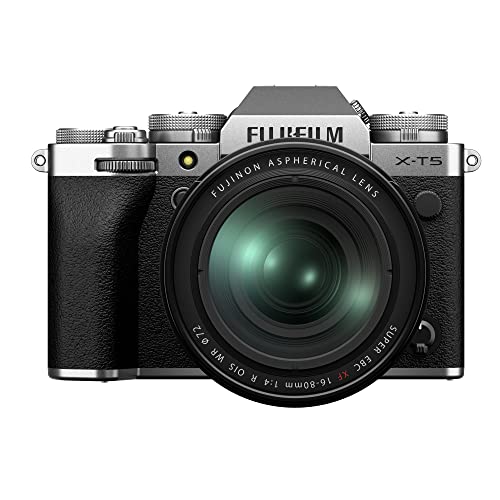
Fujifilm X-H2 review. Compare 108 technical specifications and user reviews to see how it ranks among cameras and if it is worth buying.
Overall score
What it is: An overall evaluation of the camera's quality, based on technical analyses and user reviews.
When it matters: When you need a quick reference to identify the best cameras on the market.
Score components:
90.0%
Technical Score
10.0%
User score
Technical Score
What it is: An assessment of the camera's technical performance, covering eight key areas: image quality, autofocus, video features, stabilization, lens compatibility, connectivity, battery, and design.
When it matters: When you want to compare cameras based on technical performance and available features.
Score components:
28.0%
Sensor & Image
25.0%
Photo Features
18.0%
Video & Audio
14.0%
Display & Design
8.0%
Battery & Power
7.0%
Connectivity & Storage
User score
What it is: A rating that combines user reviews and the total number of reviews received by the camera.
When it matters: When real-world owner satisfaction and review volume matter to your decision.
Score components:
70.0%
User reviews
30.0%
Popularity
Score components:
25.0%
Sensor size
20.0%
Main camera megapixels
20.0%
Dual card slots
15.0%
N. of focus points
10.0%
RAW photo capture
10.0%
Phase-detection autofocus (photos)
Score components:
35.0%
Weight
30.0%
Battery life (CIPA)
20.0%
Sensor-shift stabilization
15.0%
GPS
Score components:
30.0%
Price
20.0%
Weight
20.0%
AF tracking
20.0%
Battery life (CIPA)
10.0%
Touchscreen
Score components:
30.0%
Main camera megapixels
25.0%
Sensor size
20.0%
Main camera pixel size
15.0%
Sensor-shift stabilization
10.0%
RAW photo capture
Score components:
30.0%
Weight
25.0%
Thickness
20.0%
AF low-light sensitivity
15.0%
Sensor-shift stabilization
10.0%
Eye detection AF (human)
Score components:
30.0%
Sensor size
25.0%
Main camera pixel size
20.0%
Eye detection AF (human)
15.0%
Main camera megapixels
10.0%
Sensor-shift stabilization
Score components:
30.0%
Weight
25.0%
Battery life (CIPA)
20.0%
Min operating temperature
15.0%
Sensor-shift stabilization
10.0%
GPS
Available: ranking among products currently available (including other versions of this product).
All: ranking among all products in the database.
#2 in Best Fujifilm Cameras
#16 in Best Vlogging Cameras
#16 in Best Cameras for YouTube
#19 in Best Cameras
#19 in Best Digital Cameras
#19 in Best Mirrorless Cameras
#19 in Best 4K Cameras
#19 in Best Cameras for Portraits
#497 in Best Cameras for Hiking
What it is: An assessment of the camera's technical performance, covering eight key areas: image quality, autofocus, video features, stabilization, lens compatibility, connectivity, battery, and design.
When it matters: When you want to compare cameras based on technical performance and available features.
Score components:
28.0%
Sensor & Image
25.0%
Photo Features
18.0%
Video & Audio
14.0%
Display & Design
8.0%
Battery & Power
7.0%
Connectivity & Storage
What it is: A rating that combines user reviews and the total number of reviews received by the camera.
When it matters: When real-world owner satisfaction and review volume matter to your decision.
Score components:
70.0%
User reviews
30.0%
Popularity
What it is: An indicator that combines the camera's overall rating with its cost.
When it matters: When you want to know how much overall quality you get for the price.
Score components:
60.0%
Overall score
40.0%
Price
Importance: HIGH
Good value: Full frame or larger
Importance: HIGH
Good value: At least 20 MP
Importance: HIGH
Good value: At least 3.5 µm
Importance: LOW
Importance: MEDIUM
Good value: At least ISO 25,600
Importance: MEDIUM
Importance: MEDIUM
Good value: At least 14-bit
Importance: LOW
Importance: LOW
Importance: LOW
Importance: LOW
Importance: LOW
Importance: LOW
Importance: LOW
Importance: LOW
Importance: MEDIUM
Importance: LOW
Importance: LOW
Importance: LOW
Importance: LOW
Importance: LOW
Importance: HIGH
Good value: At least 200 points
Importance: HIGH
Importance: MEDIUM
Importance: LOW
Importance: LOW
Importance: MEDIUM
Importance: MEDIUM
Importance: HIGH
Good value: At least 5 stops
Importance: LOW
Importance: MEDIUM
Good value: At least 10 fps
Importance: LOW
Importance: LOW
Importance: LOW
Importance: LOW
Importance: LOW
Importance: LOW
Importance: LOW
Importance: LOW
Importance: LOW
Importance: LOW
Importance: LOW
Importance: LOW
Importance: LOW
Importance: LOW
Importance: LOW
Importance: LOW
Good value: At least 200,000 actuations
Importance: LOW
Good value: At least 10x
Importance: HIGH
Good value: At least 3840 px
Importance: MEDIUM
Good value: At least 200 Mbps
Importance: MEDIUM
Good value: At least 10-bit
Importance: LOW
Importance: LOW
Importance: LOW
Importance: LOW
Importance: LOW
Importance: LOW
Importance: LOW
Good value: At least 30 min
Importance: LOW
Importance: LOW
Importance: LOW
Importance: LOW
Importance: LOW
Good value: At least 2 microphones
Importance: LOW
Importance: LOW
Importance: LOW
Importance: LOW
Importance: MEDIUM
Good value: 500 g or less
Importance: LOW
Importance: LOW
Importance: LOW
Importance: MEDIUM
Importance: MEDIUM
Good value: At least 2.36 million dots
Importance: LOW
Good value: 100%
Importance: LOW
Importance: LOW
Good value: At least 120 Hz
Importance: MEDIUM
Good value: At least 3 in
Importance: LOW
Importance: LOW
Importance: LOW
Importance: LOW
Importance: LOW
Importance: LOW
Importance: LOW
Good value: At least 10 m
Importance: LOW
Importance: LOW
Importance: LOW
Importance: LOW
Importance: MEDIUM
Good value: At least 400 shots
Importance: LOW
Good value: At least 1,500 mAh
Importance: LOW
Importance: LOW
Importance: LOW
Importance: LOW
Importance: LOW
Importance: LOW
Importance: LOW
Importance: LOW
Importance: LOW
Importance: LOW
Importance: LOW
Importance: LOW
Importance: LOW
Importance: LOW
Importance: LOW
Importance: LOW
Importance: LOW
Importance: LOW
Importance: HIGH
Good value: At least 200 points
Importance: HIGH
Good value: At least 3840 px
Importance: MEDIUM
Importance: HIGH
Importance: HIGH
Good value: At least 20 MP
Importance: MEDIUM
Good value: At least 200 Mbps
Importance: MEDIUM
Good value: At least 10 fps
Importance: HIGH
Good value: At least 5 stops
Importance: MEDIUM
Good value: 500 g or less
Importance: LOW
Importance: LOW
Importance: LOW
Importance: LOW
The DPReview in-depth review awards the Fujifilm X-H2 an 89% score, praising it as a high-resolution 40.2-megapixel APS-C powerhouse ideal for studio and landscape photography. Key pros include exceptional image quality, a 160MP pixel-shift mode, robust build, 7-stop IBIS, and internal 8K/30p video capabilities. Conversely, the review notes the non-stacked sensor has a slow readout speed, leading to significant rolling shutter effects unsuitable for fast action. Furthermore, while featuring AI subject tracking, the autofocus accuracy and tenacity still show room for improvement compared to industry competitors. DPReview
In his review, Dustin Abbott describes the Fujifilm X-H2 as a professional-grade, "jack-of-all-trades" camera offering high-end capabilities similar to full-frame systems, yet at a lower price point. Key strengths highlighted include exceptional image detail from the 40.2-megapixel X-Trans CMOS 5 HR sensor, excellent noise control up to ISO 6400, a robust, weather-sealed body, effective 7-stop in-body image stabilization (IBIS), and capable 8K 30p internal ProRes video recording. YouTube · However, the review notes significant limitations, most notably the noticeable rolling shutter distortion during fast pans in electronic shutter mode, due to the non-stacked sensor design. Abbott further observes that while the intelligent hybrid autofocus system is accurate, it lacks the blistering speed found in competing systems, and the high-resolution sensor places heavy demands on lenses, requiring superior glass to achieve optimal results. YouTube
The FUJIFILM X-H2 is a highly versatile APS-C mirrorless camera that balances premium video and photo specifications with an attractive $1,999 price tag, making it a "Swiss Army Knife" for content creators. Built around a newly developed 40.2MP X-Trans CMOS 5 HR back-illuminated sensor and the X-Processor 5, it sets a milestone as the first APS-C camera capable of recording 8K/30p Apple ProRes internally. Key advantages include its flexible internal codec options (ProRes HQ/422/LT and Proxy), excellent 4K oversampled footage from the 8K sensor, and an improved In-Body Image Stabilization (IBIS) system that noticeably outperforms its sibling, the X-H2S. It also introduces a practical "focus meter" assist tool for manual focusing, performs surprisingly well in low light up to ISO 6400 despite high pixel density, and offers a Type A HDMI port and F-Log2 workflow. However, the camera comes with specific trade-offs because it ditches the expensive stacked sensor design found in the X-H2S. The non-stacked configuration results in lower sensor readout speeds, causing a more pronounced rolling shutter effect. Furthermore, filmmakers miss out on 6.2K open gate (3:2) anamorphic...
The Photo Review assessment highlights the Fujifilm X-H2 as a 40-megapixel APS-C flagship, praising its exceptional resolution, 8K video capability, and extensive third-party lens compatibility. Key pros include the high-resolution X-Trans CMOS 5 BSI sensor for detailed stills and robust video versatility. Conversely, the review notes a slower processing speed compared to the stacked-sensor X-H2S, making it less suitable for extreme action photography. Despite this, the camera achieves a 9.0/10 rating for its superior image quality and hybrid performance.
The Fujifilm X-H2 is a high-performance, detail-oriented mirrorless camera within the Fujifilm X-mount ecosystem that retails for around $2,100 to $2,300. Built specifically as a professional hybrid workhorse, it features a robust 23.3-ounce (660 g) body designed to balance large XF zoom and wide-angle lenses smoothly. It houses a 40.2-MP APS-C X-Trans CMOS 5 HR sensor and an X-Processor 5 engine, enabling 8K internal video recording at 30p and a massive buffer capacity capable of capturing over 1,000 compressed RAW images using a CFexpress Type B card slot. In field tests spanning astrophotography, street, and landscape shooting, the camera demonstrated strong dynamic range, high-resolution detailing, a fully articulating touchscreen, and exceptional battery life rated for 540 shots that easily endured long-exposure night sessions. While highly capable of capturing sharp celestial targets like the Orion Nebula and various star clusters, the review notes several performance trade-offs. The primary pros include its robust, weather-ready build quality, highly customizable controls featuring seven dedicated custom modes, and massive 40MP image resolution. On the downside, the cons focus heavily on its steep price point and...
The Fujifilm X-H2 mirrorless camera is a highly capable, advanced-enthusiast to professional-grade flagship model that delivers massive upgrades over its predecessors. Built around a brand-new, back-illuminated 40.2MP X-Trans CMOS 5 HR sensor and a lightning-fast X-Processor 5, it stands as the highest-resolution camera in the history of the X Series. Its core strengths (pros) lie in its superb image quality—particularly for portraits and low-light shooting—and its impressive internal 8K video recording at 30P for up to 160 minutes in AppleProRes. Additionally, the camera boasts an incredibly fast electronic shutter speed of up to 1/180,000 second, deep-learning-powered autofocus that automatically tracks varied subjects, and a welcome hardware upgrade to a 3-inch tilting, touch-sensitive LCD screen alongside a high-resolution EVF. From a design perspective, the X-H2 maintains Fujifilm’s iconic retro styling and familiar control layout, enhanced by a prominent, deep hand grip that provides a solid and comfortable hold despite its slightly chunky form factor. However, the review highlights a few notable drawbacks (cons). Ergonomics have historically taken a backseat compared to rival camera brands on the market, which may deter some...
Fujifilm X-H2 Review Summary The Fujifilm X-H2 redefines the expectations of an APS-C camera system by delivering an extremely compelling, professional-grade body at a highly competitive price point. It features a groundbreaking 40-megapixel X-Trans 5 HR BSI sensor that surpasses most full-frame cameras in resolution and introduces 8K 30p video capability to the APS-C format for the first time. Designed for creators for whom ultimate resolution is everything, the camera includes a crisp 5.76-million-dot EVF, a 1.62-million-dot vari-angle touchscreen, and deep body customization via seven custom dial settings. Notably, it defies typical high-resolution limitations by maintaining a fast 15fps mechanical burst speed and offers an impressive internal heat management system that allows for up to 160 minutes of continuous 8K recording without overheating. Pros & Cons Breakdown 40MP Still Images: Exceptional resolution outperforming almost all APS-C rivals. 160MP Multi-Shot Mode: Pixel-shift technology to merge 20 images via computer software. 8K Video Recording: Long recording times reaching 160 minutes natively at 25°C. Fast Continuous Shooting: Capable of 15fps mechanical and 20fps electronic bursts. Slower Readout & Tracking: Autofocus tracking and sensor...
The Fujifilm X-H2 is a powerful 40-megapixel APS-C hybrid camera that prioritises high-resolution image quality and accessible 8K video recording. Sharing the same durable, weather-sealed body as the speed-focused X-H2S, it features a back-illuminated sensor capable of generating 160-megapixel files via a tripod-based Pixel Shift mode. Stills photographers will benefit from its 15fps mechanical burst shooting, an expanded phase-detect autofocus array with AI subject tracking, and a crisp base sensitivity of 125 ISO. For videographers, the camera breaks ground by recording uncropped 8K video up to 30p internally in ProRes codecs, offering oversampled 4K HQ footage, and including a unique 2x digital zoom feature that maintains native 4K resolution. However, the X-H2 sacrifices speed for its dense resolution, making it less suitable for dedicated action or fast-paced video. Its most significant drawback is a slower sensor readout, which leads to highly visible rolling shutter skewing when panning—particularly in the 8K, 6.2K, and 4K HQ modes. In terms of performance limitations, JPEGs experience aggressive, softening noise reduction at 3200 ISO, the Pixel Shift mode fails when any subject motion is present,...
The Fujifilm X-H2 is a hybrid, high-resolution APS-C camera featuring a 40.2-megapixel sensor that delivers exceptional detail, dynamic range, and robust 8K/30p video recording, along with highly effective IBIS. Pros include its sturdy build, excellent battery life, and high-fidelity video codecs, making it a strong contender for studio and landscape work. RTINGS.com However, the camera suffers from significant rolling shutter artifacts due to a slower sensor readout speed and, unlike the X-H2S, lacks a stacked sensor. Additional cons include occasional autofocus struggles in complex scenes, a bulky form factor, and a tendency to overheat during extended, high-resolution recording sessions.
The digitalkamera.de review highlights the Fujifilm X-H2 as an APS-C powerhouse featuring a 40.2-megapixel sensor, delivering exceptional, crisp image resolution and 8K video capability. Pros include robust weather sealing, a high-resolution 5.76-million-dot EVF, and effective 5-axis IBIS, although the non-stacked sensor causes significant rolling shutter in high-resolution video modes compared to the X-H2S. The analysis also notes that while autofocus is enhanced by AI, it can lack the consistent reliability of top competitors, and the PASM dial layout departs from traditional Fujifilm styling. YouTube
The Fujifilm X-H2 is a powerful 40.2-megapixel APS-C mirrorless camera designed primarily for landscape, portrait, macro, and studio photographers, as well as videographers seeking high resolution. Equipped with the X-Trans CMOS 5 HR sensor and X-Processor 5, it is capable of recording internal 8K/30p Apple ProRes video and includes a "Pixel Shift Multi-Shot" mode that outputs massive 160-megapixel files for still-life work. The camera delivers excellent image quality with a native base of ISO 125 and exceptionally low noise up to ISO 3,200. Its deep-learning AI autofocus excels at tracking animals, faces, and vehicles, while the 5.76-million-dot electronic viewfinder offers an exceptionally clear, lag-free 120 fps viewing experience. Pros & Cons Pros Cons High Resolution: Superb 40.2 MP image quality and internal 8K video capture. Lens Demands: Older or budget lenses show corner softness; 40 MP requires top-tier glass. Advanced Autofokus: Fast, professional-grade subject and animal eye-tracking. Ergonomic Sacrifices: The physical AF-S/AF-C/MF switch was replaced by a less intuitive button. Excellent Viewfinder: Exceptional 5.76-million-dot EVF with 120 fps refresh rate. Fixed Dials: Unlike the X-T4, the front and rear command...
The Fujifilm X-H2 is a top-tier APS-C mirrorless camera that stands out for its high-resolution 40-megapixel sensor (7728x5152 pixels) and fast X-Processor 5 engine. It delivers exceptional image quality and detail that approaches the performance of full-frame cameras when paired with high-quality lenses. Key advantages include a large, highly detailed 5.76-million-dot electronic viewfinder with a 0.80x magnification, an advanced autofocus system with subject recognition for humans, animals, and vehicles, and a fast burst shooting rate of up to 15.5 frames per second using the mechanical shutter. Video capabilities are equally robust, offering 8K recording at 30 fps and support for Apple ProRes on its CFexpress Type B card slot. However, the high pixel density introduces some performance trade-offs at higher sensitivities. While low-light performance is excellent up to ISO 1600, images exhibit a loss of sharpness and a somewhat flat, washed-out appearance at ISO 6400 as the camera's noise reduction algorithms smooth out fine details. Another notable downside is the camera menu structure, which is somewhat confusing and poorly organized. Additionally, unlike its sister model (the X-H2S), the X-H2's sensor...
The Fujifilm X-H2 is a high-resolution, professional-grade APS-C mirrorless camera tailored for photographers and videographers who prioritize image detail over pure burst speed. It features a 40.2-megapixel X-Trans CMOS HR sensor powered by the X-Processor 5, making it the highest-resolution APS-C camera on the market at the time of the review. Key advantages highlighted in the review include its extreme resolution capabilities—boosted by a multi-shift pixel mode that generates massive 160-megapixel photos—and an integrated 5-axis image stabilization system providing up to seven stops of compensation. The camera also earns strong praise for its exceptional autofocus system, 8K/30p video recording in Apple ProRes, dual storage slots (SD and CFexpress Type B), weather-sealed body, intuitive interface with a top status display, and a high-quality viewfinder paired with a fully articulating monitor. Despite achieving an overall "Very Good" rating of 91.3%, the review outlines specific drawbacks and performance compromises compared to its sister model, the X-H2S. Because the high-resolution sensor lacks a stacked design, the X-H2 cannot match the rapid burst shooting speeds of the X-H2S. While it can achieve up to 20...
The Fujifilm X-H2 stands out as a top-tier APS-C camera featuring a highly impressive 40.2 MP X-Trans CMOS 5 HR sensor, delivering a class-leading effective resolution of 36.9 MP at base ISO. Lab testing confirms that this high pixel density does not compromise noise performance or dynamic range, actually outperforming older 26 MP models like the X-T4 in noise management. The camera offers excellent professional handling and connectivity, featuring dual card slots (CFexpress Type B and SD), an advanced 5.76-million-dot electronic viewfinder, and comprehensive ports like full-sized HDMI and USB-C. It provides versatile shooting options, including 15 frames per second (fps) continuous shooting with the mechanical shutter and a highly specialized 160 MP Pixel-Shift mode for static studio environments. Video capabilities are equally robust, supporting resolutions up to 8K at 30p alongside an optional external cooling fan to prevent overheating. However, the high-resolution sensor imposes some physical and performance limitations compared to its speed-focused sibling, the X-H2S. Because the readout speed is slower, the electronic shutter is highly susceptible to rolling shutter distortions on moving targets and banding under pulsed...
The Fujifilm X-H2 is a flagship APS-C mirrorless camera that stands out for its high-resolution 40.2-megapixel sensor, securing the top spot in the publisher's APS-C leaderboard. Tested with the Fujinon XF 56mm f/1.2 R APD lens, the camera delivers exceptional image quality, high contrast, and a wide dynamic range of up to 14 stops at base ISO. It achieves remarkable detail resolution, surpassing 3,000 line pairs per picture height at ISO 400. The camera features an excellent 5.76-megapixel viewfinder, a fully articulating 7.6 cm touchscreen, a top monochrome status display, and robust, weather-sealed ergonomics weighing 660 grams. It also supports dual card slots (SDXC UHS-II and CFexpress) and boasts impressive 8K video recording at 30 fps. However, the review highlights several drawbacks, particularly regarding low-light performance and usability. Due to the high pixel density on the smaller APS-C sensor, image quality and sharpness noticeably drop above ISO 1,600, where noise levels increase and fine details begin to blur. This demanding sensor also requires exceptionally high-quality lenses to unlock its full potential. Compared to its sister model, the X-H2s, the X-H2...
The Frandroid review evaluates the Fujifilm X-H2 as a highly capable and versatile APS-C mirrorless camera that stands out for its resolution and aggressive price-to-performance ratio compared to full-frame rivals. Key advantages highlighted in the review include its impressive 40.2 MP X-Trans sensor, which captures impeccable image detail, and its robust video capabilities, notably supporting internal 8K 30p recording in Apple ProRes HQ. The camera boasts a comfortable, deep grip with a weather-sealed body, an excellent 5-axis in-body image stabilization system, a highly articulate touch screen, and a fast, reliable autofocus system equipped with deep-learning subject tracking. Additionally, it offers a dual memory card slot layout (SD and CFexpress Type B) to easily manage heavy data loads during continuous 15 fps burst shooting. However, the review points out several distinct drawbacks. The high-resolution sensor is not stacked, resulting in a significant rolling shutter effect that causes line distortion during fast panning or action shots, making it less ideal for high-speed sports video than its sibling, the X-H2S. Operating the camera under maximum burst settings or heavy video recording proves labor-intensive...
Fujifilm X-H2 Review Summary The Fujifilm X-H2 is a premium APS-C mirrorless camera that stands out for its ultra-high-resolution 40.2 Mpx X-Trans CMOS 5 HR sensor and impressive 8K 30p video capabilities. The camera delivers exceptional image detail, allowing photographers extensive freedom to crop images without losing quality and make large prints. Despite the massive resolution, ISO performance holds up remarkably well, matching the X-T4 at 3200 and 6400 ISO with cleaner details, and its dynamic range reaches a solid 10.9 stops in RAW. For videographers, it serves as a powerhouse by offering oversampled 4K HQ video, Apple ProRes support, unlimited recording times, and up to 12.4 stops of dynamic range in F-Log 2 without overheating issues. However, the camera has notable limitations, particularly regarding its autofocus system, which relies on improved detection algorithms but lacks the tracking speed and agility found in the sport-oriented X-H2s. To avoid performance bottlenecks and buffer limits during continuous shooting at 15 fps, users are practically required to invest in expensive CF Express Type B cards, as standard SD cards cause the camera to...
The Fujifilm X-H2 mirrorless APS-C camera earns a 4-star rating from Labo Fnac, highly praised for its massive 40.2-megapixel sensor that delivers a perfect 10/10 score in definition. It exhibits excellent low-light performance with a near-perfect 9.7/10 score for daylight sensitivity, demonstrating a brilliant mastery over digital noise reduction. Tested with the XF 16-80mm f/4 R OIS WR kit lens, the camera proves exceptionally versatile for distant subjects, achieving an 8.8/10 score for telephoto usage. Furthermore, it caters well to videographers by supporting high-resolution 8K video recording. In contrast, the high-resolution sensor exposes significant optical flaws, leading to a disappointing 5.5/10 score in optical quality. The lab experts specifically highlighted noticeable vignetting and chromatic aberrations that degrade overall image clarity. Colorimetry also took a hit with a 7.3/10 score due to Fujifilm's highly stylised, non-neutral default colour profile. Performance at wide-angle focal lengths was less impressive at 6.9/10, and despite the strong praise from Fnac customers regarding its ergonomics, the overall package weighs in at a heavy 1,315.7 grams.
The Camerarace review rates the Fujifilm X-H2 a 67/100, highlighting its 40.2-megapixel sensor for high-resolution stills and 8K video. Key pros include exceptional subject-tracking autofocus, a fully articulated screen, and robust weather sealing, making it highly versatile for both action and production. Conversely, the review notes a lower speed rating compared to stacked-sensor competitors due to the dense, non-stacked sensor, alongside a, modern command-dial layout instead of traditional retro dials. The camera requires high-end, sharp lenses to fully utilize its resolution, and it represents a significant investment.
The Fujifilm X-H2 is a highly capable APS-C hybrid camera that balances extreme high-resolution photography with consumer-accessible 8K video recording. It departs from Fujifilm’s traditional retro dial aesthetics in favour of a modern, deeply cushioned grip design and standard mode dials, which ensures an ergonomic layout that balances heavy telephoto lenses effectively. Equipped with a groundbreaking 40-megapixel X-Trans CMOS 5 sensor, the camera delivers incredible detail, massive print potential, and an extensive post-crop margin. Its headline performance features include a maximum electronic shutter speed of 1/180,000 seconds, an advanced phase-detection autofocus that detects humans, animals, and multiple vehicle types, a robust 5-axis in-body image stabilisation offering up to 7 stops of compensation, and a 160MP Pixel Shift Multi-Shot mode for static tripod setups. However, the reviewer points out several notable drawbacks despite the highly competitive €2,249 body-only price. On the video side, while internal Apple ProRes recording (via a dedicated CFexpress Type B slot) and 8K 30fps are major strengths, the highly desired 4K 60fps video triggers a slight image crop, and Cinema 4K tops out at only 30fps. Most...
The Fujifilm X-H2 is a high-resolution powerhouse that breaks records for the APS-C format with its 40-megapixel CMOS sensor. Unlike its high-speed sibling, the X-H2S, this model focuses on detail, making it an ideal choice for landscape, commercial, fashion, and product photography. It also pushes boundaries in video, offering 8K recording capabilities that appeal to hybrid creators. Priced at €2,250 for the body, it provides a more affordable entry point into Fujifilm's professional tier compared to the faster X-H2S. The primary pros of the X-H2 include its unprecedented resolution for its class, competitive pricing within the professional APS-C market, and versatile video features like 8K support. However, some cons and potential concerns identified include questions regarding noise control at high ISOs compared to full-frame cameras, and the polarizing design choice of a fully articulating side-flip screen, which some photographers find less practical for still shooting than traditional tilting screens. Additionally, users must weigh the choice of the X-H2 against the potentially more compact and similarly specced (but then unreleased) X-T5. Are you interested in how the X-H2 compares to specific...
The Fujifilm X-H2 delivers exceptional image quality through its high-resolution 40.2-megapixel APS-C sensor, which pairs surprisingly well with older, classic lenses like the Fujinon XF 35mm f/1.4 and XF 18mm f/2. The reviewer noted outstanding dynamic range at base ISO 125, making it an excellent tool for landscape photography, especially when paired with its highly effective internal image stabilisation. Furthermore, the massive resolution introduces a flexible "cropping culture" where digital crops retain plenty of detail, and the sensor output allows for gallery-quality physical prints up to A3+ and 50x70cm sizes with rich detail extraction. However, the review highlights some inherent limitations tied to its high pixel density. Noise becomes visible at higher sensitivities like ISO 3200, making it less than ideal for low-light shooting with slow lenses, even though its overall noise performance remains remarkably well-managed and comparable to older 24-megapixel sensors. Additionally, older lenses like the XF 18mm f/2 experience a slight deterioration in corner sharpness under the stress of 40 megapixels, and the camera's built-in quick crop modes are restricted solely to JPEG shooting.
The Digital Camera Lens review provides a preliminary, hands-on look at the Fujifilm X-H2, focusing heavily on its market-disrupting 40-megapixel APS-C sensor. The analysis notes that after a hiatus in the megapixel race, Fujifilm has aggressively pushed pixel limits to create a highly specialized tool tailored for studio work, architecture, publicity, and controlled nature photography. The reviewer details comprehensive testing across core operational pillars—comparing changes against the older X-H1—while explicitly examining raw (.RAF) and JPEG file processing, noise controls, dynamic range recovery, mechanical/electronic shutter options, and field performance with the Fujinon XF 16-80mm f/4 zoom lens. The evaluation highlights distinct advantages and disadvantages stemming from this dense sensor architecture. The primary pro is its extreme pixel density of 108,000 pixels per mm², delivering incredible resolution capabilities that closely rival competitive Micro Four Thirds options and intentionally outdates older camera generations. However, the primary con is the inherent baggage of an aggressive "hyper-megapixel" approach, which introduces specific drawbacks in noise control and requires pristine user environments. Additionally, because the non-stacked sensor focuses entirely on resolution, the reviewer lists unpredictable sports tracking...
The Fujifilm X-H2 is an innovative APS-C mirrorless camera built around a high-resolution 40.2-megapixel X-Trans CMOS sensor, making it a highly capable, detailed-oriented tool for both photography and video production. Physically identical to the more expensive, speed-focused X-H2S, it features a robust, weather-sealed DSLR-style body weighing 660g, a logical PASM mode dial, a crisp 5.76-million-dot OLED viewfinder, and a fully articulating 3-inch touchscreen. The camera offers extensive connectivity including full-sized HDMI and USB-C, alongside dual card slots (one SD and one CFexpress Type B) to handle its processing power and enable advanced features like AI-assisted subject tracking autofocus for people, animals, and vehicles. The core advantages (pros) of the X-H2 lie in its magnificent image sharpness, its ability to produce massive 160-megapixel images via Pixel Shift Multi-Shot, and its high-end video capabilities, which include capturing sharp 8K footage at 30 fps and recording in Apple ProRes. However, the camera suffers from notable drawbacks (cons); it struggles under difficult low-light environments where digital noise and softness become an issue, and it requires expensive CFexpress Type B cards to unlock high-demanding functions...
The review from DigitalCámaraLens provides a detailed, studio-based analysis of the Fujifilm X-H2, evaluating its build, operability, resolution, dynamic range, and high-ISO noise performance through standard test series. The testing methodology utilized in-camera processed JPEG files with noise reduction disabled (NR to 0) to directly evaluate raw sensor behavior, later adjusted for brightness and focus in Photoshop-ACR. To provide a concrete performance baseline, the reviewer specifically compared the image results against the older Fujifilm X-H1 across three extreme sensitivity thresholds: ISO 3200, ISO 6400, and ISO 12800. The core advantage highlighted in the analysis is the camera's ability to maintain high image resolution, which forms a vital part of its testing criteria alongside its structural design and operability. However, the primary disadvantage identified in this specific segment is the sensor's handling of noise at high sensitivities when all automated smoothing features are deactivated. By tracking the performance up to ISO 12800, the review highlights that pushing the camera to its upper native limits without noise reduction reveals a noticeable decline in clarity compared to lower ISO baselines.
The Fujifilm X-H2 is a groundbreaking APS-C mirrorless camera featuring a record-breaking 40.2-megapixel non-stacked sensor, making it highly appealing for landscape and studio photographers who require exceptional detail and strong cropping flexibility. Designed with a robust, weather-sealed body identical to the high-speed X-H2S, it delivers solid ergonomics, a fully articulating screen, a high-resolution EVF, and impressive video capabilities including internal 8K recording at 30 FPS. The camera introduces a baseline sensitivity of ISO 125 and a Pixel Shift multi-shot feature that utilizes sensor stabilization to generate massive 160-megapixel DNG files. While the sensor is highly demanding of lens optics, testing shows superb image sharpness when paired with high-quality lenses like the XF 27mm f/2.8 WR and XF 70-300mm zoom, with peak resolution maintained safely between f/4 and f/5.6 before diffraction visibly softens the image at f/11. On the downside, the review highlights that the high pixel density causes a noticeable increase in image noise at higher sensitivities compared to its 26-megapixel sibling, with the X-H2S showing a clear advantage from ISO 6400 onwards. The Pixel Shift mode is heavily criticized...
The Fujifilm X-H2 is an advanced APS-C mirrorless camera featuring a groundbreaking 40.2-megapixel X-Trans CMOS 5HR BSI sensor paired with the high-speed 1GHz X-Processor 5. Designed primarily for landscape, commercial, and high-detail photography, it sets a new resolution standard for its sensor class while delivering surprising high-ISO noise handling and excellent overall battery efficiency. The camera breaks away from traditional Fujifilm retro dial aesthetics in favour of a rugged, DSLR-style layout complete with a useful top E-Ink information display, an electronic shutter speed reaching up to 1/180,000s, and a highly responsive deep-learning autofocus system capable of complex subject recognition. On the video front, it packs serious production power by supporting internal Apple ProRes recording up to 8K resolution at 30fps and offering over 13 stops of dynamic range via F-Log 2. Key Pros and Cons Pro: Exceptional 40.2MP image quality with a Pixel Shift mode that outputs massive 160-megapixel files. Pro: Powerful internal 8K@30fps video capture in Apple ProRes (HQ, standard, and LT) alongside a full-sized HDMI Type-A port. Pro: Excellent ergonomics featuring a deep front grip, a top status...
The FOTO Cult review positions the Fujifilm X-H2 as a professional, high-resolution hybrid camera, highlighting its 40.2-megapixel APS-C sensor, 8K/30p video capability, and robust 7-stop image stabilization. Key strengths include exceptional image detail, a durable, weather-sealed body, and a comfortable grip shared with the X-H2S. Conversely, the review identifies limitations, such as a more noticeable rolling shutter in high-res video modes and higher noise levels at greater ISO, resulting from the non-stacked sensor. Other considerations include the necessity of high-quality lenses to maximize resolution and the, for some, less desirable PASM dial interface.
However, the camera's non-stacked sensor design introduces several performance trade-offs that lean away from action photography. Primary cons include a severe rolling shutter effect and a less fluid electronic viewfinder experience that suffers from a slide-show effect during continuous burst shooting. Its continuous shooting speed drops to a maximum of 13 fps when using the electronic shutter at full resolution, requiring a 1.29x crop to reach 20 fps. High ISO noise performance is also slightly compromised compared to the X-H2S, showing a noticeable difference at 12,800 ISO. Finally, the X-H2 suffers from slightly reduced battery life (540 shots per charge) and lacks the traditional physical dials of older Fujifilm bodies, which some studio photographers might miss.
The Universo Foto review highlights the Fujifilm X-H2 as a complete, top-tier hybrid APS-C camera featuring a high-resolution 40-million-pixel BSI X-Trans CMOS 5HR sensor and the X-Processor 5. The camera offers excellent handling via a magnesium-alloy weather-sealed body with a deep grip, customisable controls, a PSAM mode dial, and a dual card setup including a CFexpress slot to handle internal 8K video recording. In terms of performance, the review notes excellent image stabilization and an incredibly reliable deep-learning autofocus system that tracks faces and eyes flawlessly even during fast actions like basketball, making it highly recommended for landscape photographers seeking massive prints and still life artists leveraging its 160MP multi-shot mode. However, the review outlines specific downsides tied directly to its dense pixel count and non-stacked sensor design. While the camera proves to be perfectly ISO invariant and displays excellent dynamic range—matching the X-T4 by recovering 2 stops of overexposure and 4 stops of underexposure—it struggles at higher sensitivities. Fine digital noise begins to creep in noticeably starting around 3200 ISO, and images become entirely unusable at 12800 ISO due...
The Fujifilm X-H2 is a 40.2MP hybrid mirrorless camera featuring an APS-C X-Trans CMOS 5HR BSI sensor paired with the X-Processor 5, which handles wildlife and wildlife observation exceptionally well despite initial user concerns about noise at high resolutions. Designed with a robust ergonomic build, it features a deep front grip, a rear thumbrest, a top status LCD, a 5.76-million-dot EVF with a 120fps refresh rate, and a 360-degree fully articulating 3-inch screen. The camera also expands its versatility with a Pixel Shift Multi Shot mode that shifts the sensor across 16 RAW exposures to deliver massive 160-megapixel combined images. It is highly capable for video creators, supporting up to 8K resolution at 30fps, 4K oversampled recording, high-speed 240fps video in Full HD, and 10-bit 4:2:2 depth utilizing F-Log2 to secure 13 stops of dynamic range. Key Pros and Cons Pro: Ergonomic Design. Deep front grip and rear thumbrest ensure a secure hold even during vertical shooting. Pro: Advanced Autofocus. Deep Learning AI technology accurately tracks human eyes, animals, birds, and various vehicles. Pro: Low-Light Handling. Tests show the high-resolution...
The Fujifilm X-H2 is highlighted as a record-breaker for the APS-C format, boasting a high-resolution 40-megapixel sensor designed to challenge the quality of larger sensor formats. The review explores whether this massive jump in pixel count offers a true leap in image quality or if there are compromises in other performance areas. Positioned as a versatile tool, the camera aims to bridge the gap between high-end studio work and demanding street photography, maintaining Fujifilm's philosophy of offering tailored "made-to-measure" experiences for different photographic needs. Pros and Cons Pros: The primary advantage is the exceptional 40 Mpxl resolution, which provides incredible detail for an APS-C camera, making it suitable for professional studio environments. It also benefits from Fujifilm's balanced technical ecosystem, offering a "best-in-class" digital balance for those who prefer the APS-C system's size-to-performance ratio. Cons: The review suggests a potential trade-off ("pulling the blanket from one side"), implying that the high resolution may come at the cost of other factors, typically seen as decreased low-light performance or slower processing speeds compared to lower-resolution models like the X-H2S. Additionally, its sophisticated...
The Fujifilm X-H2 is a powerful APS-C mirrorless camera that balances elite photography features with advanced cinema capabilities for €2,249. Built around a newly developed 40.2-megapixel BSI X-Trans CMOS 5 HR sensor and the X-Processor 5, this model shifts the series' focus toward extreme detail and high-resolution imaging. For photographers, it introduces a Pixel Shift Multi-Shot mode capable of combining images into massive 160-megapixel files. For filmmakers, it stands out as the world's first APS-C camera capable of recording internal 8K 30P video in professional Apple ProRes formats (HQ, Standard, and LT). It retains the rugged, weather-sealed physical body of its sister model, the X-H2S, complete with a sharp 5.76-million-dot electronic viewfinder and a dual card slot system accommodating both CFexpress Type B and UHS-II SD cards. The camera excels across several performance metrics but carries a few design trade-offs depending on user needs. Pros include its remarkable image stabilization system (IBIS) offering up to 7 stops of compensation, an ultra-fast maximum electronic shutter speed of 1/180.000 second that eliminates the need for ND filters in bright sunlight, a lowered...
of the FUJIFILM X-H2: High-Resolution Performance and Autofocus Success The FUJIFILM X-H2 marks a shift toward a modern, robust design within the APS-C X Series, prioritising extreme image quality with its 40.2-megapixel backside-illuminated sensor and a fifth-generation processor. Vervoort tested the camera under grueling low-light and smoky conditions at a horror event paired with the FUJINON XF56mm F1.2 R WR lens. The camera excelled, offering exceptionally fast and accurate subject-detection autofocus that tracked eyes and faces in near-total darkness. Key pros identified in the review include impressive color rendition, excellent high-ISO image quality when properly managing the histogram, an updated high-resolution electronic viewfinder without distortion, and a highly efficient 5-axis IBIS system delivering up to seven stops of stabilization. Additional pros highlight the dual card slots (CFexpress Type-B and SD) and a bright tiltable LCD screen that remains perfectly readable under bright sunlight. Ergonomics and Battery Quirks Despite being a highly complete and versatile camera system, the reviewer also pointed out notable design compromises. The primary cons focus on the camera's physical weight and power consumption. The body is noticeably...
The Fujifilm X-H2 is a high-resolution, modern hybrid flagship mirrorless camera featuring a groundbreaking 40.2-megapixel APS-C sensor paired with the powerful X-Processor 5. Geared heavily toward absolute image quality and professional versatility, it stands out as the first APS-C camera capable of recording internal 8K ProRes video at 30p. The camera boasts an advanced 5-axis in-body image stabilisation (IBIS) system providing up to 7 stops of shake correction. It also features a Pixel Shift Multi-Shot mode that allows users to capture massive 160-megapixel files for static commercial or studio work. Reviewers highly praise its robust, weather-sealed build quality, its deep-learning AI autofocus tracking system, and a exceptionally bright 5.76-million-dot electronic viewfinder (EVF). The review highlights several distinct advantages and disadvantages to help buyers decide between the X-H2 and its sister models. Pros include its class-leading raw and HEIF image resolution, excellent dynamic range at its native base ISO 125, superb oversampled 4K video quality, and an aggressive price point that challenges full-frame alternatives at half the cost. However, the cons are notable: the incredibly dense pixel count leads to higher...
The Fujifilm X-H2 delivers outstanding 40.2-megapixel APS-C image quality with sharp details, improved skin tones, and rich colors (especially blues) that rival the more affordable X-T5. Its physical build is a major highlight, featuring a deep, comfortable handgrip, an improved battery life, and a highly responsive autofocus (AF-C) system. A standout feature is the exceptionally well-calibrated 5.6 million-dot Electronic Viewfinder (EVF) and LCD screen, which sync seamlessly to display identical color, brightness, and white balance. Additionally, the camera excels at clean high-ISO performance between 4000 and 6000, handles complex high-contrast lighting beautifully via its Film Simulations and Dynamic Range (DR) settings, and includes a convenient joystick for moving the focus point. However, the reviewer notes several persistent flaws, most notably Fujifilm's ongoing firmware issues with the histogram, which frequently cuts off and fails to display the crucial highlight data while overlapping the highlight screen. For studio photographers, manual flash requires deep menu diving to deactivate specific white balance and exposure previews to avoid a blacked-out display. The shutter button is also critiqued for being overly sensitive to the lightest touch....
Compare