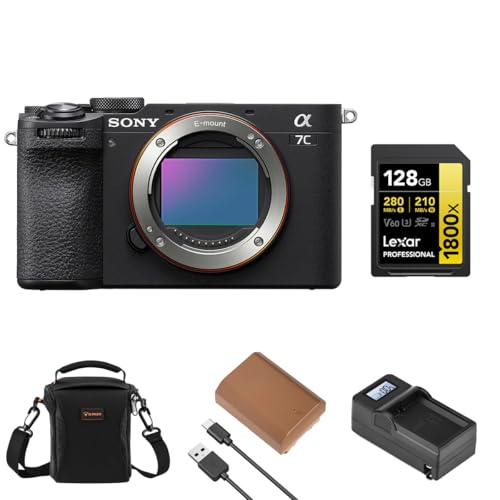
Sony Alpha 7C II review. Compare 108 technical specifications and user reviews to see how it ranks among cameras and if it is worth buying.
Overall score
What it is: An overall evaluation of the camera's quality, based on technical analyses and user reviews.
When it matters: When you need a quick reference to identify the best cameras on the market.
Score components:
90.0%
Technical Score
10.0%
User score
Technical Score
What it is: An assessment of the camera's technical performance, covering eight key areas: image quality, autofocus, video features, stabilization, lens compatibility, connectivity, battery, and design.
When it matters: When you want to compare cameras based on technical performance and available features.
Score components:
28.0%
Sensor & Image
25.0%
Photo Features
18.0%
Video & Audio
14.0%
Display & Design
8.0%
Battery & Power
7.0%
Connectivity & Storage
User score
What it is: A rating that combines user reviews and the total number of reviews received by the camera.
When it matters: When real-world owner satisfaction and review volume matter to your decision.
Score components:
70.0%
User reviews
30.0%
Popularity
Score components:
25.0%
Sensor size
20.0%
Main camera megapixels
20.0%
Dual card slots
15.0%
N. of focus points
10.0%
RAW photo capture
10.0%
Phase-detection autofocus (photos)
Score components:
35.0%
Weight
30.0%
Battery life (CIPA)
20.0%
Sensor-shift stabilization
15.0%
GPS
Score components:
30.0%
Price
20.0%
Weight
20.0%
AF tracking
20.0%
Battery life (CIPA)
10.0%
Touchscreen
Score components:
30.0%
Main camera megapixels
25.0%
Sensor size
20.0%
Main camera pixel size
15.0%
Sensor-shift stabilization
10.0%
RAW photo capture
Score components:
30.0%
Weight
25.0%
Thickness
20.0%
AF low-light sensitivity
15.0%
Sensor-shift stabilization
10.0%
Eye detection AF (human)
Score components:
30.0%
Sensor size
25.0%
Main camera pixel size
20.0%
Eye detection AF (human)
15.0%
Main camera megapixels
10.0%
Sensor-shift stabilization
Score components:
30.0%
Weight
25.0%
Battery life (CIPA)
20.0%
Min operating temperature
15.0%
Sensor-shift stabilization
10.0%
GPS
Available: ranking among products currently available (including other versions of this product).
All: ranking among all products in the database.
#6 in Best Sony Cameras
#14 in Best Vlogging Cameras
#14 in Best Cameras for YouTube
#15 in Best Travel Cameras
#16 in Best Low Light Cameras
#17 in Best Cameras
#17 in Best Digital Cameras
What it is: An assessment of the camera's technical performance, covering eight key areas: image quality, autofocus, video features, stabilization, lens compatibility, connectivity, battery, and design.
When it matters: When you want to compare cameras based on technical performance and available features.
Score components:
28.0%
Sensor & Image
25.0%
Photo Features
18.0%
Video & Audio
14.0%
Display & Design
8.0%
Battery & Power
7.0%
Connectivity & Storage
What it is: A rating that combines user reviews and the total number of reviews received by the camera.
When it matters: When real-world owner satisfaction and review volume matter to your decision.
Score components:
70.0%
User reviews
30.0%
Popularity
What it is: An indicator that combines the camera's overall rating with its cost.
When it matters: When you want to know how much overall quality you get for the price.
Score components:
60.0%
Overall score
40.0%
Price
Importance: HIGH
Good value: Full frame or larger
Importance: HIGH
Good value: At least 20 MP
Importance: HIGH
Good value: At least 3.5 µm
Importance: LOW
Importance: MEDIUM
Good value: At least ISO 25,600
Importance: MEDIUM
Importance: MEDIUM
Good value: At least 14-bit
Importance: LOW
Importance: LOW
Importance: LOW
Importance: LOW
Importance: LOW
Importance: LOW
Importance: LOW
Importance: LOW
Importance: MEDIUM
Importance: LOW
Importance: LOW
Importance: LOW
Importance: LOW
Importance: LOW
Importance: HIGH
Good value: At least 200 points
Importance: HIGH
Importance: MEDIUM
Importance: LOW
Importance: LOW
Importance: MEDIUM
Importance: MEDIUM
Importance: HIGH
Good value: At least 5 stops
Importance: LOW
Importance: MEDIUM
Good value: At least 10 fps
Importance: LOW
Importance: LOW
Importance: LOW
Importance: LOW
Importance: LOW
Importance: LOW
Importance: LOW
Importance: LOW
Importance: LOW
Importance: LOW
Importance: LOW
Importance: LOW
Importance: LOW
Importance: LOW
Importance: LOW
Importance: LOW
Good value: At least 200,000 actuations
Importance: LOW
Good value: At least 10x
Importance: HIGH
Good value: At least 3840 px
Importance: MEDIUM
Good value: At least 200 Mbps
Importance: MEDIUM
Good value: At least 10-bit
Importance: LOW
Importance: LOW
Importance: LOW
Importance: LOW
Importance: LOW
Importance: LOW
Importance: LOW
Good value: At least 30 min
Importance: LOW
Importance: LOW
Importance: LOW
Importance: LOW
Importance: LOW
Good value: At least 2 microphones
Importance: LOW
Importance: LOW
Importance: LOW
Importance: LOW
Importance: MEDIUM
Good value: 500 g or less
Importance: LOW
Importance: LOW
Importance: LOW
Importance: MEDIUM
Importance: MEDIUM
Good value: At least 2.36 million dots
Importance: LOW
Good value: 100%
Importance: LOW
Importance: LOW
Good value: At least 120 Hz
Importance: MEDIUM
Good value: At least 3 in
Importance: LOW
Importance: LOW
Importance: LOW
Importance: LOW
Importance: LOW
Importance: LOW
Importance: LOW
Good value: At least 10 m
Importance: LOW
Importance: LOW
Importance: LOW
Importance: LOW
Importance: MEDIUM
Good value: At least 400 shots
Importance: LOW
Good value: At least 1,500 mAh
Importance: LOW
Importance: LOW
Importance: LOW
Importance: LOW
Importance: LOW
Importance: LOW
Importance: LOW
Importance: LOW
Importance: LOW
Importance: LOW
Importance: LOW
Importance: LOW
Importance: LOW
Importance: LOW
Importance: LOW
Importance: LOW
Importance: LOW
Importance: LOW
Importance: HIGH
Good value: At least 200 points
Importance: MEDIUM
Importance: HIGH
Importance: MEDIUM
Good value: At least ISO 25,600
Importance: MEDIUM
Good value: At least 200 Mbps
Importance: HIGH
Good value: At least 20 MP
Importance: HIGH
Good value: At least 5 stops
Importance: LOW
Importance: LOW
Importance: LOW
Importance: MEDIUM
Good value: 500 g or less
Importance: LOW
Importance: LOW
(Reviews last updated: July 2026)
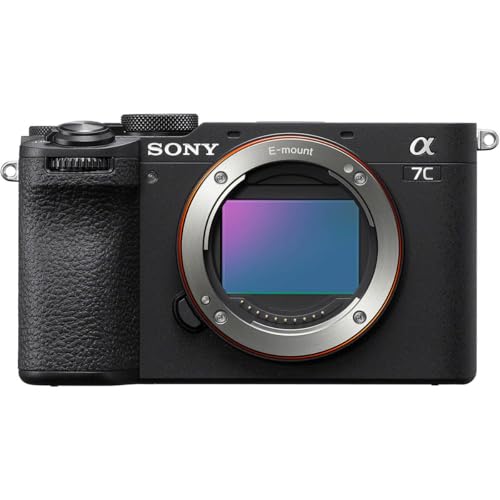
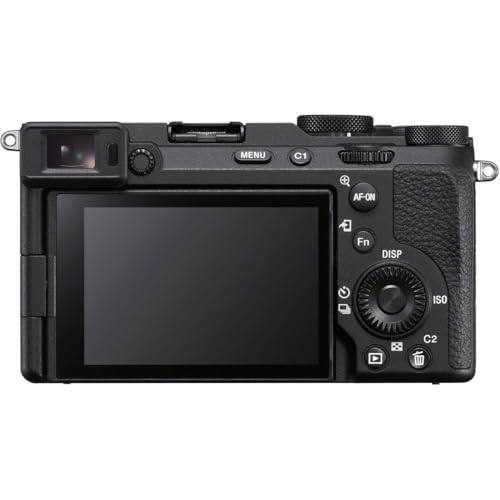
The Sony A7C II is a highly compact, full-frame hybrid camera featuring an upgraded 33-megapixel BSI Exmor R sensor and an AI-driven Bionz XR processor. Tailored for content creators who value both high-quality stills and professional video capabilities, it brings pro-level features into a small, portable rangefinder-style body. Key strengths of the camera include its class-leading autofocus tracking for subjects like humans and animals, excellent dynamic range in RAW files, and top-tier 4K video recording features like S-Log, S-Cinetone, and robust 7-stop in-body image stabilization. However, the camera does suffer from notable design and hardware limitations. The ultra-compact body means that handling becomes awkward and front-heavy when pairing the camera with larger, premium Sony G Master lenses. Additionally, data-conscious creators may find the presence of only a single SD card slot restrictive for backup purposes. The reviewer also noted minor performance inconsistencies, such as unpredictable white balance across matching shots and a tendency for highlights to blow out early within standard JPEG files.
The DPReview evaluation of the Sony a7C II awards it a Silver Award (87% overall score), highlighting it as a highly capable, rangefinder-style hybrid camera with a 33-megapixel BSI sensor, excellent AI-powered autofocus, and 7-stop IBIS. Key improvements in the compact, 10-bit 4:2:2 capable body include a front command dial and a more refined grip. However, the compact form factor leads to trade-offs, including the absence of an AF joystick, a single SD card slot, a small EVF, and lower-resolution LCD screen. Additionally, the camera faces a 1.5x crop for 4k/60p video and lacks a fully mechanical shutter, relying instead on an electronic first-curtain shutter. For full details, visit DPReview. YouTube ·distantlately.
The Sony α7C II is a compact, high-performance, full-frame mirrorless camera featuring a 33-megapixel sensor, superior AI-driven autofocus, and effective in-body image stabilization. It excels in both photography and video, offering 10-bit 4:2:2 capture and good battery life, though it lacks a dedicated focus joystick and features a small, low-resolution EVF. The camera's main drawbacks include a limited buffer for continuous shooting and a significant APS-C crop when recording 4K/60p video.
The Sony a7C II delivers professional-grade full-frame video and image quality in a highly compact, lightweight body comparable in size to an APS-C camera like the a6700. Equipped with a 33.0 MP Exmor R CMOS sensor and a BIONZ XR Processor, it captures detailed oversampled 4K video at 30 fps, full HD up to 120 fps, and boasts over 15 stops of dynamic range via S-Log3 and S-Cinetone profiles. Its standout feature is an advanced AI processing unit that provides exceptional subject-specific tracking and face/eye detection that reliably sticks to moving subjects. Additionally, the camera runs completely silent, suffers no overheating issues during prolonged use, and utilizes a robust NP-FZ100 battery that easily lasts through long shoots. Despite these performance upgrades, the camera has notable ergonomic and technical limitations. A primary drawback for videographers is the single UHS-II SD media card slot, which is awkwardly positioned near the ports, making it highly cumbersome to swap cards when cables are plugged into the HDMI, headphone, or microphone jacks. Furthermore, shooting 4K video at 60 fps forces a restrictive 1.5x Super 35...
The Sony Alpha a7C II is an exceptional, travel-friendly full-frame camera that effectively bridges the gap between APS-C portability and full-frame performance, serving as a highly refined alternative to the larger Sony a7IV. The reviewer highlights several major performance upgrades over the a7IV, including noticeably better In-Body Image Stabilization (IBIS) and superior AI-driven autofocus tracking capable of locking onto subjects from difficult angles. Additionally, the inclusion of a built-in bulb timer eliminates the need for a remote trigger during long exposures, which is a massive quality-of-life win for casual and landscape photographers. This blend of advanced internals, lightweight design, and competitive pricing makes it a highly attractive choice for creators wanting to step up from crop-sensor bodies without carrying a bulky setup. However, the compact form factor of the a7C II requires a few structural and hardware sacrifices that may deter professional shooters. The most notable omissions include the absence of a second memory card slot for real-time redundancy and worse overall ergonomics, meaning the camera can feel front-heavy when paired with large premium lenses. The physical compromises extend to...
The MPB review highlights the Sony A7C II as a versatile, lightweight, rangefinder-style, full-frame camera featuring a 33MP sensor and advanced AI-powered autofocus with real-time tracking. It excels in both photo and video, offering 4K 10-bit 4:2:2 recording, 7-stop IBIS, and an articulating screen, making it a powerful tool for travel creators. However, the compact body introduces compromises, including noticeable rolling shutter in 4K, potential overheating in high temperatures, and poor balance with large lenses. Additionally, the lack of an AF joystick and the inclusion of only one SD card slot may limit professional users. YouTube
The Sony a7C II and a7CR are compact, full-frame mirrorless cameras designed for travel and street photographers who want the power of their larger siblings (the a7 IV and a7R V) in a much smaller form factor. On the positive side, both models deliver exceptional image quality, excellent dynamic range, and strong high-ISO performance, with the a7C II featuring a 34.1-megapixel sensor and the a7CR boasting 62.5 megapixels. They also feature a highly accurate, AI-powered autofocus system with robust subject tracking, an updated and vastly improved menu structure, a dedicated front dial on the grip, and advanced built-in features like focus stacking and pixel-shift high resolution. However, the reviewer notes that the compact chassis severely compromises overall ergonomics, resulting in small buttons, a front dial that is too deeply recessed, and a rear dial that is prone to accidental presses. Major drawbacks include a complete lack of a focus joystick, only a single UHS-II SD card slot, and highly outdated hardware for the low-resolution 1.04 MP LCD screen and the small, uncomfortable electronic viewfinder (EVF). Furthermore, due to slow sensor...
The Sony A7C II is a highly portable full-frame mirrorless camera that balances a 33MP Exmor R CMOS sensor with a BIONZ XR processor to deliver excellent detail, color accuracy, and dynamic range for hybrid shooters. Its absolute standout features include a powerful AI-driven autofocus system with 759 phase-detection points for precision subject tracking, 5-axis in-body image stabilization offering up to 7 stops of compensation, and a fully articulating 3-inch touchscreen ideal for vlogging. For videographers, the camera adds professional-grade 4K recording up to 60p (with a 1.5x crop), support for S-Log3 and HLG profiles, and an AI-based Auto Framing feature. However, the camera's ultra-compact form factor requires several hardware compromises. Significant drawbacks include a small 0.39-inch electronic viewfinder, a cramped handgrip that can feel unbalanced with larger lenses, and a single SD card slot that lacks professional backup redundancy. Additionally, videographers will notice rolling shutter artifacts during quick panning shots, and users may find the limited touchscreen functionality frustrating since it does not fully support menu navigation. Ultimately, it is an exceptional travel and hybrid choice, though users seeking...
The Amateur Photographer review highlights the Sony Alpha A7C II as a versatile 33MP full-frame camera that effectively delivers the performance of the Sony A7 IV in a smaller rangefinder-style body. Key pros include exceptional image quality, effective 5-axis image stabilization, and an advanced AI-powered autofocus system, paired with versatile file management options. However, the review notes that the compact design presents drawbacks, such as reduced handling comfort when paired with larger lenses. Furthermore, the electronic viewfinder is described as relatively small, which may not be ideal for all photographers.
The $2,200 Sony a7C II (33-megapixel) and $3,000 a7CR (61-megapixel) represent a major step up from their entry-level predecessor, borrowing high-end internals from the a7 IV and a7R V respectively. On the positive side, both compact 18-ounce cameras offer excellent travel-friendly ergonomics, a much-needed new front control dial, upgraded UHS-II SD card slots, and robust weather sealing. They feature the powerful Bionz XR processor and Sony's latest AI-driven autofocusing algorithms, allowing the a7C II to actually outperform the more expensive a7 IV in video autofocus performance. Furthermore, their upgraded In-Body Image Stabilization (IBIS) promises up to seven stops of stability, and the electronic first curtain shutter ensures highly stable shooting at slower shutter speeds. However, these structural downsizings come with notable drawbacks. For hardware cons, both models feature a single card slot and lower-tier, one-million-dot rear LCD panels, alongside a 2.36-million-dot EVF that, while clearer than the original, still lacks the sophistication of premium bodies. Because they strictly utilize electronic first curtain shutters, background bokeh can render with a truncated look when pairing the cameras with very bright maximum aperture...
The Sony Alpha 7C II is a compact full-frame camera featuring a 33-megapixel BSI sensor that delivers high resolution, excellent dynamic range, and low noise levels. It features a lightweight, travel-friendly body, improved handling with a front control dial, enhanced 7-stop in-body image stabilization, and advanced AI-powered autofocus, according to the The-Digital-Picture.com review. However, the smaller design results in constraints such as a single SD memory card slot, a small side-mounted electronic viewfinder, and the absence of an autofocus joystick or Pixel Shift Multi Shooting. Despite these limitations, the camera is highly regarded for its portability and performance in a compact form factor, as outlined in the The-Digital-Picture.com review.
The Sony A7C II is a compact, travel-friendly full-frame mirrorless camera that inherits several key features from the chunkier Sony A7 IV, most notably its 33MP sensor and high-performance Bionz XR processor. It delivers strong upgrades in video performance, now supporting 10-bit 4:2:2 4K video at 30p (oversampled from 33MP) and up to 60p with a Super35 crop. Additional pros include advanced AI-powered subject-detection autofocus, video auto-framing capabilities, an improved touchscreen interface with simpler menus, and a refined outer build that introduces a dedicated front control dial and a photo/video switch for easier adjustments. Despite these performance leaps, the camera introduces a few notable compromises, particularly regarding its battery life, which has dropped to a CIPA-rated 540 shots per charge compared to the original A7C's impressive 740 shots. Additionally, while the electronic viewfinder (EVF) features an improved 0.70x magnification, it retains the same somewhat disappointing 2.36 million-dot resolution as its predecessor, trailing behind larger camera models. Action photographers will find that while the continuous shooting speed holds steady at 10fps with an essentially unlimited JPEG buffer, shooting in raw format...
The Drone & Cam review concludes that the Sony A7C II is an exceptional, high-performance hybrid camera that successfully merges professional-grade full-frame capabilities with a highly portable, travel-friendly chassis. Prominent pros highlighted in the assessment include its upgraded 33-megapixel full-frame CMOS sensor and BIONZ XR processor, which jointly deliver spectacular image clarity, wide dynamic range, and strong low-light performance. Creators will also benefit from its robust 5-axis in-body image stabilization and a hyper-accurate 759-point hybrid autofocus system capable of seamless, real-time subject tracking. On the video front, it excels by supporting oversampled 4K recording at 60fps alongside flexible 10-bit 4:2:2 post-production color options. Ergonomically, the magnesium alloy build weighs a mere 525 grams, includes weather-sealing, and boasts a fully tilting touchscreen with customizable controls for smooth operation. However, the review notes a few notable cons that potential buyers should weigh before purchasing. The most apparent drawback is its relatively high price point, which demands a substantial investment from enthusiasts and content creators alike. Additionally, while the camera retains a highly praised, long-lasting battery capacity capable of roughly 520 photos or...
The Sony Alpha 7C II is praised by Digitalkamera.de as a robust, compact full-frame camera featuring a 33-megapixel sensor and advanced AI-driven autofocus. It offers exceptional low-noise image quality and effective 5-axis stabilization, making it a capable tool for travel and daily photography. However, compromises for its small size include a small electronic viewfinder (EVF) and the lack of a dedicated joystick for focus point selection. The camera features a 7.5cm, 1.04-million-dot touchscreen, which some may find lower in resolution, and the grip can feel cramped with larger lenses.
Review Overview The Sony Alpha 7C II is a highly capable full-frame mirrorless camera that balances a remarkably compact, lightweight body with high-end performance features. Weighing just 513 grams without a lens, it is highly portable and well-suited for everyday photography, including portraits, reporting, and travel. The camera integrates a 33-megapixel full-frame sensor paired with a modern BIONZ XR processor, matching the resolution and capturing slightly cleaner details from ISO 400 to 12,800 than the bulkier Sony Alpha 7 IV. Photographers and videographers alike will benefit from its cutting-edge AI-assisted autofocus system, which tracks humans, animals, vehicles, and insects. Additionally, it offers a built-in 5-axis image stabilization system that provides up to 6 stops of compensation in practical use, a physical front control dial for seamless exposure adjustment, and UHD 4K video recording up to 60fps. Pros and Cons While the camera excels in image clarity and portability, it does present a few functional compromises due to its compact form factor. Pros Excellent image sharpness and detail retention across its 33-megapixel resolution. Highly lightweight, compact, and weather-sealed body layout. Advanced...
The fotoMAGAZIN review gives the Sony Alpha 7C II a very good overall score of 87%, praising it as a highly capable and exceptionally compact full-frame system camera. Key pros highlighted in the test include its top-tier, AI-driven hybrid autofocus system that seamlessly tracks people, animals, insects, and various vehicles across 759 phase-detection points. Performance is bolstered by an upgraded 5-axis image stabilizer offering up to seven stops of compensation, an improved ergonomic grip with an extra front control dial, and a fully functional touchscreen menu. Its 33-megapixel sensor delivers superb image quality that maintains high resolution up to ISO 1600, while the Z-battery provides an impressive long runtime of 560 shots per charge. Video capabilities are also strong, supporting 4K video at up to 60p in 10-bit 4:2:2 depth without any artificial recording length limits. However, the review points out several notable cons stemming from its ultra-compact form factor and market positioning. For instance, its 4K/60p video capture is restricted to Super35 mode, resulting in a mandatory 1.5x image crop. The physical interface compromises on advanced ergonomics by omitting...
The Sony Alpha 7C II is a highly compact and lightweight full-frame system camera that weighs just 682 grams with its kit lens, making it an excellent portable option that does not compromise on performance. It features an upgraded 33-megapixel sensor and a powerful BIONZ XR processor paired with a dedicated AI autofocus chip, delivering significantly sharper details and exceptional image quality even in low-light conditions. For videographers, the camera offers high-quality 4K recording at up to 60 frames per second with 10-bit color depth, log formats (S-Log3/HLG), an auto-framing feature, a fully articulating touchscreen display, and an impressive battery life of around two hours during continuous filming. Handling is also improved over its predecessor with an added front control dial on the grip, a dedicated photo/video toggle switch, and a more intuitive, reorganized menu system. The review highlights several distinct pros and cons for prospective buyers. On the positive side, the camera excels with its rapid and highly accurate AI-driven autofocus capable of tracking human postures, animals, and vehicles, alongside its superb top-tier photo and video quality at high...
The review evaluates the Sony Alpha 7C II paired with the Tamron 28-200mm F2.8-5.6 Di III RXD lens as a compact, full-frame travel photography setup during a hike through the former Lehnitz military training grounds. The Sony Alpha 7C II is highly praised for its lightweight body, 33-megapixel resolution that allows for flexible image cropping, and an exceptionally fast, precise autofocus system capable of tracking insects. It also delivers excellent dynamic range, high-ISO performance up to 12,800, and robust video capabilities featuring uncropped 4K30 10-bit internal recording and S-Log support. However, the reviewer notes specific drawbacks: the electronic viewfinder is uncomfortably small for glasses wearers, the placement of the four control dials feels counterintuitive, and video recording suffers from a noticeable rolling shutter effect in 4K30 alongside a mandatory crop in 4K60 mode. The Tamron 28-200mm lens proves to be a highly versatile, bright, and cost-effective all-rounder, performing admirably across landscapes, close-up insect photography, and quick snapshots. Its standout advantage is its fast F2.8 starting aperture, but it lacks built-in optical image stabilization—a deficit mitigated by the Sony body's internal...
The field review of the Sony a7C II on the Netzwerk Fotografie Community highlights its exceptional integration of a 33 MP sensor and advanced AI-powered BIONZ XR processor into a compact, travel-friendly body. Key strengths include, top-tier autofocus, robust 5- LV compensation, and impressive image quality, making it a high-performance, lightweight option. Conversely, the review identifies significant limitations, including a noticeable delay in eye-autofocus under low-contrast conditions and the limitation of a single SD card slot. Furthermore, the 2.35-million dot electronic viewfinder is considered modest compared to, premium alternatives, and the compact ergonomics may not suit all users.
summary of the Sony Alpha 7C II review: Review Summary The Sony Alpha 7C II is a very small and lightweight full-frame camera that matches the excellent image quality of the larger Sony Alpha 7 IV. Its 32.7-megapixel sensor captures amazing details and keeps image noise very low, even when shooting in darker settings up to ISO 3,200 or 6,400. The camera also features a robust magnesium body that is protected against dust and moisture. Users will love its built-in image stabilizer that lets you take sharp photos without a tripod, as well as its incredibly fast, AI-powered autofocus that easily tracks people, animals, and vehicles. For video creators, it records high-quality 4K videos and ultra-smooth Full-HD slow-motion clips. On the downside, the camera's compact design comes with a small grip, making it uncomfortable to hold when using large or heavy lenses unless you buy an extra add-on grip. While it can shoot at a fast speed of 10 frames per second, it can only keep this up for a long time if you take JPEG photos; high-quality RAW photo...
The Sony Alpha 7C II and Alpha 7CR expand Sony's compact full-frame camera line-up by upgrading the original A7C design with improved ergonomics, a fully articulating touchscreen display, a front control dial, and a customisable C-button. Both models feature an advanced 5-axis image stabilisation system offering up to 7 stops of compensation, alongside a powerful BIONZ XR processor and an AI-driven real-time tracking autofocus system. A key strength of both systems is their versatility for creative workflows, offering 10 Creative Looks, auto-framing capabilities, and the option to shoot in lossless compressed RAW or HEIF formats. However, a notable physical limitation shared by both compact bodies is the restriction to a single UHS-II card slot. The primary distinction lies in their sensor resolutions and intended use cases, dividing them into distinct performance tiers. The budget-friendly A7C II utilizes a 33.3-megapixel sensor—adapted from the A7 IV—making it a well-rounded hybrid tool for enthusiast photography, everyday vacation use, and street shooting. In contrast, the premium A7CR boasts a massive 61-megapixel sensor matching the flagship A7R V, targeting professional landscape, architectural, fashion, and commercial...
The Sony Alpha 7C II is a compact full-frame mirrorless camera designed as a highly portable yet powerful option for travel photographers and videographers. It shares several core components with the larger Alpha 7 IV, including a 33-megapixel back-illuminated Exmor R CMOS sensor and the BIONZ XR image processor. The camera achieved an overall "SUPER" rating of 92.2%, scoring exceptionally high in image quality (96.3%) and video features (93.2%). It includes modern upgrades like a fully articulating screen, 10 frames-per-second continuous shooting, and 4K video recording at up to 60 frames per second. The review highlights several key strengths and weaknesses of the device. On the positive side, it features an advanced AI-supported autofocus system with 759 phase-detection points that tracks people, animals, and vehicles in real time. It also boasts outstanding image quality, a built-in 7-stop image stabilizer, and comprehensive video functions. On the downside, the camera is limited to a single memory card slot due to its small form factor. Additionally, the reviewer criticises the low resolution of the rear monitor as a significant disappointment given the camera's...
The Sony Alpha 7C II is an ultra-compact full-frame mirrorless camera measuring 12.4 x 7.1 x 6.4 cm and weighing just 514g, which mirrors the portability of smaller APS-C models. Built with a high-quality magnesium alloy frame and weather sealing, it packs an advanced AI Processing Unit that delivers exceptional real-time subject tracking for humans, animals, vehicles, and insects. Key strengths include extensive button customization, 4K video recording with excellent oversampled image quality, 4:2:2 10-bit color depth support, and a fully articulating 3.0-inch touchscreen. However, its small size leads to several notable drawbacks. The ergonomic grip is too small for average-sized hands, causing the pinky finger to hang in the air unless users purchase the expensive €180 GP-X2 extension grip. Additionally, the electronic viewfinder is quite small with a relatively low resolution of 2.36 million subpixels, which complicates critical focus checking. Physical handling is further limited by the complete omission of an autofocus control joystick. Finally, while shooting 4K video at 50p or 60p, the camera incurs a significant crop factor by switching to an APS-C sensor area.
The Sony A7C II is a versatile, lightweight 33-megapixel full-frame camera lauded for its AI-powered autofocus, strong low-light performance, and 7-stop in-body image stabilization, making it ideal for travel photography. It also supports 10-bit 4:2:2 internal video recording and advanced S-Log profiles for creators. However, the camera features a smaller RAW buffer compared to its predecessor and an electronic viewfinder that blacks out during 10fps high-speed shooting. Additionally, its size requires a dedicated bag, limiting its portability compared to truly compact options.
The Sony Alpha 7C II (A7C II) is a highly compact, versatile full-frame mirrorless camera that serves as a condensed version of the popular Sony A7 IV. It features a 33MP BSI CMOS sensor and inherits the advanced AI-driven autofocus tracking system from the high-end A7R V. This allows for highly responsive detection of humans, animals, birds, insects, and vehicles. Image quality is excellent, delivering warm and rich color rendering, high dynamic range, and clean high-ISO performance usable up to ISO 12,800. Additionally, it features an upgraded 5-axis in-body image stabilization system offering up to 7 stops of compensation, alongside useful video capabilities like Auto Framing, S-Log 3, and 4K video capabilities. Despite these strengths, the A7C II suffers from notable physical and performance compromises to maintain its small footprint. Key downsides include an outdated, cramped electronic viewfinder (EVF) and the omission of a physical joystick for AF point selection. Performance is throttled by a modest 10 fps burst rate paired with a very shallow, restrictive buffer memory (culminating in just 20 images for compressed RAW files). Videographers must contend...
The Sony Alpha 7C II (A7C II) is a highly compact and lightweight 24x36 full-frame mirrorless camera that integrates a high-performance 33-megapixel BSI CMOS sensor and the powerful Bionz XR processor into a portable body layout. Tailored perfectly for street and travel photography, it delivers exceptional photo quality, impressive dynamic range, and excellent noise control up to ISO 1600, with highly usable files extending up to ISO 6400. A standout feature is its dedicated AI tracking chip, which dramatically elevates subject recognition and autofocus tracking for eyes, faces, birds, and vehicles. When paired with smaller prime lenses, such as the FE 40mm f/2.5 G, the camera offers fantastic ergonomics and very sharp, easily gradable raw files. However, the downscaled form factor comes with notable compromises, most critically a cramped and mediocre 2.36 Mpx electronic viewfinder that hinders the overall shooting experience. Physical handling becomes noticeably unbalanced when using larger, heavier zoom lenses unless users purchase the optional GP-X2 grip accessory. For video creators, the camera suffers from a heavy 1.5x crop factor when shooting in 4K at 60p, alongside a...
The Fnac Lab review awards the Sony Alpha 7C II a perfect 5 out of 5 stars, highly praising its incredible versatility as a compact, lightweight full-frame hybrid camera that excels equally at photography and video production. Equipped with a 33-megapixel sensor, the camera delivers impeccable optical quality completely free of artifacts and achieves near-flawless, vibrant color accuracy (scoring 9 out of 10). Its high resolution provides immense flexibility for photographers to crop tightly into their images without sacrificing sharpness. Lab testing confirms that daylight sensitivity is highly reliable, scoring an impressive 8.3, while the camera's overall premium build and seamless performance earned enthusiastic recommendations from professional and travel-focused user reviews alike. Despite its high praise, the review highlights a significant drawback regarding its low-light performance, where digital noise inevitably creeps into the image, resulting in a low technical score of 4 out of 10 for low-light environments. Additionally, compiled customer feedback notes a few minor ergonomic challenges, pointing out that the camera's ultra-compact footprint yields a somewhat average grip and an interface that requires a learning curve. Some users...
The Sony Alpha 7C II is a highly compact, full-frame hybrid camera that successfully inherits the excellent 33-megapixel BSI CMOS sensor and image quality of the Sony A7 IV. It is praised for its lightweight magnesium-alloy body (weighing just 514g with battery and card), deeper ergonomic grip compared to its predecessor, and impressive 5-axis in-body image stabilisation. Driven by a dual Bionz XR processor and enhanced with AI capabilities, the camera delivers an outstanding, highly responsive autofocus system that excels at tracking human subjects and predicting motion. Additionally, it uses the long-lasting NP-FZ100 battery (delivering over 500 shots per charge) and supports Power Delivery charging via USB-C. However, the camera makes significant compromises to achieve its compact form factor, receiving a total review score of 7/10. Its largest flaws are a small, uncomfortable 2.36 Mpx OLED viewfinder and a low-resolution 3-inch LCD rear screen. Performance is bottlenecked by the absence of a joystick, a single SD UHS-II card slot, and a shallow buffer that limits burst shooting to 20 images in RAW + Jpeg. Video creators face frustrating restrictions, such...
The Sony A7C II and A7CR pack the full-frame capabilities of the A7 IV and A7R V into lighter, more compact bodies aimed at a broader consumer audience. The A7C II (33 MP) introduces updated 2023 technologies like AI-driven autofocus, real-time tracking, internal LUT management, and auto-framing, outperforming the older A7 IV tech while costing €350 less. Meanwhile, the A7CR offers the same massive 61 MP resolution and image quality as the high-end A7R V but at a significant savings of €800. Both cameras deliver exceptional, highly configurable image quality, zero overheating issues during extended 4K video recording, and improved 7-stop image stabilisation. However, achieving this ultra-portable form factor requires accepting several design and performance compromises. Users lose ergonomics due to a shallower grip, fewer customisable buttons, and the removal of the physical joystick. Storage is limited to a single SD card slot, completely dropping the professional dual-slot setup and CF-Express Type A compatibility, which directly limits the continuous shooting buffer. Furthermore, the electronic viewfinder is smaller and less comfortable for glasses-wearers, the mechanical shutter speed drops from 1/8000s to...
The Sony A7C II review on Droneandcam highlights the camera’s 33-megapixel full-frame sensor and impressive 759-point real-time tracking autofocus, all housed in a compact, travel-friendly body. Key strengths include 5-axis in-body stabilization, excellent low-light noise management, and high-performance capabilities similar to larger models. droneandcam.com Conversely, the review notes drawbacks such as a low-resolution electronic viewfinder with limited magnification and a lack of a physical joystick for focus point control. Additionally, performance is constrained by a single SD card slot, a 10 fps maximum burst speed, and a limited memory buffer.
The Sony a7C II, as reviewed on MPB France, is presented as a highly capable, compact full-frame hybrid, ideal for travel with its 33-megapixel sensor and advanced real-time autofocus tracking. Its strengths lie in its versatile performance, offering 4K 60p 10-bit video, robust in-body image stabilization, and a user-friendly design for switching between stills and video. However, the review notes that while compact, the camera does not fit into standard pockets, and it suffers from a noticeable rolling shutter effect, a cropped 4K/60p mode, and a narrow electronic viewfinder. Performance limitations also include a 10 fps burst speed and noticeable grain at higher ISO levels, making it less ideal for specialized high-speed action photography.
The Sony Alpha 7C II (tested with the FE 28-60mm f/4-5.6 standard kit lens) is highly praised as an exceptionally compact and discreet full-frame mirrorless camera that packs the performance of full-sized bodies into a highly portable frame. Labo Fnac’s technical evaluations awarded the device a perfect 10/10 score for its optical quality, sensor definition, and color rendering. The high-resolution sensor delivers pristine, vibrant, and distortion-free images that cater to both advanced hobbyists and professional photographers who want to travel light without sacrificing image quality. Despite its stellar daytime performance, the camera struggles significantly in low-light environments, receiving a low technical rating of 3/10 due to noticeable digital noise creeping into darker shots. Additionally, customer feedback highlights real-world hardware compromises made to achieve its compact footprint. Users note that the viewfinder lacks high-definition clarity, the device lacks an included standalone battery charger, and the overall battery life feels somewhat limited during extended shooting sessions.
The Sony Alpha 7C II (A7C II) is a compact, lightweight 33-megapixel full-frame mirrorless camera that packs the powerful Bionz XR processor from the popular A7 IV into a portable body weighing just 514g. It excels in image quality, delivering high-detailed photos with excellent dynamic range and strong noise management up to ISO 6400. Its standout feature is an advanced autofocus system driven by a dedicated AI processing chip, offering 759 AF points and highly reliable tracking for humans, animals, birds, and insects. Additionally, it features highly effective 5-axis in-body image stabilisation providing up to 7 stops of compensation, making it an ideal choice for street, travel, and reportage photography. Despite its strong performance, the camera makes several ergonomic and technical concessions to maintain its small size. The physical interface lacks a joystick for focus point selection, and the electronic viewfinder is notably small with a low resolution of 2.36 million dots and 0.7x magnification. Photographers shooting action will find the burst rate limited to 10 frames per second with a modest buffer of 45 compressed RAW files. Storage is...
The review from Drone & Cam highlights the Sony A7C II as a highly capable, hybrid full-frame mirrorless camera that successfully packs professional-tier performance into a remarkably compact frame. Weighing roughly 525 grams and measuring 124 x 71.1 x 63.4 mm, its magnesium alloy chassis offers robust, weather-sealed durability ideal for travel content creators. Key advantages noted in the review include its 33-megapixel full-frame CMOS sensor and BIONZ XR processor, which yield brilliant sharpness, vivid colour profiles, and an expansive dynamic range even in low-light environments. Furthermore, its advanced 759-point hybrid autofocus system delivers rapid real-time tracking, complemented effectively by an integrated 5-axis image stabilization system. On the video front, it provides creators with flexible post-production options by shooting 4K video at 60fps and supporting high-efficiency 10-bit 4:2:2 codecs. Despite these robust technical accomplishments, the review and market context pinpoint a few distinct drawbacks. A primary concern for potential buyers is the camera's relatively high retail price, making it a substantial financial investment. Additionally, while the review highly praises the intuitive layout of the physical buttons and the vari-angle touchscreen...
based on the provided text: The Sony a7C II is a compact full-frame rangefinder-style camera featuring a 33-megapixel Exmor R CMOS sensor, a Bionz XR processor, and an updated AI processing unit derived from the older a7 IV. Its lightweight magnesium-alloy body is highly portable, measuring 124.0 x 71.1 x 63.4 mm and weighing 514 grams. Notable pros include excellent daytime image quality with vivid, realistic colours, 7 stops of in-body image stabilisation (IBIS), and a highly reliable 759-point AI-assisted autofocus system. Furthermore, it introduces a vastly improved, more intuitive touch user interface, shoots up to 10 frames per second, and records crisp 10-bit video in 4K at 30p or Full HD at 120p with decent 530+ shot battery life. However, the camera has several physical and performance-related cons that may deter professional users. Ergonomically, the grip can feel too small for large hands, and the design lacks a dedicated physical joystick for navigating menus or shifting focus points. The 3-inch LCD touch screen is prone to accidental input that shifts the focus point unexpectedly, and its overall resolution feels...
The MPB review highlights the Sony a7C II as an outstanding, lightweight full-frame travel camera, boasting an upgraded 33-megapixel sensor, exceptional AI-driven autofocus, and highly effective 7-stop image stabilization. Its improved ergonomics—featuring a front control dial and deeper grip—enhance handling, while 4K video recording up to 60p at 10-bit provides significant creative versatility. However, the compact design necessitates compromises, including a single SD card slot, a 1.5x crop when shooting 4K/60p, and a lack of continuous live view during high-speed bursts. While the camera offers high-end performance, users may find the resolution of the EVF and rear screen underwhelming, and the body, while small, is not truly pocket-sized.
The Sony Alpha 7C II and Alpha 7C R compress the capabilities of their larger siblings, the Alpha 7 IV and Alpha 7R V, into much smaller and lighter bodies. The a7C II features a 33-megapixel sensor and matches the video performance of the a7 IV, supporting up to 4K 60p recording in 10-bit 4:2:2 (with a 1.5x crop). Meanwhile, the higher-end a7C R features a 61-megapixel sensor, shoots continuous bursts up to 8 frames per second, and offers 16-bit RAW video output to external recorders. Both cameras benefit from a dedicated AI processing chip that significantly enhances subject recognition, autofocus tracking speed, and adds auto-framing capabilities. A major pro of both models is the advanced AI autofocus, which outpaces older standard models in subject tracking, alongside an improved in-body image stabilisation (IBIS) system that performs up to 1.5 stops better than the a7 IV. However, their compact size introduces noticeable cons: both cameras offer only a single UHS-II SD card slot and lack support for a traditional battery grip. The most prominent complaint is the low-resolution electronic viewfinder (EVF)...
The FOTO Cult review identifies the Sony Alfa 7C Mark II as a compact, high-performance, full-frame camera acting as a smaller alternative to the A7 IV, highlighting its 33-megapixel sensor and dedicated AI processing unit for superior autofocus. Key strengths include 7-stop image stabilization, improved ergonomics with a front dial, and 10-bit 4:2:2 4K video capabilities. However, limitations identified in the review include the lack of an autofocus joystick, the presence of only a single SD card slot, and a relatively low-resolution electronic viewfinder. Furthermore, the compact, rangefinder-style design can feel unbalanced with larger lenses, and 4K 60p video shooting introduces an APS-C crop.
The Sony A7C II is a highly compact, full-frame mirrorless camera that packs the powerful 33 MP Exmor R sensor and BIONZ XR processor inherited from the popular Sony A7 IV into a lightweight 514-gram body. It delivers exceptional photo quality with natural skin tones and strong low-light performance up to 8,000 ISO, alongside high-quality video capabilities including 4K at 30 fps oversampled from 7K and 4:2:2 10-bit S-Log3 recording. The camera features significant internal upgrades over its predecessor, including a revamped card-based menu system, a dedicated AI Processing Unit that ensures incredibly fast and reliable subject tracking, an impressive 5-axis IBIS system providing up to 7 stops of stabilization, and a highly satisfactory battery life yielding over 530 shots per charge. However, the review highlights several compromises made to achieve this portable form factor. On the downside, the physical unboxing experience is disappointing, missing both an external charger and a basic USB-C cable. While the camera features a sleek design, its overall ergonomics are not ideal for intensive professional use; it lacks a dedicated joystick for selecting focus points,...
The Foto Ema review highlights the Sony a7C II as an exceptionally versatile, powerful, and lightweight hybrid mirrorless camera that excels in real-world street photography and visual storytelling. Tested on the streets of Naples, the camera's core strengths lie in its compact form factor and the inclusion of the 33-megapixel full-frame sensor from the Sony a7 IV, paired with an advanced AI processing unit. These features provide a surprising 15-stop dynamic range and superb image detail, allowing the camera to act as a perfect ally under difficult lighting, such as harsh direct sunlight or deep alley shadows. Despite its high-level performance, the review notes that the camera remains underrated and underappreciated in the Italian market, even though it offers uncompromising capabilities for travel documentation and 4K video. The main advantages detailed are its lightweight mobility, excellent hybrid performance for both stills and video, and superior handling in challenging lighting conditions. Conversely, the primary drawbacks implied are its slow adoption or lack of recognition among local creators, alongside the inherent physical limitations of choosing a compact body over standard studio gear.
The MPB review highlights the Sony A7C II as a versatile, rangefinder-style, 33-megapixel full-frame camera ideal for travel and hybrid content creation. It features 15 stops of dynamic range, 5-axis IBIS, and 10-bit 4:2:2 video, utilizing AI-driven autofocus for high-speed subject tracking. Key advantages include the compact, portable design with an improved front dial and enhanced EVF, though it is not strictly pocketable. Notable limitations, or cons, include a visible rolling shutter effect during fast panning and the lack of dual card slots, making it less suitable for critical, high-stakes commercial work.
The Sony a7C II review by Francesco Giardino praises this camera as a compact yet highly powerful tool for hybrid creators. A major pro is its new 33-megapixel full-frame sensor (taken from the A7 IV) which is now boosted with advanced AI capabilities for smarter performance. The camera also features smart design upgrades like a front control dial, an extra custom button, and a dedicated switch to swap between photo, video, and slow-motion modes. For video, it excels by shooting 4K video at 30 fps using the full 7K sensor, or 4K at 60 fps in Super35 mode. However, the reviewer points out a few notable cons that keep it from being absolutely perfect. The camera is limited by a single SD memory card slot, which might worry creators who want instant backups while shooting. Additionally, it uses a mini HDMI port instead of a full-sized one, which can be less reliable for external monitors. Lastly, shooting 4K at 60 fps requires a sensor crop, meaning you lose some of your wide-angle view. Despite these limits, the review concludes it...
The Saggiamente review highlights the Sony a7C II and a7C R as high-performance full-frame cameras in compact bodies, featuring improved ergonomics, 7-step IBIS, and advanced AI-driven autofocus. The a7C II offers a versatile 33 MP sensor, while the a7C R packs a 61 MP sensor into a lightweight frame, both aimed at blending professional-grade imaging with portability. Key compromises include the lack of a dedicated AF joystick, small electronic viewfinders, a single SD card slot, and, in the case of the a7C R, potential for chromatic noise, according to the review. Despite these limitations, the cameras are praised for their robust performance and thoughtful design choices, such as the included extension grip for the high-resolution model.
The Sony a7C II full-frame mirrorless camera excels as a travel-friendly powerhouse by packing the robust capabilities of the standard a7 IV into a significantly downsized, lightweight body. Reviewers praise its upgraded 33-megapixel full-frame sensor, which provides an ideal middle-ground resolution for crisp, detailed images without generating unmanageable file sizes. The camera stands out for its high-performing, AI-powered autofocus tracking that reliably locks onto humans, animals, and vehicles, as well as its enhanced 7-stop in-body image stabilization (IBIS) that handles handheld shooting with ease. Hybrid creators will also appreciate the addition of premium video profiles like 10-bit 4:2:2 S-Log3 and S-Cinetone, which deliver beautiful color science straight out of the camera. YouTube · However, achieving this ultra-compact form factor requires several distinct structural compromises. For physical handling, the camera lacks a dedicated autofocus joystick, features a notably small, lower-resolution viewfinder, and has a shallow handgrip that feels front-heavy and awkward when paired with larger, professional lenses. On the technical side, professional shooters might be deterred by the single SD card slot, which eliminates the option for real-time backup on critical...
The Sony A7C II effectively remedies the flaws of its predecessor by packing the advanced internals of the A7 IV into a highly compact, lightweight, retro rangefinder-style body. It upgrades to a 33-megapixel full-frame sensor paired with the powerful Bionz XR processor. Key advantages highlighted in the review include the addition of a much-needed front command dial for easier manual shooting, an improved fully touch-sensitive menu system, and an upgraded 7-stop in-body image stabilisation system. Furthermore, its autofocus is significantly enhanced by a dedicated AI chip that excels at subject tracking and human pose recognition. Video capabilities are also a strong point, offering high-quality 10-bit 4:2:2 recording at up to 4K/30p (oversampled from 7K) and a useful Auto Framing feature for solo content creators. However, the review points out several notable drawbacks that users should consider. The electronic viewfinder and the rear LCD screen remain stuck at relatively low resolutions of 2.36 and 1.03 megapixels respectively, which is physically limited by the camera's compact footprint. There is still only a single UHS-II SD card slot available, leaving no room for...
The Sony A7C II (Silver Body) is reviewed as a powerful yet exceptionally lightweight and compact full-frame camera that is ideal for photographers who travel frequently. The reviewer awards it a perfect 5-star rating, highlighting its robust build quality, excellent ergonomics, comfortable grip, and well-placed physical controls. Performance-wise, the camera excels in low-light environments, maintaining pin-sharp image quality even at higher ISO levels when shooting in dim settings like a twilight forest. Key strengths include its highly reliable autofocus system featuring subject recognition (capable of tracking animals, birds, and insects) and Active Image Stabilisation that ensures incredibly steady video recording. Furthermore, its fully articulating touchscreen makes it highly suitable for vlogging, and the viewfinder remains comfortable even for users wearing glasses. The explicit list of pros and cons provided in the review breaks down as follows: Pros: Robust build quality Pros: Compact size and comfortable handling Pros: Strong battery life Pros: Excellent sharpness Cons: None identified Additionally, a brief comment section notes that the camera pairs with the official Sony Creators App for wireless smartphone file transfers.
However, their highly portable form factor introduces several prominent structural and functional drawbacks. Chief among these is a very shallow and uncomfortable handgrip, making the bodies feel severely unbalanced and difficult to hold securely when paired with heavy, professional glass like a 70-200mm f/2.8 lens,. To save space, Sony also omitted a physical focus joystick—forcing users to rely on touch controls or the D-pad to change focus points—and limited the hardware to a single UHS-II SD card slot, which might deter professional event shooters,,. Furthermore, the electronic viewfinder (EVF) is criticized for its low resolution and small size, which delivers a cheap, budget-tier viewing experience that doesn't match the premium price tag of the cameras,.
The reviewed Photofacts article evaluates the Sony A7C II and Sony A7C R, positioning them as compact, lightweight full-frame mirrorless alternatives to their larger counterparts, the A7 IV and A7R V. While the two compact models are physically identical, they are distinguished primarily by sensor resolution, with the A7C II featuring a 34.1-megapixel sensor and the high-resolution A7C R offering 62.5 megapixels. The reviewer praises both cameras for delivering outstanding image quality, expansive dynamic range, excellent high-ISO performance, and an AI-powered autofocus system that provides flawless real-time tracking and multi-subject recognition. Additional core strengths include an improved menu structure, a dedicated front command dial, and effective 7-stop in-body image stabilization. However, the review details significant ergonomic and performance trade-offs resulting from the cameras' ultra-compact bodies. A major disadvantage is the complete omission of a physical joystick, forcing users to change focus points using a cramped four-way D-pad or the touchscreen. The deeply recessed command dials are difficult to operate—especially when wearing gloves—and the electronic viewfinder is criticized for being too small, low-resolution, and prone to distracting blackouts. Furthermore, both cameras...
Compare