
Are Canon mirrorless cameras good?
Canon mirrorless cameras are especially good for portraits, events, wildlife, sport, vlogging, and hybrid photo-video work because their autofocus and handling are consistently approachable. Dual Pixel CMOS AF uses on-sensor phase detection, and newer EOS R bodies add eye and subject recognition for people, animals, and vehicles. The result is smooth video focus and confident stills tracking without forcing the photographer to learn two unrelated focusing systems.
The RF range progresses from R50 and R10 models for learners and travel to the stabilized APS-C R7, compact full-frame R8, and faster, higher-resolution R6, R5, R3, and R1 families. EF and EF-S DSLR lenses adapt to EOS R with aperture control, autofocus, and lens stabilization generally retained. Check the exact tier: R100, R50, R10, and R8 omit in-body stabilization, while entry bodies may have one card slot, smaller batteries, limited sealing, or no headphone socket. Some advanced video modes add crops, heat limits, or large files, and native RF/RF-S lens availability and price still need checking.
What are the main Canon mirrorless camera series?
The main Canon mirrorless series and models are as follows:
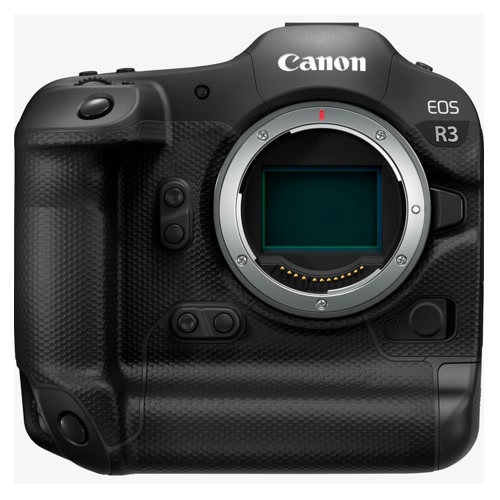
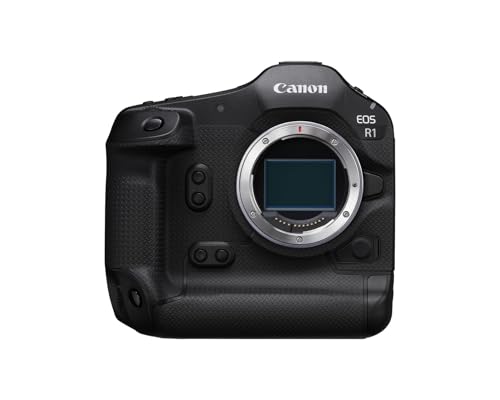
- EOS R1 and R3: These are Canon's speed-focused professional full-frame bodies, built around deep grips, large batteries, robust sealing, fast sensor readout, and advanced subject tracking. They are designed for sport, news, and wildlife photographers who need dependable bursts and handling more than compact size or the lowest system cost.
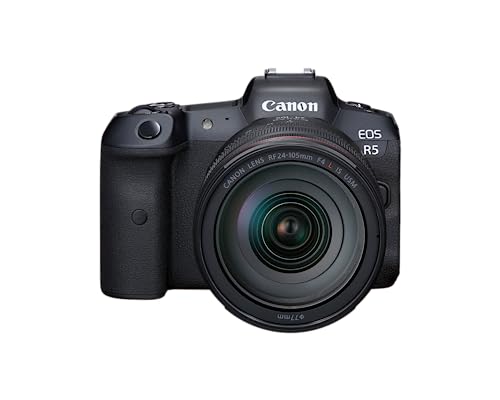
- EOS R5 family: R5-class cameras combine high-resolution full-frame stills with advanced video, placing them between studio/detail work and professional hybrid production. Models such as the R5, R5 Mark II, and video-oriented R5 C differ in autofocus generation, burst behavior, cooling, codecs, power needs, and stabilization, so they should not be treated as interchangeable versions of one specification.
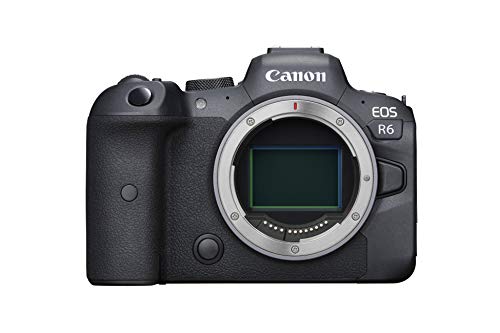
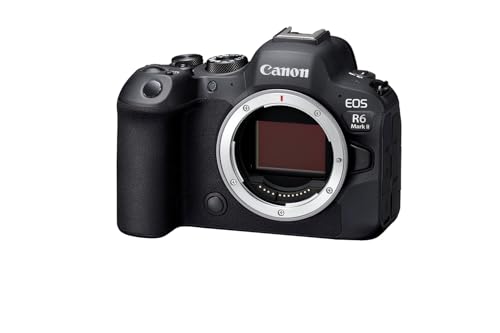
- EOS R6 family: The R6 line favors balanced full-frame performance rather than maximum megapixels. It is a strong event, wedding, portrait, low-light, and hybrid choice because it combines in-body stabilization, fast autofocus, useful bursts, and serious video in a more affordable package than the R5 or flagship tiers.
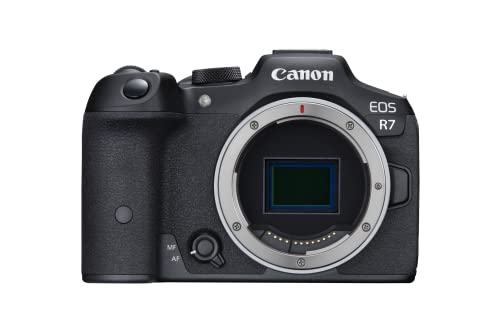
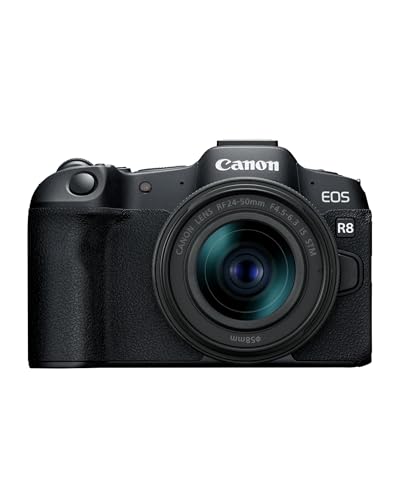
- EOS R7 and R8: The R7 is an APS-C enthusiast body with a 1.6× field-of-view crop, in-body stabilization, dual card slots, and controls suited to wildlife or sport. The R8 is instead a compact full-frame camera aimed at travel, portraits, and hybrid use; it offers full-frame image characteristics but omits in-body stabilization and uses a smaller body and battery.
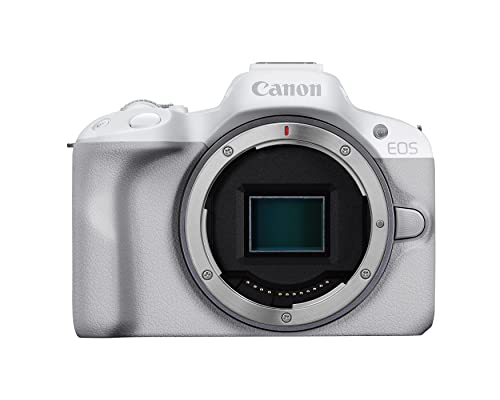
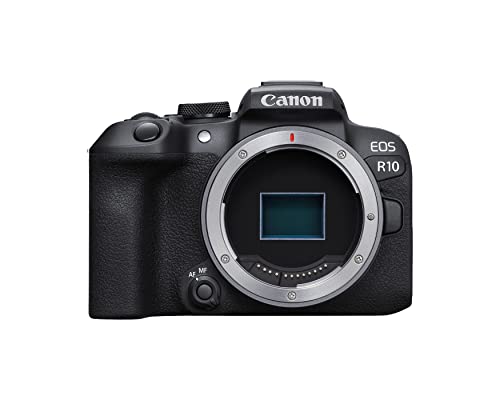
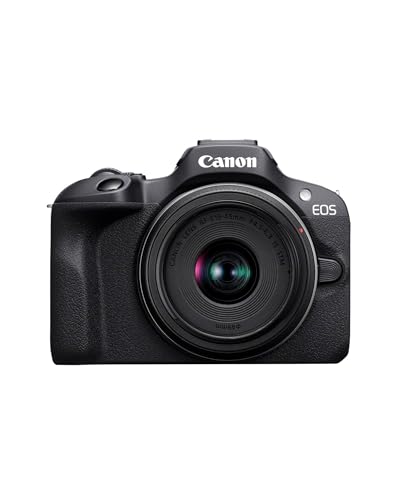
- EOS R10, R50, and R100: These APS-C RF bodies cover enthusiast-beginner through basic entry use. The R10 provides more direct controls and speed, the R50 emphasizes guided operation and creator-friendly features, and the R100 reduces cost with a simpler screen and interface; none includes in-body stabilization.
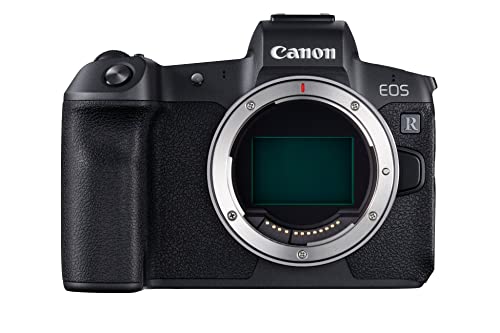
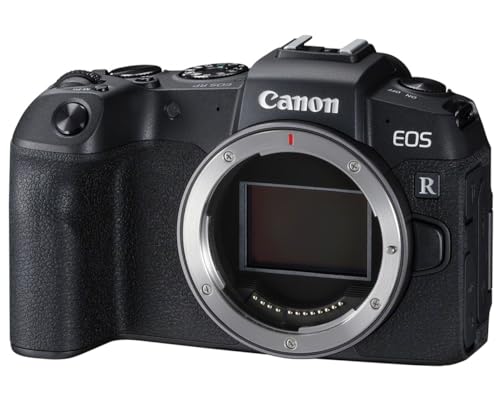
- EOS R and RP: Canon's first-generation full-frame RF bodies remain important because they established the mount and introduced many DSLR users to mirrorless Canon. Their autofocus, burst speed, video modes, and interface are less advanced than newer equivalents, so model age matters even when sensor size and lens compatibility look similar.
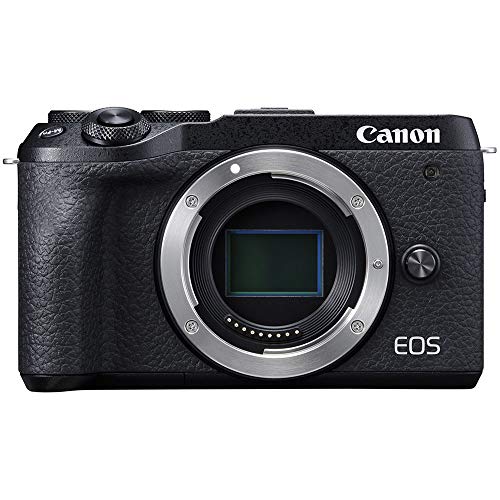
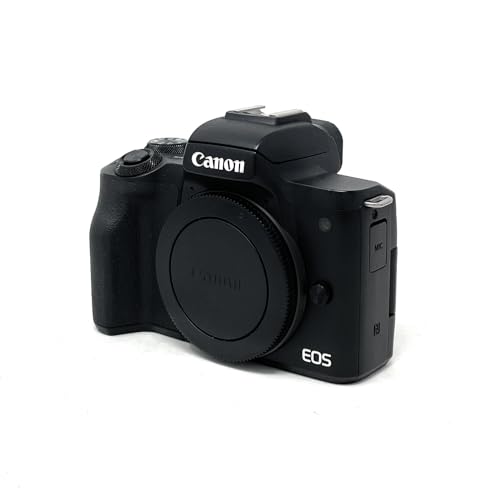
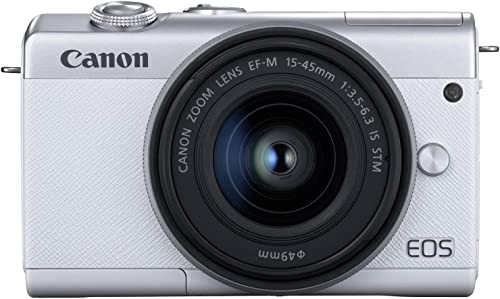
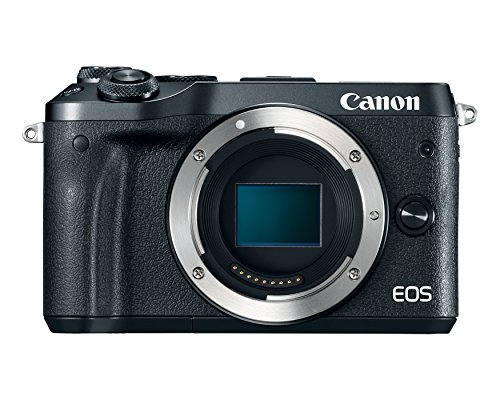
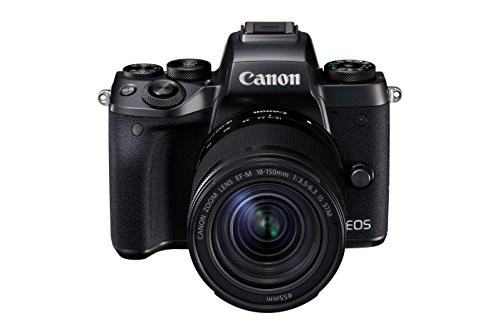
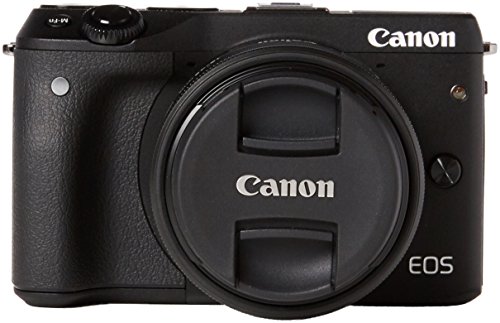
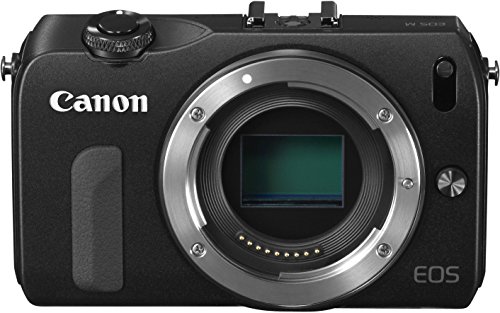
- EOS M family: Models such as the M50 Mark II, M6 Mark II, and M200 use the compact APS-C EF-M mount rather than RF. EOS M can still perform well as a self-contained camera, but EF-M lenses cannot be mounted on EOS R bodies and Canon's current development is centered on RF, making it a discontinued-system path rather than a route into the current lineup.

How much do Canon mirrorless cameras cost?
New Canon mirrorless cameras generally cost about £300-£6,500 for the body or a basic kit, with the current RF range spanning beginner APS-C cameras through professional full-frame flagships. The final system price depends on sensor format, stabilization, burst performance, video modes, card slots, construction, and—most importantly—the lenses required.
Entry-level EOS R pricing starts around £300-£600 for an R100 body or kit, while an R50 kit is commonly around £600-£800. The R10 typically occupies the £800-£1,100 tier, and the R7 or R8 generally sits around £1,000-£1,500. The R7 costs more for APS-C speed, stabilization, dual cards, and wildlife-oriented controls; the similarly positioned R8 pays instead for a full-frame sensor in a lighter body without in-body stabilization.
R6-family bodies cost about £1,700-£2,600, while an R5-class high-resolution hybrid usually falls around £3,000-£4,300. Professional R3 and R1 models extend from roughly £3,900 to £6,500, paying for faster readout and autofocus, durability, larger batteries, connectivity, and reliability rather than more megapixels. Include lenses: consumer RF/RF-S zooms and compact primes may cost £200-£700, bright L-series zooms often reach £1,300-£3,000, and specialist super-telephotos can exceed £8,600. EF and EF-S lenses adapt, but compare adapter cost, size, handling, and convenience with an equivalent native RF or RF-S lens.
How do Canon mirrorless cameras compare with Sony mirrorless models?
Canon mirrorless cameras are usually the easier choice for touch-driven hybrid shooting and fully articulating screens, while Sony offers more native E-mount lenses and a wider selection of compact full-frame bodies. Neither has a universal image-quality advantage at an equivalent sensor size.
Canon’s Dual Pixel autofocus and EF-lens adapters make the EOS R system approachable; Sony counters with mature subject tracking and extensive first- and third-party lens choice. Compare R50/R10 with Sony APS-C bodies, R8 with compact Alpha full-frame options, and R6/R5 tiers with similarly positioned Alpha 7 models, paying attention to stabilization, card slots, video crops, and heat limits.
Canon mirrorless bodies or kits cost about £300-£6,500, while Sony spans roughly £470-£6,500. Mainstream APS-C and full-frame choices overlap most heavily between about £560 and £2,600, so the better value is usually the system that supplies the required lens at the lower complete-kit price.
What should you consider while choosing the best Canon mirrorless camera?
Consider the following points while choosing a Canon mirrorless camera:
- Choose RF or EOS M deliberately: RF and RF-S form Canon's current mirrorless system, covering full-frame and APS-C bodies. EF-M lenses cannot be fitted to RF bodies, and EOS M is a discontinued-system path, so it should not be chosen with the expectation of moving its lenses to a future EOS R camera.
- Match APS-C or full frame to the subject: Canon APS-C bodies use about a 1.6× field-of-view crop, helping wildlife and sport fill the frame with smaller telephoto lenses but making equivalent wide-angle and shallow-depth-of-field results harder. Full frame improves high-ISO and depth-of-field flexibility, although equivalent lenses are normally larger and more expensive.
- Verify in-body stabilization: The R7, R6 family, R5 family, R3, and R1 classes include sensor-shift stabilization, while the R100, R50, R10, and R8 depend mainly on an IS lens or cropped electronic video stabilization. For handheld low-light work, unstabilized primes, or walking video, this distinction can matter more than a small resolution increase.
- Read autofocus modes beyond the headline: Check which subjects the camera recognizes, whether eye detection works in the intended stills and video modes, how easily targets can be changed, and whether tracking remains active at the required burst rate. Newer high-tier models have more sophisticated subject recognition and control options than the first EOS R/RP generation.
- Separate mechanical and electronic burst figures: Confirm mechanical or electronic-first-curtain speed, electronic-shutter speed, RAW buffer depth, card write time, and sensor readout. A fast silent mode can still show rolling-shutter distortion or banding under movement and artificial light, making the highest advertised frame rate unsuitable for some sport or event work.
- Inspect the exact video mode: Check whether 4K is oversampled or cropped, which frame rates retain Dual Pixel AF, whether Canon Log and 10-bit recording are available, and whether heat or power limits affect long sessions. Microphone input is common, but a headphone socket, full-size HDMI, active cooling, and professional codecs belong to selected higher tiers.
- Build the lens kit first: Price the required RF or RF-S focal lengths and apertures before choosing the body. Existing EF and EF-S lenses can usually retain autofocus and stabilization through an EF-EOS R adapter, but the adapter adds length and can make a compact camera feel front-heavy.
- Check operational features: Dual card slots, weather sealing, a larger battery, AF joystick, top display, deeper grip, and faster media matter for paid event, wildlife, and production work. Entry bodies can produce excellent files yet omit several of these safeguards, so compare the physical camera and workflow rather than only sensor specifications.
- Confirm support and accessories: Check current firmware, battery and charger type, USB power requirements, flash compatibility, remote and microphone connections, adapter support, and authorized service. Accessories and batteries are not shared uniformly across every EOS R tier, and a compact body may require extra spares for a full shooting day.