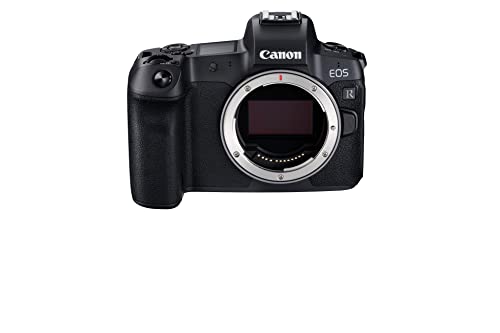
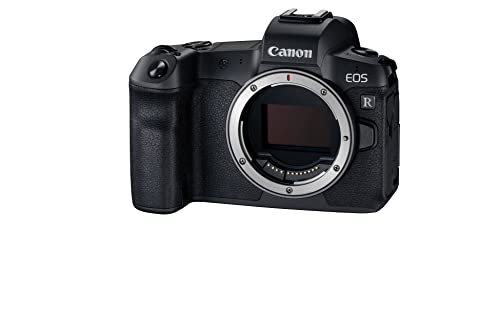
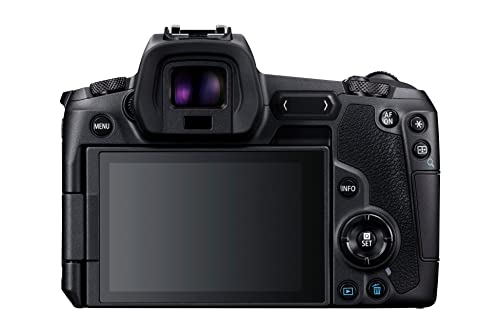
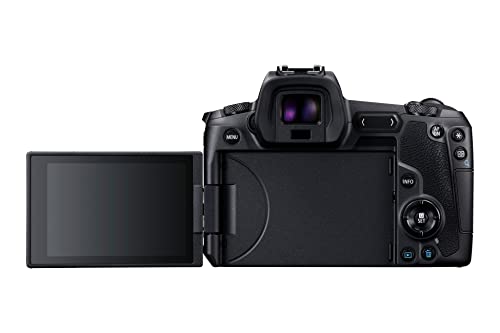
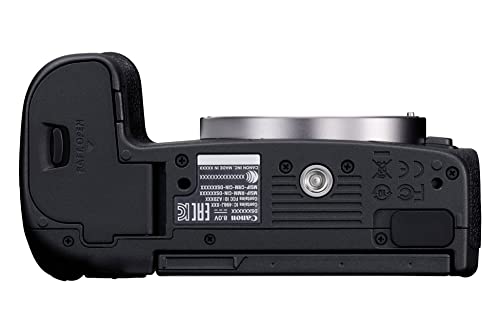
Canon EOS R review. Compare 108 technical specifications and user reviews to see how it ranks among cameras and if it is worth buying.
Overall score
What it is: An overall evaluation of the camera's quality, based on technical analyses and user reviews.
When it matters: When you need a quick reference to identify the best cameras on the market.
Score components:
90.0%
Technical Score
10.0%
User score
Technical Score
What it is: An assessment of the camera's technical performance, covering eight key areas: image quality, autofocus, video features, stabilization, lens compatibility, connectivity, battery, and design.
When it matters: When you want to compare cameras based on technical performance and available features.
Score components:
28.0%
Sensor & Image
25.0%
Photo Features
18.0%
Video & Audio
14.0%
Display & Design
8.0%
Battery & Power
7.0%
Connectivity & Storage
User score
What it is: A rating that combines user reviews and the total number of reviews received by the camera.
When it matters: When real-world owner satisfaction and review volume matter to your decision.
Score components:
70.0%
User reviews
30.0%
Popularity
Score components:
25.0%
Sensor size
20.0%
Main camera megapixels
20.0%
Dual card slots
15.0%
N. of focus points
10.0%
RAW photo capture
10.0%
Phase-detection autofocus (photos)
Score components:
35.0%
Weight
30.0%
Battery life (CIPA)
20.0%
Sensor-shift stabilization
15.0%
GPS
Score components:
30.0%
Price
20.0%
Weight
20.0%
AF tracking
20.0%
Battery life (CIPA)
10.0%
Touchscreen
Score components:
30.0%
Main camera megapixels
25.0%
Sensor size
20.0%
Main camera pixel size
15.0%
Sensor-shift stabilization
10.0%
RAW photo capture
Score components:
30.0%
Weight
25.0%
Thickness
20.0%
AF low-light sensitivity
15.0%
Sensor-shift stabilization
10.0%
Eye detection AF (human)
Score components:
30.0%
Sensor size
25.0%
Main camera pixel size
20.0%
Eye detection AF (human)
15.0%
Main camera megapixels
10.0%
Sensor-shift stabilization
Score components:
30.0%
Weight
25.0%
Battery life (CIPA)
20.0%
Min operating temperature
15.0%
Sensor-shift stabilization
10.0%
GPS
Available: ranking among products currently available (including other versions of this product).
All: ranking among all products in the database.
#4 in Best Cameras under £300
#9 in Best Canon EOS Cameras
#24 in Best Vlogging Cameras
#24 in Best Cameras for YouTube
#28 in Best Low Light Cameras
#30 in Best Full-Frame Cameras
#36 in Best Mirrorless Cameras
#38 in Best Cameras
What it is: An assessment of the camera's technical performance, covering eight key areas: image quality, autofocus, video features, stabilization, lens compatibility, connectivity, battery, and design.
When it matters: When you want to compare cameras based on technical performance and available features.
Score components:
28.0%
Sensor & Image
25.0%
Photo Features
18.0%
Video & Audio
14.0%
Display & Design
8.0%
Battery & Power
7.0%
Connectivity & Storage
What it is: A rating that combines user reviews and the total number of reviews received by the camera.
When it matters: When real-world owner satisfaction and review volume matter to your decision.
Score components:
70.0%
User reviews
30.0%
Popularity
What it is: An indicator that combines the camera's overall rating with its cost.
When it matters: When you want to know how much overall quality you get for the price.
Score components:
60.0%
Overall score
40.0%
Price
Importance: HIGH
Good value: Full frame or larger
Importance: HIGH
Good value: At least 20 MP
Importance: HIGH
Good value: At least 3.5 µm
Importance: LOW
Importance: MEDIUM
Good value: At least ISO 25,600
Importance: MEDIUM
Importance: MEDIUM
Good value: At least 14-bit
Importance: LOW
Importance: LOW
Importance: LOW
Importance: LOW
Importance: LOW
Importance: LOW
Importance: LOW
Importance: LOW
Importance: MEDIUM
Importance: LOW
Importance: LOW
Importance: LOW
Importance: LOW
Importance: LOW
Importance: HIGH
Good value: At least 200 points
Importance: HIGH
Importance: MEDIUM
Importance: LOW
Importance: LOW
Importance: MEDIUM
Importance: MEDIUM
Importance: HIGH
Good value: At least 5 stops
Importance: LOW
Importance: MEDIUM
Good value: At least 10 fps
Importance: LOW
Importance: LOW
Importance: LOW
Importance: LOW
Importance: LOW
Importance: LOW
Importance: LOW
Importance: LOW
Importance: LOW
Importance: LOW
Importance: LOW
Importance: LOW
Importance: LOW
Importance: LOW
Importance: LOW
Importance: LOW
Good value: At least 200,000 actuations
Importance: LOW
Good value: At least 10x
Importance: HIGH
Good value: At least 3840 px
Importance: MEDIUM
Good value: At least 200 Mbps
Importance: MEDIUM
Good value: At least 10-bit
Importance: LOW
Importance: LOW
Importance: LOW
Importance: LOW
Importance: LOW
Importance: LOW
Importance: LOW
Good value: At least 30 min
Importance: LOW
Importance: LOW
Importance: LOW
Importance: LOW
Importance: LOW
Good value: At least 2 microphones
Importance: LOW
Importance: LOW
Importance: LOW
Importance: LOW
Importance: MEDIUM
Good value: 500 g or less
Importance: LOW
Importance: LOW
Importance: LOW
Importance: MEDIUM
Importance: MEDIUM
Good value: At least 2.36 million dots
Importance: LOW
Good value: 100%
Importance: LOW
Importance: LOW
Good value: At least 120 Hz
Importance: MEDIUM
Good value: At least 3 in
Importance: LOW
Importance: LOW
Importance: LOW
Importance: LOW
Importance: LOW
Importance: LOW
Importance: LOW
Good value: At least 10 m
Importance: LOW
Importance: LOW
Importance: LOW
Importance: LOW
Importance: MEDIUM
Good value: At least 400 shots
Importance: LOW
Good value: At least 1,500 mAh
Importance: LOW
Importance: LOW
Importance: LOW
Importance: LOW
Importance: LOW
Importance: LOW
Importance: LOW
Importance: LOW
Importance: LOW
Importance: LOW
Importance: LOW
Importance: LOW
Importance: LOW
Importance: LOW
Importance: LOW
Importance: LOW
Importance: LOW
Importance: LOW
Importance: HIGH
Good value: At least 200 points
Importance: HIGH
Importance: MEDIUM
Good value: At least ISO 25,600
Importance: MEDIUM
Good value: At least 200 Mbps
Importance: HIGH
Good value: At least 20 MP
Importance: LOW
Importance: HIGH
Good value: At least 3.5 µm
Importance: MEDIUM
Importance: MEDIUM
Good value: 500 g or less
Importance: LOW
Importance: LOW
Importance: LOW
Importance: LOW
(Reviews last updated: July 2026)
The DPReview Canon EOS R review classifies the camera as a solid but polarizing entry into full-frame mirrorless, highlighting its 30-megapixel sensor derived from the 5D Mark IV, which offers excellent image quality, strong low-light performance, and accurate single-AF. Pros include a comfortable grip, high-resolution EVF, and great EF/EF-S lens compatibility via adapters. However, notable cons include frustrating controls, such as the missing AF joystick and the inconsistent M-Fn bar, alongside a slow 5 fps continuous AF burst rate. The camera also falls short for video, lacking IBIS, suffering from high rolling shutter, and applying a severe 1.8x crop in 4K mode.
The ePHOTOzine review highlights the Canon EOS R as a competent, high-quality full-frame mirrorless camera featuring excellent image quality, fast autofocus, and a 3.69m-dot OLED viewfinder. Key advantages include its durable weather-sealed body, silent shooting capabilities, and seamless integration with EF lenses via adapters. Conversely, the review notes significant limitations, such as a 1.8x cropped 4K video mode, the absence of in-body image stabilization (IBIS), and a single SD card slot. The camera also faces criticism for its reduced battery life, reliance on a new touch-bar interface, and lack of certain traditional physical buttons.
However, the camera comes with notable downsides, particularly for specialized or high-end video shooters. It features a severe 1.7x crop when recording in 4K video mode, making wide-angle shooting difficult unless using adapted EF-S lenses. It completely lacks in-body image stabilization (IBIS), lacks a traditional physical joystick, and has only a single SD card slot, which may deter professionals who require an immediate back-up. Furthermore, the sensor introduces noticeable image noise at higher ISO settings (such as ISO 1600 and above in dark environments), falling short of Sony's superior low-light sensor performance. Ultimately, while it looks flawed on a technical spec sheet, it excels as an inspiring, joyful tool for everyday photography and 1080p HD videography.
In his 6-month hands-on review of the Canon EOS R for SLR Lounge, Pye Jirsa concludes that while it is an excellent mid-point, full-frame camera for stills, professional DSLR users should hold off on upgrading. On the positive side, Jirsa praises the camera's compatibility with the exceptional RF lens lineup—particularly the Canon RF 28-70 f/2—and highlights the useful control rings on native lenses and select EF-mount adapters. He also commends its compact body form factor when paired with smaller lenses, the intuitive menu layout, its ergonomics, and the renowned Canon color science that minimizes post-production editing. For videographers, the integration of Canon Log straight out of camera makes it a viable B- or C-cam when synced with higher-end cinema systems. However, the review details several major performance and design drawbacks. For action and sports photographers, the camera's frame rate is insufficient for capturing quick sequential bursts. The handling also suffers because the awkward on-screen touchscreen joystick is significantly less comfortable and harder to use than the physical joystick found on the 5D Mark IV. Furthermore, videographers face severe constraints, including...
The Canon EOS R is Canon’s first full-frame mirrorless camera, built with a 30.3-megapixel CMOS sensor and a DIGIC 8 image processor that delivers excellent image quality mirroring the 5D Mark IV. Designed with a highly praised, compact form factor and an incredible grip, it features a fully articulating 3.15-inch touchscreen that is highly useful for shooting from difficult angles and composing vlogs. A standout functional update is its dedicated video record button, which allows users to instantly trigger preset video settings independently from their photo shooting mode. Furthermore, it uses standard LP-E6N batteries and supports convenient in-camera charging via its USB-C port, though the port cannot actively power the device while in use. Despite these strengths, the reviewer notes several prominent limitations that hold the camera back. Its most notable drawbacks include a complete lack of in-body sensor stabilization and a frustrating 1.7x crop factor when recording 4K video, making wide-angle vlogging difficult. The camera also launched with a very limited selection of native RF lenses, making the EF-to-RF adapter mandatory; while this adapter maintains flawless autofocus performance, it...
The DPReview conclusion of the Canon EOS R identifies it as a camera with a strong, 30.3MP full-frame sensor and excellent RF lens compatibility, alongside a highly capable Dual Pixel CMOS AF system. It is praised for its robust weather sealing and quality image output, though it is described as a polarizing, initial entry into the mirrorless market. Conversely, the review highlights significant limitations in ergonomics, including the lack of an AF joystick and a polarizing touch bar, coupled with below-average battery life and a single memory card slot. Furthermore, the camera suffers from severe 4K video cropping (1.8x), a lack of IBIS, and competitive limitations regarding burst speed and dynamic range.
The Photography Life review of the Canon EOS R praises its robust, full magnesium alloy build and comfortable handgrip, which feels balanced with both RF and adapted EF lenses. While more compact than DSLRs, it maintains a solid, high-resolution 3.69-million dot OLED viewfinder and a fully-articulated touchscreen, although its weather-proofing is rated similarly to the mid-tier 6D Mark II.
The ePHOTOzine review identifies the Canon EOS R as a highly competent full-frame mirrorless camera producing excellent image quality, featuring a responsive OLED EVF, a versatile articulating touchscreen, and robust battery life. Key strengths include silent shooting capability, extensive customization options, and strong, consistent performance. Conversely, the review highlights drawbacks for professionals, notably the absence of dual memory card slots, the lack of in-body image stabilization (IBIS), and significant 4K video cropping. Operational quirks, including a heavy reliance on menu navigation for adjustments, are also noted as potential downsides.
In his real-world review, Steve Huff explains his complete switch from Sony to the Canon EOS R for his concert photography, video, and casual work, highlighting that the camera's usability and emotional connection outweigh its paper specifications. A major standout feature is Canon’s renowned color science, which Huff notes delivers cinematic, organic skin tones and deep image depth far superior to Sony's more digital looking files. He heavily praises the camera's ergonomics, comfortable grip, intuitive touch menus, and the highly versatile swivel-out touch screen that eliminates his need for external video monitors. Furthermore, the Dual Pixel autofocus system is lauded as arguably the best on the market, achieving instantaneous, near-magical tracking in extremely dark environments when paired with high-quality glass like the new RF 50mm f/1.2 or adapted older EF lenses, which face no performance compromises on the new mirrorless body.
The Canon EOS R marks Canon's debut into full-frame mirrorless systems, introducing a highly innovative RF lens mount that delivers exceptional image quality and unique lens designs despite initial backlash from native EF mount users. Built to sit comfortably between the 6D Mark II and the 5D Mark IV, the camera boasts excellent hand ergonomics, featuring the most robust and comfortable grip found on a mirrorless body to date. Its 30.3MP sensor shares similarities with the 5D Mark IV but delivers slightly higher contrast and brighter exposure efficiency at high ISO limits up to 40,000, paired with Canon’s acclaimed natural color science and highly accurate skin tone reproduction. The autofocus is a standout success, utilizing a Dual Pixel AF system with 5,655 selectable points that cover almost the entire frame, providing flawless adapted performance for legacy EF lenses and near-instant native focus down to an impressive EV-6 low-light sensitivity. However, the camera is a study in contradictions due to several restrictive design choices and performance omissions. On the downside, the EOS R completely lacks In-Body Image Stabilization (IBIS), features only...
In this first part of his Canon EOS R Mirrorless Camera Review, professional photographer Martin Bailey shares his real-world experiences using the camera across four weeks of demanding field use during his landscape and wildlife tours in Japan. Bailey is highly enthusiastic about the device, noting that the image quality from the 30.3MP full-frame CMOS sensor is spectacular. When compared to his 50MP Canon EOS 5Ds R, the EOS R images showed sharper edges and slightly better definition. Additional pros include an exceptional 5,655 autofocus points, a helpful 3.15" swivel touchscreen LCD, flawless operation in extreme cold down to -25°C, and excellent compatibility with EF lenses via the Control Ring Mount Adapter, which lets the user reprogram the ring to change settings like ISO. Conversely, the review highlights significant cons, most notably a severe weather-sealing failure where the inside of the electronic viewfinder (EVF) heavily fogged up and gathered thick condensation within minutes of being exposed to light snow. Furthermore, Bailey critiques the camera's tracking capability during burst shooting, explaining that the viewfinder becomes stroboscopic, forcing the photographer to track...
The Canon EOS R is described as a polarizing camera with a "split personality," offering professional-level image quality but suffering from severely outdated internal hardware. On the positive side, it functions exceptionally well as a 4K APS-C crop camera when paired with lenses like the Sigma 18-35mm F1.8. It delivers cinematic Canon colour science, a robust 480Mbit ALL-I codec, and highly reliable Dual Pixel Autofocus in 4K. Vloggers will appreciate its forward-facing fully articulated screen, and photographers can still utilise it as a 30-megapixel full-frame stills camera with flawless EF lens adaptation. However, the camera is severely let down by major ergonomic flaws and technical limitations for video production. Its most critical defect is an atrocious rolling shutter in 4K that can easily ruin shots. It also lacks in-body image stabilisation (IBIS), features a single card slot, and offers subpar 720p/120fps slow-motion video with no autofocus. Furthermore, the reviewer highly criticises the removal of the physical mode dial and stills/movie toggle, replacing them with a poorly positioned "Mode" button and a highly frustrating, inaccurate "M-fn" touch bar. Finally, official Canon...
The Nature TTL hands-on review evaluates the Canon EOS R as a highly customisable full-frame mirrorless camera suited as a primary body for enthusiasts or a secondary camera for professionals. Key pros include its robust yet lightweight 600-gram chassis, which minimizes weight during travel. The physical layout offers immense customisation, featuring an assignable control ring on native RF lenses to easily manage settings on the fly. Additionally, it features a protective shutter curtain that seals out sensor dust when powered off. The bright 3.69-million-dot EVF operates seamlessly with touch-and-drag LCD autofocus. Finally, the camera excels in low-light environments, with its 5,655 focus positions focusing down to EV -6 while producing surprisingly clean images at high sensitivity levels up to ISO 6,400. However, the review outlines distinct cons that limit its competitive edge. The biggest disappointment stems from slow continuous shooting capabilities. The standard 8 frames-per-second capability drops significantly down to 5 fps when tracking with AF Servo. It further degrades to just 3 fps if the user prioritizes absolute focus accuracy. Furthermore, it lacks substantial resolution gains over existing options,...
The Rangefinder Online hands-on review of the 30-megapixel Canon EOS R full-frame mirrorless camera highlights it as a solid, compact option with remarkable image quality that matches or slightly exceeds the sharpness and color reproduction of the 5D Mark IV. Reviewers praise the highly responsive 3.15-inch fully articulated touchscreen monitor, which allows for touch-and-drag focusing while using the viewfinder. It features fast and generally accurate autofocus and excellent compatibility with older EF and EF-S lenses through three distinct adapter options. Despite some operational quirks, the camera's compact body and deep, comfortable grip make it a highly appealing system. This is particularly true for existing Canon users looking to transition into the mirrorless ecosystem for wedding and portrait photography.
The Photography Life review deems the Canon EOS R a solid, ergonomic entry into full-frame mirrorless, suited for portrait, landscape, and travel photography, while offering excellent 30.3-megapixel image quality and superior high-ISO performance. Key advantages include an comfortable grip for balancing large lenses and a highly sensitive Dual Pixel autofocus system, which functions down to -6 EV.
The Shotkit review highlights the Canon EOS R as a capable first-generation full-frame mirrorless camera, praising its excellent electronic viewfinder, precise autofocus system, and extensive customization options. It notes the camera offers a high-resolution 30.3MP sensor and reliable tracking, making it suitable for various photography styles. Conversely, the review highlights drawbacks including less-than-ideal ergonomics and the absence of an in-body image stabilization (IBIS) system, relying only on lens stabilization. Critically, the inclusion of a single SD card slot is identified as a limitation for professionals requiring immediate backup capabilities.
The Canon EOS R is a 30.3 MP full-frame mirrorless camera that provides reliable image quality, great ergonomics with a deep front grip, and access to the advanced mirrorless ecosystem at a reasonable price point. It features a bright, 3.69M-dot electronic viewfinder that supports black-and-white previewing, a fully-articulating 3.2-inch touchscreen for shooting at unusual angles, and a highly customizable, sensitive touch bar for quick setting adjustments like ISO. Additionally, it offers a truly silent shooting mode ideal for discrete street and event photography, an extensive autofocus coverage of 5,655 points working down to -6 EV, and seamless, lag-free performance with older EF and EF-S lenses when using a budget-friendly adapter. However, the camera has notable limitations that make it unsuitable for dedicated action or high-stakes professional work. Its biggest drawbacks are a single SD card slot, which lacks the redundancy required by wedding and sports photographers, and a mediocre battery life rated at just 370 shots. Continuous shooting speeds are slow, topping out at 5 fps with continuous autofocus, and it lacks in-body image stabilization (IBIS). Video shooters face a...
The Canon EOS R is a highly capable full-frame mirrorless camera that stands out for its excellent ergonomics, beautiful electronic viewfinder (EVF), responsive articulating touch screen, and innovative cRAW file compression scheme that drastically reduces 30-megapixel file sizes. In terms of video performance, it captures an exceptional amount of image data, offering an impressive 4k bitrate of 480mbps and a 1080p bitrate of 180mbps, which vastly outperforms the video bitrates found on competitors like the Sony A7III. Furthermore, its larger lens mount gives it a distinct advantage by accommodating highly advanced native RF optics, while seamlessly adapting older EF lenses with functional drop-in filters. However, the camera does suffer from a few significant shortcomings, most notably the lack of eye-tracking capabilities in continuous autofocus (Servo AF mode) and the complete absence of in-body image stabilization (IBIS). Videographers must contend with a heavy 1.7x crop factor when shooting in 4k, as well as noticeable rolling shutter distortion. Hardware and physical limitations include a single memory card slot, highly restricted external button customization, a smaller 1GB buffer, and memory card write speeds...
Despite these strengths, the reviewer notes several notable cons and technical limitations. The autofocus system lacks pre-programmed tracking modes for erratic subjects, requiring users to manually configure custom settings to replicate these features. It is not designed to replace high-end action DSLRs due to its modest burst rates, which top out at 8fps with fixed autofocus and drop to 5fps with continuous AF tracking. Additionally, transitioning to the touchscreen for touch-and-drag focus can initially feel slow and cumbersome for users accustomed to a traditional joystick. Finally, while new RF lenses like the RF 50mm f/1.2L offer staggering sharpness, they can be quite large and bulky in comparison to the camera's compact body.
Regarding video capabilities, the camera successfully delivers internal 4K/30p recording (8-bit 4:2:0), external 10-bit 4:2:2 output via a clean HDMI port, and reliable Dual Pixel autofocus. The articulating screen proves incredibly useful for shooting on sliders or facing the camera. Despite these advantages, the video functionality is heavily limited by a severe 1.8x crop factor when shooting in 4K, which drastically narrows the lens field of view. Video production is further hindered by the complete lack of In-Body Image Stabilization (IBIS) and the disappointing omission of a 1080p/120fps high-frame-rate option for smooth, versatile slow-motion footage.
The Canon EOS R marks a significant milestone as the manufacturer's first full-frame mirrorless camera system, blending a high-quality build with exceptional photographic capabilities. Built with a robust magnesium alloy chassis, it inherits a 30.1-megapixel sensor similar to the 5D Mark IV but delivers even better sharpness, color accuracy, and low-light performance across a wide ISO range up to 12,800. Photographers will benefit from a highly responsive "Touch & Drag" autofocus system that locks onto targets in under 0.4 seconds, an interactive top shoulder display, and excellent backwards compatibility with older EF and EF-S lenses via standard adapters. Additionally, file management is heavily optimized through a new C-RAW format that shrinks file sizes down to 20 MB without sacrificing noticeable image details. However, the camera suffers from notable drawbacks, particularly regarding video capture and hardware limitations. Shooting in Ultra HD video triggers a severe 1.83x crop factor that vastly restricts wide-angle shots, a limitation that worsens to over 2x magnification if digital image stabilization is activated. Video capabilities are further hampered by a pronounced rolling shutter effect, 120fps slow-motion restricted...
The digitalkamera.de review highlights the Canon EOS R as a high-quality mirrorless camera featuring robust weather-sealed construction, an ergonomic handgrip, and a highly detailed 3.69-million-dot electronic viewfinder. Its 30.3-megapixel CMOS sensor delivers excellent image quality and 25% higher resolution than typical 24-megapixel competitors, supported by a flexible "Fv" exposure mode and reliable wireless connectivity. Conversely, the review notes significant limitations, including the lack of in-body image stabilization (IBIS) and a notable drop in continuous autofocus performance for tracking subjects. Furthermore, 4K video recording suffers from a severe focal crop, while the polarizing "M-Fn" touch bar and a lack of compatibility with EOS M lenses limit handling and versatility.
summary of the Canon EOS R review: Review Summary The reviewer, Elmar, provides a highly positive real-world assessment of the Canon EOS R, noting that the camera system easily handles daily photographic needs despite initial negative online sentiments. On the positive side, the camera features a solid, well-built body with distinct buttons, clean sealing for weather protection, and a highly logical, easy-to-navigate Canon menu system that allowed full setup in just 11 minutes. Its touch-controlled flip-and-rotate screen is highly praised, alongside fast Wi-Fi connectivity and excellent image quality. Most notably, the reviewer lauds the phenomenal RF lenses, specifically the 50mm f1.2 L, which delivers exceptional sharpness and near "Zeiss Otus" quality with precise autofocus and reliable focus peaking, even in dim settings.
The Medium review of the Canon EOS R highlights the camera as a capable, well-rounded, and user-friendly tool, praised for its 30-megapixel sensor derived from the 5D Mark IV, strong low-light performance, and fast autofocus system. Key advantages include a comfortable grip, an articulating touchscreen, and seamless compatibility with older EF lenses via an adapter. Conversely, the review identifies significant limitations for professional use, such as a heavy 1.8x crop factor in 4K video, the lack of in-body image stabilization (IBIS), and a single SD card slot. Further drawbacks include a polarizing touch bar and relatively slow continuous shooting compared to modern alternatives.
The Canon EOS R is a mirrorless full-frame camera that delivers high-quality performance with a user-friendly, rotating touchscreen display and an exceptionally fast autofocus system that locks onto targets at "lightning speed". Boasting a 30.3-megapixel CMOS sensor powered by a DIGIC 8 processor, the camera excels in low-light environments, producing highly usable, detailed images even at high sensitivities like ISO 12,800. Its battery life is robust enough to last through a full day of shooting. Additionally, its RF lens mount allows for versatile future expansions, while a relatively affordable EF-EOS R adapter makes it easy for existing DSLR users to transition by seamlessly utilizing their old EF lenses. However, the reviewer points out several notable drawbacks that make it less suitable for high-speed action and sports photography. The massive 30.3 MP files quickly overwhelm the camera's continuous shooting buffer, causing it to stall after just three to four consecutive frames when capturing RAW and JPEG files simultaneously. Furthermore, it features only a single SD card slot, and the reviewer experienced major software frustrations because Camera Raw initially failed to recognize...
The Digitalkamera.de review highlights the Canon EOS R as a high-quality, full-frame mirrorless camera featuring a robust, weather-sealed magnesium alloy chassis, an exceptionally ergonomic deep handgrip, and an impressive 30.3-megapixel sensor. It praises the class-leading Dual Pixel CMOS autofocus for functioning down to -6 EV, alongside a high-resolution 3.69-million-dot EVF and a versatile fully articulating touchscreen.
The Canon EOS R full-frame mirrorless camera delivers excellent image quality and a highly robust, ergonomic design, making a positive overall impression during testing. Powered by a 30.1-megapixel CMOS sensor, it captures superb details with practically no visible image noise up to ISO 1,600, and remains highly usable through ISO 3,200 and ISO 6,400. Key highlights include its weather-sealed magnesium-alloy body, a large and sharp 3.69-million-subpixel electronic viewfinder, and a fully articulating 3.2-inch touchscreen display, which is a standout feature among full-frame mirrorless cameras. Additionally, its Dual Pixel CMOS autofocus performs incredibly fast for stationary subjects, registering an impressive lab capture time of 0.19 seconds. However, the camera has notable limitations that restrict its versatility for certain workflows. Its biggest drawback is a massive crop factor when shooting in 4K resolution, turning a 24mm focal length into roughly 42mm, which significantly restricts wide-angle videography. While it can shoot up to 8 frames per second (fps) with a generous buffer depth, its burst speed drops significantly to just 5.2 fps with continuous tracking autofocus, making it less suitable for high-speed action...
The Canon EOS R is a mirrorless full-frame system camera that delivers excellent image and video quality, featuring a 30-megapixel sensor derived from the EOS 5D Mark IV coupled with a powerful DIGIC 8 processor. The camera offers crisp, highly detailed photos even in low-light environments, making its wide ISO range of 100 to 12800 highly usable. It is praised for its ergonomic design, which includes an exceptionally large, comfortable handgrip and a high-contrast electronic viewfinder with 3.69 million dots that provides zero delay. Additionally, its Dual Pixel autofocus is remarkably fast and precise for single shots, acquiring focus in just 0.10 seconds during daylight. The overalled battery life is solid, yielding up to 600 to 800 frames per charge under typical usage. Despite these strong features, the camera has notable limitations that prevent it from being a perfect professional tool. A major drawback is the lack of an in-body image stabiliser, meaning users must rely on lenses equipped with optical stabilisation. For videographers, 4K recording is heavily restricted by a severe crop factor that narrows the field of view...
The Canon EOS R is a compact, mirrorless full-frame camera made from a durable magnesium alloy body featuring an ergonomic grip and a fully articulating touchscreen display. It delivers exceptional image quality using a 30.3-megapixel sensor that captures extensive detail and provides a highly flexible dynamic range with accurate, vibrant colours. Performance highlights include a fast and precise autofocus system boasting 5,655 manually selectable AF points that cover 88% of the sensor, a highly reliable Eye-Detection AF mode, and a burst shooting speed of up to 8 frames per second. For videography, the camera supports 4K recording up to 30 fps, Full HD 1080p recording up to 60 fps, and includes Canon Log to maximise dynamic range flexibilities during post-processing. However, the camera does have a few drawbacks that potential buyers should consider. The native battery life of the LP-E6N battery is somewhat limited for a mirrorless camera, offering only about 370 shots per charge when using the electronic viewfinder and up to 430 shots via the rear LCD screen. While this issue is mitigated by a built-in USB charging...
The Canon EOS R review on fotowissen.eu paints the full-frame mirrorless camera as a mixed bag, offering strong ergonomics paired with significant technical shortcomings. On the positive side, the author highlights its excellent image quality, comfortable large grip, outstanding electronic viewfinder, and highly functional, fully articulating touchscreen. The innovative lens control ring and the dust-protection mechanism that closes the mechanical shutter when the lens is removed are also praised. Furthermore, its fast Dual Pixel autofocus with eye and face tracking delivers great performance in One-Shot mode. Older EF lenses can also be easily adapted to the system, backed by Canon's reliable menu system and customer service. However, the reviewer finds several severe downsides that make the camera problematic for serious enthusiasts and professionals. The single most critical flaw is the presence of only a single memory card slot, which lacks professional redundancy and can lead to catastrophic data loss in the event of card failures. The camera also lacks an autofocus joystick—forcing users to rely on a frustratingly awkward touch-and-drag screen interface that becomes unusable when wearing winter gloves or...
The Canon EOS RP is a compact and exceptionally lightweight mirrorless full-frame camera designed primarily as an accessible entry-level option. Inheriting its 26.2-megapixel CMOS sensor from the EOS 6D Mark II, it offers dependable image quality, highly intuitive menu navigation, and comfortable ergonomics that make it a great option for beginners. Key performance highlights include a highly accurate and rapid Dual Pixel autofocus system, which notably supports eye tracking even during video recording, as well as built-in Wi-Fi and Bluetooth connectivity. Furthermore, its ability to easily adapt a massive catalog of legacy EF lenses via an adapter serves as a significant selling point for budget-conscious photographers looking to transition into a full-frame ecosystem. However, the camera makes several noticeable compromises to maintain its low price point and smaller form factor. Its video capabilities are restricted by a prominent 1.6x crop factor when shooting in 4K resolution at 25p, effectively narrowing wide-angle perspectives, and its continuous shooting speed tops out at a relatively modest 4.7 frames per second. Users looking to shoot in low-light environments may find the image quality lacking...
The Canon EOS R marks the manufacturer's first foray into the 24x36 full-frame mirrorless market, positioning its features between the EOS 6D II and the 5D Mark IV. Built around a 30.3-megapixel CMOS sensor with Dual Pixel AF technology, the camera delivers excellent image quality and rich detail up to ISO 3,200, alongside a highly customizable interface, comfortable handling, and robust build quality. It also features an innovative sensor protection curtain that closes when the camera is powered down to prevent dust buildup during lens changes. However, its overall performance left reviewers slightly underwhelmed for its price point, earning a modest 3 out of 5 stars. The review highlights several critical weaknesses, particularly concerning speed and video capabilities. The continuous shooting speed drops to a sluggish 5 frames per second when subject tracking (AF Servo) is engaged. Video recording is highly disappointing due to a massive image crop in 4K, notable rolling shutter effects, and the absence of helpful capture tools like exposure zebras. Ergonomically, the omission of a traditional AF joystick forces users to rely on a slower touchscreen...
This long-term review by Alex-Michel Ngningha frames the Canon EOS R as a highly capable and budget-friendly full-frame mirrorless camera well-suited for professional travel, wedding, and studio portrait photography. The author notes that transitioning from a bulky DSLR setup reduced his travel kit weight by an impressive 900 grams. Key pros highlighted in the text include its flexible, fully articulating touchscreen, highly accurate eye-detection autofocus, and a brilliant 30-megapixel sensor inherited from the 5D Mark IV. Additionally, the compressed CRAW format saves considerable storage space with no discernible quality degradation, and the EF-to-RF adapter functions seamlessly, revitalizing older lenses by correcting historical front-and-back focusing issues. While industry outlets like Digital Camera World praised its exceptional low-light autofocusing capabilities, this review emphasizes that a succession of eight firmware updates dramatically improved its real-world tracking and usability over time.
The Labo Fnac review describes the Canon EOS R as a highly capable but slightly limited first-generation full-frame mirrorless camera, heavily drawing comparisons to a mirrorless version of the 5D Mark IV. On the positive side, the camera excels in image quality, offering an excellent 30.3-megapixel resolution, impressive image homogeneity from the center to the edges, and superb fine detail reproduction. It is equipped with a class-leading, highly sensitive 5,655-point Dual Pixel autofocus system that can focus down to -6 IL in low-light environments. Hardware highlights include a bright, comfortable 3.6-million-dot electronic viewfinder, a robust weather-resistant magnesium alloy body, and a highly responsive, sharp 3.2-inch fully articulating LCD touchscreen. A clever sensor shield also activates when turned off to protect the sensor during lens changes.
The review from CNET France highlights the Canon EOS R as an effective full-frame mirrorless camera, though it presents a highly polarizing and destabilising design shift for traditional DSLR users. Equipped with a 30.3-megapixel CMOS sensor and a Digic 8 processor, the camera delivers richly detailed image quality and highly accurate exposure metering. Performance remains stellar across a broad ISO range, showing consistent sharpness up to ISO 800 and remaining entirely acceptable through ISO 6400 or 12,800. This places its image quality on par with competitors like the Sony A7 III and ahead of the Nikon Z7 in low-light management. The review praises the exceptionally high-end, professional-grade RF lens lineup launched alongside the camera, though it notes that targeting "expert amateurs" creates a slight mismatch with these heavy, premium optics. CNET France However, the camera suffers from several functional and design drawbacks that limit its appeal. The most significant technical flaw is the complete lack of in-body image stabilization (IBIS), which is particularly problematic because premium companion lenses like the RF 50mm and RF 28-70mm also omit stabilization despite their...
The Canon EOS R is a mirrorless camera that maintains the classic, rounded ergonomic design and menu structure familiar to traditional Canon DSLR users, making it highly comfortable and intuitive to operate. Key strengths highlighted in the review include its responsive and highly customizable touch screen interface, which allows seamless settings adjustments via the "Q" button, and a customizable touch bar for quick ISO adjustments. Additionally, the review praises the real-time electronic viewfinder, the ability to assign separate control mappings for photo and video modes, and a unique mechanical lens-mount curtain that automatically closes when the camera is powered off to protect the sensor from dust and damage. On the downside, the reviewer notes a minor handling flaw where the sensitive touch bar can be easily triggered by accident during shooting, though this can be remedied by mapping a custom button lock. The camera also features a relocated physical layout, with the power switch moved entirely to the left side of the top plate, forcing a slight adjustment for long-time users. Overall, the review positions the EOS R as a...
Conversely, the review notes several significant drawbacks (cons) that fall behind market competitors. A major limitation for videographers is the lack of in-body image stabilization (IBIS) and a severe, hard-to-justify 1.8x crop factor when recording in 4K resolution. Battery performance is disappointing, failing to reach 400 photos on a single charge during real-world testing. Action photographers will find the continuous shooting speed lacking, as the burst rate drops significantly from 8 frames per second down to just 5.5 fps when continuous autofocus tracking is enabled. Finally, the camera features only a single SD card slot, and the innovative rear touch bar feels confusing and requires a steep learning curve to use effectively.
This review of the Canon EOS R mirrorless camera reveals a highly customizable, lightweight body that provides a familiar, comfortable grip for traditional Canon users. The author praises its innovative electronic viewfinder, which offers immense clarity and allows real-time histogram tracking directly through the eyepiece. Optically, the camera excels with high dynamic range, great shadow recovery with minimal noise at low-to-mid ISOs, and vibrant, lifelike color rendering. Performance-wise, its low-light autofocus system comfortably beats the 5D Mark IV. Additionally, the sensor features an automatic protective cover that drops down during lens changes, and the new customizable control rings on native RF lenses significantly streamline exposure adjustments.
Canon EOS R Review Summary In this real-world review, Johnnie Behiri tests the Canon EOS R—Canon’s first professional mirrorless camera—while filming a fast-paced wedding mini-documentary in Shimla, India. Chosen over the BMPCC 4K and FUJIFILM X-T3 for its specific balance of features, the camera excelled due to its reliable Dual Pixel autofocus with Touch & Drag functionality, excellent battery life, and a flip-out LCD screen. On the optical side, the camera delivered solid 8-bit internal MP4 files and a highly regarded "colour science" supported by two Canon Log variants. It also proved durable, showing no signs of overheating and featuring an automatic shutter dust protector when powered down. Furthermore, its high bit-rate "All Intra" recording (up to 480 Mbps) and reliable low-light performance up to ISO 6400 allowed for versatile run-and-gun handheld shooting without a tripod.
The Xataka Foto review emphasizes that the Canon EOS R represents a balanced, highly responsive system designed for advanced amateurs and selected professionals. Evaluated firsthand at the Photokina 2018 trade show, the primary breakthrough is identified as the innovative RF lens mount rather than the camera body itself, aiming for ultra-fast, seamless communication between the lens and the chassis. The publication highlights the camera's remarkable low-light autofocus capabilities, which successfully and rapidly locked onto targets in extreme illumination conditions as low as -6 EV. Additionally, Canon confirms its continued commitment to standard DSLRs alongside this mirrorless system, ensuring that older DSLR setups still hold significant longevity.
The Canon EOS R represents a major strategic shift for the Japanese manufacturer as its first full-frame mirrorless camera built around the innovative RF mount. It features a 30.3-megapixel CMOS sensor and the DIGIC 8 processor, delivering excellent image quality, accurate color reproduction, and highly flexible RAW files capable of recovering deep shadows. A major highlight is its Dual Pixel CMOS AF system, which features up to 5,655 selectable focus points and excels remarkably in extreme low-light environments. Structurally, the camera is highly praised for its robust magnesium alloy build, weather sealing, comfortable grip, fully articulated touchscreen, and a protective shutter mechanism that automatically closes during lens changes. However, the camera falls short in terms of speed and mechanical stability, making it less ideal for sports and wildlife photography. Its continuous burst shooting maxes out at a limited 5 fps with continuous tracking (Servo AF), or a slow 3 fps when Dual Pixel functionality is fully active. Major drawbacks include the complete absence of in-body image stabilization (IBIS), a restrictive eye-detection autofocus that only works in single-shot mode, and an...
Oliver Yanes praises the Canon EOS R as a highly capable, 5D Mark IV-derived mirrorless camera featuring an excellent 3.69-million-pixel EVF, superior low-light autofocus with face detection, and seamless lens adaptability for EF/EF-S glass. Key features include the familiar LP-E6 battery, innovative Fv exposure mode, and a customizable control ring, easing the transition for traditional DSLR users. Conversely, the review highlights significant drawbacks for professionals, most notably the inclusion of only a single SD card slot and slow burst shooting speeds compared to market rivals. Furthermore, the camera is criticized for a heavily cropped 1.8x 4K video mode and the absence of in-body image stabilization (IBIS), limiting its appeal for serious videographers.
The Canon EOS R represents a strategic shift for Canon, prioritizing an entirely new full-frame mirrorless user experience rather than replicating their traditional DSLRs or the smaller EOS M series. In his field test, Eugenio Tursi highlights that the manufacturer focuses heavily on the camera's operational "spirit" and flexibility rather than competing solely on raw technical benchmarks. The camera emphasizes a highly adaptable workflow, introducing unique physical layout features like the customizable Touch Bar and a dedicated "Fv" (Flexible-priority) exposure mode to streamline settings adjustments on the go. Pros & Cons Cons: Lacks an in-body image stabilization (IBIS) system, leaving stabilization duties dependent on optical stabilization in the native RF lenses.
The Canon EOS R is an excellent full-frame mirrorless camera that offers spectacular photo quality, high dynamic range, and minimal noise under various lighting conditions, matching the performance of the more expensive 5D Mark IV. Its standout features include a revolutionary RF lens mount with 12 electrical contacts for ultra-fast lens-to-body communication, an industry-leading Dual Pixel CMOS autofocus system featuring 5,655 selectable positions with highly accurate face/eye tracking, and full cross-compatibility with older EF/EF-S lenses via official adapters. Furthermore, users benefit from an articulating 3.15-inch touchscreen monitor, a crisp 3.69-million-dot OLED viewfinder, a modern top dot-matrix LCD, and weather-sealed build quality.
The Camerarace review highlights the Canon EOS R as a highly capable full-frame mirrorless camera for portrait, landscape, and sports photography, featuring a precise autofocus system and a robust, weather-sealed body. Key strengths include a fully articulated LCD display, excellent low-light tracking, and convenient wireless connectivity. However, the analysis identifies a significant weakness in its low battery life, which offers only 370 shots per charge, potentially limiting long shooting sessions without spare batteries.
This Saggiamente review evaluates the Canon EOS R from a DSLR photographer's perspective, praising the fully articulating screen, excellent ergonomics, and high-quality image output, especially when using EF lenses with the control ring adapter. Key advantages include its intuitive interface and seamless connectivity, making it a reliable tool for professional event work. Conversely, the review notes significant limitations, specifically the lack of a physical focus joystick, a slow burst rate for action, and the absence of internal body stabilization (IBIS). Furthermore, the user highlights that, while capable, the sensor does not offer a significant advancement over the older 5D Mark IV, which may underwhelm those seeking cutting-edge performance.
The Canon EOS R is a 30-megapixel full-frame mirrorless camera that balances premium image quality with a highly portable design. On the positive side, it delivers the excellent RAW and JPEG image quality of the more expensive 5D Mark IV at a lower price point, featuring Canon’s renowned accurate color science. The robust magnesium-alloy body offers great ergonomics and an effective Touch & Drag autofocus system, complemented by an innovative customizable M-Fn touch bar. Furthermore, its Dual Pixel autofocus system is exceptionally precise, offering 5,655 selectable points that reliably track subjects across nearly the entire frame. However, the camera suffers from several limitations that prevent it from being a definitive choice for specialized professionals. Action and sports photographers face a severely reduced burst rate of just 3 frames per second when utilizing full continuous tracking autofocus. For videographers, the drawbacks are particularly severe: the camera lacks in-body mechanical image stabilization, produces a heavily cropped 1.8x image when shooting in 4K, and yields soft, unoptimized 4K footage without extensive post-production work. Additionally, the older sensor limits dynamic range innovation, and large...
The Canon EOS R is a 30.3-megapixel full-frame mirrorless camera positioned between the 5D Mark IV and 6D Mark II, sharing a proven CMOS sensor design with the former. The review highlights several notable advantages, starting with its compact, lightweight, and weather-sealed build that provides an excellent grip compared to traditional DSLRs. Its standout performance feature is the highly accurate Dual Pixel Autofocus system, boasting 5,655 selectable AF points and reliable face-tracking and touch autofocus capabilities, even in low-light conditions. Additionally, users benefit from a bright, fully articulating OLED touchscreen that is ideal for high-angle and low-angle shots or vloggers, a creative FV exposure mode, 10-bit 4:2:2 video output via HDMI, and seamless compatibility with adapted EF lenses. However, the camera falls short in several critical operational and video features. A significant drawback is the lack of In-Body Image Stabilization (IBIS), making handheld video and low-light shooting highly dependent on lens-based stabilization. Video recording is further limited by a heavy 1.83x crop factor when shooting in 4K, accompanied by noticeable rolling shutter distortion. Photographers will also face frustrating ergonomics, including...
In this field-test review, nature photographer Johan van der Wielen shares his first hands-on experience using the Canon EOS R, positioning it as a highly capable full-frame mirrorless alternative that sits comfortably between the 5D Mark IV and 6D Mark II. The reviewer strongly praises the camera's image quality, noting that its deep color science, impressive dynamic range, and low-light noise control at high ISO settings (up to ISO 25,600) easily match or exceed his 5D Mark IV. Additional prominent pros include an incredibly fast and accurate autofocus system with 5,655 selectable points, a highly flexible articulating rear touchscreen that excels during macro photography, and exceptional battery life that yielded 1,750 shots on a single charge.
The review summarizes the Canon EOS R as a highly revolutionary first-generation full-frame mirrorless camera that provides exceptional image quality and a solid gateway into Canon's future RF lens system. On the positive side, reviewers praise the excellent 30.3-megapixel sensor, which offers a great balance of resolution, high-ISO performance, and vibrant Canon color reproduction. The advanced Dual Pixel CMOS autofocus system stands out for its incredible low-light accuracy, offering up to 5,655 selectable focus points that cover almost the entire frame. Additionally, the camera is lauded for its robust, weather-sealed magnesium build, a highly responsive and flexible fully articulating touchscreen, and full compatibility with legacy EF lenses via high-performing lens adapters.
Nando Harmsen’s review of the Canon EOS R finds it a capable, solidly built camera with an excellent electronic viewfinder, offering a comfortable, DSLR-like experience. However, the design is heavily criticized for its experimental and flawed innovative touch-bar, which fails to operate effectively in practice. While technically strong, these interface issues limit the overall user experience, rendering it a mixed first step for Canon's full-frame mirrorless system.
The Canon EOS R is highly regarded by users as a durable, well-built full-frame mirrorless camera that provides a significant upgrade from older DSLRs like the 6D or 5D Mark II. Reviewers consistently praise its outstanding image quality, excellent low-light performance, deep dynamic range, and the reliable accuracy of its dual-pixel autofocus—which has been further enhanced via firmware to include eye tracking. Its deep, ergonomic handgrip makes it very comfortable to hold, and users love the versatile, sharp fully-articulating touchscreen display. Additionally, the camera integrates seamlessly with existing EF lenses via an adapter without losing performance, and the layout of the menu remains familiar and highly customizable for long-time Canon shooters.
Compare