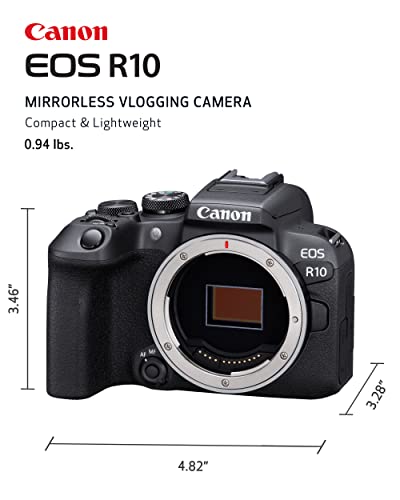
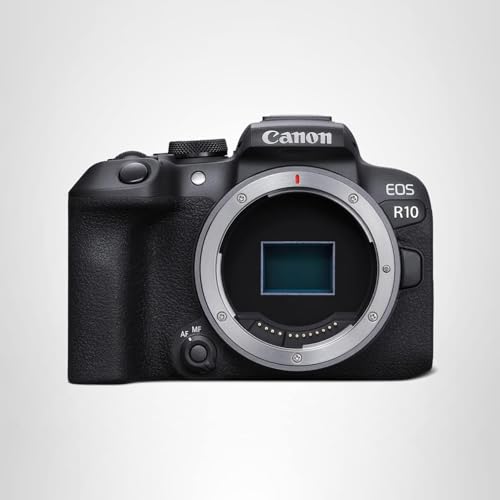
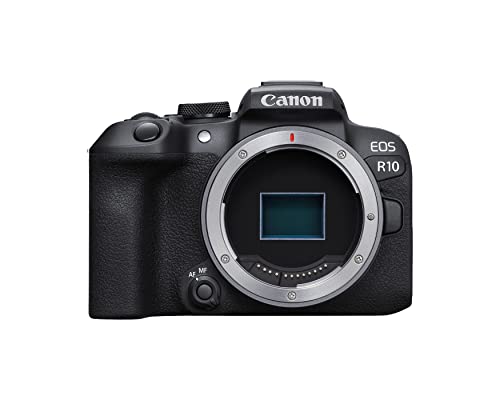
Canon EOS R10 review. Compare 108 technical specifications and user reviews to see how it ranks among cameras and if it is worth buying.
Overall score
What it is: An overall evaluation of the camera's quality, based on technical analyses and user reviews.
When it matters: When you need a quick reference to identify the best cameras on the market.
Score components:
90.0%
Technical Score
10.0%
User score
Technical Score
What it is: An assessment of the camera's technical performance, covering eight key areas: image quality, autofocus, video features, stabilization, lens compatibility, connectivity, battery, and design.
When it matters: When you want to compare cameras based on technical performance and available features.
Score components:
28.0%
Sensor & Image
25.0%
Photo Features
18.0%
Video & Audio
14.0%
Display & Design
8.0%
Battery & Power
7.0%
Connectivity & Storage
User score
What it is: A rating that combines user reviews and the total number of reviews received by the camera.
When it matters: When real-world owner satisfaction and review volume matter to your decision.
Score components:
70.0%
User reviews
30.0%
Popularity
Score components:
25.0%
Sensor size
20.0%
Main camera megapixels
20.0%
Dual card slots
15.0%
N. of focus points
10.0%
RAW photo capture
10.0%
Phase-detection autofocus (photos)
Score components:
35.0%
Weight
30.0%
Battery life (CIPA)
20.0%
Sensor-shift stabilization
15.0%
GPS
Score components:
30.0%
Price
20.0%
Weight
20.0%
AF tracking
20.0%
Battery life (CIPA)
10.0%
Touchscreen
Score components:
30.0%
Main camera megapixels
25.0%
Sensor size
20.0%
Main camera pixel size
15.0%
Sensor-shift stabilization
10.0%
RAW photo capture
Score components:
30.0%
Weight
25.0%
Thickness
20.0%
AF low-light sensitivity
15.0%
Sensor-shift stabilization
10.0%
Eye detection AF (human)
Score components:
30.0%
Sensor size
25.0%
Main camera pixel size
20.0%
Eye detection AF (human)
15.0%
Main camera megapixels
10.0%
Sensor-shift stabilization
Score components:
30.0%
Weight
25.0%
Battery life (CIPA)
20.0%
Min operating temperature
15.0%
Sensor-shift stabilization
10.0%
GPS
Available: ranking among products currently available (including other versions of this product).
All: ranking among all products in the database.
#5 in Best Cameras under £300
#10 in Best Canon Digital Cameras
#10 in Best Canon EOS Cameras
#25 in Best Vlogging Cameras
#25 in Best Cameras for YouTube
#39 in Best Mirrorless Cameras
#42 in Best Cameras
What it is: An assessment of the camera's technical performance, covering eight key areas: image quality, autofocus, video features, stabilization, lens compatibility, connectivity, battery, and design.
When it matters: When you want to compare cameras based on technical performance and available features.
Score components:
28.0%
Sensor & Image
25.0%
Photo Features
18.0%
Video & Audio
14.0%
Display & Design
8.0%
Battery & Power
7.0%
Connectivity & Storage
What it is: A rating that combines user reviews and the total number of reviews received by the camera.
When it matters: When real-world owner satisfaction and review volume matter to your decision.
Score components:
70.0%
User reviews
30.0%
Popularity
What it is: An indicator that combines the camera's overall rating with its cost.
When it matters: When you want to know how much overall quality you get for the price.
Score components:
60.0%
Overall score
40.0%
Price
Importance: HIGH
Good value: Full frame or larger
Importance: HIGH
Good value: At least 20 MP
Importance: HIGH
Good value: At least 3.5 µm
Importance: LOW
Importance: MEDIUM
Good value: At least ISO 25,600
Importance: MEDIUM
Importance: MEDIUM
Good value: At least 14-bit
Importance: LOW
Importance: LOW
Importance: LOW
Importance: LOW
Importance: LOW
Importance: LOW
Importance: LOW
Importance: LOW
Importance: MEDIUM
Importance: LOW
Importance: LOW
Importance: LOW
Importance: LOW
Importance: LOW
Importance: HIGH
Good value: At least 200 points
Importance: HIGH
Importance: MEDIUM
Importance: LOW
Importance: LOW
Importance: MEDIUM
Importance: MEDIUM
Importance: HIGH
Good value: At least 5 stops
Importance: LOW
Importance: MEDIUM
Good value: At least 10 fps
Importance: LOW
Importance: LOW
Importance: LOW
Importance: LOW
Importance: LOW
Importance: LOW
Importance: LOW
Importance: LOW
Importance: LOW
Importance: LOW
Importance: LOW
Importance: LOW
Importance: LOW
Importance: LOW
Importance: LOW
Importance: LOW
Good value: At least 200,000 actuations
Importance: LOW
Good value: At least 10x
Importance: HIGH
Good value: At least 3840 px
Importance: MEDIUM
Good value: At least 200 Mbps
Importance: MEDIUM
Good value: At least 10-bit
Importance: LOW
Importance: LOW
Importance: LOW
Importance: LOW
Importance: LOW
Importance: LOW
Importance: LOW
Good value: At least 30 min
Importance: LOW
Importance: LOW
Importance: LOW
Importance: LOW
Importance: LOW
Good value: At least 2 microphones
Importance: LOW
Importance: LOW
Importance: LOW
Importance: LOW
Importance: MEDIUM
Good value: 500 g or less
Importance: LOW
Importance: LOW
Importance: LOW
Importance: MEDIUM
Importance: MEDIUM
Good value: At least 2.36 million dots
Importance: LOW
Good value: 100%
Importance: LOW
Importance: LOW
Good value: At least 120 Hz
Importance: MEDIUM
Good value: At least 3 in
Importance: LOW
Importance: LOW
Importance: LOW
Importance: LOW
Importance: LOW
Importance: LOW
Importance: LOW
Good value: At least 10 m
Importance: LOW
Importance: LOW
Importance: LOW
Importance: LOW
Importance: MEDIUM
Good value: At least 400 shots
Importance: LOW
Good value: At least 1,500 mAh
Importance: LOW
Importance: LOW
Importance: LOW
Importance: LOW
Importance: LOW
Importance: LOW
Importance: LOW
Importance: LOW
Importance: LOW
Importance: LOW
Importance: LOW
Importance: LOW
Importance: LOW
Importance: LOW
Importance: LOW
Importance: LOW
Importance: LOW
Importance: LOW
Importance: HIGH
Good value: At least 200 points
Importance: HIGH
Importance: MEDIUM
Good value: At least ISO 25,600
Importance: MEDIUM
Good value: At least 10 fps
Importance: MEDIUM
Good value: At least 200 Mbps
Importance: LOW
Importance: MEDIUM
Importance: LOW
Importance: MEDIUM
Good value: At least 3 in
Importance: LOW
Importance: LOW
Good value: At least 1,500 mAh
Importance: LOW
Importance: MEDIUM
Good value: 500 g or less
(Reviews last updated: July 2026)
The DPReview in-depth review awards the Canon EOS R10 a Silver Award with an 87% score, highlighting it as a capable, modern successor to the Rebel DSLR series with excellent ergonomics, twin control dials, and an AF joystick. Key strengths include advanced AI-derived subject-recognition autofocus inherited from the EOS R3, high-speed shooting up to 23 fps, and good image quality for both stills and 10-bit HDR video. However, the camera lacks in-body image stabilization (IBIS) and features a small, entry-level viewfinder. Additionally, the review notes reduced autofocus reliability in video mode, a significant crop in 4K/60p, limited buffer capacity, and a constrained native APS-C RF-S lens ecosystem.
The Canon EOS R10 is a capable, lightweight APS-C mirrorless camera offering excellent value with a comfortable grip, 24.2 MP sensor with good dynamic range, and a fast 15 fps mechanical shutter. Its sophisticated autofocus system is a key strength for tracking, providing high-end performance for beginners and content creators. However, the camera lacks in-body image stabilization (IBIS) and features a severe 1.56x crop when shooting 4K/60p video. Further limitations include significant rolling shutter, lack of weather sealing, and subpar high-ISO noise performance in low light.
The Amateur Photographer review highlights the Canon EOS R10 as a compact, lightweight APS-C mirrorless camera offering excellent value through 15fps continuous shooting and a sophisticated AI-driven Dual Pixel CMOS AF II system for subject tracking. It is praised for its ergonomic handling, deep grip, and high-quality 24.2MP image output. Limitations noted by the review include a severely restricted native APS-C RF-S lens selection, the lack of in-body image stabilization (IBIS), a small electronic viewfinder, and no weather-sealing. The camera is described as a highly capable, yet constrained, option in the current market.
The-Digital-Picture.com reviews the Canon EOS R10 as a high-performing, entry-level APS-C camera, highlighting its excellent 24.2-megapixel sensor, vibrant image quality, and advanced Dual Pixel CMOS AF II subject-tracking system. Key strengths include rapid continuous shooting speeds of up to 15 fps (mechanical) or 23 fps (electronic), making it a versatile option for beginners and enthusiasts. Conversely, the review notes limitations including the lack of In-Body Image Stabilization (IBIS), a single SD card slot, and a smaller battery (LP-E17) that restricts long-duration shooting. The compact, lightweight design also results in a smaller, less robust grip and electronic viewfinder, with 4K/60p video recording incurring a notable image crop.
The Canon EOS R10 is a small, lightweight entry-level APS-C mirrorless camera that punches well above its weight with professional-tier autofocus capabilities. It features an exceptionally flexible tracking system that detects the eyes, heads, and bodies of both humans and a wide array of animals. Action photographers will appreciate its impressive shooting speeds of up to 15 frames per second (fps) with the mechanical shutter and 23 fps with the electronic shutter, alongside a 30 fps raw burst mode with pre-shooting functionality. It is also highly capable for video, offering crisp 4K recording at 30 fps oversampled from 6K, 10-bit 4:2:2 video when HDR PQ is enabled, a user-friendly touch menu, and dedicated controls like a joystick, AF-ON button, and an AF/MF switch. However, the camera comes with several physical and functional trade-offs due to its compact and budget-friendly design. On the downside, it completely lacks in-body image stabilization (IBIS), meaning users must rely on stabilized lenses or digital stabilization which introduces an extra crop. Its plastic body completely lacks weather sealing, and the incredibly small frame makes it uncomfortable...
Canon EOS R10 Review Summary However, the camera's budget-friendly, diminutive design introduces several hardware and physical limitations. Ergonomically, the small grip leaves little clearance when paired with large full-frame lenses, causing discomfort during handling. It lacks essential premium features found in higher-end bodies, such as in-body image stabilization (IBIS), robust weather-sealing, dual SD card slots, and a mechanical shutter that covers the sensor when powered off. Furthermore, video shooters are limited by the complete omission of a built-in headphone jack, and the camera relies on Canon's smaller, less powerful battery cells, which restricts its overall battery life.
The Canon EOS R10 serves as a highly capable, budget-friendly mirrorless camera well-suited for travel and wildlife photography, acting as a powerful upgrade for those transitioning from all-in-one digital compacts. Tested across diverse environments—including a safari night-drive at Singita and the bustling streets of Tokyo—the camera excels in fast-paced action by delivering continuous shooting speeds of up to 23 frames per second. It features an intuitive user interface with helpful viewfinder instructionals for beginners, manages challenging lighting admirably with a maximum expandable ISO of 32,000 for low-noise stills, and offers a highly portable footprint with a combined camera and compact lens weight of just 650 grams.
The Canon EOS R10 is a midrange mirrorless camera featuring a 24MP APS-C format sensor and Canon's advanced RF lens mount. The camera stands out for its exceptional autofocus capabilities, utilizing next-generation subject recognition that quickly identifies and tracks humans, animals, and motorsports across the entire sensor frame. It is highly capable for action photography, boasting rapid burst capture rates of up to 15 frames per second (fps) with its mechanical shutter and up to 23fps with the electronic shutter, complemented by a fast-clearing image buffer. Users will also benefit from solid ergonomics, an intuitive dual control layout with a focus joystick, a fully articulating 3-inch touchscreen display, a built-in flash, and full-width 4K video recording at 24 or 30fps. Furthermore, it offers excellent compatibility with existing gear, natively supporting RF-S and full-frame RF lenses, alongside older EF and EF-S SLR lenses via an adapter. Despite these strengths, the camera is held back by several limitations, primarily rooted in its older, traditional CMOS sensor architecture. This dated chip results in more visible image noise at high ISO settings (specifically from...
Canon EOS R10 Review Summary The Canon EOS R10 is a highly capable 24.2MP APS-C mirrorless camera designed for enthusiasts, travel photographers, and lifestyle creators graduating from smartphones or DSLRs. Powered by the Digic X image processor, it packs extraordinary pro-level performance into a lightweight, budget-friendly body weighing just 429g. Its standout features include lightning-fast burst shooting speeds of up to 15fps mechanical and 23fps electronic, alongside a highly sophisticated Dual Pixel CMOS AF II autofocus system with comprehensive subject tracking for humans, animals, and vehicles. For video, it offers 4K 30p oversampled from 6K, 1080p slow-motion at 120p, and a fully articulating touchscreen paired with a microphone jack, making it highly accessible for hybrid content creators. Despite its impressive speed and value, the camera has notable drawbacks that buyers should consider. The review highlights a lack of in-body image stabilization (IBIS) and a total absence of weather sealing, meaning users must exercise caution in harsh outdoor environment conditions. While the camera can record 4K video at 60p, doing so enforces a heavy 64% crop that significantly extends focal lengths...
The PCMag review highlights the Canon EOS R10 as a capable, value-driven midrange mirrorless camera featuring excellent subject-tracking autofocus inherited from higher-end models and fast burst shooting speeds of up to 23fps. The compact, ergonomic design includes a fully articulating screen and built-in flash, making it a strong contender for enthusiasts. However, the camera lacks in-body image stabilization (IBIS) and features an older 24.2-megapixel sensor that, while good, is not class-leading in image quality. Additionally, 4K/60p video recording incurs a significant crop, and the native RF-S lens selection remains limited.
The Tom's Guide Canon EOS R10 review highlights this mirrorless camera as a lightweight hybrid tool designed for smartphone or DSLR users transitioning into content creation. Equipped with a 24.2MP APS-C sensor and the robust DIGIC X processor, the camera delivers sharp, clean imagery at lower ISOs and natural color rendition. Its core strengths lie in its professional-grade Dual Pixel CMOS AF II autofocus system, which tracks human and animal eyes efficiently, and its ability to shoot uncropped 4K video at 30p (oversampled from 6K) or cropped 4K at 60p. The inclusion of a highly responsive, vari-angle touchscreen adds major practical value for vloggers shooting directly to the camera. However, the review details several prominent drawbacks that may compromise its long-term viability for serious creators. A major limitation is the lack of native RF-S lenses, leaving users reliant on a small selection of slow-aperture kit zooms or bulkier full-frame RF lenses. Furthermore, the camera lacks in-body image stabilization (IBIS) and advanced video tools like a Canon Log profile, making handheld video shaky and reducing post-production grading flexibility. Performance limitations also...
Overview The Canon EOS R10 is a compact and lightweight mirrorless APS-C camera designed primarily for beginners, travel photographers, and content creators looking for high performance at an affordable entry-level price point of around €799. Equipped with a 24.2-megapixel sensor and the Digic X processor, the camera delivers sharp, detail-rich, and naturally colored images under optimal lighting conditions up to ISO 800. Its standout features include the highly advanced Dual Pixel CMOS AF II system with deep-learning subject tracking for people, animals, and vehicles, alongside an impressive burst shooting capability of up to 23 frames per second with an electronic shutter. For video, it supports high-quality 4K/30p video oversampled from 6K, as well as Full-HD at 120p for slow-motion effects, all complemented by an intuitive touchscreen interface and a rare physical focus joystick for its class. Pros and Cons Despite its strong price-to-performance ratio, the camera comes with notable trade-offs due to its budget-friendly plastic construction. Pros Autofokus: Fast and precise deep-learning subject recognition. Speed: Rapid continuous shooting up to 23 frames per second. Video Quality: Crisp 4K/30p video derived...
The Canon EOS R10 is a compact and lightweight APS-C mirrorless camera designed to succeed Canon's 100-series DSLRs (EOS 300D to EOS 850D) by offering a faster, more user-friendly shooting experience. Equipped with a 24-megapixel sensor paired with a high-performance DIGIC X processor, the camera delivers high image quality with noticeable noise reduction in low-light environments up to ISO 6400. It provides fast performance, achieving an impressive continuous shooting speed of 15.2 frames per second. For videographers, it offers oversampled, highly detailed 4K video at 30 frames per second using the full sensor, alongside a 10-bit HDR PQ mode utilizing the HEVC codec. Its ergonomics feature a pronounced, comfortable grip that handles heavier RF and older adapted EF/EF-S lenses well, and its battery lasts through 66 minutes of continuous 4K video recording. Key Pros and Cons High Image Quality: Captures crisp 24MP stills and detailed 4K/30p video oversampled from the entire sensor area. Advanced Autofocus: Features a quick, accurate AF system with sophisticated subject tracking for eyes, faces, animals, and vehicles. Rapid Burst Speeds: Fires up to 15.2 frames per...
However, the camera comes with notable downsides, most significantly the complete lack of in-body image stabilization (IBIS), forcing photographers to rely entirely on optically stabilized lenses or tripods. The physical build prioritizes cost-cutting; the body is made without dust or splash protection, and the small 83mm handgrip can feel cramped when paired with wide, fast lenses like an f/2.8 or f/1.2. Canon also scaled back on display quality, fitting a lower-resolution 2.95-inch rear monitor with only 346,667 RGB pixels, which makes the 0.63x viewfinder the only reliable option for checking image sharpness. Finally, while its low-ISO JPEG processing is exceptionally sharp, shooting in RAW yields prominent luminance noise at ISO 1600 that requires strong Lightroom noise reduction to make the images usable.
The digitalkamera.de review highlights the Canon EOS R10 as a versatile, lightweight APS-C camera with a comfortable, ergonomic grip. It features an advanced Dual Pixel CMOS AF II system, excellent manual controls with a, and capable 4K video performance, making it a strong choice for hobbyists. However, significant cons include the absence of in-body image stabilization (IBIS), a small buffer for continuous shooting, and a small viewfinder magnification. The review also notes limited battery life and a lack of a dedicated headphone jack, positioning it strictly as an entry-to-mid-range, not professional, tool.
The Canon EOS R10 serves as an affordable entry point into Canon's R-system mirrorless lineup, priced under €1,000 for the body alone. It excels in performance by inheriting the high-end Dual Pixel CMOS AF II system with deep learning subject recognition and the Digic X processor from more premium models. This combination delivers excellent overall image quality from its 24.2-megapixel APS-S sensor up to ISO 3,200, alongside a rapid continuous shooting speed of up to 15 frames per second with the mechanical shutter and 23 frames per second with the electronic shutter. Its physical handling is aided by a lightweight 429-gram frame, an ergonomic grip, and a fully articulating 3-inch touchscreen monitor. However, the camera makes several notable compromises to maintain its lower price point. The most significant drawbacks are the lack of in-body image stabilisation (IBIS) and a body design that completely lacks weather sealing. Furthermore, its electronic viewfinder provides a noticeably smaller magnification (0.95x) compared to the higher-end R7, which restricts the shooter's overall view. In terms of video and connectivity, 4K/60p recording forces a heavy 64% crop...
The Canon EOS R10 is a mid-range APS-C mirrorless camera featuring a 24-megapixel sensor that delivers excellent image quality with minimal noise up to ISO 1600 and highly usable results up to ISO 6400. Its standout advantages include a remarkably fast and precise autofocus system with advanced subject recognition that locks focus in just 0.12 seconds. Performance is exceptional for its class, reaching continuous shooting speeds of up to 23 frames per second (fps) with the electronic shutter and 15 fps with the mechanical shutter, alongside a 30 fps RAW Burst mode that features a helpful pre-shooting option. However, a major performance bottleneck is its small buffer memory; shooting at top speeds fills the buffer in under a second, limiting continuous capture to just 17 standard RAW or 33 cRAW files before slowing down significantly. In terms of video and physical design, the camera produces high-quality 4K footage at up to 60 fps (with an added crop) or 30 fps (uncropped), supporting 10-bit 4:2:2 color and an external microphone port, though it lacks a headphone jack for monitoring. The body...
The CHIP Review highlights the Canon EOS R10 as an impressive mirrorless (DSLM) camera tailored for ambitious beginners. A primary strength is its 24-megapixel APS-C sensor, which delivers crisp sharpness in both photography and video modes. Action and wildlife enthusiasts will appreciate its exceptional continuous shooting speed, reaching up to 23 frames per second with full resolution and automatic autofocus tracking. Additionally, the camera excels in usability by featuring an ergonomically designed grip, dual control dials, and a dedicated explanation menu specifically structured to help beginners easily understand various features. YouTube · On the downside, the review identifies the absence of an in-body image stabilizer (IBIS) as the camera's largest flaw, which increases the likelihood of blurry, shaky images when shooting handheld in low-light environments. Another notable constraint is the relatively limited selection of native compatible RF lenses optimized for this specific sensor type. While users can circumvent this restriction by using older EF DSLR lenses via an external adapter, it adds to the bulk of an otherwise compact setup. Priced at around €1,000, the R10 earns a final test...
The Canon EOS R10 is an exceptional, lightweight APS-C mirrorless camera designed primarily for beginners and advanced hobbyists seeking a versatile all-rounder. The reviewer notes that the camera excels due to its compact, lightweight design (weighing roughly 429g) and highly intuitive handling, which includes highly customizable buttons and a physical autofocus joystick. Performance is a major highlight, featuring a rapid burst rate of up to 23 frames per second (electronic) or 15 fps (mechanical), backed by a superb, reliable Dual Pixel CMOS AF II autofocus system capable of precise eye and animal tracking. Furthermore, its 24.2-megapixel sensor yields clean, sharp image quality even at ISO 12800, and its video capabilities are strong, supporting oversampled 4K video at up to 60fps with no 30-minute recording limit. Despite these strengths, the reviewer outlines several notable disadvantages, most prominently the severe lack of native RF-S lens options currently available on the market. Battery life from the tiny LP-E17 battery is only mediocre, providing between 300 and 700 shots depending on usage and image stabilization, and the camera body frustrates with a klutzy, cheap-feeling...
Travel blogger Diana Millos tested the compact Canon EOS R10 in Seville, highlighting its lightweight design for travel and advanced Dual Pixel CMOS AF II autofocus for fast-moving subjects, such as dancers. The review praises the camera's high-speed burst shooting, vari-angle screen, and specialized modes like Panorama and Movie Digital IS, which facilitate steady, handheld, on-the-go content creation. Conversely, the review notes that the entry-level APS-C system and its smaller RF-S kit lenses (18-45mm and 18-150mm) offer narrower apertures, which can limit background blur. Furthermore, shooting in lower-light conditions, like interior scenes, requires higher ISO settings of up to 12,800 to maintain exposure. Finally, using the Electronic Movie Digital IS for stabilization can significantly crop the video field of view. Canon Central
The Heise Online review describes the Canon EOS R10 as a highly capable, compact 24.2-megapixel APS-C camera, highlighting its advanced Dual Pixel CMOS AF II system, high-speed shooting up to 23 fps, and excellent ergonomics with an AF joystick. Despite its performance, the camera lacks in-body image stabilization (IBIS), has a small buffer for raw files, and features a plastic, non-weather-sealed body to maintain its budget-friendly price point.
The Canon EOS R10 review by Les Numériques highlights it as a highly capable, mid-range APS-C mirrorless camera tailored for beginners and advancing enthusiasts. Promoted for its balance of efficiency and rich features, the camera excels with an intelligent, highly responsive autofocus system that borrows advanced subject-tracking capabilities from high-end models—working effectively across both stills and video modes. It showcases remarkable burst speeds of up to 20 frames per second using its electronic shutter accompanied by continuous autofocus tracking. Furthermore, users benefit from a comfortable ergonomic grip, a versatile fully articulating touchscreen, oversampled uncropped 4K video recording at 30 fps, and convenient USB-C power delivery during operations. Despite these strengths, the review notes several significant limitations tied to its lower tier pricing. On the physical side, the EOS R10 lacks in-body image stabilization (IBIS), features a loud and cheap-sounding mechanical shutter, and completely omits weather sealing against moisture or dust. Storage accessibility is compromised because the single SD card slot is situated awkwardly inside the bottom battery compartment, restricting access when mounted on a tripod. Performance-wise, internal memory constraints lead...
The Fnac review by Jason highly praises the Canon EOS R10 as an elegant, exceptionally balanced, and lightweight APS-C mirrorless camera weighing just 429g. Its ergonomic design features a comfortable 2.36 Mpx electronic viewfinder, a reactive vari-angle touchscreen, and a practical mini-joystick that ensures immediate usability. Driven by a powerful processor and a 24.2 Mpx sensor, the camera delivers outstanding, rapid performance, capturing up to 15 frames per second using the mechanical shutter. A major pro is its advanced autofocus system that easily tracks both people and animals. For videographers and vloggers, the camera shines with high-quality oversampled 4K video at 60 fps (30 fps uncropped), Full HD at 120 fps for slow motion, a built-in microphone jack, permanent smartphone connectivity, and up to two hours of continuous recording time. While the review treats the camera as an unmissable value option with "no real flaws" at its price point, it notes that the sensor can produce image grain under extremely dim conditions, such as inside a dark abbey. This high-ISO grain is primarily flagged as a con because the camera...
The Canon EOS R10 is a budget-friendly 24.2-megapixel APS-C mirrorless camera featuring the Digic X processor, 15-23 fps shooting speeds, and advanced AI-driven autofocus inherited from higher-end models. It excels in speed and subject tracking for entry-level action photography, while delivering oversampled 4K/30p video and featuring a compact body with excellent ergonomics, including a fully articulating screen. YouTube ·Miklós Mayer - I will be Key compromises include the lack of in-body image stabilization (IBIS), no weather-sealing, and a lightweight plastic construction. The camera also suffers from significant 4K/60p cropping, a small electronic viewfinder, limited native RF-S lens selection, and short battery life. For a detailed in-depth analysis of the camera's performance, see the full review at ePHOTOzine. YouTube ·Miklós Mayer - I will be
The Canon EOS R10 is a compact, lightweight APS-C mirrorless camera tailored for beginners and mid-range photographers seeking high performance on a budget. Its standout feature is an exceptionally fast, precise autofocus system with advanced subject tracking inherited from the high-end EOS R3. The camera boasts excellent overall image quality from its 24.2-megapixel sensor, a highly comfortable deep-grip ergonomics design, a fully articulating touchscreen perfect for vlogging, and uncropped 4K video recording at 30 fps. It delivers incredible value for money, offering premium operational capabilities under the €1,000 price point. However, the R10 has several notable limitations resulting from its budget-conscious build. The most severe flaw is its incredibly small RAW buffer size (storing only up to 29 RAW frames), which makes its high-speed burst rates of 15–23 fps almost unusable for sustained action. Additionally, the camera body lacks in-body image stabilization (IBIS), is built with basic plastic finitions without weather sealing, and suffers from a noticeable loss of detail at or above ISO 3200. From a functional standpoint, users may find the single SD card slot frustrating because it...
The Canon EOS R10 is a highly capable and lightweight (429g with battery) APS-C mirrorless camera tailored for sports, wildlife, and content creators seeking professional-grade responsiveness at an accessible price point. Driven by the advanced DIGIC X processor, it features the Dual Pixel CMOS AF II system backed by Deep Learning AI, which provides exceptional tracking for people, vehicles, and animals. Action photographers benefit from blistering burst speeds of 15 frames per second (fps) with the mechanical shutter and up to 23 fps using the electronic shutter with continuous autofocus. For videographers, the camera delivers high-quality 4K 60p recording (with a slight crop) and crisp 4K 30p oversampled from 6K, alongside slow-motion capabilities up to 240p in HD and integrated Wi-Fi/Bluetooth connectivity. Despite its excellent value and performance, the reviewer highlights several limitations to consider before purchasing. On the downside, the R10 lacks In-Body Image Stabilization (IBIS), meaning users must rely on stabilized lenses to minimize camera shake. It is equipped with only a single SD card slot, lacks weather-sealing (tropicalization), and has an average battery life rated at 430...
The Canon EOS R10 is an affordable APS-C mirrorless camera designed for beginners, travellers, and content creators looking to transition from smartphones or older DSLRs. It features a 24-megapixel sensor capable of producing high-quality images and large prints. Standout features include a highly advanced Dual Pixel V2 autofocus system with real-time tracking for humans, animals, and vehicles, alongside an impressive burst shooting rate of up to 15 frames per second mechanically and 23 frames per second electronically. For videographers, the camera supports 4K recording at 30 fps in 10-bit color, a vari-angle touchscreen perfect for vlogging, and unique direct livestreaming capabilities to YouTube via a smartphone connection. Pros and Cons Pros Autofocus Performance: Exceptional subject-tracking system matching higher-end professional models. Speed: Rapid burst shooting (15/23 fps) ideal for sports and wildlife. Ergonomics & Weight: Balanced, robust build with a deep grip and dedicated joystick, yet weighing only 429 grams. Connectivity: Allows direct streaming without a PC and supports fast UHS-II SD cards. Cons No Stabilization: Lacks in-body image stabilization (IBIS), requiring stabilized lenses or tripods. Video Crop: Experiencing a heavy...
The Canon EOS R10 is a lightweight, 382-gram APS-C mirrorless camera that integrates high-end technologies into an affordable body aimed at beginners and hobbyists. It stands out primarily for its exceptional performance, inheritance of the Dual Pixel CMOS AF II autofocus system, and deep learning AI from premium models like the EOS R3 and R5, delivering near-infallible subject tracking for people, animals, and vehicles. Driven by the powerful DIGIC X processor, the 24.2-megapixel camera handles high ISO settings smoothly up to 6400, offers an impressive burst shooting rate of up to 15 frames per second with a mechanical shutter, and captures sharp 4K video. Ergonomically, it features a deeply comfortable grip, a highly responsive autofocus joystick, and a versatile 7.5 cm fully articulating touchscreen display ideal for vlogging and creative angles. It also maximizes lens choices by supporting native RF optics as well as older EF lenses through an adapter. Despite its stellar entry-level performance, the review highlights several structural and technical compromises designed to keep costs down. The camera lacks both in-body image stabilization (IBIS) and weather sealing, making...
The Canon EOS R10 is a highly versatile APS-C mirrorless camera designed for travel enthusiasts and content creators, serving as a modern alternative to traditional DSLR lines like the 80D and 90D. Its standout feature is an exceptional Dual Pixel CMOS AF II autofocus system derived from top-tier models like the R3, which provides flawless, lightning-fast tracking even in extremely low-light conditions (-4 EV) and tricky environments like night-time fireworks. Built with a robust yet compact hybrid body, it delivers excellent image quality via its 24.2 MP sensor and impressive shooting speeds of up to 15 frames per second (fps) with the mechanical shutter and 23–30 fps with the electronic shutter. It also boasts advanced connectivity, including direct YouTube live streaming, Wi-Fi, and 4K video recording with 6K oversampling. However, the camera features a few notable engineering compromises to keep its price competitive at around €1,029. The button layout is heavily inherited from the entry-level EOS M50, resulting in a single-dial layout that lacks a dedicated second physical dial for manual control, though users can program the lens control ring...
The Photolari review describes the Canon EOS R10 as a highly competitive, mid-range APS-C mirrorless camera that offers great ergonomics and high speed for around 1,100 to 1,400 euros. Built with an exceptional grip similar to higher-end models, it features a 24-megapixel sensor, an articulating screen, an electronic viewfinder, and a dedicated autofocus joystick. Testing with the 18-150mm f3.5-6.3 lens showed standard but pleasing image quality with solid detail, beautiful colours, and good dynamic range. The camera's biggest strengths are its lightning-fast burst speeds—up to 15 frames per second with a mechanical shutter—and a highly advanced autofocus tracking system inherited from premium models like the EOS R3. However, the review points out several important drawbacks that hold the camera back. The most significant flaw is the lack of in-body image stabilization (IBIS), meaning users must rely on stabilized lenses. Additionally, the small battery has poor life, limiting users to about 400 shots per charge if they do not film video. For video creators, 4K shooting at 60p forces a heavy 1.6x crop, and the body lacks a headphone jack for...
Travel photographer Diana Millos tested the Canon EOS R10 in Seville, utilizing its 429g body with RF-S 18-45mm and RF-S 18-150mm lenses to capture fast-moving scenes, architecture, and food. The review highlights the camera’s advanced Dual Pixel CMOS AF II with eye-tracking, panning, and in-camera focus bracketing as key features for enhancing creativity and performance. Pros of the R10 include its compact, lightweight design ideal for travel, fast burst shooting, and excellent 4K 60p video capabilities. Cons noted in the review include a significant image crop when shooting at 4K 60p and the lack of in-body image stabilization (IBIS), requiring users to rely on stabilized lenses.
The Canon EOS R10 review marks a major milestone as Canon unifies its mirrorless ecosystem by introducing its first entry-level APS-C sensor models to the R-system, positioning the R10 as a modern alternative to traditional DSLRs like the EOS 850D. Retailing around €1,000 for the body alone, this hybrid camera delivers exceptional value by blending high-end performance with an accessible price point. Key strengths highlighted in the review include its featherlight, compact design weighing just 429 grams, a highly intuitive layout reminiscent of the full-frame EOS R6, and industry-leading autofocus tracking. Furthermore, by abandoning the mirror mechanism, it achieves rapid burst shooting speeds that easily outclass traditional mid-range DSLRs.
Summary of Pros & Cons Pros DIGIC X Processor provides rapid menu navigation and top-tier picture processing. Dual Pixel CMOS AF II delivers highly accurate, premium subject tracking. Blazing fast burst rates (15fps mechanical / 30fps electronic). Excellent ergonomics with a deep grip and functional AF joystick despite its compact size. Cons No internal sensor stabilization (IBIS), limiting handheld low-light flexibility. Sharp drop in image quality and high noise scaling beyond ISO 1600. Few customisable buttons and cheap plastic battery compartment door. The RF-S 18-45mm kit lens restricts capabilities with noticeable distortion and color fringing.
The Canon EOS R10 is a compact, entry-level APS-C mirrorless camera designed for beginners needing an accessible entry point or professionals seeking a lightweight second body. Built with a polycarbonate and fiberglass blend, it features a deep, comfortable grip, an articulating touchscreen, a 2.36-million-dot viewfinder, and a single UHS-II card slot. Its core strengths include an exceptional Dual Pixel autofocus tracking system, rapid subject recognition, and up to 5 stops of image stabilisation. The camera offers a respectable 6-stop dynamic range, performing remarkably well when recovering overexposed highlights by 2 stops or underexposed shadows by up to 4 stops. Additionally, it exhibits excellent ISO invariance, allowing photographers to brighten dark areas in post-production without adding extra noise or sacrificing fine detail. Despite its versatile performance, the camera has several physical and technical limitations. The polycarbonate body material offers a less premium tactile sensation, and the external interface suffers from limited button customization and the absence of a traditional control wheel. While low-light performance is highly usable up to ISO 1600, noise becomes prominent at ISO 3200 and requires aggressive, detail-destroying...
The Canon EOS R10 is a compact, ultra-lightweight entry-level mirrorless camera designed primarily for content creators, vloggers, and smartphone users transitioning to a dedicated camera system. Priced around €1029.99 for the body only, it features a 24.2-megapixel APS-C image sensor paired with the high-performance DIGIC X processor. One of its standout pros is its exceptional Dual Pixel CMOS AF II autofocus system, which includes machine-learning tracking for humans, animals, and vehicles, operating efficiently down to -4 EV. Additionally, it delivers impressive burst shooting speeds of up to 15 frames per second (fps) with the mechanical shutter and 23 fps with the electronic shutter, outperforming some high-end professional models. For creators, it includes a helpful rear joystick for quick focus-point selection and an articulated 3-inch touchscreen display perfect for self-shooting. On the downside, the camera body is not weather-sealed, making it risky to use in the rain. It provides a single UHS-II SD card slot and omits a dedicated headphone jack, which may limit advanced video monitoring. While it records high-quality video up to 4K/30p oversampled from 6K, shooting at 4K/60p...
Travel blogger Diana Millos tested the compact Canon EOS R10 in Seville, highlighting the camera's lightweight design, fast autofocus, and high-speed shooting capabilities for capturing quick movement. The EOS R10 is praised for being an affordable, user-friendly transition from DSLRs that offers 4K video and 120p slow-motion, making it an excellent tool for content creators. However, the APS-C sensor limits low-light performance compared to full-frame alternatives, and the body lacks weather sealing. Additionally, the camera does not feature in-body image stabilization (IBIS), and the RF-S lens selection remains somewhat limited, according to technical evaluations. YouTube ·Miklós Mayer - I will be
The Canon EOS R10 is highly praised as a lightweight, compact, and versatile entry-level mirrorless camera that punches well above its weight class for its €999 price tag. Reviewers highlight its stellar autofocus system powered by the DIGIC X processor, which features advanced Dual Pixel tracking for humans, animals, and vehicles. It is an exceptional tool for sports and wildlife photography due to its blazing speed, offering continuous bursts of 15 frames per second (fps) with a mechanical shutter and up to 23fps electronically. Image and video capabilities are also strong, delivering detailed 24.2-megapixel resolution with minimal noise up to ISO 6400, alongside oversampled 4K video at 30p and high-speed Full HD at 120p for crisp slow-motion footage. However, the camera requires several concessions compared to high-end models like the EOS R7. Its most notable omissions are the lack of In-Body Image Stabilization (IBIS) and weather sealing, which makes handheld video shooting and outdoor photography in poor weather more challenging. Additionally, videographers will face a significant crop when shooting in 4K at 60p and will miss having a dedicated headphone...
The Canon EOS R10 is a versatile, lightweight (426g) mirrorless camera featuring a 24.2-megapixel APS-C sensor and a DIGIC X processor that delivers high-speed shooting up to 23 frames per second. It boasts the same advanced deep-learning autofocus system for tracking subjects as higher-end models, along with quality 4K video recording. Key drawbacks highlighted in the review include the lack of in-body image stabilization (IBIS) and the absence of weather sealing. Additionally, the camera is limited by a shorter battery life and a smaller buffer for continuous shooting, along with a lack of a headphone jack for audio monitoring.
Travel blogger Diana Millos tested the Canon EOS R10 over 48 hours in Seville, highlighting its compact, lightweight design as ideal for travel. The review praises the camera’s Dual Pixel CMOS AF II for fast, accurate tracking of moving subjects, alongside a versatile vari-angle screen and high-quality 4K video capabilities. However, the review notes that the R10 lacks In-Body Image Stabilisation (IBIS), requiring reliance on lens-based stabilization (IS) for steady, handheld footage. Additionally, users accustomed to traditional DSLRs may need to adjust to the new button layout, and the APS-C sensor represents a limitation for those seeking full-frame performance.
Despite its impressive speed and autofocus capabilities, the camera has clear limitations stemming from cost-saving design choices. A significant drawback is the complete absence of in-body image stabilization (IBIS), meaning users must rely heavily on lenses with built-in stabilization. Its lightweight plastic body is not weather-sealed, making it risky to use in dusty or wet environments. The camera is restricted to a single SD card slot and features a relatively small image buffer, which restricts prolonged burst shooting to only about 1.5 seconds at top speeds. In terms of image and video performance, its low-light capability is somewhat limited, with JPEG images showing noticeable noise and a loss of sharpness at ISO 3,200 and above. For videographers, the 4K 60p mode incurs a heavy 64% sensor crop, there is a risk of rolling shutter distortion when utilizing the electronic shutter, and the camera lacks both a headphone jack for audio monitoring and the ability to record in a flat log profile.
The Canon EOS R10 is presented as a lightweight, versatile mirrorless camera ideal for travel creators, featuring advanced Deep Learning AF and 4K 60p/30p video capability without a 30-minute recording limit. Travel photographer Diana Millos highlights the camera's compact design and rapid burst shooting as key advantages for capturing fast-paced scenes. However, the analysis notes that 4K 60p recording introduces a substantial sensor crop, limiting wide-angle options, and the lack of In-Body Image Stabilization (IBIS) necessitates the use of stabilized lenses for smooth footage. The camera relies on digital stabilization and intelligent autofocus, positioning it as a capable, entry-level, non-IBIS option for content creators.
The EOSzine review positions the Canon EOS R10 as a highly capable, budget-friendly entry-level camera within Canon's mirrorless APS-C system, functioning as an ideal upgrade for older DSLR users. It is heavily praised for its exceptionally lightweight and compact body, impressive ergonomics, and an advanced autofocus system mirrored from the more expensive EOS R7. Performance-wise, it stands out for its high continuous shooting speeds—reaching 15 fps with the mechanical shutter and 23 fps with the electronic shutter—alongside oversampled internal 4K video recording and noticeably improved JPEG noise processing at higher ISO levels compared to older DSLRs. However, the review details several prominent design compromises made to achieve this compact size and aggressive sub-€1000 price point. Key disadvantages include the complete absence of In-Body Image Stabilization (IBIS), a single SD card slot packed tightly into the battery compartment, and the lack of a headphone jack for video monitoring. Furthermore, it uses the smaller LP-E17 battery which offers less capacity, has a smaller, less sharp electronic viewfinder (EVF) than high-end bodies, and struggles with autofocus subject tracking when paired with slower lenses...
Compare