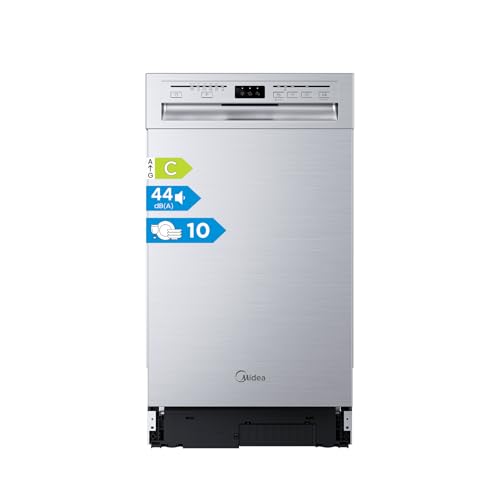
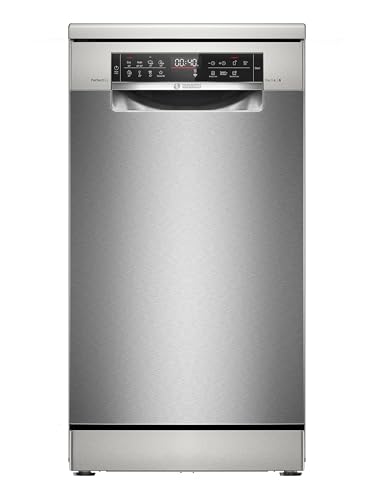
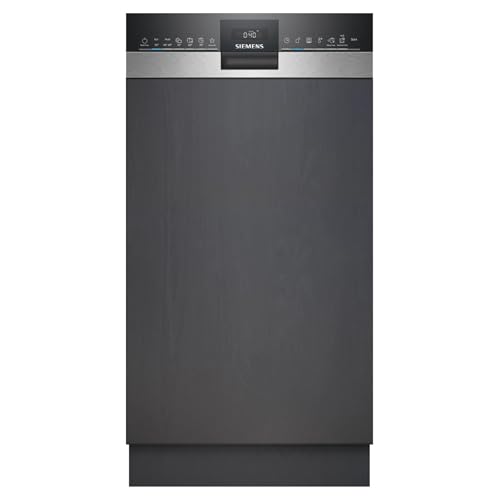
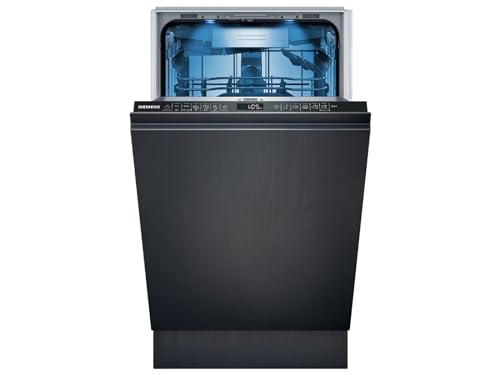
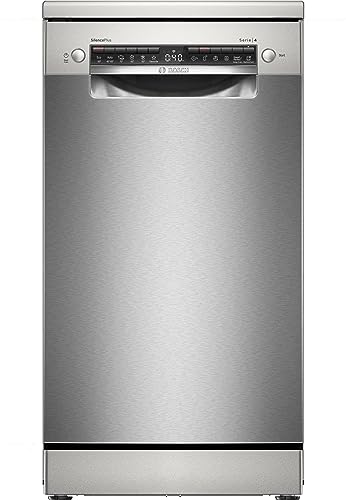
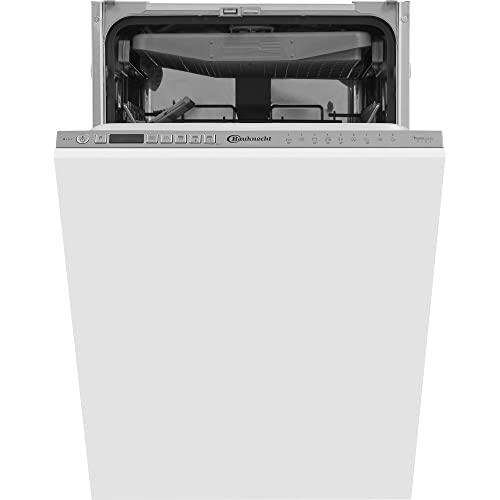
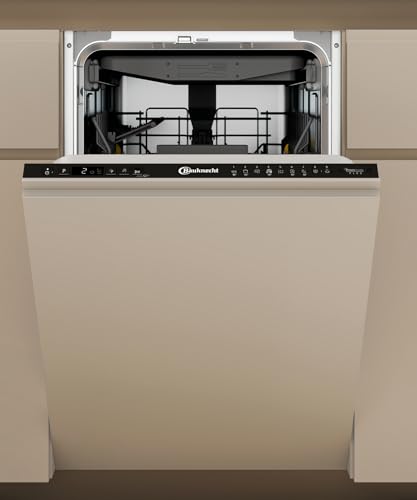
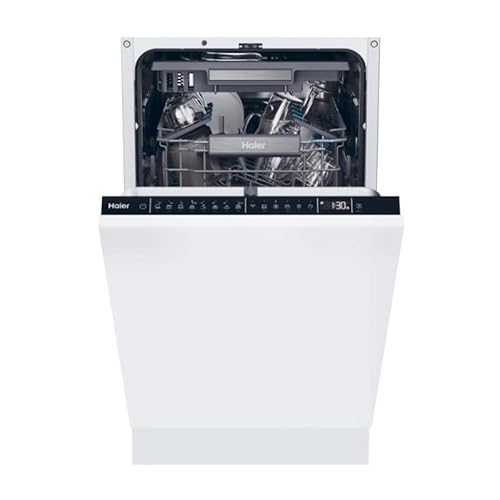
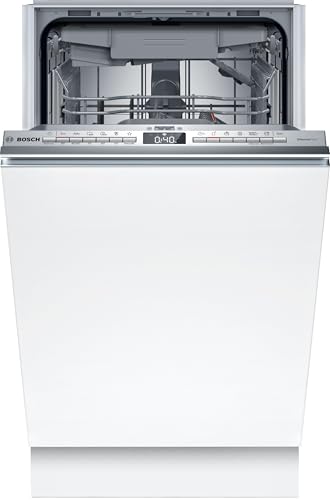
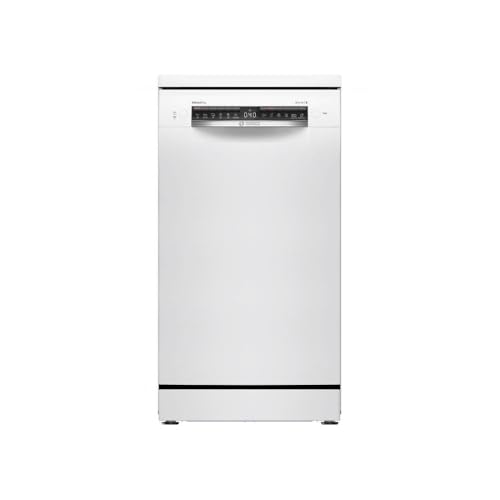
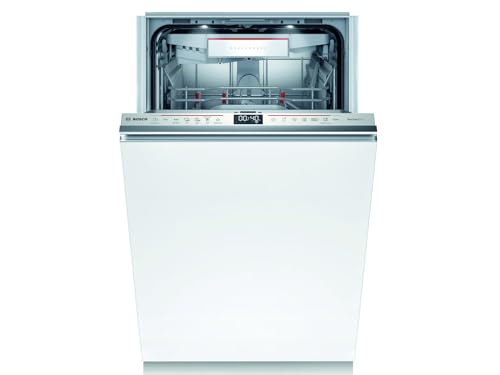
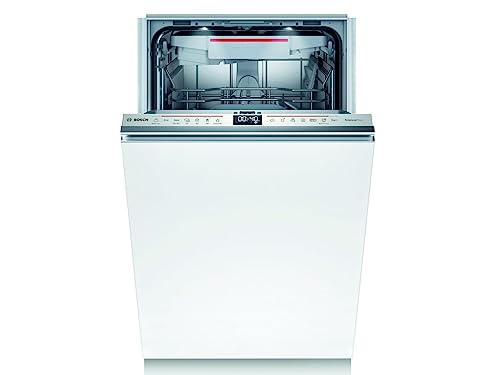
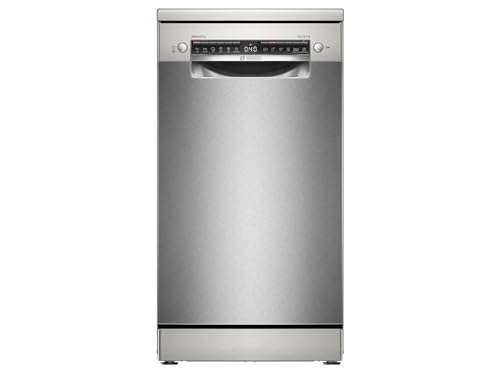
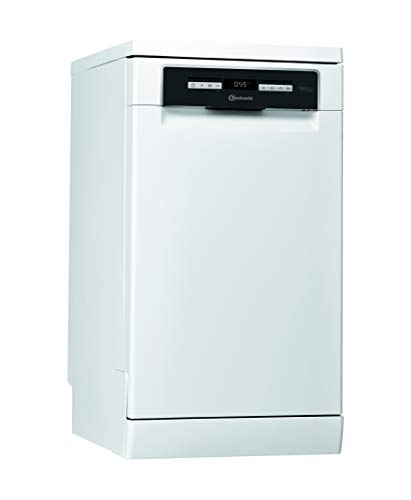
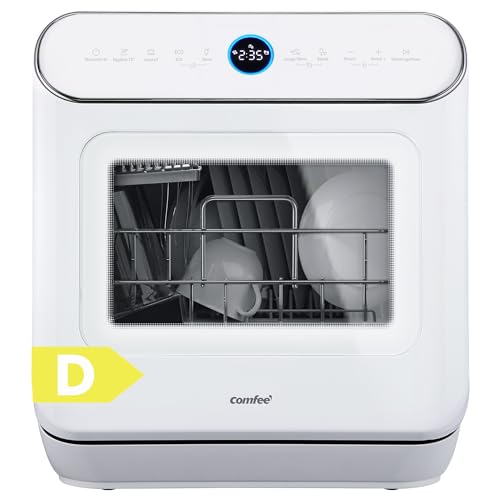
Which brands make the best slim dishwashers?
The best slim dishwasher brands are ranked below:
- Bauknecht (Average overall score: 8.6)
- Midea (Average overall score: 8.5)
- Bosch (Average overall score: 8.3)
The chart below ranks slim dishwasher brands by average overall score.
[horizontal-chart-13369171627581840449016757969051939563660718435428]
What width counts as a slim dishwasher?
A full-height slim dishwasher is normally about 45 cm wide, with product widths commonly around 44.5–45 cm. The broader 40–50 cm label can also capture unusually narrow or countertop products, so width alone is not enough to identify the intended format.
For a floor-standing or integrated slimline replacement, check that the appliance is full height and offers roughly 9–10 place settings. Models nearer 42 cm wide may be compact countertop designs with much lower capacity and different plumbing or placement requirements.
Always use the manufacturer’s exact cabinet dimensions. Nominal width does not include every tolerance, hose route, door projection, hinge requirement, or ventilation clearance.
How much kitchen space can a slim dishwasher save?
A slim dishwasher can save about 15 cm of kitchen width compared with a standard 60 cm model. That space may preserve a useful drawer unit, make a narrow galley workable, or allow a dishwasher where a full-width opening is impossible.
The saving applies mainly to width, not necessarily depth or door clearance. Full-height slim models are still commonly around 55–61 cm deep, and the open door occupies a similar forward area, so measure the entire installation rather than treating slim as compact in every direction.
How much capacity does a slim dishwasher provide?
A full-height slim dishwasher usually provides 9–10 place settings, with some models offering 11. This suits many one- or two-person households and can work for three when loads are modest and the machine runs regularly.
The narrow basket has less room for pans, serving dishes, and large plates than a 60 cm model. Upper-rack adjustment, folding tines, efficient cutlery storage, and maximum plate diameter therefore matter more than a single extra nominal setting.
Smaller countertop products within the 40–50 cm width band may hold only two to four settings. Confirm height, installation type, and stated capacity before assuming every narrow machine is a conventional slimline dishwasher.
The chart below shows the place-setting capacities of slim dishwashers.
[vertical-chart-02212948496519512269163396849994393516491873535501]
Do slim dishwashers clean as well as full-width models?
Slim dishwashers can clean as well as full-width models when they are loaded correctly and have comparable wash systems. Width mainly changes capacity and loading flexibility, not the basic ability of water, detergent, heat, and spray action to remove soil.
The main risk is overcrowding. Closely packed plates, pans, or cutlery can block spray paths, while oversized items may prevent an arm from rotating. A flexible rack layout is therefore essential.
Drying can also differ by model rather than width. Compare automatic door opening, extra-dry options, heat-exchanger or fan systems, and results on plastics instead of assuming a slim cabinet will dry worse.
Choose a 60 cm dishwasher if ordinary loads would routinely require two slim cycles. Choose slim when one properly arranged load is enough and the saved width has real value in the kitchen.
How much do slim dishwashers cost?
Slim dishwashers generally cost about £300-£600, across full-height and compact designs. Installation type, capacity, rack flexibility, efficiency, noise, drying, and hinge requirements influence the price.
Below £300, expect simpler baskets, core programs, conventional drying, or small countertop capacities. From £300-£430, full-height 9–10-setting models more commonly add adjustable racks, automatic cycles, improved displays, quieter operation, and stronger leak protection.
Above £430, models may provide very low noise, premium cutlery trays, advanced drying, time projection, interior lighting, connectivity, or sophisticated integrated hinges. Include furniture panels and fitting for built-in models before comparing total cost.
The chart below shows the price distribution of slim dishwashers.
[vertical-chart-00393545239465818926039779058340453134701228644290]
What should you consider when choosing a slim dishwasher?
Before buying a slim dishwasher, consider the following factors:
- Product format and exact fit: Confirm whether the appliance is a full-height 45 cm slimline model or a smaller countertop design, then measure width, height, depth, hoses, ventilation, and open-door clearance. Width alone does not establish capacity, installation method, or plumbing requirements.
- Required capacity: Full-height models with 9–10 settings generally suit 1–3 people, while smaller products in the 40–50 cm width band with 2–4 settings are mainly for one person or very light two-person use. Estimate peak dish and cookware volume to avoid buying a machine that must run repeatedly.
- Rack flexibility: Check maximum plate diameter, upper-rack adjustment, folding supports, cutlery storage, glass holders, and spray-arm clearance. A narrow chamber magnifies every fixed tine or poorly positioned basket component.
- Energy and water consumption: For a full-height slim machine, about 0.60–0.80 kWh and 8.5–10 L per Eco cycle is good; more than 0.90 kWh or 11 L is relatively high. Countertop formats should instead target about 0.4–0.6 kWh and 5–7 L because they wash far fewer settings.
- Noise level: Around 44–46 dB or less is useful for a full-height machine near living spaces; countertop models may be more noticeable because they sit closer to ear level. Check rated sound independently from quiet-program marketing.
- Wash performance and programs: Eco, automatic, intensive, quick, and glass cycles cover most needs when spray coverage, filtration, detergent release, and sensor control are effective. Assess performance with a full narrow basket, where overcrowding is the main risk.
- Drying performance: Compare plastics and systems such as automatic door opening, heat exchange, fans, or extra heat. Verify that steam and door movement will not affect overhead cabinets, furniture panels, worktops, or narrow walkways.