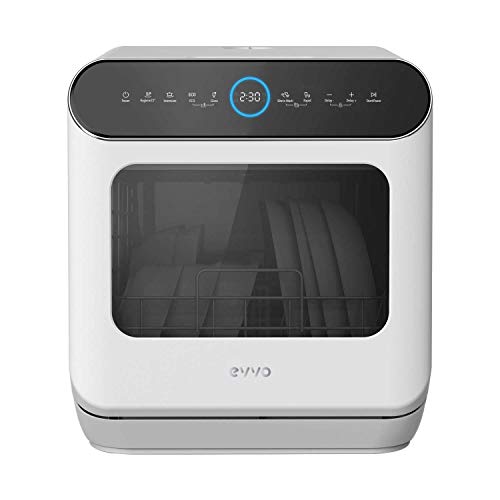
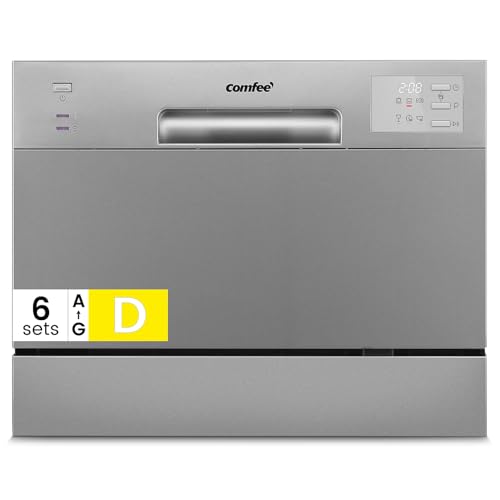
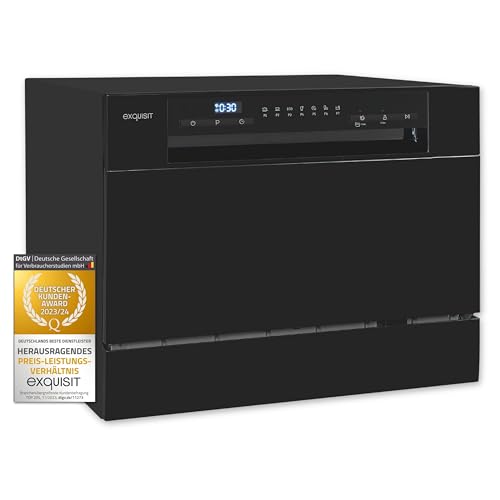
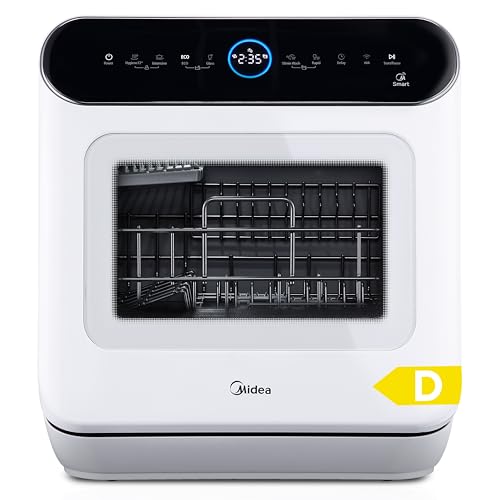
Which brands make the best small countertop dishwashers?
The best small countertop dishwasher brands are ranked below:
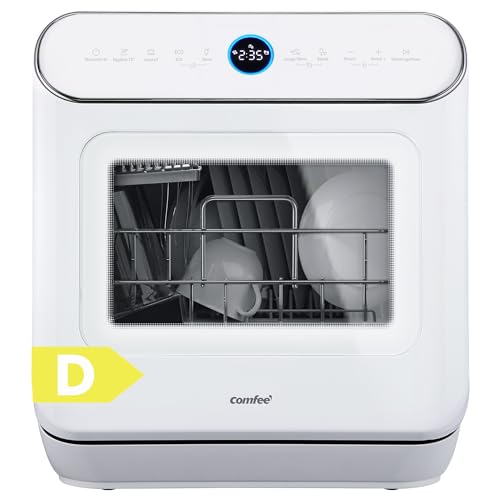
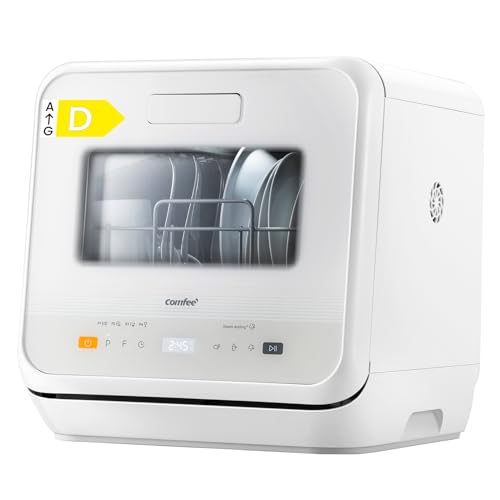
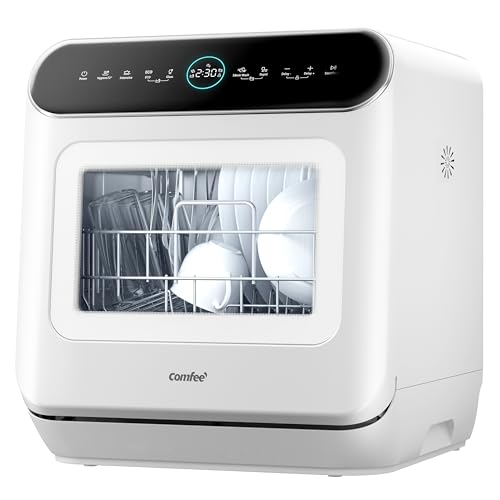
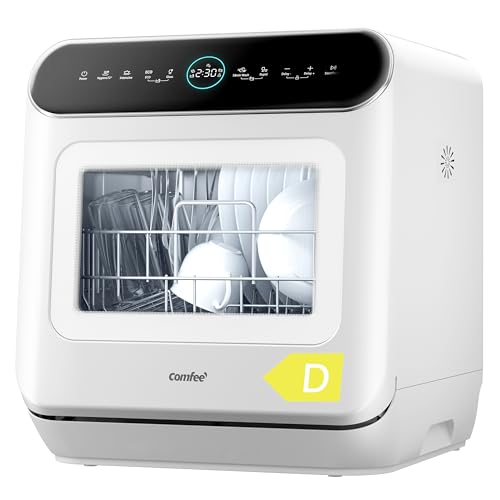
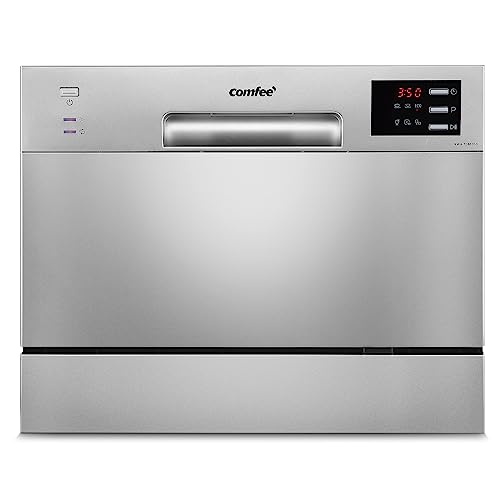
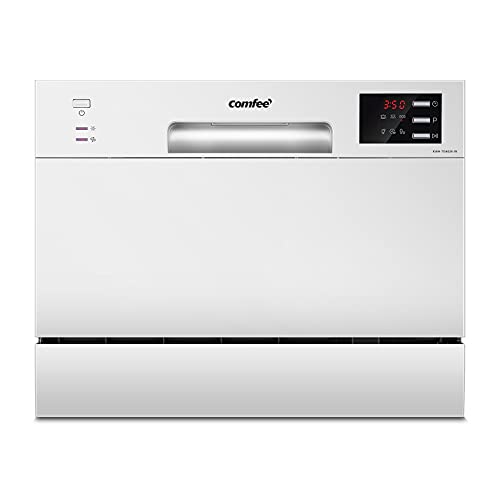
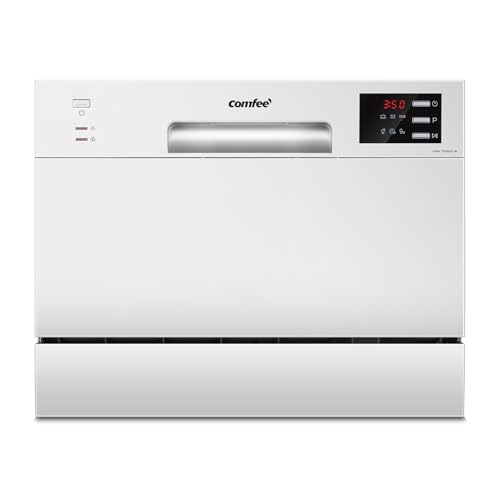
- COMFEE' (Average overall score: 7.8)
- Candy (Average overall score: 7)
- Klarstein (Average overall score: 6.9)
The chart below ranks small countertop dishwasher brands by average overall score.
[horizontal-chart-10011527440105019781137811302120077407814017112117]
What is considered a mini or small dishwasher?
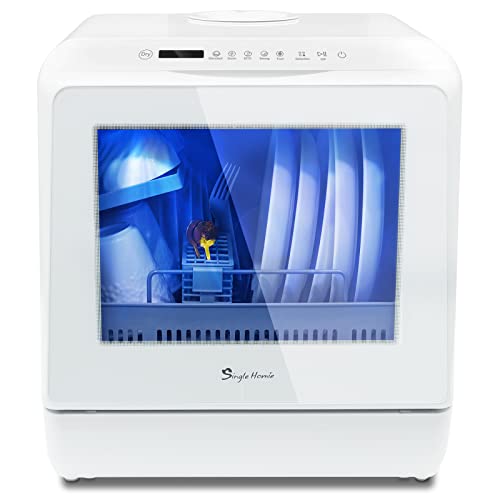
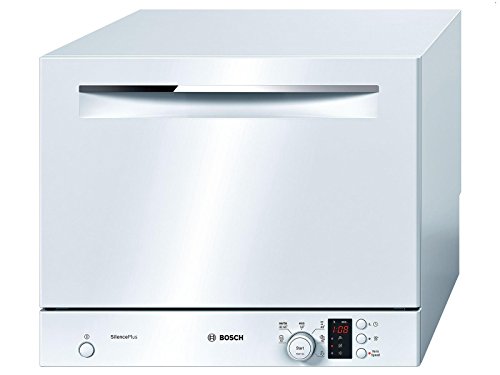
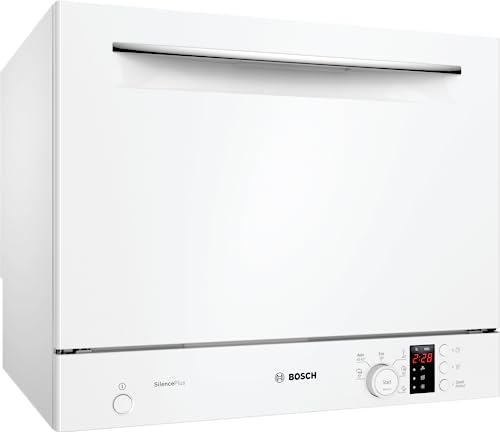
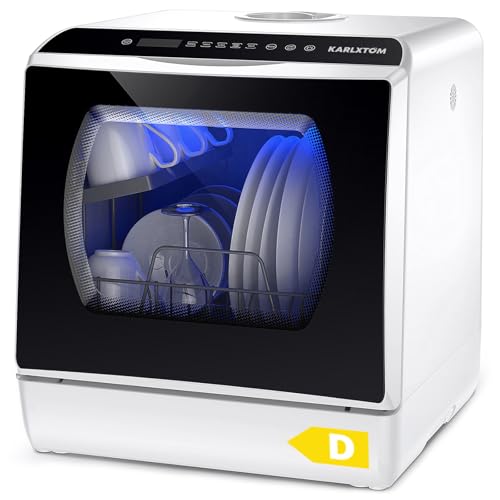
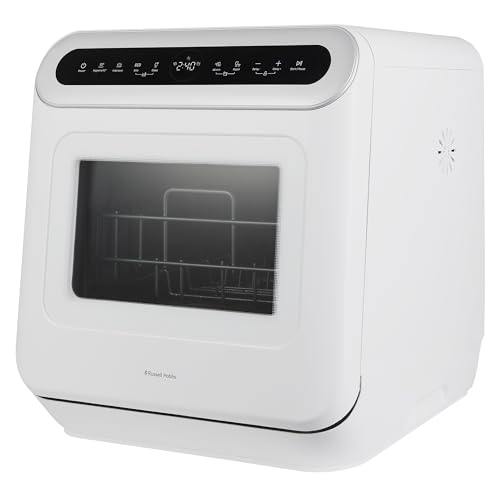
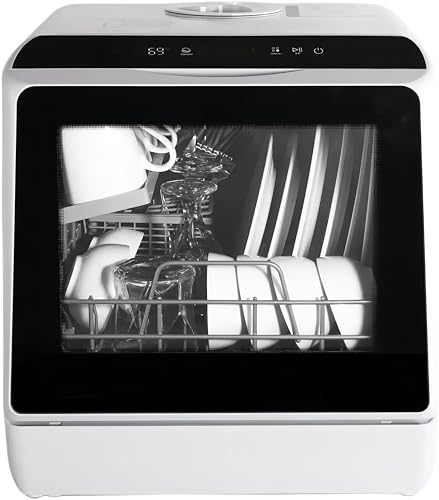
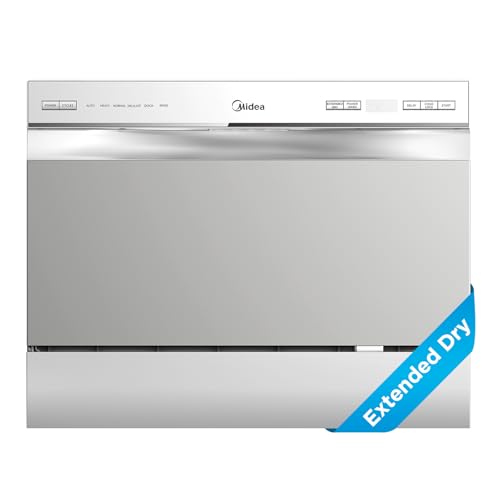
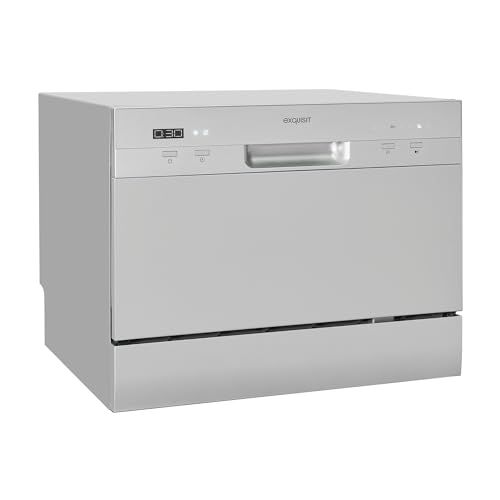
A mini or small dishwasher is a compact countertop machine designed to wash a reduced load without requiring a standard 45 cm or 60 cm floor-level cabinet opening. For buying purposes, the term refers to countertop models rather than slim freestanding or integrated dishwashers.
Most countertop machines are about 42–55 cm wide, 43–47 cm high, and 43–50 cm deep. They normally hold four to six place settings and can sit near a sink, although some larger units reach eight settings. A compact exterior does not guarantee easy placement: the door needs room to open, the top and sides may require ventilation clearance, and the fill and drain hoses add depth behind the machine.
How many place settings can a small countertop dishwasher hold?
Most small countertop dishwashers hold four to six place settings, with current models ranging from roughly two to eight. Six settings is the common practical target for a couple or a small household that runs the machine regularly, while two- to four-setting units prioritize portability and the smallest footprint.
The rated number does not reveal whether large dinner plates, deep bowls, pans, or tall glasses will fit. Check the maximum plate diameter, basket layout, cutlery holder, and usable height below the spray arm. A flexible rack can be more valuable than one extra nominal place setting if the normal load includes cookware rather than standardized tableware.
The chart below shows the capacity distribution of small countertop dishwashers.
[vertical-chart-13880375025581073807101954807747629359850805877420]
How do countertop dishwashers connect to water and drainage?
Countertop dishwashers connect either to a tap through an inlet hose or use a manually filled internal tank; every design still needs a safe wastewater route. Tap-fed machines suit repeated daily use, while tank-fed models help when the faucet cannot accept an adapter.
For a tap connection, confirm thread size, inlet pressure, permitted water temperature, and the supplied hose length. Dishwasher supply hoses are often only around 1.5–1.65 m, so measure from the final appliance position to the tap without stretching the hose or adding an unapproved extension.
The drain hose normally empties into a sink, basin, or permanent waste connection and must remain within the manufacturer’s permitted height. Secure the outlet against pump movement, avoid kinks and backflow, and keep the plug away from splash zones; a six-setting machine may discharge roughly 6–8 L during a typical cycle.
How much do small countertop dishwashers cost?
Small countertop dishwashers generally cost about £200-£300, while unusually well-equipped models can cost more. Capacity, water-supply design, program choice, drying, noise, and included connection accessories account for much of the difference.
Below £220, expect basic controls, limited rack flexibility, and usually four to six place settings with a conventional tap connection. From £220-£300, delayed start, more useful wash programs, improved displays, better baskets, or an integrated water tank become more common.
Above £300, models may add quieter operation, stronger drying, enhanced hygiene cycles, viewing windows, automatic door opening, or more polished controls. Check whether those extras justify the price because the compact chamber and plate-size limits remain.
The chart below shows the price distribution of small countertop dishwashers.
[vertical-chart-02819603432054325998059367292982322020420298776400]

What should you consider when choosing a small countertop dishwasher?
Before buying a small countertop dishwasher, consider the following factors:
- Counter space and door clearance: Measurements should cover the full width, height, and depth, then add room for ventilation, cable bends, hoses, and the open door. Check overhead cabinets carefully because a top-fill water tank may need additional vertical clearance.
- Water supply and drainage: The first decision is whether you need a refillable tank or can leave the machine connected to a faucet. Verify the supplied adapter, inlet pressure, hose lengths, permitted drain height, wastewater route, and overflow protection before purchase.
- Capacity and dish clearance: Two to six place settings are common: 2–4 settings suit one person or very light two-person use, while 5–6 settings suit 1–2 people who run the machine frequently; maximum plate diameter and chamber height still matter more than the headline number. Deep bowls, large mugs, pans, and chopping tools can reduce the practical load substantially.
- Energy and water consumption: For a countertop dishwasher, roughly 0.4–0.6 kWh and 5–7 L per cycle is good; more than 0.7 kWh or 8 L is relatively high for the small load. A very small machine may consume less per cycle but more overall if it must run repeatedly.
- Noise level: Countertop dishwashers commonly operate around 47–60 dB, so aim near 52 dB or below for a studio or open-plan room. A night program may run more quietly, but it often takes longer and cannot compensate for a high rated noise level.
- Wash programs and cleaning: Eco, quick, intensive, glass, and hygiene cycles cover most compact-dishwasher uses. Check spray-arm clearance, filter design, detergent compatibility, and whether heavily soiled cookware actually fits rather than counting several similar programs.
- Drying performance: Compact chambers often retain moisture, especially on plastics, so compare residual-drying results, extra-dry settings, ventilation, and automatic door opening. Confirm that an opening door or released steam will not obstruct the work surface or damage nearby cabinetry.