Fujifilm X-T50 review. Compare 108 technical specifications and user reviews to see how it ranks among cameras and if it is worth buying.
Overall score
What it is: An overall evaluation of the camera's quality, based on technical analyses and user reviews.
When it matters: When you need a quick reference to identify the best cameras on the market.
Score components:
90.0%
Technical Score
10.0%
User score
Technical Score
What it is: An assessment of the camera's technical performance, covering eight key areas: image quality, autofocus, video features, stabilization, lens compatibility, connectivity, battery, and design.
When it matters: When you want to compare cameras based on technical performance and available features.
Score components:
28.0%
Sensor & Image
25.0%
Photo Features
18.0%
Video & Audio
14.0%
Display & Design
8.0%
Battery & Power
7.0%
Connectivity & Storage
User score
What it is: A rating that combines user reviews and the total number of reviews received by the camera.
When it matters: When real-world owner satisfaction and review volume matter to your decision.
Score components:
70.0%
User reviews
30.0%
Popularity
Score components:
25.0%
Sensor size
20.0%
Main camera megapixels
20.0%
Dual card slots
15.0%
N. of focus points
10.0%
RAW photo capture
10.0%
Phase-detection autofocus (photos)
Score components:
35.0%
Weight
30.0%
Battery life (CIPA)
20.0%
Sensor-shift stabilization
15.0%
GPS
Score components:
30.0%
Price
20.0%
Weight
20.0%
AF tracking
20.0%
Battery life (CIPA)
10.0%
Touchscreen
Score components:
30.0%
Main camera megapixels
25.0%
Sensor size
20.0%
Main camera pixel size
15.0%
Sensor-shift stabilization
10.0%
RAW photo capture
Score components:
30.0%
Weight
25.0%
Thickness
20.0%
AF low-light sensitivity
15.0%
Sensor-shift stabilization
10.0%
Eye detection AF (human)
Score components:
30.0%
Sensor size
25.0%
Main camera pixel size
20.0%
Eye detection AF (human)
15.0%
Main camera megapixels
10.0%
Sensor-shift stabilization
Score components:
30.0%
Weight
25.0%
Battery life (CIPA)
20.0%
Min operating temperature
15.0%
Sensor-shift stabilization
10.0%
GPS
Available: ranking among products currently available (including other versions of this product).
All: ranking among all products in the database.
#12 in Best Fujifilm Cameras
#69 in Best Mirrorless Cameras
#72 in Best Cameras
#72 in Best Digital Cameras
#72 in Best 4K Cameras
#72 in Best Cameras for Portraits
#637 in Best Travel Cameras
#656 in Best Cameras for Hiking
What it is: An assessment of the camera's technical performance, covering eight key areas: image quality, autofocus, video features, stabilization, lens compatibility, connectivity, battery, and design.
When it matters: When you want to compare cameras based on technical performance and available features.
Score components:
28.0%
Sensor & Image
25.0%
Photo Features
18.0%
Video & Audio
14.0%
Display & Design
8.0%
Battery & Power
7.0%
Connectivity & Storage
What it is: A rating that combines user reviews and the total number of reviews received by the camera.
When it matters: When real-world owner satisfaction and review volume matter to your decision.
Score components:
70.0%
User reviews
30.0%
Popularity
What it is: An indicator that combines the camera's overall rating with its cost.
When it matters: When you want to know how much overall quality you get for the price.
Score components:
60.0%
Overall score
40.0%
Price
Importance: HIGH
Good value: Full frame or larger
Importance: HIGH
Good value: At least 20 MP
Importance: HIGH
Good value: At least 3.5 µm
Importance: LOW
Importance: MEDIUM
Good value: At least ISO 25,600
Importance: MEDIUM
Importance: MEDIUM
Good value: At least 14-bit
Importance: LOW
Importance: LOW
Importance: LOW
Importance: LOW
Importance: LOW
Importance: LOW
Importance: LOW
Importance: LOW
Importance: MEDIUM
Importance: LOW
Importance: LOW
Importance: LOW
Importance: LOW
Importance: LOW
Importance: HIGH
Good value: At least 200 points
Importance: HIGH
Importance: MEDIUM
Importance: LOW
Importance: LOW
Importance: MEDIUM
Importance: MEDIUM
Importance: HIGH
Good value: At least 5 stops
Importance: LOW
Importance: MEDIUM
Good value: At least 10 fps
Importance: LOW
Importance: LOW
Importance: LOW
Importance: LOW
Importance: LOW
Importance: LOW
Importance: LOW
Importance: LOW
Importance: LOW
Importance: LOW
Importance: LOW
Importance: LOW
Importance: LOW
Importance: LOW
Importance: LOW
Importance: LOW
Good value: At least 200,000 actuations
Importance: LOW
Good value: At least 10x
Importance: HIGH
Good value: At least 3840 px
Importance: MEDIUM
Good value: At least 200 Mbps
Importance: MEDIUM
Good value: At least 10-bit
Importance: LOW
Importance: LOW
Importance: LOW
Importance: LOW
Importance: LOW
Importance: LOW
Importance: LOW
Good value: At least 30 min
Importance: LOW
Importance: LOW
Importance: LOW
Importance: LOW
Importance: LOW
Good value: At least 2 microphones
Importance: LOW
Importance: LOW
Importance: LOW
Importance: LOW
Importance: MEDIUM
Good value: 500 g or less
Importance: LOW
Importance: LOW
Importance: LOW
Importance: MEDIUM
Importance: MEDIUM
Good value: At least 2.36 million dots
Importance: LOW
Good value: 100%
Importance: LOW
Importance: LOW
Good value: At least 120 Hz
Importance: MEDIUM
Good value: At least 3 in
Importance: LOW
Importance: LOW
Importance: LOW
Importance: LOW
Importance: LOW
Importance: LOW
Importance: LOW
Good value: At least 10 m
Importance: LOW
Importance: LOW
Importance: LOW
Importance: LOW
Importance: MEDIUM
Good value: At least 400 shots
Importance: LOW
Good value: At least 1,500 mAh
Importance: LOW
Importance: LOW
Importance: LOW
Importance: LOW
Importance: LOW
Importance: LOW
Importance: LOW
Importance: LOW
Importance: LOW
Importance: LOW
Importance: LOW
Importance: LOW
Importance: LOW
Importance: LOW
Importance: LOW
Importance: LOW
Importance: LOW
Importance: LOW
Importance: HIGH
Good value: At least 200 points
Importance: MEDIUM
Importance: HIGH
Importance: HIGH
Good value: At least 3840 px
Importance: HIGH
Good value: At least 20 MP
Importance: MEDIUM
Good value: At least 200 Mbps
Importance: HIGH
Good value: At least 5 stops
Importance: LOW
Importance: LOW
Importance: MEDIUM
Good value: At least 400 shots
Importance: MEDIUM
Good value: 500 g or less
Importance: LOW
The DPReview evaluation highlights the Fujifilm X-T50 as a highly portable, mid-range mirrorless camera that brings 40-megapixel X-Trans sensor performance and in-body image stabilization (IBIS) into a compact body, featuring a dedicated Film Simulation dial. The review praises its exceptional JPEG/Raw image quality, 6.2K video capabilities, and useful built-in flash, making it a powerful tool for photographers looking for a smaller alternative to the X-T5. However, the camera falls short of a top-tier award due to its high price point, which places it in a competitive, premium segment, along with a significantly smaller electronic viewfinder (EVF) and reduced battery life. Additionally, the autofocus tracking performance lags behind direct competitors, and the rear button layout is criticized for being cramped and hard to use, particularly the joystick and Q-menu button.
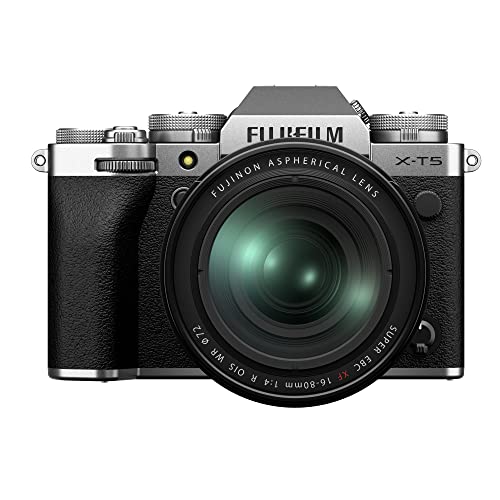
The Fujifilm X-T50 is a mid-range mirrorless camera that packs the advanced 40-megapixel X-Trans V sensor and X-Processor 5 into a highly compact, lightweight, and vintage-styled body. A major pro of this model is the inclusion of built-in sensor-shift image stabilisation (IBIS), providing around four stops of handheld compensation in a body that remains barely thicker than its predecessor. It introduces a dedicated Film Simulation dial that encourages creative exploration, alongside upgraded video features like 6.2k/30p recording, H.265 encoding, a 3.5mm microphone jack, and substantially longer 4k recording limits with reduced overheating compared to the X-T30. Additionally, it gains faster UHS-II card slot support and automated subject-detection tracking when operating in full Auto mode. However, the X-T50 makes several feature compromises to maintain its smaller footprint and lower price point relative to the higher-end X-T5. Notable cons include a lacks of weather-sealing and a single SD card slot shared inside the bottom battery compartment. The camera relies on the smaller NP-W126S battery pack, which can run short during heavy video or continuous IBIS usage. For composition, the electronic viewfinder image...
The Fujifilm X-T50 packs a 40.2-megapixel sensor, 7-stop IBIS, and AI-subject tracking into a 438g body, offering high-end image quality with a dedicated film simulation dial for creative shooting. Despite its performance, the compact design lacks weather-sealing, features only a single SD card slot, and suffers from limited battery life, the review notes. While the camera is a versatile APS-C option, its small EVF and two-way tilting screen may not suit videographers, and the handling can feel cramped.
The Fujifilm X-T50 is an enthusiast-grade mirrorless camera that brings the premium features of the upscale X-T5 into a smaller, lighter body with rounded edges for a comfortable grip. Standout pros include a highly capable 40MP APS-C X-Trans sensor paired with a 5-axis in-body image stabilization (IBIS) system, reliable subject recognition autofocus with 13fps electronic tracking, and access to a vast ecosystem of quality X-mount lenses. Designed with a physical Film Simulation dial on the top plate, the camera allows casual and stills-focused creators to swap creative color profiles effortlessly on the fly. It also features a sharp 3-inch tilting touch LCD and a 2.4-million-dot EVF, though it relies on traditional exposure controls like shutter and EV dials instead of a standard PASM layout. However, the camera has notable cons that limit its hybrid appeal, starting with an anemic battery life driven by the small NP-W126S cell, which delivers a paltry CIPA rating of just 305 shots per charge. It completely omits dust and splash weather protection, and the pixel-dense 40MP sensor poses severe video limitations. High-quality 6.2K and 4K...
The Fujifilm X-T50 earns a "Highly Recommended" rating from ePHOTOzine, offering exceptional image quality through its 40.2MP X-Trans CMOS 5 HR sensor and X-Processor 5, with performance highlights including ISO 125 sensitivity, effective 5-axis IBIS, and a dedicated Film Simulation dial. The compact, rounded body provides intuitive handling, though it lacks a joystick, relying instead on a D-pad for menu navigation. Key drawbacks identified in the review include the presence of only a single SD card slot, the use of a tilting rather than fully articulating screen, and limited battery capacity, making spare batteries necessary for extended use. Despite these limitations, the camera is noted for bringing high-end, high-resolution performance into a more accessible, mid-range body.
The Fujifilm X-T50 is an ultra-compact, retro-styled APS-C camera designed primarily for adventurous travel, landscape, and nightscape photographers seeking maximum portability without compromising on image quality. Its biggest asset is the flagship 40.2-megapixel X-Trans CMOS 5 HR sensor, which delivers incredible, high-resolution details and impressive high-ISO noise performance that rivals some full-frame cameras. Content creators will benefit from up to 7 EV of sensor-based image stabilization (IBIS), gorgeous straight-out-of-camera JPGs powered by legendary film simulation modes, a dedicated physical film simulation dial, and high-quality 6.2K video capabilities. Priced at $1,399 body-only, it stands alone in its class by offering unmatched resolution and a professional build quality in a highly portable form factor. However, the camera's compact size and retro design introduce a steep learning curve and several ergonomic frustrations. Notable downsides include the lack of a physical photo/video switch and a traditional PSAM exposure dial, making quick adjustments cumbersome. The physical interface also suffers from tiny, slippery controls—such as the joystick and record button—an awkwardly placed "Q" button prone to accidental presses, a non-self-locking battery door, and an underwhelming battery...
The Fujifilm X-T50 is a compact mirrorless camera that balances a portable design with powerful, high-end imaging capabilities, making it an ideal choice for casual photographers. It features a large 40.2MP APS-C sensor paired with the advanced X-Processor 5, enabling users to capture highly detailed images and make extreme crops while maintaining clarity. The camera excels in versatility, offering reliable autofocus that quickly locks onto humans and animals, alongside the capability to record 6.2K/30fps video stabilized by a 5-axis (7 stops) in-body image stabilization (IBIS) system. A major highlight is its dedicated film simulation dial on the top plate, which grants immediate access to Fujifilm's renowned color recipes and allows for custom profiles to ensure visual consistency across different shooting styles. Despite its impressive performance, the reviewer highlights a few notable drawbacks to consider before purchasing. The camera lacks weather sealing, meaning it cannot be safely operated during heavy rainfall. Additionally, its battery life is relatively weak on paper, carrying a modest 305-shot CIPA rating, though it manages to perform reasonably well in real-world scenarios. Finally, with a retail price...
Fujifilm X-T50 Review Summary The Fujifilm X-T50 marks a major upgrade in the compact APS-C mirrorless camera line, inheriting the advanced 40.2MP BSI CMOS 5 HR sensor and X-Processor 5 combination found in the higher-end X-T5. This hardware leap introduces a powerful hybrid autofocus system featuring deep-learning subject detection for tracking animals, vehicles, and humans, alongside 5-axis in-body image stabilisation (IBIS) offering up to 7 stops of compensation. It provides identical image quality to the X-T5, captures 10-bit HEIF files, and offers advanced video capabilities up to 6.2K/30P. Additionally, handling is improved by an ergonomic thumb rest that repositions the Quick Menu button to prevent accidental presses, and a physical Film Simulation dial on the top plate for quick creative adjustments. Key Pros and Cons Pros: Highlights include a significant 54% resolution boost over its predecessor, excellent handling, and a highly secure grip despite its compact travel-friendly size. It delivers snappy autofocus, efficient subject tracking in real-world environments like safari parks, and features an upgraded flush-fitting rear display. Cons: On the downside, the camera is not weatherproof, restricting its use...
The Fujifilm X-T50, reviewed on Live View, is highlighted as a versatile, compact camera delivering flagship-level 40.2MP performance, including advanced AI autofocus and high-quality 6.2K/30P video capabilities, making it ideal for travel and creative photography. Key strengths include the inclusion of the X-Processor 5, robust subject-tracking, and a useful 1.4x/2x digital teleconverter that enhances versatility. Medium · However, the compact design presents notable trade-offs, particularly a shorter battery life requiring spare batteries for extended shooting, and the absence of weather sealing, which is present in higher-end models. Furthermore, the camera features a single SD card slot and a screen that only tilts, limiting options for both data redundancy and vertical shooting, according to the review. YouTube
The MPB review highlights the Fujifilm X-T50 as a compact, high-performance camera featuring a 40.2-megapixel sensor, 5-axis in-body image stabilization (IBIS), and a highly responsive autofocus system, making it an excellent, portable alternative to the X-T5. While the camera offers high-end technology, it introduces a film simulation dial that replaces the traditional drive dial, and it carries a higher price point compared to its predecessor.
The Fujifilm X-T50 is a compact, lightweight camera that borrows premium features from the flagship X-T5, notably sharing its high-resolution 40.2-megapixel X-Trans CMOS 5 HR sensor and AI-powered subject-tracking autofocus. A standout design feature is the new dedicated Film Simulation dial, which allows photographers to seamlessly cycle through creative profiles like Reala Ace on the fly rather than burying them in custom menus. Its ergonomics are physically superior to its predecessor, the X-T30, boasting a more rounded body and a beefier front grip. For video creators, it delivers impressive internal recording capabilities up to 6.2K at 30p in 10-bit color, and supports F-Log2 for up to 13 stops of dynamic range, alongside native Frame.io cloud integration. Reviewers also praised the return of a convenient physical pop-up flash for quick snapshots. Despite these heavy-hitting specs, the X-T50 makes clear compromises compared to the higher-end X-T5 to remain hobbyist-friendly. Its shooting speed maxes out at a slower 8 frames per second (fps) with the mechanical shutter compared to the X-T5's 15 fps, and it lacks the advanced 160-megapixel pixel shift capability. Hardware...
The Fujifilm X-T50 is a compact, retro-styled mirrorless camera that inherits the high-end 40-megapixel sensor and up to 7 stops of In-Body Image Stabilisation (IBIS) from its premium sibling, the X-T5. It is highly praised for its lightweight, "chunky" yet comfortable build, which makes it an exceptional tool for travel, street, and landscape photography. Key physical and digital innovations include a dedicated top dial dedicated entirely to film simulation settings, advanced subject recognition autofocus (tracking people, pets, and vehicles), and a highly functional built-in digital tele-converter that extends lens focal lengths by 1.4x or 2x magnification. However, the camera's smaller footprint introduces several notable trade-offs and physical compromises compared to more expensive professional models. It features only a single memory card slot, which poses a disadvantage for professional backups or extended video recording. Additionally, using the 2x digital zoom reduces the original 40-megapixel resolution down to 11 megapixels. The author also points out performance bottlenecks, noting that the camera is surprisingly slow at writing data to the storage card. Finally, the device suffers from a shortened battery life due to...
The Fujifilm X-T50 is an enthusiast-oriented mirrorless camera that packs premium features from the upscale X-T5 into a smaller, lighter, and more rounded chassis. It boasts an excellent 40MP stabilized APS-C sensor that delivers exceptional, highly detailed images and offers direct access to popular Film Simulation profiles via a dedicated top-plate physical dial. For performance, it delivers a robust 13fps tracking speed with intelligent subject recognition for people, animals, and vehicles. The camera also sports advanced physical controls, including dedicated shutter speed and EV compensation dials, alongside a sharp, tilting 3-inch touchscreen and a 2.4-million-dot electronic viewfinder. However, the X-T50 suffers from notable physical and technical compromises to hit its more affordable price point. Its most glaring flaw is an anemic battery life driven by a small NP-W126S battery, which yields a paltry 305 shots per charge in normal usage. Additionally, it completely lacks weather sealing against dust and moisture, uses a single memory card slot, and struggles with notable rolling shutter distortion when recording high-quality 6.2K or 4K HQ video. Because its video capabilities are heavily limited by sensor...
The Fujifilm X-T50 transitions into the upper mid-range, inheriting the 40.2-megapixel sensor, X-Processor 5, and 5-axis IBIS from the flagship X-T5, while introducing a dedicated Film Simulation dial in a compact, retro-style body. The camera delivers excellent image quality and fast AI-based autofocus, housed in a body with a 1.84 million-dot tiltable touchscreen. However, compromises include a lack of weather sealing, the use of a smaller NP-W126S battery with limited life, a single SD card slot on the bottom, and a lower-resolution 2.36 million-dot viewfinder. The higher price point and lack of a dedicated headphone jack are also noted drawbacks compared to the pro-level X-T5.
The Fujifilm X-T50 introduces high-end capabilities to the double-digit T-series by integrating the 40-megapixel X-Trans CMOS 5 HR APS-C sensor and X-Processor 5 from flagship models. It delivers exceptional image quality with low noise levels up to ISO 3,200 and sharp resolution that nearly rivals the pricier X-T5. A major highlight is the newly added 5-axis sensor-based image stabilisation (IBIS), which provides up to 7 stops of compensation for steadier handheld shooting. Additionally, the camera features an advanced AI-driven autofocus system capable of tracking humans, animals, and various vehicles, alongside an upgraded video mode that supports 6.2K resolution at 30p using the modern H.265 codec. Despite these performance leaps, the review points out several limitations. The camera relies on the older NP-W126S battery, which leads to a shorter battery life when using the electronic viewfinder compared to its predecessor, the X-T30 II. Physical limitations include the lack of weather sealing against water splashes and a single UHS-II SD card slot that is awkwardly positioned too close to the battery door, making card extraction clumsy. Furthermore, the high-resolution 40MP sensor creates...
The Fujifilm X-T50 is a compact, retro-styled APS-C mirrorless camera designed primarily for travel, street, and portrait photographers who want premium features in a lightweight 438-gram body. It shares the same high-end 40-megapixel sensor as its more expensive sibling, the X-T5, delivering exceptional image sharpness with 2,677 line pairs at base ISO and impressive 6.2K video capabilities at 30p, alongside slow-motion recording up to 240 fps in Full HD. Notable hardware highlights include a built-in 5-axis body image stabiliser (IBIS) to reduce shake, a rare pop-up flash, and a brand-new, dedicated film simulation dial that allows quick switching between popular Fujifilm colour profiles like Velvia and Sepia without digging through menus. Despite its strong performance, the camera makes several hardware compromises to maintain its smaller form factor. Key drawbacks include a body that entirely lacks weather-sealing protection, a relatively low continuous shooting speed of roughly 13 frames per second, and a downgraded electronic viewfinder with only 0.62x magnification. Additionally, the 3-inch touchscreen can tilt but cannot flip completely forward for selfies or vlogging, and its recycled battery limits runtime to...
The Computer Bild review evaluates the Fujifilm X-T50 as a highly capable, ultra-high-resolution mirrorless system camera that packs premium components into a lightweight, 439-gram retro chassis. Powered by a 40-megapixel APS-C sensor and the speedy X-Processor 5, the camera delivers superb image detail at a resolution of 7728x5152 pixels, easily outpacing class competitors like the Canon EOS R7. Key strengths highlighted in the test include an advanced 425-point autofocus system with AI subject recognition (covering humans, animals, and vehicles), up to 4 stops of in-body image stabilisation (IBIS) in the telephoto range, a dedicated on-body Film Simulation dial, and rapid burst shooting hitting 8.6 frames per second mechanically. Video shooters are also well catered to, with internal 4K capture up to 60p alongside professional grading options like F-Log, F-Log2, and HLG profiles. Despite achieving a strong final test score of 1.8 ("Good"), the reviewer points out several practical limitations inherited from its downsized footprint. The most prominent drawbacks are a noticeable loss of image sharpness and detail at high ISO settings above 1600 (where the aggressive internal noise reduction creates...
The Fujifilm X-T50 is a highly capable, compact retro-styled mirrorless camera that inherits most of its core internal hardware from its larger sibling, the X-T5, earning a "SEHR GUT" (Very Good) overall score of 87.1%. It features the premium 40.2-megapixel X-Trans CMOS 5 HR sensor and the high-speed X-Processor 5, which deliver identical elite image quality and exceptional 6K video performance at up to 30p. Key hardware pros include a rapid, deep-learning AI-assisted autofocus system with advanced subject tracking, a built-in five-axis in-body image stabilization (IBIS) correcting up to 7 stops, and a novel dedicated Film Simulation dial on the top plate for quick access to 20 signature analog profiles. However, the downsized body design necessitates significant compromises to achieve its cheaper price tag and portability. Key cons identified in the review include a lack of any weather or environmental sealing and a much smaller battery that only manages 390 shots in economy mode—nearly half the lifespan of the X-T5. Furthermore, advanced creators will miss out on the "Pixel Shift Multi-Shot" 160-megapixel mode, and must contend with a lower-resolution electronic...
The MPB review highlights the Fujifilm X-T50 as a compact, mid-range camera delivering flagship 40.2-megapixel resolution, advanced AI autofocus, 7-stop IBIS, and 6.2K video in a lightweight body. Key features praised include the dedicated top-plate Film Simulation dial, including Reala Ace, which enhances the shooting experience for street photographers and casual users. Conversely, the review identifies compromises for this smaller form factor, including a lack of weather sealing and the limitation of a single SD card slot. Furthermore, the X-T50 uses a smaller battery with lower capacity compared to higher-end models, and removes the physical drive dial to accommodate the new top-plate control.
Fujifilm X-T50 Review Summary The Fujifilm X-T50 is a premium mid-range APS-C mirrorless camera that inherits the high-resolution 40.2 MP X-Trans CMOS 5 HR sensor and rapid X-Processor 5 from the higher-end X-T5, packed into a lightweight 438g body. It delivers exceptional image quality with impressive fine detail, generous cropping flexibility, and 20 distinct film simulations—including the new "Reala Ace" mode—accessible via a newly dedicated top-plate physical dial. Key operational strengths include a highly reactive deep-learning autofocus system that tracks eyes and vehicles efficiently, a powerful 5-axis in-body image stabilisation (IBIS) offering up to 7 stops of compensation, and robust video capabilities featuring up to 6.2K at 30 fps or 4K HQ recording. The camera is frequently bundled with a new Fujinon XF 16-50mm f/2,8-4,8 R LM WR kit lens, praised for its light weight (240g) and fast linear motor autofocus, despite its less bright f/4.8 telephoto maximum aperture. Despite its high-end performance, the review notes significant design compromises given its launch price of €1,499 (body only), which sits uncomfortably close to the more robust X-T5. Major drawbacks include a...
Fujifilm X-T50 Review Summary The Fujifilm X-T50 is a mid-range mirrorless camera featuring a 40.2 MP X-Trans CMOS 5 HR sensor paired with the X-Processor 5, bringing high-resolution imaging and mechanical stabilization into a lightweight body. It provides identical image quality to the higher-end X-T5 and excels in everyday use and street photography due to its portability and rich color science. A major highlight of this model is its physical film simulation dial on the top plate, allowing quick access to popular color profiles like Classic Chrome and Reala Ace. Additionally, its video capabilities match the X-T5 by supporting internal 6.2K30p recording in 10-bit 4:2:2 and LOG profiles. However, the camera requires several ergonomic compromises that complicate its position in the Fujifilm lineup. Key disadvantages include an outdated, lower-resolution 2.36 Mpt electronic viewfinder and a memory card slot located at the bottom next to the battery, making it highly inconvenient for tripod use. Performance specs are notably reduced compared to the X-T5, with its mechanical burst speed cut down to 8 fps, half the battery capacity (305 shots), a smaller...
The Fujifilm X-T50 hybrid mirrorless camera receives a highly favorable 4 out of 5 stars from the Labo Fnac review. The camera is heavily praised for its stunning, vintage aesthetic and its impressive 40.2-megapixel sensor resolution, earning a perfect 10/10 score in definition. When paired with the 16-50mm kit zoom lens, the camera demonstrates outstanding optical quality (scoring 8.8/10) and offers great standard and telephoto performance. Additionally, customer reviews celebrate its highly compact, lightweight frame, and quick, intelligent autofocus. However, the review details a few notable drawbacks that hold the camera back from perfection. The sensor lacks overall light sensitivity, resulting in a poor low-light rating of just 4/10 due to digital noise artifacts appearing even in daylight photos. Furthermore, its highly stylized, distinct color rendering scored a 7/10 and is described as a "love it or hate it" feature. Lastly, while the kit lens is highly capable, it is noted as slightly less flawless than ideal, and the grand-angle performance sits lower at 7.2/10.
The Fujifilm X-T50 is a highly capable and compact APS-C mirrorless camera that packs a high-resolution 40-megapixel X-Trans 5 HR sensor and a powerful X-Processor 5 into a vintage-styled, lightweight 438g body. The camera stands out for its exceptional image quality, producing richly detailed JPEGs and highly flexible RAW files with flattering color science. Key performance strengths include a robust in-body image stabilization system allowing sharp handheld long exposures up to one second, an advanced autofocus tracking system equipped with subject and eye detection, and rapid electronic burst shooting up to 20 frames per second. Additionally, it introduces a physical top dial specifically dedicated to switching between 20 film simulation modes, which applies unique analogue-style aesthetics directly to photos. Despite its impressive feature set, the camera makes several compromises compared to the higher-end X-T5. Key disadvantages include a limited battery life rated for just 305 shots, a relatively low-resolution 2.36 million-dot OLED viewfinder, and a single memory card slot. It also lacks weather-sealing, has a small and stiff joystick, and features a dense, overly complex menu layout. From a performance...
The MPB review highlights the Fujifilm X-T50 as a compact, mid-range mirrorless camera featuring a 40.2-megapixel sensor and X-Processor 5, which provide exceptional image quality and 6.2K video capabilities. Key strengths include 5-axis in-body stabilization, a revised ergonomic design, and a dedicated Film Simulation dial, making it a capable, portable alternative to higher-end models. However, the X-T50 lacks weather sealing, utilizes a smaller, less robust battery, and features a lower-resolution electronic viewfinder (EVF) to achieve its compact, lower-priced design. Potential overheating during extended high-resolution video recording is also noted.
The Fujifilm X-T50 is a compact and lightweight APS-C mirrorless camera that inherits premium features from the higher-end X-T5, making it a highly portable option for street, travel, and portrait photographers. Chief among its strengths is the exceptional image quality delivered by the 40.2-megapixel X-Trans CMOS 5 HR sensor and X-Processor 5, which provide incredibly detailed RAW files, vast editing flexibility, and natural color reproduction. Users will also benefit from an advanced hybrid autofocus system equipped with deep-learning subject detection, a powerful 5-axis in-body image stabilization (IBIS) offering up to 7 stops of compensation, and a distinct dedicated film simulation dial that provides rapid access to 20 different color profiles. Furthermore, its sleek retro design features improved grip ergonomics, a tilting 3-inch touchscreen, and capable video options including 6.2K at 30 fps recording. Despite these impressive capabilities, the review highlights several notable weaknesses and compromises that come with the downscaled body. A primary drawback is its limited battery life, which is rated for only 305 images per charge under CIPA standards, making a spare battery practically necessary. Demanding shooters may...
The Fujifilm X-T50, as reviewed on Galaxus, is a compact camera packing a high-resolution 40.2-megapixel sensor, X-Processor 5, and in-body image stabilization (IBIS) into a small body with a new dedicated film simulation dial. It features advanced AI-driven autofocus, offering significant performance upgrades over the X-T30 II, making it a capable, portable system. However, the review notes drawbacks including a high launch price close to the superior X-T5, a lack of weather sealing, and a single SD card slot. Additionally, the camera suffers from short battery life due to the power-intensive sensor and IBIS, along with a less premium, "cheaper" feel in the housing construction. YouTube
The Fujifilm X-T50 is an ultra-compact, lightweight (438g) APS-C mirrorless camera that inherits the high-resolution 40-megapixel stabilized sensor and X-Processor 5 from the higher-end X-T5. On the positive side, it delivers exceptional image quality at a highly competitive price of €1,499, making it a strong option for landscape, portrait, and studio photographers. Its physical design is aesthetically beautiful, featuring rounded corners, an improved front grip, a dedicated thumb rest to avoid accidental button presses, and an axis-aligned tilting screen. It also introduces a dedicated film simulation dial to easily swap JPEG profiles on the fly. However, the camera has notable drawbacks, most significantly a short battery life rating of only 305 photos per charge due to its use of an older, smaller battery model. The review also criticises its tendency to overheat quickly during video recording (lasting only 25 minutes in high-quality 4K), a lack of weather-sealing, and a small, low-resolution viewfinder. Furthermore, the 40-megapixel sensor results in larger files and a slower continuous burst rate. While the autofocus is effective, it struggles with fast-moving subjects. Ultimately, the reviewer suggests...
Fujifilm X-T50 Review Summary The Fujifilm X-T50 is a highly capable and ultra-compact travel camera that delivers exceptional image quality using the same 40-megapixel sensor found in the high-end X-T5 and X100VI. During a field test in Northern Italy, the camera proved to be an ideal everyday companion, being significantly lighter and more manageable than larger models, making it comfortable to carry during long days of walking. A standout feature is the dedicated film simulation dial on the left shoulder, which allows photographers to easily toggle between 20 different look profiles and configure up to four custom positions. This encourages on-the-go creativity and yields high-quality, straight-out-of-camera (SOOC) JPEGs that save immense post-production time, especially when emulating classic stocks like Fujifilm Pro 400H. However, the camera requires some performance trade-offs to maintain its portable, beginner-friendly footprint. On the downside, the X-T50 lacks a weather-resistant body, features a smaller and less ergonomic handgrip, and has a shorter battery life compared to the professional X-T5. Additionally, its rear LCD screen only tilts along a standard horizontal axis rather than offering the versatile vertical...
The Digixo review characterizes the Fujifilm X-T50 as a high-performance, compact mirrorless camera, praising its 40.2-megapixel sensor and snappy X-Processor 5 for delivering excellent image quality. Key advantages include a dedicated film simulation dial for intuitive, creative shooting and improved ergonomics, though the smaller design limits certain professional features. Conversely, the review notes the lack of dual memory card slots and weather sealing, along with limited battery life due to the in-body stabilization system.
The Frandroid review of the Fujifilm X-T50 describes it as a highly capable, premium mirrorless camera that packs flagship-level performance into a lightweight, retro-styled body. The core strength of the camera is its 40-megapixel APS-C X-Trans sensor, which produces soft, incredibly natural, and detailed images with outstanding dynamic range and low noise up to ISO 6400. Reviewers highly praise the physical ergonomics—especially the new dedicated film simulation dial that allows on-the-fly aesthetic changes—and the built-in image stabilisation (IBIS) providing 7 stops of shake reduction. On the video front, the X-T50 punches above its class by recording at resolutions up to 6.2K in professional color spaces like F-Log and HLG. However, the camera comes with several physical and functional compromises to achieve its compact foot print. Its autofocus system, while snappy, features a overly cluttered interface with separate tracking and face-detection AI profiles that require dedicated button mapping to use effectively without missing shots. From a design perspective, the review notes a very small shutter button and criticises the lack of a dedicated video recording button, forcing users to navigate through...
Fujifilm X-T50 Review Summary Overview and Key Features The Fujifilm X-T50 introduces a compact, lightweight (431g) mirrorless design that pairs high-end internals from the premium X-T5 with retro physical dials. It is equipped with a 40-megapixel X-Trans CMOS 5 HR sensor, an X-Processor 5 engine, and 6K video capabilities, bringing substantial resolution and processing leaps over its predecessor, the X-T30. Crucially, this model marks the debut of a 5-axis In-Body Image Stabilization (IBIS) system within this specific line, providing up to 7 stops of shake compensation. The camera targets enthusiast travel, street, and everyday photographers who favor out-of-the-box color styling, leaning heavily into social media trends by introducing a dedicated film simulation selection dial in place of the traditional drive dial. Notable Pros and Cons Pros: Highly effective built-in sensor stabilization (IBIS) packed into a remarkably portable frame. Sharp 40MP resolution with fast, AI-trained subject-tracking autofocus that identifies animals, birds, and vehicles. Upgraded connectivity features like dual-band Wi-Fi AC and a fast UHS-II SD card slot. Tactile ergonomics are improved by a slightly deeper handgrip and repositioned rear buttons to...
The Fujifilm X-T50 forum review on Fujistas highlights significant pros in processing, resolution, and street usability, particularly when migrating from older models like the X-T30. The reviewer praises the 40-megapixel sensor for delivering a finer, more organic film-like noise structure that is easier to clean with AI noise-reduction software compared to previous 26-megapixel sensors. Autofocus accuracy is a massive standout, with AI-driven subject recognition and instant tracking box deployment that significantly reduces reaction times during candid street photography. Additionally, the Fujinon XF 16-50mm F2.8-4.8 kit lens receives high praise for its exceptional center sharpness and balanced weight distribution, preventing the front-heavy feel common with its 18-55mm predecessor. Conversely, the forum discussion emphasizes prominent hardware and physical usability cons. Users point out that the camera completely lacks weather sealing, missing a critical layer of environmental protection for an otherwise highly capable device. The new dedicated Film Simulation dial on the top plate is heavily criticized by several experienced members as an attractive but largely "useless" addition that they would have gladly swapped for a dedicated ISO dial. Community members also criticize...
The Photolari review highlights the Fujifilm X-T50 as a compact, premium mirrorless camera that inherits powerful flagship features from its larger sibling, the X-T5, but in a smaller and lighter body weighing 438 grams. A major highlight of the new design is the inclusion of a dedicated Film Simulation dial on the top plate, which replaces the traditional drive mode dial and gives users quick, creative control over Fujifilm's classic color profiles. Internally, the camera excels by incorporating the identical 40-megapixel APS-C sensor and the latest X-Processor 5 found in high-end models like the X-T5 and X100 VI. Additionally, for the first time in this double-digit lineage, it introduces In-Body Image Stabilization (IBIS) capable of compensating up to 7 stops, alongside smart AI-driven autofocus algorithms for tracking faces, eyes, and various objects. YouTube · However, the review outlines several clear drawbacks, notably its steep launch price of 1,500 euros for the body alone, which marks a dramatic pricing increase from the 900-euro launch price of its predecessor, the X-T30 II. Critics also note that the rear LCD display only tilts...
The FOTO Cult review identifies the Fujifilm X-T50 as a compact, high-performance camera featuring a 40.2-megapixel X-Trans CMOS 5 HR sensor, 5-axis IBIS, and a dedicated Film Simulation dial, all powered by the X-Processor 5. Key advantages include superior image quality, advanced AI autofocus, and 6.2K/30p video capability, though it is limited by a single SD card slot, lack of weather sealing, and the smaller NP-W126S battery. While praised for its portability and tactile controls, the review notes a significantly higher price point than its predecessor, bringing it close to the flagship X-T5 in cost.
The Fujifilm X-T50 is a highly portable, lightweight APS-C mirrorless camera that borrows the high-end 40.2 MP X-Trans CMOS 5 HR sensor and X-Processor 5 from its more expensive sibling, the X-T5. It delivers outstanding image quality, rich dynamic range, and features a newly introduced physical film simulation dial on the left top plate tailored for younger creators. Key hardware strengths highlighted in the review include its highly reactive 425-point AI autofocus system and a highly effective 5-axis IBIS (In-Body Image Stabilisation) system providing up to 7 stops of compensation. On the video front, it is surprisingly capable, outputting up to 6.2K at 30 fps and supporting advanced profiles like 10-bit 4:2:2 color and F-Log2 workflow options. However, the camera is severely held back by its premium launch price tag (€1,529.99 body-only), which positions it too close to the street price of the vastly superior X-T5 and forces it into direct competition with powerhouse alternatives like the Sony A6700. The compact ergonomics compromise grip comfort for shooters with larger hands, and the physical build lacks the reassuringly solid tactile feedback...
The Fujifilm X-T50 is an exceptionally compact and lightweight mirrorless camera weighing just 438 grams, bringing flagship-level performance from the X-T5 and X-H2 into a highly portable body. It features a 40.2-megapixel X-Trans CMOS 5 HR sensor, an X-Processor 5 engine, and a 5-axis in-body image stabilization (IBIS) system offering up to 7 stops of compensation. Key advantages highlighted in the review include its highly intelligent AI-driven autofocus system capable of tracking diverse subjects, outstanding image quality with deep crop potential, impressive 6.2K video capabilities, and an innovative physical film simulation dial that replaces the traditional drive dial for quick creative adjustments. Despite its robust features, the camera has notable design compromises to maintain its small form factor. Its primary drawback is the complete lack of weather sealing (tropicalizzazione), which causes concern for a device designed heavily for travel photography. Additionally, the review points out that it only features a single, slower UHS-I memory card slot, has a reduced battery capacity resulting in roughly 305 shots per charge, and includes an EVF with lower resolution than its larger counterpart. It...
The Fujifilm X-T50 packs the impressive 40-megapixel APS-C sensor of the larger X-T5 into a highly compact, robust, and lightweight body weighing just 438 grams. Tested during a monsoon season trip to Thailand, the camera proved remarkably durable, surviving torrential rain and physical impact without operational issues. Key strengths include its newly added in-body image stabilisation (IBIS), which enables sharp handheld shooting at slow shutter speeds, and a fast, reliable continuous autofocus (AF-C) system with eye-detection. The high-resolution sensor also offers generous cropping flexibility, though it requires top-tier optics like the XF 23mm f/1.4 to fully maximize its potential. However, the camera has several distinct drawbacks, starting with its steep launch price of around €1,500 (body only), which positions it too closely to the superior X-T5. Due to utilizing the smaller NP-W126S battery, its battery life is halved compared to the X-T5, making it inadequate for a full day of heavy shooting. From an ergonomic standpoint, the dedicated film simulation dial on the top left cannot be customised, which frustratingly prevents users from reassigning it to more critical functions like...
The Fujifilm X-T50 is a compact and lightweight mirrorless camera weighing under 450 grams, designed for photographers seeking the portability of the X100VI but with the flexibility of interchangeable lenses. The reviewer praised its high-performance hardware, specifically highlighting the 40-megapixel APS-C X-Trans 5 sensor and the X-Processor 5 inherited from the premium X-T5. These components deliver excellent dynamic range, sharp images capable of heavy cropping, and an exceptionally fast, AI-driven autofocus system that reliably tracks subjects like animals, vehicles, and insects. Additionally, the internal video capabilities (up to 6.2K open gate at 30fps) and the bundled Fujinon 16-50mm f/2.8-4.8 kit lens were highly rated for delivering great sharpness and versatility across travel and street photography. On the downside, the reviewer pointed out several compromises made to maintain the camera's small form factor. The most notable con is the use of an older battery model, which results in limited battery life compared to newer alternatives. The electronic viewfinder (EVF) was also criticized for being relatively small and potentially impractical for some users. Finally, while the camera introduces a dedicated film simulation...
The MPB review highlights the Fujifilm X-T50 as a compact, midrange camera packing flagship-level tech, specifically the 40.2-megapixel sensor and X-Processor 5 from the X-T5, delivering superior image quality and fast autofocus. Key advantages include 5-axis, 7-stop in-body image stabilization (IBIS) for sharp, low-light shooting and a new dedicated Film Simulation dial for instant, creative looks. YouTube · Conversely, the review identifies compromises, such as the removal of a traditional drive dial and limited weather sealing compared to the X-T5. The, X-T50 also features only a single SD card slot and a smaller battery, leading to lower endurance, though it remains a strong, lighter, and more budget-friendly alternative for high-resolution stills. YouTube
The Fujifilm X-T50 is a highly capable, premium APS-C mirrorless camera that packs flagship-tier technology into a lightweight, 438-gram vintage-style body. Serving as an excellent companion for travel and street photography, it inherits the powerful 5th-generation X-Processor and a high-resolution 40.2-megapixel X-Trans V sensor from its larger sibling, the X-T5. This enables impressive professional capabilities, including 6K video recording, advanced autofocus tracking, and a 5-axis In-Body Image Stabilization (IBIS) system providing up to 7 stops of compensation. A standout creative element is its physical film simulation dial, giving photographers instant access to classic Fujifilm recipes like Velvia, Classic Chrome, and Acros for production-ready JPEGs right out of the camera. However, achieving this ultra-compact form factor requires several design trade-offs. Review highlights note that the camera completely lacks weather sealing, limiting its use in harsh environments, and features a limited battery life as it relies on an older battery model. Additionally, while the 1.84 million-dot touchscreen monitor tilts comfortably for high and low angles, it cannot flip forward or fully fold out. Finally, older lenses may struggle to fully resolve the...
The Fujifilm X-T50 is a powerful, compact APS-C camera that sits in the upper-midrange market, acting as a more advanced successor to the X-T30 II while sharing premium internals with the high-end X-T5. It features a 40.2-megapixel X-Trans CMOS 5 sensor paired with the X-Processor 5, which allows it to deliver exceptional high-resolution still images and impressive 6.2K video at 30p with 10-bit 4:2:2 color depth. A standout design update is a dedicated film simulation dial on the left shoulder, offering quick access to 20 built-in color profiles, including the processing-heavy Reala Ace. Additionally, the camera is equipped with a newly designed in-body image stabilization (IBIS) system offering up to 7 stops of compensation, alongside improved AI-driven autofocus algorithms for superior subject recognition.
The Fujifilm X-T50 is a compact, lightweight APS-C mirrorless camera that shares many advanced features with the X-T5, including a 40.2-megapixel X-Trans CMOS 5 HR sensor and 7-stop in-body image stabilisation (IBIS). It delivers strong image quality and usable files up to ISO 6400, allowing photographers to recover up to three stops of shadow detail in post-processing without excessive noise. A standout feature is the dedicated physical film simulation dial, which makes switching JPEG looks highly intuitive. Additionally, the camera boasts a powerful autofocus system with AI-driven subject recognition for animals, vehicles, and aircraft, alongside continuous shooting speeds up to 13 frames per second (or 20 frames per second with a 1.29x crop). However, the camera's ultra-compact build compromises ergonomics, especially for users with larger hands, as the deeply recessed command dials provide minimal feedback. The placement of the Quick menu (Q) button on the thumb rest frequently causes accidental activations. The physical film simulation dial is entirely useless for those who shoot exclusively in RAW format. Furthermore, the autofocus interface is highly confusing and counter-intuitive, as activating general subject...
The Fujifilm X-T50 review highlights the camera as a compact, lightweight, and €500 cheaper alternative to the flagship X-T5, delivering nearly identical image quality, autofocus tracking, and animal detection capabilities. Its greatest strengths lie in its phenomenal dynamic range and its unique ability to easily bridge intense high-contrast scenes by allowing photographers to fine-tune the shadow (S) and highlight (H) functions. The camera offers an extensive array of exposure options while preserving a classic, retro aesthetic. However, the author criticizes the new physical film simulation dial on the top plate, calling it an illogical design choice that omits crucial profiles like Ns and Nh, which ironically forces photographers to navigate the main menus or Q-menu anyway. On the downside, the reviewer points out that cramming too many pixels onto an APS-C sensor results in artificial, overly harsh sharpness, and notes that the built-in histograms are frequently incomplete or inaccurate. A significant functional drawback is its reliance on the older, fast-draining NP-W126S battery, alongside a limited continuous burst rate of 5 frames per second compared to the X-T5's 15 frames per...
The FUJIFILM X-T50 and X-S20 target enthusiastic beginners and advanced users at similar price points but serve different primary purposes. The photography-focused X-T50 features a high-resolution 40.2MP sensor that delivers finer details when focus is perfectly locked, alongside a retro body design equipped with dedicated shutter speed, exposure compensation, and film simulation dials. It also offers an impressive maximum electronic shutter speed of 1/180,000s and a 4K HQ oversampled video mode. However, its aesthetic focus results in a shallow, uncomfortable grip that causes hand cramping during prolonged use. It suffers from a severely limited battery life (only 1 hour and 25 minutes of continuous shooting on its smaller NP-W126S battery), applies a heavy 1.23x uitsnede (crop) in 6.2K video mode, and lacks a headphone jack.
The Fujifilm X-T50 is a highly capable, mid-range mirrorless camera praised for packing the powerhouse performance of the larger X-T5 into a remarkably compact and lightweight body. Reviewers consistently highlight its outstanding image quality, driven by the flagship 40-megapixel X-Trans sensor and X-Processor 5, which allows for sharp, highly detailed photos and flexible cropping options. Users and experts love its travel-friendly design, the newly integrated 7-stop in-body image stabilisation (IBIS), and its vastly improved AI-driven autofocus tracking for sports and wildlife. Additionally, the implementation of a dedicated top-plate film simulation dial makes experimenting with the camera's 20 built-in creative color profiles—including Reala Ace—incredibly seamless and fun for JPEG shooters. Despite its impressive features, the camera has notable compromises that users should consider. It lacks weather-sealed protection against the elements, features only a single SD card slot, and suffers from mediocre battery life that frequently demands carrying a spare. Some reviewers find the body and buttons overly cramped for large hands, criticize the easy-to-bump positioning of the Q button, and note that the dedicated film dial is useless if you shoot...
The Fujifilm X-T50 is a compact mirrorless camera featuring a 40.2 MP X-Trans CMOS 5 HR sensor and an X-Processor 5, matching the high-end image and autofocus performance of the X-T5 at a more accessible price point. A standout addition is a dedicated hardware dial for Fujifilm’s popular film simulations, making creative styles easy to access without navigating menus. It features an improved in-body image stabilisation (IBIS) system providing up to 7 stops of compensation, advanced AI-driven autofocus with tracking capabilities, and an ergonomically enhanced handgrip compared to its predecessor. For videographers, it offers high-resolution recording up to 6.2K at 30p with F-Log and F-Log2 options, high-speed 240fps Full HD, and useful touch tracking features on its 3-inch tilting touchscreen. The review highlights several pros and cons for prospective buyers
The Fujifilm X-T50 is an excellent hobby-tier camera that borrows the high-end 40.2-megapixel X-Trans CMOS 5 HR sensor and X-Processor 5 from its pricier sibling, the X-T5, delivering superb image quality and detail. Tested on a race circuit, its deep-learning AI autofocus excelled at recognizing specific subjects like cars and trackside spectators, though it slightly struggled with predictive tracking during high-speed, unpredictable car spins. Ergonomic upgrades make it a standout choice, featuring a rounded body style, a deeper handgrip for better handling with long telephoto lenses, and redesigned button layouts—such as a dedicated top dial for quick film simulation selection and reallocated rear buttons—to prevent accidental setting changes. The review highlights significant pros and cons for prospective buyers considering its €1,499 price tag. On the positive side, the camera boasts exceptional JPEG/HEIF image cleanliness up to ISO 3200, highly functional built-in image stabilization offering up to 7 stops of compensation, an ultra-fast 1/80,000 second electronic shutter speed, and an overall highly intuitive user interface. Conversely, the primary drawbacks inherited from its predecessor include a limited battery life that yields a...
The Shoot.be review evaluates the Fujifilm X-T50 mirrorless camera bundle paired with the XF 16-50mm f/2.8-4.8 R LM WR lens, framing it as a compact "mini X-T5" that compromises very little on performance. The review highlights that the camera shares the exact same advanced 40.2-megapixel X-Trans CMOS 5 HR sensor and X-Processor 5 as its larger sibling, which produces identical, ultra-detailed image resolution and a matching dynamic range. Proving to be a highly versatile combination for diverse shooting environments, the system features 7.0 stops of 5-axis in-body image stabilization (IBIS). External design changes are prominently noted, including a more comfortable rounded body grip and a highly visual, dedicated Film Simulation dial on the top plate that offers a live preview and quick information for hobbyists who enjoy instantly shifting their JPEG color profiles. YouTube · On the hardware side, the kit includes the redesigned XF 16-50mm lens, which wins praise for its internal zoom design that keeps a constant physical length, a very short minimal focusing distance for excellent close-up shots, and an expanded 16mm wide-angle end that delivers a...
Compare