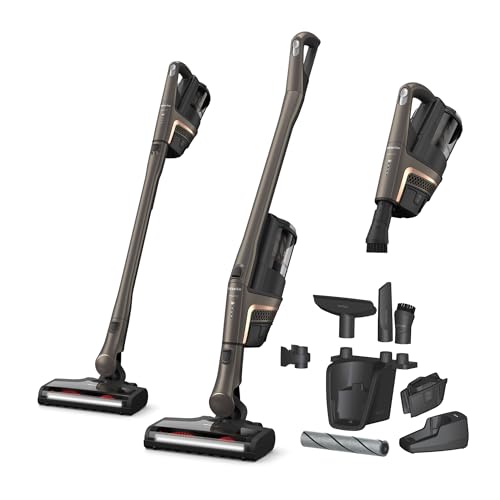

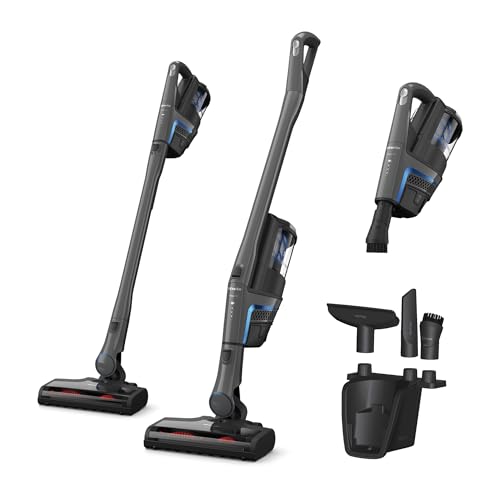
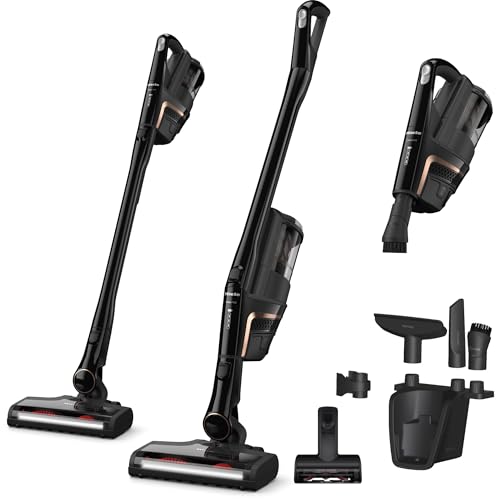
When should you consider buying a Miele cordless vacuum?
You should consider buying a Miele cordless vacuum when quick deployment, stairs and moving between floor and handheld cleaning matter more than maximum capacity. Duoflex suits buyers who want a conventional stick layout, while Triflex can move its motor unit to alter balance and storage.
The format works best for regular maintenance cleaning across hard floors and rugs. A powered electrobrush and roughly 55–60 minutes in a lower mode can cover a typical session, but carpet, pet hair and maximum power increase battery use substantially.
A corded bagged Miele is more practical when a large home needs uninterrupted deep cleaning or cleaner dust disposal. Cordless bins hold only about 0.3–0.5 L, and 12–17 minutes at maximum power may require a spare battery for extensive carpet.

Which Miele vacuum series include cordless models?
The Miele cordless-vacuum series are as follows:
- Duoflex HX1: This is Miele’s conventional light stick family, weighing about 3.1 kg with a roughly 0.3 L bin and up to 55 minutes in a lower mode. It suits frequent floor and above-floor cleaning where simpler handling matters more than maximum capacity.
- Triflex HX1: The original Triflex uses a repositionable motor unit, allowing upright, reach and compact configurations. Its flexible layout is useful around furniture, but it is heavier than Duoflex.
- Triflex HX2: HX2 is the newer, stronger Triflex generation, with a roughly 0.5 L bin and up to about 60 minutes per battery. Pro versions may include a second battery and charger, while Cat & Dog packages add a pet-focused powered tool.
How much do Miele cordless vacuums cost?
New Miele cordless vacuums generally cost about £300-£900. Duoflex HX1 and entry Triflex packages commonly sit near £300-£400, where buyers should compare the powered head, upholstery tools and battery rather than selecting by colour.
More complete packages around £400-£600 may add specialist tools, improved floor detection or a more useful charging setup. Confirm whether the same motor and battery are available in a cheaper package before paying for accessories that will not be used.
Premium Triflex HX2 Runner or Pro versions can reach about £700-£900. A second battery and charger can justify much of that difference; without them, the price is difficult to defend against a lower-tier Miele or a corded canister.
What should you check before buying a Miele cordless vacuum?
You should check the following factors before buying a Miele cordless vacuum:
- Duoflex or Triflex layout: Choose Duoflex for a familiar stick shape and lower ready-to-clean weight, or Triflex when repositioning the motor improves upright stability, reach or handheld use. Test the balance in the configuration that will be used most often.
- Suction and floorhead: Around 150 AW is a practical mixed-floor baseline, while roughly 170–200 AW or more provides greater headroom for carpet and pet hair when measured comparably. A powered electrobrush, seal and agitation remain as important as the motor figure.
- Runtime by mode: Aim for 55–60 minutes in a lower mode and at least 12–15 minutes at maximum power. Confirm whether the claim uses the powered head, because an unpowered tool can produce a much longer headline figure.
- Charging and battery package: Prefer charging within four hours and a removable battery that can be charged separately. Check whether a Pro package actually includes a second battery and charger, then price a future replacement pack.
- Weight and handling: Duoflex is about 3.1 kg and Triflex roughly 3.6 kg before the practical effect of balance is considered. For stairs or overhead work, motor position and wrist load matter more than a difference of a few hundred grams.
- Bin and filtration: A 0.3 L Duoflex bin is compact but fills quickly, while Triflex provides about 0.5 L. Inspect how cleanly the bin releases, how the cyclone and filters are accessed and how long washable components must dry.
- Noise, tools and support: Prefer about 75 dB or below in the mode used most often, since higher settings can approach 80 dB. Verify the exact pet tool, floorhead, charger and wall mount, and confirm local availability of batteries, filters and brush bars.