
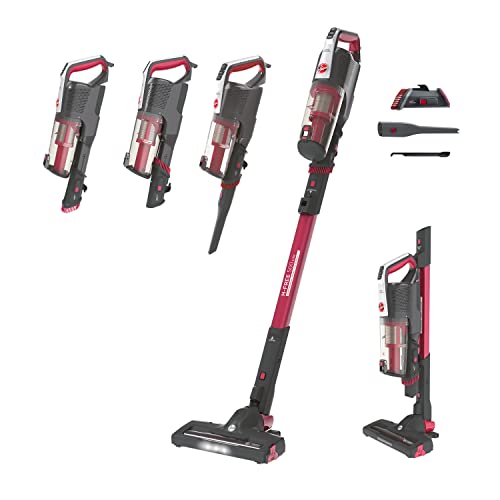
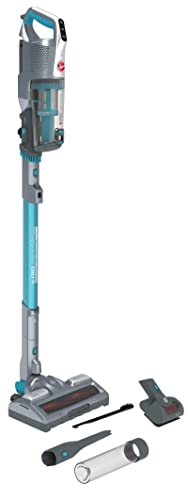
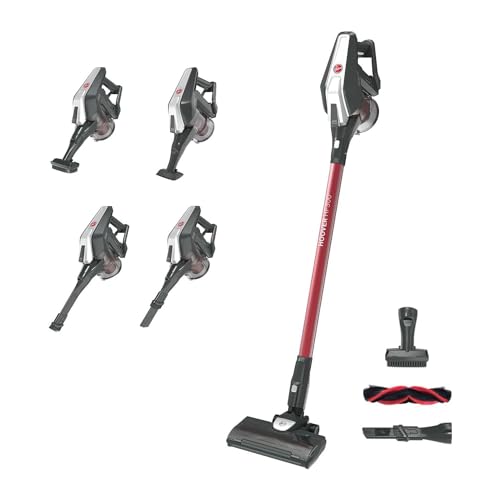
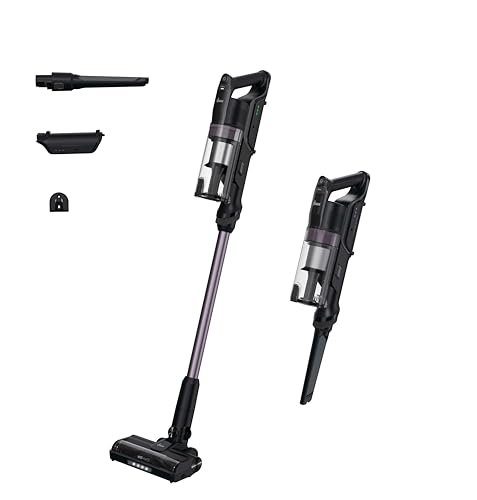
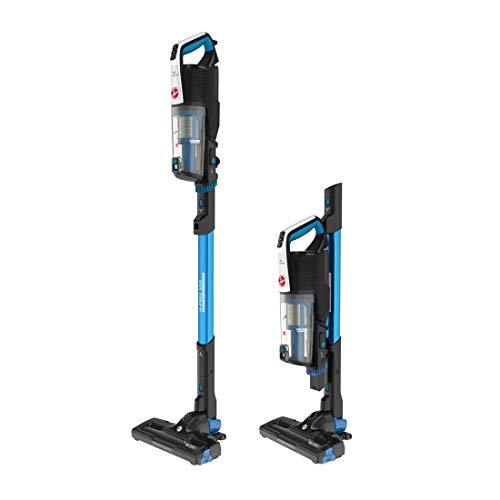
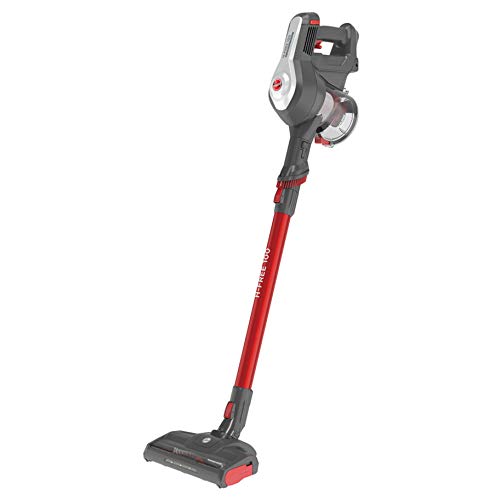
When should you consider buying a Hoover cordless vacuum?
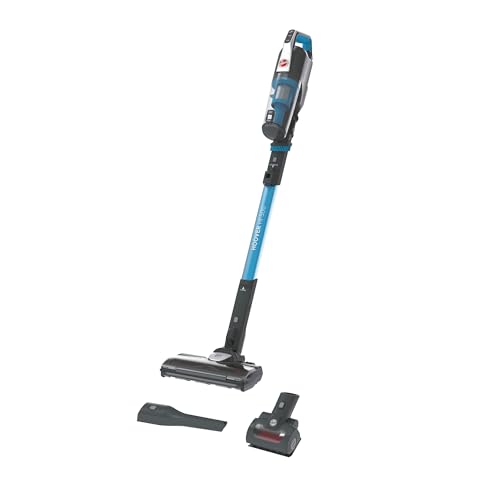
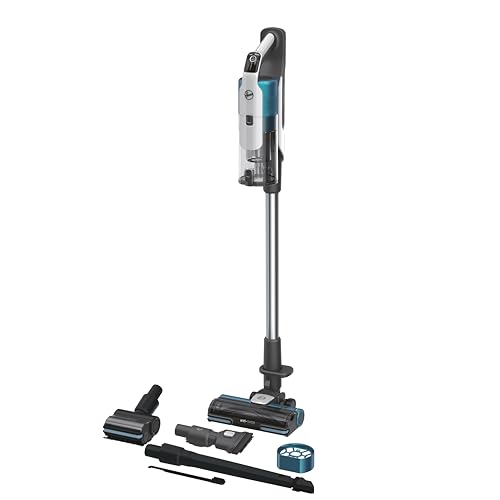
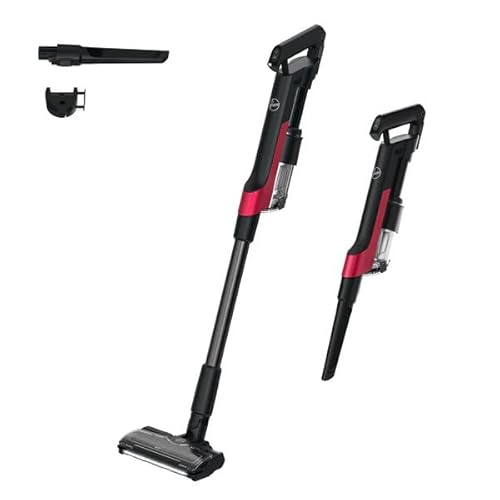
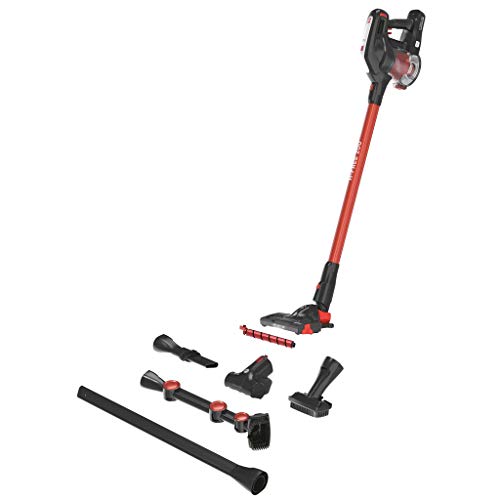
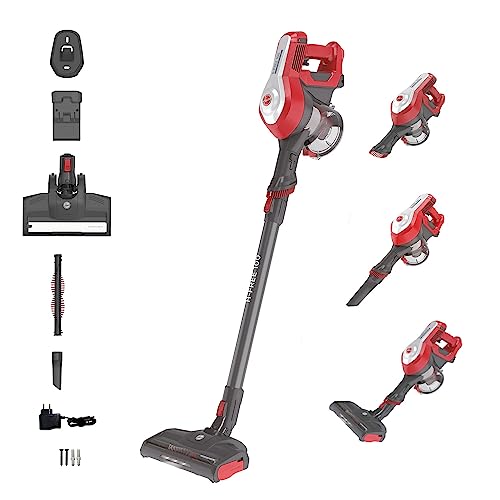
You should consider buying a Hoover cordless vacuum if you often clean crumbs, hard floors, rugs, stairs or car interiors and value immediate use without unwinding a cable. HF models convert to handheld form, and selected versions add flexible tubes, automatic floor response or hair-control hardware for cleaning around furniture and pets.
Cordless is a weaker fit when one battery must cover extensive deep carpet at maximum power. A 60-minute headline can fall toward 10–20 minutes in turbo, so larger homes should use a removable spare battery or a model whose 70–100-minute claim is achieved with the tools and mode you will actually use.
Also consider how often a compact bin will be emptied. About 0.7 L is a sensible balance for routine cleaning, but a pet-heavy home may benefit more from effective one-touch emptying and an accessible washable filter than from the smallest possible body.

Which Hoover vacuum series include cordless models?
The main Hoover cordless-vacuum families are as follows:
- HF1 Plus and HF1 Max: The HF1 family is Hoover's accessible everyday option, with compact handling, roughly 0.7–0.9 L bins and about 30–40 minutes of lower-mode runtime depending on version. Max, Pet and Flexi packages alter the tools and tube, so they suit small homes and quick cleaning more than prolonged maximum-power carpet work.
- HF2 Ultra Light: HF2 focuses on low carrying weight and manoeuvrability, typically around 2.3 kg with a 1 L-class bin and about 40 minutes of claimed runtime. It is attractive for stairs and frequent pickups, but published suction near 25 AW means the floorhead and surface match matter more than the “Ultra Light” name.
- HF3 DynamicClean: HF3 steps up to selected 60-minute configurations, a 0.7 L bin and variants aimed at pets or allergy-sensitive cleaning. Its balanced midrange position suits mixed floors when buyers want more autonomy than HF1 or HF2 without the bulk and cost of HF6.
- HF4 PowerMove and Hydro: HF4 versions can combine longer claimed runtime, higher-voltage batteries and floor-management features, while Hydro packages add a wet-cleaning function. Verify whether the wet head, pet tool and battery are included because these are model-specific rather than universal HF4 equipment.
- HF6 TurboSense and HF9: HF6 is the current high-output family, rated up to 250 AW in stated handheld turbo testing and up to 100 minutes under qualifying lower-power conditions. HF9 is an earlier premium platform with anti-twist hair control; both target carpet and pet hair but are heavier and more expensive than the compact lines.
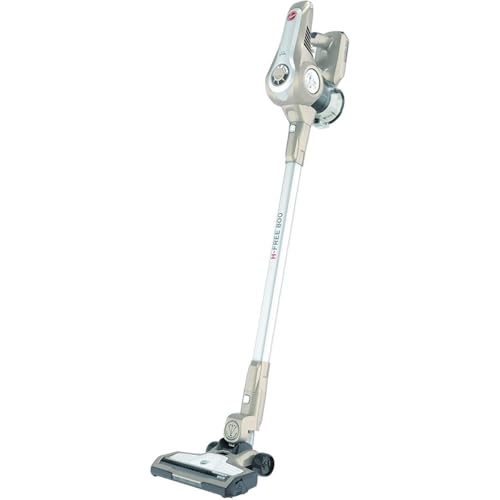
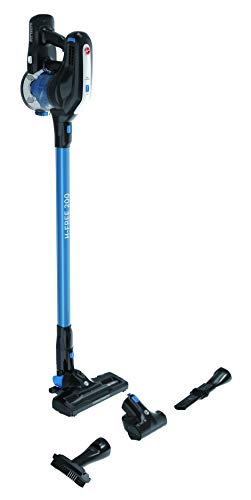
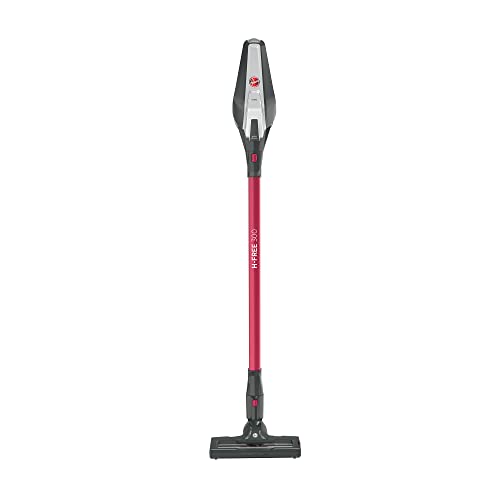
- Legacy H-FREE: H-FREE 100, 200, 300, 500, 700 and 800 models remain widely available across different price levels. Their batteries, charging times and turbo runtimes vary substantially, so a replacement pack or head must be matched to the exact HF commercial code.
How much do Hoover cordless vacuums cost?
New Hoover cordless vacuums generally cost about £100-£400, and a typical midrange model is close to £170. Budget HF1 and older H-FREE versions often fall around £90-£130, where the main compromises are lower peak suction, a shorter turbo runtime or a simpler tool package.
The £200-£300 range contains many stronger HF3, HF4, HF500 and pet-focused configurations. Expect a powered head, removable battery, roughly 0.7 L bin and charging near 3.5–4 hours; check whether automatic floor sensing, anti-tangle hardware and the mini pet tool are actually included.
Above about £260, look for HF6-class suction, meaningfully longer runtime, a second battery or premium dock. A high list price is difficult to justify if it adds only accessories while retaining the same motor, battery and floorhead as a less expensive suffix.
The chart below shows the price distribution of Hoover cordless vacuums.
[vertical-chart-06416146347262420218033239196388702552384165076403]
What should you check before buying a Hoover cordless vacuum?
You should check the following factors before buying a Hoover cordless vacuum:
- Measured suction: For routine hard floors, aim for at least 100–150 AW; carpet and pet hair benefit from about 170–200 AW or more when figures follow comparable methods. Hoover values can range from roughly 25 AW to 250 AW, and HF6's highest claim is measured in turbo with a stated handheld configuration, so do not compare it with an unspecified floorhead result.
- Real runtime by mode: Target 45–60 minutes for everyday lower-power cleaning and at least 10–15 minutes in turbo. If a model advertises 70–100 minutes, confirm the battery count, attached tool and power mode, then size the battery for the area that actually needs the powered floorhead.
- Charging and spare battery: Prefer a recharge time of four hours or less and a removable pack that can charge separately from the vacuum. Check the cost and availability of the exact Hoover battery because HF generations and regional platforms are not universally compatible.
- Weight and handling: A ready-to-use weight near 2.5–3 kg is practical for floor cleaning, while closer to 2.5 kg is preferable for stairs and frequent lifting. Judge wrist load in handheld mode, floorhead steering and whether the tube folds or stands securely for storage.
- Bin and filtration: Around 0.7 L is a good target for normal use; 0.45 L is compact but can fill quickly, while larger bins add bulk. For allergies, require a sealed airflow path and a clearly specified final filter, then follow the stated wash-and-dry interval to prevent suction loss.
- Brush roll and tools: Choose a powered removable roller for carpet, effective hard-floor contact and a mini motorised tool for pet hair on upholstery. Anti-tangle combs, floor detection and Hydro heads appear only on selected models, so inspect the exact included package.
- Noise, warranty and parts: Prefer around 75 dB or below in the mode used most often, as several Hoover cordless models reach 80–86 dB at higher power. Confirm the separate battery-warranty period and local supply of filters, rollers and chargers before relying on the longer appliance warranty.
The chart below shows the battery-runtime distribution of Hoover cordless vacuums.
[vertical-chart-09054248147079459310036186356450355414911837989805]