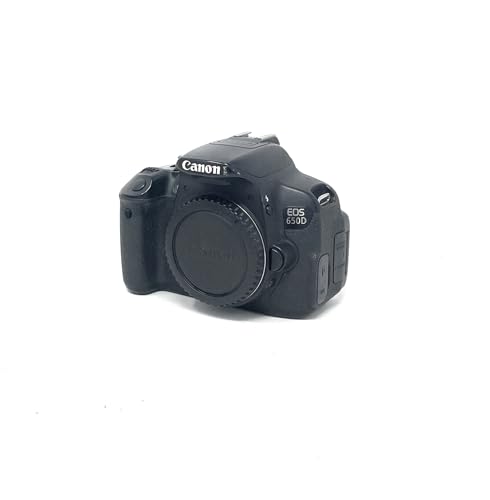
Canon EOS 700D review. Compare 108 technical specifications and user reviews to see how it ranks among cameras and if it is worth buying.
Overall score
What it is: An overall evaluation of the camera's quality, based on technical analyses and user reviews.
When it matters: When you need a quick reference to identify the best cameras on the market.
Score components:
90.0%
Technical Score
10.0%
User score
Technical Score
What it is: An assessment of the camera's technical performance, covering eight key areas: image quality, autofocus, video features, stabilization, lens compatibility, connectivity, battery, and design.
When it matters: When you want to compare cameras based on technical performance and available features.
Score components:
28.0%
Sensor & Image
25.0%
Photo Features
18.0%
Video & Audio
14.0%
Display & Design
8.0%
Battery & Power
7.0%
Connectivity & Storage
User score
What it is: A rating that combines user reviews and the total number of reviews received by the camera.
When it matters: When real-world owner satisfaction and review volume matter to your decision.
Score components:
70.0%
User reviews
30.0%
Popularity
Score components:
25.0%
Sensor size
20.0%
Main camera megapixels
20.0%
Dual card slots
15.0%
N. of focus points
10.0%
RAW photo capture
10.0%
Phase-detection autofocus (photos)
Score components:
35.0%
Weight
30.0%
Battery life (CIPA)
20.0%
Sensor-shift stabilization
15.0%
GPS
Score components:
30.0%
Price
20.0%
Weight
20.0%
AF tracking
20.0%
Battery life (CIPA)
10.0%
Touchscreen
Score components:
30.0%
Main camera megapixels
25.0%
Sensor size
20.0%
Main camera pixel size
15.0%
Sensor-shift stabilization
10.0%
RAW photo capture
Score components:
30.0%
Weight
25.0%
Thickness
20.0%
AF low-light sensitivity
15.0%
Sensor-shift stabilization
10.0%
Eye detection AF (human)
Score components:
30.0%
Sensor size
25.0%
Main camera pixel size
20.0%
Eye detection AF (human)
15.0%
Main camera megapixels
10.0%
Sensor-shift stabilization
Score components:
30.0%
Weight
25.0%
Battery life (CIPA)
20.0%
Min operating temperature
15.0%
Sensor-shift stabilization
10.0%
GPS
Available: ranking among products currently available (including other versions of this product).
All: ranking among all products in the database.
#2 in Best Cheap DSLR Cameras
#3 in Best Cameras under £1000
#9 in Best DSLRs for Beginners
#12 in Best Canon DSLR Cameras
#19 in Best Cameras under £500
#21 in Best Canon Vlogging Cameras
#32 in Best Canon EOS Cameras
#33 in Best DSLR Cameras
#33 in Best SLR Cameras
#33 in Best Canon Digital Cameras
#41 in Best Cameras under £200
#45 in Best Cameras for Beginners
#58 in Best Vlogging Cameras
What it is: An assessment of the camera's technical performance, covering eight key areas: image quality, autofocus, video features, stabilization, lens compatibility, connectivity, battery, and design.
When it matters: When you want to compare cameras based on technical performance and available features.
Score components:
28.0%
Sensor & Image
25.0%
Photo Features
18.0%
Video & Audio
14.0%
Display & Design
8.0%
Battery & Power
7.0%
Connectivity & Storage
What it is: A rating that combines user reviews and the total number of reviews received by the camera.
When it matters: When real-world owner satisfaction and review volume matter to your decision.
Score components:
70.0%
User reviews
30.0%
Popularity
What it is: An indicator that combines the camera's overall rating with its cost.
When it matters: When you want to know how much overall quality you get for the price.
Score components:
60.0%
Overall score
40.0%
Price
Importance: HIGH
Good value: Full frame or larger
Importance: HIGH
Good value: At least 20 MP
Importance: HIGH
Good value: At least 3.5 µm
Importance: LOW
Importance: MEDIUM
Good value: At least ISO 25,600
Importance: MEDIUM
Importance: MEDIUM
Good value: At least 14-bit
Importance: LOW
Importance: LOW
Importance: LOW
Importance: LOW
Importance: LOW
Importance: LOW
Importance: LOW
Importance: LOW
Importance: MEDIUM
Importance: LOW
Importance: LOW
Importance: LOW
Importance: LOW
Importance: LOW
Importance: HIGH
Good value: At least 200 points
Importance: HIGH
Importance: MEDIUM
Importance: LOW
Importance: LOW
Importance: MEDIUM
Importance: MEDIUM
Importance: HIGH
Good value: At least 5 stops
Importance: LOW
Importance: MEDIUM
Good value: At least 10 fps
Importance: LOW
Importance: LOW
Importance: LOW
Importance: LOW
Importance: LOW
Importance: LOW
Importance: LOW
Importance: LOW
Importance: LOW
Importance: LOW
Importance: LOW
Importance: LOW
Importance: LOW
Importance: LOW
Importance: LOW
Importance: LOW
Good value: At least 200,000 actuations
Importance: LOW
Good value: At least 10x
Importance: HIGH
Good value: At least 3840 px
Importance: MEDIUM
Good value: At least 200 Mbps
Importance: MEDIUM
Good value: At least 10-bit
Importance: LOW
Importance: LOW
Importance: LOW
Importance: LOW
Importance: LOW
Importance: LOW
Importance: LOW
Good value: At least 30 min
Importance: LOW
Importance: LOW
Importance: LOW
Importance: LOW
Importance: LOW
Good value: At least 2 microphones
Importance: LOW
Importance: LOW
Importance: LOW
Importance: LOW
Importance: MEDIUM
Good value: 500 g or less
Importance: LOW
Importance: LOW
Importance: LOW
Importance: MEDIUM
Importance: MEDIUM
Good value: At least 2.36 million dots
Importance: LOW
Good value: 100%
Importance: LOW
Importance: LOW
Good value: At least 120 Hz
Importance: MEDIUM
Good value: At least 3 in
Importance: LOW
Importance: LOW
Importance: LOW
Importance: LOW
Importance: LOW
Importance: LOW
Importance: LOW
Good value: At least 10 m
Importance: LOW
Importance: LOW
Importance: LOW
Importance: LOW
Importance: MEDIUM
Good value: At least 400 shots
Importance: LOW
Good value: At least 1,500 mAh
Importance: LOW
Importance: LOW
Importance: LOW
Importance: LOW
Importance: LOW
Importance: LOW
Importance: LOW
Importance: LOW
Importance: LOW
Importance: LOW
Importance: LOW
Importance: LOW
Importance: LOW
Importance: LOW
Importance: LOW
Importance: LOW
Importance: LOW
Importance: LOW
Importance: HIGH
Importance: LOW
Importance: LOW
Importance: LOW
Importance: LOW
Importance: LOW
Importance: LOW
Importance: HIGH
Good value: At least 3.5 µm
Importance: MEDIUM
Importance: LOW
Good value: 100%
Importance: LOW
Importance: MEDIUM
Good value: 500 g or less
Importance: LOW
Importance: LOW
Importance: HIGH
Good value: At least 200 points
Importance: LOW
(Reviews last updated: July 2026)
The DPReview in-depth review identifies the Canon EOS 700D/Rebel T5i as a responsive, beginner-friendly DSLR featuring an intuitive, smudge-resistant touchscreen and excellent JPEG image quality. Key strengths include reliable 9-point all-cross-type autofocus for stills and smooth 1080p video, making it a strong contender for entry-level users. However, the review notes limitations, including slow hybrid AF during Live View compared to competitors and a small buffer that hampers continuous RAW shooting. Additionally, excessive noise reduction above ISO 6400 smears fine detail, and the construction feels plasticky with below-average battery life.
The Canon EOS 700D is lauded by ePHOTOzine as a high-quality entry-level DSLR featuring a responsive 3-inch vari-angle touchscreen, a simplified "Q" menu, and a 360-degree mode dial with real-time filter previews. Performance highlights include the DIGIC 5 processor, 5fps shooting, effective Handheld Night Scene mode, and improved ISO 12800 capability, all housed in a durable, textured body. Conversely, the review identifies the primary drawback as the lack of innovation, noting the 700D offers only minor updates over the predecessor 650D. Consequently, the review concludes there is little incentive for 650D owners to upgrade, as the performance improvements are minimal. ePHOTOzine
The Photo Review assessment of the Canon EOS 700D highlights a robust, user-friendly entry-level DSLR featuring a durable stainless steel chassis, a tactile leather-like grip, and a highly responsive 3-inch vari-angle capacitive touchscreen. The camera is praised for its quiet, efficient EF-S 18-55mm f/3.5-5.6 IS STM kit lens, which provides excellent, near-silent autofocus tracking suitable for hybrid shooters and videographers. Conversely, the evaluation notes that Live View autofocus is significantly slower than competing mirrorless systems, and the matte finish attracts dust. Other drawbacks include small, hard-to-press menu icons and a lack of significant performance updates over the previous 650D model, making it a minor iterative upgrade.
The What Digital Camera review describes the Canon EOS 700D/Rebel T5i as a refined, user-friendly entry-level DSLR featuring a responsive 3-inch 1040k-dot vari-angle touchscreen, a durable build with a 360-degree rotating mode dial, and a reliable 9-point all cross-type AF system. Key advantages highlighted include live view creative filter previews and excellent handling. However, the review notes the camera is an extremely minor upgrade over the 650D with no built-in Wi-Fi. Minor limitations include lack of 100% zoom with a double-tap and slight lag in image playback, leading to the conclusion that it is ideal for newcomers but offers little for existing users.
The Focus Review of the Canon 700D highlights it as a user-friendly, feature-rich DSLR designed for photographers transitioning from compact cameras to serious photography. Released shortly after its predecessor (the 650D), it retains the same 18-megapixel hybrid sensor, Digic-5 processor, and 9 cross-type AF points. Major performance features include 5 frames per second continuous shooting and Full-HD video (1080p at 30 fps) with smooth, quiet continuous autofocus when paired with silent STM stepper-motor lenses. Physically, it introduces minor ergonomic upgrades, including a more robust rubber grip case, a 360-degree rotating mode dial, and three-dimensional button symbols that offer a more luxurious aesthetic. The review explicitly breaks down the camera's design strengths and operational limitations into clear pros and cons. Its primary advantages (Pros) center around its multi-angle 3-inch touch screen, an exceptionally user-friendly interface, and excellent Full-HD video capabilities that feature manual control and seamless continuous autofocus. However, the camera suffers from notable drawbacks (Cons), most significantly that it is virtually identical to the Canon 650D in terms of actual performance. Furthermore, it features a limited dynamic range at low...
The Canon EOS 700D (Rebel T5i) is an entry-level DSLR camera built from stainless steel and polycarbonate resin, featuring an 18-megapixel APS-C CMOS sensor, a 1.6x crop factor, and an unchallenging, navigable layout suitable for beginners. The reviewer praises its highly responsive autofocus system with nine cross-type points, its crisp image quality with well-saturated colors, and a fully articulating 7.6cm touchable LCD screen. Additional positive features include its 5 frames-per-second continuous shooting speed (up to 22 JPEGs or 6 RAW files), dedicated top-deck ISO controls, an accessible side card slot, and unique shooting modes like Handheld Night Scene and HDR Backlight Control. However, the camera comes with several technical compromises that buyers should consider. The 18-megapixel resolution might feel limiting if you require extensive cropping or pro-level control. When capturing Full HD video, the tracking autofocus feature works decently but experiences a lag of a second or two to properly lock onto moving targets. Furthermore, the mode switch forces you to select video mode manually, meaning you cannot snap still photos while recording video. Low-light performance also drops significantly at...
The Canon EOS 700D is an entry-level DSLR that serves as a minor, iterative update to its predecessor, the 650D. The camera features an 18-megapixel CMOS sensor that delivers neutral colors and fantastic image quality up to ISO 1600, remaining usable at higher settings like ISO 3200 and 6400. Key hardware upgrades to the physical body include a new premium grippy matte coating, a mode dial that rotates a full 360 degrees, and a slight weight reduction of 5 grams. It retains the 650D’s highly responsive, flippable, and twistable touchscreen, which simplifies shooting from awkward angles. The most significant advancement is its new video-centric EF-S 18-55mm IS STM kit lens, which uses stepper motor technology to provide smooth, quiet, and fast autofocus transitions during 1080p video recording. The review highlights several prominent advantages and disadvantages of the system. On the positive side (pros), the 700D offers superb overall photo and 1080p video quality, a highly intuitive and flexible flip-out touchscreen, and an excellent, quiet kit lens tailored for home movie makers. It also boasts a large sensor, a proper optical...
The Canon 700D (known as the T5i in America) is a highly capable entry-level DSLR priced around $500, making it an affordable and durable option for beginner travel photographers and filmmakers. Reviewer Phil Wilson highlights several outstanding pros, including a fully articulating flip-out touchscreen that is excellent for solo travelers taking selfies or low-angle shots, and a sturdy build with a protective plastic backing for the screen. The included 18-55mm STM kit lens delivers fast, quiet autofocusing and solid image stabilization, which pairs perfectly with an external microphone input to capture high-quality video audio without motor noise. Additionally, its user-friendly shooting modes like "Sport" and "TV" make it incredibly easy for novices to quickly capture sharp, moving action and long exposures on the road. However, the review also highlights a few notable cons and limitations inherent to this budget-friendly camera. Most significantly, the Canon 700D is not completely weather-sealed like higher-end models, making it vulnerable in extreme environments unless handled carefully. The built-in microphone struggles heavily against wind and background noise, forcing users to buy external accessories like a Rode...
The Radojuva review characterizes the Canon 700D as a minor, marketing-driven update over the 650D, featuring a responsive 3-inch touchscreen, a 360-degree rotating mode dial, and the ability to preview creative filters in real-time. Pros include an improved, simplified user interface with a consolidated special scene mode (SCN) for beginners. However, the review highlights significant stagnation, noting that the 700D retains the outdated first-generation Hybrid CMOS AF system. A major con is this slow autofocus performance in Live View and video mode, which shows no improvement over its predecessor and lags behind the capabilities of the simultaneously released, more compact Canon 100D.
The Canon EOS Rebel T5i (also known as the EOS 700D) is a versatile and user-friendly entry-level DSLR that features an 18-megapixel APS-C sensor, a DIGIC 5 processor, and a highly responsive vari-angle touchscreen. Designed to bridge the gap for beginners stepping up from smartphones while still offering full manual control for enthusiasts, it features a textured coating and a 360-degree mode dial for a premium feel. Key strengths of the camera include its ability to record immense image detail, shoot continuously at 5fps, produce high-quality video, and preview Creative Filters directly on the screen during Live View mode. However, the camera falls short because it relies on the same sensor as its predecessor, the 650D, resulting in dynamic range and signal-to-noise ratios that lag behind its rivals. Additionally, the camera completely lacks built-in Wi-Fi, and the otherwise excellent LCD screen easily attracts fingerprints. It is worth noting that while it has since been replaced by newer, higher-resolution models like the T6i and T7i, the T5i remains a highly capable camera that has become significantly more affordable. If you'd like,...
The Canon EOS Rebel T5i is a solid entry-level DSLR that heavily mimics its predecessor, the T4i, featuring nearly identical hardware, an 18-megapixel APS-C CMOS sensor, and a highly responsive 3-inch articulating touchscreen LCD with a sharp 1,040k-dot resolution. The camera delivers swift overall performance, boasting a 0.5-second startup time, a minimal 0.1-second shutter lag, and rapid autofocus when using the optical viewfinder. It achieves continuous shooting speeds of up to 4 frames per second, handling up to 39 JPEG images or 7 Raw files before the burst buffer fills up. For video creators, the T5i captures full HD video up to 1080p and introduces a microphone input alongside continuous video autofocus, which provides an incredibly smooth, silent experience when paired with Canon's STM lenses. However, the reviewer points out several notable drawbacks, particularly when comparing the T5i to contemporary market rivals. The optical viewfinder utilizes a small, dim pentamirror system, which fails to match the larger, brighter glass pentaprisms found in competing models like the Pentax K-30. While the camera controls are decent, it only offers a single control...
The Canon EOS Rebel T5i is a solid entry-level DSLR that delivers excellent still photo quality and clean, low-light video performance, though it offers only minimal upgrades over its predecessor, the T4i. A major highlight of the camera is its highly responsive and articulated 3-inch touch-screen LCD, which features an intelligent user interface that greatly simplifies Live View shooting and video recording. Additionally, the T5i exhibits improved continuous burst shooting, capable of blowing through 30 JPEG frames at 7.6 frames per second without slowing down when paired with a fast SD card, thanks to enhanced buffer handling. However, the camera is held back by outdated components and a lackluster feature set that lags behind its competition. Its creaky, nine-point phase-detection autofocus system is noticeably aging, and the tiny autofocus points inside the viewfinder remain frustratingly difficult to see until you prefocus. Video shooters will also have to contend with significant aliasing and moiré, as well as a lack of modern manual assists like focus peaking. Furthermore, the T5i disappoints on modern conveniences, completely omitting built-in wireless connectivity, GPS, and creative...
The Canon Rebel T5i (EOS 700D) is a minor, consumer-friendly update that functions essentially as a rebranding of the previous T4i, launched at a lower retail price point. Built with a solid, ergonomic body, it features a bright tilt/swivel touchscreen monitor that resists fingerprints and excels at framing unique angles. The camera delivers excellent, accurate color reproduction, great detail, and includes a highly quiet, above-average 18-55mm STM kit lens. Users will also benefit from good cycle times, multi-shot noise reduction, and pre-capture Creative Filter previews. However, the T5i suffers from several performance and design drawbacks. Its flagship Hybrid CMOS autofocus underperforms, showing slow speeds, frequent hunting, and false focus locks that make it a poor fit for video-centric shooters. The camera also falls short of its competitors regarding dynamic range, battery life, and buffer depth when shooting raw files. Additional quirks include a single control dial, highly warm auto white balance under tungsten lighting, a glossy screen, and a system that clears exposure bracketing settings every time the device powers down. Despite these flaws, it remains a highly capable, budget-friendly...
The TechNuovo review positions the Canon EOS 700D as a robust, beginner-friendly DSLR that balances solid physical handling with appealing entry-level specifications. Built with an 18-megapixel APS-C CMOS sensor and a DIGIC 5 processor, the camera successfully delivers uncompressed Raw image files and crisp, high-quality results. Its core strengths highlighted in the review include an incredibly versatile vari-angle touchscreen LCD attached to a boom arm—allowing for flexible, multi-angle shooting—alongside impressive low-light performance stretching up to ISO 25,600. Additionally, the camera is light enough to move around easily, includes a decent standard 18-55mm starter lens, and boasts a continuous shooting speed of 5 frames per second for up to 22 sequential images. However, the reviewer notes a few drawbacks regarding the device's feature set and value. A notable con is the camera's high retail price point of approximately £749, which the review suggests feels a bit steep for the features provided. The author also indicates that the overall system leaves room for more advanced features, hinting that seasoned photographers looking for deeper capabilities might eventually outgrow its setup. Ultimately, while the...
The Canon Rebel T5i (EOS 700D) delivers capable video performance for its consumer price point, offering standard progressive scan formats including Full HD 1080p at 30 and 24 frames per second (fps) and 720p at 60 fps. Recorded in MOV format with H.264/MPEG-4 AVC encoding, the video quality is characterized by crisp detail and accurate color rendition. It features an intuitive touch screen that permits silent exposure adjustments while recording, continuous Movie-Servo autofocus utilizing a Hybrid CMOS AF system, and flexible manual audio controls alongside an external 3.5mm microphone jack. Furthermore, the camera excels at managing rolling shutter artifacts ("Jello effect"), keeping distortion minimal at 1080p and even less noticeable at 720p. Despite these strengths, the T5i has clear limitations and drawbacks when it comes to higher-end productions. A primary disadvantage is the presence of noticeable moiré and aliasing artifacts in scenes with fine patterns, roof shingles, or window screens—problems that become even more pronounced when dropping down to 720p resolution. Additionally, standard picture profiles produce overly contrasty daytime footage with dark shadows, meaning users must design custom picture styles...
The Canon EOS Rebel T5i is an entry-level DSLR that delivers good overall image quality and a highly accurate autofocus system covering a wide section of the frame. Its 18-megapixel APS-C sensor controls noise well, keeping images completely clean up to ISO 1600 and producing usable mid-sized prints at ISO 3200 and 6400. The camera is responsive with instant dial and button inputs, and its shutter lag is remarkably brief. Furthermore, it features a helpful "Highlight Tone-Priority" option to preserve bright details, alongside dependable full 1080p HD video capabilities with instant start and stop controls. However, the camera suffers from below-average dynamic range that causes highlight clipping and falls three stops behind class-leading competitors like the Nikon D7200. Performance limitations include a slow 5 FPS continuous drive, an underpowered 440-shot battery life, and a sluggish 1.5-second instant review delay. Additionally, automatic white balance leaves a noticeable yellow cast under low artificial light, and the default image sharpness is slightly soft. The Hybrid AF II sensor also disappoints by failing to improve autofocus during video, causing the kit lens to disruptively...
The digitalkamera.de review highlights the Canon EOS 700D as a capable entry-to-mid-level DSLR featuring an intuitive 3-inch articulating touchscreen, excellent image quality up to ISO 1,600, and a secure grip. Key advantages include its reliable, fast autofocus when shooting through the viewfinder and solid, natural color reproduction, making it a strong performer for photographers looking to upgrade from entry-level, despite being an iterative update over the 650D. Conversely, the review notes significant limitations, particularly regarding the slow Live View autofocus performance and notable chromatic aberration in the included STM kit lens. Furthermore, the camera offers minimal improvements in overall image quality or speed compared to its predecessor, limiting its appeal as a necessary upgrade, say digitalkamera.de.
The Canon EOS 700D is a mid-range DSLR that offers very high image quality through its 18-megapixel sensor and sharp Full HD video recording at 24 or 25 frames per second. A major highlight is its 3-inch articulating touchscreen display, which supports intuitive smartphone-like multi-touch gestures and a highly optimized quick menu system. The camera provides extensive manual controls alongside numerous automated scene modes, a powerful internal flash (guide number 11) capable of controlling external Speedlite units, and standard 3.5mm audio jacks for precise audio leveling. Additionally, its phase-detection autofocus system with nine cross-type sensors ensures swift and accurate focus within 0.4 seconds when using the optical viewfinder. However, the EOS 700D offers almost no innovation compared to its predecessor, the EOS 650D, because the only changes are an abrasive body grip texture, a 360-degree rotating mode dial, and a live-view preview for creative art filters. Performance in live-view remains heavily bottlenecked by a slow contrast-autofocus system that takes a sluggish 1.4 seconds to lock onto targets. Lab testing also revealed minor regressions in burst shooting speeds (4.8 frames per...
The dkamera.de review of the Canon EOS 700D highlights the entry-level DSLR as a capable, user-friendly device featuring an 18-megapixel APS-C CMOS sensor that delivers low noise levels up to ISO 800 and high detail up to ISO 3,200. Key pros include the 3.0-inch, 1.04-million-dot, vari-angle touchscreen LCD, a reliable 9-point all-cross-type autofocus system, and comfortable, rubberized handling. However, the review notes a severe lack of technical innovation compared to the predecessor EOS 650D, with image quality degrading notably at ISO 6,400. Additional cons include a limited continuous shooting buffer, an optical viewfinder with only 95% frame coverage, and the absence of built-in Wi-Fi or NFC.
The Canon EOS 700D is an entry-level DSLR camera praised for its user-friendly operation, lightweight build, and impressive overall image quality, even in low-light environments. Key positive features highlighted in the review include its sharp photo output, a relatively powerful built-in flash that reaches up to 3.7 metres, and a 3-inch articulating touchscreen that simplifies overhead shooting and serves as a real-time Live-View finder. Furthermore, the camera boasts an exceptionally fast autofocus when capturing still images, clocking an impressive reaction time of just 0.1 to 0.12 seconds even in dark conditions. The battery life is also highly durable, sustaining roughly 1,500 shots on a single charge during testing. On the downside, the review notes significant limitations regarding the camera's video performance and autofocus system architecture. While it captures Full HD video at 30 fps, the autofocus operates incredibly slowly in video and Live-View modes, sometimes taking up to two full seconds to lock onto a subject. Additionally, its continuous burst shooting mode is relatively modest at 3.84 frames per second, making it less ideal for fast-paced action photography. Finally, the...
The Canon EOS 700D is a highly responsive DSLR camera that provides noticeable upgrades in autofocus speed and shutter lag reduction compared to older generations like the EOS 500D. Tested during a trip to Alaska, the camera’s standout feature is its articulating flip-and-swivel touchscreen display, which simplifies menu adjustments and significantly eases low-angle shooting. When paired with an ultra-wide-angle lens like the EF-S 10-22mm f/3.5-4.5, it proves to be an excellent tool for capturing vast landscapes, tight spaces, and aircraft interiors. The overall menu structure remains intuitive, well-organized, and user-friendly across Canon generations. Despite its strong performance, the reviewer highlights a major downside regarding the physical accessories, explicitly criticizing the included camera strap for being too narrow, stiff, and uncomfortable on the neck. This design flaw led the reviewer to substitute it with a vintage 1970s/1980s Canon professional strap. Additionally, while the camera is highly praised, the reviewer stops short of an immediate purchase recommendation, noting the necessity to first test its larger sister model, the EOS 70D, to make a final decision.
The Canon EOS 700D delivers a solid, dependable performance as an entry-level DSLR camera, though it represents a very minor upgrade over its predecessor, the EOS 650D. It features an 18-megapixel APS-C CMOS sensor that provides high image quality and very good detail reproduction at lower ISO levels (ISO 100–800). The camera stands out for its fast operating speed, capturing continuous burst shots at 4.9 frames per second with a highly responsive shutter delay of just 0.06 seconds. Users benefit from excellent handling via a high-resolution 3.0-inch swiveling touch display and full manual control during Full HD video recording, which also supports external microphone input. A major highlight of the kit is the new EF-S 18-55mm IS STM lens, which features an incredibly fast, completely silent stepper motor that greatly improves autofocus performance in Live View and video modes while maintaining sharp image borders. Despite its strong overall utility, the camera falls short due to a complete lack of technological progression over the previous generation, making it an unnecessary upgrade for current EOS 650D owners. Image quality experiences a steep...
The CHIP review explains that the Canon EOS 700D is a powerful mid-range DSLR camera that offers very good image quality through its 18-megapixel sensor. A major strength is its excellent handling, thanks to a very sharp, articulated touchscreen display that swivels on two axes, alongside a fast 9-point viewfinder autofocus system. For video, it shoots in Full HD with convincing quality, supports manual settings, and includes an external microphone port. However, the camera falls short when filming because its Live View autofocus responds way too slowly. Image noise also becomes quite noticeable once you climb above ISO 3200, which causes a loss in sharp detail. Ultimately, this update is criticized as a "facelift without innovation" because it is technically identical to its predecessor, the EOS 650D. The only real changes are a 360-degree rotating mode dial, a slightly rougher body texture for a better grip, and the ability to preview creative filter effects in Live View. Because there are no real technical breakthroughs, paying a higher price for the newer model over the older 650D is not justified, even...
The Canon EOS 700D is an entry-level DSLR priced at €800 that builds closely upon its predecessor, the EOS 650D, by utilizing the same 18-megapixel APS-C sensor and a highly capable 3-inch, articulating touchscreen. A key highlight of the device is its revised hybrid autofocus system in Live-View mode, which dramatically cuts focus times down to under 0.3 seconds in optimal 1,000-lux laboratory settings. Additional strengths include a sturdy, tactile handgrip and an improved pop-up flash with a guide number that has increased from GN9 to GN11. Handling is further enhanced by a modified, 360-degree rotating mode dial, easily accessible physical buttons, and a well-organized main menu that requires zero scrolling. However, the review outlines notable weaknesses, particularly concerning the hybrid autofocus system, which breaks down dramatically in low-light environments. Video performance is also compromised by noticeable delays in autofocus tracking and distracting artifacts appearing in fine structures and shadows during Full-HD recording. In terms of image quality, the camera's aggressive processing artificially inflates color contrast in standard JPEG files, creating a harsh, overly sharp visual appearance that users may...
The Canon EOS 700D is an entry-level DSLR that serves as a minor cosmetic refresh of its predecessor, the 650D. Under the hood, the camera retains the identical 18-megapixel APS-C CMOS sensor, a 9-point cross-type autofocus system, a 3-inch articulating touchscreen, and 5 frames per second continuous shooting. The primary hardware updates are limited to a new 360-degree rotating mode dial, a dedicated "SCN" scene position, real-time creative filters during live view, and a slightly modified body texture. Because it uses the exact same processing algorithms as the previous model, its electronic noise management and overall performance remain unchanged. In terms of image quality, the camera delivers clean, detailed JPEGs with accurate color reproduction up to ISO 400. Minor grain appears at ISO 800, but details remain sharp enough for excellent large prints up to ISO 3200. However, performance degrades at higher sensitivities; ISO 6400 introduces a coarser grain and visible purple artifacting in dark zones, while ISO 12800 and 25600 suffer from heavy luminance noise, reduced dynamic range, and severe details loss. Ultimately, the 700D stands out for its...
The Canon EOS 700D serves as a minor, cosmetic update to its predecessor, the 650D, maintaining an identical 18-megapixel CMOS sensor and electronic processing pipeline. The DSLR is highly praised for its excellent 3-inch, fully articulating touchscreen LCD, high responsiveness, and a capable 5 frames-per-second continuous shooting mode. In terms of image quality, it delivers solid performance with well-managed electronic noise up to ISO 3200. For video enthusiasts, it offers flexible manual exposure controls and supports multiple frame rates, including 1080p at 24/25 fps and 720p at 50 fps, creating a smooth and versatile recording experience when paired with a silent STM lens. However, the camera falls short in modern connectivity features, completely lacking built-in Wi-Fi, GPS, and USB 3.0 support. Its polycarbonate body feels premium but lacks any weather-sealing protection against harsh environments. Reviewers noted that the optical viewfinder is somewhat cramped compared to rivals like the Pentax K-30. Furthermore, despite some minor speed improvements, the live-view autofocus system remains sluggish and prone to "hunting," making it less efficient for fast-moving subjects or tracking walking individuals in video mode.
The Labo Fnac review rates the Canon EOS 700D kit (with the EF-S 18-55 mm f/3.5-5.6 IS STM lens) with a 3 out of 5 stars rating, framing it as a highly reactive and solid DSLR tailored for creative beginners. The laboratory tests highlight the camera's 18-megapixel APS-C CMOS sensor, which delivers a very good overall image definition and strong low-light sensitivity up to ISO 3200. Key design advantages include its 7.6 cm swivelling, 170° multi-touch LCD screen (1,040,000 dots) for smooth menu scrolling and multi-touch zooming, alongside a highly responsive 9-point autofocus system capable of reaching a burst shooting speed of 5 frames per second. The camera also records Full HD video in 24p or 25p and features a built-in flash capable of controlling external slave units. Despite these strengths, the review notes prominent technical drawbacks that hold the device back. Lab testing revealed a significant amount of digital noise as soon as the sensitivity goes beyond ISO 3200, coupled with perfectible color reproduction. Additionally, when shooting at a wide-angle focal length with the bundled 18-55 mm kit lens,...
The Canon EOS 700D is an entry-level APS-C DSLR camera designed for beginners and family use, though it offers features that can satisfy advanced users as well. Acting as a minor update to the 650D, it shares the same 18-megapixel CMOS sensor, Digic 5 processor, and 5 frames-per-second burst shooting rate, but introduces a continuous 360-degree mode dial and live creative filter previews. The review highlights its exceptional automatic modes, including "Scene Intelligent Auto," "HDR Backlight" for high-dynamic-range scenes, and a "Night Scene" mode that blends multiple rapid shots to significantly reduce digital noise without a tripod. For video, the camera delivers clean 1080p footage up to 30 frames per second with stereo sound and adjustable ISO, making it a reliable tool for starting out in videography. The camera's primary advantages include its intuitive, rotating touchscreen display—highly praised for selfies and navigating menus—alongside solid image quality and good ISO performance that remains perfectly usable up to ISO 3200. The kit's 18-135mm lens is also noted for its built-in stabilization and versatile focal range. On the downside, the review criticizes the...
The Camerarace review rates the Canon EOS 700D a 55/100, highlighting it as a compact (580g) and user-friendly DSLR featuring a 3-inch fully articulating touchscreen and a reliable 18-megapixel APS-C CMOS sensor. The camera excels in versatility and general daily use, with particular praise for its intuitive physical controls and, when paired with an STM lens, smooth, silent autofocus capabilities. Key strengths include a lightweight design, good image quality, and fluid handling, but the camera faces limitations in speed, with a restrictive 9-point autofocus system scoring low in tracking performance. Notable drawbacks include an outdated, limited dynamic range, high-ISO performance that lags behind newer models, and a complete lack of modern built-in Wi-Fi connectivity.
The Canon EOS 700D is an entry-level DSLR camera designed for beginners that balances a lightweight, 580g build made of stainless steel and polycarbonate resin with comfortable ergonomics and a 360-degree rotating mode dial for fast setting adjustments. Built around an 18-megapixel CMOS sensor and paired with an 18-55mm EF-S STM kit lens, it delivers high-quality images and a highly satisfactory user experience in favorable lighting conditions. Key highlights include an articulating, multi-touch screen that supports touch-to-shoot and enhanced manual video capture functionality, allowing users to control shutter speed, aperture, and continuous hybrid autofocus. On the downside, the touch screen is noted to feel somewhat awkward and less efficient for general menu navigation compared to the traditional physical buttons. Performance limitations emerge in low-light and low-contrast scenes, where the camera's 9-point cross-type autofocus system struggles to lock onto targets, forcing reliance on manual adjustments. Furthermore, while the ISO scale expands up to 25,600 to capture details in extreme conditions, it generates significant, disruptive noise that renders the imagery largely unusable for 99% of normal photography.
The review highlights the Canon EOS 700D as a highly significant entry-level DSLR for amateur photographers. Tested with the standard 18-55mm EF-S kit lens, the analysis focuses closely on the camera's ergonomics, manual controls, and its expanding capabilities in video recording. On the positive side, the camera excels with its well-designed physical controls, intuitive ergonomics, and a highly responsive user experience. It is particularly noted for its enhanced video features, making it a competitive option for creators interested in moving pictures alongside standard photography. However, the review points out a few notable limitations. While the inclusion of the 18-55mm kit lens offers a practical, out-of-the-box system, it ultimately limits the camera's deeper performance potential, indicating that users may need to upgrade their glass to unlock better image quality. Additionally, because the camera is targeted strictly at amateurs and hobbyists, advanced shooters might find the overall feature set somewhat restrictive. Ultimately, the original full evaluation featured on Xataka Foto positions the 700D as a reliable, video-capable starter tool, even if it lacks the high-end specifications required for professional-grade work.
The Canon EOS 700D review profiles this camera as a highly continuous, entry-level DSLR designed primarily for beginners stepping into the world of reflex photography. Positioned as a direct successor to the 650D, it shares major internal specifications including an 18-megapixel APS-C CMOS sensor, a DIGIC 5 processor, 5 frames-per-second continuous shooting, and an ISO range of 100 to 12,800. Key pros highlighted in the review include an improved, more rugged body construction for a better grip and a redesigned 360-degree simplified mode dial that optimizes menu navigation. Furthermore, the addition of real-time previews for creative filters in Live View and advanced EOS Movie video controls assist novice users in expanding their technical skills. The camera is also complemented by a renewed EF-S 18-55mm STM kit lens that features 4-stop optical stabilization and an ultra-quiet stepping motor tailored specifically for smooth video autofocus. Conversely, the prominent con of the Canon EOS 700D is its highly predictable, conservative upgrade path that brings very few surprises or significant performance leaps over the previous generation. Its core hardware setup—including the 9-point autofocus system,...
The Canon EOS 700D delivers excellent image quality with highly impressive performance at high ISO levels up to 6,400, making it a reliable choice for low-light photography without forcing users to rely on flash. The camera excels with an incredibly fast autofocus system in both single and continuous modes, outstanding photometry, a comfortable physical grip, and a surprisingly high-quality 18-55mm kit lens ("pI Sa"). Additionally, shooting in Live View mode effectively acts like a mirror lock-up feature, keeping the mirror raised to significantly reduce internal camera vibrations during execution. However, the reviewer notes that the EOS 700D lacks major technological innovations and falls short in providing a diverse selection of creative filters and scene modes. It missing the advanced built-in HDR system found in superior models like the 5D Mark III. A notable physical disadvantage is the exceptionally loud shutter noise, which resembles a "Formula 1" car and practically requires headphones to mask the sound. Lastly, the automatic white balance struggles and routinely fails under tricky tungsten lighting conditions.
The Saggiamente review characterizes the Canon 700D as a minor, iterative update to the Rebel lineup, featuring the DIGIC 5 processor for a 5 fps shooting speed and a fully articulating 3-inch touchscreen LCD, along with a robust grip and external microphone input. Despite these features, the camera is limited by an aging 18-megapixel APS-C sensor and a small memory buffer that restricts sustained RAW+JPEG shooting. Additionally, the review notes the absence of modern, built-in Wi-Fi and native time-lapse functionality, marking it as a slow evolution rather than a significant upgrade. YouTube
The Tom's Hardware review evaluates the Canon EOS 700D as a capable entry-level DSLR featuring an 18-megapixel APS-C CMOS sensor, DIGIC 5 processor, and a 3-inch vari-angle touchscreen designed for beginners. Key pros include improved ergonomics, a 360-degree mode dial, and a reliable 9-point all-cross-type autofocus system that supports quality still photography and Full HD 1080p video, especially when paired with the silent STM kit lens. YouTube · However, the analysis highlights that the 700D offers only minor upgrades over the predecessor 650D, along with a lack of built-in Wi-Fi and native time-lapse functionality. Additionally, the continuous autofocus tracking for video, while competent, can still struggle with accuracy in challenging scenarios. YouTube
The FotografiaStore.it review for the Canon EOS 700D (marketed as the Rebel T5i in the Americas) presents an evaluation conducted by the Centro Studi Progresso Fotografico. Originally introduced in 2013, this entry-level DSLR features an APS-C sensor format with an 18-megapixel resolution. The comprehensive lab test explicitly grades the camera across several core performance fields, including its lens resolution, exposure latitude, continuous shooting speed, battery autonomy, autofocus capabilities, and noise management across its sensitometric curves. The review highlights a balanced mix of strengths and limitations for everyday photography. On the pros side, the camera delivers a user-friendly and lightweight design that balances excellent JPEG color accuracy with effective noise control at standard ISO levels. Its fully articulating, sharp LCD touchscreen is a major highlight, making it exceptionally versatile for shooting from awkward angles and recording video. However, the cons reflect its entry-level positioning. The camera lacks modern wireless connectivity features like built-in Wi-Fi, and its build can feel somewhat plasticky. Furthermore, with a limited 9-point phase-detection autofocus system and a shallow buffer in RAW burst mode, it struggles to keep...
The Fotocamerapro review highlights the Canon EOS 700D (Rebel T5i) as a highly reliable and versatile entry-level DSLR designed to help beginners master photography basics. It achieves an overall score of 80%, praised specifically for its 18-megapixel resolution sensor, 5 frames-per-second continuous shooting speed, and a highly responsive 3-inch vari-angle LCD touchscreen. Noted pros include excellent JPEG image quality with balanced detail and noise reduction, a sharp 9-point cross-type autofocus system for viewfinder shooting, full HD 1080p video recording with manual exposure, and a built-in stereo microphone with an external mic socket. Conversely, the review points out several design and performance shortcomings that buyers should consider. A primary drawback is the slower "Hybrid AF" performance during Live View and video modes, which lags behind competing mirrorless alternatives. Additionally, the review criticizes its below-average battery life (rated at 550 shots per charge), slightly elevated noise levels compared to same-class competitors, and a restrictive self-timer limited to just 2-second or 10-second intervals. Finally, the camera represents a minimal functional upgrade over its predecessor, the 650D, and lacks modern support options like official...
The NextGen Tech review gives the Canon EOS 700D + EF-S 18-55mm f/3.5-5.6 IS STM kit an excellent overall score of 9.3 out of 10. The reviewer notes that this 18 MP DSLR serves as a highly reliable tool for editorial multimedia production, such as capturing sharp product photos and recording unboxing videos,. Positioned as a step up from the entry-level EOS 100D toward professional photography, it offers full HD video recording up to 30 fps and native support for fast memory cards like the Kingston UHS-I Class 10,,. Priced around €465 with the kit lens, it is highlighted as a high-quality holiday gift option,. The core strengths identified in the review include its robust and reliable build quality, maximum memory card compatibility, a highly responsive 7.7” tiltable touchscreen display that simplifies Live View shooting and vlogging setup, and a dedicated 3.5mm external microphone port that drastically reduces ambient noise during interviews,,,. On the downside, the reviewer notes that the camera is initially difficult to master, featuring a steeper learning curve and a more complex button layout compared to simpler...
The Canon EOS 700D is reviewed as an excellent entry-level DSLR camera that stands out as a top choice for beginners, food photographers, and creators making video recipes. It features an 18-megapixel CMOS sensor that captures high-resolution images and Full HD video clips. One of its most notable highlights is the 3-inch articulated Clear View LCD touchscreen, which can rotate 360 degrees. This design makes it incredibly easy to snap photos or record videos from difficult angles while allowing users to navigate menus, focus, and view creative filters with a simple pinch-to-zoom action. For multimedia creators, it is unique in its class for offering built-in stereo audio recording, a comfortable ergonomic chassis, and a fast 9-point cross-type autofocus system that captures 5 shots per second. However, the review also highlights areas where the camera falls short. While it is highly capable for entry-level use, it lacks the rugged, weather-sealed construction and fast dual-dial control layout found on Canon's more advanced professional camera bodies. Additionally, the continuous autofocus tracking during video mode and live view shooting can feel sluggish compared to...
The Canon 700D is a user-friendly DSLR camera that is nearly identical to its predecessor, the 650D, but offers a few minor body and software enhancements. It features an 18-megapixel hybrid sensor paired with a DIGIC 5 processor, enabling continuous autofocus during live view video and a shooting speed of 5 frames per second. When paired with Canon's STM stpper motor lenses (like the 18-55mm or 18-135mm kits), the camera achieves exceptionally quiet, smooth autofocusing that is ideal for amateur videography and vlogging. Key design improvements include a less slippery rubber grip, a mode dial that rotates a full 360 degrees, and the ability to preview creative filters in real-time during live view. Pros and Cons The review highlights several distinct performance advantages and limitations: Pros: Highly responsive Vari-angle touchscreen display. Pros: Smooth continuous autofocus in Full-HD video modes. Pros: 5 fps shooting speed for sports and wildlife. Pros: Stated 20% better battery life over the 650D. Cons: Camera is virtually identical to the older 650D. Cons: Limited dynamic range at low ISO settings. Cons: Lower resolution than newer, same-class...
The Canon EOS 700D is a compact, full-option DSLR camera designed for demanding hobbyist photographers, introduced primarily to bring renewed attention to its predecessor's features in a market crowded by mirrorless alternatives. This model remains virtually identical to the EOS 650D in body layout, design, and internal specifications, continuing to utilize an 18-megapixel APS-C sensor paired with a Digic 5 processor. The minor upgrades introduced include a mode dial that can now be rotated indefinitely in both directions, a different rubberized body coating, and the ability to apply creative filters in real-time while shooting via the Live View mode. The review highlights several strong points, most notably the camera's excellent multi-touch functionality, fully articulating flip-and-swivel LCD screen, and intuitive physical layout that makes adjusting settings, shooting, and video playback highly enjoyable. However, a notable drawback is that the EOS 700D lacks the faster contrast autofocus system found in the EOS 100D. The reviewer notes that Canon should have integrated the EOS 100D's newer sensor to improve focus speeds during Live View and video recording, rendering the camera's overall autofocus performance...
Compare