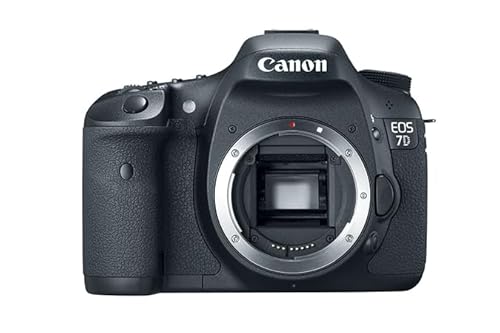
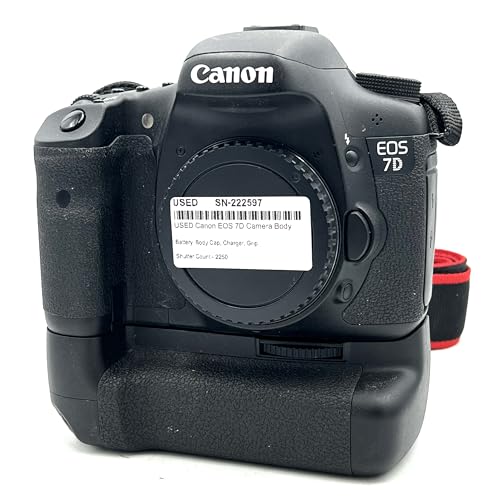
Canon EOS 7D review. Compare 108 technical specifications and user reviews to see how it ranks among cameras and if it is worth buying.
Overall score
What it is: An overall evaluation of the camera's quality, based on technical analyses and user reviews.
When it matters: When you need a quick reference to identify the best cameras on the market.
Score components:
90.0%
Technical Score
10.0%
User score
Technical Score
What it is: An assessment of the camera's technical performance, covering eight key areas: image quality, autofocus, video features, stabilization, lens compatibility, connectivity, battery, and design.
When it matters: When you want to compare cameras based on technical performance and available features.
Score components:
28.0%
Sensor & Image
25.0%
Photo Features
18.0%
Video & Audio
14.0%
Display & Design
8.0%
Battery & Power
7.0%
Connectivity & Storage
User score
What it is: A rating that combines user reviews and the total number of reviews received by the camera.
When it matters: When real-world owner satisfaction and review volume matter to your decision.
Score components:
70.0%
User reviews
30.0%
Popularity
Score components:
25.0%
Sensor size
20.0%
Main camera megapixels
20.0%
Dual card slots
15.0%
N. of focus points
10.0%
RAW photo capture
10.0%
Phase-detection autofocus (photos)
Score components:
35.0%
Weight
30.0%
Battery life (CIPA)
20.0%
Sensor-shift stabilization
15.0%
GPS
Score components:
30.0%
Price
20.0%
Weight
20.0%
AF tracking
20.0%
Battery life (CIPA)
10.0%
Touchscreen
Score components:
30.0%
Main camera megapixels
25.0%
Sensor size
20.0%
Main camera pixel size
15.0%
Sensor-shift stabilization
10.0%
RAW photo capture
Score components:
30.0%
Weight
25.0%
Thickness
20.0%
AF low-light sensitivity
15.0%
Sensor-shift stabilization
10.0%
Eye detection AF (human)
Score components:
30.0%
Sensor size
25.0%
Main camera pixel size
20.0%
Eye detection AF (human)
15.0%
Main camera megapixels
10.0%
Sensor-shift stabilization
Score components:
30.0%
Weight
25.0%
Battery life (CIPA)
20.0%
Min operating temperature
15.0%
Sensor-shift stabilization
10.0%
GPS
Available: ranking among products currently available (including other versions of this product).
All: ranking among all products in the database.
#6 in Best Cheap Cameras
#7 in Best Cheap DSLR Cameras
#9 in Best Cameras under £1000
#14 in Best Canon DSLR Cameras
#25 in Best Cameras under £500
#34 in Best Canon EOS Cameras
#36 in Best Canon Digital Cameras
#39 in Best DSLR Cameras
#39 in Best SLR Cameras
#51 in Best Cameras under £200
#90 in Best Cameras under £300
#149 in Best Cameras
#149 in Best Digital Cameras
#382 in Best Travel Cameras
What it is: An assessment of the camera's technical performance, covering eight key areas: image quality, autofocus, video features, stabilization, lens compatibility, connectivity, battery, and design.
When it matters: When you want to compare cameras based on technical performance and available features.
Score components:
28.0%
Sensor & Image
25.0%
Photo Features
18.0%
Video & Audio
14.0%
Display & Design
8.0%
Battery & Power
7.0%
Connectivity & Storage
What it is: A rating that combines user reviews and the total number of reviews received by the camera.
When it matters: When real-world owner satisfaction and review volume matter to your decision.
Score components:
70.0%
User reviews
30.0%
Popularity
What it is: An indicator that combines the camera's overall rating with its cost.
When it matters: When you want to know how much overall quality you get for the price.
Score components:
60.0%
Overall score
40.0%
Price
Importance: HIGH
Good value: Full frame or larger
Importance: HIGH
Good value: At least 20 MP
Importance: HIGH
Good value: At least 3.5 µm
Importance: LOW
Importance: MEDIUM
Good value: At least ISO 25,600
Importance: MEDIUM
Importance: MEDIUM
Good value: At least 14-bit
Importance: LOW
Importance: LOW
Importance: LOW
Importance: LOW
Importance: LOW
Importance: LOW
Importance: LOW
Importance: LOW
Importance: MEDIUM
Importance: LOW
Importance: LOW
Importance: LOW
Importance: LOW
Importance: LOW
Importance: HIGH
Good value: At least 200 points
Importance: HIGH
Importance: MEDIUM
Importance: LOW
Importance: LOW
Importance: MEDIUM
Importance: MEDIUM
Importance: HIGH
Good value: At least 5 stops
Importance: LOW
Importance: MEDIUM
Good value: At least 10 fps
Importance: LOW
Importance: LOW
Importance: LOW
Importance: LOW
Importance: LOW
Importance: LOW
Importance: LOW
Importance: LOW
Importance: LOW
Importance: LOW
Importance: LOW
Importance: LOW
Importance: LOW
Importance: LOW
Importance: LOW
Importance: LOW
Good value: At least 200,000 actuations
Importance: LOW
Good value: At least 10x
Importance: HIGH
Good value: At least 3840 px
Importance: MEDIUM
Good value: At least 200 Mbps
Importance: MEDIUM
Good value: At least 10-bit
Importance: LOW
Importance: LOW
Importance: LOW
Importance: LOW
Importance: LOW
Importance: LOW
Importance: LOW
Good value: At least 30 min
Importance: LOW
Importance: LOW
Importance: LOW
Importance: LOW
Importance: LOW
Good value: At least 2 microphones
Importance: LOW
Importance: LOW
Importance: LOW
Importance: LOW
Importance: MEDIUM
Good value: 500 g or less
Importance: LOW
Importance: LOW
Importance: LOW
Importance: MEDIUM
Importance: MEDIUM
Good value: At least 2.36 million dots
Importance: LOW
Good value: 100%
Importance: LOW
Importance: LOW
Good value: At least 120 Hz
Importance: MEDIUM
Good value: At least 3 in
Importance: LOW
Importance: LOW
Importance: LOW
Importance: LOW
Importance: LOW
Importance: LOW
Importance: LOW
Good value: At least 10 m
Importance: LOW
Importance: LOW
Importance: LOW
Importance: LOW
Importance: MEDIUM
Good value: At least 400 shots
Importance: LOW
Good value: At least 1,500 mAh
Importance: LOW
Importance: LOW
Importance: LOW
Importance: LOW
Importance: LOW
Importance: LOW
Importance: LOW
Importance: LOW
Importance: LOW
Importance: LOW
Importance: LOW
Importance: LOW
Importance: LOW
Importance: LOW
Importance: LOW
Importance: LOW
Importance: LOW
Importance: LOW
Importance: HIGH
Importance: MEDIUM
Good value: At least 400 shots
Importance: LOW
Importance: LOW
Importance: LOW
Good value: At least 1,500 mAh
Importance: LOW
Importance: LOW
Importance: HIGH
Good value: At least 3.5 µm
Importance: MEDIUM
Importance: MEDIUM
Good value: 500 g or less
Importance: LOW
Importance: LOW
Importance: LOW
Good value: At least 2 microphones
Importance: LOW
Importance: LOW
Importance: LOW
(Reviews last updated: July 2026)
The Canon EOS 7D is lauded by DPReview as a rugged, high-speed APS-C flagship, featuring dual DIGIC 4 processors, 8fps continuous shooting, and a 19-point all cross-type AF system. The 18MP sensor delivers class-leading sharpness, while the durable, weather-sealed magnesium alloy body and 100% viewfinder cater to action and pro users. Conversely, the review notes significant drawbacks, including unreliable automatic white balance under artificial light and a tendency for the metering system to overexpose in high-contrast scenarios. Furthermore, the camera's heavy, complex design requires a learning curve, and the 720p video mode can display artifacts.
The Canon EOS 7D is a powerful 18-megapixel midrange dSLR that represents an aggressive, feature-rich upgrade over previous models like the 50D. It introduces an advanced iFCL 63-area metering system and a highly customizable 19-point all-cross-type autofocus system that excels at focus tracking during continuous shooting. Performance is a standout strength; the camera powers on in under 0.2 seconds, boasts class-leading autofocus speeds in both bright and dim light, and sustains an impressive maximum continuous shooting burst of up to 7.3 frames per second for best-quality JPEGs. Additionally, it features a large, bright 100% coverage viewfinder and a dedicated switch that streamlines switching between Live View and 1080p movie capture modes. However, the review highlights several distinct drawbacks, particularly regarding physical design and specific feature limitations. The camera body features an array of small, flat buttons—such as the M-Fn and LCD illumination buttons—that are incredibly difficult to differentiate by feel alone. For landscape or high-dynamic-range photographers, the 7D is disappointingly limited to only three shots per bracket, even though it can bracket up to 3 stops. Other cons include a...
The Canon EOS 7D is a substantial 18-megapixel DSLR camera featuring an APS-C CMOS sensor with a 1.6x crop factor and a robust body weighing approximately 1.5kg with an 18-135mm lens attached. Designed for ambitious photographers, it delivers exceptional still image quality with high sharpness and accurate color fidelity, alongside the capability to shoot Full HD video at 1920×1080 resolution. Key performance strengths include a rapid continuous shooting speed of up to 8 frames per second, an expansive ISO range from 100 to 12,800, a fast shutter speed reaching 1/8000 second, and an automated sensor-cleaning system to combat dust. The camera's interface is highly accessible, offering physical top-surface buttons for direct setting changes, a Creative Auto Shooting mode, and an internal lens stabilization system. Despite its impressive features, the review notes several limitations, particularly regarding noise control and video handling. Image noise becomes problematic at ISO 1600 and renders images highly degraded with visible color artifacts by ISO 12,800. The rear 7.6cm LCD screen is fixed, failing to swing out or rotate for easier viewing angles. Additionally, video recording presents...
The Imaging Resource review highlights the Canon 7D as a robust, pro-grade APS-C DSLR featuring dual DIGIC 4 processors, 8 fps burst speeds, and a 19-point all cross-type AF system suitable for fast action. Notable pros include a durable weather-sealed body, 100% viewfinder coverage, and versatile 1080p video with an integrated wireless flash commander. YouTube · Conversely, the camera lacks continuous autofocus during video recording and suffers from high-ISO noise reduction that can blur fine details at ISO 1600 and above. Other cons include reliance on CompactFlash (CF) cards, slow contrast-detection autofocus in Live View, and a default image profile with high contrast.
The Canon EOS 7D review on The-Digital-Picture.com highlights the camera as a high-performance, weather-sealed, 18-megapixel APS-C DSLR offering an 8 fps shooting speed and a 19-point all-cross-type AF system. Its key strengths include a 100% coverage viewfinder, a robust build, and sophisticated AF, aiming directly at wildlife and action photographers. Conversely, the review identifies that default images appear softer compared to competitors, requiring post-processing sharpening that can increase noise. While the 7D offers great value, this inherent softness and noise performance are noted as primary cons.
The Canon EOS 7D is a magnesium alloy prosumer DSLR designed to bridge the gap between high-quality 18-megapixel still photography and professional filmmaking. It features an APS-C CMOS image sensor, twin Digic IV image processors, and an impressive 19-point cross-type autofocus system capable of capturing 8 frames per second. For filmmakers, the 7D offers extensive creative freedom by providing full manual video control and native compatibility with a vast assortment of Canon EF and EF-S lenses. The camera records H.264.mov files to CompactFlash cards, offering multiple resolution flavors including 1080p "Cinema Mode" at 24, 25, or 30fps, and 720p action modes at 50 or 60fps. Several notable strengths and weaknesses emerged during testing. On the positive side, the camera boasts excellent low-light performance with an expandable ISO range up to 12,800, accurate color rendition, great physical ergonomics with a dedicated video/live view switch, and superb manual video controls. However, the review highlights significant drawbacks, including a slow and disappointing video autofocus system and a complete lack of on-camera manual audio level controls or a headphone jack. Additionally, the predominantly plastic...
Canon EOS 7D Review Summary The Canon EOS 7D is a highly capable and ruggedly built APS-C DSLR featuring an 18 MP CMOS sensor and dual Digic 4 processors. It excels at action photography due to a hair-trigger shutter release and a rapid burst rate of up to 8 frames per second. Additionally, it provides exceptional, noise-free image quality at lower light sensitivities, keeping digital noise well-controlled through ISO 800. Its robust magnesium body offers weather sealing, and the advanced 19 cross-type autofocus system along with a 63-zone dual-layer metering sensor provide consistent and stable exposures under challenging lighting conditions.
However, the reviewer points out several drawbacks, most notably that the crop sensor image quality does not match the clean, "spotless" output of full-frame cameras like the 5D series, with noise becoming noticeable at settings above ISO 400. The iFCL metering system also has a tendency to overexpose scenes, requiring the shooter to shoot in RAW and manually underexpose bright environments by a third or two-thirds of a stop. Out of the box, the reviewer encountered significant focusing issues that required standard micro-adjustments in the menu system to correctly align each lens. Finally, the reviewer notes that cramming 18 megapixels onto an APS-C sensor feels excessive, stating a personal preference for lower resolution MRAW files for professional work.
The Canon EOS 7D is a semi-pro DSLR equipped with an 18-Megapixel APS-C CMOS sensor, positioning itself between the EOS 50D and the full-frame EOS 5D Mark II. Designed to compete directly with Nikon's D300s, the camera boasts a powerful 8fps continuous shooting speed and an upgraded 19-point autofocus system featuring innovative zone focusing modes. Video creators benefit from highly requested manual exposure controls, a stereo mini-jack for external microphones, and diverse frame rate choices across multiple resolutions—including 24fps at Full HD (1920×1080) and up to 60fps at 720p. Additionally, it offers a tough, weather-sealed body, a built-in Speedlite transmitter for wireless flash control, and a high-quality viewfinder with 100% coverage, 1.0x magnification, and on-demand electronic grid lines. A major advantage of the camera includes its advanced HD video options and frame rates that cater perfectly to independent filmmakers and PAL-region users. The upgraded 63-zone iCFL metering system, which integrates color data, and the high-density 19-point AF tracking also stand out as strong performance pros. However, a notable con is the elevated concern regarding high ISO image noise; because the...
The Trusted Reviews evaluation of the Canon EOS 7D hails the DSLR as a top-tier enthusiast camera, highlighting its robust magnesium alloy build, impressive 8fps continuous shooting, and 18-megapixel APS-C sensor. Key advantages include the 19-point autofocus system, bright 100% coverage viewfinder, and high-quality Full HD video capabilities, offering superb image quality and speed. Conversely, the camera features a higher price point compared to rivals, along with a steep learning curve due to complex menu customization. The 820g weight is also noted as being quite heavy, potentially causing fatigue during long shooting sessions. Despite these factors, the review concludes the 7D offers class-leading performance for its market segment.
The Digitalkamera.de review highlights the Canon EOS 7D as a robust, weather-sealed, and fast-handling APS-C DSLR designed for professionals, offering 8 frames per second shooting and an accurate 100% viewfinder. Its 18-megapixel sensor delivers high resolution and, despite lacking basic automatic modes, it excels in demanding action scenarios. Conversely, the 7D is noted for its high weight of over 900 grams and inferior low-light performance at maximum ISO compared to full-frame models.
Overview and Features The Canon EOS 7D is a high-performance APS-C DSLR housed in a robust, weather-sealed magnesium alloy body. It features an 18-megapixel CMOS sensor, dual DIGIC 4 processors, and an advanced 19-point cross-type autofocus system. A standout aspect of the camera is its high-speed continuous shooting, which reaches a blistering maximum of 7.8 frames per second (fps) in laboratory testing, making it one of the fastest APS-C options of its era. Additionally, it features an excellent, bright viewfinder that delivers a 100% field of view alongside a translucent LCD that overlays grid lines and an electronic level indicator. The camera also incorporates an advanced 63-zone iFCL exposure metering system that excels at white balance and color accuracy. Video Capabilities, Pros, and Cons For multimedia creators, the 7D delivers versatile Full-HD video functionality with manual exposure control and a dedicated video start button. It records 1080p footage at 24, 25, or 30 fps, and 720p footage at 50 or 60 fps for up to 30 minutes or until hitting a 4 GB file size limit. The primary pros of...
The Canon EOS 7D is a highly flexible, mid-range APS-C DSLR camera that stands out for its advanced video capabilities, effectively serving as a viable alternative to a separate camcorder for small video clips and video journalism. A key feature highlighted in the review is its dedicated video quick-start button, allowing users to instantly switch from photography to full-HD recording in any mode. Additionally, it offers rare-for-its-time fully manual video controls, letting users adjust exposure and frame rates (such as 24 frames per second) to achieve a cinematic feel. Built with a robust magnesium alloy body, the camera features an 18-megapixel CMOS sensor, dual processors for speed, a 3-inch LCD screen, and compatibility with CompactFlash (CF) cards, all carrying a retail price of 2,848.00 CHF.
In this review from the German photography blog SWQUADRAT.DE, the author tests a borrowed Canon EOS 7D paired with a Canon EF 24-105mm f/4L IS USM lens. Despite the camera being released back in 2009, the reviewer notes that this setup still delivers very detailed, high-contrast images with highly commendable color reproduction today. Key strengths highlighted in the review include its robust, weather-sealed magnesium alloy body, an excellent deep-grip handle for comfortable operations, a top-tier optical viewfinder offering 100% coverage and 1.0x magnification, an illuminated top shoulder display, and a fast burst shooting rate of up to 8 frames per second. However, the review points out several distinct drawbacks driven by the camera's age and design. The author heavily criticizes the 3.0-inch, non-touch LCD monitor because it is completely fixed, making low-angle or ground-level photography highly impractical. Weight is another major con, as the body alone weighs around 1 kg and balloons to 1.7 kg when paired with the L-series lens, making it too heavy for the reviewer's taste. Furthermore, the 18 MP sensor suffers from noise once it passes...
The Canon EOS 7D is a semiprofessional APS-C DSLR that, even in a recent 2025 retrospective evaluation, remains a highly capable and robust camera body for enthusiast photography. Boasting an 18-megapixel CMOS sensor, a high-quality 100% optical viewfinder, and a solid 19-point autofocus system, it historically marked a revolutionary step above its predecessor, the EOS 50D. Its high-speed continuous shooting performance of 8 frames per second remains impressive and highly usable today for action or wildlife photography, especially when paired with fast UDMA-7 CompactFlash cards that quickly clear the 22-image RAW buffer. Furthermore, its weather-resistant body provides good durability against dust and moisture, and the dual-battery integration within its optional portrait grip offers a highly efficient and balanced energy workflow. However, the reviewer highlights several notable drawbacks and modern limitations when comparing the aging DSLR to contemporary mirrorless alternatives like the EOS M5. The camera's low-light noise performance becomes significantly dated above ISO 1600, its USB 2.0 interface yields very sluggish data transfer speeds, and smaller M-RAW/S-RAW formats complicate modern editing workflows. Furthermore, early firmware versions suffer from a notorious...
The Canon EOS 7D review by Sébastien Huruguen is a highly positive assessment of the semi-professional DSLR, which he adopted to replace his EOS 50D after discovering it fit perfectly into his existing Liquid Eye underwater housing. Huruguen praises the camera's excellent build quality, professional ergonomics, and professional-grade weather-sealing that mirrors Canon's top-tier 1D series. Key advantages highlighted in his review include the camera's high-speed 8 frames per second continuous burst shooting and a redesigned autofocus system equipped with 19 cross-type focal points. Furthermore, he commends the highly accurate 63-zone iFCL metering system that calculates distance and colour to avoid exposure errors, an integrated electronic leveling tool, a 100% coverage viewfinder, and the inclusion of built-in wireless transmitter controls for external Speedlite EX flashes. While the photographer finds the camera to be an outstanding technological package that meets all his requirements, the review touches upon a few limitations and specific operational caveats. The physical reality of crowding 18 megapixels onto an APS-C size sensor naturally threatens to increase digital noise at high ISO settings, though Huruguen notes that Canon's physical...
The Canon EOS 7D is evaluated as an excellent and highly responsive APS-C camera tailored for advanced amateurs and professionals needing a reliable backup or action body. Tested during live music concerts, the camera stands out for its high performance, delivering smooth images with impressive sharpness, rich contrast, and color accuracy straight out of the camera without requiring immediate post-processing. Its key strengths include a fast 8 frames-per-second burst rate driven by dual Digic IV processors, making it highly capable for sports and wildlife photography. Additional pros highlight a bright 100% optical viewfinder, a reactive 19-point autofocus system, improved weather sealing, an integrated virtual horizon level, and deep menu customization that allows photographers to reassign buttons according to their workflow preferences. However, the reviewer details several prominent cons and limitations that make the EOS 7D a very demanding "diva" of a camera. Packed with 18 megapixels on a small APS-C sensor, it creates massive 20MB RAW files that demand heavy investments in high-capacity storage cards and hard drives. The sensor is highly unforgiving, requiring exclusively high-end Canon L-series lenses to...
The Canon EOS 7D is a semi-professional DSLR camera launched in September 2009 that features an 18.84-megapixel APS-C CMOS sensor and an EOS EF lens mount. Built for high-speed performance, it boasts a fast continuous shooting speed of 8.0 frames per second, a maximum mechanical shutter speed of 1/8000 second, and an optical pentaprism viewfinder with 100% coverage. The camera includes a 3-inch LCD screen, supports Full HD video recording, and utilizes a robust 63-area evaluation exposure metering system alongside versatile autofocus modes like AI Servo and AI Focus. It relies on a Canon LP-E6 battery pack and saves images in JPEG or RAW formats to Compact Flash cards. In terms of performance benchmarks, DXOMARK awards the Canon 7D an overall score of 66, highlighting distinct strengths and weaknesses when compared to newer or alternative models. On the positive side, its major pros include its rapid burst rate, mirror lock-up capability, built-in sensor cleaning, and a broad ISO range stretching from 100 up to 12800. Conversely, its primary cons involve a total lack of image stabilization, a fixed screen that...
The Canon EOS 7D is a powerful APS-C DSLR that delivers impressive noise control and continuous image detail up to 800 ISO, with manageable grain extending to 3200 ISO. It handles video well by featuring a dedicated physical switch to easily toggle between photography, Liveview, and movie modes. In manual video mode, filmmakers enjoy extensive creative exposure freedom through full control over shutter speeds, ISO ranges up to 6400, and lens apertures. Furthermore, its larger APS-C sensor provides superior low-light handling and a much shallower depth of field compared to traditional consumer camcorders. However, the camera has notable limitations, particularly regarding its pixel pitch of 4.3 µm, which is physically smaller than its predecessor, the EOS 50D. At high sensitivities like 12800 ISO, image quality degrades significantly with coarse grain and severe color banding. The built-in audio records strictly in mono unless an external microphone is attached to its mini-jack port. Most critically, the video autofocus is frustratingly slow, loud, and completely unreliable during active recording, making manual focusing and a stable tripod absolute necessities to avoid shaky footage and...
The French tech site Les Numériques highlights the Canon EOS 7D as a versatile semi-professional DSLR, placing particular emphasis on its highly capable video recording features. The review praises the camera for offering a broad array of recording formats, including Full HD (1080p) and HD (720p) capture at multiple frame rates. A standout feature is its full manual exposure mode, which gives videographers absolute creative control over aperture, shutter speed, and ISO to adapt effortlessly to varying light conditions. Additionally, the review notes the convenience of a dedicated physical switch that allows seamless transitions between taking still photos, entering Live View, and recording movies. Despite its high HD footage quality and smooth motion, the review and user consensus reveal a few notable drawbacks. The primary limitation of the video mode is the lack of continuous autofocus (AI Servo) during movie recording, forcing users to rely on manual focus for moving subjects. While the camera features an external microphone socket for improved audio, early firmware heavily restricted internal volume adjustments. Furthermore, because it uses an APS-C crop sensor rather than a...
The DXOMARK review of the Canon EOS 7D evaluates the performance of its 18-megapixel APS-C sensor, assigning it an overall Sensor Score of 66. This quantitative analysis breaks down the camera's sensor capabilities into three specific photographic use cases: Portrait, Landscape, and Sports. For Portrait photography, the sensor achieves a color depth score of 22 bits. In Landscape scenarios, it captures a maximum dynamic range of 11.7 EV. For Sports and action photography, its low-light sensitivity maxes out at ISO 854 before noise levels significantly compromise image quality. The laboratory data reveals notable sensor pros and cons when compared to its peers. On the positive side (pros), the 7D delivers a well-rounded foundation for an APS-C DSLR of its era, offering acceptable low-light processing up to ISO 854 and functional color depth that serves everyday studio or daylight photography. However, the testing highlights substantial limitations (cons), particularly in raw sensor depth where it lags significantly behind modern and competing standards. Its 11.7 EV dynamic range restricts detail preservation in high-contrast scenes like landscapes, while its lower low-light ISO score causes...
Noise Performance Analysis The review details a rigorous noise test conducted on the Canon 7D. It notes that image noise remains highly contained at ISO 800 and stays acceptable at ISO 1600 without software reduction. However, fine details begin to degrade heavily by ISO 3200, and settings like ISO 6400 or the extended ISO 12800 display severe noise distortion. Applying Digital Photo Professional (DPP) noise reduction software significantly rescues image quality at ISO 1600 and 3200, but higher sensitivities continue to suffer from unnatural processing artifacts. Pros and Cons Pro: Exceptional, well-contained noise performance at or below ISO 800. Pro: Highly usable image quality up to ISO 1600 after basic software noise reduction. Pro: Excellent detail retention for standard web-sized outputs, even under extreme test conditions. Con: Noticeable and disruptive image noise starting at ISO 3200 without software filtering. Con: Unbearable grain levels and unnatural image artifacts at extreme ISO 6400 and 12800 settings. If you like, I can: Provide details on the recommended lens options for this camera Share tips on optimising Digital Photo Professional (DPP) settings Contrast these...
The Radojuva review of the Canon 7D highlights the camera as a robust, 18MP APS-C DSLR designed for speed, featuring an 8 fps burst rate, a durable magnesium alloy body, a 19-point AF system, and excellent wireless flash control. Key pros include 100% viewfinder coverage, strong battery life, and high-performance, though the review notes the camera is designed for experienced users rather than beginners. YouTube · However, the 7D shows its age with a restrictive Auto ISO range (100-3200), a single CF card slot, no articulating screen, and significant image noise at high ISO settings (above 1600). The review also cites the lack of a viewfinder autofocus backlight and heavy, bulky ergonomics as notable drawbacks during extended use. YouTube
This forum review by Manuel Redondo counters the common criticism that the Canon EOS 7D features an inaccurate autofocus (AF) system. Through a series of practical tests using a high-contrast monitor background and a backlit desk lamp, the reviewer explains that the physical AF reading coverage is simply larger than the square indicator visible inside the viewfinder. By utilizing the camera’s highly precise center point, the review shows that the AF is a complex, algorithmic robot designed to latch onto high-contrast transitions and edges even outside the boundaries of the viewfinder box. The review highlights distinct pros and cons regarding the Canon EOS 7D autofocus performance: Pros: The extended perimeter focusing area provides a major advantage for wildlife and sports photography by maintaining lock on moving subjects even when they drift slightly outside the viewfinder square. Furthermore, switching to "Spot AF" (enfoque puntual) successfully minimizes the sampling area to resolve tricky compositions where foreground obstacles might otherwise distract standard single-point focusing. Cons: In everyday shooting, this wide sensitivity can cause frustration as the camera may aggressively prioritize high-contrast backgrounds over...
Canon 7D The JuzaPhoto review highly recommends the Canon 7D as an outstanding, high-performance APS-C DSLR that delivers exceptional value for money. Designed as a highly responsive body, it stands out for wildlife, sports, macro, and action photography due to its intense pixel density, giving an effective 1.5x "reach" or magnification advantage over older professional full-frame flagships like the Canon 1DsIII. While full-frame bodies remain superior for wide-angle landscape photography due to sensor size and lens availability, the 7D matches or exceeds expectations in continuous shooting, build, and price efficiency. Pros and Cons Pro (Speed & Buffer): Delivers a fast burst rate of 8 frames per second (FPS) for up to 21-25 RAW frames. Pro (Video Capabilities): Exceptional video mode supporting up to 1920x1080px at 30 FPS with full manual control over exposure and ISO. Pro (Ergonomics & Design): A much more compact, lighter form factor without an integrated battery grip, alongside a highly advanced, ultra-fast autofocus system. Pro (Silent Shooting): Feature-rich Live View includes a silent shooting option, removing the need for manual mirror lock-up (MLU). Con (High ISO...
Canon EOS 7D Review Summary The Canon EOS 7D is an advanced APS-C digital SLR camera that bridges the gap between mid-range hobbyist models and high-end professional full-frame bodies. Designed based on direct feedback from thousands of photographers, it offers a robust build and a rich feature set tailored for serious enthusiasts and pros looking for a high-performance second body. Key strengths (pros) highlighted in the review include its exceptionally fast continuous shooting speed of up to 8 frames per second, a highly resilient shutter rated for 150,000 cycles, and a highly advanced autofocus system featuring 19 all-cross-type sensors. Additionally, it boasts an upgraded 65-zone metering system, a 100% viewfinder coverage, Full HD video capabilities with manual frame rate selection, and a groundbreaking integrated wireless flash controller that utilizes the internal flash to trigger external Speedlite units without requiring extra accessories.
The FotografiaStore.it review of the Canon EOS 7D, conducted by the Centro Studi Progresso Fotografico, focuses on laboratory evaluations of this APS-C sensor DSLR camera. Formally introduced in 2009, the camera features an 18-megapixel resolution. The lab test comprehensively grades specific technical metrics, including autofocus speed, battery autonomy, sensitometric curves, MTF sharpening, digital noise, image resolution, and exposure latitude. Based on the review criteria and broader professional consensus, the pros of this camera center on its fast operating speed, highly capable autofocus system, and robust body design. Its advanced Dual DIGIC 4 processors allow it to achieve a rapid continuous shooting rate of 8 frames per second, making it an excellent choice for wildlife and sports photography. Conversely, the primary cons stem from its technological limitations. It suffers from slower contrast-detect autofocus performance during Live View or movie modes, a fixed rear LCD screen that does not tilt, and digital noise management that struggles at higher ISO sensitivities compared to full-frame or modern equivalents.
The Binomania review highlights the combination of the Canon EOS 7D and EF 400mm f/5.6L USM as an exceptional, high-value setup for wildlife photography, offering an effective 640mm reach. Pros include the camera's robust, fast-acting autofocus and the lens's razor-sharp optical performance, lightweight design, and built-in hood. Conversely, the system is hindered by the 7D's poor high-ISO noise performance and the lack of Image Stabilization (IS) on the lens, which necessitates fast shutter speeds or stable support. Further constraints include the 5.6 aperture's limited low-light ability and a 3.5-meter minimum focus distance.
The Canon EOS 7D is a professional-grade DSLR featuring an 18-megapixel APS-C CMOS sensor, dual DIGIC 4 processors, and an advanced 63-zone iFCL metering system. Its standout pros include an exceptional operational speed with a continuous shooting rate of 8.0 frames per second (up to 78 fine JPEGs or 17 RAW images), an extremely versatile 19-point all-cross-type autofocus system, an extensive level of body customization, and a fully manual Full HD video recording mode. The camera also boasts a bright "Intelligent Viewfinder" with 100% coverage, excellent battery endurance delivering up to 1,469 shots, and physical weather sealing against water and dust. Conversely, the primary con noted in the review is its reliance on the smaller APS-C cropped sensor format rather than a full-frame sensor. This limitation prevents the camera from matching the superior edge-to-edge frame sharpness and fine image resolution achievable by full-frame alternatives like the EOS 5D. Additionally, image noise increases progressively at higher ISO sensitivities up to its extended 12,800 ISO limit, where shadow detail becomes muddy and requires noise reduction filters that compromise fine details. Other minor...
The Canon EOS 7D is an APS-C digital SLR camera designed for enthusiasts and professionals looking for a robust balance between high-quality photography and Full HD 1080p video recording. Built with a durable magnesium alloy body and weather sealing, it features an 18-megapixel CMOS sensor powered by dual DIGIC 4 processors. This configuration enables an impressive continuous shooting speed of 8 frames per second, making it an excellent choice for sports and action photography. Users will also benefit from a highly flexible and accurate 19-point all-cross-type autofocus system, a large optical viewfinder providing 100% coverage, reliable wireless flash control, and a solid battery life capable of capturing around 800 shots per charge. Despite its strong performance, the camera has notable limitations that prospective buyers should consider. The 3.0-inch LCD screen is completely fixed, which restricts flexibility when framing video or shooting from awkward angles. Additionally, the review highlights inconsistent automatic white balance performance when shooting under artificial lighting and a slight tendency to overexpose images in high-contrast environments. Video shooters might occasionally experience jagged lines in 720p footage, and the...
The reviewed Canon EOS 7D is a ground-breaking semi-professional DSLR featuring an 18-megapixel APS-C CMOS sensor, dual DIGIC 4 processors, and a rugged, weather-sealed magnesium alloy body. According to the gathered review material, its key performance pros include a very fast 8 frames per second (fps) continuous burst rate, a highly sophisticated 19-point all cross-type autofocus system with customizable zoning, and an advanced 63-zone iFCL exposure metering system. Photographers highly praise the large, bright optical viewfinder offering 100% coverage, the integrated wireless Speedlite flash transmitter, and the exceptional cinematic quality of its Full HD 1080p video with manual control. However, the review details point out several performance cons. On the downside, the camera's high-speed burst mode can occasionally fall short of the advertised 8 fps due to the processing demands of the new metering system. The high concentration of 18 megapixels on a cropped sensor causes notable digital noise at high ISO settings, which does not offer a significant improvement over the older Canon 50D. Additionally, critics emphasize that the contrast-detect autofocus in Live View mode remains sluggish, Auto White...
In this real-world field review from Patagonia, the author evaluates the Canon EOS 7D specifically for wildlife photography while shooting handheld with high-end lenses. The review highlights several major pros, noting that the camera’s 18-megapixel APS-C sensor delivers a significant resolution and noise-reduction leap over prior semi-pro models like the 40D and 50D, rendering images fully usable up to ISO 1600 (and ISO 3200 with minor noise). When paired with top-tier glass like the Canon EF 300mm f/2.8 L IS USM, the 1.6x crop factor provides a distinct advantage for wildlife by turning it into a sharp 480mm equivalent while gaining an extra stop of depth of field compared to full-frame cameras. Furthermore, the sensor handles teleconverters incredibly well, creating a highly capable, handheld-friendly 960mm equivalent setup when paired with a 2x teleconverter. However, the reviewer points out a few specific cons and limitations of the system. While image quality is excellent, extracting the sensor's maximum sharpness requires flawless shooting techniques and premium lenses; using cheap optics or subpar methods yields no detail improvement over older 10-megapixel bodies. The author...
The Canon EOS 7D is a highly capable APS-C DSLR designed to challenge Nikon's market dominance by delivering a professional-grade feature set for telephoto and action photographers. A key highlight of the camera is its high-speed performance, achieving an impressive continuous shooting rate of 8 frames per second (bps) driven by dual image processors, allowing it to capture up to 15 sequential RAW files or 126 JPEGs. It boasts a completely overhauled 19-point autofocus system that offers intricate customization and fast tracking across the frame. Additional advantages include an ergonomically sound body design, a bright 100% coverage viewfinder with an interactive transparent LCD grid overlay, advanced Full HD video controls, and a built-in flash capable of wirelessly controlling external Speedlights.
Canon EOS 7D The reviewed Canon EOS 7D is highly praised for its bright viewfinder—which greatly aids manual focusing—as well as its large 3.0-inch TFT display and exceptionally long-lasting battery life. The reviewer notes that the camera handles much faster and more intuitively compared to older pro bodies like the 1D Mark II, utilizing a multi-controller joystick for zoomed photo navigation and simplified single-button combinations for ISO and drive settings. Furthermore, its 1.6x crop factor is highlighted as a major "free" advantage for macro and telephoto nature photography by maximizing focal length reach. It also delivers highly impressive, clear Full-HD video quality, making it a highly flexible tool for enthusiasts. On the downside, the reviewer found the camera's high-ISO noise performance disappointing, noting very little improvement at ISO 400 compared to a five-year-old pro model, which he attributes to cramming 18 megapixels onto a small APS-C sensor. The 19-point autofocus system also struggled with precision in macro setups, frequently locking onto a dragonfly's legs instead of its thorax and forcing a return to manual focusing. Additional complaints include the lack...
In this review, the photographer evaluates the Canon EOS 7D, a camera she purchased to update her quick-course photography books and replace her previous EOS 50D. She highlights the 7D as a completely different system that features far more settings than both the 50D and the full-frame 5D Mark II. She notes that the 7D is distinctly built for high-speed action, making it exceptionally well-suited for wildlife, sports, and birds in flight due to its remarkably fast autofocus and overall speed. Furthermore, she appreciates keeping an APS-C crop sensor body in her gear lineup specifically for nature and macro photography, as the crop factor extends the reach of her telephoto and macro lenses and allows her to stay further away from subjects. The review highlights several key performance pros and cons: Pros: Fast Performance: It focuses exceptionally fast, outperforming both the 50D and the slower 5D Mark II. Useful Viewfinder/Display Aids: The camera features a built-in viewfinder grid to keep horizons straight (a feature previously requiring a separate focusing screen in older Canon models) as well as a digital horizon...
summary of the review: Review Summary The Canon EOS 7D marks a major shift in Canon's midrange DSLR line-up, moving past the EOS 50D with a completely redesigned magnesium alloy body built from the input of over 5,000 photographers. Instead of moving to a full-frame format, Canon equipped the camera with an 18-megapixel APS-C CMOS sensor alongside dual Digic 4 processors, which allows for a high continuous shooting speed of 8 frames per second. The review highlights a vastly improved 19-point all cross-type autofocus system and a new iFCL exposure metering system that utilizes focus and color data to improve accuracy. Physically, the camera gains better weather sealing, an intuitive rearranged button layout with flattened top buttons, a dedicated Q-menu button, a 100% coverage viewfinder, and a dedicated switch to easily toggle 1080p video recording and Live View modes. Pros and Cons
The Canon EOS 7D is reviewed as a high-performing APS-C flagship camera tailored for serious amateur ("prosumer") and professional photographers, particularly those specializing in sports and nature photography. Architecturally positioned between the Canon 60D and the full-frame 5D Mark II, it stands out by offering a highly accurate, bright optical viewfinder with 100% coverage, a rugged body with advanced dust and moisture sealing, and an impressive continuous shooting speed of 8 frames per second powered by dual DIGIC processors. The testing highlights its exceptional color accuracy—ranking as the highest tested by the reviewer at the time—along with a strong usable dynamic range of nearly 8 stops at base ISO and excellent noise control up to ISO 3200, matching the performance of its full-frame sibling. However, the camera has notable limitations, specifically the lack of in-camera corrections for lens distortion and chromatic aberration, and a 19-point autofocus system where all cross-type points are clustered exclusively in the center of the frame. Additionally, its buffer capacity is restrictive, filling up after just 15 RAW files or approximately two seconds of continuous shooting....
The EOSzine review highlights the Canon EOS 7D as a highly responsive, semi-professional APS-C camera designed using feedback from 5,000 users. The reviewer praises its superb ergonomics and build quality, noting a dust- and splash-water sealed body equivalent to the professional 1D-series. Key operational pros include a redesigned layout featuring a dedicated Power switch, a quick "Q" button for immediate parameter adjustments, a larger viewfinder with a built-in electronic horizon leveling tool, and an integrated wireless flash transmitter. Performance is exceptional for its price class, powered by Dual DIGIC 4 processors that enable an instant startup time and an impressive continuous burst rate of 8 frames per second for up to 120 JPEGs. Its completely redesigned autofocus system boasts 19 cross-type AF points backed by a dedicated processor, making it excellent for tracking fast-moving subjects. However, the review details a few notable cons, particularly regarding image quality and video mechanics. While the 18-megapixel sensor utilizes a new architecture to combat noise, pushing the pixel density on an APS-C crop sensor reveals visual limitations. When compared to the full-frame EOS 5D...
Compare