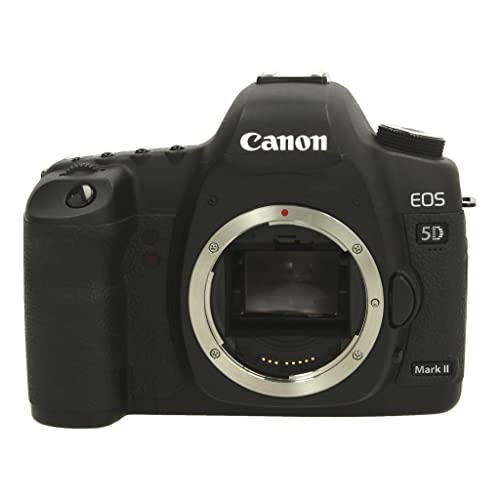
Canon EOS 5D Mark II review. Compare 108 technical specifications and user reviews to see how it ranks among cameras and if it is worth buying.
Overall score
What it is: An overall evaluation of the camera's quality, based on technical analyses and user reviews.
When it matters: When you need a quick reference to identify the best cameras on the market.
Score components:
90.0%
Technical Score
10.0%
User score
Technical Score
What it is: An assessment of the camera's technical performance, covering eight key areas: image quality, autofocus, video features, stabilization, lens compatibility, connectivity, battery, and design.
When it matters: When you want to compare cameras based on technical performance and available features.
Score components:
28.0%
Sensor & Image
25.0%
Photo Features
18.0%
Video & Audio
14.0%
Display & Design
8.0%
Battery & Power
7.0%
Connectivity & Storage
User score
What it is: A rating that combines user reviews and the total number of reviews received by the camera.
When it matters: When real-world owner satisfaction and review volume matter to your decision.
Score components:
70.0%
User reviews
30.0%
Popularity
Score components:
25.0%
Sensor size
20.0%
Main camera megapixels
20.0%
Dual card slots
15.0%
N. of focus points
10.0%
RAW photo capture
10.0%
Phase-detection autofocus (photos)
Score components:
35.0%
Weight
30.0%
Battery life (CIPA)
20.0%
Sensor-shift stabilization
15.0%
GPS
Score components:
30.0%
Price
20.0%
Weight
20.0%
AF tracking
20.0%
Battery life (CIPA)
10.0%
Touchscreen
Score components:
30.0%
Main camera megapixels
25.0%
Sensor size
20.0%
Main camera pixel size
15.0%
Sensor-shift stabilization
10.0%
RAW photo capture
Score components:
30.0%
Weight
25.0%
Thickness
20.0%
AF low-light sensitivity
15.0%
Sensor-shift stabilization
10.0%
Eye detection AF (human)
Score components:
30.0%
Sensor size
25.0%
Main camera pixel size
20.0%
Eye detection AF (human)
15.0%
Main camera megapixels
10.0%
Sensor-shift stabilization
Score components:
30.0%
Weight
25.0%
Battery life (CIPA)
20.0%
Min operating temperature
15.0%
Sensor-shift stabilization
10.0%
GPS
Available: ranking among products currently available (including other versions of this product).
All: ranking among all products in the database.
#9 in Best Cheap DSLR Cameras
#16 in Best Canon DSLR Cameras
#32 in Best Cameras under £500
#38 in Best Canon EOS Cameras
#40 in Best Canon Digital Cameras
#41 in Best DSLR Cameras
#41 in Best SLR Cameras
#60 in Best Cameras under £200
#99 in Best Cameras under £300
#158 in Best Cameras
#158 in Best Digital Cameras
#412 in Best Travel Cameras
#418 in Best Cameras for Hiking
What it is: An assessment of the camera's technical performance, covering eight key areas: image quality, autofocus, video features, stabilization, lens compatibility, connectivity, battery, and design.
When it matters: When you want to compare cameras based on technical performance and available features.
Score components:
28.0%
Sensor & Image
25.0%
Photo Features
18.0%
Video & Audio
14.0%
Display & Design
8.0%
Battery & Power
7.0%
Connectivity & Storage
What it is: A rating that combines user reviews and the total number of reviews received by the camera.
When it matters: When real-world owner satisfaction and review volume matter to your decision.
Score components:
70.0%
User reviews
30.0%
Popularity
What it is: An indicator that combines the camera's overall rating with its cost.
When it matters: When you want to know how much overall quality you get for the price.
Score components:
60.0%
Overall score
40.0%
Price
Importance: HIGH
Good value: Full frame or larger
Importance: HIGH
Good value: At least 20 MP
Importance: HIGH
Good value: At least 3.5 µm
Importance: LOW
Importance: MEDIUM
Good value: At least ISO 25,600
Importance: MEDIUM
Importance: MEDIUM
Good value: At least 14-bit
Importance: LOW
Importance: LOW
Importance: LOW
Importance: LOW
Importance: LOW
Importance: LOW
Importance: LOW
Importance: LOW
Importance: MEDIUM
Importance: LOW
Importance: LOW
Importance: LOW
Importance: LOW
Importance: LOW
Importance: HIGH
Good value: At least 200 points
Importance: HIGH
Importance: MEDIUM
Importance: LOW
Importance: LOW
Importance: MEDIUM
Importance: MEDIUM
Importance: HIGH
Good value: At least 5 stops
Importance: LOW
Importance: MEDIUM
Good value: At least 10 fps
Importance: LOW
Importance: LOW
Importance: LOW
Importance: LOW
Importance: LOW
Importance: LOW
Importance: LOW
Importance: LOW
Importance: LOW
Importance: LOW
Importance: LOW
Importance: LOW
Importance: LOW
Importance: LOW
Importance: LOW
Importance: LOW
Good value: At least 200,000 actuations
Importance: LOW
Good value: At least 10x
Importance: HIGH
Good value: At least 3840 px
Importance: MEDIUM
Good value: At least 200 Mbps
Importance: MEDIUM
Good value: At least 10-bit
Importance: LOW
Importance: LOW
Importance: LOW
Importance: LOW
Importance: LOW
Importance: LOW
Importance: LOW
Good value: At least 30 min
Importance: LOW
Importance: LOW
Importance: LOW
Importance: LOW
Importance: LOW
Good value: At least 2 microphones
Importance: LOW
Importance: LOW
Importance: LOW
Importance: LOW
Importance: MEDIUM
Good value: 500 g or less
Importance: LOW
Importance: LOW
Importance: LOW
Importance: MEDIUM
Importance: MEDIUM
Good value: At least 2.36 million dots
Importance: LOW
Good value: 100%
Importance: LOW
Importance: LOW
Good value: At least 120 Hz
Importance: MEDIUM
Good value: At least 3 in
Importance: LOW
Importance: LOW
Importance: LOW
Importance: LOW
Importance: LOW
Importance: LOW
Importance: LOW
Good value: At least 10 m
Importance: LOW
Importance: LOW
Importance: LOW
Importance: LOW
Importance: MEDIUM
Good value: At least 400 shots
Importance: LOW
Good value: At least 1,500 mAh
Importance: LOW
Importance: LOW
Importance: LOW
Importance: LOW
Importance: LOW
Importance: LOW
Importance: LOW
Importance: LOW
Importance: LOW
Importance: LOW
Importance: LOW
Importance: LOW
Importance: LOW
Importance: LOW
Importance: LOW
Importance: LOW
Importance: LOW
Importance: LOW
Importance: HIGH
Importance: HIGH
Good value: At least 3.5 µm
Importance: MEDIUM
Good value: At least 400 shots
Importance: LOW
Importance: LOW
Importance: HIGH
Good value: Full frame or larger
Importance: LOW
Good value: At least 1,500 mAh
Importance: HIGH
Good value: At least 20 MP
Importance: MEDIUM
Importance: MEDIUM
Good value: 500 g or less
Importance: LOW
Importance: LOW
Importance: LOW
Good value: At least 2 microphones
Importance: LOW
Good value: 100%
Importance: MEDIUM
Good value: At least 10 fps
Importance: HIGH
Good value: At least 200 points
(Reviews last updated: July 2026)
The DPReview of the Canon EOS 5D Mark II highlights the camera as a groundbreaking full-frame DSLR, praising its 21.1-megapixel resolution and pioneering 1080p HD video recording capabilities. Key strengths include superb image quality, excellent high ISO noise performance, a bright 98% coverage viewfinder, and a high-resolution 3.0-inch LCD screen. Conversely, the 9-point autofocus system uses an older architecture, making it less effective for tracking fast-moving subjects, while the 3.9 frames-per-second continuous shooting speed is the slowest in its class. Additionally, the camera lacks built-in sensor-shift stabilization and has a less robust default noise reduction, though it remains a strong choice for video and high-resolution stills.
The-Digital-Picture.com review highlights the Canon EOS 5D Mark II as a significant upgrade, praising its 21.1-megapixel full-frame sensor for delivering sharp, high-resolution image detail and improved low-noise performance at high ISO levels. Key advantages include groundbreaking 1080p video capability, a superior 3-inch LCD screen, efficient battery life, and a built-in sensor cleaning system. Conversely, the review identifies limitations, specifically the older 9-point autofocus system which lacks speed and tracking capabilities for fast-action photography. Other cons include a moderate 3.9 frames-per-second burst rate, the absence of a built-in flash, and significant image degradation at maximum expanded ISO settings.
Ken Rockwell identifies the Canon 5D Mark II as a premier DSLR for landscape photography, highlighting its 21.1-megapixel full-frame sensor and exceptional image quality that challenges more expensive alternatives. Key advantages include its lightweight design, a bright 3-inch LCD, and improved usability with functional Auto ISO and custom memory settings. Conversely, the review strongly criticizes the camera's dated, uncomfortable ergonomics, specifically the painful front control dial. Technical drawbacks noted include limited data display in the viewfinder, a lack of 1,000+ shot counter functionality, and a cumbersome, multi-step process for setting custom white balance.
The Canon EOS 5D Mark II is a highly capable full-frame DSLR that delivers exceptional 21.1-megapixel image quality and outstanding low-light performance, making it an excellent value at its $2,700 body-only price. A key pro is its advanced processing power and sensor resolution, which achieves 2820 lines of resolution at ISO 100 and retains 2400 lines even when pushed to an expanded ISO of 25,600, significantly outperforming competitors in high-ISO image clarity. Furthermore, it is the first DSLR to offer pro-caliber 1080p high-definition video at 30 frames per second, utilizing its massive full-frame CMOS sensor to achieve cinematic background defocusing and depth-of-field control. Notable physical upgrades include a sharp, 3-inch 920,000-dot LCD screen, a 98% accurate viewfinder, an Integrated Cleaning System to repel sensor dust, and a durable shutter rated for an impressive 150,000 cycles. However, the camera suffers from several distinct drawbacks, most notably an outdated, sluggish 9-point autofocus system inherited from its predecessor that takes 0.51 seconds to focus in bright light and frequently fails in extremely low light. Additional cons include a slow burst rate of just...
Overview and Key Strengths The Canon EOS 5D Mark II is a high-resolution, full-frame digital SLR that balances strong studio performance with impressive image characteristics. It excels in color accuracy, topping its competitive class in lab testing, and delivers the highest performance in dynamic range, which can be expanded further by shooting in RAW format. Its 21.1-megapixel sensor offers excellent noise control, maintaining levels below 1% up to ISO 800 even with noise reduction disabled. For videographers, a firmware update introduces manual exposure, aperture, and shutter controls, which—when paired with a built-in 3.5mm external microphone jack—elevates its 30p HD video recording capabilities well above standard consumer camcorders. Additional notable pros include an intuitive 9-tab menu layout, a high-resolution 3-inch LCD screen, a jackrabbit startup speed, and a highly informative battery status system tracking the health and serial numbers of up to six batteries. Limitations and Pain Points Despite these strengths, the camera suffers from notable hardware omissions and performance bottlenecks. The body lacks both a built-in pop-up flash and an autofocus assist lamp, forcing users to buy external Speedlites for...
The Canon EOS 5D Mark II is highly praised in the WIRED review for its revolutionary ability to seamlessly blend professional-grade still photography and cinematic video production into a single magnesium alloy body. Powered by a high-performance Digic 4 processor and a 21-megapixel full-frame sensor, the camera delivers outstanding, high-resolution stills that can outperform significantly more expensive models. Its standout cinematic capability is the production of rich, 1080p high-definition video at 30 frames per second using large-aperture autofocus lenses. Furthermore, the camera features an intuitive user interface, a self-cleaning sensor, and exceptional high-ISO noise reduction that enables clear shooting in near-dark conditions without heavy grain. Helpful automated software tools like an auto lighting optimizer to pull out shadow details and a peripheral-illumination correction feature to eliminate edge vignetting add to its strong appeal. Despite its high 9/10 score, the review highlights distinct limitations, particularly regarding its operational speed and physical limitations. The primary drawback of the Canon EOS 5D Mark II is its autofocus system, which is noticeably slower than rival systems from competitors like Nikon. While the camera offers...
The Canon EOS 5D Mark II is a highly influential, 21.1-megapixel full-frame DSLR introduced in 2008 as a major upgrade to the original 5D. Built with a durable yet lightweight magnesium alloy body, this camera achieved legendary status by becoming the first DSLR to offer 1080P Full HD video, effectively pioneering budget-friendly, broadcast-quality video production with cinematic shallow depth of field. Its core strengths (pros) include superb overall image quality at low ISO settings, built-in sensor dust reduction, a high-resolution 3-inch LCD, a native ISO range of 100–6400, and a helpful live view mode that simplifies the use of manual focus lenses. The reviewer considers it a time-tested workhorse and the ultimate "jack of all trades" for professional portrait and wedding photographers. Despite its strengths, the camera does have several performance drawbacks (cons) that reflect its era. It retains the same basic 9-point autofocus system as its 2005 predecessor, which—while adequate when using the center point—falls short of Canon's action-oriented 1D standards in AI Servo tracking mode. Furthermore, out-of-camera JPEG files tend to be a bit soft, the automatic white...
In this hands-on review, photographer Alex Coghe evaluates how the classic Canon EOS 5D Mark II DSLR holds up in today's fast-paced shooting environment, specifically for portrait, documentary, and street photography. The prominent pros highlighted include its exceptional image quality, natural color reproduction, and strong low-light performance driven by its 21.1-megapixel full-frame CMOS sensor. Additionally, its magnesium alloy body is highly durable, weather-sealed, and exceptionally rugged—acting like a reassuring "tank" for travel expeditions. Coghe praises the camera's intuitive user interface, clear optical viewfinder with 98% coverage, and its commendable, long-lasting battery life that easily outlasts modern, power-hungry mirrorless systems. Furthermore, purchasing it on the used market provides a massive financial advantage, offering high-tier performance at a very cheap price. Conversely, the review highlights several distinct cons, emphasizing that the camera is heavy, bulky, and "loud as hell". Its loud, mechanical shutter sound makes it indiscreet, completely ruling out a stealthy or "ninja" approach when shooting on active city streets. The 9-point autofocus system with 6 assist points is also remarkably outdated compared to modern camera standards, though Coghe personally circumvents...
In his long-term review, documentary photographer Vish Vishvanath highlights the Canon 5D Mark II as a revolutionary camera that transformed the industry by introducing full-frame DSLR video capabilities. Among its prominent pros, Vishvanath praises its excellent image quality, noting that its 21.1 megapixels remain a "sweet spot" capable of producing sharp large-scale prints up to 50 inches. Furthermore, its focusing accuracy is highly rated; though not lightning-fast, it delivers pin-point sharp results that outpaced competitor models in crispness. The camera also excels in exceptional reliability, surviving extreme weather over 40°C in India and rugged treatment during a confiscation by the Israeli Navy without ever stuttering. Conversely, the review details specific performance limitations and cons. A primary drawback is its limited recording time, which restricts video capture to 4GB or just under 30 minutes per clip. The camera also exhibits high ISO struggles in low-light environments, where it frequently battles to lock focus and produces prominent image noise; however, Vishvanath notes this can be mitigated using an external focus assist beam tool. Overall, the reviewer concludes that while newer models have...
The Canon EOS 5D Mark II is a ground-breaking full-frame DSLR featuring an outstanding 21.1-megapixel sensor that excels in low-light environments and yields highly usable images up to ISO 6400. Reviewers highlight its highly accurate and fast autofocus performance, which allows photographers to consistently nail moving targets, macro details, and sudden shots using the central focus point. The camera introduces impressive high-definition video capabilities that deliver excellent quality and ultra-shallow depth of field, further enhanced by a firmware update that unlocks full manual control over exposure. Additional praised features include its lightweight yet solid weather-sealed body, a long-lasting battery life, an intuitive menu system, three convenient custom shooting presets (C1, C2, C3), and an improved 3-inch high-resolution rear LCD screen perfect for live view focusing. Despite its high-end performance, the camera has notable cons, particularly regarding its professional video and design limitations. It is not a complete replacement for a dedicated professional video camera due to restrictive audio control and the lack of adjustable frame rates, slower shutter speeds, or gamma adjustments. Built-in microphone audio can easily be ruined by...
The PhotoReview Australia review highlights the Canon EOS 5D Mark II as a significant high-resolution, full-frame upgrade, featuring a robust, weather-sealed magnesium alloy chassis. The camera is noted for introducing Full HD 1080p video, excellent 21.1-megapixel image quality, and a highly precise, battery-reporting system. Key drawbacks include an aging 9-point autofocus system that lags in fast action tracking, poor built-in microphone quality, and a tendency for soft in-camera JPEGs.
The Canon EOS 5D Mark II review by Roland Lim highlights the camera as a highly capable, full-frame successor to the original 5D, delivering exceptional 21.1-megapixel resolution and matching the image quality of top-tier models like the 1Ds Mark III. Key advantages include its high-ISO performance, which boasts excellent resolving power and low noise levels that successfully rival the Nikon D3. The camera introduces groundbreaking Full HD 1080p movie recording with breathtaking clarity, an updated intelligent battery information system, and a bright, automatic-brightness 3.0-inch VGA LCD screen optimized for checking focus accuracy. Furthermore, useful in-camera JPEG processing enhancements are integrated, such as Peripheral Illumination Correction to resolve corner vignetting and Highlight Tone Priority to preserve sky details. However, the reviewer identifies notable limitations, particularly the outdated 9-point autofocus system (plus 6 assist points) carried over directly from the original 5D, which struggles to lock focus effectively in low-light and low-contrast conditions compared to the cross-type systems found on the 40D and 50D. The continuous shooting speed is restricted to a relatively slow 3.9 frames per second, making it less than...
The Canon EOS 5D Mark II is a full-frame DSLR camera featuring a 21.1-megapixel CMOS sensor that delivers excellent image sharpness and substantial creative flexibility for cropping images. A major standout feature is its exceptional low-light performance and digital noise control, allowing photographers to shoot clean, usable images at high ISO settings up to 6400 without relying heavily on in-camera noise reduction. The camera introduces helpful ergonomic upgrades over its predecessor, including a subtly repositioned, more comfortable shutter release button, an automated sensor cleaning mechanism, and a larger color LCD monitor. Additionally, the redesigned interface improves usability by utilizing the main dial to jump across nine distinct sub-menu screens and incorporating a dedicated AF-on button to decouple autofocus from the shutter operation. However, the review highlights notable drawbacks, particularly regarding the camera's autofocus system, which is easily distracted by moving subjects and underperforms compared to the professional 1Ds Mark III, leading to potentially missed action or sports shots. The shutter button also requires more physical effort to actuate an exposure, lacking a true hair-trigger response. Furthermore, the author expresses strong...
Overview of the Canon EOS 5D Mark II The Canon EOS 5D Mark II is a highly capable full-frame digital camera featuring a 21.1-megapixel CMOS sensor and the advanced DIGIC 4 image processor. It delivers exceptional low-light performance with an expandable ISO reach up to 25,600, showing remarkably low noise levels even at ISO 3200. On the positive side, it offers a beautifully upgraded 920,000-dot rear LCD monitor, a slightly improved continuous shooting speed of 3.9 frames per second, and added weather resistance compared to its predecessor. Most notably, it introduces stunning 1080p HD video capture that rivals high-end cinematography equipment due to its large sensor size and expansive lens options. At a retail price of $2,699, it provides an affordable, lightweight alternative that rivals the image quality of more expensive pro-level cameras. Limitations and Drawbacks Despite its strengths, the camera has distinct limitations for both still photography and videography. It entirely lacks a built-in pop-up flash, forcing users to rely on external flash units for fill lighting or wireless triggering. The camera's ergonomics lag behind competition like Nikon, specifically...
The Canon EOS 5D Mark II is a highly capable full-frame digital SLR designed as a significant upgrade over the original 5D, appealing particularly to professional wedding photographers. Built with a solid steel chassis and magnesium alloy body, the 2-pound camera features a 21-megapixel CMOS sensor, an upgraded Digic 4 image-processing engine, and groundbreaking 1080p HD video capture at 30fps with stereo mic input capabilities. It delivers exceptional image quality with accurate color representation and a highly impressive noise profile that renders clean images up to ISO 1600, with usable results extending as high as ISO 12,800. In terms of speed, it operates with zero perceived sluggishness, waking up and shooting in 0.3 seconds and managing a shot-to-shot time of 0.4 seconds. Despite its stellar performance, the camera has several notable limitations in features and design. On the positive side, its primary strengths (pros) include excellent photo and video quality, top-tier high-resolution imaging components borrowed from more expensive models, and an advanced battery tracking system. On the negative side, its drawbacks (cons) include a slow continuous burst-shooting speed of just...
The Canon EOS 5D Mark II, launched in September 2008, revolutionized the industry by combining a 21.1-megapixel full-frame sensor with groundbreaking 1080p Full HD video recording, enabling cinematic shallow depth of field for creators. Key upgrades included an expanded ISO range, a 3.0-inch VGA screen, and a robust weather-sealed body, offering exceptional low-light performance. Despite these advancements, the camera was hampered by a sluggish 9-point autofocus system, slow continuous shooting speeds, and poor built-in mono audio, which required external solutions for professional use. Nonetheless, it remains recognized for democratizing high-end video and stills production at a competitive price point.
The digitalkamera.de review highlights the Canon EOS 5D Mark II as a significant milestone, featuring an outstanding 21.1-megapixel full-frame sensor and 1080p Full HD video recording, combined with high-quality, robust construction. The test praises its exceptional image resolution, superb high-ISO noise handling, and effective sensor cleaning system. Conversely, the review identifies limitations in operational speed, citing a relatively slow 3.9 frames per second burst rate, and notes that the 9-point autofocus system struggles with tracking in low light.
The Canon EOS 5D Mark II is a versatile full-frame DSLR that bridges the gap between professional photography and high-definition filmmaking with its 21.1-megapixel sensor and innovative Full-HD video capabilities. Its lightweight design makes it ideal for long hours of handheld shooting, while the upgraded 3-inch high-resolution display significantly improves image evaluation and Live View precision. The review highlights excellent image quality with low noise levels up to ISO 3200 and effective weather sealing, making it a reliable tool for landscape and studio work. However, the camera has notable drawbacks, particularly its outdated 9-point autofocus system, which struggles with fast-moving subjects compared to more expensive models. While its video quality is high, the 30 fps limit and lack of a built-in viewfinder shutter or dedicated AF-assist light are minor professional inconveniences. Additionally, despite having an integrated sensor cleaning system, the review notes that dust particles still occasionally appear, requiring manual maintenance. Overall, it is praised as a high-performance, cost-effective alternative for photographers who do not require the extreme speed of the 1D series.
The CHIP Review of the Canon EOS 5D Mark II highlights it as a professional-grade full-frame DSLR that delivers outstanding, benchmark-setting image quality. On the pros side, the camera excels with its high-resolution 21-megapixel full-frame sensor, which produces an exceptionally high resolution of over 1,600 line pairs per picture height while maintaining remarkably low noise levels up to ISO 3,200. Additional advantages include its durable magnesium alloy chassis, intuitive ergonomics, highly customizable menu layouts with three custom user profiles, and the inclusion of Full HD video recording with manual audio levels via firmware updates. It even offers a rare full-auto mode for its class. Conversely, the review touches upon a few notable cons when comparing it to its direct competition, specifically the Nikon D700. The 5D Mark II exhibits a slower continuous burst shooting rate than its Nikon rival. Furthermore, while the sensor provides incredible low-noise performance up to a certain point, the competition is noted to deliver slightly better image quality at ultra-high ISO ranges due to its lower pixel density. Despite these limitations, the camera is deemed an...
The Canon EOS 5D Mark II is hailed as a benchmark camera that delivers outstanding image quality, remarkable detail preservation, and minimal image noise even at high ISO sensitivities up to 3,200. It is packed with user-friendly features, including a sharp, 3.0-inch ultra-high-resolution display with 920,000 dots that remains legible at wide viewing angles. The camera excels in studio setups, thanks to the included "EOS Utility" software, which supports remote live view, precise manual focus fine-tuning, a depth-of-field preview, and built-in timer or interval recording. Additionally, it boasts strong overall build quality with a magnesium alloy body protected by special weather seals, great battery life (retaining 63% capacity after 655 photos and nearly 18 minutes of recording), an improved anti-static sensor cleaning system, and an integrated HDMI output for external monitoring. However, the camera has notable limitations, particularly regarding speed, video focus, and physical design flaws. Its continuous shooting speed is limited to 3.9 frames per second, making it significantly slower than rivals like the Nikon D700, and its live-view contrast-detect autofocus is painfully slow. While its Full HD 1080p...
Conversely, the camera suffers from several cons, particularly regarding handling and component choices. The reviewer notes that the complete rearrangement of top-plate buttons and the relocation of the playback and delete buttons are unnecessary and confusing for photographers transitioning from older models like the 20D. The display's automatic dimming sensor behaves erratically when moving from dark rooms to bright exteriors, and the massive screen easily collects smudges. While advertised as weather-sealed, a battery door hinge inexplicably developed rust, which Canon support stated was normal due to non-stainless steel parts. In freezing conditions, moisture can freeze around the rear quick-control dial, locking it entirely. Furthermore, long exposures (Bulb mode) at extreme temperatures (-25°C) drain the battery heavily. Optically, the high-resolution sensor exposes lens flaws, displaying prominent vignetting on standard lenses like the 24-105mm f/4. Finally, intense humidity shifts in tropical environments led to a temporary but critical "Err 20" mirror failure, requiring a full shutter and mirror box replacement by Canon.
The provided FOTO HITS Magazin review snippet evaluates four Canon DSLR cameras, highlights their laboratory measurements, and grades their individual performance metrics. The Canon EOS 50D balances advanced beginner and mid-range pricing, scoring 93.4 for overall image quality by leveraging a 15.1-megapixel APS-C sensor, high processing speed, and excellent dynamic range. However, it lacks an integrated image stabilizer and suffers from a low baseline color saturation of 90.85%. Meanwhile, the budget-friendly Canon EOS 450D packs professional-level 12-megapixel resolution, fast autofocus, and great dynamic contrast optimization into an entry-level body. Its primary drawbacks include increased image noise over its predecessor due to smaller pixel areas, a fixed non-swiveling monitor, and a lack of built-in image stabilization. Moving into high-end territory, the full-frame Canon EOS 5D Mark II sets a milestone with an outstanding 21.1-megapixel resolution, Full HD video capabilities, and a near-silent "Quiet Mode". Despite its excellent skin-tone reproduction and high overall build quality, it is critiized for noticeable color noise at low ISO speeds and high luminance noise starting at ISO 800. Lastly, the Canon EOS 7D bridges the gap...
The Canon EOS 5D Mark II is a significant full-frame DSLR evolution that delivers spectacular image quality via its 21.1-megapixel CMOS sensor and DIGIC 4 image processor. Its standout innovation is a groundbreaking Full HD video mode (1920x1080 at 30 fps) that allows videographers to achieve a shallow depth of field, paired with a stereo external microphone input and a crisp 3-inch VGA LCD screen. The camera boasts remarkable electronic noise management, making images perfectly usable up to ISO 6400. Additional strengths include strong battery life from its new LP-E6 battery, UDMA CompactFlash card compatibility, in-camera vignette correction, an advanced live-view system, and a robust magnesium alloy chassis featuring improved weather seals. Conversely, the 5D Mark II struggles with action photography due to a lackluster 9-point autofocus system (specifically in AI Servo mode) and a modest 3.9 fps burst rate. Furthermore, the video functionality is limited by slow contrast-detection autofocus, a lack of manual exposure controls, and a built-in microphone that picks up lens noise. Other limitations include the lack of a built-in flash, restricted bracketing options, and large, demanding...
The Canon EOS 5D Mark II is a highly popular full-frame DSLR camera praised for its superior image quality and portable design, making it an excellent choice for landscape photographers. Equipped with a 21 MP sensor, it delivers outstanding dynamic range and low-noise performance at high sensitivities up to ISO 3200, achieving its peak quality at ISO 50. The camera features a clear 7.6 cm anti-reflective screen, an effective anti-dust sensor cleaning system, an advanced video mode, and an excellent quality-to-price ratio at under 2,000 euros for the body. While it pairs well with a 50mm f/1.4 lens for sharp shots with characterful bokeh, testing with a budget-friendly 50mm f/1.8 II lens also yields spectacular results, reaching maximum central and edge sharpness between f/5.6 and f/8. To maximize performance, users are advised to ensure firmware version 2.0.8 or later is installed. Despite its strengths, the 5D Mark II has several notable drawbacks that make it less ideal for action photography compared to rivals like the Nikon D3s or D700. Its continuous burst rate is slow by modern standards at just...
The Canon 5D Mark II is a semi-professional Full Frame camera praised as an exceptional value-for-money option for photographers moving into full-frame photography. It features a 21-megapixel CMOS sensor, a durable LP-E6 battery capable of up to 1,500 shots per charge, and a reliable, highly functional 3-inch LCD screen. Key performance strengths include a blazing fast autofocus (AF) speed—making it a favorite for action and sports photography—and highly practical user-customizable modes (C1, C2, C3) on the mode dial. Additionally, it features an effective "Peripheral Illumination Correction" option that seamlessly eliminates lens vignetting, and it remains relatively lightweight compared to higher-end professional bodies. Despite its strengths, the reviewer notes several ergonomic and technical drawbacks, particularly when compared to competitor layouts. A major complaint is the awkward placement and design of the 3-stage power switch, which requires two hands to operate and can accidentally lock out manual aperture adjustments. The depth-of-field preview button is also poorly located on the left side of the lens. Performance-wise, the camera's burst rate is relatively low at 3.9 frames per second, its flash sync speed misses...
This review highlights a highly polarizing experience with the Canon EOS 5D Mark II, drawing a sharp divide between satisfied users and professionals facing severe performance issues. On the positive side, the camera is praised for its exceptional full-frame image quality, 21-megapixel resolution, and excellent high ISO performance, making it a powerful tool in controlled environments like studios or when shooting static subjects in natural light. Some users also commend its durability in humid environments and its revolutionary low-light capabilities that allow for clean, high-sensitivity shots without excessive grain. Conversely, the review exposes critical flaws that made the camera a "nightmare" for fast-paced professional work like concert and action photography. The primary drawback is a sluggish, erratic autofocus system inherited from the original 5D, which consistently fails to lock onto moving subjects in low-light and low-contrast conditions, resulting in soft or completely out-of-focus images. Additionally, reviewers note a frustrating tendency for the body to systematically overexpose images by up to two stops, alongside poor moisture resistance in demanding field conditions and an overall lack of consistency between different camera bodies...
The Canon EOS 5D Mark II is highly praised for its excellent photo quality and groundbreaking features that bridge the gap for professional photographers and videographers alike. On the positive side, it delivers an outstanding full-frame shooting experience featuring a high-resolution 21.1-megapixel sensor that outputs superb image detail, beautiful color rendering, and highly reliable performance even under challenging conditions. Additionally, it introduced 1080p Full HD video recording capabilities that proved good enough for cinematic use, solid dynamic range, a spacious and clear rear display, and highly capable high ISO low-light management. However, the camera does show limitations, particularly in its speed and integrated features. The autofocus system relies on an aging 9-point setup that feels outdated, slow in low-light environments, and lacks fluid continuous tracking during video capture. The direct physical controls could be more refined, and the camera lacks both a built-in flash and a built-in wireless controller. Furthermore, the internal microphone records only low-quality mono audio that picks up loud mechanical noise from the camera body, requiring an external microphone for any professional video work. If you plan...
Summary of the Canon EOS 5D Mark II Retro-Review The Canon EOS 5D Mark II, initially launched in November 2008 as a revolutionary full-frame DSLR capable of Full HD video recording, remains an incredibly cost-effective option in 2026. Selling on the used market for between €150 and €300, its 21-megapixel sensor delivers exceptional image quality, accurate color rendering that avoids the typical magenta shift of newer models, and an organic look highly valued by portrait and landscape photographers. Additional advantages include a robust, dependable physical construction that inspires confidence in various shooting environments, and an outstanding battery life that easily surpasses 1,500 shots per charge. Furthermore, using the third-party Magic Lantern firmware unlocks advanced video capabilities like 3K RAW recording and focus peaking, preventing it from becoming a total relic. However, the age of the camera shows through significant performance limitations by contemporary standards. The phase-detection autofocus system relies on a restrictive 9-point setup inherited from the original 2005 5D, making it incredibly slow, hesitant, and ill-suited for fast-moving subjects or wide-open lenses like an 85mm f/1.2. The exposure metering...
The Canon EOS 5D Mark II is a full-frame reflex camera featuring a 21.1-megapixel CMOS sensor inherited directly from the professional 1Ds Mark III studio body, bringing high-end imagery to a more accessible price point. The review highlights excellent image definition, luxury cropping capabilities, and superb ISO handling that produces professionally usable shots up to 3200 ISO. Furthermore, its magnesium alloy body offers a lightweight yet solid frame, balanced well with heavy lenses. Its standout Full HD video mode, complete with an external microphone port and manual focus control, adds immense appeal for journalists and film creators. On the downside, the review notes that the overall build quality falls slightly short of competitors like the Nikon D700 and Sony Alpha 900, with buttons that feel a bit plasticky and a screen lacking physical protection. A notable operational drawback is its outdated 9-point autofocus system, which struggles with moving subjects compared to Nikon’s highly reactive 51-point system. Additionally, noise becomes quite apparent at 6400 ISO, and the extreme 12800 and 25600 expansion modes remain largely unusable. Despite these minor limitations, the...
This review analyzes the video capabilities of the Canon EOS 5D Mark II, emphasizing that it delivers remarkable full-frame aesthetic quality but suffers from significant limitations typical of early HD-DSLRs. On the positive side, the camera produces beautiful bokeh, offers strong low-light performance with clean images up to ISO 1600, and allows manual control over frame rates (24p, 25p, 30p) and audio via firmware updates. Additionally, shooting with a flat "Neutral" image profile effectively minimizes in-camera clipping and aliasing, leaving a flexible canvas for post-production color grading. However, the reviewer highlights severe operational drawbacks, such as a prominent rolling shutter that causes "jello effects" during fast pans and horizontal bands under strobe lighting. Thermal noise is another major con, as the sensor lacks internal fans and requires frequent cooldown periods to avoid image degradation or automatic shutdowns. Furthermore, the camera's battery life is very short during continuous shooting, the H.264 acquisition codec demands a heavy conversion workflow for smooth editing, and the physical HDMI output is restricted to a low 480p resolution while recording, which makes external monitoring highly cumbersome.
The Canon 5D Mark II, launched in late 2008 for around €2,500, delivers a high-performing full-frame photography and video experience. On the positive side, it features an impressive 21-megapixel sensor, an expandable ISO range reaching up to 25,600, a large high-resolution LCD screen, and exceptional low-light performance with minimal image noise. A revolutionary addition is its 1080p HD video capability at 30 frames per second, which allows filmmakers to adapt high-quality interchangeable lenses and capture near-cinematic footage without relying on expensive film equipment. However, the camera comes with a few prominent drawbacks. A major negative aspect is the absence of an in-camera image stabilizer, meaning users require a monopod or a costly external gyroscope for smooth handheld filming. Additionally, its burst shooting rate is limited to a modest 3.9 frames per second. The camera has also suffered from notable technical defects; reviewers and buyers have reported a "black pixel" issue appearing in high-contrast frames (such as candle flames), as well as "hot" or blue stuck pixels showing up exclusively in video mode during low-light conditions.
The Canon EOS 5D Mark II is a significant evolution of its predecessor, featuring a completely redesigned 21.1 MP full-frame CMOS sensor and the DIGIC 4 processor. This combination allows for a native ISO range of 100–6,400 (expandable to 25,600) and introduces Full HD video recording, a first for Canon DSLRs. Key improvements include a highly detailed 3-inch LCD screen with 920,000 dots, a more accurate 98% viewfinder coverage, and a tropicalized body for better weather resistance. Additionally, the inclusion of an integrated sensor cleaning system addresses a major pain point of the original 5D, which was notorious for attracting dust. Pros and Cons Pros Cons High Resolution: 21.1 MP sensor provides exceptional detail for professionals. Incompatible Accessories: Changes to the internal design require a new vertical grip (BG-E6) and batteries (LP-E6). Video Capabilities: Groundbreaking 16:9 Full HD video recording at 30 fps. Silent Shutter: The silent shooting mode is noted as being less effective than those found on the professional 1D series. Durability: Tropicalized body protects against rain and dust (rated for 10mm of rain for 3 minutes). Processing...
The product page on FotografiaStore.it offers a specialized digital lab test report (code T-71) for the Canon EOS 5D Mark II for €5.00. Originally conducted by the Centro Studi Progresso Fotografico, this comprehensive review evaluates the technical parameters of the camera, focusing on its Full Frame sensor and its 21.1-megapixel resolution. The digital article provides detailed, metric-driven insights regarding the camera's operational capabilities, evaluating key features such as shutter speed, battery autonomy, sensitometric curves, MTF sharpening metrics, digital noise control, resolution limits, and exposure latitude. Based on the laboratory metrics highlighted in this publication and industry standard evaluations, the camera boasts several major strengths, or pros. These include its large Full Frame sensor that provides exceptional image resolution, wide exposure latitude, and an outstanding sensitometric response with highly controlled digital noise at standard sensitivities. On the other hand, the primary cons or limitations identified in these performance tests relate to its operational velocity—particularly its slower autofocus system and a limited continuous shooting speed—alongside the specific degradation of image sharpness and noise buildup when shooting at extended, high-ISO limits.
The Fotocamerapro review highlights the Canon EOS 5D Mark II as a highly capable, professional-grade DSLR that delivers exceptional value, especially as an accessible entry point into full-frame photography. The camera stands out for its 21.1-megapixel full-frame CMOS sensor and its pioneering 1080p Full HD video recording capabilities at 30 and 24 frames per second, which turned it into a benchmark tool for television and independent cinema productions. Reviewers praise its superb overall image quality, excellent high ISO performance ranging up to an expanded 25.600, a large and bright 3-inch Clear View LCD screen, an integrated ultrasonic sensor-cleaning system, and its sturdy magnesium alloy body. Additionally, the implementation of the DIGIC 4 processor brings modern 14-bit A/D conversion and versatile sRAW1 and sRAW2 formats that minimize file size without sacrificing RAW editing benefits. Conversely, the review points out several notable limitations, particularly concerning performance speed and hardware layout. A major drawback is its slow burst rate, which tops out at a "miserly" 3.9 frames per second, making it the slowest continuous shooting camera in its full-frame class. The autofocus system...
The Canon 5D Mark II is a highly successful full-frame digital SLR camera featuring a 21.1-megapixel CMOS sensor, high light sensitivity ranging from ISO 50 to 25,600, and a 3.0-inch display. Built as a solid and ergonomically comfortable camera, it excels in image quality, dynamic range, and high-ISO performance, making files highly usable up to ISO 6,400 without noise-reduction processing. It was also one of the earliest DSLRs to feature Full HD video recording capability. Photographers benefit from its large, bright viewfinder and the option to shoot in a lower-resolution 10-megapixel sRAW format to save hard drive space, though its massive 25MB full RAW files deliver the best overall quality. Despite its exceptional image capabilities, the camera has notable limitations, primarily its slow 9-point autofocus system which makes it poorly suited for action or sports photography. Furthermore, continuous shooting is capped at a modest 3.9 frames per second, and contrast-autofocus during video mode is quite slow, making manual focusing the preferred choice. The 3.0-inch screen is clear but tends to smudge easily, and user feedback in the review highlights a...
The Canon 5D Mark II is highly praised for its exceptional image quality, boasting a high resolution of 21 megapixels, a wide dynamic range, and an excellent signal-to-noise ratio that keeps noise levels remarkably low up to ISO 3200. Compared to its predecessor, it introduces Full HD video capabilities, a significantly sharper 3-inch LCD screen, and a built-in sensor dust reduction system. Built relatively compact and lightweight for a full-frame camera, it features an intuitive, shallow menu system alongside quick and accurate single-point autofocus when using the central AF point. Landscape photographers can maximize performance by using the 50 ISO setting to achieve noise-free, large-format prints. However, the review identifies several notable drawbacks, particularly regarding its autofocus performance for moving subjects, as the continuous AF tracking is neither fast nor accurate enough for sports photography. Additionally, only the center AF point operates with high speed and precision, while the outer AF points are placed too close to the middle. Other cons include a weak automatic white balance under artificial lighting—which causes images to look overly red and heavily saturated—and small,...
In his review for EOSzine, Pieter Dhaeze highlights the Canon EOS 5D Mark II as a revolutionary full-frame DSLR tailored for professional photographers and serious enthusiasts. Powered by the highly responsive DIGIC IV processor, the camera ensures that users never have to wait between shots. It handles massive data streams with a burst rate of nearly 4 frames per second while processing 25 MB RAW files efficiently. Key pros mentioned include its incredibly high 21.1-megapixel resolution, which pairs with outstanding low-light performance to deliver noise-free images even at ISO 6400. The 3-inch VGA LCD screen is also praised for its exceptional clarity (920,000 pixels), which dramatically enhances accurate composition during Live View. Additionally, it marks a milestone as the first EOS DSLR capable of capturing cinematic 1080p Full-HD video. On the flip side, the review outlines several prominent cons and bottlenecks associated with the system. The most immediate barrier is its steep retail price of over €2,000 for the body alone, ballooning to around €3,250 when paired with a premium lens like the EF 24-105mm. Furthermore, exploiting the camera's full...
Based on the community feedback from Tweakers, users overwhelmingly praise the Canon EOS 5D Mark II for its exceptional image quality, exceptional color reproduction, and impressive full-frame performance. Many reviewers highlighted that the 21.1-megapixel full-frame resolution allows for excellent cropping flexibility and stunning large-format prints (like A3 size) without losing detail. The camera also receives high marks for its robust, weather-resistant build, bright 98% viewfinder, reliable battery life, and highly functional C1-C3 custom shooting modes, which save photographers significant setup time. Additionally, its performance in low-light conditions is noted as a massive advantage over older crop-sensor bodies. However, the reviews identify several distinct performance and usability drawbacks, particularly regarding speed and video functions. The autofocus system is heavily criticized for being too slow, overly centralized, and unreliable in dark environments or when tracking moving subjects, making it a poor choice for sports or action photography. Reviewers also expressed frustration with the lack of manual controls in video mode, noting that auto exposure settings (ISO, aperture, and shutter speed) make the video quality unpredictable and hard to replicate. Other minor complaints...
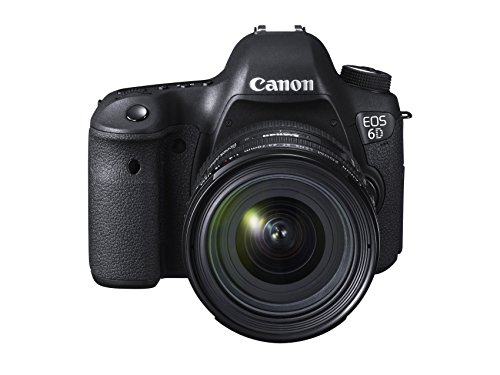
The Canon EOS 6D shows clear progress over the older, legendary 5D Mark II, specifically outperforming it in low-light noise control by roughly one full stop. While both full-frame cameras score equally well at lower ISO sensitivities, noise begins appearing at ISO 1600, with the 6D pulling ahead significantly at ISO 3200 and ISO 6400. At ISO 25600, the 5D Mark II struggles heavily with major detail loss, whereas the 6D retains comparable image quality to the 5D Mark II at ISO 12800. However, the extreme ISO extension settings on the 6D—such as ISO 51200 and 102400—result in severe noise, making them virtually unusable for practical purposes. In terms of build and hardware, the review highlights distinct trade-offs between the two bodies. The main advantages (pros) of the Canon 6D include its lower weight, two additional autofocus points, and built-in GPS and Wi-Fi features. On the downside, the 6D has a less robust body that features plastic parts to allow GPS and Wi-Fi signals to pass through, and it uses slower, smaller SD cards. Conversely, the 5D Mark II possesses...
Compare