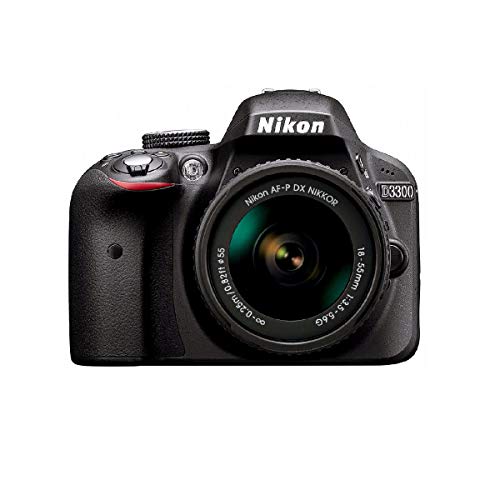
Nikon D3300 review. Compare 108 technical specifications and user reviews to see how it ranks among cameras and if it is worth buying.
Overall score
What it is: An overall evaluation of the camera's quality, based on technical analyses and user reviews.
When it matters: When you need a quick reference to identify the best cameras on the market.
Score components:
90.0%
Technical Score
10.0%
User score
Technical Score
What it is: An assessment of the camera's technical performance, covering eight key areas: image quality, autofocus, video features, stabilization, lens compatibility, connectivity, battery, and design.
When it matters: When you want to compare cameras based on technical performance and available features.
Score components:
28.0%
Sensor & Image
25.0%
Photo Features
18.0%
Video & Audio
14.0%
Display & Design
8.0%
Battery & Power
7.0%
Connectivity & Storage
User score
What it is: A rating that combines user reviews and the total number of reviews received by the camera.
When it matters: When real-world owner satisfaction and review volume matter to your decision.
Score components:
70.0%
User reviews
30.0%
Popularity
Score components:
25.0%
Sensor size
20.0%
Main camera megapixels
20.0%
Dual card slots
15.0%
N. of focus points
10.0%
RAW photo capture
10.0%
Phase-detection autofocus (photos)
Score components:
35.0%
Weight
30.0%
Battery life (CIPA)
20.0%
Sensor-shift stabilization
15.0%
GPS
Score components:
30.0%
Price
20.0%
Weight
20.0%
AF tracking
20.0%
Battery life (CIPA)
10.0%
Touchscreen
Score components:
30.0%
Main camera megapixels
25.0%
Sensor size
20.0%
Main camera pixel size
15.0%
Sensor-shift stabilization
10.0%
RAW photo capture
Score components:
30.0%
Weight
25.0%
Thickness
20.0%
AF low-light sensitivity
15.0%
Sensor-shift stabilization
10.0%
Eye detection AF (human)
Score components:
30.0%
Sensor size
25.0%
Main camera pixel size
20.0%
Eye detection AF (human)
15.0%
Main camera megapixels
10.0%
Sensor-shift stabilization
Score components:
30.0%
Weight
25.0%
Battery life (CIPA)
20.0%
Min operating temperature
15.0%
Sensor-shift stabilization
10.0%
GPS
Available: ranking among products currently available (including other versions of this product).
All: ranking among all products in the database.
#3 in Best Cheap Cameras
#5 in Best Cheap DSLR Cameras
#6 in Best Cameras under £1000
#22 in Best Cameras under £500
#34 in Best Nikon Cameras
#36 in Best DSLR Cameras
#36 in Best SLR Cameras
#47 in Best Cameras under £200
#84 in Best Cameras under £300
#88 in Best Cameras for Hiking
#93 in Best Travel Cameras
#141 in Best Cameras
#141 in Best Digital Cameras
What it is: An assessment of the camera's technical performance, covering eight key areas: image quality, autofocus, video features, stabilization, lens compatibility, connectivity, battery, and design.
When it matters: When you want to compare cameras based on technical performance and available features.
Score components:
28.0%
Sensor & Image
25.0%
Photo Features
18.0%
Video & Audio
14.0%
Display & Design
8.0%
Battery & Power
7.0%
Connectivity & Storage
What it is: A rating that combines user reviews and the total number of reviews received by the camera.
When it matters: When real-world owner satisfaction and review volume matter to your decision.
Score components:
70.0%
User reviews
30.0%
Popularity
What it is: An indicator that combines the camera's overall rating with its cost.
When it matters: When you want to know how much overall quality you get for the price.
Score components:
60.0%
Overall score
40.0%
Price
Importance: HIGH
Good value: Full frame or larger
Importance: HIGH
Good value: At least 20 MP
Importance: HIGH
Good value: At least 3.5 µm
Importance: LOW
Importance: MEDIUM
Good value: At least ISO 25,600
Importance: MEDIUM
Importance: MEDIUM
Good value: At least 14-bit
Importance: LOW
Importance: LOW
Importance: LOW
Importance: LOW
Importance: LOW
Importance: LOW
Importance: LOW
Importance: LOW
Importance: MEDIUM
Importance: LOW
Importance: LOW
Importance: LOW
Importance: LOW
Importance: LOW
Importance: HIGH
Good value: At least 200 points
Importance: HIGH
Importance: MEDIUM
Importance: LOW
Importance: LOW
Importance: MEDIUM
Importance: MEDIUM
Importance: HIGH
Good value: At least 5 stops
Importance: LOW
Importance: MEDIUM
Good value: At least 10 fps
Importance: LOW
Importance: LOW
Importance: LOW
Importance: LOW
Importance: LOW
Importance: LOW
Importance: LOW
Importance: LOW
Importance: LOW
Importance: LOW
Importance: LOW
Importance: LOW
Importance: LOW
Importance: LOW
Importance: LOW
Importance: LOW
Good value: At least 200,000 actuations
Importance: LOW
Good value: At least 10x
Importance: HIGH
Good value: At least 3840 px
Importance: MEDIUM
Good value: At least 200 Mbps
Importance: MEDIUM
Good value: At least 10-bit
Importance: LOW
Importance: LOW
Importance: LOW
Importance: LOW
Importance: LOW
Importance: LOW
Importance: LOW
Good value: At least 30 min
Importance: LOW
Importance: LOW
Importance: LOW
Importance: LOW
Importance: LOW
Good value: At least 2 microphones
Importance: LOW
Importance: LOW
Importance: LOW
Importance: LOW
Importance: MEDIUM
Good value: 500 g or less
Importance: LOW
Importance: LOW
Importance: LOW
Importance: MEDIUM
Importance: MEDIUM
Good value: At least 2.36 million dots
Importance: LOW
Good value: 100%
Importance: LOW
Importance: LOW
Good value: At least 120 Hz
Importance: MEDIUM
Good value: At least 3 in
Importance: LOW
Importance: LOW
Importance: LOW
Importance: LOW
Importance: LOW
Importance: LOW
Importance: LOW
Good value: At least 10 m
Importance: LOW
Importance: LOW
Importance: LOW
Importance: LOW
Importance: MEDIUM
Good value: At least 400 shots
Importance: LOW
Good value: At least 1,500 mAh
Importance: LOW
Importance: LOW
Importance: LOW
Importance: LOW
Importance: LOW
Importance: LOW
Importance: LOW
Importance: LOW
Importance: LOW
Importance: LOW
Importance: LOW
Importance: LOW
Importance: LOW
Importance: LOW
Importance: LOW
Importance: LOW
Importance: LOW
Importance: LOW
Importance: HIGH
Importance: LOW
Importance: MEDIUM
Good value: At least 400 shots
Importance: LOW
Importance: HIGH
Good value: At least 20 MP
Importance: LOW
Importance: MEDIUM
Importance: LOW
Importance: MEDIUM
Importance: LOW
Good value: 100%
Importance: LOW
Importance: MEDIUM
Good value: At least 14-bit
Importance: LOW
Good value: At least 2 microphones
Importance: LOW
Importance: MEDIUM
Good value: At least 10 fps
Importance: HIGH
Good value: At least 200 points
(Reviews last updated: July 2026)
The DPReview review highlights the Nikon D3300 as a reliable, beginner-friendly DSLR delivering exceptional image quality, driven by a 24-megapixel APS-C sensor without an optical low-pass filter and the EXPEED 4 processor, which enables 5 fps shooting and 1080/60p video. Key pros include excellent per-pixel sharpness, high dynamic range, a lightweight design with a collapsible kit lens, and a strong 700-shot battery life. Conversely, the review notes significant ergonomic flaws, including an inability to use the rear command dial in the info menu and buried controls for key features. Specific cons include sluggish contrast-detect AF in Live View, lack of built-in Wi-Fi or touchscreen, and inability to adjust aperture while in video mode.
The Nikon D3300 is a budget-friendly, entry-level DSLR that remains an excellent option for beginners, even though it has been succeeded by newer models like the D3400 and D3500. It is equipped with an impressive 24.2MP APS-C sensor that omits an optical low-pass filter to capture higher image detail, alongside an EXPEED 4 processing engine that supports 5fps continuous shooting and Full HD video recording up to 60p. Key advantages of this camera include its standout Guide Mode, superb value for money, overall ease of use, and compatibility with a vast ecosystem of creative lenses. However, the camera shows its age through several notable design and performance limitations. Its 3.0-inch LCD display is completely fixed to the body and lacks touch sensitivity, which makes navigating the heavily menu-reliant interface less convenient. It also provides fewer direct physical controls, and the optical viewfinder only offers a 95% field of view, creating a risk of stray objects slipping into the frame un-noticed. Finally, connectivity is very restricted, as it lacks built-in Wi-Fi and requires a separate wireless mobile adapter
The Nikon D3300 is a highly competent, budget-friendly entry-level DSLR that improves upon its predecessor, the D3200, primarily through its upgraded 24.2-megapixel sensor that removes the antialiasing filter to deliver sharper, cleaner images. Photos display accurate colours and minimal noise through ISO 1600, with usable results extending up to ISO 6400. The camera performs reliably for its price class, capturing a fast 5.1 frames per second burst rate and clocking a quick 0.2-second shot-to-shot time. Additionally, Nikon updated its beginner-friendly Guide Mode to offer better instruction for novice photographers, reduced the overall body weight to a light 16 ounces, and added 1080/60p video capabilities alongside an external microphone jack. Despite these solid performance and image quality upgrades, the D3300 suffers from a very limited feature set and notably slow Live View performance, which takes nearly two seconds to focus and shoot. The 11-point autofocus system remains unchanged and frequently misses targets during high-speed burst shooting, while the small, dim optical viewfinder features tiny focus points that are difficult to see in low light. Furthermore, the camera still lacks built-in Wi-Fi—requiring...
The Nikon D3300 is a compact, lightweight 24-megapixel entry-level D-SLR designed for beginner photographers upgrading from smartphones or point-and-shoot cameras. It stands out for omitting an optical low-pass filter (OLPF) on its APS-C CMOS sensor, which maximizes fine image details, and features an intuitive in-camera Guide Mode that helps novices navigate settings via visual thumbnails. Packaged with a redesigned, collapsible 18-55mm f/3.5-5.6 VR II lens, the camera delivers sharp, highly detailed JPEG images even at higher sensitivities like ISO 1600 and 3200. Furthermore, it captures 1080p video at 60fps with smooth motion tracking and provides a dedicated microphone port, enhancing its utility for budding videographers. Despite its strengths, the D3300 falls short of earning an Editors' Choice award due to a few key design and performance limitations. Its 3-inch, 920k-dot rear LCD screen is completely fixed, which limits shooting flexibility compared to articulating displays found on competing models like the Nikon D5200. The camera's small pentamirror viewfinder provides only 95% frame coverage, and its 11-point autofocus system can feel sluggish, taking up to 2.8 seconds to lock onto subjects in...
The ePHOTOzine review highlights the Nikon D3300 as a highly capable, lightweight entry-level DSLR featuring a 24.2-megapixel sensor without an optical low-pass filter, delivering exceptional sharpness, vibrant color, and strong low-light performance up to ISO 12,800. Upgraded with the EXPEED 4 processor, it offers 5fps shooting, 1080/60p video, a compact body, and a user-friendly Guide Mode. Notable limitations include the lack of built-in Wi-Fi, requiring an optional WU-1a adapter, and a slow contrast-detect autofocus in Live View. Furthermore, the camera has limited external controls for advanced users and exhibits significant lag in Live View, which restricts aperture adjustment.
The Photo Review Australia evaluation highlights the Nikon D3300 as a highly capable entry-level DSLR, featuring a 24-megapixel sensor without an optical low-pass filter for exceptional sharpness and high resolution. Key pros include the fast EXPEED 4 processor, improved 700-shot battery life, an intuitive Guide Mode for beginners, and a portable, lightweight design. Conversely, the review notes significant limitations, including limited external controls that necessitate frequent menu diving and a basic autofocus system that struggles in low light. Other drawbacks include the lack of built-in Wi-Fi, a fixed, non-touch rear LCD, and restrictions on video shooting, such as unchangeable aperture in Live View. YouTube
The What Digital Camera review awards the Nikon D3300 a 90% score, highlighting its 24.2-megapixel, low-pass filter-free sensor for exceptional sharpness, alongside a faster 5fps burst rate and a compact, lightweight design. Key benefits include this high-resolution output and an improved, beginner-friendly interface, positioning it as a top-tier, cost-effective entry-level DSLR. Conversely, the review notes significant noise at higher ISO settings due to high pixel density on the APS-C sensor, leading to degraded image quality. Furthermore, the camera lacks built-in Wi-Fi, requiring an optional adapter for wireless connectivity.
The Nikon D3300 is an entry-level APS-C SLR camera featuring a 24-megapixel sensor with the anti-alias filter removed to slightly improve image quality. It provides outstanding resolution, great dynamic range, and strong low-light performance up to ISO 3200, though color noise and purple tones appear at higher settings. While the body is lightweight, compact, and comfortable to hold, it lacks built-in WiFi and GPS, and its menu system is traditionally long and difficult to navigate. Focusing is fast and precise via the 11-point optical viewfinder system, but performance slows down significantly in LiveView mode. Additionally, it features a convenient built-in Panorama mode. Ultimately, the camera delivers fantastic image quality that rivals professional SLRs, making it an ideal choice for beginner photographers. Its key pros include its small and lightweight build, outstanding high-ISO capability, fast overall operation, and a large battery capacity capable of up to 700 shots. On the downside, the cons include the slow autofocus in LiveView, the lack of built-in WiFi or GPS, tiny and hard-to-use buttons, and an inconvenient menu system. Because the upgrades over its predecessor...
The Amateur Photographer review highlights the Nikon D3300 as a fast, entry-level DSLR featuring an upgraded processor that enables a competitive 5fps continuous shooting rate. Key strengths include improved viewfinder coverage, intuitive automatic flash modes, and a compact design suited for beginners looking for high-quality, quick-shooting performance. Conversely, the review notes that the camera's simple, lightweight body design and heavy reliance on automated features may limit advanced users seeking more manual control, according to the Amateur Photographer analysis. Despite these limitations, it is positioned as a significant, speedy upgrade over its predecessor.
The CNET review by Lori Grunin concludes that the Nikon D3300 delivers highly competitive photo quality for an inexpensive entry-level dSLR, noticeably improving upon its predecessor. On the positive side, the camera excels at preserving sharp, precise details in low-ISO JPEG files and renders colors relatively accurately. It manages high ISO sensitivity and low-light situations reasonably well through ISO 1600 and remains acceptable up to ISO 3200, proving to be a solid performer for budget-conscious photographers looking for capable hardware. However, the review highlights several distinct drawbacks regarding the camera's JPEG processing and lens kit. The default camera settings tend to aggressively push contrast and clip shadow details in JPEGs, which becomes noticeable as early as ISO 800. Furthermore, image stabilization on the included kit lens is less effective than expected, and severe noise artifacts alongside an unavoidable blue hue shift plague high-sensitivity shots at ISO 6400 and beyond, making those extreme settings impractical unless the final images are scaled down significantly.
The DPReview hands-on article covers the Nikon D3300, highlighting its 24.2MP sensor without an optical low-pass filter and compact, lightweight design as key pros, along with a significantly improved, collapsible 18-55mm VR II kit lens. While user-friendly for beginners, cons include a plastic construction and the absence of built-in Wi-Fi. The accompanying AF-S Nikkor 35mm F1.8G lens is noted for its sharp performance and large aperture, serving as a versatile 52.5mm equivalent prime on the DX-format body. However, the lens faces criticism for its high introductory price point of $599.
Ken Rockwell’s review highlights the Nikon D3300 as a remarkably lightweight (16.2 oz) yet highly capable 24-megapixel DSLR, offering image quality that rivals more expensive models. Key pros include the quiet, refined shutter, an easy-to-use menu system, and the excellent performance of the included 18-55mm VR II kit lens. Conversely, the camera’s limitations include a sparse physical interface with only one control dial and a lack of dedicated buttons, requiring menu navigation for settings. While effective for general use, the autofocus is less advanced than professional systems, and native Wi-Fi capability is absent, requiring an external adapter.
The Radojuva review highlights the Nikon D3300 as an excellent entry-level DSLR, featuring a 24.2 MP DX-format sensor without an anti-aliasing filter for high image detail and the EXPEED 4 processor for 5 fps shooting and 1080/60p video. Key strengths include superb high-ISO performance up to 25,600 and effective in-camera features like RAW processing. However, the camera suffers from poor ergonomics, lacking a dedicated ISO button and restricting manual ISO adjustments to whole steps, alongside the absence of an internal focus motor for older AF lenses. Additional limitations include the inability to display viewfinder grid lines and the lack of advanced options like exposure bracketing.
The Nikon D3300 serves as an impressive entry-level DSLR that stands out primarily due to its exceptional 24-megapixel DX-format image sensor, which delivers prosumer-level image quality with excellent dynamic range and strong low-light performance. Key upgrades over its predecessor include an updated EXPEED 4 processor, an increased continuous shooting speed of 5 fps, enhanced 1080p video recording at 60 fps, and a vastly improved battery life rated at 700 CIPA shots. The camera's compact, lightweight build and highly accurate 11-point phase-detect autofocus system (particularly the central sensor) make it a highly responsive and portable "daily driver" choice for stationary and tracking shots. However, the D3300 suffers from several design and feature limitations targeted at consumer budgeting. A major usability drawback is the clumsy, mechanically collapsing 18-55mm kit lens, which delays shooting by forcing the user to manually extend the lens upon startup. Furthermore, the high-resolution 24MP sensor easily exposes the optical flaws of lower-end lenses, creating a mismatch since Nikon offers very few high-quality, compact DX primes beyond the 35mm f/1.8G. Other notable cons include the omission of built-in Wi-Fi,...
The Nikon D3300 is a highly capable entry-level DSLR that stands out primarily for its exceptional image quality, punchy sharpness, and strong low-light performance. Thanks to its 24-megapixel APS-C sensor lacking an anti-aliasing (low-pass) filter, it achieves remarkable edge sharpness, capturing 1,886 out of 2,000 maximum line pairs per picture height. Image noise remains impressively low and mirrors higher-tier models like the D5300, keeping grain unnoticeable up to ISO 1,600 and perfectly acceptable for large DIN-A3 prints even at a maximum ISO of 12,800. On top of solid build quality, the camera offers a robust battery life capable of delivering roughly 1,500 shots or 120 minutes of video recording on a single charge. It also improves upon its predecessor with an upgraded video mode that captures smooth Full HD footage at up to 60 frames per second, complemented by a built-in stereo microphone and a dedicated 3.5mm external microphone input. However, the camera cuts corners regarding extra features and autofocus speed to maintain its budget-friendly price point. A major downside is its sluggish autofocus system; while it performs adequately in...
The Nikon D3300 is a compact, lightweight entry-level DSLR featuring a 24.2-megapixel DX-format (APS-C) CMOS sensor designed without an optical low-pass filter to maximize image sharpness. Priced at a recommended retail price of €649 at launch, it introduces an improved image processor that enables Full HD video recording at up to 60 frames per second and a continuous shooting rate of 4.5 frames per second. The camera is tailored heavily toward beginners, integrating an intuitive Guide Mode on the mode dial that walks users through optimal settings via a Q&A interface, completely eliminating the immediate need for a physical manual. It delivers exceptional image quality during daylight and flash photography, boasts an impressive battery life capable of capturing up to 1,000 shots on a single charge, and features a near-instant startup time of just 0.2 seconds alongside a snappy 0.35-second phase-detection autofocus in good lighting conditions. Despite its strengths, the review notes several hardware compromises and performance limitations. On the negative side, the D3300 lacks a tilting or articulating screen and does not feature built-in Wi-Fi connectivity, requiring an external...
The Digitalkamera.de review highlights the Nikon D3300's exceptional portability, noting its lightweight, 615-gram design with the 18-55mm kit lens, and its excellent 24.2-megapixel sensor that produces high-detail, low-noise images. Key strengths include a 700-shot battery life, smooth 1080p 60fps video, and a helpful guide mode, though it lacks an optical low-pass filter for maximum sharpness. Conversely, the, review notes a "plastic" construction with flimsy port covers and a fixed, non-touch screen that limits shooting angles. Small, cramped buttons and a deep, traditional menu system that relies on the quick-access "i" button are also cited as ergonomic drawbacks.
The Nikon D3300 is a solid entry-level DSLR equipped with a 24-megapixel APS-C sensor that lacks an anti-aliasing filter to boost detail sharpness. In terms of performance, it offers a surprisingly fast continuous shooting rate of 5.1 frames per second for up to 100 JPEGs or 9 RAW images, accompanied by a quick 0.25-second phase-detection autofocus and minimal 0.07-second shutter lag when using the optical viewfinder. Additionally, its low-light capability is highly respectable for its class, keeping image noise minimal up to ISO 1,600 and remaining usable at ISO 3,200 and 6,400. The camera also punches above its weight in video mode, delivering very high-quality Full HD recordings at up to 60 frames per second, complete with a 3.5mm external microphone port. However, the camera comes with several notable drawbacks, particularly regarding its speed in Liveview mode. When switching away from the optical viewfinder, the Liveview autofocus slows down to 1.10 seconds, and the total time from pressing the shutter to seeing the image on the screen takes a frustrating 4 to 5 seconds. The D3300 lacks an internal autofocus...
The Nikon D3300 is a highly capable entry-level digital single-lens reflex (DSLR) camera designed to provide beginners with a high-quality yet affordable introduction to photography. The review highlights its exceptional value, noting that the camera features an impressive 24.2-megapixel APS-C crop sensor that lacks an optical low-pass filter, allowing it to capture outstanding per-pixel sharpness and image detail. In terms of performance, the camera is quick and responsive, delivering a continuous burst speed of 5 frames per second along with a reliable 11-point autofocus system. For novice users, it includes an intuitive, built-in "Guide Mode" to assist with learning key photographic settings on the fly. Furthermore, the camera body is incredibly lightweight and compact, making it highly portable, while its energy efficiency guarantees excellent battery life for extended shooting sessions. Despite its strong points, the review outlines several functional limitations that reflect its low price point. A major drawback is the complete lack of built-in Wi-Fi, meaning users must rely on external, cumbersome adapters to transfer images wirelessly to a smartphone. Additionally, the 3-inch LCD monitor is completely fixed, missing...
The dkamera.de review identifies the Nikon D3300 as a high-performing entry-level DSLR, highlighting its 24.2-megapixel APS-C sensor (lacking an optical low-pass filter) for delivering superior image detail, alongside a fast 5 fps shooting speed and Full HD 1080p video at 60 fps. Pros include excellent noise management up to ISO 1,600, a user-friendly Guide Mode, and a lightweight, compact body design. YouTube ·Tony & Conversely, the review notes significant cons, including the lack of built-in Wi-Fi and a fully fixed 3-inch LCD screen. The camera is further limited by a single command dial, a slow live-view autofocus system, and a kit lens that does not fully utilize the sensor's potential resolution. YouTube
The Nikon D3300 serves as an impressive, budget-friendly DSLR that inherits the 24-megapixel sensor and image processor from its higher-end sibling, the D5300, bringing a cinema-like Super35mm aesthetic to entry-level videographers. A standout pro is its exceptional video quality, delivering a very soft, organic image virtually free of aliasing, moiré, and fixed pattern noise, which heavily plagued its predecessors. It also boasts high dynamic range—maximized using the "Neutral" picture profile—and natural color reproduction. Furthermore, it offers strong low-light performance and great framerate flexibility, supporting 24, 25, 30, 50, and 60 fps in Full HD. However, the camera comes with notable limitations. Major cons include its lower-resolution display, which is fixed and cannot flip or swivel out like the D5300. It also lacks built-in Wi-Fi, a headphone jack, a 16:9 preview mode, and the ability to load custom picture profiles like Flaat or LPowell for log-style workflows. Manual focus verification is hindered by a choppy live view magnification tool, the internal microphone produces mediocre background hiss with cut-off treble, and the aperture cannot be adjusted while in Live View. Despite these...
The Nikon D3300 is a robust and entry-level DSLR camera that offers image quality exceeding average compact cameras, making it a solid, budget-friendly choice for beginners. On the positive side, it features an upgraded JPEG image processor delivering intense colours and rich details, an excellent 24.2 MP APS-C sensor shared with the higher-end D7100, and an impressive battery life capable of shooting 700 frames per charge. Additionally, it provides a faster-than-average continuous shooting speed of 5 frames per second and includes a compact, retractable 18-55mm kit lens that saves space in a backpack. However, the reviewer describes the camera as "spartiate" (bare-bones) because it sacrifices several modern conveniences to maintain its low price point. Key drawbacks include the complete absence of an articulated tilting screen, lack of built-in Wi-Fi, underwhelming mono audio video recording that underperforms in low light, and menus that are paradoxically too shallow for experts yet confusing for beginners. Furthermore, the retractable mechanism of the standard lens can slow down spontaneous shooting, and the camera faces stiff competition from mirrorless hybrids if purchased near its €500 launch...
summary of the review: Review Summary The Nikon D3300 is a lightweight, compact entry-level DSLR designed primarily to introduce beginners and amateurs to interchangeable lens photography. It features a powerful 24-megapixel APS-C sensor with no low-pass filter, a responsive Expeed 4 image processor, and a highly capable 11-point autofocus system that performs reliably even in low light. Overall, the camera delivers immediate, high-quality images and fast performance, outperforming smartphones and compact cameras while maintaining an exceptionally strong battery life capable of lasting an entire weekend of shooting. However, the camera has notable limitations dictated by its budget-friendly design. Pros include its excellent image quality, responsive autofocus, lightweight chassis, and impressive battery longevity. On the downside, the cons include a fixed rear screen that lacks touch capabilities, a complete absence of built-in Wi-Fi or GPS, a limited built-in flash range, and high-ISO noise at 12,800 that requires RAW editing. Additionally, it lacks an internal autofocus motor (requiring AF-S lenses) and a depth-of-field preview button. The reviewer also notes that the bundled 18-55mm kit lens is somewhat "soft" and fails to fully...
The Radojuva review highlights the Nikon D3300 as a highly capable entry-level DSLR, featuring a 24.2 MP APS-C sensor and EXPEED 4 processor that deliver image quality comparable to higher-tier models. Key advantages include exceptional high-ISO performance up to 25,600, a 5 frames-per-second burst rate, and 1080/60p video recording. YouTube · Conversely, the review notes ergonomic limitations, specifically the lack of a quick Auto ISO toggle, requiring menu navigation. Additional drawbacks include a basic 11-point autofocus system, a shallow buffer for RAW files, and the absence of features like Wi-Fi or auto-bracketing. YouTube
The Nikon D3300 is an entry-level APS-C (DX) digital SLR camera tailored for beginners looking to upgrade from smartphones or compact cameras. The review highlights its impressive 24-megapixel sensor with no low-pass filter, a fast Expeed 4 image processor, and a maximum native sensitivity of 12,800 ISO (expandable to 25,600). Key strengths include its great general speed, reactive 11-point autofocus system (featuring a highly precise central cross-type point), and a Full HD 1080p video mode that excels in low-light conditions. It also features built-in guide modes to assist novice photographers alongside manual P, S, A, and M modes for advanced user control. However, the camera has several physical and technical compromises to keep costs low. Its autofocus is strictly limited to 11 points—significantly fewer than higher-end models like the D5500—and the viewfinder is less advanced than those found on expert-level bodies. Furthermore, its high-ISO performance cannot match full-frame sensors. From a usability standpoint, the D3300 lacks modern conveniences like an adjustable touchscreen display, built-in GPS, and integrated Wi-Fi, which instead requires an easily misplaced external plug-in module.
The Nikon D3300 is an entry-level DSLR equipped with a 24.2-megapixel APS-C CMOS sensor without an optical low-pass filter, delivering excellent image quality that remains reliable up to ISO 3200. The camera demonstrates vast responsiveness upgrades over its predecessor, achieving fast autofocusing across multiple shooting situations and a burst rate of 4.5 frames per second in JPEG mode. Notable strengths include its highly reliable build quality, a dedicated microphone port, and an included 18-55mm retractable zoom lens that offers exceptional sharpness and zero distortion when utilizing its maximum 55mm portrait position. However, the D3300 suffers from major design and user-interface limitations that hinder its appeal for beginners. The fixed 7.5 cm TN display lacks both tilting and touchscreen capabilities, there is no built-in Wi-Fi or electronic level, and the physical ergonomics make it frustrating to navigate vital settings like automatic ISO configuration. Furthermore, the camera has a slight tendency to underexpose images, and the bundled lens delivers disappointing performance at wide-angle focal lengths due to barrel distortion and poor edge sharpness. Video performance is equally limited; it records Full HD...
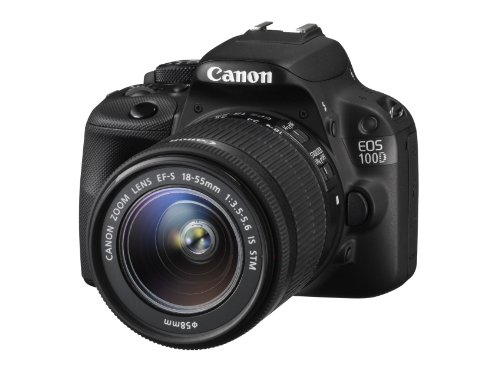
This review by Les Numériques compares two entry-level APS-C DSLR cameras: the Canon EOS 100D and the Nikon D3300. The Canon 100D stands out for its highly innovative, ultra-compact design and vastly superior user interface, making it the overall favorite of the test,. Its main pros include an exceptionally clear and responsive 7.7 cm touchscreen that simplifies setting changes, a larger 0.87x optical viewfinder with an automatic eye-detection sensor, and a faster Hybrid CMOS AF III autofocus during live view on-screen shooting,,,. However, the Canon has notable cons, such as a significantly lower battery life of only 380 shots, poorer electronic noise handling above 1,600 ISO, a standard 18-55mm kit lens that feels disproportionately bulky for the small body, and a poorly placed memory card slot located underneath the battery flap,,,. Conversely, the Nikon D3300 takes a much more traditional approach but dominates in pure hardware performance and value. The Nikon's pros include a superior 24.2 MP sensor (versus Canon's 18 MP) that delivers cleaner image quality up to 3,200 ISO with less digital noise, a highly efficient retractable kit...
The review from Les Numériques highlights the Nikon D3300 as a revitalised entry-level DSLR entry that introduces several performance upgrades over its predecessor, the D3200. The most significant advancement is its 24.2-megapixel APS-C CMOS sensor which removes the optical low-pass filter to deliver enhanced sharpness, powered by the upgraded Expeed 4 processor. These technical updates grant the camera notable pros, including an expanded sensitivity range of 100 to 12,800 ISO (extensible to 25,600 ISO), a faster burst shooting rate of 5 frames per second, and improved video capabilities capable of recording Full HD 1080p at 60 frames per second. Furthermore, the updated AF-S DX Nikkor 18-55mm f/3.5-5.6G VR II kit lens features a lightweight, retractable design that slims the lens length down to 59.5mm and drops its weight to just 190 grams. The camera also features an upgraded optical viewfinder with a 0.85x magnification and a dedicated Guide Mode to assist beginner photographers. However, the review points out several distinct cons and missed opportunities for modern user needs. Nikon chose not to integrate modern features such as built-in Wi-Fi or...
The Nikon D3300 is a lightweight, robust, entry-level SLR kit equipped with a 24.2 MP APS-C CMOS sensor and a stabilized 18-55mm f/3.5-5.6G VR II lens offering a 3x optical zoom. It delivers exceptional image quality with vivid colors, handles Full HD video recording smoothly, and boasts an impressive battery life capable of capturing over 500 photos per charge. Priced competitively around €599.91, it features intuitive control placement and a durable metal tripod mount, making it highly accessible and physically easy to handle for beginners looking to step up their photography skills. However, the camera's construction relies heavily on plastic, which can make it feel less premium. Its 3-inch LCD screen is fixed and lacks touch capabilities, which limits shooting versatility and modern user interaction. Additionally, it lacks integrated battery charging within the camera and does not feature built-in Wi-Fi connectivity, requiring users to purchase an external adapter for wireless transfers. Out of the box, the camera also lacks an included SD card or carrying case, meaning buyers will need to budget for these essential separate purchases.
The Nikon D3300 is a highly capable entry-level DSLR camera that stands out by packing the advanced "motor" (a 24-megapixel sensor and an ExPeed 4 image processor) of higher-end models into a budget-friendly body. It delivers exceptional photographic performance, boasting a fast 5 frames-per-second burst mode, native ISO sensitivities up to 12,800 (expandable to 25,600), and an integrated sensor self-cleaning system. The camera features a compact and lightweight design accompanied by a comfortable grip, an intuitive interface, and an updated, space-saving collapsible 18-55mm kit lens. Additionally, it provides substantial shooting flexibility through an 11-point autofocus system (including 3D tracking), a Full HD video mode, and an impressive battery life rated for approximately 700 shots per charge. Imaging Resource However, the review highlights several compromises made to keep this model affordable and compact. A significant limitation is its lens compatibility: the camera lacks an internal focus motor, meaning it requires specialized AF-S lenses with built-in motors to utilize autofocus, forcing users into manual focus with older D, AI-S, and AI lenses. Physically, it is constrained by a fixed, non-tilting 3-inch LCD...
The reviewed Nikon D3300 is highly recommended as the perfect entry-level DSLR for beginners due to its lightweight, well-balanced body and excellent value for money. Built around a 24.2 MP DX (APS-C) sensor that omits an anti-aliasing filter to boost image sharpness, the camera features the Expeed 4 processor to deliver speedy performance and an impressive continuous burst rate of 5 frames per second. Image quality is excellent with highly accurate JPEG rendering, and RAW files allow photographers ample room to recover fine details and tones later. Additionally, its video capabilities are a standout feature for its class, capturing smooth, high-quality 1080p video at 60fps. Despite these strengths, the review notes several design compromises to keep the price down. The primary downsides include the lack of built-in Wi-Fi and a fixed, non-articulating 3-inch LCD screen, which makes capturing creative video angles difficult. Its autofocus system is limited to 11 points and becomes notably slower and prone to hunting in low light or when using the Live View screen. Furthermore, users cannot adjust the lens aperture while recording video in Live...
The Radojuva review of the Nikon D3300 highlights this entry-level DSLR as a capable, lightweight tool offering excellent image quality, 5 fps burst shooting, and Full HD 60p video, with high ISO performance that challenges more advanced models. Key advantages include the 24MP sensor without an optical low-pass filter, resulting in sharp, high-resolution, and low-noise images. However, the camera features a simplified, somewhat clunky user interface, lacking direct access to Auto ISO settings via the quick menu and completely omitting automatic exposure bracketing (AEB). Additionally, the review notes the device only offers a 12-bit, rather than 14-bit, RAW data processing, limiting dynamic range compared to higher-tier models, although it remains a top choice for entry-level photographers.
Nikon D3300 Review Summary The Nikon D3300 is highlighted as an ideal, user-friendly entry-level DSLR that delivers high image quality in a highly portable design. Its key pros include a high-resolution 24.2-megapixel CMOS sensor built without an optical low-pass filter, which maximizes sharpness and fine detail capture when paired with the EXPEED processor. The camera offers an expanded ISO range up to 25,600 for low-light shooting, an 11-point Multi-CAM 1000 autofocus system featuring 3D tracking, and rapid 5 frames per second continuous burst shooting. For multimedia, it stands out by offering Full HD 1080p video recording at 50 or 60 fps for smooth motion and slow-motion editing, alongside a dedicated 3.5mm external microphone port to bypass internal camera noise. Beginners benefit heavily from its specialized Guide Mode on the main dial, which provides step-by-step shooting assistance, as well as 13 built-in creative special effects including an Easy Panorama option. However, the review points out several notable hardware and connectivity cons. A significant limitation is its lack of built-in wireless capabilities; to share photos on smart devices or record geolocation data,...
The Tom's Hardware review presents the Nikon D3300 as a highly accessible entry-level DSLR, featuring a lightweight, rigid monocoque structure and a high-resolution 24.2-megapixel APS-C CMOS sensor. Key strengths include exceptional image sharpness due to the lack of an optical low-pass filter, the rapid EXPEED 4 processor enabling 5fps shooting, and an improved, beginner-friendly interactive Guide Mode. YouTube · Conversely, the review notes significant design compromises aimed at budget constraints, notably the fixed, non-touch screen that hampers creative shooting. Further limitations include sluggish Live View autofocus, the inability to change aperture settings in Live View, and the lack of built-in Wi-Fi. Additionally, the camera exhibits higher image noise at lower ISO levels than expected due to aggressive resolution processing. YouTube
Nikon D3300 Review Summary The Nikon D3300 (tested with the 18-55 mm Nikkor VR II lens) is an entry-level DSLR camera that offers high overall quality at a below-average price point for its segment. The expert review highlights its excellent 24-megapixel resolution, which delivers consistently good photo quality, solid low-light performance, and effective image stabilisation to reduce blur. Additionally, it records high-quality 1080p video with exceptional 5-star audio performance. The rear 3-inch screen boasts clear 921-kilopixel resolution and remains highly legible even under intense sunlight. The camera is commended for its user-friendly handling, minimal shutter response lag, and an impressive battery life capable of delivering 700 shots per charge. While the review notes that the camera does not have any major weaknesses or performance flaws, it does miss several advanced, modern features. On the hardware side, the 3-inch screen is completely fixed and lacks touchscreen capabilities, meaning users cannot use the display to alter viewing angles or tap to focus. In terms of connectivity, the Nikon D3300 entirely lacks built-in Wi-Fi and NFC, making wireless file sharing to other devices...
Based on the hands-on impressions from DDay.it at the Consumer Electronics Show (CES), the Nikon D3300 is an enticing entry-level DSLR designed to be compact and feature-rich. A major highlight of this model is its 24.2-megapixel sensor that completely lacks an optical low-pass filter, paired with an updated EXPEED 4 image processor to deliver maximum image sharpness and fine detail capture. Additionally, reviewers praise its incredibly lightweight and compact body structure, enhanced by a redesigned, collapsible 18-55mm kit lens that significantly reduces its overall footprint for portability. Performance upgrades include a 5 frames per second continuous burst shooting mode and smooth Full HD 1080p video recording at up to 60fps, complete with a dedicated external microphone jack to improve production audio quality. Despite its strong imaging capabilities, the camera has notable limitations that point toward its entry-level target audience. A primary downside is the complete absence of built-in Wi-Fi connectivity, forcing users to buy an optional external mobile adapter to transfer files wirelessly to smart devices. The compact chassis also leaves very little space for dedicated external controls, resulting in...
The Nikon D3300 is a budget-friendly digital single-lens reflex (DSLR) camera introduced in 2014, tailored primarily for beginner photographers seeking high image quality without breaking the bank. Its standout feature is its 24-megapixel APS-C DX-format sensor, which entirely omits an anti-aliasing (optical low-pass) filter to produce remarkably sharp, high-resolution details that rival more expensive enthusiast models. The review details performance evaluations conducted by the Centro Studi Progresso Fotografico, assessing critical technical metrics including autofocus response, resolving power, dynamic range (exposure latitude), noise levels, and sensitometric curves. Despite its high-performing sensor, the camera has notable operational limitations that constrain its flexibility. The core pros highlight its excellent value proposition and stellar resolution potential for an entry-level body. Conversely, the primary cons emphasize a restrictive exposure metering system, a lack of physical interface flexibility, and the total absence of built-in Wi-Fi and GPS functionalities, both of which require purchasing external modules to operate.
of the Nikon D3300 The Nikon D3300 is a compact, entry-level DSLR camera designed to bridge the gap between smartphone photography and serious digital imaging. Its primary advantage is outstanding image quality, delivered through a 24.2-megapixel CMOS sensor and an EXPEED 4 image processing engine. This hardware allows beginners to easily achieve a desirable background bokeh effect that most smartphones cannot replicate. Additional pros include Full HD video recording capability at 50/60p, creative built-in filters, and a dedicated "Guide Mode" (Hulpstand) that helps novice users navigate settings and understand the camera’s operations. However, the camera has notable drawbacks that might frustrate users accustomed to modern tech. A major con is the lack of a touchscreen or an articulating flip screen, making operation heavily reliant on a complex mode dial and multiple physical buttons. Sharing images via its Wi-Fi feature is also criticized for being overly complicated, as files must be transferred through a specific smartphone app before they can be posted to social media. Ultimately, while its image quality is excellent for the price, the steep learning curve and lack...
The Photofacts review highlights the Nikon D3300 as a highly capable entry-level DSLR camera tailored specifically for beginning photographers. The primary strength of the camera lies in its excellent image quality, which delivers sharp photos comparable to much more expensive models, especially when paired with an upgraded lens rather than just the standard 18-55mm kit lens. It features a robust 24.2-megapixel APS-C sensor, shoots at 5 frames per second, handles Full HD video, and has a light sensitivity range from 100 to 12,800 ISO. Additionally, its compact and lightweight design makes it highly comfortable and easy to hold for users with smaller hands. However, the review details several notable limitations stemming from the camera's basic, entry-level nature. On the ergonomics side, its small size can feel cramped and fiddly for users with larger hands, and the menus are poorly designed, requiring frustratingly long scrolling sequences to change advanced parameters (though basic options can be altered quickly via the 'i' button). Crucially, the camera lacks premium built-in features found on its larger sibling, the Nikon D5300. It misses out on a...
The Nikon D3300 is a budget-friendly, entry-level DSLR camera designed for beginner photographers that balances high-resolution performance with simple, intuitive controls. The review highlights its 24.2MP APS-C CMOS sensor, which excludes an optical anti-aliasing filter to deliver optimal image sharpness and detail capable of matching much more expensive cameras. Driven by the Expeed 4 image processing engine, it achieves continuous shooting speeds of up to 5fps and features a highly reliable evaluative metering system alongside an impressive dynamic range of 12.98EV at ISO 100. Additionally, the camera is bundled with a collapsible 18-55mm kit lens that is 30% smaller and 25% lighter than its predecessor while maintaining excellent center sharpness. Videographers also benefit from Full HD 1080p video recording at up to 60fps, supplemented by a 3.5mm external microphone input. Despite these strengths, the review notes several notable drawbacks, particularly regarding image noise and low-light performance. Notable luminance and color noise become visible in shadow areas at ISO settings as low as 400, becoming severe at its maximum native ISO of 12,800. The 11-point autofocus system also struggles in low-light...
According to the review details on Tweakers, the Nikon D3300 is an excellent entry-level DSLR camera equipped with a modern 24-megapixel sensor that lacks an optical low-pass filter (OLPF). This design choice allows the camera to deliver exceptionally sharp, high-quality images and strong low-light performance that outpaces its direct competition. Redactors and users alike praise the camera's high resolution, compact and lightweight build, comfortable hand grip, and extended battery life. It is also highlighted as an intuitive, user-friendly device for beginners—particularly due to its built-in "GUIDE" mode—while offering enough advanced settings and video options (such as Full HD recording at 60fps) for users to grow into as they develop their photography skills. However, the review points out several distinct limitations, particularly regarding hardware convenience, advanced features, and performance pacing. Critics note that powering on the camera requires a multi-step process and that it lacks a dedicated ISO button, a bulb mode, or a native HDR exposure option. Performance bottlenecks include a sluggish autofocus system during live-view and video recording, a small buffer memory that quickly fills up during burst shooting,...
The Focus Review evaluates the Nikon D3300 as a fantastic entry-level SLR camera that delivers exceptional 24-megapixel resolution and stellar low-light capability, matching the raw image quality of professional bodies. Key pros highlighted in the review include its highly compact, lightweight plastic body, fast up-to-5fps continuous shooting speed, and an upgraded optical viewfinder (0.82% magnification). Dropping the anti-alias low-pass filter optimizes detail reproduction, which yields outstanding per-pixel sharpness when paired with high-quality lenses. Furthermore, its high-capacity EN-EL 14a battery is a major advantage, capable of achieving roughly 700 shots per charge. Conversely, the review exposes several distinct cons, most notably the sluggish and slow autofocus in LiveView mode and the notable absence of built-in WiFi and GPS. The camera's small physical size leaves minimal room for external buttons, which forces users to navigate through traditionally long, bothersome menus for basic settings like auto-ISO and D-lighting. Additionally, shooting at high ISO settings introduces noticeable color noise, which gives dark areas an uncorrected purple tone. Ultimately, because its feature upgrades are so minor compared to its predecessor, the review notes that the...
Compare