Scored using Smartwatches Methodology v3.0
Smartwatches Methodology v3.0
Mathematical & Unbiased Scoring
Products in this category are scored under Frontum Smartwatches Methodology v3.0: the technical score from the specifications is the base, and independent expert and video reviews (up to ±0.5 points), owner opinions (up to ±0.3) and best-of lists (up to +0.3) move it up or down.
Explore Smartwatches Methodology v3.0

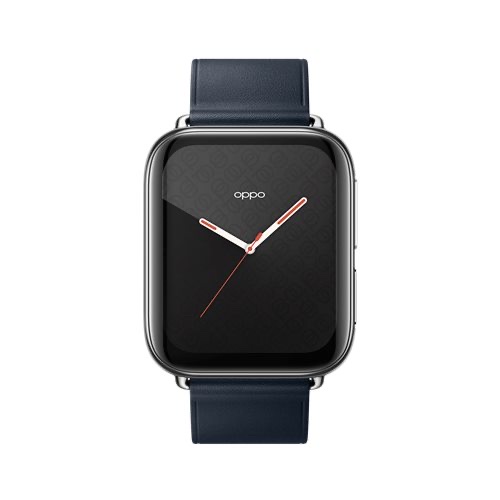
Oppo Watch Stainless Steel review: 127 specs compared

Avg. price:~£230Screen size:1.91 inchBattery life:1.5 daysDisplay type:AMOLED

Oppo Watch Stainless Steel Review: Compare 127 technical specifications and 39 expert and video reviews to see how this product ranks in the Smartwatches category and whether it is worth buying.
Oppo Watch Stainless Steel
7.9/10

Overall score

Score
7.9/ 10
✕
What it is
Our main score for this model, 1–10. It combines specs, best-of lists, expert reviews and owners.
How we count it
Parts: Technical score 35%, List score 30%, Reviews score 25%, Sentiment score 10%
Marks: Each part gets a mark out of 10. For reviews, lists and owners, a typical model in this category gets about 8 and the best one gets 10.
No data yet: A part with no data shows "?". It counts as the mark of a weaker model in this category (4 in 5 models with data score higher). This way, models with reviews, lists and owners usually come out ahead.
Score distribution
â–¼
<55-66-77-88-99-10
Score components

35%

8.0

Technical score

30%

?

List scoreNot enough data yet, so we use 7.5, the mark of a weaker model in this category

25%

7.9

Reviews score

10%

8.9

Sentiment score

â–²Better than 81% of smartwatches
8.4

Value for money

Value for money
8.4/ 10
✕
What it is
An indicator that combines the smartwatch's overall rating with its cost.
When it matters
When you are looking for a smartwatch with a good balance between quality and price.
Score distribution
â–¼
<55-66-77-88-99-10
Score components

70%

7.9

Overall score

30%

9.3

Price

â–²Better than 80%
8.0

Technical score

Technical score
8.0/ 10
✕
What it is
How good the specs are compared with the other models in this category, 1–10.
How we count it
Areas: We rate the specs in each area against the other models in this category.
Weighting: The areas that matter most to buyers count more. The shares are shown under Score components.
Share: The technical score is 35% of the overall score.
Score distribution
â–¼
<55-66-77-88-99-10
Score components

24%

8.0

Health

21%

8.6

Fitness

16%

5.8

Battery

14%

9.0

Smart features

12%

8.9

Connectivity

9%

8.9

Display & Design

4%

6.4

Hardware

â–²Better than 84%
7.9

Reviews score

Reviews score
7.9/ 10
✕
What it is
Average grade from independent test sites, magazines and video reviewers, 1–10.
How we count it
Grades: Each review's own score is converted to 1–10; without one, we grade the review ourselves. Every review counts the same: written or video, short or full test.
Score: The average grade is 80% of the review mark; the number of reviews is the other 20% (1 review = 5, the typical number in this category = 8, the most-reviewed model = 10).
Enough data: With few reviews, the average grade is pulled toward the typical grade of this category. No reviews yet: 7.4 for now.
Share: Reviews count 25% of the overall score.
Score distribution
â–¼
<55-66-77-88-99-10

80%

7.7

Average grade

20%

8.7

Popularity

Grades by review (39)
39 videos, average 7.7/10. Reviews count 25% of the overall score.
User ratings collected online are not part of this score.
â–¼Worse than 51%
?

List score

List score
7.5/ 10
✕
What it is
How often independent test sites, magazines and video reviewers put this model in their best-of lists for this category.
How we count it
Points: The model in the most lists of this category gets 10; the others get 8 to 10 in proportion. In no list yet: 7.5. Lists count 30% of the overall score.
Enough data: Every list counts, even a single one. With fewer than 5 best-of lists in the category, this part is left out.
Lists with this model (0)
Not in any best-of list yet, so this part counts as 7.5. Models in a list get 8 to 10.
Not in any best-of list yet

What reviewers say about the Oppo Watch Stainless Steel

Based on 0 · 12

Reviewers love the premium design and sharp screen, but battery life falls short for most of them.
Praised
Criticised
Pick a topic to see who said what

What owners say about the Oppo Watch Stainless Steel

Based on 115 owners sharing their experience in online comments

39%positive30%mixed31%negative

Owners praise its design, useful wrist features and fast charging, but short battery life and uneven software hold it back.

What owners dislike

  • Owners say the battery drains fast, often lasting only about a day, and needs charging once or twice daily, especially with heavy use.22
  • Owners say the watch often disconnects from Android phones and needs restarting, and it has poor connection with iPhones.13
  • Owners say the watch gets stuck on the startup screen, reboots, or has touch problems, and some struggle with setup and pairing.10
  • Owners say Google Assistant stopped working after updates, with voice commands like "OK Google" no longer responding on the watch.8
  • Owners say WhatsApp and text notifications sometimes do not sound or arrive, and email notifications lack previews.8
  • Owners say software updates stopped in 2021, so features like Google Fit and Google Assistant no longer work properly.6
  • Owners say they can read notifications but cannot read full messages or reply to texts from the watch.5
  • Owners say the Chinese version cannot run Wear OS or Google apps, has no English setup, and cannot sync with Android phones.5
  • Owners say the altimeter shows wildly wrong heights, step counts are inaccurate, and GPS is slow or imprecise.4
  • Poor value for the price4

Points mentioned by at least 3 owners, most mentioned first.

Loading...
Loading category ranking...

Technical Specifications of smartwatch Oppo Watch Stainless Steel

Technical score
Technical score
8.0/ 10
✕
What it is
How good the specs are compared with the other models in this category, 1–10.
How we count it
Areas: We rate the specs in each area against the other models in this category.
Weighting: The areas that matter most to buyers count more. The shares are shown under Score components.
Share: The technical score is 35% of the overall score.
Score distribution
â–¼
<55-66-77-88-99-10
Score components:

24%

8.0

Health

21%

8.6

Fitness

16%

5.8

Battery

14%

9.0

Smart features

12%

8.9

Connectivity

9%

8.9

Display & Design

4%

6.4

Hardware

8.0
Reviews score
7.9
List score
?
Value for money
Value for money
8.4/ 10
✕
What it is
An indicator that combines the smartwatch's overall rating with its cost.
When it matters
When you are looking for a smartwatch with a good balance between quality and price.
Score distribution
â–¼
<55-66-77-88-99-10
Score components:

70%

7.9

Overall score

30%

9.3

Price

8.4
Heart rate monitor
yes
This smartwatch includes a heart rate monitor. 9.5% of smartwatches include a heart rate monitor.
Blood oxygen monitoring
no
This smartwatch does not support blood oxygen monitoring. 69.7% of smartwatches support blood oxygen monitoring.
ECG
yes
This smartwatch supports ECG. 82.1% of smartwatches support ECG.
Availability may vary by region or model version.
Irregular heart rate warnings
yes
This smartwatch supports irregular heart rate warnings. 49.5% of smartwatches support irregular heart rate warnings.
HRV tracking
yes
This smartwatch supports HRV tracking. 54.9% of smartwatches support HRV tracking.
Show more
Accelerometer
yes
This smartwatch includes an accelerometer. 0.5% of smartwatches include an accelerometer.
Barometer
yes
This smartwatch includes a barometer. 46.5% of smartwatches include a barometer.
Gyroscope
yes
This smartwatch includes a gyroscope. 28.9% of smartwatches include a gyroscope.
Cadence sensor
yes
This smartwatch includes a cadence sensor. 67.2% of smartwatches include a cadence sensor.
Distance tracking
yes
This smartwatch supports distance tracking. 3.7% of smartwatches support distance tracking.
Show more
What reviewers say
Battery life
1.5 days
This smartwatch lasts 1.5 days on a charge, which is shorter than 86.2% of Smartwatches and the same as 1.2% of Smartwatches.
Converted from the reported 36-hour Smart Mode battery life.
Battery life in training mode
16 h
This smartwatch records workouts for 16 h on a charge, which is shorter than 56% of Smartwatches and the same as 1.6% of Smartwatches.
Battery life with GPS on
25 h
This smartwatch lasts 25 h with GPS on, which is longer than 60.3% of Smartwatches and the same as 2.6% of Smartwatches.
Battery power
415 mAh
This smartwatch has a 415 mAh battery, which is larger than 74.7% of Smartwatches and the same as 0.4% of Smartwatches.
Battery capacity varies by case size/model variant.
Charge time
75 min
This smartwatch charges from empty in 75 min, which is quicker than 77.1% of Smartwatches and the same as 3.8% of Smartwatches.
Approximate value from reported charging range: 75 minutes.
Show more
What reviewers say
Operating system
Wear OS
This smartwatch runs Wear OS, which is more advanced than the system in 80.2% of Smartwatches and equal to 15.8% of Smartwatches.
Software update frequency
?
Third-party app support
yes
This smartwatch supports third-party apps. 48.5% of smartwatches support third-party apps.
Notifications
yes
This smartwatch supports notifications. 0.3% of smartwatches support notifications.
Voice assistant support
yes
This smartwatch supports voice assistants. 30.8% of smartwatches support voice assistants.
Show more
What reviewers say
Cellular module
yes
This smartwatch includes a cellular module. 83.5% of smartwatches include a cellular module.
SIM cards
1
This smartwatch uses 1 for cellular connectivity which is more advanced than that of 2% of smartwatches and the same as that of 98% of smartwatches.
eSIM
GPS
yes
This smartwatch supports GPS. 40.3% of smartwatches support GPS.
Galileo support
yes
This smartwatch supports Galileo navigation. 56.5% of smartwatches support Galileo navigation.
Dual-frequency GPS
no
This smartwatch does not support dual-frequency GPS. 15.1% of Smartwatches offer this.
Show more
Screen size
1.91 inch
This smartwatch has a 1.91 inch screen, which is larger than 93.1% of Smartwatches and the same as 1.8% of Smartwatches.
Display type
AMOLED
This smartwatch uses AMOLED, which is more advanced than the screen in 46.9% of Smartwatches and equal to 53.1% of Smartwatches.
Flexible display panel.
Resolution
402x 476
This smartwatch has a display resolution of 402x476 which is higher than that of 68% of smartwatches and equal to that of 0.1% of smartwatches.
Pixel density
326 ppi
This smartwatch has a pixel density of 326 ppi, which is higher than 45% of Smartwatches and equal to 8.7% of Smartwatches.
Display brightness
?
Show more
What reviewers say
CPU speed
4x 1.09 GHz
This smartwatch uses a CPU configuration of 4x1.09 GHz which is faster than that in 82.2% of smartwatches.
Processor model
Snapdragon Wear 3100
This smartwatch uses the Snapdragon Wear 3100 processor model.
With Apollo3 co-processor.
RAM
1 GB
This smartwatch has 1 GB of RAM, which is more than 34.1% of Smartwatches and equal to 41.8% of Smartwatches.
Internal storage
8 GB
This smartwatch has 8 GB of internal storage, which is more than 65.5% of Smartwatches and equal to 11.3% of Smartwatches.
External memory slot
no
This smartwatch does not include an external memory slot. 0.3% of smartwatches include an external memory slot.
Show more

Oppo Watch Stainless Steel vs the average smartwatch

246810TotalHealthFitnessBatteryConnectivityDisplay & DesignSmart featuresHardware
  • ECG support
    This smartwatch supports ECG, the average smartwatch does not. 18% of smartwatches support ECG.
    Availability may vary by region or model version.
  • Blood pressure monitoring
    This smartwatch supports blood pressure monitoring, the average smartwatch does not. 21.6% of smartwatches support blood pressure monitoring.
  • Temperature sensing
    This smartwatch includes a temperature sensor, the average smartwatch does not. 31.9% of smartwatches include a temperature sensor.
  • More advanced operating system
    This smartwatch runs a more advanced operating system than the average smartwatch (Wear OS vs Proprietary OS).
    Wear OS vs Proprietary OS
  • Built-in cellular module
    This smartwatch includes a cellular module, the average smartwatch does not. 16.6% of smartwatches include a cellular module.
  • Fall detection
    This smartwatch supports fall detection, the average smartwatch does not. 20.7% of smartwatches support fall detection.
  • HRV tracking
    This smartwatch supports HRV tracking, the average smartwatch does not. 45.2% of smartwatches support HRV tracking.
  • 45 min quicker charging
    This smartwatch charges faster than the average smartwatch (75 min vs 120 min). The average smartwatch takes 120 min to charge from empty.
    Approximate value from reported charging range: 75 minutes.
    75 min vs 120 min
  • 12.9% higher review score
    Reviews score
    7.9/ 10
    ✕
    What it is
    Average grade from independent test sites, magazines and video reviewers, 1–10.
    How we count it
    Grades: Each review's own score is converted to 1–10; without one, we grade the review ourselves. Every review counts the same: written or video, short or full test.
    Score: The average grade is 80% of the review mark; the number of reviews is the other 20% (1 review = 5, the typical number in this category = 8, the most-reviewed model = 10).
    Enough data: With few reviews, the average grade is pulled toward the typical grade of this category. No reviews yet: 7.4 for now.
    Share: Reviews count 25% of the overall score.
    Score distribution
    â–¼
    <55-66-77-88-99-10

    80%

    7.7

    Average grade

    20%

    8.7

    Popularity

    Grades by review (39)
    39 videos, average 7.7/10. Reviews count 25% of the overall score.
    User ratings collected online are not part of this score.
    7.9 vs 7.0
  • 18.7% higher sentiment score
    8.9 vs 7.5
  • 7.6% better value for money
    Oppo Watch Stainless Steel has a higher value-for-money score than the average smartwatch (8.36 vs 7.8).
    8.36 vs 7.76
  • ECG support
    This smartwatch supports ECG, the average smartwatch does not. 18% of smartwatches support ECG.
    Availability may vary by region or model version.
  • Blood pressure monitoring
    This smartwatch supports blood pressure monitoring, the average smartwatch does not. 21.6% of smartwatches support blood pressure monitoring.
  • Temperature sensing
    This smartwatch includes a temperature sensor, the average smartwatch does not. 31.9% of smartwatches include a temperature sensor.
  • HRV tracking
    This smartwatch supports HRV tracking, the average smartwatch does not. 45.2% of smartwatches support HRV tracking.
  • External heart rate monitor support
    This smartwatch supports external heart rate monitor compatibility, the average smartwatch does not. 46.6% of smartwatches support external heart rate monitor compatibility.
  • Cadence tracking
    This smartwatch includes a cadence sensor, the average smartwatch does not. 32.9% of smartwatches include a cadence sensor.
  • 45 min quicker charging
    This smartwatch charges faster than the average smartwatch (75 min vs 120 min). The average smartwatch takes 120 min to charge from empty.
    Approximate value from reported charging range: 75 minutes.
    75 min vs 120 min
  • Supports wireless charging
    This smartwatch supports wireless charging, the average smartwatch does not. 23.4% of smartwatches support wireless charging.
  • 110 mAh larger battery capacity
    This smartwatch has a larger battery than the average smartwatch (415 mAh vs 305 mAh). The average smartwatch has a 305 mAh battery.
    Battery capacity varies by case size/model variant.
    415 mAh vs 305 mAh
  • 4 h longer GPS battery life
    This smartwatch lasts longer with GPS on than the average smartwatch (25 h vs 21 h). The average smartwatch lasts 21 h with GPS on.
    25 h vs 21 h
  • Built-in cellular module
    This smartwatch includes a cellular module, the average smartwatch does not. 16.6% of smartwatches include a cellular module.
  • Maps support
    This smartwatch supports maps, the average smartwatch does not. 34.4% of smartwatches support maps.
    Maps via Google Maps app.
  • NFC functionality
    This smartwatch supports NFC, the average smartwatch does not. 45.6% of smartwatches support NFC.
  • Supports Wi-Fi
    This smartwatch supports Wi-Fi, the average smartwatch does not. 43.5% of smartwatches support Wi-Fi.
  • Galileo satellite support
    This smartwatch supports Galileo navigation, the average smartwatch does not. 43.6% of smartwatches support Galileo navigation.
  • 0.51 inch larger display
    This smartwatch has a larger screen than the average smartwatch (1.9 inch vs 1.4 inch). The average smartwatch has a 1.4 inch screen.
    1.91 inch vs 1.4 inch
  • Rugged construction
    This smartwatch has a rugged design, the average smartwatch does not. 41.3% of smartwatches have a rugged design.
    Rugged design supported by MIL-STD/military-grade durability claim.
  • Stronger display glass
    This smartwatch uses Corning Gorilla Glass display glass, while the average smartwatch uses mineral glass.
    Corning Gorilla Glass vs mineral glass
  • Better band material
    This smartwatch uses rubber, stainless steel for the band material, while the average smartwatch uses silicone.
    rubber, stainless steel vs silicone
  • Better case material
    This smartwatch uses stainless steel for the case material, while the average smartwatch uses polycarbonate.
    stainless steel vs polycarbonate
  • 10 °C higher heat tolerance
    This smartwatch tolerates a higher temperature than the average smartwatch (55 °C vs 45 °C). The average smartwatch is rated up to 45.0 °C.
    55.0 °C vs 45.0 °C
  • More advanced operating system
    This smartwatch runs a more advanced operating system than the average smartwatch (Wear OS vs Proprietary OS).
    Wear OS vs Proprietary OS
  • Fall detection
    This smartwatch supports fall detection, the average smartwatch does not. 20.7% of smartwatches support fall detection.
  • Emergency SOS
    This smartwatch includes Emergency SOS, the average smartwatch does not. 44.8% of smartwatches include Emergency SOS.
  • More advanced processor model
    This smartwatch uses the Snapdragon Wear 3100 processor model, while the average smartwatch uses Silicon Labs EFM32 Giant Gecko.
    With Apollo3 co-processor.
    Snapdragon Wear 3,100 vs Silicon Labs EFM32 Giant Gecko
  • 2x more internal storage
    This smartwatch has more internal storage than the average smartwatch (8 GB vs 4 GB). The average smartwatch has 4 GB of internal storage.
    8 GB vs 4 GB
  • Faster CPU speed
    This smartwatch uses a CPU configuration of 4x1.09 GHz, while the average smartwatch uses 1 GHz.
    4x1.09 GHz vs 1 GHz
  • No blood oxygen monitoring
    This smartwatch does not support blood oxygen monitoring, the average smartwatch does. 69.6% of smartwatches support blood oxygen monitoring.
  • No automatic activity detection
    This smartwatch does not support automatic activity detection, the average smartwatch does. 81.8% of smartwatches support automatic activity detection.
  • No auto-pause
    This smartwatch does not support auto pause, the average smartwatch does. 62.6% of smartwatches support auto pause.
  • 5.5 days shorter battery life
    This smartwatch runs for less time per charge than the average smartwatch (1.5 days vs 7 days). The average smartwatch runs for 7 days on a charge.
    Converted from the reported 36-hour Smart Mode battery life.
    1.5 days vs 7 days
  • No route support
    This smartwatch does not support route support, the average smartwatch does. 54.4% of smartwatches support route support.
  • 78 fewer exercise types
    This smartwatch includes fewer exercise types than the average smartwatch (12 vs 90). The average smartwatch includes 90 exercise types.
    Reported as at least 12 exercise modes.
    12 vs 90
  • No smart alarm
    This smartwatch does not support a smart alarm, the average smartwatch does. 50.6% of smartwatches support smart alarms.
  • Less practical form
    This smartwatch uses a rectangular form, while the average smartwatch uses round.
    rectangular vs round
  • 2.09x more expensive
    Oppo Watch Stainless Steel is more expensive than the average smartwatch (£230 vs £110).
    £230 vs £110
  • No blood oxygen monitoring
    This smartwatch does not support blood oxygen monitoring, the average smartwatch does. 69.6% of smartwatches support blood oxygen monitoring.
  • 1 years older
    This smartwatch was released earlier than the average smartwatch (2020 vs 2021). The average smartwatch was released in 2021.
    March 2020
    2,020 vs 2,021
  • No automatic activity detection
    This smartwatch does not support automatic activity detection, the average smartwatch does. 81.8% of smartwatches support automatic activity detection.
  • No auto-pause
    This smartwatch does not support auto pause, the average smartwatch does. 62.6% of smartwatches support auto pause.
  • No route support
    This smartwatch does not support route support, the average smartwatch does. 54.4% of smartwatches support route support.
  • 78 fewer exercise types
    This smartwatch includes fewer exercise types than the average smartwatch (12 vs 90). The average smartwatch includes 90 exercise types.
    Reported as at least 12 exercise modes.
    12 vs 90
  • 5.5 days shorter battery life
    This smartwatch runs for less time per charge than the average smartwatch (1.5 days vs 7 days). The average smartwatch runs for 7 days on a charge.
    Converted from the reported 36-hour Smart Mode battery life.
    1.5 days vs 7 days
  • 4 h shorter training battery life
    This smartwatch lasts less time in training mode than the average smartwatch (16 h vs 20 h). The average smartwatch lasts 20 h in training mode.
    16 h vs 20 h
  • Less current Bluetooth version
    This smartwatch uses a less current Bluetooth version than the average smartwatch (4.2 vs 5).
    4.2 vs 5.0
  • Less practical form
    This smartwatch uses a rectangular form, while the average smartwatch uses round.
    rectangular vs round
  • No smart alarm
    This smartwatch does not support a smart alarm, the average smartwatch does. 50.6% of smartwatches support smart alarms.

Video reviews

Hands-on testing, unboxing, and real-world video evaluations
6.0
innoiso
≈ estimated
08/03/2021
Long-term test · a couple of months of use
Verdict
Oppo Watch Stainless Steel is a good Apple Watch alternative for Android, but its price is hard to justify without a discount.
6.0
HardwareZone
≈ estimated
22/10/2020
Hands-on review · workouts, sync and software tests
Verdict
Oppo Watch Stainless Steel has a solid build and good battery, but restrictive Wear OS software holds it back for most buyers.
4.0
Tech Support Ashish
≈ estimated
14/09/2020
Long-term problem report · heat, battery and colour fading
Verdict
Oppo Watch Stainless Steel has many problems: heating, poor battery, faded back colour, and support that did not help.
7.0
GH Tech Review
≈ estimated
10/09/2020
Hands-on review · ColorOS version, fitness and battery tests
Verdict
Oppo Watch Stainless Steel is recommended to buy, but waiting for the Wear OS version is better; the ColorOS model is a decent fitness tracker.
8.0
Tech Spurt
≈ estimated
27/08/2020
Long-term test · two weeks of daily use
Verdict
Oppo Watch Stainless Steel is a strong Wear OS watch, held back by battery life, quirky behaviour and voice assistant issues.
9.0
ben's gadget reviews
≈ estimated
08/08/2020
Full review · daily wear and comparison with Apple Watch
Verdict
Oppo Watch Stainless Steel is not original in design, but it is a top Android choice for anyone who likes the Apple Watch.
7.0
MrMobile [Michael Fisher]
≈ estimated
31/07/2020
Full review · one week of daily use
Verdict
Oppo Watch Stainless Steel is the most reliable square Wear OS watch, but its battery life and Apple-like design hold it back.
9.0
palolz
≈ estimated
14/06/2020
Unboxing and review · bike ride test vs Garmin
Verdict
Oppo Watch Stainless Steel is a great watch and the best Apple Watch alternative right now, with accurate fitness tracking.
7.0
Nikolay Tanev
≈ estimated
30/03/2020
Hands-on review · first impressions and app tests
Verdict
Oppo Watch Stainless Steel is an interesting first smartwatch from Oppo, short on apps and features, but a possible pick for Android users.
8.0
Nil Chitra
≈ estimated
25/11/2021
Short review · several days of personal use
Verdict
Oppo Watch Stainless Steel is still one of the best-looking smartwatches, though its watch faces and battery disappoint.
7.0
TechZG
≈ estimated
29/03/2020
First impressions · 24 hours of use
Verdict
Oppo Watch Stainless Steel is decent overall, with good battery life and fast charging, though its voice assistant only works in Chinese.
9.0
TechZG
≈ estimated
08/03/2020
First look · quick hands-on impressions
Verdict
Oppo Watch Stainless Steel is a very good first smartwatch from Oppo, with a stylish design and standalone eSIM calling.

Third-party reviews

What customers like about Oppo Watch Stainless Steel

  • Premium stainless steel frame and high-quality construction that feels robust and luxurious
  • Stunning curved AMOLED display with high brightness and excellent outdoor visibility
  • Smooth and responsive performance due to the 1GB RAM, providing a lag-free Wear OS experience
  • Exceptionally fast VOOC charging that can provide a full day of use with just a 15-minute top-up
  • Comprehensive suite of health sensors, including accurate heart rate monitoring and GPS tracking

What customers don't like about Oppo Watch Stainless Steel

  • Middling battery life that typically requires daily charging, especially with the Always-On Display active
  • Use of proprietary watch strap lugs makes it difficult to find and swap in standard third-party bands
  • Lack of a rotating crown can make navigating long menus with touch controls slightly cumbersome
  • Software limitations such as a lack of SpO2 (blood oxygen) tracking on the original 46mm model
  • The built-in speaker can sound 'tinny' and is often too quiet in noisy environments

Verdict

The Oppo Watch Stainless Steel (46mm) features a premium 316L stainless steel frame with a 1.91-inch 3D curved flexible AMOLED display, offering a sharp 326 PPI density and 100% DCI-P3 color gamut. It is powered by a dual-chip system—the Snapdragon Wear 2500 and an Apollo3 co-processor—supported by 1GB of RAM and 8GB of internal storage to balance performance with power efficiency. Key characteristics include 5ATM water resistance, built-in GPS, NFC for payments, and VOOC flash charging that provides a full day's power in just 15 minutes. While users praise its vibrant screen, fast charging, and robust health tracking (including heart rate and sleep monitoring), common cons include its relatively short 36-hour battery life in smart mode and a design that is often criticized for heavily imitating the Apple Watch.

Compare Oppo Watch Stainless Steel with other Smartwatches

1Product to compare no. 1
VS
2Product to compare no. 2
VS
3Product to compare no. 3 (optional)

Graphic comparison of Oppo Watch Stainless Steel and other Smartwatches

No results found