
Are Oppo smartwatches good?
Oppo smartwatches have an average overall score of [shortcode-12964661650398887765010537321134509376652658557946], ranking #[shortcode-00225660159455919927052949024700328811891236224169] among all smartwatch brands, and a user rating of [shortcode-16918515737359995019173475075524930634303286504646], placing them at #[shortcode-01881701656820328664152535380558726007622896172270] based on user reviews.
Yes, Oppo smartwatches are good for users who want balanced features in the mid-range segment.
Oppo strengths are display quality, practical health tracking, and good charging performance on many models. The lineup also covers both app-centric smartwatch use and lighter fitness-oriented usage.
Trade-offs include uneven global availability, a smaller app ecosystem than top platforms, and some feature limitations depending on phone pairing and market version.
(Note: A total of [shortcode-14661770756085064892067463167598775618980189591735] brands were evaluated in the comparison in the first paragraph. Only those with at least 5 smartwatches in our database were included.)
The best Oppo smartwatch models are as follows:
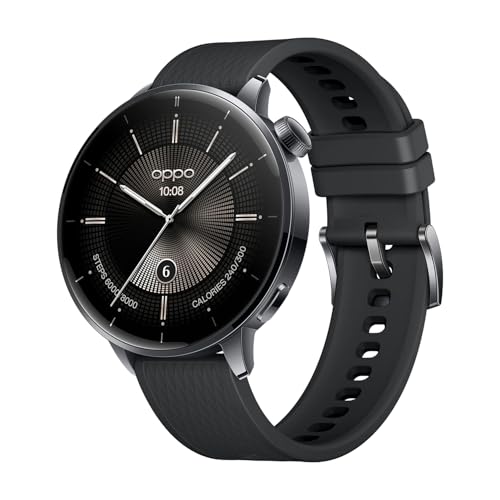
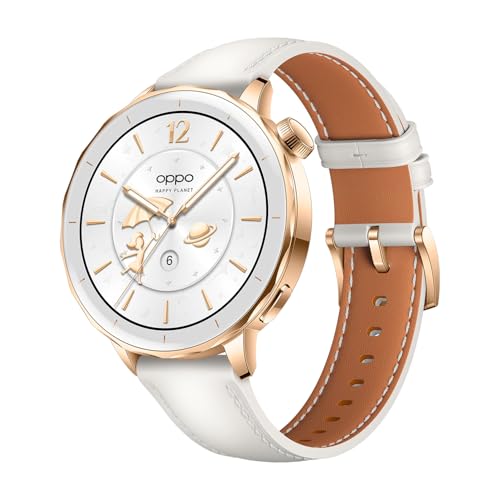
- [shortcode-02980784670505377193043538745156199064230942620113] (Overall score: [shortcode-01894697678640068403079224427759205548252610740080])
- [shortcode-06911943919475909428069752866311279476561797257817] (Overall score: [shortcode-11747660580686619429060886030302974361792032991916])
- [shortcode-17953167705093862446055526406235873396850613024316] (Overall score: [shortcode-03818132956144833454166641227362936356562728089224])
[horizontal-chart-03302773280258034273180208919870815536630019360859]
What are the main advantages of Oppo smartwatches?
The main advantages of Oppo smartwatches are as follows:
- Design and build: Oppo smartwatches have premium materials such as 3D curved glass, aluminum alloy frame, and AMOLED displays with resolutions up to 402 × 476 pixels, which give clear visibility even in sunlight. Models like Oppo Watch 3 Pro include 1.91-inch large screens with high pixel density for sharp details.
- Dual chipset system: Oppo integrates Qualcomm Snapdragon Wear 4100 along with Apollo4s co-processor in models like Watch 3 series, which reduces power consumption and increases performance. The Snapdragon handles demanding apps while the Apollo chip manages basic tasks for higher efficiency.
- Battery performance: Oppo Watch 3 Pro reaches up to 5 days in Smart Mode and up to 15 days in Power Saver Mode. Fast charging gives 24 hours of use in just 10 minutes and full charge takes about 65 minutes, which is strong compared to many rivals.
- eSIM support: Oppo smartwatches include eSIM functionality in several models, which means they can handle calls, SMS, and data independently from a smartphone. This feature is rare in mid-range smartwatches and adds strong connectivity.
- Health tracking: Oppo smartwatches track heart rate, SpO2, sleep, stress levels, and skin temperature in real time. Advanced sensors collect continuous data and show detailed reports through the HeyTap Health app.
- Fitness functions: They include more than 100 sport modes, with auto-detection for running, walking, rowing, and elliptical training. GPS with Beidou, GLONASS, and Galileo support gives accurate outdoor tracking, which is precise even in dense areas.
What are the main disadvantages of Oppo smartwatches?
Oppo smartwatches have the following main disadvantages:
- Limited app support: Oppo smartwatches run on ColorOS Watch in China and Wear OS in global versions, but app availability is still weaker compared to Apple Watch or Samsung Galaxy Watch.
- Software updates: Oppo does not guarantee long-term updates across all models, so software support may stop after 2–3 years, which reduces long-term usability.
- iOS compatibility: Functions are restricted when paired with iPhones, with limitations in notifications and third-party app integration.
- Availability: Oppo smartwatches are not released in all markets, so global buyers often face limited stock, fewer accessories, and reduced warranty support.
- Size and weight: Larger models such as Oppo Watch 3 Pro weigh more than 30 g without the strap and can feel bulky on smaller wrists, which reduces comfort for long-term wear.

Who makes Oppo smartwatches?
Oppo smartwatches are made by Oppo, a Chinese consumer electronics company founded in 2004. The brand is part of BBK Electronics, one of the largest technology groups in the world which also owns Vivo, Realme, and OnePlus. Oppo designs and develops its smartwatches in-house, using its own hardware design teams and ColorOS Watch software.
The company entered the smartwatch market in 2020 with the Oppo Watch, expanding its product range beyond smartphones and audio devices. Oppo employs tens of thousands of people worldwide and operates research centers in China, Japan, and the United States. Its smartwatch production is handled in Oppo’s own facilities and through manufacturing partners in China, where most of its devices are assembled.
How popular are Oppo smartwatches worldwide?
Oppo smartwatches are a minor player worldwide, with shipments in 2024 estimated at around 1–2 million units and a global market share of about 1 %, which kept the brand outside the top 10 vendors. Sales concentrated mainly in China and parts of Southeast Asia, while in Europe and North America Oppo presence remained very limited.
How much do Oppo smartwatches cost?
Oppo smartwatches usually cost about 100-£300 depending on series, connectivity, and feature tier.
Typical prices are around 100-£130 for entry and band-style models, about 150-£220 for mainstream smartwatch options, and roughly 250-£300 for higher-tier versions with stronger build and broader feature sets.
Price differences come mainly from screen class, eSIM support, sensor depth, and platform capabilities.
What are the main Oppo smartwatches series?
The main Oppo smartwatches series are the following:
- Oppo Watch: This was the first smartwatch line launched by Oppo, introduced in 2020. It has a square AMOLED display and comes in different sizes (41 mm and 46 mm). It runs on Wear OS in global versions (ColorOS Watch in China), and it integrates features like eSIM support, heart rate tracking, sleep monitoring, and fast charging with VOOC technology. The design resembles the Apple Watch, with curved edges and interchangeable straps.
- Oppo Watch Free: This series targets users who want a lighter and more affordable smartwatch. It has an elongated rectangular display and focuses on fitness and sleep tracking. It tracks SpO2 levels, heart rate, and has multiple sport modes. The Watch Free is smaller than the main Oppo Watch and does not run Wear OS, so it is less advanced in apps but has longer battery life.
- Oppo Watch 2: This is the successor to the first Oppo Watch and comes with Qualcomm Snapdragon Wear 4100 and Apollo 4s dual-chip architecture. It improves performance, battery efficiency, and fitness functions. It supports eSIM, voice calls, and advanced health monitoring. It runs on ColorOS Watch in China and maintains strong hardware features with up to 16 days of battery life in power-saving mode.
- Oppo Watch 3 series: This line represents the latest generation, built on Snapdragon W5 Gen 1. It has improved efficiency, better battery life, and refined design with an AMOLED display. It supports eSIM connectivity, advanced health sensors, and features like ECG in some versions. It is considered the most advanced Oppo smartwatch family, competing with top models from other brands.
Which smartphones are compatible with Oppo smartwatches?
Oppo smartwatches work with Android smartphones running Android 6.0 and above as well as iPhones with iOS 10.0 or later. The specific models like the OPPO Watch X series require Android 8.0 or higher with GMS version 23.45.23 and above, but these watches do not support iOS or Android Go edition devices.
Most Oppo wearables use standard Bluetooth compatibility and connect to any Android or iOS device through Bluetooth Low Energy 5.0, which means users can pair them with smartphones from various manufacturers including Samsung, OnePlus, Motorola, Google, Xiaomi, and Nokia.