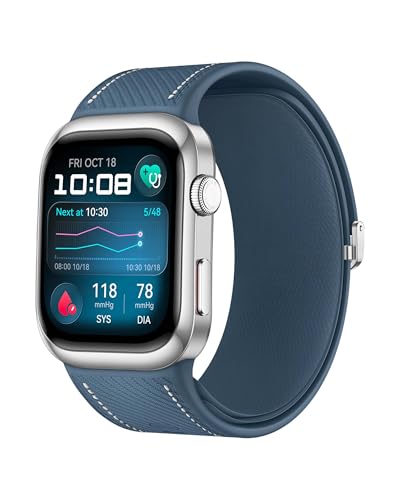
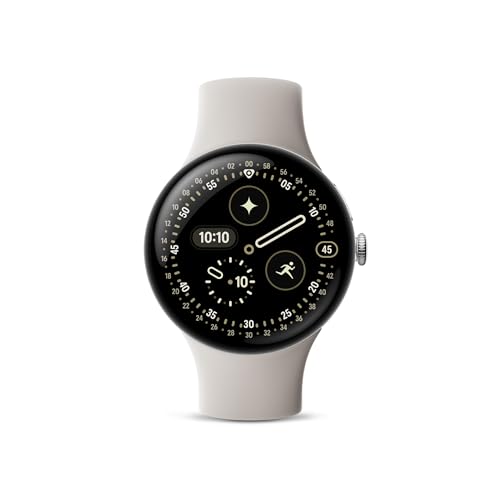
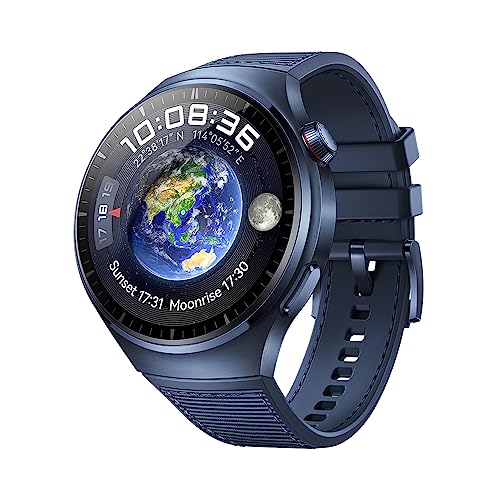
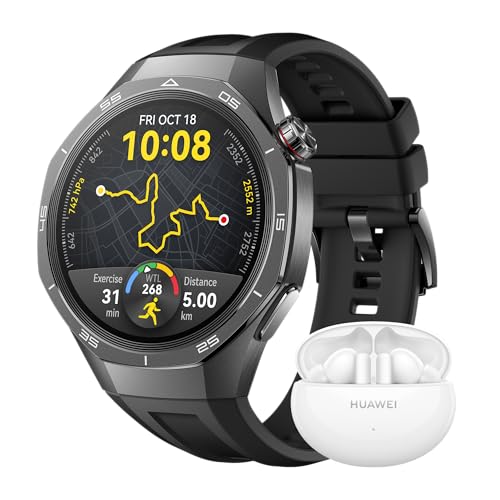
Which smartwatch brands make the best smartwatches with SIM cards?
The best smartwatch brands with SIM card support are as follows:
- [shortcode-15660164963899860213126833059830474810211464860468] (Average overall score: [shortcode-07095872999542935404097618509215560186250517815880])
- [shortcode-03359848977138578588176182810098989577262503061800] (Average overall score: [shortcode-15036300658235279764078226136412585441802154341167])
- [shortcode-14169900939114351412141292833743999376663487733772] (Average overall score: [shortcode-11962032956427100531092542818958999276511751215819])
[horizontal-chart-04467706632100296223008397488101333616353206773218]
How much do smartwatches with SIM card cost?
Smartwatches with SIM card cost anywhere from £45 to over £550 depending on the brand, features, and build quality.
Entry-level models aimed at basic calls and messages usually fall between £45 and £130, while mid-range options with stronger processors, better displays, and longer battery life cost between £130 and £260. Premium models from brands like Apple or Samsung often reach £340 to £550 because they include advanced health tracking, NFC payments, and better LTE connectivity.
Only a smaller share of smartwatches offer built-in cellular support, so LTE and SIM functionality usually push prices upward.
How does a smartwatch with a SIM card work?
A smartwatch with a SIM card works by connecting directly to a mobile network, so it can call, text, and use data without staying near your phone.
With a physical SIM or eSIM profile activated, the watch registers on the carrier just like a phone and can handle standalone communication. Most models still sync with a companion app for contacts, settings, and health data, but core calling and messaging can run independently once cellular service is active.
Can a smartwatch with a SIM card replace a smartphone?
A smartwatch with a SIM card cannot fully replace a smartphone for most users.
It can handle calls, messages, navigation, and basic apps on its own, which is useful for workouts, short trips, or child safety use cases. The trade-off is the smaller screen, lower typing comfort, and more limited multitasking compared with a phone.
For light communication and tracking, it can work as a temporary standalone device. For heavier browsing, media, work apps, and camera use, a smartphone is still necessary.
Can children use smartwatches with SIM cards safely?
Children can use smartwatches with SIM cards safely when parental controls are configured correctly and communication is limited to approved contacts.
Strong child-focused setups usually combine contact whitelists, GPS location sharing, geofencing alerts, and an SOS button. These features reduce risk and let parents respond quickly when a child leaves predefined areas or needs help.
The main risks are unmanaged calling permissions, unexpected data costs, and weak privacy settings. Safety improves significantly when the watch is paired with a restricted plan and app permissions are reviewed from the parent account.
What type of SIM card do smartwatches use?
Smartwatches use either a nano-SIM card or an eSIM profile, depending on the model.
Nano-SIM models require a physical card inserted into the watch tray, while eSIM models are activated digitally through your carrier app or QR setup. Both formats provide the same core result: standalone mobile connectivity for calls, texts, and data without permanent phone tethering.
How do you insert a SIM card into a smartwatch?
You insert a SIM card into a smartwatch by locating the SIM slot and placing the card inside in the correct orientation. Some smartwatches have a small tray on the side that you open with a pin tool, while others keep the SIM slot under the back cover near the battery compartment.
The type of SIM you need depends on your watch (nano-SIM, micro-SIM, or eSIM), so it is best to check your model specifications before you insert it.

After placing the SIM card, you usually press it gently until it clicks into position or slide the tray back into the watch. You then restart the smartwatch so it detects the card and connects to your mobile network.

If your device uses an eSIM instead of a physical card, you do not insert anything; you scan a QR code from your carrier and activate the connection through the watch settings.
What to consider while choosing the best smartwatch with a SIM card?
To choose the best smartwatch with a SIM card, consider the following factors as follows:
- Network and eSIM support: Check carrier compatibility in the country (LTE bands, Number Share/OneNumber support) and confirm eSIM activation with the operator because most cellular watches use eSIM, not physical SIM. Apple Watch Series/Ultra, Samsung Galaxy Watch LTE, Huawei Watch 4/Ultimate, and Google Pixel Watch 2/3 support eSIM on specific carriers and regions.
- Battery life on LTE: Cellular drains batteries faster than Bluetooth or Wi‑Fi, so look for low‑power modes and larger batteries if frequent standalone use is needed. Apple cites roughly a day to day‑and‑a‑half with heavier LTE use on Watch Series/Ultra, while HarmonyOS models from Huawei often stretch multi‑day endurance with LTE used sparingly.
- Operating system and ecosystem: Match OS to the phone platform for full features (watchOS with iPhone, Wear OS with Android and partial iOS support, HarmonyOS best with Huawei/Android). watchOS integrates tightly with iOS apps and services, Wear OS brings Google apps and broad brand choice, and HarmonyOS favors efficiency but has limited global app availability.
- Health, safety, and sensors: Look for ECG, SpO2, fall detection, SOS, GPS/GNSS accuracy, and reliable HR tracking because cellular adds value for safety features when out without a phone. Apple Watch Series/Ultra lead on regulated features, Wear OS models integrate Fitbit/Google Health metrics, and Huawei focuses on long battery and broad health tracking.
- Durability and water resistance: Target at least 5 ATM or IP68 for swimming and dust resistance, and consider MIL‑STD‑810G/H for shock and temperature resilience. Sapphire crystal and titanium or stainless steel cases improve scratch and impact resistance on models like Apple Watch Ultra, Samsung Galaxy Watch (5ATM + IP68 + MIL‑STD‑810), and Huawei Watch Ultimate.
- Connectivity and hardware: Verify LTE Cat level, dual‑band GNSS, NFC for payments, Wi‑Fi, Bluetooth stability, and enough storage/RAM for apps and music. Samsung Galaxy Watch LTE specs list LTE, NFC, Wi‑Fi, and MIL‑STD durability, while Wear OS watches rely on Google Play apps and Spotify/Strava support.