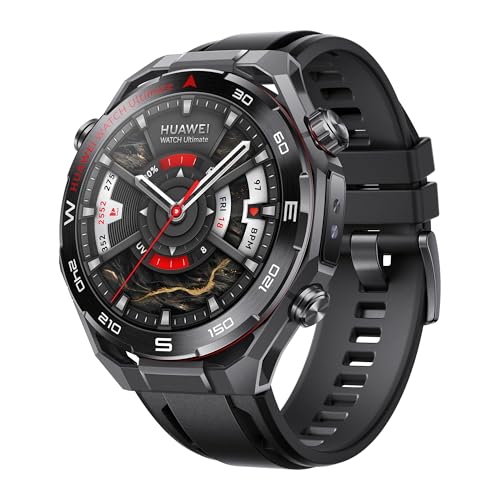
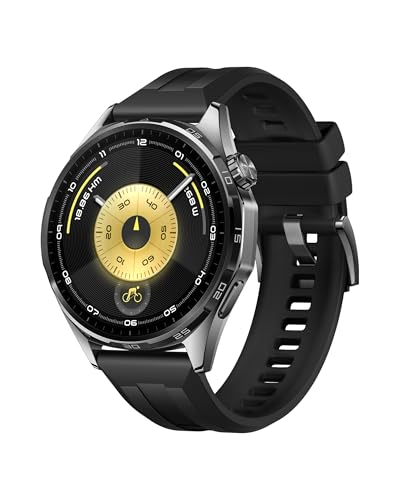
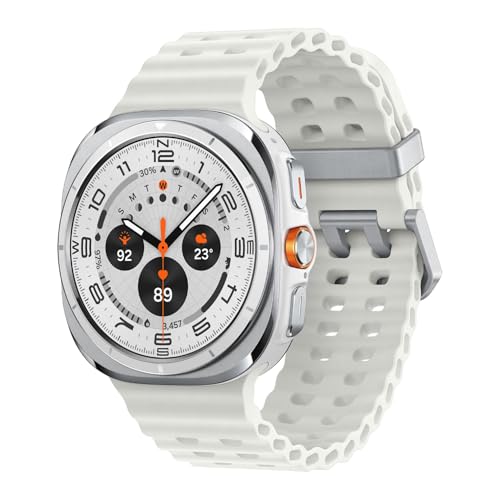
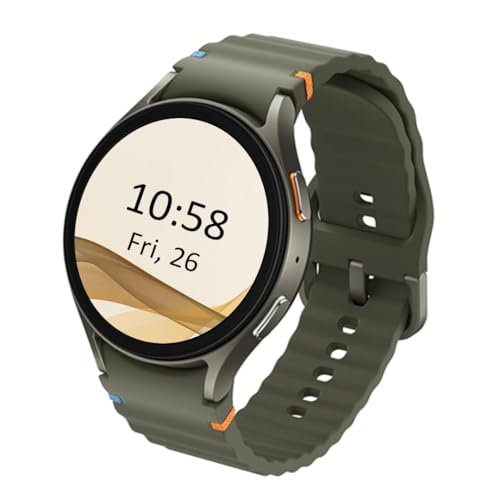
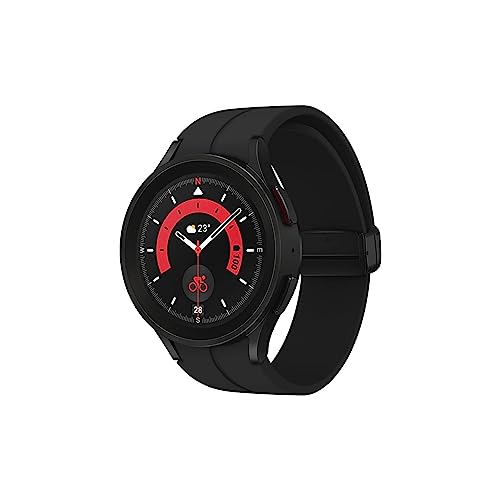
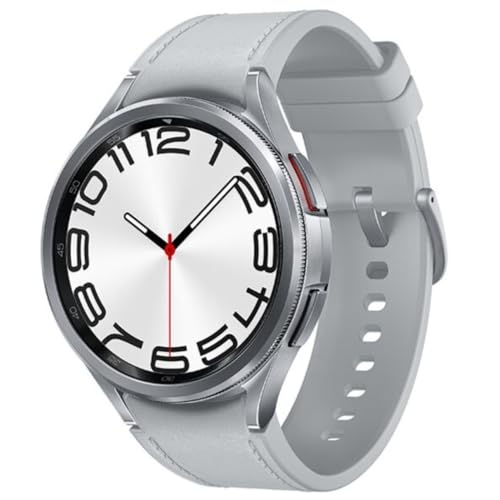
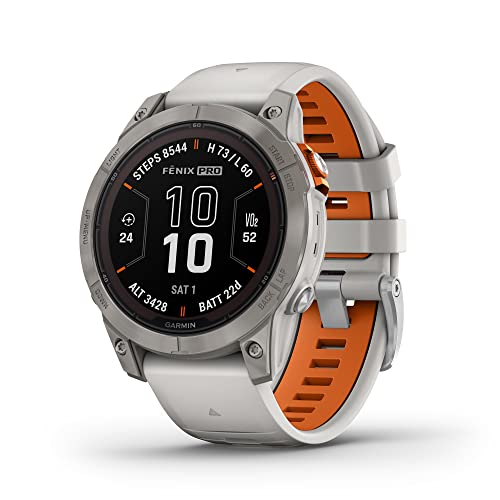
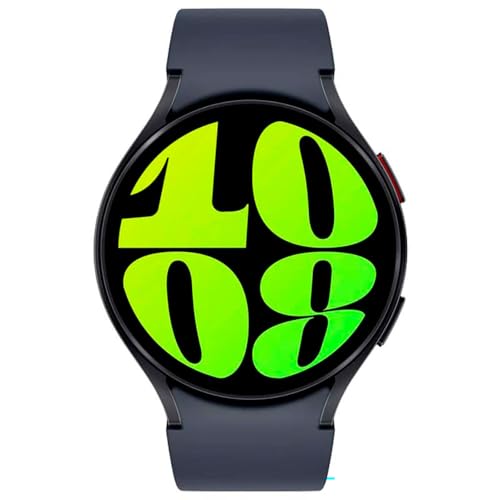
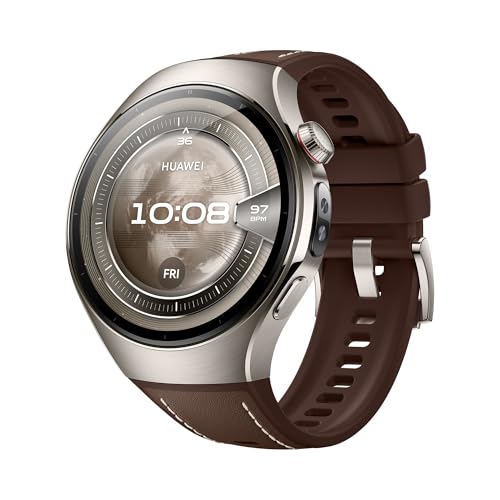
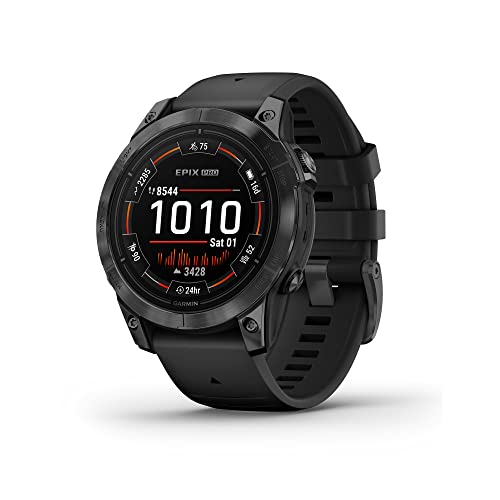
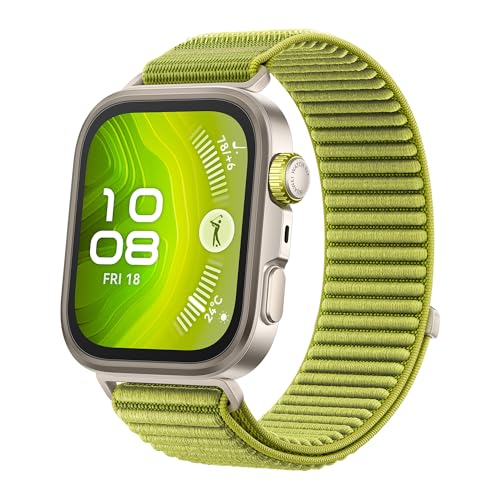
Which brands make the best rugged smartwatches?
The best rugged smartwatch brands are as follows:
- [shortcode-00903406282518077324054171549418819001562682704070] (Average overall score: [shortcode-04668580913691095267102713012866401766902524710175])
- [shortcode-01973926862696089076077794096593426622323450842694] (Average overall score: [shortcode-12176163254019069808173968485385128024971469595128])
- [shortcode-06579816028863636777000498758160174952862634068244] (Average overall score: [shortcode-15506779170057542531099076624485789110232069237606])
[horizontal-chart-14513387603531303477158740508593099667042095026852]
How much do the best rugged smartwatches cost?
Most rugged smartwatches cost about 100-£430. Better premium outdoor models can cost above 500-£600.
Typical prices are around 100-£220 for simpler rugged models with basic durability and long battery life, about 250-£430 for stronger all-round outdoor watches with better GPS and sensor depth, and above 500-£600 for premium adventure models with mapping, sapphire glass, and higher-end materials.
Price differences mainly come from case materials, battery capacity, mapping capabilities, and sensor depth. For most outdoor users, the 250-£430 range is the practical value zone.
What is a rugged smartwatch?
A rugged smartwatch is a smartwatch built with extra durability that withstands harsh conditions such as water, dust, shock, and extreme temperatures. You can use it outdoors without worry since most models come with military-grade certifications (MIL-STD-810G) and a high level of water resistance like 5 ATM or higher. These watches often have reinforced cases, scratch-resistant glass, and stronger straps that handle daily wear in tough environments.
You can expect rugged smartwatches to include health and fitness tracking, GPS navigation, and long battery life, which is useful if you spend time hiking, climbing, or working in remote areas. Some models also include barometers, altimeters, and advanced navigation tools that give you reliable data when you move off the grid.
Rugged designs remain a smaller but important segment of the smartwatch market, centered on outdoor, adventure, and work-oriented use.
Are rugged smartwatches waterproof?
Rugged smartwatches are waterproof, but the level of protection depends on the model and its rating. Most devices use an IP certification or an ATM rating, which tells you how well the watch resists water and dust. An IP68 watch can handle dust and submersion in water for a limited time, while a 5 ATM rating means the watch can resist water pressure up to 50 meters. Some models go further with 10 ATM resistance, which suits swimming or snorkeling.
You can use a rugged smartwatch in the rain, while washing your hands, or during water sports, but you should always check the rating because not all watches withstand the same depth or pressure. For example, a watch with 3 ATM resistance can handle splashes but not swimming, while one with 10 ATM resistance works well for diving in shallow water.
How long does the battery last on a rugged smartwatch?
Battery life on rugged smartwatches is usually longer than on mainstream smartwatches because these models prioritize endurance.
In practical use, many rugged models provide about 5-20 days in regular smartwatch mode, while high-end endurance models can run longer with conservative settings. With heavy GPS usage, battery life drops significantly, often into roughly 20-40 hours depending on tracking mode and signal conditions.
If long expeditions are your priority, compare both smartwatch-mode and GPS-mode figures before buying.
What to consider while choosing the best rugged smartwatch?
When you choose the best rugged smartwatch for your needs, you should consider the following key specifications and features.

- Durability standards and build: Look for MIL-STD-810G/H test claims for shock, vibration, thermal, and humidity resistance, and match this with robust materials like titanium, stainless steel, reinforced polymer, or carbon composite for structural strength and corrosion resistance (e.g., Garmin Instinct series uses fiber-reinforced polymer, Apple Watch Ultra uses aerospace titanium with sapphire crystal).
- Water and dust resistance: Check ATM or meter ratings for depth use cases (5 ATM for pool swimming, 10 ATM/100 m for snorkeling and watersports) and IP6X for dust, which watches like Apple Watch Ultra list alongside 100 m water resistance and EN13319-style dive readiness to 40 m.
- Battery life: Verify real-world endurance in smartwatch and GPS modes, and consider solar charging variants for multi-week use in sunlight (e.g., Garmin Instinct 2 Solar can extend to very long smartwatch uptime, Casio G-Shock solar models target indefinite daily use under light).
- GNSS accuracy and sensors: Prefer dual-frequency/multi-band GPS with support for multiple constellations (GPS, GLONASS, Galileo, QZSS, BeiDou) for better lock under canopy and canyons, and look for barometer, compass, altimeter, thermometer, and depth sensors as relevant (Apple Watch Ultra lists L1+L5 and a depth gauge, some rugged budget models advertise dual-frequency GPS).
- Display protection: Prioritize sapphire crystal or chemically strengthened glass for scratch resistance, and check for high brightness or sunlight-readable displays for outdoor visibility (Apple Watch Ultra uses a flat sapphire front crystal with a protective case lip, Garmin Instinct uses Corning Gorilla Glass with high-contrast monochrome).
- Controls and usability in harsh conditions: Favor large tactile buttons, glove-friendly operation, and rugged strap systems that resist snag and moisture (Apple Watch Ultra adds an Action button and ruggedized bands like Alpine/Ocean, Garmin Instinct uses pronounced buttons and secure polymer lugs).
- Ecosystem and feature set: Match endurance features with required smart and training functions such as SOS, dive features, mapping support, or advanced training metrics (Apple Watch Ultra includes SOS, siren, and dive to 40 m with IP6X dust resistance, while Garmin Instinct prioritizes outdoor metrics and long battery with fewer app-centric functions).