Scored using Smartwatches Methodology v3.0
Smartwatches Methodology v3.0
Mathematical & Unbiased Scoring
Products in this category are scored under Frontum Smartwatches Methodology v3.0: the technical score from the specifications is the base, and independent expert and video reviews (up to ±0.5 points), owner opinions (up to ±0.3) and best-of lists (up to +0.3) move it up or down.
Explore Smartwatches Methodology v3.0

Oppo Watch 3 Pro review: 127 specs compared

Avg. price:~£240Screen size:1.91 inchBattery life:5 daysDisplay type:AMOLED

Oppo Watch 3 Pro Review: Compare 127 technical specifications and 5 expert and video reviews to see how this product ranks in the Smartwatches category and whether it is worth buying.
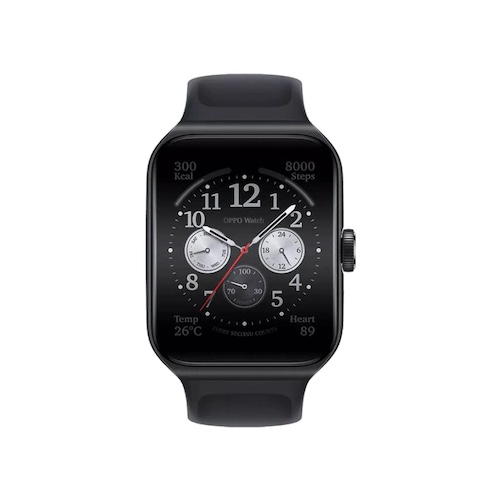
Oppo Watch 3 Pro
7.8/10

Overall score

Score
7.8/ 10
✕
What it is
Our main score for this model, 1–10. It combines specs, best-of lists, expert reviews and owners.
How we count it
Parts: Technical score 35%, List score 30%, Reviews score 25%, Sentiment score 10%
Marks: Each part gets a mark out of 10. For reviews, lists and owners, a typical model in this category gets about 8 and the best one gets 10.
No data yet: A part with no data shows "?". It counts as the mark of a weaker model in this category (4 in 5 models with data score higher). This way, models with reviews, lists and owners usually come out ahead.
Score distribution
â–¼
<55-66-77-88-99-10
Score components

35%

8.4

Technical score

30%

?

List scoreNot enough data yet, so we use 7.5, the mark of a weaker model in this category

25%

7.5

Reviews score

10%

7.4

Sentiment score

â–²Better than 76% of smartwatches
8.2

Value for money

Value for money
8.2/ 10
✕
What it is
An indicator that combines the smartwatch's overall rating with its cost.
When it matters
When you are looking for a smartwatch with a good balance between quality and price.
Score distribution
â–¼
<55-66-77-88-99-10
Score components

70%

7.8

Overall score

30%

9.3

Price

â–²Better than 70%
8.4

Technical score

Technical score
8.4/ 10
✕
What it is
How good the specs are compared with the other models in this category, 1–10.
How we count it
Areas: We rate the specs in each area against the other models in this category.
Weighting: The areas that matter most to buyers count more. The shares are shown under Score components.
Share: The technical score is 35% of the overall score.
Score distribution
â–¼
<55-66-77-88-99-10
Score components

24%

8.7

Health

21%

8.8

Fitness

16%

7.6

Battery

14%

8.7

Smart features

12%

8.6

Connectivity

9%

7.6

Display & Design

4%

8.4

Hardware

★Better than 94%
7.5

Reviews score

Reviews score
7.5/ 10
✕
What it is
Average grade from independent test sites, magazines and video reviewers, 1–10.
How we count it
Grades: Each review's own score is converted to 1–10; without one, we grade the review ourselves. Every review counts the same: written or video, short or full test.
Score: The average grade is 80% of the review mark; the number of reviews is the other 20% (1 review = 5, the typical number in this category = 8, the most-reviewed model = 10).
Enough data: With few reviews, the average grade is pulled toward the typical grade of this category. No reviews yet: 7.4 for now.
Share: Reviews count 25% of the overall score.
Score distribution
â–¼
<55-66-77-88-99-10

80%

7.7

Average grade

20%

6.6

Popularity

Grades by review (5)
1 review + 4 videos, average 7.4/10. Reviews count 25% of the overall score.
User ratings collected online are not part of this score.
â–¼Worse than 54%
?

List score

List score
7.5/ 10
✕
What it is
How often independent test sites, magazines and video reviewers put this model in their best-of lists for this category.
How we count it
Points: The model in the most lists of this category gets 10; the others get 8 to 10 in proportion. In no list yet: 7.5. Lists count 30% of the overall score.
Enough data: Every list counts, even a single one. With fewer than 5 best-of lists in the category, this part is left out.
Lists with this model (0)
Not in any best-of list yet, so this part counts as 7.5. Models in a list get 8 to 10.
Not in any best-of list yet

What reviewers say about the Oppo Watch 3 Pro

Based on 0 · 3

Reviewers mostly like the battery life, but most are let down by health tracking that doesn't measure up.
Praised
Criticised
Pick a topic to see who said what
Loading...
Loading category ranking...

Technical Specifications of smartwatch Oppo Watch 3 Pro

Technical score
Technical score
8.4/ 10
✕
What it is
How good the specs are compared with the other models in this category, 1–10.
How we count it
Areas: We rate the specs in each area against the other models in this category.
Weighting: The areas that matter most to buyers count more. The shares are shown under Score components.
Share: The technical score is 35% of the overall score.
Score distribution
â–¼
<55-66-77-88-99-10
Score components:

24%

8.7

Health

21%

8.8

Fitness

16%

7.6

Battery

14%

8.7

Smart features

12%

8.6

Connectivity

9%

7.6

Display & Design

4%

8.4

Hardware

8.4
Reviews score
7.5
List score
?
Value for money
Value for money
8.2/ 10
✕
What it is
An indicator that combines the smartwatch's overall rating with its cost.
When it matters
When you are looking for a smartwatch with a good balance between quality and price.
Score distribution
â–¼
<55-66-77-88-99-10
Score components:

70%

7.8

Overall score

30%

9.3

Price

8.2
Heart rate monitor
yes
This smartwatch includes a heart rate monitor. 9.5% of smartwatches include a heart rate monitor.
Blood oxygen monitoring
yes
This smartwatch supports blood oxygen monitoring. 30.4% of smartwatches support blood oxygen monitoring.
ECG
yes
This smartwatch supports ECG. 82.1% of smartwatches support ECG.
Irregular heart rate warnings
yes
This smartwatch supports irregular heart rate warnings. 49.5% of smartwatches support irregular heart rate warnings.
HRV tracking
yes
This smartwatch supports HRV tracking. 54.9% of smartwatches support HRV tracking.
Show more
What reviewers say
Accelerometer
yes
This smartwatch includes an accelerometer. 0.5% of smartwatches include an accelerometer.
Barometer
yes
This smartwatch includes a barometer. 46.5% of smartwatches include a barometer.
Gyroscope
yes
This smartwatch includes a gyroscope. 28.9% of smartwatches include a gyroscope.
Cadence sensor
no
This smartwatch does not include a cadence sensor. 32.9% of smartwatches include a cadence sensor.
Distance tracking
yes
This smartwatch supports distance tracking. 3.7% of smartwatches support distance tracking.
Show more
Battery life
5 days
This smartwatch lasts 5 days on a charge, which is shorter than 65.9% of Smartwatches and the same as 6.1% of Smartwatches.
Battery life in training mode
60 h
This smartwatch records workouts for 60 h on a charge, which is longer than 94.4% of Smartwatches and the same as 1.3% of Smartwatches.
Battery life with GPS on
66 h
This smartwatch lasts 66 h with GPS on, which is longer than 99% of Smartwatches.
60 (in training mode.
Battery power
475 mAh
This smartwatch has a 475 mAh battery, which is larger than 86.4% of Smartwatches and the same as 0.5% of Smartwatches.
Charge time
65 min
This smartwatch charges from empty in 65 min, which is quicker than 82.3% of Smartwatches and the same as 1% of Smartwatches.
Show more
What reviewers say
Operating system
ColorOS Watch
This smartwatch runs ColorOS Watch, which is less advanced than the system in 97.7% of Smartwatches and equal to 0.8% of Smartwatches.
Software update frequency
regular
This smartwatch has regular software update support which is more active than that of 94.4% of smartwatches and equal to that of 5.6% of smartwatches.
Updates are released regularly throughout the year.
Third-party app support
yes
This smartwatch supports third-party apps. 48.5% of smartwatches support third-party apps.
Notifications
yes
This smartwatch supports notifications. 0.3% of smartwatches support notifications.
Voice assistant support
yes
This smartwatch supports voice assistants. 30.8% of smartwatches support voice assistants.
Assistant varies by region/version.
Show more
Cellular module
yes
This smartwatch includes a cellular module. 83.5% of smartwatches include a cellular module.
SIM cards
1
This smartwatch uses 1 for cellular connectivity which is more advanced than that of 2% of smartwatches and the same as that of 98% of smartwatches.
eSIM on LTE version only.
GPS
yes
This smartwatch supports GPS. 40.3% of smartwatches support GPS.
Galileo support
yes
This smartwatch supports Galileo navigation. 56.5% of smartwatches support Galileo navigation.
Dual-frequency GPS
?
Show more
Screen size
1.91 inch
This smartwatch has a 1.91 inch screen, which is larger than 93.1% of Smartwatches and the same as 1.8% of Smartwatches.
Display type
AMOLED
This smartwatch uses AMOLED, which is more advanced than the screen in 46.9% of Smartwatches and equal to 53.1% of Smartwatches.
LTPO panel wording.
Resolution
378x 496
This smartwatch has a display resolution of 378x496 which is higher than that of 56.6% of smartwatches and equal to that of 0.1% of smartwatches.
Pixel density
327 ppi
This smartwatch has a pixel density of 327 ppi, which is higher than 53.8% of Smartwatches and equal to 1.1% of Smartwatches.
Display brightness
1,000 nit
This smartwatch has a screen brightness of 1,000 nits, which is higher than 53.5% of Smartwatches and equal to 27% of Smartwatches.
Show more
CPU speed
4x 1.7 GHz
This smartwatch uses a CPU configuration of 4x1.7 GHz which is faster than that in 89.6% of smartwatches and equal to that in 8.5% of smartwatches.
Processor model
Snapdragon W5 Gen 1
This smartwatch uses the Snapdragon W5 Gen 1 processor model.
RAM
1 GB
This smartwatch has 1 GB of RAM, which is more than 34.1% of Smartwatches and equal to 41.8% of Smartwatches.
Internal storage
32 GB
This smartwatch has 32 GB of internal storage, which is more than 81.3% of Smartwatches and equal to 15% of Smartwatches.
External memory slot
no
This smartwatch does not include an external memory slot. 0.3% of smartwatches include an external memory slot.
Show more

Oppo Watch 3 Pro vs the average smartwatch

246810TotalHealthFitnessBatteryConnectivityDisplay & DesignSmart featuresHardware
  • ECG support
    This smartwatch supports ECG, the average smartwatch does not. 18% of smartwatches support ECG.
  • More frequent updates
    This smartwatch receives regular software updates, while the average smartwatch receives ended updates.
    Updates are released regularly throughout the year.
    regular vs ended
  • 45 h longer GPS battery life
    This smartwatch lasts longer with GPS on than the average smartwatch (66 h vs 21 h). The average smartwatch lasts 21 h with GPS on.
    60 (in training mode.
    66 h vs 21 h
  • Blood pressure monitoring
    This smartwatch supports blood pressure monitoring, the average smartwatch does not. 21.6% of smartwatches support blood pressure monitoring.
  • 40 h longer training battery life
    This smartwatch lasts longer in training mode than the average smartwatch (60 h vs 20 h). The average smartwatch lasts 20 h in training mode.
    60 h vs 20 h
  • Temperature sensing
    This smartwatch includes a temperature sensor, the average smartwatch does not. 31.9% of smartwatches include a temperature sensor.
  • 55 min quicker charging
    This smartwatch charges faster than the average smartwatch (65 min vs 120 min). The average smartwatch takes 120 min to charge from empty.
    65 min vs 120 min
  • Built-in cellular module
    This smartwatch includes a cellular module, the average smartwatch does not. 16.6% of smartwatches include a cellular module.
  • 7.1% higher review score
    Reviews score
    7.5/ 10
    ✕
    What it is
    Average grade from independent test sites, magazines and video reviewers, 1–10.
    How we count it
    Grades: Each review's own score is converted to 1–10; without one, we grade the review ourselves. Every review counts the same: written or video, short or full test.
    Score: The average grade is 80% of the review mark; the number of reviews is the other 20% (1 review = 5, the typical number in this category = 8, the most-reviewed model = 10).
    Enough data: With few reviews, the average grade is pulled toward the typical grade of this category. No reviews yet: 7.4 for now.
    Share: Reviews count 25% of the overall score.
    Score distribution
    â–¼
    <55-66-77-88-99-10

    80%

    7.7

    Average grade

    20%

    6.6

    Popularity

    Grades by review (5)
    1 review + 4 videos, average 7.4/10. Reviews count 25% of the overall score.
    User ratings collected online are not part of this score.
    7.5 vs 7.0
  • ECG support
    This smartwatch supports ECG, the average smartwatch does not. 18% of smartwatches support ECG.
  • Blood pressure monitoring
    This smartwatch supports blood pressure monitoring, the average smartwatch does not. 21.6% of smartwatches support blood pressure monitoring.
  • Temperature sensing
    This smartwatch includes a temperature sensor, the average smartwatch does not. 31.9% of smartwatches include a temperature sensor.
  • HRV tracking
    This smartwatch supports HRV tracking, the average smartwatch does not. 45.2% of smartwatches support HRV tracking.
  • 45 h longer GPS battery life
    This smartwatch lasts longer with GPS on than the average smartwatch (66 h vs 21 h). The average smartwatch lasts 21 h with GPS on.
    60 (in training mode.
    66 h vs 21 h
  • 40 h longer training battery life
    This smartwatch lasts longer in training mode than the average smartwatch (60 h vs 20 h). The average smartwatch lasts 20 h in training mode.
    60 h vs 20 h
  • 55 min quicker charging
    This smartwatch charges faster than the average smartwatch (65 min vs 120 min). The average smartwatch takes 120 min to charge from empty.
    65 min vs 120 min
  • 170 mAh larger battery capacity
    This smartwatch has a larger battery than the average smartwatch (475 mAh vs 305 mAh). The average smartwatch has a 305 mAh battery.
    475 mAh vs 305 mAh
  • Built-in cellular module
    This smartwatch includes a cellular module, the average smartwatch does not. 16.6% of smartwatches include a cellular module.
  • Maps support
    This smartwatch supports maps, the average smartwatch does not. 34.4% of smartwatches support maps.
    Maps via Google Maps app.
  • NFC functionality
    This smartwatch supports NFC, the average smartwatch does not. 45.6% of smartwatches support NFC.
  • Galileo satellite support
    This smartwatch supports Galileo navigation, the average smartwatch does not. 43.6% of smartwatches support Galileo navigation.
  • 0.51 inch larger display
    This smartwatch has a larger screen than the average smartwatch (1.9 inch vs 1.4 inch). The average smartwatch has a 1.4 inch screen.
    1.91 inch vs 1.4 inch
  • Better band material
    This smartwatch uses silicone, leather for the band material, while the average smartwatch uses silicone.
    silicone, leather vs silicone
  • 7.5 g lighter
    This smartwatch is lighter than the average smartwatch (37.5 g vs 45 g). The average smartwatch weighs 45.0 g.
    Weight refers to watch case without strap/band.
    37.5 g vs 45.0 g
  • 250 nits brighter screen
    This smartwatch has a brighter screen than the average smartwatch (1,000 nits vs 750 nits). The average smartwatch peaks at 750 nits.
    1,000 nits vs 750 nits
  • More frequent updates
    This smartwatch receives regular software updates, while the average smartwatch receives ended updates.
    Updates are released regularly throughout the year.
    regular vs ended
  • Fall detection
    This smartwatch supports fall detection, the average smartwatch does not. 20.7% of smartwatches support fall detection.
  • Emergency SOS
    This smartwatch includes Emergency SOS, the average smartwatch does not. 44.8% of smartwatches include Emergency SOS.
  • 8x more internal storage
    This smartwatch has more internal storage than the average smartwatch (32 GB vs 4 GB). The average smartwatch has 4 GB of internal storage.
    32 GB vs 4 GB
  • More advanced processor model
    This smartwatch uses the Snapdragon W5 Gen 1 processor model, while the average smartwatch uses Silicon Labs EFM32 Giant Gecko.
    Snapdragon W5 Gen 1 vs Silicon Labs EFM32 Giant Gecko
  • Faster CPU speed
    This smartwatch uses a CPU configuration of 4x1.7 GHz, while the average smartwatch uses 1 GHz.
    4x1.7 GHz vs 1 GHz
  • No auto-pause
    This smartwatch does not support auto pause, the average smartwatch does. 62.6% of smartwatches support auto pause.
  • Basic battery type
    This smartwatch uses a Li-ion battery, while the average smartwatch uses Li-Po.
    Li-ion vs Li-Po
  • 2 days shorter battery life
    This smartwatch runs for less time per charge than the average smartwatch (5 days vs 7 days). The average smartwatch runs for 7 days on a charge.
    5 days vs 7 days
  • More basic operating system
    This smartwatch runs a more basic operating system than the average smartwatch (ColorOS Watch vs Proprietary OS).
    ColorOS Watch vs Proprietary OS
  • 1.1 mm thicker
    This smartwatch is thicker than the average smartwatch (12.8 mm vs 11.7 mm). The average smartwatch is 11.7 mm thick.
    12.80 mm vs 11.7 mm
  • Less practical form
    This smartwatch uses a rectangular form, while the average smartwatch uses round.
    rectangular vs round
  • 2.18x more expensive
    Oppo Watch 3 Pro is more expensive than the average smartwatch (£240 vs £110).
    £240 vs £110
  • 5.4 mm taller case
    This smartwatch has a taller case than the average smartwatch (50.4 mm vs 45 mm). The average smartwatch is 45.0 mm tall.
    50.4 mm vs 45.0 mm
  • 2.18x more expensive
    Oppo Watch 3 Pro is more expensive than the average smartwatch (£240 vs £110).
    £240 vs £110
  • No auto-pause
    This smartwatch does not support auto pause, the average smartwatch does. 62.6% of smartwatches support auto pause.
  • Basic battery type
    This smartwatch uses a Li-ion battery, while the average smartwatch uses Li-Po.
    Li-ion vs Li-Po
  • 2 days shorter battery life
    This smartwatch runs for less time per charge than the average smartwatch (5 days vs 7 days). The average smartwatch runs for 7 days on a charge.
    5 days vs 7 days
  • 1.1 mm thicker
    This smartwatch is thicker than the average smartwatch (12.8 mm vs 11.7 mm). The average smartwatch is 11.7 mm thick.
    12.80 mm vs 11.7 mm
  • Less practical form
    This smartwatch uses a rectangular form, while the average smartwatch uses round.
    rectangular vs round
  • 5.4 mm taller case
    This smartwatch has a taller case than the average smartwatch (50.4 mm vs 45 mm). The average smartwatch is 45.0 mm tall.
    50.4 mm vs 45.0 mm
  • More basic operating system
    This smartwatch runs a more basic operating system than the average smartwatch (ColorOS Watch vs Proprietary OS).
    ColorOS Watch vs Proprietary OS

Video reviews

Hands-on testing, unboxing, and real-world video evaluations
8.0
MinistryTech
≈ estimated
07/10/2022
Hands-on review · five days of battery and health tests
Verdict
Oppo Watch 3 Pro has impressive battery life, though its wide bezel, strong vibration and iPhone notification sync are drawbacks.
6.0
gizmochina
≈ estimated
30/09/2022
Hands-on review · software, features and China availability
Verdict
Oppo Watch 3 Pro is a versatile Android watch, but many features only work in China, so wait before buying abroad.
7.0
Pandaily
≈ estimated
15/09/2022
Hands-on review · setup, health tests and daily use
Verdict
Oppo Watch 3 Pro is a good watch with a curved design, but missing ECG and a painful Wi-Fi setup hold it back.
8.0
DK2D
≈ estimated
15/09/2022
Unboxing and hands-on review · setup, apps and payments
Verdict
Oppo Watch 3 Pro is well built and good value, but Chinese-only apps, payments and ECG limit it outside China.
Hands-on video, no verdict
Not graded
Not graded
Not graded
Not graded
Not graded

Third-party reviews

What customers like about Oppo Watch 3 Pro

  • Impressive 5-day battery life in smart mode, significantly outperforming many rivals.
  • Large 1.91-inch LTPO AMOLED curved display with high resolution and excellent brightness.
  • VOOC Flash Charging provides a full day of use from just 10 minutes of charging.
  • Premium build quality featuring a digital crown with haptic feedback and a stainless steel frame.
  • Comprehensive health tracking including heart rate, SpO2, and the addition of ECG monitoring.
  • Support for standalone eSIM connectivity for calls and mobile data.

What customers don't like about Oppo Watch 3 Pro

  • Large and heavy physical profile (48.5mm size) may be uncomfortable for users with smaller wrists.
  • Limited global software support as the current version is primarily marketed for China and lacks Google Play/Wear OS.
  • Proprietary strap connectors limit third-party band options and are incompatible with previous generations.
  • Auto-workout detection for activities like cycling can occasionally be unreliable.
  • Lack of independent SMS support through eSIM functionality in certain configurations.

Verdict

The Oppo Watch 3 Pro is a flagship smartwatch featuring a 1.91-inch LTPO curved AMOLED display with a 378 x 496 resolution and a smooth 60Hz refresh rate. It is powered by the dual-chip Snapdragon W5 Gen 1 and Apollo 4 Plus architecture, supported by 1GB of RAM and 32GB of storage. Key characteristics include standalone eSIM connectivity, 5ATM water resistance, and a comprehensive health suite including ECG, continuous SpO2, and vascular health monitoring. Its main pros are the efficient LTPO screen that enables a 5-day battery life in 'Full Smart' mode (extending to 15 days in 'Light' mode) and fast VOOC charging that provides a full day of use in 10 minutes. However, notable cons include its large 50.4mm chassis which may be bulky for smaller wrists, the lack of a global release with standard Wear OS (primarily using ColorOS Watch in China), and limited compatibility with older watch straps.

Compare Oppo Watch 3 Pro with other Smartwatches

1Product to compare no. 1
VS
2Product to compare no. 2
VS
3Product to compare no. 3 (optional)

Graphic comparison of Oppo Watch 3 Pro and other Smartwatches

No results found