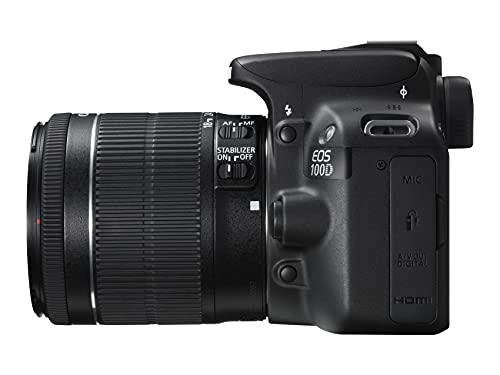
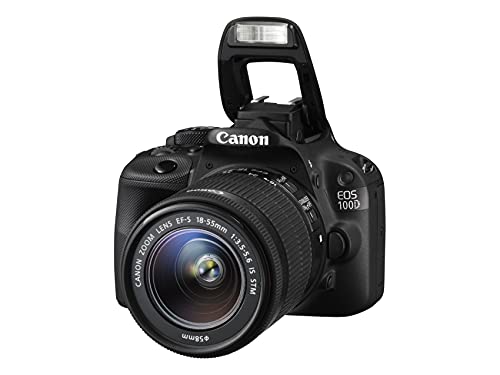
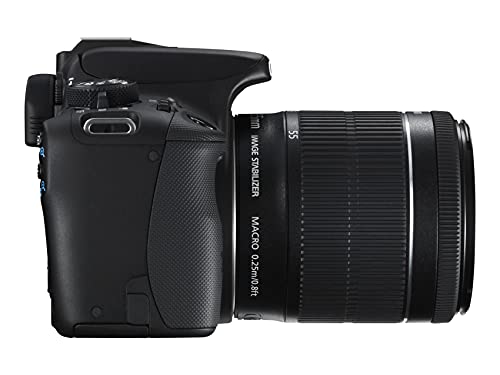
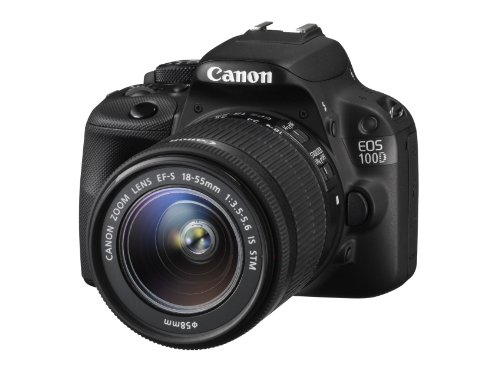
Canon EOS 100D review. Compare 108 technical specifications and user reviews to see how it ranks among cameras and if it is worth buying.
Overall score
What it is: An overall evaluation of the camera's quality, based on technical analyses and user reviews.
When it matters: When you need a quick reference to identify the best cameras on the market.
Score components:
90.0%
Technical Score
10.0%
User score
Technical Score
What it is: An assessment of the camera's technical performance, covering eight key areas: image quality, autofocus, video features, stabilization, lens compatibility, connectivity, battery, and design.
When it matters: When you want to compare cameras based on technical performance and available features.
Score components:
28.0%
Sensor & Image
25.0%
Photo Features
18.0%
Video & Audio
14.0%
Display & Design
8.0%
Battery & Power
7.0%
Connectivity & Storage
User score
What it is: A rating that combines user reviews and the total number of reviews received by the camera.
When it matters: When real-world owner satisfaction and review volume matter to your decision.
Score components:
70.0%
User reviews
30.0%
Popularity
Score components:
25.0%
Sensor size
20.0%
Main camera megapixels
20.0%
Dual card slots
15.0%
N. of focus points
10.0%
RAW photo capture
10.0%
Phase-detection autofocus (photos)
Score components:
35.0%
Weight
30.0%
Battery life (CIPA)
20.0%
Sensor-shift stabilization
15.0%
GPS
Score components:
30.0%
Price
20.0%
Weight
20.0%
AF tracking
20.0%
Battery life (CIPA)
10.0%
Touchscreen
Score components:
30.0%
Main camera megapixels
25.0%
Sensor size
20.0%
Main camera pixel size
15.0%
Sensor-shift stabilization
10.0%
RAW photo capture
Score components:
30.0%
Weight
25.0%
Thickness
20.0%
AF low-light sensitivity
15.0%
Sensor-shift stabilization
10.0%
Eye detection AF (human)
Score components:
30.0%
Sensor size
25.0%
Main camera pixel size
20.0%
Eye detection AF (human)
15.0%
Main camera megapixels
10.0%
Sensor-shift stabilization
Score components:
30.0%
Weight
25.0%
Battery life (CIPA)
20.0%
Min operating temperature
15.0%
Sensor-shift stabilization
10.0%
GPS
Available: ranking among products currently available (including other versions of this product).
All: ranking among all products in the database.
#8 in Best Cheap Cameras
#8 in Best Cheap DSLR Cameras
#11 in Best DSLRs for Beginners
#13 in Best Cameras under £1000
#15 in Best Canon DSLR Cameras
#29 in Best Cameras under £500
#37 in Best Canon EOS Cameras
#39 in Best Canon Digital Cameras
#40 in Best DSLR Cameras
#40 in Best SLR Cameras
#55 in Best Cameras for Beginners
#55 in Best Cameras under £200
#94 in Best Cameras under £300
#153 in Best Cameras
What it is: An assessment of the camera's technical performance, covering eight key areas: image quality, autofocus, video features, stabilization, lens compatibility, connectivity, battery, and design.
When it matters: When you want to compare cameras based on technical performance and available features.
Score components:
28.0%
Sensor & Image
25.0%
Photo Features
18.0%
Video & Audio
14.0%
Display & Design
8.0%
Battery & Power
7.0%
Connectivity & Storage
What it is: A rating that combines user reviews and the total number of reviews received by the camera.
When it matters: When real-world owner satisfaction and review volume matter to your decision.
Score components:
70.0%
User reviews
30.0%
Popularity
What it is: An indicator that combines the camera's overall rating with its cost.
When it matters: When you want to know how much overall quality you get for the price.
Score components:
60.0%
Overall score
40.0%
Price
Importance: HIGH
Good value: Full frame or larger
Importance: HIGH
Good value: At least 20 MP
Importance: HIGH
Good value: At least 3.5 µm
Importance: LOW
Importance: MEDIUM
Good value: At least ISO 25,600
Importance: MEDIUM
Importance: MEDIUM
Good value: At least 14-bit
Importance: LOW
Importance: LOW
Importance: LOW
Importance: LOW
Importance: LOW
Importance: LOW
Importance: LOW
Importance: LOW
Importance: MEDIUM
Importance: LOW
Importance: LOW
Importance: LOW
Importance: LOW
Importance: LOW
Importance: HIGH
Good value: At least 200 points
Importance: HIGH
Importance: MEDIUM
Importance: LOW
Importance: LOW
Importance: MEDIUM
Importance: MEDIUM
Importance: HIGH
Good value: At least 5 stops
Importance: LOW
Importance: MEDIUM
Good value: At least 10 fps
Importance: LOW
Importance: LOW
Importance: LOW
Importance: LOW
Importance: LOW
Importance: LOW
Importance: LOW
Importance: LOW
Importance: LOW
Importance: LOW
Importance: LOW
Importance: LOW
Importance: LOW
Importance: LOW
Importance: LOW
Importance: LOW
Good value: At least 200,000 actuations
Importance: LOW
Good value: At least 10x
Importance: HIGH
Good value: At least 3840 px
Importance: MEDIUM
Good value: At least 200 Mbps
Importance: MEDIUM
Good value: At least 10-bit
Importance: LOW
Importance: LOW
Importance: LOW
Importance: LOW
Importance: LOW
Importance: LOW
Importance: LOW
Good value: At least 30 min
Importance: LOW
Importance: LOW
Importance: LOW
Importance: LOW
Importance: LOW
Good value: At least 2 microphones
Importance: LOW
Importance: LOW
Importance: LOW
Importance: LOW
Importance: MEDIUM
Good value: 500 g or less
Importance: LOW
Importance: LOW
Importance: LOW
Importance: MEDIUM
Importance: MEDIUM
Good value: At least 2.36 million dots
Importance: LOW
Good value: 100%
Importance: LOW
Importance: LOW
Good value: At least 120 Hz
Importance: MEDIUM
Good value: At least 3 in
Importance: LOW
Importance: LOW
Importance: LOW
Importance: LOW
Importance: LOW
Importance: LOW
Importance: LOW
Good value: At least 10 m
Importance: LOW
Importance: LOW
Importance: LOW
Importance: LOW
Importance: MEDIUM
Good value: At least 400 shots
Importance: LOW
Good value: At least 1,500 mAh
Importance: LOW
Importance: LOW
Importance: LOW
Importance: LOW
Importance: LOW
Importance: LOW
Importance: LOW
Importance: LOW
Importance: LOW
Importance: LOW
Importance: LOW
Importance: LOW
Importance: LOW
Importance: LOW
Importance: LOW
Importance: LOW
Importance: LOW
Importance: LOW
Importance: HIGH
Importance: LOW
Importance: LOW
Importance: LOW
Importance: LOW
Importance: LOW
Importance: HIGH
Good value: At least 3.5 µm
Importance: MEDIUM
Importance: MEDIUM
Importance: LOW
Good value: 100%
Importance: LOW
Good value: At least 2 microphones
Importance: LOW
Importance: LOW
Importance: HIGH
Good value: At least 200 points
Importance: LOW
Importance: MEDIUM
Good value: At least 10 fps
(Reviews last updated: July 2026)
The Canon EOS 100D (Rebel SL1) is highlighted as a remarkably small and lightweight APS-C DSLR that effectively bridges the gap between traditional DSLRs and compact mirrorless cameras. Its primary strengths include a highly responsive, smudge-resistant touchscreen, excellent image quality with usable high ISO performance, and capable Live View/movie shooting with the Hybrid AF II system. Conversely, the significantly reduced size leads to a cramped, uncomfortable handgrip and poor balance with larger lenses. Technical drawbacks highlighted by DPReview include a lower dynamic range compared to peers, limited autofocus tracking with non-STM lenses, and an AF illuminator that requires the pop-up flash to be active. DPReview
Canon EOS 100D Review Summary The Canon EOS 100D (known as the Rebel SL1 in the US) is a remarkably compact and lightweight DSLR that successfully downsizes the body of a traditional DSLR while maintaining an 18-megapixel APS-C hybrid CMOS AF II sensor. It retains standard DSLR styling, an optical viewfinder, a responsive capacitive touchscreen, and a traditional EF-S lens mount, ensuring full compatibility with Canon's extensive lens ecosystem. While the camera targeted beginner users with fun shooting modes and live-preview digital filters, it delivered impressive image quality that rivals its larger siblings, making it highly portable without sacrificing performance. However, the downsized design comes with several distinct limitations. The primary drawback is that while the camera body itself is small, the overall system remains large because standard EF-S lenses do not scale down in size. Performance-wise, users face slow autofocusing speeds when using Live View, and the camera's built-in creative digital filters are strictly limited to Live View shooting. Additionally, the smaller form factor necessitated a physically downsized battery capable of only 380 shots per charge, alongside a weaker...
The Amateur Photographer review highlights the Canon EOS 100D as an impressively engineered, ultra-compact DSLR that maintains excellent handling despite its small size. Key strengths include a deep handgrip for secure, comfortable usage and a high-quality, responsive 3.2-inch touchscreen for easy navigation. However, the compact design introduces compromises, including a significantly shorter battery life and a modest 4 frames-per-second burst rate. Additionally, the viewfinder offers less than 100% coverage, and the rear screen is fixed, hindering shooting from high or low angles.
The What Digital Camera review rates the Canon EOS 100D (Rebel SL1) at 90%, highlighting its exceptionally compact, lightweight design paired with excellent 18-megapixel image quality and a highly responsive 3-inch touchscreen. The camera boasts solid ISO performance, a useful rubberized grip, and quiet autofocus, making it a capable entry-level option. However, compromises include a limited 9-point AF system with only one cross-type sensor, reduced battery life due to its small size, and lack of a tilting screen. Additionally, the camera is noted for having a small d-pad and a launch price that offered little savings over the more feature-rich Canon EOS 700D.
Canon EOS 100D Review Overview The Canon EOS 100D stands out as a remarkable feat of engineering by being the smallest and lightest APS-C DSLR ever created, offering a body roughly 30 percent smaller and lighter than its sister model, the 700D. Despite its dinky size, it shares the same high-quality 18MP CMOS sensor as larger models, which translates into superb picture quality with highly detailed images, neutral colors, and impressively low noise up to ISO 1600. Unlike the slower Live View autofocus found on the 700D, the 100D incorporates the superior Hybrid CMOS AF II system, enabling remarkably swift and accurate subject locking even in low-contrast macro environments or while shooting smooth 1080p video with its stepper-motor (STM) kit lens. However, achieving this miniature frame required several physical and technical compromises that hold the camera back from a perfect score. Key disadvantages include the omission of a convenient flip-out screen in favor of a fixed 3-inch touchscreen, stripped-back manual shortcut buttons that force users into the Q menu for basic settings like white balance, mono-only microphone audio, a smaller...
The Canon EOS 100D is an entry-level, highly compact APS-C DSLR camera that offers excellent ergonomics, a superb touchscreen interface, and impressive image quality with very low noise at fast ISO speeds. Perfect for beginners, it introduces a responsive phase-detect autofocus system in live view that, when paired with the smooth and silent 18-55mm STM kit lens, makes it a capable option for casual video recording. It provides a fast, traditional viewfinder experience through a primary 9-point autofocus sensor and supports full manual exposure control during video capture. Originally launched at a high price point, its value significantly improved over time as prices tumbled, making it an affordable entry point into the Canon EOS lens ecosystem. However, the camera features several notable limitations and has since been superseded by the Canon EOS 200D. Its continuous burst shooting is deliberately limited to 4fps—slower than the 700D's 5fps—and enabling chromatic aberration removal heavily degrades this performance down to 2.2fps. Furthermore, only the center focus point is cross-type for added sensitivity, the screen is completely fixed rather than articulated, and it lacks built-in...
Canon EOS 100D Review Summary The Canon EOS 100D (also known as the Rebel SL1) stands out as an exceptionally compact and lightweight 18-megapixel DSLR designed to compete with the smaller footprint of mirrorless compact system cameras. It successfully packs a standard APS-C sensor and a highly responsive DIGIC 5 image processor into an aluminum and resin body that weighs just 407 grams, making it an ideal, non-intimidating choice for everyday use and holiday photography. Navigating the camera is highly intuitive for both beginners and traditionalists, thanks to an impressively sharp 3-inch touchscreen LCD and a straightforward layout that includes a dedicated ISO button and a swift top-plate lever for transitioning into Full HD video mode. Performance remains reliable with a decent battery life capable of delivering up to 380 shots per charge, alongside compatibility with over 75 Canon lenses. However, the camera's ultra-compact form factor comes with notable compromises. The review highlights that the lack of a tilting or angle-adjustable LCD screen and a shorter, foreshortened handgrip make it less ergonomic for users with larger hands compared to its...
The Canon EOS 100D (also known as the SL1) is a compact, lightweight entry-level DSLR camera capable of shooting video and photographs. Tested during a walk in the Scottish highlands, the camera's form factor proves highly convenient and pleasing for travel environments, making it almost small enough to fit into a large pocket. It features an impressive Image Stabilizer performance from the included 18-55mm kit lens, allowing filmmakers to capture stable handheld shots without a tripod. Additionally, the camera features quick autofocus capabilities and handles up to 30 minutes of individual clip recordings on a standard SD card. However, the reviewer notes several downsides, highlighting that the camera's image quality is deeply tied to an outdated sensor that performs identically to older or alternative Canon models like the 700D, 7D, or T3i. A major drawback for landscape shooting is the heavy amount of aliasing produced by the sensor, which struggles to neatly capture fine details. The touch screen control is also described as not very intuitive, and the autofocus causes a shifting motion in the frame while adjusting. Ultimately, the...
The Canon EOS Rebel SL1 (EOS 100D) is a highly capable camera that effectively merges the ultra-compact, lightweight design of a mirrorless system with the high performance and excellent image quality of a traditional DSLR. It features an upgraded Hybrid CMOS II autofocus system that covers 80% of the live-view screen, significantly improving autofocus tracking and framing flexibility during video recording and Live View mode compared to older models. Accompanied by a sharp, quiet, and smooth-focusing EF-S 18-55mm STM kit lens, the camera excels at capturing Full HD 1080p video at 30fps and delivers sharp low-ISO still photography with superb hue accuracy, an responsive touchscreen LCD, and fast shot-to-shot times. Despite its impressive miniaturization, the camera suffers from poor battery life and a fixed, non-articulating LCD screen. While its small stature is a major selling point, the body remains bulkier than many modern mirrorless alternatives due to the physical space required for the interior DSLR mirror system. Furthermore, the SL1 falls short of its competitors regarding high-ISO performance and dynamic range, showing a noticeable drop-off in image quality above ISO...
The ePHOTOzine review highlights the Canon EOS 100D as an ultra-compact 18-megapixel APS-C DSLR designed for portability, featuring a responsive 3.0-inch touchscreen, a built-in feature guide, and an improved Hybrid CMOS AF II system for better video and live view performance. It delivers strong image quality up to ISO 25600, includes a self-cleaning sensor, and offers a dedicated microphone socket for enhanced audio. However, the smaller body results in a cramped handgrip for some users, and the 4fps continuous shooting speed limits its use for fast action. Additionally, the camera is constrained by a 9-point AF system with only one cross-type sensor and a smaller battery capacity compared to larger models.
The Canon 100D stands out as the world’s smallest and lightest DSLR featuring an APS-C sensor, designed specifically to compete against mirrorless options while retaining native compatibility with the extensive line of Canon EF and EF-S lenses. Measuring 90 by 114 mm and weighing 420 grams, it successfully pushes the limits of miniaturization without significantly sacrificing ergonomics, offering a comfortable, textured grip suitable for medium-sized hands. Its core performance relies on an 18-megapixel Hybrid CMOS AF II sensor paired with a Digic 5 processor, which improves JPEG processing and high-ISO noise reduction compared to older models like the 7D. It features a responsive 3-inch ClearView II touchscreen for menu navigation, 9 autofocus points, Full-HD video with continuous autofocus, and up to 4 frames per second shooting speed. The evaluation highlights strong positive points alongside some definitive drawbacks. On the positive side, its main pros include its remarkably compact and lightweight dimensions, surprisingly solid ergonomics, excellent image quality at high ISO settings, a beautiful LCD touchscreen interface, and full lens compatibility without the need for an adapter. Conversely, the cons focus...
Canon EOS Rebel SL1 Review Summary The Canon EOS Rebel SL1 stands out primarily as the smallest and lightest traditional dSLR available, specifically tailored for users with small-to-medium hands who want a more compact camera body. It delivers reliable, entry-level photo and video performance, capturing clean JPEGs up to ISO 800 (and usable shots up to ISO 1600), with snappy startup and autofocus speeds that easily handle family photography and vacations. It also inherits a highly responsive and intuitive touch-screen user interface from its larger sibling, the T5i, which streamlines setting navigation and Live View touch-focusing. Despite its compact comfort, the SL1 suffers from several notable feature omissions and design limitations. On the downside, the camera is incredibly light on modern features, completely lacking built-in wireless connectivity, GPS, intervalometers, or focus peaking for manual lenses. Furthermore, its 3-inch touch screen is fixed rather than articulated, making it nearly impossible to shoot video or frame shots in bright, direct outdoor sunlight. Because mirrorless interchangeable-lens cameras can offer the same photo quality in an even smaller form factor for a lower price,...
The HardwareZone review of the Canon EOS 100D highlights its status as the world's smallest and lightest DSLR featuring a large APS-C sensor. Weighing only 407 grams, the camera stands out for its clever handling design, which prevents the controls from feeling cramped despite its diminutive size. Key pros mentioned include a comfortable, spaced-out layout complete with an unexpected, dedicated ISO button and a highly responsive 3-inch touch-sensitive monitor. The review praises its Hybrid AF system for smooth operation in Live View mode and its strong image performance, which yields sharp resolution and vivid JPEG colors that remain clean up to ISO 3200. However, the main cons center around the inevitable compromises of its ultra-compact form factor. The small camera body is not physically built to balance large DSLR lenses, making the system front-heavy and unwieldy when paired with heavy zooms. This limitation constrains a photographer's choice to smaller lenses, such as Canon’s 40mm f/2.8 pancake lens, to maintain a balanced total package. The review concludes that while it faces tough competition from mirrorless Micro Four Thirds systems that offer...
The Canon EOS 100D, featured in an ePHOTOzine hands-on preview, is an ultra-compact 370g DSLR designed to offer 18-megapixel APS-C quality with a 25% size reduction compared to the 650D. It features a 3-inch touchscreen, a 9-point AF system, and updated Hybrid CMOS AF II for improved video focusing. Pros include the remarkably small, lightweight form factor combined with a secure, deep hand grip and a responsive touchscreen interface. Key cons, driven by the compact design, include reduced battery life of 380 shots and limited direct control buttons, forcing reliance on the "Q" menu for adjustments.
The Canon EOS 100D review by AUDIO VIDEO FOTO BILD highlights the camera as a remarkably compact and lightweight digital SLR that does not compromise on performance. Equipped with an 18-megapixel sensor and a DIGIC 5 image processor, the camera delivers an impressive photo quality that easily competes with more expensive DSLR models, ensuring sharp details and low image noise even in low-light conditions up to ISO 3200. The camera stands out for its high mobility and innovative Hybrid CMOS AF II system, which covers 80% of the sensor area to enable fast, accurate touch-to-focus capabilities during Live View and Full HD video recording. Additionally, it features a highly responsive touchscreen interface paired with a quick-access "Q-Menu" that streamlines manual adjustments faster than traditional button layouts. Despite these strengths, the review notes clear trade-offs resulting from the camera's ultra-compact down-sizing. The primary drawback is ergonomics: the handgrip is significantly shrunken, making it uncomfortable and difficult to securely hold for photographers with large hands. While the camera includes direct physical buttons for critical adjustments like ISO and exposure compensation, the overall...
The Canon EOS 100D is lauded in the digitalkamera.de review as an exceptionally compact, lightweight DSLR that offers solid 18-megapixel APS-C image quality and highly responsive touch-screen controls. Key pros include fast phase-detection autofocus via the viewfinder, a comfortable rubberized grip, and useful features like a microphone input and built-in flash, making it an excellent, portable option for users with smaller hands. Conversely, the review notes that the, compact, plastic-heavy construction sacrifices a robust feel, and the rear controls are criticized for being too small and awkwardly positioned. Performance drawbacks include a slow, roughly one-second hybrid autofocus lag in Live View mode, along with limited battery life and a lack of modern, built-in connectivity features like Wi-Fi or NFC.
Overview and Design The Canon EOS 100D is an ultra-compact DSLR that successfully packs the performance of a mid-range camera into a body resembling a mirrorless system. Weighing only 410 grams compared to the 585 grams of the larger EOS 700D, it serves as a lighter alternative while maintaining a very high build quality. Its 18-megapixel APS-C sensor delivers outstanding image quality with low noise up to ISO 1,600 and crisp sharpness at base ISO. The camera handles remarkably well with smaller lenses like the 18-55mm kit or a 40mm pancake lens, though larger telephoto lenses can compromise its balance. Additionally, it features a highly responsive 3-inch touchscreen that significantly improves system navigation, complemented by an optical viewfinder that matches the frame coverage of bulkier models. Pros, Cons, and Performance The primary advantages of the EOS 100D include its impressive image resolution, intuitive touchscreen controls, and exceptionally handy form factor. However, the downsized body introduces several notable drawbacks. The built-in flash is weak, there is no option to attach a battery grip for extended use, and modern features like Wi-Fi...
The LMscope review evaluates the Canon EOS 100D, highlighting its advantage as the smallest and lightest DSLR for photomicrography, which prevents lever action on microscopes. It offers excellent image quality, supports Canon EOS Utility for remote control, and serves as a budget-friendly option for specialized macro tasks. However, the camera's compact design introduces limitations, specifically a modest battery capacity that restricts extended laboratory use. Additionally, the review notes the automatic shut-off feature is too aggressive, requiring users to adapt to these minor constraints for professional work.
The Canon EOS 100D is a highly compact, lightweight entry-level DSLR featuring an 18-megapixel APS-C CMOS sensor paired with a DIGIC 5 processor. It delivers very good image quality with high detail resolution from ISO 100 to 800, remaining usable up to ISO 3,200 before noise degradation becomes severe. Performance-wise, the camera operates efficiently with a fast shutter lag of 0.09 seconds, a quick standard focus time of 0.10 seconds, and a brief 1.64-second startup time. Key advantages include its extensive feature set despite its miniature build, a sharp 3.0-inch multi-touch display, Full HD video capabilities with manual exposure control, and a solid EF-S 18-55mm STM kit lens that focuses silently and quickly. However, the compact design brings drawbacks like small, cramped buttons and less secure handling, especially for those with larger hands. It falls short in speed, offering only 4 frames per second with a shallow buffer for continuous shooting (only 9 RAW images). While the Live View autofocus is decent for a DSLR at 0.5 seconds, it cannot match modern mirrorless cameras. Furthermore, it lacks features found on...
The Canon EOS 100D is evaluated as a highly capable, budget-friendly entry-level digital SLR priced under €500, earning it the title of a "people's camera" (Volkskamera). Weighing just 620 grams when combined with its stabilized EF-S 18-55mm IS STM kit lens, this camera is celebrated for being exceptionally lightweight and compact, making it an excellent alternative to bulky professional gear for travel, seniors, and beginners. The review praises its intuitive button layout for Canon users, a fast 4-frames-per-second shooting rate, and a large, modern touchscreen display that supports smartphone-like pinch-to-zoom gestures for image review. Furthermore, it caters well to advanced users by providing full manual controls, RAW shooting capabilities across all exposure modes, HD video recording, and a useful depth-of-field preview button. However, the review notes a few notable drawbacks, primarily that the large display is fixed and cannot be tilted or flipped out. Users seeking an articulating screen for low-angle or high-angle photography are directed to the heavier and more expensive EOS 700D, which also offers an improved autofocus system with nine cross-type sensors compared to the 100D's single...
The Canon EOS 100D is a highly compact, lightweight DSLR camera that successfully scales down the technical foundation of the larger EOS 650D into a more portable frame. Reviewers praised its record-breaking compact size for a DSLR with a built-in flash, exceptional overall responsiveness, and surprisingly strong battery life, which users noted can reach up to 1,200 shots. A major highlight is its highly accurate, capacitive multi-touch screen, which boasts perfect gamma calibration and color temperatures that rival professional graphic arts monitors. Image performance is reliable and easily exploitable up to ISO 3200, making it a powerful yet simple option for photography enthusiasts who want a lightweight setup. Despite these strengths, the review notes major limitations regarding the 18-55mm STM kit lens, which is criticized for being too bulky for the tiny body, optically imprecise, and prone to chromatic aberrations. The autofocus on this specific kit lens also suffers from front-focusing issues, frequently shifting focus slightly forward and requiring manual intervention to correct. Furthermore, the physical build feels overly plastic despite containing carbon and glass fibers, and the memory card...
The Canon EOS 100D is reviewed as an exceptionally lightweight and compact APS-C DSLR camera body, measuring 116.8 x 90.7 x 69.4 mm and weighing only 407 grams. Despite its small size, it retains the familiar design language of Canon DSLRs, sporting an aluminum alloy and polycarbonate resin chassis. Built around an 18-megapixel sensor paired with a DIGIC 5 processor, the camera delivers sharp, detailed JPEG and RAW files. On the field, it provides solid battery performance ranging from 350 to 380 shots, outlasting typical mirrorless cameras because its optical viewfinder consumes minimal energy. Image quality remains highly usable up to ISO 3200, and is even acceptable up to ISO 6400. While the original review highlighted its highly competitive price point for beginners, a prominent update notes that the 100D has been discontinued, succeeded by the Canon EOS 200D, and is now primarily available secondhand. The core strengths and weaknesses of the camera are summarized into distinct categories: Pros: Highly lightweight and compact chassis. High-quality, responsive 3-inch capacitive touchscreen. Solid high-ISO performance up to ISO 3200 (usable up to 6400)....
The Fnac Lab review of the Canon EOS 100D paired with the EF-S 18-135mm f/3.5-5.6 IS STM lens evaluates the ultra-compact DSLR as a fast and highly responsive camera system that is well-suited for beginners. Testing reveals that the camera boots quickly and benefits from an efficient autofocus system, delivering excellent resolution results when utilizing the 18-135mm zoom range. The hardware includes a 95% coverage optical viewfinder and a responsive 7.6 cm touchscreen display with 1,040,000 dots, which users report makes menu navigation incredibly intuitive. YouTube · Despite receiving a high 4.5 out of 5-star aggregate rating from retail customers who praise its exceptional value, the technical lab team assigns the bundle a critical 2 out of 5-star rating due to notable performance limitations. The primary pros highlighted are the camera's remarkably small, lightweight chassis and its snappy overall operational responsiveness. Conversely, the major cons focus on its flawed automatic white balance and mediocre low-light sensitivity, alongside a general lack of image sharpness (piqué) and noticeable geometric distortion when shooting at wide-angle focal lengths.
The DXOMARK review of the Canon EOS 100D highlights its target design as a highly compact and lightweight DSLR, though its performance benchmarks lag behind its primary competitors. Tested on its raw sensor capabilities, the camera achieved an overall DXOMARK sensor score of 63, which sits at the lower end for APS-C sensor DSLR cameras of its era. Specifically, the sensor records a Portrait (Color Depth) score of 21.8 bits, a Landscape (Dynamic Range) score of 11.3 Evs, and a Sports (Low-Light ISO) score of 843 ISO. When compared directly to similar generation entry-level alternatives, its overall performance score falls notably behind rivals like the Nikon D3400 (score of 86) and the Sony A6000 (score of 82), while matching or barely edging out much older entries like the Canon EOS 1000D. Pros Ultra-Compact Footprint: Features an exceptionally small, portable design built to compete with mirrorless camera dimensions while maintaining a standard optical viewfinder. YouTube · Decent Low-Light Entry Performance: Despite low overall metric results, the Low-Light ISO score matches several comparable entry-level DSLR bodies. DxOMark Upgraded Hybrid Autofocus Area: Houses...
This article from the French photography website Lense features a hands-on review of the ultra-compact Canon EOS 100D DSLR by two amateur photographers, Marlène (a blogger focused on travel, food, and street life) and Antoine (a hobbyist interested in architecture and e-sports). Comparing the DSLR to their everyday setups—Marlène's Sony NEX-3N mirrorless camera and Antoine's Sony Alpha a57—the testers evaluate the device based on its design, performance, and everyday usability. Ultimately, Marlène concludes that her mirrorless device better suits her need for discretion, though she would consider the 100D if she ever switched to a DSLR system. Antoine, heavily impressed by the upgrade over his current gear, states he would definitely purchase it if his budget allowed. The reviewers highlight several major pros, most notably the camera's remarkably small, lightweight chassis, which Antoine finds highly beneficial for active, sporty use. They praise its clear, intuitive touchscreen menu system, rapid and precise autofocus, clear optical viewfinder, and excellent JPEG image quality. On the flip side, the cons focus heavily on bulk and physical feel; Marlène notes that the body feels slightly...
The user review panel featured on Les Numériques evaluates the Canon EOS 100D through the field experiences of four distinct readers: Solana, Mickaël, Robert, and Deniz. The overarching consensus positions this device as a highly versatile, beginner-friendly DSLR that excels in casual family, portrait, and street photography, while struggling heavily in demanding sports or low-light scenarios. Key Performance Breakdown Pros: Testeurs highly praise the device's ultra-compact, lightweight frame and excellent ergonomics for daily use. The 3-inch capacitive touchscreen stands out as a major highlight, drastically reducing navigation times and providing intuitive menu interactions. Additionally, users report robust optical image stabilization that prevents camera shake, an autofocus system that responds very quickly in daylight, and an impressive capacity to produce high-quality images at higher ISO settings without needing a flash. Cons: The main physical limitation is its fixed LCD screen, with users noting that an articulating display would have added massive utility without sacrificing compacity. Performance-wise, the 4 frames-per-second burst rate is deemed too slow for sports photography. Furthermore, the autofocus drastically degrades in low-light conditions, causing the lens to "hunt"...
The Canon EOS 100D review highlights its distinct advantages, primarily its very compact body size and user-friendly features. Tester Solana praised the highly responsive touchscreen, noting it is much faster and easier to use than physical controls for making camera adjustments. Additionally, Robert found the image stabilization of the kit lens to be effective, while the overall design was deemed accessible enough to suit beginner photographers. Conversely, the camera suffers from notable drawbacks regarding battery life and lens performance. Multiple reviewers, including Mickaël and Deniz, reported that the battery is too small and drains quickly, lasting barely an hour and a half during intensive use or when operating in Live View and video modes. The standard 18-55mm STM kit lens was widely criticized for being insufficient, delivering mediocre results in macro photography, poor background blur (bokeh) for portraits, and inaccurate autofocus in both photo and video modes. Furthermore, Robert criticized the camera's ergonomics, noting an aesthetic imbalance when the lens is mounted, a narrow optical viewfinder, and frustration over the fixed screen that does not tilt for flexible shooting angles.
The Fnac Lab review of the Canon EOS 100D bundled with the 18-55 mm f/3.5-5.6 DC III lens gives the camera a low rating of 2 out of 5 stars. Despite the technical lab scoring, actual customer feedback on the platform is significantly higher, boasting a 4.5 out of 5-star consumer rating based on user experiences. The primary pros highlighted by buyers include its accessibility for beginners and its ease of configuration, with settings that are very simple to adjust. Users also praise its versatility, noting that it delivers great results in both indoor and outdoor settings. Conversely, the cons focus heavily on its value and kit limitations; customers feel the price-to-performance ratio is slightly elevated, and some express a strong preference for a higher-range zoom lens kit, such as a 18-200mm focal range, over the included 18-55mm lens. If you'd like, I can: Provide the full technical specifications of this entry-level DSLR. Compare this older model with its modern equivalent, the Canon EOS R100. Help you find better-rated beginner-friendly alternative cameras from the same era.
In this user-test review by Les Numériques, three distinct readers evaluated the image and video performance of the Canon EOS 100D based on their personal skill levels and specific use cases. Mickaël, a sports technician transitioning from a bridge camera, praised the DSLR for its superior low-light capability, instant burst-mode performance, and reliable AI Servo autofocus when tracking fast-moving roller skaters. Deniz, a beginner student, noted a massive leap in overall image quality compared to a standard compact camera, highlighting that the instant shutter response eliminated any noticeable latency, while the robust build felt highly durable. In terms of video performance, reviewers found that the camera outputs stabilized, beautifully colored imagery with clean, distortion-free sound suitable for amateur videographers. Despite these positive takeaways, the reviewers highlighted significant limitations when using the camera's default 18-55mm STM kit lens, which was criticized for low-quality optics, poor aperture speeds, and noticeable chromatic aberrations. Robert, an experienced retiree using a premium compact camera, felt the camera ramed and lagged in dim environments, noting that severe image grain and digital smoothing appear as soon as...
The Canon EOS 100D stands out as an exceptionally compact and lightweight DSLR, weighing just 407 grams, making it an excellent secondary body for advanced hobbyists or a user-friendly entry point for beginners. Powered by an 18MP APS-C CMOS sensor and a DIGIC 5 processor, the camera delivers remarkable image quality with strong low-light performance up to ISO 800, and fully usable results up to ISO 3200. Key strengths highlighted in the review include its premium build quality consisting of carbon fiber and aluminum alloy, full manual control during 1080p video recording, and a highly responsive, intuitive capacitive touchscreen inherited from the EOS M. Furthermore, its upgraded Hybrid CMOS AF II system provides a generous 80% frame coverage, facilitating snappy focus and effortless shutter triggering directly from the display screen. Despite these advantages, the miniature design introduces notable trade-offs in terms of everyday functionality and handling. The drastically scaled-down chassis results in a shallow handgrip that compromises overall ergonomics, making it less comfortable to hold over prolonged periods. Mechanically, the camera's single cross-type center autofocus point struggles in lower contrast...
The Xataka review highlights the Canon EOS 100D as a highly capable reflex camera engineered explicitly to be ultra-small, lightweight, and manageable. Equipped with an 18-megapixel APS-C sensor and a DIGIC 5 image processor, it delivers excellent image and Full HD video quality that distances it from typical entry-level basic cameras. Testers found the camera comfortable in the hands due to its premium build materials and noted that its intuitive menus allow both Canon veterans and beginners to navigate and shoot efficiently. Pros & Cons From the Review YouTube · Cons: The 3-inch rear LCD screen is fixed and does not articulate or flip out; there is noticeable image noise that requires careful management once you shoot above ISO 3200; and the initial launch price was considered somewhat high for a camera targeted at photography newcomers.
The Canon EOS 100D is reviewed as an incredibly small and lightweight DSLR camera designed to compete with the compact size of mirrorless EVIL cameras while retaining traditional DSLR features. It is equipped with an 18-megapixel APS-C CMOS sensor shared with higher-tier models, delivering vibrant colors, sharp details, and clean images at low ISO ranges. Key technical highlights include a fixed 3-inch Clear View II touchscreen, a 95% coverage optical viewfinder, 4 frames per second continuous shooting, and Full HD video capability. Despite its miniaturized chassis, the camera offers great usability with a thoughtfully arranged layout of buttons and dials that remain easily accessible for beginners and seasoned users alike. The review outlines several distinct pros and cons regarding the camera's real-world performance. On the positive side, it praises the camera's superb overall image quality, excellent ergonomics, highly intuitive touchscreen interface, and full compatibility with Canon's extensive EF and EF-S lens catalog. Conversely, the primary drawback is a significant drop in autofocus speed and performance when operating in "Live View" mode compared to using the optical viewfinder. Additionally, noise becomes...
The Canon EOS 100D is highlighted as the world's smallest DSLR camera, designed specifically to challenge the portability of mirrorless cameras while maintaining the core benefits of a traditional reflex system. Measuring 116.8 x 90.7 x 69.4 mm and weighing just 407 grams, its size is highly comparable to mirrorless models like the Fujifilm X-Pro1. Key advantages (pros) include its native optical viewfinder, a high-tier autofocus system, and complete compatibility with Canon’s extensive existing lens catalog without needing adapters. Additionally, it features an impressive AF Hybrid II system that excels at smooth, continuous tracking during video capture, eliminating annoying focus hunting. Performance-wise, the review notes that the EOS 100D matches the capabilities of the larger EOS 700D in a miraculously compact body. However, the primary drawback (con) compared to its larger sibling is the omission of an adjustable, articulating display screen. Priced at €699 for the body only, it is highly recommended both as a lightweight secondary camera for experienced Canon users and as an easy-to-use, high-quality entry point for beginners transitioning from smartphone photography.
The Saggiamente review highlights the Canon EOS 100D as a uniquely compact DSLR, balancing a 407g, highly portable body with the ergonomics of a traditional reflex camera. Key strengths include an 18-megapixel APS-C sensor, DIGIC 5 processor for excellent image quality, and a responsive capacitive touchscreen. Conversely, the compact design presents drawbacks, such as a fixed, non-articulating screen and a shallower grip that can feel unbalanced with larger lenses. Additionally, the review notes a relatively slow, though improved, live view autofocus and a 4fps shooting speed that limits its performance for fast action.
The Canon EOS 100D is reviewed as the smallest and lightest APS-C digital SLR ever produced. It serves as a compact alternative for users tempted by mirrorless systems. The primary pros highlighted in the review include its highly portable body weight of 407 grams. It retains great ergonomics and native compatibility with the extensive EF/EF-S lens catalog. Additionally, it delivers image quality on par with larger three-digit EOS models like the 650D and 700D. It also debuts a second-generation Hybrid AF system that covers a significantly wider area (80%) of the viewfinder frame compared to its predecessors. Conversely, the review notes several significant cons stemming from its scaled-down design. The primary autofocus system underwent a downgrade to 9 points with only the center point being cross-type. Despite sharing the same image processor as the EOS 700D, its continuous shooting speed is slower by 1 fps, capping out at just 4 fps. Price is another drawback; at a list price of around 590 euros for the body alone, it costs the same as the older EOS 600D, making it less budget-friendly...
in English: Review Overview and Pros The review highlights the Canon EOS 100D (paired with the standard EF-S 18-55mm f/3.5-5.6 IS STM lens) as an exceptional, highly versatile compact DSLR camera that offers great value for money, making it ideal for amateur photographers and editorial field use. Key pros include its lightweight and user-friendly design, featuring an essential control layout and a 7.7” touchscreen display that supports a seamless Live View mode for shooting without the viewfinder. Furthermore, it stands out for its comprehensive interface options, most notably the inclusion of a 3.5mm external microphone input—which is essential for recording professional interviews—and its flawless compatibility with high-performance Class 10 microSDHC/SDXC cards for full HD video recording. Performance Details and Cons While the bundled kit lens provides excellent technical flexibility for everything from wide panoramic shots to close-up macro photography across varying light conditions, the camera does have a notable drawback. The primary con identified in the review is the poor performance of the original battery, which tends to drain quickly and forces users to purchase a backup battery to avoid...
summary of the Canon EOS 100D review: The Canon EOS 100D is evaluated as a solid, compact, and affordable entry-level DSLR designed to compete directly with the smaller form factor of mirrorless cameras. Built with a highly rubberized grip, it offers excellent image quality up to ISO 800 (and highly usable quality up to ISO 1600/3200) courtesy of its 18-megapixel APS-C sensor and DIGIC 5 processor. A major highlight is its pentamirror optical viewfinder, which is slightly larger than usual for its class and completely avoids the operational lag that plagues standard electronic viewfinders. Additionally, its highly intuitive capacitive touchscreen effectively compensates for the loss of dedicated physical buttons on the directional pad. However, the camera comes with notable downsides, particularly its traditional 9-point autofocus module, which is outdated and mediocre unless relying strictly on the single center cross-type point. Autofocus performance drops even lower during Live View mode, where it functions very slowly compared to rival mirrorless systems. Ergonomically, the ultra-small body is highly uncomfortable for users with large hands, and physical controls are limited to just one adjustment...
The EOSzine review highlights the Canon EOS 100D as a groundbreaking, entry-level DSLR engineered to compete against the rising popularity of smaller mirrorless compact system cameras (CSCs). The reviewer praises its exceptionally small, lightweight body (420 grams), which shrinks overall volume by 20% to 30% compared to its larger siblings like the EOS 650D and 60D without compromising baseline ergonomics. Performance is a major pro; the camera is highly responsive at startup, maintains a stable 3 to 4 frames-per-second burst rate, and integrates a superior Contrast-AF Version 2 system. This allows significantly faster autofocus tracking during Live View and Full HD video recording, especially when paired with Canon's STM stepping motor lenses. Furthermore, the 18-megapixel sensor delivers exceptional image quality with well-controlled noise up to ISO 3200, making it an excellent, low-weight companion for travel photography. However, the review outlines clear limitations resulting from this extreme downsizing design. The most prominent con is the fixed LCD screen, a major downgrade from the fully articulated, tilt-and-swivel screens found on the EOS 650D and 700D. This omission limits flexibility when shooting from...
Based on user feedback on Tweakers, the Canon EOS 100D is widely celebrated as a highly compact, lightweight, and affordable entry-level DSLR camera. Reviewers consistently highlight its excellent price-to-quality ratio, robust build, and intuitive menu system, making it an ideal choice for beginner photographers looking to step up from compact cameras. The camera boasts a highly responsive, well-functioning LCD touchscreen that supports touch-to-focus capabilities, Full-HD video recording, and smooth customisation of settings on the fly. Users also note that it pairs beautifully with compact lenses like the EF-S 24mm f/2.8 STM and the EF 50mm f/1.8 STM, maintaining a lightweight profile that is incredibly easy to carry around. However, the camera does have clear limitations, particularly concerning its aging technology. A prominent complaint is the lack of a tiltable or articulating screen, which limits flexible shooting angles. Users frequently find its autofocus system subpar, citing only a single cross-type AF point, a modest 4 frames-per-second continuous shooting rate that makes it poor for sports photography, and distracting autofocus "hunting" noise during video capture. From an ergonomics standpoint, it features only...
The Focus Review highlights the Canon EOS 100D as a highly compact, 18-megapixel APS-C digital single-lens reflex camera that successfully shrinks the traditional DSLR form factor without significantly sacrificing usability. Equipped with a Digic 5 processor, a 3-inch multi-touch screen, and a 9-point autofocus system, this consumer-tier camera delivers excellent, lifelike color reproduction in daylight and strong high-ISO noise management. It is highly recommended as a lightweight travel companion, particularly when paired with a compact STM pancake lens like the Canon EF 40mm f/2.8. However, the review details several performance bottlenecks, most notably a limited native dynamic range at low ISO settings that requires activating the "Highlight Tone Priority" feature to prevent blown-out highlights. Additionally, the camera falls behind competitors in resolution, possesses slow contrast-detect autofocus when shooting in Live View, and struggles with inaccurate, overly orange automatic white balance under artificial lighting. It also lacks modern connectivity and hardware features, missing built-in Wi-Fi, GPS, native in-camera HDR, a tilting or articulating LCD screen, and a substantial ecosystem of ultra-small lenses optimized for its miniature body.
This Photofacts review highlights the Canon EOS 100D as a remarkably tiny yet fully capable DSLR camera. The reviewer, Har van der Zee, underscores that the camera shares many features with larger models like the EOS 650D and 700D, maintaining a highly familiar and mature user experience despite its significantly reduced footprint. Key strengths noted in the review include a redesigned, quieter shutter and mirror mechanism featuring a "Silent Shutter" mode. It also benefits from an upgraded autofocus system with phase-detection sensors covering 80% of the Live-View area, making it particularly well-suited for high-quality video tracking. Additionally, the LCD screen offers real-time live previews of creative filters before a shot is taken. However, the downsized body introduces distinct compromises. The most prominent drawback is the fixed, non-articulating LCD screen, which stands in stark contrast to the tilt-and-swivel displays found on its larger siblings. The ultra-compact form factor can also feel uncomfortably small for individuals with large hands. Furthermore, the physical control layout has been stripped down; the rear adjustment wheel no longer has dedicated direction-button functions, forcing users to rely...
The Canon EOS 100D is a full-fledged DSLR that surprises with its remarkably compact and lightweight body, weighing just over 400 grams. Despite its small size, it performs similarly to the 700D and features a high-quality, bright optical viewfinder covering 95% of the image field. A standout feature is the large, responsive LCD touchscreen that allows for intuitive smartphone-like navigation and settings adjustment. The reviewer notes that while the camera body is plastic, it feels solid and provides a surprisingly good grip, even for those with larger hands. The review highlights several pros and cons for potential users: Pros: It is an ideal lightweight travel companion or backup body, offering fast, accurate autofocus and impressive image quality for its class. It is also compatible with professional accessories like Canon GPS receivers.
Compare