Scored using Cameras Methodology v3.0
Cameras Methodology v3.0
Mathematical & Unbiased Scoring
Products in this category are scored under Frontum Cameras Methodology v3.0: the technical score from the specifications is the base, and independent expert and video reviews (up to ±0.5 points), owner opinions (up to ±0.3) and best-of lists (up to +0.3) move it up or down.
Explore Cameras Methodology v3.0

Fujifilm instax mini Evo review: 112 specs compared

Avg. price:~£160Sensor size:1/5"Weight:285 gBattery life (CIPA):100 shots

Fujifilm instax mini Evo Review: Compare 112 technical specifications, 7 expert and video reviews and 3 best-of lists to see how this product ranks in the Cameras category and whether it is worth buying.
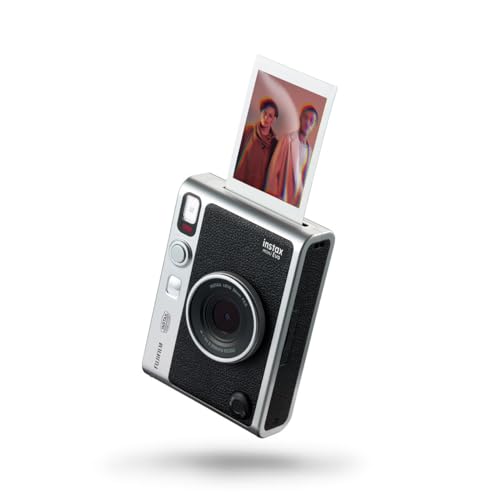
Fujifilm instax mini Evo
4.6/10

Overall score

Score
4.6/ 10
✕
What it is
Our main score for this model, 1–10. It combines specs, best-of lists, expert reviews and owners.
How we count it
Parts: Technical score 35%, List score 30%, Reviews score 25%, Sentiment score 10%
Marks: Each part gets a mark out of 10. For reviews, lists and owners, a typical model in this category gets about 8 and the best one gets 10.
No data yet: A part with no data shows "?". It counts as the mark of a weaker model in this category (4 in 5 models with data score higher). This way, models with reviews, lists and owners usually come out ahead.
Score distribution
▼
<55-66-77-88-99-10
Score components

35%

3.2

Technical score

30%

8.1

List score

25%

3.2

Reviews score

10%

3.2

Sentiment score

▼Worse than 99% of cameras
6.2

Value for money

Value for money
6.2/ 10
✕
What it is
An indicator that combines the camera's overall rating with its cost.
When it matters
When you want to know how much overall quality you get for the price.
Score distribution
▼
<55-66-77-88-99-10
Score components

70%

4.6

Overall score

30%

9.7

Price

▼Worse than 87%
3.2

Technical score

Technical score
3.2/ 10
✕
What it is
How good the specs are compared with the other models in this category, 1–10.
How we count it
Areas: We rate the specs in each area against the other models in this category.
Weighting: The areas that matter most to buyers count more. The shares are shown under Score components.
Share: The technical score is 35% of the overall score.
Score distribution
▼
<55-66-77-88-99-10
Score components

28%

3.2

Sensor & Image

25%

2.0

Photo Features

18%

2.7

Video & Audio

14%

4.7

Display & Design

8%

3.1

Battery & Power

7%

5.2

Connectivity & Storage

▼Worse than 99%
3.2

Reviews score

Reviews score
3.2/ 10
✕
What it is
Average grade from independent test sites, magazines and video reviewers, 1–10.
How we count it
Grades: Each review's own score is converted to 1–10; without one, we grade the review ourselves. Big test sites count more, short reviews half as much as full tests. A video review counts half.
Score: The average grade is 80% of the review mark; the number of reviews is the other 20% (1 review = 5, the typical number in this category = 8, the most-reviewed model = 10).
Enough data: With few reviews, the average grade is pulled toward the typical grade of this category. No reviews yet: 7.5 for now.
Share: Reviews count 25% of the overall score.
Score distribution
▼
<55-66-77-88-99-10

3.2

Mark 7.7 is below the typical mark 7.9 of this category, so it cannot lift the score above the technical score

80%

7.9

Average grade

20%

7.0

Popularity

Grades by review (7)
2 reviews: 1 with a printed score, 1 estimated from the review. 5 video reviews, each counting half as much as a written test. Reviews count 25% of the overall score.
User ratings collected online are not part of this score.
▼Worse than 99%
8.1

List score

List score
8.1/ 10
✕
What it is
How often independent test sites, magazines and video reviewers put this model in their best-of lists for this category.
How we count it
Points: The model in the most lists of this category gets 10; the others get 8 to 10 in proportion. In no list yet: 7.5. Lists count 30% of the overall score.
Enough data: Every list counts, even a single one. With fewer than 5 best-of lists in the category, this part is left out.
Lists with this model (3)
List score: in 3 of 151 lists (2%)
★Better than 90%
  • fujifilm-instax-mini-evo
  • fujifilm-instax-mini-evo
  • fujifilm-instax-mini-evo
  • fujifilm-instax-mini-evo
  • fujifilm-instax-mini-evo
  • fujifilm-instax-mini-evo
fujifilm-instax-mini-evo
Where to buy
*As an Amazon Associate, we earn from qualifying purchases.

What reviewers say about the Fujifilm instax mini Evo

Based on 2 · 5

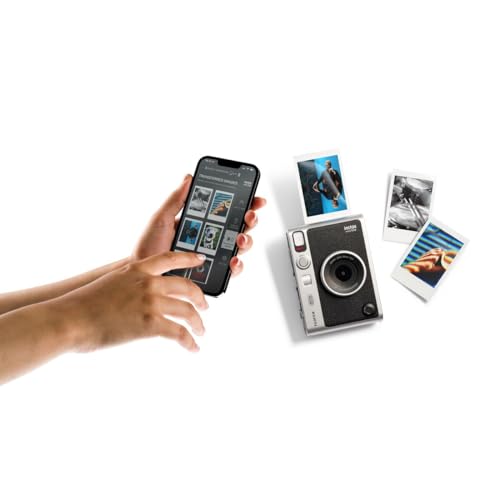
Reviewers enjoy the filters, effects and phone printing, but several feel the build quality falls short.
Praised
Criticised
Pick a topic to see who said what

What owners say about the Fujifilm instax mini Evo

Based on 158 owners sharing their experience in online comments

43%positive19%mixed38%negative

Owners love the playful, nostalgic shooting and instant prints, while print quality and limited photo transfers cause the most frustration.

What owners dislike

  • Owners report prints with dark lines or streaks on the film, and sometimes blank or white prints. Some say saved photos on the camera get corrupted.23
  • Some owners find the camera stops charging, the charge light stays on briefly, or the camera won't turn on after charging.15
  • Owners say prints come out faded, washed out, too dark, too yellow or reddish, or blurry compared with the screen image.15
  • Owners say photos can only be sent to a phone after printing them, so sharing unprinted shots is not possible without an SD card workaround.13
  • Owners say digital images look low resolution and toy-like, especially photos moved to a phone, and the internal memory saves smaller files.13
  • Owners say the battery drains quickly, sometimes within an hour or after about 30 minutes of use, and some say it lasts only days between charges.9
  • Owners report failed phone connections, especially after deleting the pairing, and error messages such as 'camera is busy' or error 1010 when printing.6
  • Some owners feel the price is high for the camera's digital quality and limited features, especially compared with other Instax models.5
  • Owners say inserting an SD card makes photos stored in the internal memory disappear from the camera's view.5
  • Owners say the instructions are sparse and the steps to transfer or print photos are confusing and take many steps.5

Points mentioned by at least 3 owners, most mentioned first.

Loading...
Loading category ranking...

Technical Specifications of camera Fujifilm instax mini Evo

Technical score
Technical score
3.2/ 10
✕
What it is
How good the specs are compared with the other models in this category, 1–10.
How we count it
Areas: We rate the specs in each area against the other models in this category.
Weighting: The areas that matter most to buyers count more. The shares are shown under Score components.
Share: The technical score is 35% of the overall score.
Score distribution
▼
<55-66-77-88-99-10
Score components:

28%

3.2

Sensor & Image

25%

2.0

Photo Features

18%

2.7

Video & Audio

14%

4.7

Display & Design

8%

3.1

Battery & Power

7%

5.2

Connectivity & Storage

3.2
Reviews score
3.2
List score
8.1
Value for money
Value for money
6.2/ 10
✕
What it is
An indicator that combines the camera's overall rating with its cost.
When it matters
When you want to know how much overall quality you get for the price.
Score distribution
▼
<55-66-77-88-99-10
Score components:

70%

4.6

Overall score

30%

9.7

Price

6.2
Sensor size
1/5"
This camera has a sensor size of 1/5", which is smaller than 99.5% of cameras and the same as 0.2% of cameras.
Sensor resolution
5 MP
This camera captures images at 5 MP, which is lower than 99% of cameras and equal to 0.3% of cameras.
Sensor pixel size
1.1 µm
This camera has sensor pixels measuring 1.1 µm, which are smaller than those in 99.7% of cameras.
Base ISO
100
This camera has a base ISO of 100, which is lower than 26.7% of cameras and equal to 53.4% of cameras.
Max ISO
ISO 1600 ISO
This camera reaches ISO 1,600, which is lower than 85.6% of cameras and equal to 13.3% of cameras.
Show more
Lens mount
N/A
Built-in focus motor
N/A
N. of focus points
N/A
Phase-detection autofocus (photos)
no
This camera does not support phase-detection autofocus for photos. 36.6% of cameras support phase-detection autofocus for photos.
AF tracking
no
This camera does not support AF tracking. 87.5% of cameras support this feature.
Show more
Max video resolution
N/A
Video bitrate
N/A
Video bit depth
N/A
Video chroma subsampling
N/A
Video codecs
N/A
Show more
Type
instant
Weight
285 g
This camera weighs 285 g, which is lighter than 62.4% of cameras and equal to 0.1% of cameras.
Width
122.9 mm
This camera is 122.9 mm wide, which is wider than 57.6% of cameras and equal to 0.2% of cameras.
Height
87 mm
This camera is 87 mm tall, which is taller than 64.9% of cameras and equal to 1.1% of cameras.
Thickness
36 mm
This camera is 36 mm thick, which is thinner than 65.1% of cameras and equal to 0.1% of cameras.
Show more
Battery life (CIPA)
100 shots
This camera lasts for 100 shots per charge, which is shorter than 99.4% of cameras and equal to 0.2% of cameras.
Battery capacity
?
Removable battery
no
This camera lacks a removable battery, while 97.9% of cameras include one.
USB Power Delivery (PD)
no
This camera does not support USB Power Delivery. 10.6% of cameras support USB Power Delivery.
Wi-Fi connectivity
no
This camera does not support Wi-Fi. 48.2% of cameras include this feature.
Wi-Fi version
N/A
Bluetooth connectivity
yes
This camera has Bluetooth. 24% of cameras support Bluetooth.
Bluetooth version
4.2
This camera has Bluetooth 4.2, which is newer than 85.1% of cameras and the same as 10.1% of cameras.
USB Type-C
yes
This camera features USB Type-C. 16.3% of cameras use USB-C ports.
Show more
What reviewers say

Fujifilm instax mini Evo vs the average camera

246810TotalDisplay & DesignSensor & ImagePhoto FeaturesVideo & AudioBattery & PowerConnectivity & Storage
  • Has USB Type-C
    This camera has a USB Type-C port, the average camera does not. 16.4% of cameras use USB-C.
  • Has Bluetooth
    This camera supports Bluetooth, the average camera does not. 24.1% of cameras support Bluetooth.
  • Smartphone remote control
    This camera supports smartphone remote control, the average camera does not. 46.2% of cameras support smartphone remote control.
  • 7 years newer
    This camera was released more recently than the average camera (2021 vs 2014). The average camera was released in 2014.
    2,021 vs 2,014
  • 12.5% higher list score
    List score
    8.1/ 10
    ✕
    What it is
    How often independent test sites, magazines and video reviewers put this model in their best-of lists for this category.
    How we count it
    Points: The model in the most lists of this category gets 10; the others get 8 to 10 in proportion. In no list yet: 7.5. Lists count 30% of the overall score.
    Enough data: Every list counts, even a single one. With fewer than 5 best-of lists in the category, this part is left out.
    Lists with this model (3)
    List score: in 3 of 151 lists (2%)
    8.1 vs 7.2
  • 0.05 GB more internal storage
    This camera has more internal storage than the average camera (0.1 GB vs 0 GB). The average camera has 0 GB internal storage.
    0.05 GB vs 0 GB
  • 104.5 g lighter
    This camera is lighter than the average camera (285 g vs 389.5 g). The average camera weighs 389.5 g.
    285 g vs 389.5 g
  • 12.5% higher list score
    List score
    8.1/ 10
    ✕
    What it is
    How often independent test sites, magazines and video reviewers put this model in their best-of lists for this category.
    How we count it
    Points: The model in the most lists of this category gets 10; the others get 8 to 10 in proportion. In no list yet: 7.5. Lists count 30% of the overall score.
    Enough data: Every list counts, even a single one. With fewer than 5 best-of lists in the category, this part is left out.
    Lists with this model (3)
    List score: in 3 of 151 lists (2%)
    8.1 vs 7.2
  • 104.5 g lighter
    This camera is lighter than the average camera (285 g vs 389.5 g). The average camera weighs 389.5 g.
    285 g vs 389.5 g
  • 7 years newer
    This camera was released more recently than the average camera (2021 vs 2014). The average camera was released in 2014.
    2,021 vs 2,014
  • Has USB Type-C
    This camera has a USB Type-C port, the average camera does not. 16.4% of cameras use USB-C.
  • Has Bluetooth
    This camera supports Bluetooth, the average camera does not. 24.1% of cameras support Bluetooth.
  • Smartphone remote control
    This camera supports smartphone remote control, the average camera does not. 46.2% of cameras support smartphone remote control.
  • 0.05 GB more internal storage
    This camera has more internal storage than the average camera (0.1 GB vs 0 GB). The average camera has 0 GB internal storage.
    0.05 GB vs 0 GB
  • 50.8% lower review score
    Reviews score
    3.2/ 10
    ✕
    What it is
    Average grade from independent test sites, magazines and video reviewers, 1–10.
    How we count it
    Grades: Each review's own score is converted to 1–10; without one, we grade the review ourselves. Big test sites count more, short reviews half as much as full tests. A video review counts half.
    Score: The average grade is 80% of the review mark; the number of reviews is the other 20% (1 review = 5, the typical number in this category = 8, the most-reviewed model = 10).
    Enough data: With few reviews, the average grade is pulled toward the typical grade of this category. No reviews yet: 7.5 for now.
    Share: Reviews count 25% of the overall score.
    Score distribution
    ▼
    <55-66-77-88-99-10

    3.2

    Mark 7.7 is below the typical mark 7.9 of this category, so it cannot lift the score above the technical score

    80%

    7.9

    Average grade

    20%

    7.0

    Popularity

    Grades by review (7)
    2 reviews: 1 with a printed score, 1 estimated from the review. 5 video reviews, each counting half as much as a written test. Reviews count 25% of the overall score.
    User ratings collected online are not part of this score.
    3.2 vs 6.5
  • Smaller image sensor
    This camera has a smaller sensor than the average camera (1/5" vs 2/3"). The average camera's sensor size is 2/3".
    1/5" vs 2/3"
  • Fewer megapixels
    This camera has fewer megapixels than the average camera (5 MP vs 16.2 MP). The average camera's sensor resolution is 16.2 MP.
    5 MP vs 16.2 MP
  • No AF tracking
    This camera does not support AF tracking, the average camera does. 87.4% of cameras support it.
  • 1.94 µm smaller sensor pixels
    This camera has smaller sensor pixels than the average camera (1.1 µm vs 3.04 µm). The average sensor pixel size is 3.04 µm.
    1.1 µm vs 3.04 µm
  • Lacks HDR mode
    This camera does not support HDR mode, the average camera does. 55% of cameras include HDR mode.
  • 55.6% lower sentiment score
    3.2 vs 7.2
  • No hot shoe
    This camera does not have a hot shoe, the average camera does.
  • 50.8% lower review score
    Reviews score
    3.2/ 10
    ✕
    What it is
    Average grade from independent test sites, magazines and video reviewers, 1–10.
    How we count it
    Grades: Each review's own score is converted to 1–10; without one, we grade the review ourselves. Big test sites count more, short reviews half as much as full tests. A video review counts half.
    Score: The average grade is 80% of the review mark; the number of reviews is the other 20% (1 review = 5, the typical number in this category = 8, the most-reviewed model = 10).
    Enough data: With few reviews, the average grade is pulled toward the typical grade of this category. No reviews yet: 7.5 for now.
    Share: Reviews count 25% of the overall score.
    Score distribution
    ▼
    <55-66-77-88-99-10

    3.2

    Mark 7.7 is below the typical mark 7.9 of this category, so it cannot lift the score above the technical score

    80%

    7.9

    Average grade

    20%

    7.0

    Popularity

    Grades by review (7)
    2 reviews: 1 with a printed score, 1 estimated from the review. 5 video reviews, each counting half as much as a written test. Reviews count 25% of the overall score.
    User ratings collected online are not part of this score.
    3.2 vs 6.5
  • 55.6% lower sentiment score
    3.2 vs 7.2
  • 11.8% worse value for money
    Fujifilm instax mini Evo has a worse value-for-money score than the average camera (6.16 vs 6.9).
    6.16 vs 6.88
  • No hot shoe
    This camera does not have a hot shoe, the average camera does.
  • 13.3 mm taller body
    This camera is taller than the average camera (87 mm vs 73.7 mm). The average camera is 73.7 mm tall.
    87 mm vs 73.7 mm
  • Smaller image sensor
    This camera has a smaller sensor than the average camera (1/5" vs 2/3"). The average camera's sensor size is 2/3".
    1/5" vs 2/3"
  • Fewer megapixels
    This camera has fewer megapixels than the average camera (5 MP vs 16.2 MP). The average camera's sensor resolution is 16.2 MP.
    5 MP vs 16.2 MP
  • 1.94 µm smaller sensor pixels
    This camera has smaller sensor pixels than the average camera (1.1 µm vs 3.04 µm). The average sensor pixel size is 3.04 µm.
    1.1 µm vs 3.04 µm
  • Lacks HDR mode
    This camera does not support HDR mode, the average camera does. 55% of cameras include HDR mode.
  • 4,800 ISO lower maximum sensitivity
    This camera reaches a lower maximum ISO than the average camera (1,600 ISO vs 6,400 ISO). The average camera's maximum ISO is 6,400 ISO.
    1,600 ISO vs 6,400 ISO
  • No AF tracking
    This camera does not support AF tracking, the average camera does. 87.4% of cameras support it.
  • No RAW photo capture
    This camera does not support RAW photo capture, the average camera does. 61% of cameras support RAW formats.
  • No manual exposure control
    This camera does not support manual exposure, the average camera does. 71.5% of cameras support manual exposure controls.
  • 29.75 s shorter exposure
    This camera allows shorter exposures than the average camera (0.3 s vs 30 s). The average camera allows exposures up to 30 s.
    0.25 s vs 30 s
  • 84.6% less optical zoom
    This camera offers less optical zoom than the average camera (1 x vs 6.5 x). The average camera offers 6.5 x.
    1 x vs 6.5 x
  • No continuous video AF
    This camera does not support continuous autofocus in video, the average camera does.
  • 230 shots shorter battery life
    This camera lasts shorter per charge than the average camera (100 shots vs 330 shots). The average camera lasts for 330 shots.
    100 shots vs 330 shots
  • No removable battery
    This camera does not have a removable battery, while the average camera does.
  • No HDMI output
    This camera does not support HDMI output, the average camera does. 77.7% of cameras support HDMI output.

Video reviews

Hands-on testing, unboxing, and real-world video evaluations

9.0
Andrew Knepper
≈ estimated
02/11/2024
Hands-on review · pros and cons, printing and pairing
Verdict
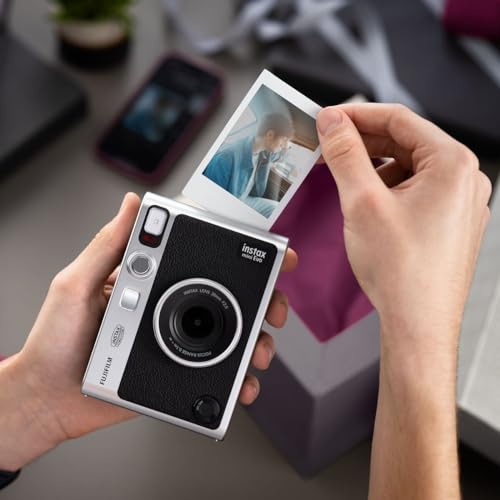
The Fujifilm instax mini Evo is a fun retro camera that works well, and its preview screen means fewer wasted prints.
8.0
Forrest Creates
≈ estimated
18/05/2024
Hands-on review · outdoor shooting and printing
Verdict
Fujifilm instax mini Evo prints well and is fun to use, but framing without a viewfinder is frustrating.
9.0
Just Another Chris
≈ estimated
05/12/2022
Full review · battery, printing and image quality
Verdict
Fujifilm instax mini Evo is a fun camera worth buying, though it's a bit pricey and hard to find.
6.0
Robert Hamm
≈ estimated
29/01/2022
Critical review · five complaints after real use
Verdict
Fujifilm instax mini Evo is fun to shoot, but its filters, face detection and low-light focus let it down.
Hands-on video, no verdict

Expert reviews

In-depth analysis and verdict from leading tech publications

5.0
tidingsblog.com
✓ explicit
05/03/2022
Hands-on review · Instant camera
Verdict
The Instax mini Evo is a light, well-made instant camera with a built-in battery and filters, and it can also send shots to your phone.
9.0
mistergadget.tech
≈ estimated
13/04/2022
Hands-on review · Hybrid instant camera
Verdict
The Instax mini Evo Hybrid is a retro instant camera that also prints phone photos, suited to people who want film with digital editing.

Third-party reviews

What customers like about Fujifilm instax mini Evo

  • USB Type-C charging uses a common cable.
  • Bluetooth connectivity is built in.
  • Smartphone remote control lets you take pictures from a distance.
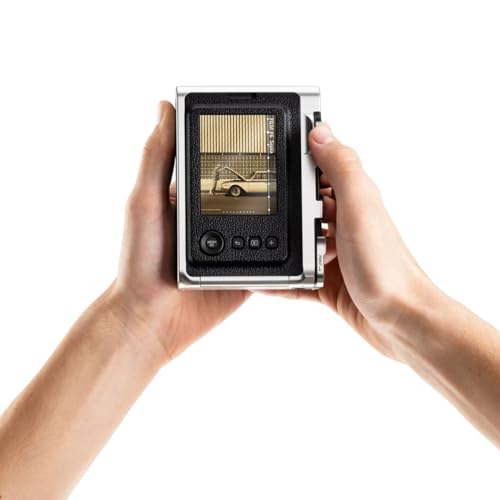
  • The 3 in screen shows your framing before you shoot.
  • An external memory slot adds room for more shots.

What customers don't like about Fujifilm instax mini Evo

  • The battery is rated for 100 shots and cannot be removed.
  • A maximum ISO of 1600 makes low-light shots hard.
  • There is no stabilization, and the longest shutter speed is 0.25 s, so handheld shots blur easily.
  • Manual exposure is missing.
  • The minimum operating temperature is 5 °C, so cold days are a limit.

Verdict

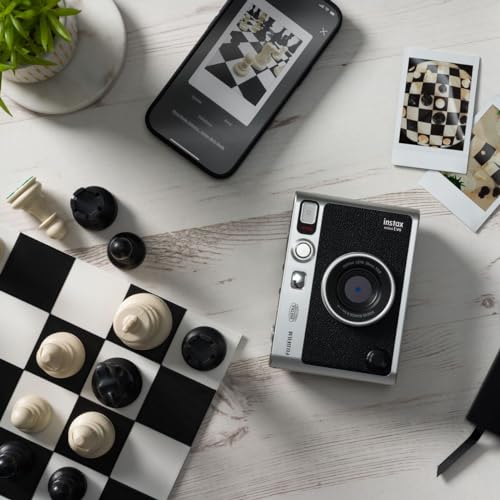
A 3 in screen is the first thing you notice on the Fujifilm instax mini Evo. It weighs 285 g, and the screen helps with framing before you shoot. USB Type-C handles charging, and Bluetooth is built in, so a phone can act as a remote control. There is an external memory slot for extra space. Image quality is basic, though. The 5 MP sensor and maximum ISO of 1600 limit results in dim rooms, and the longest shutter speed is 0.25 s, so shots need a steady hand. The battery is rated for 100 shots and cannot be removed, and there is no manual exposure. It suits someone who wants an easy camera with a screen and a phone link for sunny days, parties and casual snaps, rather than careful low-light work.

Compare Fujifilm instax mini Evo with other products in the Cameras category

1Product to compare no. 1
VS
2Product to compare no. 2
VS
3Product to compare no. 3 (optional)

Graphic comparison of Fujifilm instax mini Evo and other products in the Cameras category

No results found