Sony A7R V review. Compare 108 technical specifications and user reviews to see how it ranks among cameras and if it is worth buying.
Overall score
What it is: An overall evaluation of the camera's quality, based on technical analyses and user reviews.
When it matters: When you need a quick reference to identify the best cameras on the market.
Score components:
90.0%
Technical Score
10.0%
User score
Technical Score
What it is: An assessment of the camera's technical performance, covering eight key areas: image quality, autofocus, video features, stabilization, lens compatibility, connectivity, battery, and design.
When it matters: When you want to compare cameras based on technical performance and available features.
Score components:
28.0%
Sensor & Image
25.0%
Photo Features
18.0%
Video & Audio
14.0%
Display & Design
8.0%
Battery & Power
7.0%
Connectivity & Storage
User score
What it is: A rating that combines user reviews and the total number of reviews received by the camera.
When it matters: When real-world owner satisfaction and review volume matter to your decision.
Score components:
70.0%
User reviews
30.0%
Popularity
Score components:
25.0%
Sensor size
20.0%
Main camera megapixels
20.0%
Dual card slots
15.0%
N. of focus points
10.0%
RAW photo capture
10.0%
Phase-detection autofocus (photos)
Score components:
35.0%
Weight
30.0%
Battery life (CIPA)
20.0%
Sensor-shift stabilization
15.0%
GPS
Score components:
30.0%
Price
20.0%
Weight
20.0%
AF tracking
20.0%
Battery life (CIPA)
10.0%
Touchscreen
Score components:
30.0%
Main camera megapixels
25.0%
Sensor size
20.0%
Main camera pixel size
15.0%
Sensor-shift stabilization
10.0%
RAW photo capture
Score components:
30.0%
Weight
25.0%
Thickness
20.0%
AF low-light sensitivity
15.0%
Sensor-shift stabilization
10.0%
Eye detection AF (human)
Score components:
30.0%
Sensor size
25.0%
Main camera pixel size
20.0%
Eye detection AF (human)
15.0%
Main camera megapixels
10.0%
Sensor-shift stabilization
Score components:
30.0%
Weight
25.0%
Battery life (CIPA)
20.0%
Min operating temperature
15.0%
Sensor-shift stabilization
10.0%
GPS
Available: ranking among products currently available (including other versions of this product).
All: ranking among all products in the database.
#2 in Best Sony Cameras
#3 in Best Vlogging Cameras
#3 in Best Cameras for YouTube
#5 in Best Cameras
#5 in Best Digital Cameras
#5 in Best Mirrorless Cameras
#5 in Best 4K Cameras
What it is: An assessment of the camera's technical performance, covering eight key areas: image quality, autofocus, video features, stabilization, lens compatibility, connectivity, battery, and design.
When it matters: When you want to compare cameras based on technical performance and available features.
Score components:
28.0%
Sensor & Image
25.0%
Photo Features
18.0%
Video & Audio
14.0%
Display & Design
8.0%
Battery & Power
7.0%
Connectivity & Storage
What it is: A rating that combines user reviews and the total number of reviews received by the camera.
When it matters: When real-world owner satisfaction and review volume matter to your decision.
Score components:
70.0%
User reviews
30.0%
Popularity
What it is: An indicator that combines the camera's overall rating with its cost.
When it matters: When you want to know how much overall quality you get for the price.
Score components:
60.0%
Overall score
40.0%
Price
Importance: HIGH
Good value: Full frame or larger
Importance: HIGH
Good value: At least 20 MP
Importance: HIGH
Good value: At least 3.5 µm
Importance: LOW
Importance: MEDIUM
Good value: At least ISO 25,600
Importance: MEDIUM
Importance: MEDIUM
Good value: At least 14-bit
Importance: LOW
Importance: LOW
Importance: LOW
Importance: LOW
Importance: LOW
Importance: LOW
Importance: LOW
Importance: LOW
Importance: MEDIUM
Importance: LOW
Importance: LOW
Importance: LOW
Importance: LOW
Importance: LOW
Importance: HIGH
Good value: At least 200 points
Importance: HIGH
Importance: MEDIUM
Importance: LOW
Importance: LOW
Importance: MEDIUM
Importance: MEDIUM
Importance: HIGH
Good value: At least 5 stops
Importance: LOW
Importance: MEDIUM
Good value: At least 10 fps
Importance: LOW
Importance: LOW
Importance: LOW
Importance: LOW
Importance: LOW
Importance: LOW
Importance: LOW
Importance: LOW
Importance: LOW
Importance: LOW
Importance: LOW
Importance: LOW
Importance: LOW
Importance: LOW
Importance: LOW
Importance: LOW
Good value: At least 200,000 actuations
Importance: LOW
Good value: At least 10x
Importance: HIGH
Good value: At least 3840 px
Importance: MEDIUM
Good value: At least 200 Mbps
Importance: MEDIUM
Good value: At least 10-bit
Importance: LOW
Importance: LOW
Importance: LOW
Importance: LOW
Importance: LOW
Importance: LOW
Importance: LOW
Good value: At least 30 min
Importance: LOW
Importance: LOW
Importance: LOW
Importance: LOW
Importance: LOW
Good value: At least 2 microphones
Importance: LOW
Importance: LOW
Importance: LOW
Importance: LOW
Importance: MEDIUM
Good value: 500 g or less
Importance: LOW
Importance: LOW
Importance: LOW
Importance: MEDIUM
Importance: MEDIUM
Good value: At least 2.36 million dots
Importance: LOW
Good value: 100%
Importance: LOW
Importance: LOW
Good value: At least 120 Hz
Importance: MEDIUM
Good value: At least 3 in
Importance: LOW
Importance: LOW
Importance: LOW
Importance: LOW
Importance: LOW
Importance: LOW
Importance: LOW
Good value: At least 10 m
Importance: LOW
Importance: LOW
Importance: LOW
Importance: LOW
Importance: MEDIUM
Good value: At least 400 shots
Importance: LOW
Good value: At least 1,500 mAh
Importance: LOW
Importance: LOW
Importance: LOW
Importance: LOW
Importance: LOW
Importance: LOW
Importance: LOW
Importance: LOW
Importance: LOW
Importance: LOW
Importance: LOW
Importance: LOW
Importance: LOW
Importance: LOW
Importance: LOW
Importance: LOW
Importance: LOW
Importance: LOW
Importance: HIGH
Good value: At least 200 points
Importance: HIGH
Good value: At least 3840 px
Importance: MEDIUM
Importance: HIGH
Good value: At least 20 MP
Importance: HIGH
Importance: HIGH
Good value: At least 5 stops
Importance: MEDIUM
Good value: At least ISO 25,600
Importance: MEDIUM
Good value: At least 200 Mbps
Importance: LOW
Importance: MEDIUM
Good value: 500 g or less
Importance: LOW
Importance: LOW
Importance: LOW
Importance: LOW
(Reviews last updated: July 2026)
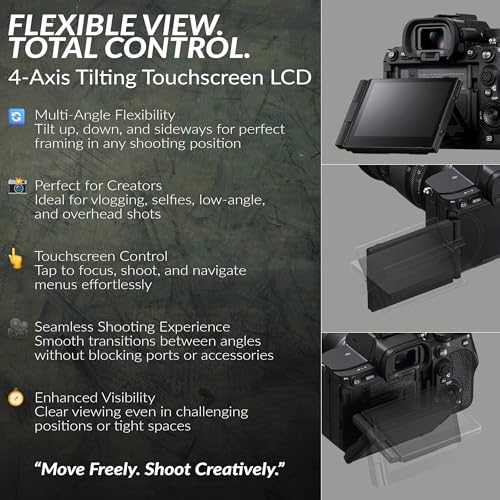
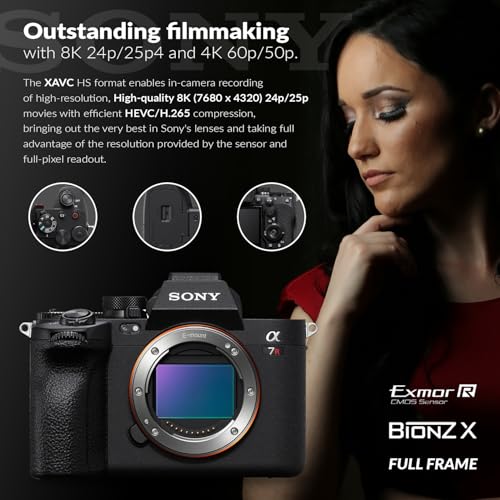
The DPReview in-depth analysis rates the 61-megapixel Sony a7R V as a 92% gold-award-winning mirrorless camera, praising its versatile performance, updated Bionz XR processors, and a dedicated AI unit for advanced subject tracking. Key pros include an exceptional four-axis multi-angle LCD screen, a 9.44M-dot EVF, eight stops of IBIS, and improved AI-driven autofocus. YouTube · Conversely, the review identifies slow sensor readout speed as a primary con, resulting in significant rolling shutter and pixel banding in video or electronic shutter modes. Additionally, 8K video is limited by a 1.24x crop factor, and the extensive menu system can be overly complex for some users.
The Sony Alpha 7R V retains the high-resolution 61-megapixel full-frame sensor of its predecessor, but expands its versatility through major technical upgrades, including a dedicated AI processing unit, an improved 8-stop in-body image stabilisation (IBIS) system, and 8K video recording at 24/25p. Key design improvements feature a highly flexible 4-axis tilting and flip-out screen, a class-leading 9.44-million-dot electronic viewfinder, dual-format slots for SD/CFexpress Type A cards, and a full-size HDMI port. Additionally, long-requested features like in-camera focus bracketing, a Bulb timer, and a revised user interface with broad touch-control support significantly enhance the workflow for studio, macro, and landscape photographers. However, the camera presents distinct performance compromises for action and wildlife shooters. The 61-megapixel sensor has a modest readout speed that causes visible rolling-shutter distortion when using the electronic shutter, and burst shooting remains capped at a modest 10 frames per second. While the new AI autofocus system expands subject detection to insects, vehicles, and human poses, its real-world accuracy was not deemed vastly superior to rivals, and utilizing its deep customization menus can be overly complex. Furthermore, the 8K...
The Sony A7R V is a highly versatile, flagship-grade mirrorless camera that balances a massive 61-megapixel full-frame sensor with an industry-leading, dedicated AI autofocus processor. Priced at $3,898, it stands out for its exceptional image quality, wide dynamic range, and rich color rendition at ISO 100. It handles low-light scenarios very well up to ISO 3200–6400. Major pros include its "wildly articulating" 3.2-inch touchscreen LCD—which combines both side-flip and traditional tilt mechanisms—and a stunning 9.44 million-dot electronic viewfinder. Additionally, Sony introduced flexible RAW file sizes (26-MP and 15-MP) alongside lossless and lossy compression options, making the massive data workflow much more manageable for high-volume shooters. However, the camera falls short for creators who require elite video capabilities or maximum shooting speeds. A significant con is its mixed video performance: 8K video is limited to 24p and comes with a 1.24x crop, while sharp 4K oversampled video forces you into a heavily cropped APSC mode. Furthermore, a relatively slow sensor readout introduces noticeable rolling shutter across all video formats. While the autofocus system tracks subjects flawlessly, the camera's physical burst rate...
The Sony Alpha 7R V is highlighted as a powerhouse high-resolution camera that retains its predecessor's 61-megapixel sensor but completely overhauls almost every other internal and external feature. Jan Paul Mioulet emphasizes that the camera introduces a new BIONZ XR processor alongside a dedicated AI processing unit, drastically enhancing subject recognition and deep-learning autofocus tracking. A major physical highlight is the unique dual-functioning rear display, which acts as both a traditional tilt screen and a fully articulating flip-out screen, eliminating past layout compromises. Furthermore, its upgraded in-body image stabilization (IBIS) achieves up to 8 stops of compensation, enabling sharp, handheld shooting at shutter speeds up to a quarter of a second. The review explicitly outlines several key advantages and disadvantages of this model: Pros: The camera boasts massive high-resolution files (including a tripod-based 240MP multi-shot mode), significantly improved 8-stop image stabilization, and next-generation AI autofocus that easily tracks human shapes even when turned around. It also gains the highly requested hybrid swivel/folding screen, a redesigned and user-friendly menu system, a crisp 9.4-megapixel viewfinder, and versatile lossless compressed RAW file options....
Ken Rockwell’s review highlights the Sony a7R V as a 60-megapixel powerhouse, praising its 10-million-dot electronic viewfinder, versatile multi-angle screen, and robust buffer capacity at 10 FPS. Key technical upgrades include a full-sized HDMI port and versatile dual slots, with the camera delivering exceptional, sharp results, particularly when using Sony's best lenses. However, the review cites a 15-minute limit on the bulb timer as a notable limitation compared to competitors. Additionally, the camera uses a rolling electronic shutter and features complex, often frustrating, menu systems and ergonomics. For many users, older models like the a7R IV or a7 III may offer similar image quality at a lower cost, says Rockwell.
The Sony A7R V excels as a high-resolution photography powerhouse and a reliable secondary video camera, delivering massive 61-megapixel RAW files with extensive flexibility for cropping and level adjustments. Its AI-assisted autofocus system represents a massive upgrade, staying firmly locked onto subjects and mitigating focus jumps even when physical disruptions cross the frame. Videographers benefit from unlimited 4K recording with zero overheating issues—tested up to 14 hours continuously—alongside highly efficient 10-bit codec options and robust active image stabilization that minimizes the need for a physical gimbal. Physical design upgrades like the versatile multi-angle flip screen, sharp electronic viewfinder (EVF), and long battery life—capable of surviving an entire wedding on just two packs—further elevate its field utility. However, the camera presents distinct compromises, particularly in its high-end video modes and physical file management. The uncompressed 61-megapixel photo files demand heavy storage overhead at roughly 130 megabytes per frame. While the camera features 8K video recording, it is hindered by a strict 24 frames per second limit, severe rolling shutter artifacts during camera movement, and severe thermal throttling that triggers overheating shutdowns...
The Sony A7R V is a professional full-frame hybrid mirrorless camera designed for creators who prioritize high resolution without paying the premium flagship price of the Sony A1 II. Equipped with a 61MP sensor, it delivers exceptional image detail, substantial cropping flexibility, and an expansive dynamic range that excels at recovering shadow detail. Its physical design features excellent professional build quality, extensive customisable buttons, and a stunningly sharp 9.44M-dot EVF. On the video front, it is highly capable, supporting internal 8K/24p and 4K/60p recording alongside professional profiles like S-Cinetone and S-Log 3. Its 5-axis image stabilization (IBIS) is highly effective, allowing for sharp handheld shots at shutter speeds as slow as 1 second. However, the camera does come with notable compromises, particularly regarding its autofocus system, which utilizes contract detection for slow targets but has phase detection that struggles to accurately track fast-moving animals. Furthermore, its class-leading 9.44M-dot EVF is incredibly power-hungry, stretching the performance of the standard NP-FZ100 battery to its absolute limit. The camera lacks an automatic subject detection mode, meaning users must manually cycle through specific tracking...
In a Photography Life review, a long-time Nikon user found the Sony a7R V delivers exceptional 61-megapixel image quality with outstanding dynamic range and sharpness. Key advantages include the high-resolution sensor, a versatile four-axis tilting screen, a detailed 9.44-million-dot viewfinder, and precise AI-driven subject recognition for tracking. Conversely, the reviewer highlighted that the AI autofocus, while accurate, is limited by a relatively slow sensor readout and modest burst speeds, making it less ideal for high-speed action compared to stacked-sensor alternatives. Additionally, the camera features an overly complex menu system and a lower-resolution viewfinder display when actively tracking subjects.
Sony Alpha 7R V The Sony Alpha 7R V marks a significant generational leap over its predecessor, pairing the familiar 61-megapixel Exmor R CMOS sensor with dual BIONX XR processors to deliver superb resolution and excellent color fidelity. The camera's standout feature is its ground-breaking AI-driven Real-Time Recognition Autofocus system, powered by a dedicated AI processor. This technology introduces human pose recognition and allows the camera to tenaciously track a broad spectrum of fast-moving subjects—including birds, insects, trains, and cyclists—even at the extreme edges of the frame. Additional major upgrades include a versatile four-axis "tilty flippy" LCD screen, an eight-stop image stabilization system, dual CFe-A card slots, and vastly accelerated operational and buffering speeds. Despite these advancements, the camera has notable limitations, particularly for video-first creators. It lacks high frame rate options like 120fps or 240fps video modes—even with a crop—and suffers from severe rolling shutter issues. The highly advanced autofocus system is also held back by an "atrocious" and overly complicated menu structure, which introduces more than a dozen new, confusing options and granular sub-menus that require heavy user...
The Sony Alpha a7R V is described by The Verge as a technical triumph featuring a 61-megapixel sensor, an advanced AI-driven autofocus system, and a versatile articulating/tilting screen, offering superior image performance. Despite these high-end specs, the review heavily critiques the camera's ergonomics, noting a short grip that causes discomfort and a pressure point under the shutter button, nicknamed "Sony Knuckle," which causes physical pain during extended use.
The Sony Alpha 7R V is a highly competent 61MP full-frame camera that bridges the gap between high-resolution photography and cutting-edge technology. The reviewer highlights the camera’s phenomenal, AI-driven real-time autofocus system, which delivers a hit rate exceeding 90% even for users new to the ecosystem. Additional major advantages include its extreme latitude for image cropping, a flexible multi-angle LCD screen that combines tilt and flip-out functionalities, and an upgraded 9.44-million-dot electronic viewfinder. Professionals will also appreciate the massive level of menu customisation, the dual card slots supporting both SD and CF-Express Type A cards, and the useful ability to save reduced-size RAW files at 26MP or 15MP. Despite its exceptional power, the camera has a few minor performance and editing drawbacks. The reviewer notes that batch-editing the camera's RAW files can be challenging because identical, consecutive shots occasionally yield slight variations in rendering. Additionally, the pairing of the 61MP sensor with top-tier G-Master lenses creates images so sharp that portraits sometimes require manual "de-sharpening" during post-processing. Finally, the sophisticated menu system offers deep customisation parameters for its AI tracking,...
The Sony Alpha 7R V features a 61MP sensor paired with an upgraded BIONZ XR processor that delivers richer colours, sharper details, and enhanced low-light performance. The camera's standout feature is its new AI-driven autofocus system, which tracks humans via pose estimation even with their backs turned, and separates distinct modes of transport or wildlife. Landscape photographers will benefit from multiple brand-new, built-in features: a flexible screen that both tilts and fully articulates, automated focus bracketing, expanded exposure bracketing increments, and a programmable bulb timer up to 15 minutes. Additional practical upgrades include dual slots accepting both SD and ultra-fast CFexpress Type A cards, an anti-dust sensor protection shutter that closes when lenses are swapped, and smaller Lossless Compressed RAW file options. However, the reviewer notes a few drawbacks to the camera. The continuous shooting speed remains capped at 10 frames per second, falling significantly short of the flagship Alpha 1's 30 frames per second performance. Battery life has also decreased to an estimated 530 shots per charge compared to the 670 shots offered by its predecessor, the Alpha 7R...
The Sony a7R V remains a class-leading full-frame mirrorless camera for detail-oriented photography genres like landscape, portrait, studio, and travel, thanks to its market-leading 61-megapixel backside-illuminated Exmor R CMOS sensor. It stands out for its exceptional image sharpness, class-leading dynamic range, and an advanced AI-powered "Real Time Recognition" autofocus system supported by a dedicated AI processing unit. Users benefit from a highly capable body design that features a versatile vari-angle rear display, a class-leading 9.44-million dot electronic viewfinder (EVF), and upgraded in-body image stabilization. However, the camera falls short in speed and multi-media versatility when compared to newer, stacked-sensor rivals like the Nikon Z8 and Canon EOS R5 II. Its primary drawbacks include a relatively slow readout speed, modest continuous burst shooting frame rates, and lackluster video performance. Additionally, it relies on expensive CFexpress Type A cards to unlock maximum performance buffers and features a cumbersome, tripod-dependent pixel-shift shooting mode. Despite these speed limitations, it remains a premier tool for photographers who prioritize ultimate resolution over action capabilities.
The Digitalkamera.de review highlights the Sony Alpha 7R V as a matured, high-resolution full-frame camera, featuring a versatile 4-axis multi-angle LCD screen and an AI-driven autofocus system that significantly upgrades subject recognition. The 61-megapixel sensor delivers exceptional image quality and sharpness, complemented by a robust, weather-sealed design. However, the review cites a complex menu system requiring a steep learning curve and notes significant rolling shutter distortion with the electronic shutter. Additionally, access to in-depth laboratory charts and detailed performance metrics within the review requires a premium subscription.
The Sony Alpha 7R V is a premium, high-resolution full-frame mirrorless camera designed for professional fashion, portrait, and landscape photography. It features a 60.2-megapixel sensor paired with a powerful Bionz XR image processor, delivering the highest measured photo sharpness among Sony cameras in CHIP's rankings with up to 2,935 line pairs per picture height at minimum ISO. A standout upgrade is its dedicated AI processing unit utilizing deep-learning algorithms, which vastly improves autofocus tracking by recognizing human bodies, heads, insects, vehicles, and aircraft. Video capabilities see a massive upgrade to 8K resolution at 25p with full pixel readout, complemented by an improved in-body image stabilization system capable of compensating up to 8 exposure stops. Additional hardware highlights include a highly flexible 4-axis 3.2-inch touchscreen display and an electronic OLED viewfinder with 9.44 million subpixels. The camera's main advantages include its exceptional 60-megapixel image resolution, sharp 8K video capture, reliable AI-driven tracking autofocus, a highly adaptable articulating display, and effective 8-stop image stabilization. However, the review highlights notable downsides, such as increased image noise during video recording and an increased tendency...
Sony Alpha 7R V Review Summary The Sony Alpha 7R V is a highly capable, high-resolution photography camera that introduces significant usability and performance upgrades while retaining the same 60-megapixel sensor as its predecessor. A standout feature is its new artificial intelligence-driven autofocus system, which excels at recognizing full human bodies, heads, and specific subjects like insects, vehicles, and birds. The camera also features a robust image stabilization system offering up to 8 EV steps of stabilization, a massive 9-million-dot viewfinder shared with the flagship Alpha 1, and dual card slots supporting both SD and ultra-fast CFexpress Type A cards. Additionally, it incorporates a highly praised hybrid tilt-and-flip display mechanism and a built-in bulb timer for long exposures without external accessories. Pros & Cons Pros Autofokus: Superior AI-driven subject recognition and stickier tracking across varied subjects. Display: Highly flexible mechanism combining both tilting and flipping mechanisms. Stabilisation: Noticeable 1-2 EV real-world improvement over previous models, reliably stabilizing 60 MP micro-movements. RAW Flexibility: Supports losslessly compressed RAW files for smaller footprint without losing data. Cons Rolling Shutter: Extremely slow sensor readout...
The Sony Alpha 7R V is a highly capable full-frame mirrorless camera that balances elite photography specs with strong hybrid video performance, all wrapped in a robust, weather-sealed magnesium alloy body. It features a 61-megapixel Exmor R CMOS sensor that delivers outstanding image quality with 15 stops of dynamic range and an improved buffer capable of handling up to 583 consecutive RAW images. The camera's standout upgrades include a revolutionary AI-powered autofocus system that effortlessly tracks humans, animals, vehicles, and insects, alongside a dual-axis tilt and flip screen design that provides unmatched flexibility for both high-angle shooting and vlogging. Additionally, its 5-axis in-body image stabilization (IBIS) provides an impressive eight stops of compensation, enabling sharp handheld shots at shutter speeds as slow as 0.5 seconds. While the camera excels in most areas, its primary drawback stems from the slow readout speed of the high-resolution sensor. This results in a heavy rolling shutter effect during fast-moving action or when recording 8K video at 24p, which also carries a 1.24x crop factor and overheating limitations after 30 to 45 minutes of continuous...
The long-term review of the Sony A7R V highlighting its use in professional event and wedding photography, outlines a highly capable but specialized camera. The primary catalyst for the reviewer's switch to the Sony ecosystem was the superior weight and performance of the Sony FE 28-70mm f/2 GM lens compared to Canon's bulky RF equivalent. Together, the camera body and lens weigh 1.62 kg, saving over 700 grams for exhausting, ten-hour shooting days. The reviewer notes that while switching camera systems is financially costly, the real-world ergonomics and performance of the pair have been completely worth the investment. The camera's greatest strength lies in its 60.2-megapixel BSI CMOS sensor, which offers industry-leading photo resolution, exceptional detail, and expansive dynamic range that surpasses even Sony's flagship A1 Mark II. Additional pros include an incredibly reliable, AI-driven autofocus system, high-quality 8K video capabilities, an improved 8-stop image stabilizer, and a highly versatile multi-axis tilting touchscreen. However, the reviewer explicitly identifies the camera's slow sensor readout speed as its major Achilles' heel. This results in a heavy rolling shutter effect that distorts fast-moving...
The Netzwerk Fotografie Community review highlights the Sony a7R V as a 61 MP, high-resolution powerhouse featuring an AI processing unit for advanced subject tracking, 8-stop 5-axis stabilization, and effective overheating management for 8K video via a specialized graphite heat dissipation mount. While praising the 250,000-cycle rated shutter, the analysis notes limitations, including an autofocus system that only covers roughly 79% of the frame, rather than full coverage. Furthermore, despite versatile, dual-standard card slots, the massive 61 MP data throughput demands costly CFexpress Type A cards to avoid performance bottlenecks, as highlighted in the review.
The Sony Alpha 7R V features a 60.2-megapixel full-frame sensor and upgraded Bionz XR processors that deliver exceptional image quality and fine detail reproduction, performing exceptionally well up to ISO 1,600 and remaining highly usable up to ISO 6,400. Key strengths highlighted in the review include a greatly expanded buffer memory that allows for unlimited continuous shooting of JPEGs and compressed RAW files at 10.0 frames per second when using high-speed CFexpress Type A cards. The camera also features a robust magnesium body protected against dust and moisture, an outstanding electronic viewfinder, a versatile multi-angle tilting and flipping LCD screen, and an advanced AI-supported autofocus system with extensive subject tracking. Videographers benefit significantly from its powerful new capabilities, including highly detailed 8K video recording at 25fps, 4K at 60fps, 10-bit 4:2:2 color, and professional features like Focus Map and Breathing Compensation. On the downside, the review notes a few key drawbacks, particularly that Pixel Shift high-resolution images cannot be combined directly inside the camera and still require dedicated PC software for processing. Additionally, high-ISO performance drops off visibly at ISO...
The Sony Alpha 7R V features a 61-megapixel Exmor R CMOS sensor paired with a new Bionz XR processor and a dedicated AI co-processor. Key advantages highlighted in this hands-on test include a massively upgraded autofocus system that utilizes "Human Pose Estimation" to track subjects by their skeletal structure, alongside expanded detection for animals, insects, cars, and trains. The camera also boasts a powerful 8-stop image stabilisation system, an upgraded 4-frame or 16-frame Multi-Shot mode that effectively corrects minor subject movement, dual card slots supporting both CFexpress Type A and SD cards, a highly flexible 4-axis multi-angle touchscreen display, and a high-resolution 9.44-million dot electronic viewfinder. However, the review notes a few notable drawbacks. The 61-megapixel image sensor remains entirely unchanged from its predecessor, meaning there is no upgrade in raw sensor resolution. Additionally, high-end video recording comes with restrictions: shooting 8K video at up to 25 fps or 4K video at up to 60 fps imposes a mandatory 1.2x crop on the image field. While the electronic viewfinder has seen a massive spec bump on paper, the reviewer mentions...
The review by Stephan Wiesner on Zielfoto positions the Sony Alpha 7R V as the current absolute best all-around camera, provided the buyer has the budget to afford its steep price tag. A standout feature highlighted in the review is the camera's cutting-edge autofocus system—potentially the best across all Sony models—which uses a dedicated chip for AI-driven object recognition to identify humans, animals, vehicles, and insects. This AI technology doesn't just benefit the autofocus; it also intelligently optimizes white balance and exposure, specifically targeting human faces to guarantee ideal lighting. Furthermore, despite its incredibly dense 60-megapixel resolution, the camera delivers remarkably clean image quality with almost unnoticeable ISO noise when shooting JPEG photos up to ISO 3200. However, the reviewer notes a few critical trade-offs, primarily centered around its niche appeal and high financial entry point. Because the R-series packs vastly more megapixels than the standard Sony 7-series, it commands a hefty premium, making it a potentially unnecessary investment for photographers who do not explicitly require such ultra-high resolution. While the community feedback remains overwhelmingly positive—with 96% of users stating...
The Sony Alpha 7R V features a 60.2 MP full-frame sensor and an upgraded BIONZ XR processor alongside a dedicated AI-processing unit that significantly advances its autofocus capabilities. The test highlights several notable upgrades over its predecessor, including an enhanced 5-axis image stabilization (IBIS) system offering up to 8 stops of compensation, a highly versatile multi-angle LCD touch screen, and a massively improved 9.44-million-dot electronic viewfinder. For storage, the body integrates dual card slots supporting both SD and CFexpress Type A formats. Additionally, the review praises the camera's flexible resolution settings, which allow users to save storage space by downsampling images to 26 or 15 megapixels without compromising core image quality. On the positive side, the standout pro is the next-generation AI autofocus, which tracks the entire human body (including joints and limbs) as well as insects, vehicles, and animals with flawless precision. Its robust, weather-sealed magnesium build, intuitive menu redesign, and newfound hybrid functionality—boasting 8K at 24p and 10-bit 4:2:2 internal recording—further elevate its appeal for landscape, portrait, and wedding professionals. However, the cons include a 1.2x image crop...
The Sony Alpha 7R V is an ambitious 61-megapixel full-frame mirrorless camera that pairs its high-resolution sensor with a new BionZ XR dual-core processor to deliver significant performance and ergonomic updates over its predecessor. It features a standout 9.44-million-dot electronic viewfinder with a 120 Hz refresh rate and a unique 4-axis multi-angle touchscreen that flips out to improve heat dissipation during intensive shoots. The camera introduces an exceptionally fast startup time of 0.58 seconds alongside a highly advanced AI-driven autofocus system capable of tracking humans, animals, vehicles, and insects. Photographers can take advantage of a sensor-shift stabilisation mechanism offering up to 8 stops of compensation, an expanded buffer supported by dual SD/CFexpress Type A slots, and a 240-megapixel Pixel-Shift mode for high-fidelity studio reproduction. Despite its impressive features, the camera has notable limitations, particularly for video creators and action photographers. Its video suite includes internal 8K recording at 24 frames per second and 10-bit 4:2:2 sampling, but shooting in 8K or 4K at 60 frames per second forces a significant 1.2x crop. The non-stacked sensor design results in a highly...
The Phototrend review rates the Sony Alpha 7R V a strong 8.9 out of 10, praising it as a highly mature and versatile 5th-generation high-resolution hybrid camera. While it retains the same 61-megapixel full-frame BSI CMOS sensor as its predecessor, the review emphasizes that it maximizes its potential through a dual Bionz XR processor and a dedicated AI and Deep Learning chip for predictive autofocus. The image quality is exceptionally clean, offering rich and vibrant color rendering, a highly responsive 9.44 million-dot OLED electronic viewfinder, and a vast buffer that handles compressed RAW files seamlessly. A standout engineering feature highlighted is the dual-mechanism 4-axis LCD screen that simultaneously tilts and flips out, satisfying both street photographers and videographers by staying clear of the left-side ports.
The Sony Alpha 7R V is a mature full-frame mirrorless camera tailored for expert photographers, featuring a high-resolution 61-megapixel CMOS Exmor R sensor and a powerful Bionz XR processor. It introduces significant hardware improvements, such as an exceptionally sharp 9.4-million-dot OLED electronic viewfinder (120 fps) alongside a highly versatile 3.1-inch, 2.1-million-dot articulating and tilting rear touchscreen. Performance is driven by an AI-backed hybrid autofocus system with 693 phase-detection points that delivers flawless real-time subject tracking for humans and animals, even under low-light conditions. Additionally, it features a robust magnesium alloy chassis with enhanced weather sealing, a double storage slot supporting ultra-fast CFexpress Type A or SDXC UHS-II cards, and a built-in focal plane shutter mechanism that safely closes when turned off to protect the sensor during lens swaps. While the camera scored an impressive 9/10 overall, it comes with explicit trade-offs. On the positive side, it yields superlative, print-ready image quality, exceptional linear noise control up to 3200 ISO, a 5-axis image stabilization system, and a 240-megapixel Pixel-Shift mode for stationary studio work. Its robust video suite supports up to...
The Sony Alpha 7R V (A7R V) is a high-resolution full-frame mirrorless camera released in November 2022 for €4,500, designed specifically for professional studio, landscape, and architectural photographers requiring extreme detail. It inherits the class-leading 61-megapixel BSI CMOS sensor from its predecessor but integrates a much faster BIONZ XR processor. Key strengths highlighted in the review include a groundbreaking dual-axis tilting and articulating touchscreen, a market-leading 9.44-million-dot electronic viewfinder, and an advanced AI-driven autofocus system capable of tracking humans, insects, animals, and vehicles with extreme precision. Additionally, it offers up to 8 stops of 5-axis image stabilisation, an improved 240MP Pixel Shift mode, internal 10-bit 4:2:2 recording, and a deep buffer capable of holding 583 RAW images during 10 fps bursts. Despite these advancements, the camera has notable drawbacks, most significantly a pronounced rolling shutter effect during electronic shutter operation that distorts fast-moving subjects and limits its effectiveness for action video. Its high-resolution video features come with compromises, as shooting in 8K at 24p or 4K at 60p forces a 1.2x crop, and 120p slow-motion is restricted to 1080p resolution....
This lab review by Les Numériques focuses on the buffer capacity and data-management upgrades of the Sony Alpha 7R V (A7R V). It highlights how the camera addresses its predecessor's (A7R IV) frustrating buffer bottlenecks by doubling its built-in memory capacity. While a standard SD card yields improved burst rates—hitting roughly 80 uncompressed or 120 compressed RAW images before pausing—the review emphasizes that the true performance breakthrough comes from the camera's dual compatibility with CFexpress Type A memory cards. By switching to this high-speed format, the real-time writing speeds allow photographers to shoot over 1,000 consecutive JPEG or compressed RAW files in a single burst, completely transforming the camera's workflow efficiency. Pros and Cons Breakdowns Category Specific Details Pros * Doubled Buffer Capacity: Significantly reduces lag compared to the older A7R IV model. * CFexpress Type A Synergy: Unlocks massive continuous bursts over 1,000 photos for JPEGs and losslessly compressed RAW files. * Electronic Shutter Latitude: Dropping to 7.5 frames per second increases raw + JPEG capacities to around 380 images. * Real-time Offloading: High-speed data writing allows immediate file...
The Sony A7R V marks a significant improvement over its predecessors, particularly in resolving long-standing issues with colour science and camera responsiveness. A major pro highlighted in the review is the camera's revamped colour matrix, which delivers highly accurate skin tones and realistic white balance straight out of camera, eliminating the overly saturated, "plastic" orange tints that plagued earlier 'R' models. Additionally, the upgraded processor completely eliminates the consecutive single-shot lag—or "jamming"—found in the A7R III and IV, allowing seamless rapid shooting without buffer hiccups. Users will also benefit from an exceptional, high-resolution electronic viewfinder, a highly robust and versatile multi-axis articulating rear screen, an improved logical menu structure, and the inclusion of a protective sensor curtain that closes when lenses are removed. On the downside, the reviewer notes a few notable cons regarding the camera's real-world operation and hardware demands. The most direct performance drawback is a noticeable reduction in battery life compared to older models, though the reviewer deems it non-critical. Furthermore, the massive resolution of the A7R V's sensor makes it incredibly demanding on optics; compact, older...
The Sony Alpha 7R V is lauded as a premier tool for wildlife photography, specifically for its advanced AI-powered autofocus that recognizes animal bodies, even when partially obscured, and its 61-megapixel sensor, which offers exceptional image quality for extensive cropping. Additionally, the 4-axis multi-angle LCD screen provides superior flexibility for low-angle shooting. However, the camera's high-resolution files require substantial storage and processing power. Furthermore, as it is designed for detail over raw speed, its maximum of 10 frames per second may not be sufficient for capturing extremely fast, split-second action compared to dedicated sports models.
The Sony A7r V is a high-resolution, full-frame mirrorless camera that offers exceptional image quality and dynamic range matching its 60-megapixel predecessor. Its standout features include a highly effective 8-stop image stabilisation system that allows for sharp handheld shots at slow shutter speeds, and a vastly improved, AI-driven autofocus system capable of tenaciously tracking diverse subjects like people, animals, and vehicles even in low-light environments. The camera also features a robust, weather-sealed build, excellent battery life that charges quickly via USB-C, an incredibly sharp electronic viewfinder, and a multi-axis articulated screen. Furthermore, the massive resolution provides immense composition freedom, effectively acting as a digital zoom via cropping without destroying details.
The FOTO Cult review of the Sony A7R V highlights a 61-megapixel sensor paired with a new AI processing unit that significantly improves subject-detection autofocus, covering human poses, animals, insects, and vehicles. Further praised features include enhanced in-body image stabilization, better ergonomics, and a versatile multi-axis screen that improve handling and image quality. Conversely, the publication notes the high barrier to entry with a launch price of approximately €4,500, marking it as a significant investment for professionals. While the 61MP sensor provides exceptional detail, it necessitates high-capacity storage and robust computing power to manage the large, high-resolution file sizes.
The Sony A7R V review details the author's real-world testing of the camera during a trip to New York City, characterizing it as a powerful, professional-grade tool designed with a clear emphasis on high-resolution photography. Standout pros highlighted in the review include its massive 61-megapixel full-frame sensor, which now features a highly flexible option to shoot compressed RAW files at reduced 26 or 15 megapixels to save storage. The reviewer heavily praises the AI-powered autofocus system, driven by deep learning, which maps human figures and precisely tracks subjects ranging from insects to vehicles across 693 focus points. Physical upgrades also received high marks, particularly the 8-stop image stabilization and the beautifully designed 4-axis multi-angle articulating touchscreen, which clears the side ports easily and improves shooting ergonomics. However, the review also notes a few prominent cons and limitations that buyers should consider. Despite boasting impressive video capabilities on paper—such as 8K recording at 24/25p and 4K at 50/60p—the author explicitly states that they did not test these features because the camera is so heavily optimized toward still photography rather than being...
The Fotografia.it field test review highlights the Sony A7R V as a highly capable full-frame mirrorless camera that balances extreme resolution with advanced automation. A major pro emphasized in the review is the camera's groundbreaking AI-driven autofocus system, which utilizes deep-learning technology for highly responsive and accurate subject tracking, such as keeping razor-sharp focus on rapid motion like motocross riders. Additionally, the camera's physical design and usability receive praise, specifically highlighting the versatility of its new multi-axis rear LCD monitor and an overall high-quality electronic viewfinder that makes framing intuitive in diverse field conditions. YouTube · On the downside, the review notes cons related to systemic limitations of high-megapixel sensors and professional usability. While the 61-megapixel sensor provides unmatched image detail for studio or landscape work, the dense file sizes put a heavy strain on memory storage and post-processing hardware. Furthermore, for specialized video capture or high-volume continuous burst shooting, the review suggests that the slow readout speed of the sensor introduces noticeable rolling shutter distortions, meaning it doesn't entirely replace specialized speed-focused bodies like the Sony A9 series or...
In his field test of the Sony Alpha A7RV (ILCE-7RM5) during a 10-day winter trip to Finnish Lapland, professional landscape photographer Roberto Moiola highlights the mirrorless camera as a highly capable hybrid tool. He praises its exceptional 15-stop dynamic range for shadow and highlight recovery, the high-quality construct of its 4-axis multi-directional tilting display, and the incredibly stable 8-stop 5-axis in-body image stabilisation (IBIS), which allowed for sharp handheld shots at shutter speeds up to half a second. Additional major advantages include an AI-driven autofocus system capable of precise subject tracking, a sensor-protection curtain that closes when powered down to prevent dust during lens changes, an in-camera focus stacking feature, and a pixel-shift mode capable of generating massive 240-megapixel composite files. He also notes robust weather-sealing and reliable battery performance in extreme freezing temperatures down to -25°C. Despite his overall praise, Moiola identifies several distinct drawbacks to the premium camera body. A significant point of criticism is the lack of built-in GPS to record location coordinates directly into the image EXIF metadata. He also regrets that the physical exposure compensation...
The Sony A7R V represents a significant shift from simple resolution upgrades to an artificial intelligence "revolution," primarily highlighted by its dedicated AI processing unit. The standalone chip introduces a major professional breakthrough called "Human Pose Estimation," which maps up to 18 skeletal points to accurately track subjects even when they are turned away, backlit, or wearing face coverings. Alongside this breakthrough, the review praises the camera’s updated Bionz XR processor, expanded 693-point phase-detection autofocus (which adds tracking for insects, cars, trains, and planes), and an upgraded 5-axis In-Body Image Stabilization (IBIS) compensating for up to 8 stops. Hardware improvements are equally definitive, showcasing a flexible 4-axis multi-angle 3.2-inch display, a high-resolution 9.44 million-dot EVF, dual card slots supporting CFexpress Type A and SD UHS-II, and massive buffer capabilities that now handle up to 583 compressed RAW images in a continuous burst. However, the review details a few notable limitations, particularly concerning hardware choices and specific shooting modes. A main disadvantage is the decision to keep the continuous shooting speed fixed at 10 frames per second, a choice intentionally made...
Overview and Key Strengths The Photofacts review highlights the Sony A7R V as a highly improved, high-resolution mirrorless camera that excels in overall handling and software functionality compared to its predecessor. Retaining the signature 61-megapixel sensor, it delivers outstanding image quality, an excellent 15-stop dynamic range, and reliable performance at high ISO levels up to 12,800. The review highly praises its revolutionary 4-axis multi-angle LCD screen, which offers unmatched flexibility by combining traditional tilting with a fully articulating flip-out design. Other notable pros include an ultra-sharp 9.44 million-dot electronic viewfinder (EVF), up to 8 stops of in-body image stabilization, an integrated bulb-timer, and dedicated software features like automatic focus bracketing (up to 299 shots) and pixel-shift high-resolution modes. Limitations and Practical Drawbacks Conversely, the reviewer points out several limitations that prevent the camera from being a dedicated choice for action or fast-paced sports photography. The continuous shooting speed is heavily limited to a maximum of 10 frames per second (fps) only when utilizing the mechanical shutter paired with JPEG or lossy compressed RAW formats; switching to uncompressed RAW drops the...
The Natuurfotografie review profiles a field test of the Sony A7R V conducted by professional nature photographer Gustav Kiburg in the French Alps. Pairing the camera body with a Sony FE 200-600mm F/5.6-6.3 G OSS lens, Kiburg evaluates how the hardware upgrades handle the demanding task of tracking Griffon vultures in flight. The review frames the camera as an exceptionally high-performing tool that allows wildlife photographers to capture fast-moving, distant subjects reliably while minimizing the need for extensive post-production editing. Key Takeaways, Pros, and Cons The review highlights several operational strengths and practical trade-offs for the camera: Cons: While the reviewer is overwhelmingly positive about the camera's performance, user comments and practical settings reveal that the extensive AI autofocus requires highly personal and deliberate adjustment depending on the specific wildlife scenario (such as manually altering focus areas from "Zone" for birds in flight to "Expanded Flexible Spot" for stationary birds). Furthermore, using the system to its full capacity requires managing complex menu options, and the sheer volume of data produced by the 61MP sensor demands a specific workflow to handle...
The Sony a7R V is reviewed as a highly advanced, 61-megapixel full-frame mirrorless camera that sets a benchmark for detail-oriented photography. The review highlights its primary strengths, which include an exceptional 61MP BSI CMOS sensor that offers unparalleled tonal subtlety, wide dynamic range, and tremendous flexibility for post-production cropping. Another standout feature is its cutting-edge, AI-driven autofocus system equipped with advanced subject recognition, which delivers remarkably rapid and "sticky" tracking for humans, animals, and vehicles. Additionally, the camera introduces a highly flexible 4-axis multi-angle tilting and articulating screen alongside an improved 8-stop in-body image stabilization system, greatly benefiting handheld shooting in challenging low-light conditions. However, the camera also presents specific downsides that may compromise its universal appeal. The massive 61MP resolution generates enormous file sizes (around 130MB per uncompressed RAW photo), requiring fast, premium memory cards and robust computer processing power to edit efficiently. For videographers, the heavily marketed 8K recording mode is significantly limited by severe rolling shutter distortion, a 1.24x image crop, and a maximum frame rate of only 24fps. Furthermore, because the sensor is unstacked, the electronic...
However, the reviewer does note specific cons regarding the camera's operational limitations. The core drawback mentioned is its slower shooting speed, making it unsuitable for high-speed sport photography compared to faster, dedicated action models on the market. Additionally, while it handles handheld video fluidly, the high resolution means it serves best as a specialized asset for portrait, landscape, product, and art photographers, rather than a specialized continuous-burst action camera. Ultimately, the review concludes that it is a "match made in camera-heaven" for creators focused on absolute detail and precision over extreme burst speeds.
The Sony A7R V is a high-resolution, full-frame mirrorless powerhouse that pairs a 61-megapixel sensor with a brand-new AI-driven BIONZ XR image processor. Expert reviews praise its exceptional image quality, which delivers stellar details and rich dynamic range, making it a dream for landscape, studio, and architectural photographers. Standout upgrades include a highly advanced 693-point real-time autofocus tracking system utilizing deep learning to predict and track humans, animals, birds, vehicles, and insects. Users also benefit from an class-leading 9.44MP electronic viewfinder, a flexible 3-axis multi-angle touchscreen that tilts and flips, and a massive 8-stop in-body image stabilisation system to prevent camera shake. Despite these highly impressive features, the camera has notable weaknesses. The primary drawback highlights sluggish sensor readout speeds, which makes the silent electronic shutter highly susceptible to rolling shutter artifacts and banding under artificial lights. Its video implementation is also limited, as the high-resolution 8K/24p and 4K/60p video modes carry a mandatory 1.24x crop factor. While the 240-megapixel Pixel Shift mode captures astonishing detail, reviewers note that the workflow is cumbersome because files cannot be merged in-camera and...
Compare