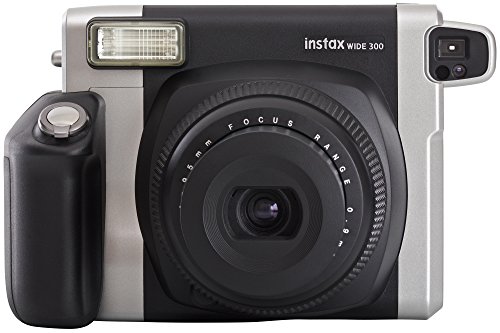
Fujifilm Instax Wide 300 review. Compare 108 technical specifications and user reviews to see how it ranks among cameras and if it is worth buying.
Overall score
What it is: An overall evaluation of the camera's quality, based on technical analyses and user reviews.
When it matters: When you need a quick reference to identify the best cameras on the market.
Score components:
90.0%
Technical Score
10.0%
User score
Technical Score
What it is: An assessment of the camera's technical performance, covering eight key areas: image quality, autofocus, video features, stabilization, lens compatibility, connectivity, battery, and design.
When it matters: When you want to compare cameras based on technical performance and available features.
Score components:
28.0%
Sensor & Image
25.0%
Photo Features
18.0%
Video & Audio
14.0%
Display & Design
8.0%
Battery & Power
7.0%
Connectivity & Storage
User score
What it is: A rating that combines user reviews and the total number of reviews received by the camera.
When it matters: When real-world owner satisfaction and review volume matter to your decision.
Score components:
70.0%
User reviews
30.0%
Popularity
Score components:
25.0%
Sensor size
20.0%
Main camera megapixels
20.0%
Dual card slots
15.0%
N. of focus points
10.0%
RAW photo capture
10.0%
Phase-detection autofocus (photos)
Score components:
35.0%
Weight
30.0%
Battery life (CIPA)
20.0%
Sensor-shift stabilization
15.0%
GPS
Score components:
30.0%
Price
20.0%
Weight
20.0%
AF tracking
20.0%
Battery life (CIPA)
10.0%
Touchscreen
Score components:
30.0%
Main camera megapixels
25.0%
Sensor size
20.0%
Main camera pixel size
15.0%
Sensor-shift stabilization
10.0%
RAW photo capture
Score components:
30.0%
Weight
25.0%
Thickness
20.0%
AF low-light sensitivity
15.0%
Sensor-shift stabilization
10.0%
Eye detection AF (human)
Score components:
30.0%
Sensor size
25.0%
Main camera pixel size
20.0%
Eye detection AF (human)
15.0%
Main camera megapixels
10.0%
Sensor-shift stabilization
Score components:
30.0%
Weight
25.0%
Battery life (CIPA)
20.0%
Min operating temperature
15.0%
Sensor-shift stabilization
10.0%
GPS
Available: ranking among products currently available (including other versions of this product).
All: ranking among all products in the database.
#4 in Best Instant Cameras
#38 in Best Fujifilm Cameras
#195 in Best Cheap Cameras
#211 in Best Cameras under £1000
#273 in Best Cameras under £500
#345 in Best Cameras under £200
#400 in Best Cameras under £300
#462 in Best Travel Cameras
#464 in Best Cameras for Hiking
#467 in Best Cameras
What it is: An assessment of the camera's technical performance, covering eight key areas: image quality, autofocus, video features, stabilization, lens compatibility, connectivity, battery, and design.
When it matters: When you want to compare cameras based on technical performance and available features.
Score components:
28.0%
Sensor & Image
25.0%
Photo Features
18.0%
Video & Audio
14.0%
Display & Design
8.0%
Battery & Power
7.0%
Connectivity & Storage
What it is: A rating that combines user reviews and the total number of reviews received by the camera.
When it matters: When real-world owner satisfaction and review volume matter to your decision.
Score components:
70.0%
User reviews
30.0%
Popularity
What it is: An indicator that combines the camera's overall rating with its cost.
When it matters: When you want to know how much overall quality you get for the price.
Score components:
60.0%
Overall score
40.0%
Price
Importance: HIGH
Good value: Full frame or larger
Importance: HIGH
Good value: At least 20 MP
Importance: HIGH
Good value: At least 3.5 µm
Importance: LOW
Importance: MEDIUM
Good value: At least ISO 25,600
Importance: MEDIUM
Importance: MEDIUM
Good value: At least 14-bit
Importance: LOW
Importance: LOW
Importance: LOW
Importance: LOW
Importance: LOW
Importance: LOW
Importance: LOW
Importance: LOW
Importance: MEDIUM
Importance: LOW
Importance: LOW
Importance: LOW
Importance: LOW
Importance: LOW
Importance: HIGH
Good value: At least 200 points
Importance: HIGH
Importance: MEDIUM
Importance: LOW
Importance: LOW
Importance: MEDIUM
Importance: MEDIUM
Importance: HIGH
Good value: At least 5 stops
Importance: LOW
Importance: MEDIUM
Good value: At least 10 fps
Importance: LOW
Importance: LOW
Importance: LOW
Importance: LOW
Importance: LOW
Importance: LOW
Importance: LOW
Importance: LOW
Importance: LOW
Importance: LOW
Importance: LOW
Importance: LOW
Importance: LOW
Importance: LOW
Importance: LOW
Importance: LOW
Good value: At least 200,000 actuations
Importance: LOW
Good value: At least 10x
Importance: HIGH
Good value: At least 3840 px
Importance: MEDIUM
Good value: At least 200 Mbps
Importance: MEDIUM
Good value: At least 10-bit
Importance: LOW
Importance: LOW
Importance: LOW
Importance: LOW
Importance: LOW
Importance: LOW
Importance: LOW
Good value: At least 30 min
Importance: LOW
Importance: LOW
Importance: LOW
Importance: LOW
Importance: LOW
Good value: At least 2 microphones
Importance: LOW
Importance: LOW
Importance: LOW
Importance: LOW
Importance: MEDIUM
Good value: 500 g or less
Importance: LOW
Importance: LOW
Importance: LOW
Importance: MEDIUM
Importance: MEDIUM
Good value: At least 2.36 million dots
Importance: LOW
Good value: 100%
Importance: LOW
Importance: LOW
Good value: At least 120 Hz
Importance: MEDIUM
Good value: At least 3 in
Importance: LOW
Importance: LOW
Importance: LOW
Importance: LOW
Importance: LOW
Importance: LOW
Importance: LOW
Good value: At least 10 m
Importance: LOW
Importance: LOW
Importance: LOW
Importance: LOW
Importance: MEDIUM
Good value: At least 400 shots
Importance: LOW
Good value: At least 1,500 mAh
Importance: LOW
Importance: LOW
Importance: LOW
Importance: LOW
Importance: LOW
Importance: LOW
Importance: LOW
Importance: LOW
Importance: LOW
Importance: LOW
Importance: LOW
Importance: LOW
Importance: LOW
Importance: LOW
Importance: LOW
Importance: LOW
Importance: LOW
Importance: LOW
Importance: MEDIUM
Importance: MEDIUM
Importance: LOW
Good value: At least 2 microphones
Importance: LOW
Importance: LOW
Importance: LOW
Importance: MEDIUM
Good value: At least 400 shots
Importance: LOW
Importance: MEDIUM
Good value: 500 g or less
(Reviews last updated: July 2026)
In his review on Dan Finnen's Blog, Dan Finnen concludes that the Fujifilm Instax Wide 300 is a noticeable upgrade over the older, "crap-tastic" Wide 210, though it still leaves considerable room for improvement. On the positive side, the camera features a sturdier, utilitarian build with a confident clicking battery door and an ergonomic grip. The control layout is highly improved; the power switch is easily accessible by the shutter, focus is adjusted by twisting the lens, and the functional buttons and small screen have been moved to a much more practical position on the back of the camera. Additionally, Finnen praises the use of four standard AA batteries over a proprietary lithium battery, making it highly convenient to swap in fresh power after weeks of disuse. However, the camera suffers from several notable flaws, particularly regarding its user experience and exposure consistency. The most infuriating con is the counter-intuitive focus mechanism: the lens defaults to a 0.3m–3m mode every time it is turned on, causing users to constantly waste film on out-of-focus shots if they forget to manually switch...
The PCMag review highlights the Fujifilm Instax Wide 300 as a fun, easy-to-use analog camera, praised for utilizing the larger Instax Wide film format for 3.9-by-2.4-inch prints. Key advantages include its comfortable, large handgrip, convenient AA battery power, and a 114mm f/14 lens suitable for snapshots and landscapes. However, the camera is limited by a bulky, 1.4-pound design and a total lack of manual exposure control. Additionally, the fixed-focus lens requires a clip-on attachment for close-ups, which, combined with the optical viewfinder, causes significant parallax errors.
The Fujifilm Instax Wide 300 is described as a novelty, "fun-first" camera that excels at producing sharp, high-quality physical prints, particularly for group shots in direct sunlight. A dedicated close-up lens adapter is included to aid in capturing clear selfies. However, the device requires a steep learning curve for gauging distance, with shots under 0.9 meters often resulting in blur, while the viewfinder fails to accurately represent the final frame. The high recurring cost of film, at approximately Rs 60 per shot, makes correcting exposure mistakes through trial-and-error an expensive endeavor.
The Fujifilm Instax Wide 300 is a large, retro-inspired instant camera designed for capturing wide shots, making it an excellent choice for a DIY wedding photobooth or group photos at parties. It utilizes large film cartridges measuring 86x108mm, which is twice the size of standard mini Instax prints, allowing for better landscape and group imagery. The camera features user-friendly, automatic functions such as an auto-flash for low-light environments, a fill-in flash for backlit situations, and exposure compensation to adjust the mood. Additionally, it includes a fully retractable close-up lens capable of focusing on subjects just 40cm away and features a built-in tripod socket, allowing for stable, hands-free operation during events. A major advantage of this camera is its long battery life; it operates on 4 AA batteries that last through extensive use without requiring frequent changes. The immediate physical development of the prints provides an exciting, nostalgic experience that appeals to both children and adults. However, user feedback highlights a notable downside regarding the basic design of the viewfinder, as it can be difficult to accurately line up subjects, meaning...
In his review, Keith Wee highly praises the Fujifilm Instax Wide 300 as a refreshing, spontaneous alternative to the overwhelming nature of modern social media apps like Instagram. He notes that the camera is incredibly intuitive to operate, making it fun and accessible for photographers of all ages. Key pros highlighted in the review include its massive film size—which measures 3.4 x 4.25 inches (twice the size of Instax Mini film)—delivering a highly attractive print size that easily fits group shots. Additionally, Wee applauds its user-friendly features, such as a responsive lens barrel "twist ring" for quick focal length adjustments, an accurate viewfinder, L/D (Light/Dark) buttons for exposure control, decent low-light capabilities, and an included close-focusing adapter that drops the minimum focusing distance down to 40cm for wide selfies. Despite his enthusiasm, Wee highlights notable cons regarding the camera's physical footprint and ongoing costs. The most prominent drawback is the bulky, un-petite physical size of the camera, which is a necessary trade-off to accommodate the massive film format. He also notes that the films are not cheap, posing a potential...
The Tech Advisor review highlights the Fujifilm Instax Wide 300 as the top instant camera for landscape photography and large group shots, offering prints double the size of standard Instax Mini photos. Priced at $129.99 when reviewed, the camera features incredibly straightforward controls, including a 95mm lens with two levels of autofocus, basic flash options, and exposure compensation settings to subtly lighten or darken images. It naturally excels at longer distances, delivering significantly higher detail in scenery and architectural photos than its market competitors. Film prices hover around £1.30/$1.30 per print, though bulk buying can drop costs below $1.00. However, the reviewer emphasizes substantial trade-offs regarding its physical design and limited flexibility. The camera is criticized for its bulky, "chunky" aesthetic, making it awkward to carry and arguably the least visually appealing model in a category typically driven by style. Functionally, the camera struggles to capture high-quality close-ups or selfies, and portraits require getting used to a wide landscape format. Additionally, the built-in flash has a tendency to overpower photos if not managed carefully, and users are completely restricted to...
The Fujifilm Instax Wide 300 is a simplistic, lightweight instant camera praised for its exceptional image sharpness and large photo size, which measures 4.2” by 3.4” (double the size of an Instax Mini). It features a barebones design with manual focus settings tailored for specific distances (3 to 10 feet for portraits and 10 feet to infinity for landscapes) and includes a clip-on close-up lens attachment. The camera excels in outdoor environments with abundant light, making it a stellar tool for capturing vibrant sunrises, sunsets, and travel landscapes. Additionally, it serves as an excellent asset for professional photographers who want to provide clients with a tangible, on-the-spot souvenir during photo sessions. Despite its strengths, the camera comes with several notable limitations. A major drawback is its lack of manual flash control, as the built-in flash automatically triggers in lower light, often leading to overexposed or color-compromised images and wasted film. The camera is also highly "light hungry," meaning that shooting in shaded areas or forests can result in severely underexposed photos even when using the "Lighter" mode. Furthermore, there is...
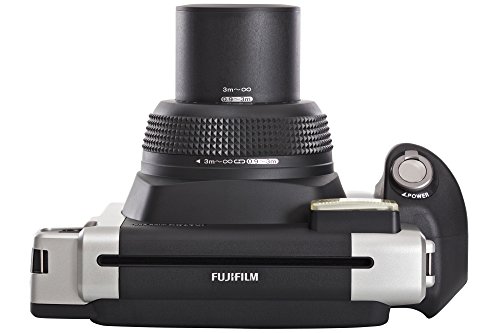
The Fujifilm Instax Wide 300 is a purely analogue instant camera designed for photographers who want physical prints that are twice the width of standard credit card-sized instant film. Its primary advantage is this larger 62x99mm landscape print format, which delivers a less gimmicky, more nostalgic feel similar to classic Polaroid film and performs remarkably well in outdoor lighting. It features an incredibly simple operation system consisting of a single shutter button encircled by a power lever, an automated lens cover, and simple top buttons to control the flash and brightness. The camera also includes a mechanized 95mm f/14 lens with a standard focus range and a Landscape mode, alongside a clip-on close-up selfie lens attachment featuring a built-in mirror. However, the major trade-off for these larger prints is the camera's massive, bulky plastic body, which weighs 612g and is too large to fit into jacket pockets, making it difficult to transport without a dedicated bag. Reviewers describe its awkward aesthetic as an "ugly design" that is uncomfortable to hand-hold without the included neck strap. Performance-wise, the optical viewfinder is...
The Canister Magazine review highlights the Fujifilm Instax Wide 300 as a rewarding, fun-to-use camera that produces large, distinctive instant prints with deep shadows and soft edges. While praised for delivering an engaging analog experience, the camera is described as addictive, making it suitable for those prioritizing the tactile, nostalgic look of wide-format film. Conversely, the review notes significant drawbacks regarding image quality and construction, explaining that resolution does not match traditional film, and the body lacks rugged, long-term durability. The author advises users to expect to replace the device over time, highlighting that the camera is more about the experience than high-fidelity output. canistermagazine.com
The Fujifilm Instax Wide 300 is a sturdy, retro-style instant camera designed for casual use at parties and events, though it lacks the advanced features needed for professional photography. On the positive side, the camera produces large physical photos that are double the size of the Instax Mini 8, featuring excellent colour balance and a nostalgic, grainy aesthetic. It is robustly built, features a comfortably placed shutter button on a curved edge, and allows users to manually switch between two focus ranges or use a detachable close-up lens for macro shots. However, the camera suffers from significant design flaws, being described as exceptionally large, heavy at over 600 grams, and clumsy to carry. Performance is highly inconsistent due to the complete lack of automatic metering, leaving users with only two extreme brightness options—"Lighten" and "Darken"—which often results in wasted, expensive film. Additionally, the viewfinder placement is awkward to use, the macro lens attachment feels flimsy, and running the device requires four heavy AA batteries, making it an expensive and bulky novelty item compared to smaller, cheaper alternatives like the Instax...
In an October 2016 review, the Fujifilm Instax Wide 300 is highlighted as a budget-friendly alternative to traditional Polaroid cameras due to the significantly lower cost per print. The author appreciates the large, wide-format instant prints for satisfying the demand for physical film chemistry without high expense. Conversely, the camera is criticized for being bulky, heavy, and possessing a cheap, plasticky build quality. Additional cons include a frustrating, small optical viewfinder, yet the camera remains in the collection because the affordability of the film outweighs the poor ergonomics.
The Instax Wide 300 is a "point-and-shoot" instant camera designed for purists who prioritise image size and quality over complex features. Its standout characteristic is the wide-format film, which produces images measuring 62 x 99 mm—double the size of the popular Instax Mini series. While its bulkier dimensions (168 x 121 x 96 mm) and weight of approximately 600g make it less portable, the ergonomic handgrip ensures it stays secure in hand. Operation is straightforward, featuring a manual lens ring to toggle between two distance ranges (0.9–3m and 3m–infinity) and a small LCD to track remaining shots. Pros and Cons Pros: Large Format: The wide film captures more detail and feels more "professional" than smaller instant formats. Macro Capability: It includes a clip-on close-up lens with an integrated selfie mirror, allowing for shots as close as 0.4m. Exposure Control: A "Lighten/Darken" (L/D) mode allows users to manually adjust brightness for difficult lighting or creative effects. Cons: Limited Settings: It lacks a self-timer, double exposure, or bulb modes, which may frustrate creative photographers. Inflexible Flash: The automatic flash cannot be turned...
The Lomography review highlights the Fujifilm Instax Wide 300 as a successful visual and ergonomic facelift of the Wide 210, featuring a modern design inspired by the Instax 500 AF and the addition of a crucial tripod socket. It continues to produce vibrant, large-format instant prints suitable for landscapes and group shots. Technically, however, the camera is nearly identical to its predecessor, suffering from a lack of manual settings, a fixed two-zone focus system, and a flash that cannot always be deactivated, marking it as a cosmetic rather than functional evolution.
The review highlights the Fujifilm Instax Wide 300 as a basic, no-frills instant camera that stands out primarily due to its large, landscape-format chemical prints. Measuring 6.2 x 9.9 cm, the wide format is a significant upgrade from the restrictive Instax Mini size, making it much better for group photos and casual portraits between 1 and 5 meters. The camera operates on a straightforward "open, insert cartridge, and shoot" routine, automatically ejecting a unique physical print that fully develops within 90 to 180 seconds. It features an automatic electronic flash with an optional fill-flash mode, basic "light/dark" exposure compensation, and a manual two-zone focus ring (0.9–3m and 3m–infinity). However, the reviewer notes several distinct drawbacks, particularly regarding the camera’s massive, bulky physical size and its technically limited, low-cost dual-lens plastic optic. The simple lens structure lacks true autofocus and delivers a soft, low-contrast "vintage" rendering that struggles with landscape details and close-up photography. The camera's automatic exposure system also suffers from a narrow dynamic range, frequently yielding overly dark "near-night" images in low ambient light or blowing out highlights in...
The Fujifilm Instax Wide 300 is a significant upgrade from the older Instax 210 model, utilizing a wide film format (86 mm × 108 mm) that is twice the size of standard Instax Mini photos. It features a fixed 95 mm retractable lens with a 1:14 aperture, a real image optical viewfinder, and motorized zone focusing that easily switches between normal (0.9 m–3 m) and landscape (3 m–∞) modes. The camera includes automated exposure control, a built-in automatic electronic flash with fill-flash capabilities, and a rear LCD display indicating the remaining shot count. It is powered by four standard AA batteries, capable of shooting roughly 100 images, and incorporates a tripod mount alongside an included close-up lens adapter for macro photography and self-portraits. This instant camera offers several distinct advantages, notably its excellent image quality under low-light conditions, user-friendly operation, straightforward film loading, and the large panoramic format ideal for group portraits or weddings. Additionally, the built-in tripod thread and solid value-for-money proposition enhance its overall utility. However, it does come with a few notable drawbacks, such as being considerably...
The Impossible Project I-1 wins this instant camera head-to-head review because of its sleek retro-modern design, creative flexibility, and superior close-up portrait performance. Its main advantages include a minimal focusing distance of 30 cm, beautiful square monochrome prints, and an advanced iOS app that unlocks manual controls for aperture, shutter speed, and double exposures. However, the I-1 suffers from a very high purchase and film price (over €2 per shot), an unreliable infrared autofocus, a loose control wheel, and painfully slow development times. In contrast, the Fujifilm Instax Wide 300 stands out as the more practical and budget-friendly alternative for casual users. Its pros highlight excellent color accuracy, faster picture development under a minute, and simpler operation that yields less unpredictable shots. On the negative side, the Fujifilm camera is described as a bulky, heavy plastic body that resembles a children's toy. It also offers almost no physical settings, forces an automatic flash that cannot be manually turned off, and has a restrictive minimum focusing distance of 90 cm which cuts off tight framing for portraits.
The Fujifilm Instax Wide 300 is an instant camera reviewed by 01net.com that operates similarly to a traditional Polaroid but utilizes landscape-format Instax Wide film rather than square prints. A major pro of this model is its updated, more attractive aesthetic compared to its predecessor, the Instax Wide 210. Powered by four AA LR06 batteries, the device functions completely autonomously. However, a notable technical con highlighted in the review is that its optical system remains entirely unchanged from the older 2010 version, meaning it delivers identical image quality without any performance upgrades. 01 In terms of build and usability, the review points out several design limitations. The camera is relatively bulky and heavy, weighing 780 grams and measuring 16 cm wide, 12 cm high, and 9 cm deep. The reviewers explicitly critiqued the viewfinder for being a bit too cramped or narrow ("étriqué"), which can hinder comfortable framing. Additionally, the camera lacks a battery life indicator and does not include a mains power charger. Despite these shortcomings, it remains a stable choice for landscape-oriented instant photography, with a recommended retail...
The Fujifilm Instax Wide 300 is reviewed as a charming, vintage-inspired instant camera that successfully revives the classic appeal of retro photography, though it retains a few design flaws. Its most significant advantage is the large 99 x 62 mm film format, which provides physical prints nearly double the size of standard Instax Mini photos. This wider layout makes it exceptionally well-suited for group shots and landscape photography. Additionally, the review praises the camera's high-quality, vivid color reproduction and an intuitive, user-friendly interface that lets users easily load film and shoot within seconds. The inclusion of a basic lens ring for focal adjustments and simple exposure management further enhances its overall ease of use. However, the camera faces clear criticism regarding its physical build and missing features. It is notably bulky and heavy, weighing 780 grams and measuring 18 cm in length, which prevents it from being a pocket-friendly device. The review highlights a slightly dark and cramped optical viewfinder that can make framing stressful, alongside a basic plastic exterior that occasionally feels cheap. A major functional omission is the...
The Instamaniac review emphasizes that the Fujifilm Instax Wide 300 remains the definitive leader for the large-format instant film category despite its launch back in 2014. The reviewer notes that its massive size (167.8mm × 94.7mm × 120.9mm) is completely dictated by the film format, occupying significant space in a camera bag. Operationally, the device is incredibly rudimentary and simple to use, requiring four AA batteries and featuring a two-position manual focus ring (0.9m–3m and 3m to infinity). While the chemical composition of the film is identical to Instax Mini, the wide layout is highly praised for capturing landscapes and group scenes, though film variations are strictly limited to basic color with white borders and a monochrome edition. The core advantages highlighted in the review include physical prints that are twice the size of standard Mini film and an intuitive, straightforward user experience. The camera also features a DSLR-style grip handle for a more secure hold, a tripod thread, a small back LCD screen, and an included plastic close-up attachment with a selfie mirror. On the downside, the reviewer criticizes...
This review highlights Fujifilm's Instax Wide Monochrome film as a highly successful, nostalgic revival of black-and-white instant photography. Tested on a Fujifilm Instax Wide 300 camera during a concert trip, the reviewer explores how the film fills the void left by discontinued professional formats like the iconic FP3000B peel-apart packs. The film is praised for delivering a captivating tactile experience and high-quality artistic prints, effectively bringing the magic back to physical photo manipulation. Pros and Cons Analysis Pros: Exceptional Image Quality: Produces beautiful, high-contrast images rich in detail, yielding deep blacks, clean whites, and delightful gray tones. Fast Development Time: The film develops rapidly—fully processing within three minutes—and safely operates in broad daylight. Cost Efficiency: At €12.90 per 10-shot pack (€1.29 per photo), it offers a much more affordable and qualitatively superior alternative to competitive options like Polaroid 600 film (€2.12 per photo). Cons: Higher Cost Than Color: The monochrome variant carries a slight price premium compared to the color counterpart, which sits at under €0.90 per print. Camera Limitations: The paired Instax Wide 300 lacks automated tracking mechanics; users...
The Fujifilm Instax Wide 300 is an analog instant film camera that stands out for producing large retro-styled prints measuring 62×99 mm, a true homage to 1980s photography. The reviewer praises the device for its excellent image quality, vivid color reproduction, and durable build. It provides user-friendly operation through an automatic exposure control system, a stable handgrip, and an effective two-mode autofocus ring covering ranges from 0.9 to 3 metres and beyond 3 metres. Additionally, it includes a practical clip-on macro lens adapter with an integrated selfie mirror, enabling close-up shots down to roughly 40 centimetres. However, the review highlights several distinct drawbacks regarding its design and overall running costs. The camera body is incredibly bulky, weighing 1.35 pounds, meaning it cannot easily fit into a small bag or pocket. Operationally, the system relies on an outdated four-AA battery setup rather than a modern rechargeable internal battery. Users face further limitations as the built-in flash cannot be manually disabled, and the camera lacks both a self-timer and included film cartridges in the initial retail box. Finally, the recurring price of...
The Fujifilm Instax Wide 300 stands out as an "outsider" in the Instax lineup due to its large size and massive print dimensions, offering an image area roughly double that of an Instax Mini. Weighing 612 grams, this non-compact camera features robust lines, a secure grip handgrip, and an incredibly simple, highly automated operation scheme. Key technical specifications include a 35mm equivalent lens with a fixed ƒ/14 aperture, dual-range manual zone focusing (0.9–3m and 3m–∞), and power supplied by four standard AA batteries that provide enough energy for up to 100 shots. The camera delivers an excellent quality-to-price ratio, retailing under €110, while a film twin-pack (20 shots total) costs around €15.97. The review highlights several distinct pros and cons regarding the camera's design and real-world performance. On the positive side, its primary strengths are the large 62 x 99mm final image size, intuitive handling suitable for beginners, long battery life using easily accessible AA batteries, and highly consistent performance that minimizes wasted film. Conversely, the camera's massive external physical dimensions make it bulky to carry. A major functional drawback...
Overview of the Fujifilm Instax Wide 300 The Fujifilm Instax Wide 300 is a robust, vintage-inspired instant camera that sets itself apart by delivering large-format prints measuring 62x99 mm, which is roughly double the size of standard Instax Mini photos. Designed with a classic 1970s silver and black aesthetic, it features a heavy, professional-looking body weighing over 600 grams without its four AA batteries. Technologically straightforward, the camera is equipped with a fixed f/14 aperture, two focus modes (normal and landscape), a close-up lens attachment for shots down to 40 cm, and an automatic flash that adjusts based on distance. While it does not offer the advanced electronic controls, LCD screens, or digital connectivity found in hybrid competitors like the Polaroid Snap Touch, it functions as a pure, analog homage to traditional instant photography. Pros and Cons Pros Large Print Format: Generates distinct 62x99 mm landscape images, filling a void for those who dislike tiny, business-card-sized prints. High Image Quality: Utilises ISO 800 film that renders vibrant colours, sharp definitions, and highly natural skin tones. Affordable Base Price: Offers superior...
The Fujifilm Instax Wide 300 is highlighted as a capable, user-friendly instant camera designed for large-format, 86x108mm prints, making it ideal for group photos and landscapes. It features a comfortable, deep handgrip, a simple focus mode switch, and an included close-up lens adapter, offering consistent, quick-ejecting exposures. YouTube · Conversely, the camera is criticized for its bulky, plastic, and heavy body, which makes it less portable. Other drawbacks include excessive mechanical noise, lack of manual flash control, and a significant, continuous cost for film, alongside an off-center viewfinder requiring user adjustments.
In this review, the blogger shares her positive experience testing the Fuji Instax Wide 300 polaroid camera, noting that instant cameras have successfully come back into style. Priced at €129.95, she prefers it over her digital Samsung NX3000 because it allows her to immediately print physical photos and display them on her bulletin board to keep memories close. The camera stands out as the larger, more professional counterpart to the Instax Mini, utilizing wider photo paper that makes it ideal for capturing group photos. Pros and Cons Highlighted in the Review Pros: It features a user-friendly, highly accessible layout with minimal buttons. The design includes standard batteries, a basic camera strap, brightness adjustments (light/dark settings), a single-click lens zoom with two distinct modes, and an integrated flash. Additionally, it bundles a practical clip-on lens attachment equipped with a mirror specifically designed for effortless selfies. Cons: The main drawback identified is the ongoing cost of photography. The device only works with original Fujifilm Instax WIDE 300 film packs, which cost €19.95 for 20 shots, resulting in an operating cost of roughly...
Compare