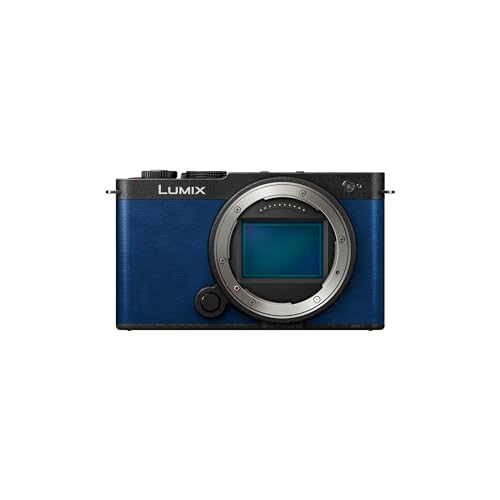
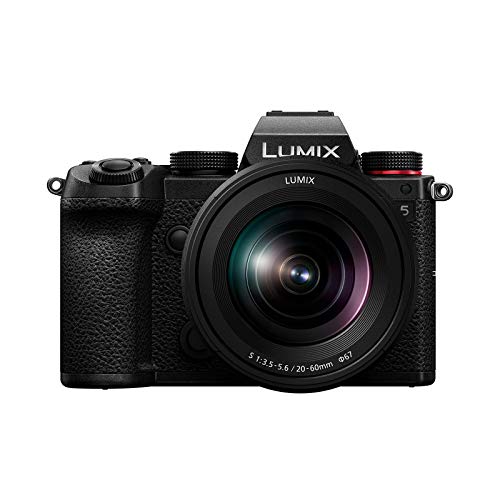
Panasonic LUMIX S5 review. Compare 108 technical specifications and user reviews to see how it ranks among cameras and if it is worth buying.
Overall score
What it is: An overall evaluation of the camera's quality, based on technical analyses and user reviews.
When it matters: When you need a quick reference to identify the best cameras on the market.
Score components:
90.0%
Technical Score
10.0%
User score
Technical Score
What it is: An assessment of the camera's technical performance, covering eight key areas: image quality, autofocus, video features, stabilization, lens compatibility, connectivity, battery, and design.
When it matters: When you want to compare cameras based on technical performance and available features.
Score components:
28.0%
Sensor & Image
25.0%
Photo Features
18.0%
Video & Audio
14.0%
Display & Design
8.0%
Battery & Power
7.0%
Connectivity & Storage
User score
What it is: A rating that combines user reviews and the total number of reviews received by the camera.
When it matters: When real-world owner satisfaction and review volume matter to your decision.
Score components:
70.0%
User reviews
30.0%
Popularity
Score components:
25.0%
Sensor size
20.0%
Main camera megapixels
20.0%
Dual card slots
15.0%
N. of focus points
10.0%
RAW photo capture
10.0%
Phase-detection autofocus (photos)
Score components:
35.0%
Weight
30.0%
Battery life (CIPA)
20.0%
Sensor-shift stabilization
15.0%
GPS
Score components:
30.0%
Price
20.0%
Weight
20.0%
AF tracking
20.0%
Battery life (CIPA)
10.0%
Touchscreen
Score components:
30.0%
Main camera megapixels
25.0%
Sensor size
20.0%
Main camera pixel size
15.0%
Sensor-shift stabilization
10.0%
RAW photo capture
Score components:
30.0%
Weight
25.0%
Thickness
20.0%
AF low-light sensitivity
15.0%
Sensor-shift stabilization
10.0%
Eye detection AF (human)
Score components:
30.0%
Sensor size
25.0%
Main camera pixel size
20.0%
Eye detection AF (human)
15.0%
Main camera megapixels
10.0%
Sensor-shift stabilization
Score components:
30.0%
Weight
25.0%
Battery life (CIPA)
20.0%
Min operating temperature
15.0%
Sensor-shift stabilization
10.0%
GPS
Available: ranking among products currently available (including other versions of this product).
All: ranking among all products in the database.
#1 in Best Cameras under £300
#20 in Best Vlogging Cameras
#20 in Best Cameras for YouTube
#23 in Best Low Light Cameras
#25 in Best Full-Frame Cameras
#29 in Best Cameras
#29 in Best Digital Cameras
#29 in Best Mirrorless Cameras
#29 in Best 4K Cameras
#29 in Best Cameras for Portraits
#89 in Best Travel Cameras
What it is: An assessment of the camera's technical performance, covering eight key areas: image quality, autofocus, video features, stabilization, lens compatibility, connectivity, battery, and design.
When it matters: When you want to compare cameras based on technical performance and available features.
Score components:
28.0%
Sensor & Image
25.0%
Photo Features
18.0%
Video & Audio
14.0%
Display & Design
8.0%
Battery & Power
7.0%
Connectivity & Storage
What it is: A rating that combines user reviews and the total number of reviews received by the camera.
When it matters: When real-world owner satisfaction and review volume matter to your decision.
Score components:
70.0%
User reviews
30.0%
Popularity
What it is: An indicator that combines the camera's overall rating with its cost.
When it matters: When you want to know how much overall quality you get for the price.
Score components:
60.0%
Overall score
40.0%
Price
Importance: HIGH
Good value: Full frame or larger
Importance: HIGH
Good value: At least 20 MP
Importance: HIGH
Good value: At least 3.5 µm
Importance: LOW
Importance: MEDIUM
Good value: At least ISO 25,600
Importance: MEDIUM
Importance: MEDIUM
Good value: At least 14-bit
Importance: LOW
Importance: LOW
Importance: LOW
Importance: LOW
Importance: LOW
Importance: LOW
Importance: LOW
Importance: LOW
Importance: MEDIUM
Importance: LOW
Importance: LOW
Importance: LOW
Importance: LOW
Importance: LOW
Importance: HIGH
Good value: At least 200 points
Importance: HIGH
Importance: MEDIUM
Importance: LOW
Importance: LOW
Importance: MEDIUM
Importance: MEDIUM
Importance: HIGH
Good value: At least 5 stops
Importance: LOW
Importance: MEDIUM
Good value: At least 10 fps
Importance: LOW
Importance: LOW
Importance: LOW
Importance: LOW
Importance: LOW
Importance: LOW
Importance: LOW
Importance: LOW
Importance: LOW
Importance: LOW
Importance: LOW
Importance: LOW
Importance: LOW
Importance: LOW
Importance: LOW
Importance: LOW
Good value: At least 200,000 actuations
Importance: LOW
Good value: At least 10x
Importance: HIGH
Good value: At least 3840 px
Importance: MEDIUM
Good value: At least 200 Mbps
Importance: MEDIUM
Good value: At least 10-bit
Importance: LOW
Importance: LOW
Importance: LOW
Importance: LOW
Importance: LOW
Importance: LOW
Importance: LOW
Good value: At least 30 min
Importance: LOW
Importance: LOW
Importance: LOW
Importance: LOW
Importance: LOW
Good value: At least 2 microphones
Importance: LOW
Importance: LOW
Importance: LOW
Importance: LOW
Importance: MEDIUM
Good value: 500 g or less
Importance: LOW
Importance: LOW
Importance: LOW
Importance: MEDIUM
Importance: MEDIUM
Good value: At least 2.36 million dots
Importance: LOW
Good value: 100%
Importance: LOW
Importance: LOW
Good value: At least 120 Hz
Importance: MEDIUM
Good value: At least 3 in
Importance: LOW
Importance: LOW
Importance: LOW
Importance: LOW
Importance: LOW
Importance: LOW
Importance: LOW
Good value: At least 10 m
Importance: LOW
Importance: LOW
Importance: LOW
Importance: LOW
Importance: MEDIUM
Good value: At least 400 shots
Importance: LOW
Good value: At least 1,500 mAh
Importance: LOW
Importance: LOW
Importance: LOW
Importance: LOW
Importance: LOW
Importance: LOW
Importance: LOW
Importance: LOW
Importance: LOW
Importance: LOW
Importance: LOW
Importance: LOW
Importance: LOW
Importance: LOW
Importance: LOW
Importance: LOW
Importance: LOW
Importance: LOW
Importance: HIGH
Good value: At least 200 points
Importance: MEDIUM
Importance: MEDIUM
Good value: At least ISO 25,600
Importance: MEDIUM
Good value: At least 200 Mbps
Importance: HIGH
Good value: At least 3.5 µm
Importance: HIGH
Good value: At least 5 stops
Importance: LOW
Importance: MEDIUM
Importance: MEDIUM
Good value: 500 g or less
Importance: LOW
Importance: LOW
Importance: LOW
Importance: LOW
Importance: LOW
(Reviews last updated: July 2026)
The Panasonic Lumix DC-S5 is a compact, 24MP full-frame hybrid camera offering high-end features from the larger S1 in a smaller body, according to DPReview. Key pros include exceptional image quality, 5-axis image stabilization, a 96MP high-res mode, and robust video capabilities such as internal 10-bit 4:2:2 recording, V-Log, and dual SD card slots. Conversely, the review identifies limitations, particularly regarding the DFD contrast-based autofocus, which can exhibit a distracting "wobble" and lags behind phase-detect competitors. Other cons include a 5 fps maximum burst rate with continuous AF, a 30-minute limit on 10-bit video recording, and a significant 1.5x crop when shooting 4K/60p.
The Panasonic Lumix DC-S5 is an outstanding, entry-level to mid-range full-frame mirrorless camera that earns an Editors' Choice award for its superior balance of performance and price. Built on a solid, weather-sealed magnesium chassis, it slims down the bulky form factor of its S1 predecessor while maintaining professional-grade physical dials and an intuitive touch interface. Key hardware features include an excellent 24-megapixel BSI CMOS sensor, a highly effective 5-axis in-body image stabilization (IBIS) system, and dual SDXC memory card slots. For creatives who focus heavily on video production, the S5 stands out as a class-leading tool for the money, delivering 10-bit 4K recording at up to 60fps internally, a flat V-Log color profile, and support for 5.9K ProRes Raw output when connected to an Atomos Ninja V external recorder. However, the camera has a few minor compromises to keep in mind. Its continuous subject tracking is limited to a modest 6fps burst speed, which is noticeably slower than key industry rivals from Sony and Nikon that offer 10fps and 12fps tracking respectively. Additionally, Panasonic continues to rely on its contrast-based...
The Panasonic Lumix S5 is praised by ePHOTOzine as a compelling, high-value full-frame mirrorless camera, boasting robust weather-sealing, excellent color reproduction, and an advanced 96-megapixel high-resolution mode. Key strengths include reliable autofocus, impressive battery life, and superior video capabilities for its price point. However, the review notes limitations such as a modest 7fps shooting speed, slower UHS-I speeds on the secondary SD card slot, and occasional autofocus inconsistencies during portraiture. Furthermore, cable connections can physically obstruct the articulated screen, making it less ideal for certain tripod-based video setups.
The Panasonic Lumix DC-S5 is a highly versatile, budget-friendly full-frame mirrorless camera that serves as an excellent entry point into the L-mount alliance or as a compact second body for Leica SL2 users. Built around a solid, dust- and splash-resistant magnesium alloy chassis, it features a 24.2 MP CMOS sensor that delivers exceptional crispness, rich color contrast, and stellar high-ISO performance up to 12800. Key strengths include its remarkably compact and lightweight ergonomics—weighing just 714 g—as well as robust 5-axis sensor-shift image stabilization, a 96 MP High Resolution mode, dual SD card slots, and professional-grade internal UHD 4K video recording features. Despite its professional-tier output, the camera has a few notable drawbacks. The review highlights that the EVF, while functional with its 2.36m-dot OLED panel and high refresh rate, falls short of the higher-resolution 5.76m-dot viewfinders found on pricier sibling models like the S1 or SL2. Additionally, its reliance on a contrast-detection based Depth-From-Defocus (DFD) autofocus system remains a point of contention for some users, even though the face and body detection performed reliably fast and accurate during real-world shoots....
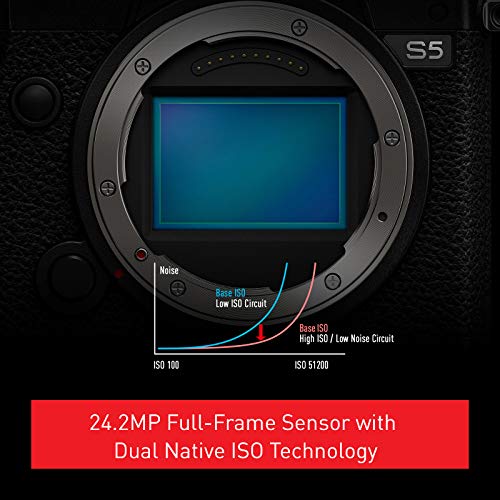
The Panasonic Lumix S5 is a compact, full-frame mirrorless camera that offers a highly competitive feature set for its price. It stands out with a 24-megapixel sensor, an expandable ISO range up to 204,800, and a High Resolution mode that outputs 96-megapixel-equivalent images. Its autofocus system utilizes 225 points with Depth from Defocus technology, achieving focus in as little as 0.08 seconds and working effectively down to -6EV. For video creators, it acts as a powerhouse, offering 14 stops of dynamic range, Dual Native ISO (640 and 4000) to minimize low-light noise, and internal 4K recording at up to 60p. Lab tests rate its dynamic range for stills as excellent at 11.2 f-stops at ISO 100, which outperforms rivals like the Nikon Z 6II. Furthermore, it provides strong image stabilization (up to 6.5 stops with stabilized lenses) and a robust, dust- and splash-resistant body with dual SD card slots. Despite these strong features, the camera has clear drawbacks when compared to its peers. Its sensor resolves only 92 percent of its theoretical maximum resolution at ISO 100, trailing the Sony...
The Panasonic Lumix S5 is a compact, highly functional full-frame mirrorless camera that addresses previous criticisms of the S series regarding heavy bodies and sluggish autofocusing. Equipped with the same 24.2MP sensor as the larger S1, it produces highly detailed images with excellent vibrant colours and outstanding low-light performance up to ISO 6400. The camera is heavily geared toward vloggers and hybrid content creators, offering impressive video specifications like uncropped 4K/30p shooting, internal 10-bit recording, V-Log support with 14 stops of dynamic range, an articulating touchscreen, and dual SD memory card slots. When paired with its wide-angle 20-60mm f/3.5-5.6 kit lens, it serves as an excellent, travel-friendly companion. Despite its stellar hybrid capabilities, the S5 has notable drawbacks that make it less suitable for certain professions. Its design relies on a Micro HDMI port rather than a full-sized one, which is prone to breaking, and its uncropped 10-bit 4K continuous shooting is restricted to a 30-minute limit. For action and wildlife photography, the camera's 7fps burst speed is relatively slow and pedestrian. Additionally, while the updated algorithm noticeably improves subject...
The review by Shane on Geeky Nerdy Techy positions the Panasonic Lumix S5 as a highly underrated, best-value full-frame hybrid camera that delivers professional results comparable to much costlier models like the Sony FX3 or A7IV. A major standout feature is its exceptional video quality, boasting a 24.2MP CMOS sensor, 10-bit 4:2:2 internal recording, over 14 stops of dynamic range, and the inclusion of full VLOG profile support without any paid upgrades. Coupled with a dual native ISO setup (base 640 and high base 4000), it excels in extreme low-light environments, with the reviewer successfully shooting up to ISO 8000. Additionally, the camera supports solid slow-motion video up to 1080p at 180fps and benefits from an excellent, standardized f/1.8 L-mount prime lens lineup that yields beautiful subject separation and background rendering. Despite its strengths, the reviewer outlines several specific technical trade-offs that buyers must navigate. The physical design lacks a full-sized HDMI port, forcing creators to rely on a micro-HDMI connection or a separate dongle wrapper for live switchers. When it comes to video performance, the camera imposes a strict...
The DPReview hands-on preview highlights the Panasonic Lumix S5 as a compact, weather-sealed 24MP full-frame L-mount camera, boasting a 96MP high-res mode, 5-axis IBIS, and pro-grade video features like 10-bit 4K/60p, V-Log, and an S1H-inspired workflow. While offering high value, the camera has compromises, including a lower-resolution 2.36M-dot EVF, only one fast UHS-II SD slot, a persistent autofocus "wobble" in the DFD system, and a 4K/60p APS-C crop.
The Panasonic Lumix S5 is presented as a capable, compact, and affordable full-frame L-mount camera, featuring a robust, weather-sealed body, excellent 24.2-megapixel sensor performance, and high-end internal 10-bit 4:2:2 4K video capabilities. Key pros include effective in-body stabilization, a comfortable grip, and a new high-capacity battery for hybrid users. Conversely, cons include the reliance on contrast-based DFD autofocus which exhibits "fluttering," a slow 5 fps continuous shooting rate, and a lower-resolution electronic viewfinder. Additional drawbacks include a fragile micro-HDMI port, only one UHS-II compatible card slot, and a 30-minute recording limit for 10-bit video. For the full video, watch at dpreview.com. DPReview
Panasonic Lumix DC-S5 The Panasonic Lumix DC-S5 is a compact full-frame mirrorless camera (DSLM) that stands as a strong competitor against established models from Sony, Canon, and Nikon. Despite its smaller body and lightweight design of around 700 grams, it delivers an impressive and highly consistent 24-megapixel resolution across all ISO levels. Testing reveals exceptional image quality and a robust dual-ISO architecture that keeps image noise minimal until high sensitivities like ISO 3,200. Designed with enthusiasts in mind, the camera features an ergonomic grip, a flexible 3-inch touchscreen display capable of flipping 180 degrees for selfies, and an excellent 120Hz electronic viewfinder. The camera's absolute standout feature is its professional-grade video functionality. It supports UHD recordings at up to 60 frames per second with 4:2:2 10-bit color depth, includes flat profiles like V-Log, and achieves a massive 180 fps in Full-HD mode. Key strengths include built-in body image stabilization, a weather-sealed magnesium shell, and dual SD slots. However, the review highlights notable downsides: the maximum continuous shooting rate is somewhat average at around 7 frames per second, the autofocus tracking...
The Digitalkamera.de comparative review highlights the Panasonic Lumix DC-S5 as a robust, compact, and highly capable full-frame mirrorless camera featuring excellent image quality up to ISO 6,400, a flexible touchscreen, and effective 5-axis image stabilization. Key advantages include its durable weather-sealed, magnesium alloy construction and a comfortable, ergonomic handgrip. Conversely, the review identifies limitations, such as a lack of official low-temperature protection and only one of its dual SD slots supporting the faster UHS-II standard. Furthermore, the DFD autofocus system, while reliable in general, lags behind phase-detection competitors, particularly in fast-tracking scenarios.
The Panasonic Lumix S5 is a compact and lightweight full-frame mirrorless camera that punches well above its weight class by packing advanced technology from the larger S1 professional series into a highly portable body. It features an excellent 24-megapixel sensor that delivers superb image quality and impressive low-light performance on par with its more expensive competitors. For landscape or still photography, it offers a High-Resolution mode capable of stitching together multiple exposures into a single 96-megapixel image. Videographers will highly appreciate its professional-grade capabilities, including 4K video recording at 60 frames per second, 10-bit colour depth, V-Log support, and unlimited recording times when shooting in 4K at 30fps. Additionally, both the camera body and the included 20-60mm kit lens are weather-sealed against dust and rain, making it a rugged option for outdoor creators. Despite its strong overall performance, the Lumix S5 has clear trade-offs, particularly for action and sports photography. Its primary drawback lies in its continuous autofocus performance; because it uses Panasonic's contrast-based Depth from Defocus (DFD) system instead of phase-detection autofocus, the camera struggles to accurately track moving...
The Panasonic Lumix S5 is a compact, full-frame mirrorless camera that punches well above its weight by inheriting premium technology from the larger S1 series. It delivers exceptional 24-megapixel photo quality, even in challenging low-light conditions, and features a unique 96-megapixel High-Resolution mode for highly detailed, stationary shots. The camera is a powerhouse for videographers, supporting 4K video at 60 frames per second with 10-bit color depth, V-Log formatting, and unlimited recording times at 30fps under optimal conditions. Its lightweight, weather-sealed body, coupled with an articulating touchscreen display, makes it highly versatile for travel, vlogging, and everyday shooting. Furthermore, users are not restricted to Panasonic lenses alone; the L-mount alliance provides access to high-quality lenses from Sigma and Leica. However, the Lumix S5 falls short in a few key areas that make it ill-suited for sports and action photography. Its Contrast-Detection Autofokus system, which uses Depth from Defocus (DFD) technology, provides reliable eye and face tracking for stationary subjects but struggles with accuracy during high-speed action tracking. This is compounded by a mediocre burst shooting speed of just 5 frames...
The DER SPIEGEL review highlights the Panasonic Lumix S5 as an ambitious full-frame camera that successfully brings professional-grade imagery to advanced hobbyists at a more accessible price. Retailing at €1,949 for the body or €2,241 as part of the "DC-S5K" kit (including a 20-60mm lens), the S5 delivers stellar, low-noise performance in dim indoor environments and evening settings. The camera heavily targets videographers by offering color profiling tools and up to 50 frames per second (fps) in UHD video using standard European PAL settings (or 60 fps in NTSC), surpassing many rivals constrained to 30 fps. Physical highlights include an exceptionally robust, dust- and splash-protected build that weighs just over a kilogram with its kit configuration, a highly adaptable fully articulating touchscreen, and integrated image stabilization that keeps handheld long exposures remarkably sharp. However, the reviewer explicitly identifies a few shortcomings. The complex control scheme—which features multiple command dials, a joystick, a directional pad, and nine customizable buttons—creates a dense layout that will easily overwhelm beginners, making the instruction manual absolute mandatory reading. On the image quality front, test shots...
Overview of the Panasonic Lumix S5 The Panasonic Lumix S5 is a compact 24-megapixel full-frame mirrorless camera that offers an excellent balance between resolution and file handling. Tested alongside the unconventional 20-60mm f/3.5-5.6 kit lens, the camera body excels in ergonomics, featuring an intuitive three-button layout for white balance, ISO, and exposure compensation directly under the shutter button. Its fully articulating, rotatable screen facilitates effortless low-angle shots and vlogging. Part of the L-Mount Alliance alongside Sigma and Leica, the system ensures cross-brand lens compatibility, allowing users to build highly versatile setups. Pros and Cons Pro: Exceptional dynamic range that allows for extensive shadow and highlight recovery. Pro: Highly effective built-in image stabilisation capable of compensating for 5 to 6 exposure stops, enabling handheld long exposures. Pro: Highly compact, ergonomic body design that handles easily with one hand. Con: Noticeable image noise begins to appear and become disruptive at settings above ISO 3,200. Con: The camera relies purely on a contrast-detect autofocus system, which faces industry criticism for being outdated. Con: The system lacks an emotional "soul" or retro appeal compared...
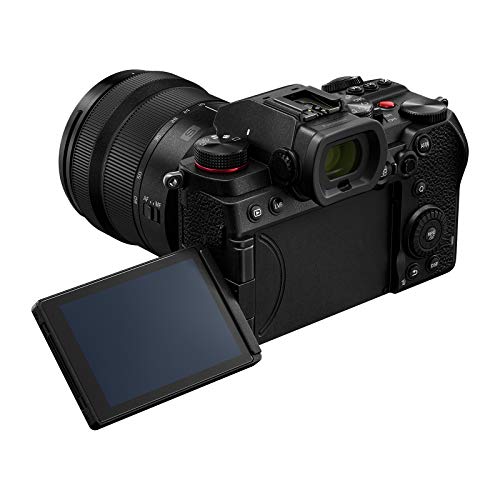
The Panasonic Lumix S5 is a solid and versatile full-frame mirrorless camera introduced in September 2020 as a lighter, more affordable hybrid generalist compared to the bulkier S1 series. Equipped with a 24-megapixel BSI CMOS sensor without a low-pass filter, it delivers high image quality, a 14-stop dynamic range, a 96MP high-resolution pixel-shift mode, and an effective 5-axis in-body image stabilization (IBIS) system. Video creators benefit significantly from its dual-native ISO setup, robust 4K recording up to 10-bit 4:2:2 internally, and advanced tools like V-Log, waveforms, and anamorphic support. It is well-regarded for its compact magnesium alloy weather-sealed body, dual SD card slots (one UHS-II), and a fully articulating touchscreen display—a first for Panasonic full-frame cameras. Despite its strong hybrid performance, the camera has notable limitations, particularly regarding its autofocus. Relying on Panasonic's contrast-based DFD (Depth from Defocus) technology, the autofocus suffers from erratic pulsing or "hunting" in continuous mode (AFC) and can lose track of subjects unexpectedly. Furthermore, 4K/60p recording is restricted to a heavily cropped APS-C sensor area, the electronic viewfinder (EVF) features a below-average resolution of 2.36...
The Digitalkamera.de review highlights the Panasonic Lumix DC-S5 as a compact, robust, and weather-sealed full-frame camera offering exceptional 24MP image quality, high-resolution shooting modes, and 5-axis IBIS, alongside a very bright, fully articulating screen. While praised for its, ergonomic handling and professional video tools, the camera is noted for compromises including a low-resolution 2.36-million-dot EVF and the lack of a full-size HDMI port.
The Panasonic Lumix DC-S5 is a compact, lightweight full-frame mirrorless camera featuring a 24-megapixel sensor with Dual Native ISO technology (ISO 100 and ISO 640). It delivers exceptional image quality with highly detailed, low-noise photos up to ISO 6,400, and remaining usable even at ISO 12.800. The camera includes a 5-axis sensor-shift image stabilisation system that provides up to 6.5 stops of compensation when paired with optically stabilised lenses. It stands out significantly for its class-leading video features, offering 4K video recording up to 60fps (albeit with a crop), Full-HD up to 180fps for slow motion, flat colour profiles, and RAW output via HDMI. The robust magnesium alloy body is weather-sealed against dust and splashes, freezing-resistant down to -10°C, and incorporates dual SD card slots for instant data backup. Despite its strong performance, the review highlights notable limitations in continuous shooting speeds and autofocus. The maximum burst rate of 7.3 frames per second is only achievable in AF-S mode; switching to continuous autofocus (AF-C) drops the burst rate to a sluggish 5.0 frames per second, making it poorly suited for...
The Nikon Z5 and Panasonic Lumix S5 are competitive entry-level full-frame mirrorless cameras that excel in different areas based on user needs. The Nikon Z5 stands out for its superior electronic viewfinder, featuring a large 0.8x magnification and a crisp 3.7-million-dot resolution. It includes 5-axis in-body image stabilization (IBIS), dual UHS-II SD card slots, and an aggressive noise reduction filter that keeps JPEG images clean up to ISO 6400. However, the Z5 falls short with a slow continuous shooting speed of just 4.5 frames per second. Its video capabilities are heavily limited by a severe 1.7x crop factor during 4K/30p recording, and its contrast autofocus struggles in low-light environments down to -2 EV. The Panasonic Lumix S5 offers superior build features and faster performance, but at a slightly higher price point. On the positive side, it delivers uncropped 4K video oversampled from 6K, supports advanced 10-bit internal recording, and features a 96-megapixel High-Resolution composite mode for tripod shooting. It captures faster burst shots at 7 fps, provides a side-flipping touchscreen fully capable of selfies, and utilizes an upgraded DFD contrast...
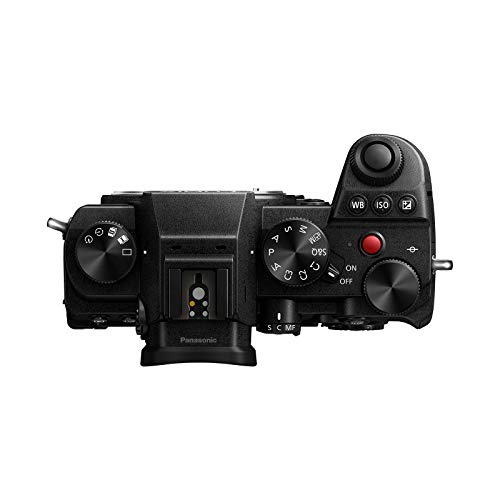
Several key pros and cons emerge from the camera's design and physical layout: Pro: Complete physical control set layout mimicking the premium S1-series. Pro: Highly responsive control joystick that operates much faster than older models like the GH5. Pro: Front control dial seamlessly rings around the shutter button for maximum comfort. Pro: Massive customization with up to five virtual touchscreen Fn keys and saved setups. Con: The mode dial completely lacks a lock mechanism to stop accidental adjustments. Con: The body lacks a top-plate status display, which is reserved for the larger S1H model. Con: The control joystick sits too close to the "AF ON" button, risking accidental dual presses with larger thumbs. Con: Very large hands may find the body too short, causing the pinky finger to slip underneath without the optional battery grip.
The Panasonic Lumix S5 is an expert-level full-frame mirrorless camera praised for packaging the heavy-hitting performance of its larger siblings, the S1 and S1H, into a much more compact, weather-sealed body. Its 24.2-megapixel sensor delivers stellar image quality and outstanding ISO low-light sensitivity, generating highly detailed files that avoid over-smoothing. For design and usability, the camera excels with an incredibly customizable ergonomic layout, dual SD card slots, a fully articulating touchscreen, and the ability to be powered continuously via USB-C. Furthermore, its built-in sensor stabilization makes handheld shooting effortless. On the video front, it satisfies advanced creators by offering advanced tools like V-Log, anamorphic support, and internal 4K recording up to 30p using the full sensor width. However, the review highlights several distinct compromises that keep the Lumix S5 from being a perfect hybrid device. A primary drawback is Panasonic's reliance on contrast-detection DFD autofocus technology, which exhibits a slight trembling and struggles with sluggish responsiveness in low-light and video tracking compared to competitors. Action photographers will also find the continuous burst speeds and internal buffer capacity underwhelming compared to...
The Panasonic Lumix S5 is a highly versatile mirrorless camera featuring a 24-megapixel full-frame CMOS sensor that excellently bridges the gap between high-end photography and professional video production. The camera delivers exceptional image quality with well-controlled image noise up to 3200 ISO, a great dynamic range (especially in RAW), and a specialized 96-megapixel high-resolution tripod mode. On the video side, it functions as a cinema-grade tool, supporting internal 10-bit 4K recording, free V-Log color profiling (offering over 14 stops of dynamic range), dual native ISO, and an upcoming firmware update for Apple ProRes RAW external recording. Furthermore, it manages to pack all of this into a weather-sealed magnesium alloy body that is remarkably compact and lightweight, nearly matching the dimensions of smaller Micro Four Thirds bodies like the GH5. Despite earning a high 9/10 score, the review highlights several distinct compromises, most notably with the Depth From Defocus (DFD) autofocus system, which is slow in low light and prone to "hunting" or losing focus during video tracking. While the physical handling is excellent, ergonomics are slightly hindered by an awkward...
The Labo Fnac review evaluates the Panasonic Lumix S5 mirrorless camera kit bundled with the Lumix S 20-60mm f/3.5-5.6 lens. Positioned as a compact and highly polyvalent hybrid option, this setup targets videographers and photographers seeking a full-frame 24.2-megapixel sensor housed within a robust, weather-sealed magnesium alloy chassis. The laboratory testing highlighted strong performance benchmarks, notably validating the core camera body's impressive low-light sensitivity, effective image stabilization systems, and extensive suite of professional video capture choices—including 4K recording up to 60 frames per second. Additionally, lab tests showed excellent center sharpness and uniform frame consistency across tested images, supporting extensive cropping capabilities where users can crop out up to 65% or 70% of an image at mid-focal lengths while safely maintaining proper print resolutions. However, the evaluation also underscores specific performance drawbacks tied strictly to the accompanying zoom kit lens. While the Panasonic optic is praised for displaying very little geometric distortion, it demonstrates a strong, notable tendency toward chromatic aberration at both the 28mm and 50mm focal ranges. Furthermore, despite the system showing highly reliable technical detail retrieval in...
The Panasonic Lumix S5 is a highly reliable, full-frame hybrid mirrorless camera that provides an excellent balance of high-end photography and cinema-quality video features. Weighing a manageable 630 grams, this robust, weather-sealed camera is built to withstand extreme environments, functioning perfectly from freezing temperatures down to -15°C up to scorching 38°C heat. Standout photographic features include its 24-megapixel sensor, a high-resolution mode capable of assembling 96-megapixel images in-camera, and an effective 5-axis image stabilization system that allows for sharp handheld shooting. For videographers, it delivers impressive 4:2:2 10-bit internal recording (capturing 1 billion colours) alongside useful tools like built-in timelapse compilation. Its physical layout is equally highly praised, featuring a deeply recessed grip for balanced handling, a dedicated focus-point joystick, a fully articulating touchscreen, dual SD card slots, and the ability to charge via power bank on the go. However, the review highlights distinct trade-offs that come with its compact form factor and accessible price point. A major limitation for video shooters is that recording in 4K at 60 frames per second forces a 1.5x APS-C crop, narrowing the field...
The Labo Fnac review rates the Panasonic Lumix S5 full-frame mirrorless hybrid camera an impressive 4 out of 5 stars, celebrating it as an exceptionally well-balanced and highly versatile tool for both photography and video production. Tested with a fixed, wide-aperture Panasonic S-50mm f/1.8 prime lens, the camera earned high technical marks for its incredible daylight sensitivity (scoring 9/10) and near-perfect, standard-setting color accuracy (scoring 8/10). While its 24-megapixel resolution is not groundbreaking, the lab noted it offers plenty of sharpness (scoring 8/10) and allows for generous cropping, especially for mobile device viewing. Furthermore, customer feedback highlights its remarkable image stabilization and advanced eye-tracking autofocus features, though some users mentioned that maximizing the camera’s extensive features requires a steep learning curve. Despite its strengths, the review notes a couple of distinct drawbacks to consider before purchasing. The camera struggles in low-light environments, scoring a lower 6/10 due to digital noise that quickly creeps into the darkest areas of nocturnal scenes—a flaw the review notes is relatively common across the market but still a clear limitation here. Additionally, the lab pointed...
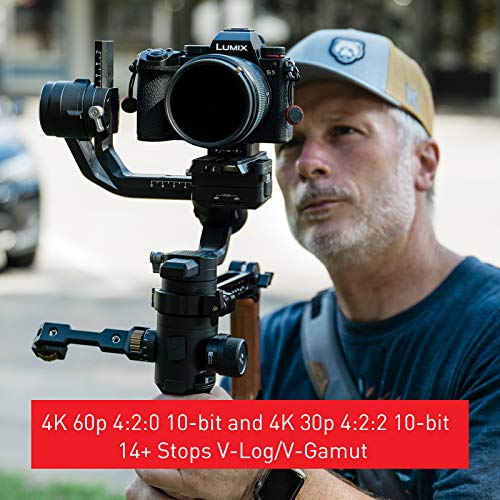
The Panasonic Lumix S5 review highlights an exceptionally capable 24.2-megapixel full-frame hybrid camera that packs professional features into a remarkably compact, weather-sealed magnesium alloy body. A major pro is its elite-tier video specification, offering internal 10-bit 4:2:2 4K recording, dual native ISO for clean low-light performance, and the inclusion of the full V-Log profile out of the box with 14+ stops of dynamic range. Photographers benefit from a highly detailed 96-megapixel high-resolution sensor-shift mode, superb ergonomics, intuitive menus, and a highly reliable 5-axis in-body image stabilization (IBIS) system. Dual SD card slots also add peace of mind for professionals needing redundant storage. However, the camera does come with notable trade-offs. The primary con is its reliance on Panasonic's contrast-based DFD (Depth from Defocus) autofocus system; while improved for general shooting, it still exhibits occasional background pulsing or hunting and is less reliable for fast action tracking than competing phase-detection systems. For video shooters, capturing 4K at 60p forces an APS-C crop, there is a 30-minute recording limit when shooting in heavy 10-bit modes, and the physical body utilizes a more...
The Panasonic Lumix S5 is a full-frame mirrorless camera that provides high performance in low-light conditions, effectively replacing older models like the micro four-thirds GH5S and bulky DSLRs for daily professional photo and video tasks. A major strength highlighted in the review is its Dual Native ISO technology, which utilises two separate circuits to process different sensitivities (such as 800 and 5000 ISO). This allows the 24.2-megapixel sensor to preserve high dynamic range, retain rich colour, and maintain a clean image with minimal noise even when pushed up to a native 51,200 ISO limit. Real-world testing proved that the built-in 5-axis image stabilisation delivers exceptional, sharp handheld results during night video shoots in Perpignan and high-shutter photo shooting at a late-night rugby match. The review underscores several key advantages and a primary drawback for potential buyers. On the positive side (pros), the camera offers extreme value for money, functioning as an elite tool for solo filmmakers, wedding videographers, and concert photographers who need to shoot discreetly without artificial lighting. The sensor handles contrast beautifully, smoothing out images right at its...
Panasonic Lumix S5 Review Summary The Panasonic Lumix S5 remains a highly competitive full-frame hybrid camera in 2026, offering professional-grade features at an affordable sub-€1,400 price point. Built around a 24.2 MP full-frame sensor, it delivers exceptional image quality with well-controlled noise at high sensitivities like ISO 6400, accurate JPEG and RAW color reproduction, and an impressive 96 MP high-resolution mode for large-format prints. On the video front, the S5 stands out as a serious tool for independent filmmakers, boasting 4K 10-bit recording, excellent V-Log dynamic range for high-end color grading, and highly effective 5-axis sensor stabilization providing up to 6.5 stops of shake correction. Furthermore, 2026 firmware updates have notably enhanced its historically criticized contrast-detection autofocus, significantly boosting face tracking and low-light reliability. Despite these strong capabilities, the review notes several technical limitations to consider before buying. For video production, shooting in 4K at 60p forces a restrictive 1.5x crop factor, which complicates wide-angle framing. For storage and data safety, the camera features only a single UHS-II compatible SD card slot, meaning the second slot lacks the same high-speed...
The Panasonic Lumix S5 is reviewed as a highly capable hybrid camera that packs full-frame capabilities into a remarkably compact body, making it significantly smaller than the S1 series and even tighter than the Micro Four Thirds GH5. It features a 24-megapixel sensor delivering excellent image quality, outstanding dynamic range, and strong high-ISO noise control]. Key pros highlighted in the review include its thoughtful physical design equipped with dual SD card slots, a fully articulated screen, a dual-control dial system, and a robust 5-axis in-body image stabilization system that performs beautifully for both photo and video. Additionally, it offers advanced internal video specifications right out of the box, including 10-bit 4:2:2 4K recording up to 30fps and integrated V-Log color profiles. On the downside, the review notes several design and technical trade-offs required to achieve its smaller footprint and competitive €2,000 price point. For instance, only one of its dual SD slots supports fast UHS-II speeds, and the electronic viewfinder is a more modest, lower-resolution unit under 3 million dots. Performance-wise, high-speed 4K recording at 50/60p is limited by a...
Panasonic LUMIX S5 Review Summary The Panasonic LUMIX S5 is a compact, full-frame L-mount camera designed primarily for hybrid users and content creators looking for high-quality video performance at a lower price point. The reviewer praises its lightweight form factor and highly adaptable menu layout, calling it their favourite in the LUMIX full-frame lineup. For video production, the camera features an effective 5-axis In-Body Image Stabilisation (IBIS) system that performs excellently for stationary, tripod-like shots and reliable handheld use. Additionally, its Dual ISO system (with base clean points at ISO 640 and ISO 4000) yields strong low-light capabilities suitable for documentary workflows. It also handles heat dissipation exceptionally well, presenting zero overheating issues during testing, and offers unlimited recording times when shooting in 8-bit formats. Despite these strengths, the review notes clear limitations in usability and functionality. The camera's contrast-based autofocus system, while improved, lacks consistency compared to competitors and is prone to sudden hunting or completely dropping focus points. For high-end productions, users face recording restrictions in 10-bit modes, which are strictly capped at a 30-minute limit per clip....
The Panasonic LUMIX S5 delivers solid overall performance in laboratory testing, especially considering its full-frame sensor category. In terms of pros, the camera offers a very respectable dynamic range of 12.1 stops at its native ISO 640 and 11.9 stops at its secondary native ISO 4000 when using V-Log. It also boasts impressive exposure latitude, maintaining highly usable images even when subexposed by 4 stops, thanks to a robust internal 10-bit 4:2:2 H.264 codec that disperses noise finely enough to be cleanly removed with noise reduction. Additionally, its rolling shutter performance in APS-C crop mode is excellent, clocking in at a swift 10.5 ms. However, the camera has notable cons that filmmakers should keep in mind. When shooting in full-frame mode (UHD 25p), the rolling shutter is an unexceptional 21 ms, which is average and lacks the speed found in some competitors. More critically, lab tests revealed an unusual anomaly where the physical shape of the lens iris (specifically tested with the Sigma 45mm f/2.8) became visible in the outer areas of the frame as a greenish tint during subexposure....
The Panasonic Lumix S5 is a compact 24-megapixel full-frame mirrorless camera that balances a lightweight form factor with high-end hybrid capabilities, shifting away from the bulky design of the Lumix S1 series. Standout positive features include an exceptional 5-axis in-body image stabilisation system (which works in tandem with stabilised lenses), a fully articulating rear touchscreen, dual SD card slots, and the ability to charge and power the camera simultaneously via USB-C. Photographically, it delivers clean, highly workable RAW files and excellent high-ISO noise management up to 12,800. For videographers, it shines by offering uncropped internal 4K recording at 10-bit 4:2:2, pre-installed V-Log without extra fees, and external RAW video output via HDMI. Conversely, the review highlights several drawbacks and limitations. A primary complaint is that the Depth From Defocus (DFD) continuous autofocus system in video mode remains inconsistent and occasionally unreliable, even with noted improvements over past models. Hardware compromises include a low-resolution electronic viewfinder and rear display, a very small micro-HDMI port, and the fact that only the first of the two memory slots supports the faster UHS-II bus...
The Techprincess review identifies the Panasonic Lumix S5 as a compact, weather-sealed full-frame camera offering high-performance, 24.2MP imaging and top-tier stabilization at a lower price point. It is praised for excellent ergonomics, intuitive controls, and robust video capabilities. However, the review notes the contrast-detection autofocus struggles with fast-paced, action-oriented tracking compared to competitors, and the camera is limited to 7fps, with a slightly bulkier build than some entry-level rivals.
The Panasonic Lumix S5 review praises the mirrorless full-frame camera for delivering excellent overall image quality and exceptional sharpness, ranking it at the top of its 24-megapixel category. The camera's JPEG engine performs very well, using internal oversharpening efficiently to compensate for minor edge softness when paired with the budget-friendly 20-60mm kit lens. Furthermore, it stands out for its outstanding chromatic performance and color accuracy, displaying a vibrant but natural saturation level of 112% that rivals high-end models like the Leica M10R. In low-light environments, the S5 manages noise linearly up to ISO 3200, maintaining strong details up to ISO 25,600 thanks to a highly flexible RAW file format. Key Pros and Cons Pros: Excellent image sharpness and fine detail rendering. Elite color accuracy and natural saturation control. Superb high ISO noise handling and RAW file flexibility up to 25,600 ISO. Accurate automatic exposure management. Cons: Noticeable quality degradation and noise artifacts at ISO 51,200. Slight loss of microscopic details starting at ISO 6400. Minor softness at the frame edges when using the standard 20-60mm kit lens.
The Panasonic Lumix S5 is a highly versatile full-frame hybrid camera that excels in both photography and videography, packing advanced features into a professionally designed body. For video creators, it stands out by inheriting many high-end capabilities from the pricier S1H, supporting full-frame 4K/30p (4:2:2 10-bit) and 4K/60p in APS-C crop mode, alongside automatic vertical video detection. Photographers benefit from a massive 96-megapixel multi-shot High-Resolution mode and a creative Live View Composite mode that allows real-time monitoring of long exposures for astrophotography or light painting. The camera offers excellent physical ergonomics with professional dials, dual SD card slots (both supporting high-speed UHS-II), micro HDMI, and a flexible 3-inch free-angle touchscreen. Its battery life is also strong, offering up to 470 shots natively and stretching up to 1,500 shots with power-saving settings enabled. However, the camera has some notable limitations, particularly concerning its autofocus system. While Panasonic updated its contrast-based Depth from Defocus (DFD) system with deep-learning algorithms—speeding up body and face tracking computations to 60 times per second and allowing subject detection down to 2.5% of the frame—the performance boost...
The Panasonic Lumix S5 is a highly compact and affordable 24-megapixel full-frame mirrorless camera designed to balance high functionality with an accessible price point. Positioned directly beneath the flagship S1 and S1R models, it shares the exact same graphical pipeline and photographic quality as the S1. Panasonic successfully shrunk the camera's physical body to match the dimensions of the Micro Four Thirds Lumix GH5, making it significantly more portable while still retaining robust video capabilities and image stabilization. It targets content creators and hybrid shooters by utilizing the mature L-Mount alliance, giving users immediate access to extensive lens options from Leica, Sigma, and Panasonic. Key Pros & Cons Pros: Compact Design: Dramatically reduced body size that is roughly equal to a GH5 and weighs 10 grams less. Image Quality: Delivers identical, top-tier photographic quality to the more expensive Lumix S1. Affordable Pricing: Retails at an aggressive €1,999 for the body only, saving buyers €500 compared to the S1's launch price. Lens Ecosystem: Native compatibility with the established L-Mount ecosystem right out of the box. Cons: Sacrificed Components: Cut costs by...
In this review, wedding videographer Ettore Mirarchi highly praises the Panasonic Lumix S5 for its versatility, ease of customization, and efficient workflow in professional event filmmaking. The core pros highlighted include its 24.2-megapixel full-frame sensor paired with Dual Native ISO technology, which allows the videographer to capture detailed, professional 4K videos with minimal noise even inside dark environments like churches. Furthermore, its 5-axis in-body image stabilization—which provides up to 6.5 stops of compensation when paired with compatible lenses—ensures smooth and stable handheld shots when moving quickly to capture emotional moments during ceremonies. The author notes excellent creative results when coupling the body with 35mm lenses for wide panoramic shots and 50mm lenses for intimate portraits with a blurred depth of field. While the review acts as a strong recommendation and concludes that the camera will not disappoint professional filmmakers, it presents a few limitations. As a con regarding physical capabilities, its internal burst shooting speed is limited to 6 fps for continuous photography. Additionally, the author notes that achieving the absolute best results for complex wedding productions requires integrating and...
Compare