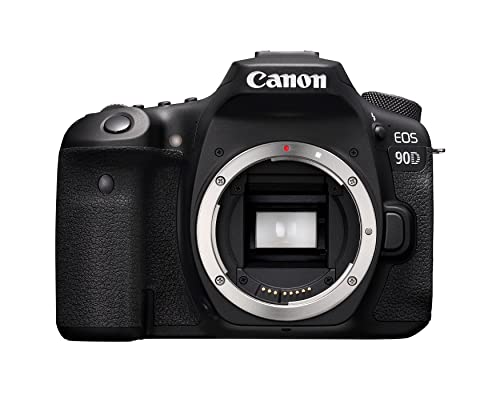
Canon EOS 250D review. Compare 108 technical specifications and user reviews to see how it ranks among cameras and if it is worth buying.
Overall score
What it is: An overall evaluation of the camera's quality, based on technical analyses and user reviews.
When it matters: When you need a quick reference to identify the best cameras on the market.
Score components:
90.0%
Technical Score
10.0%
User score
Technical Score
What it is: An assessment of the camera's technical performance, covering eight key areas: image quality, autofocus, video features, stabilization, lens compatibility, connectivity, battery, and design.
When it matters: When you want to compare cameras based on technical performance and available features.
Score components:
28.0%
Sensor & Image
25.0%
Photo Features
18.0%
Video & Audio
14.0%
Display & Design
8.0%
Battery & Power
7.0%
Connectivity & Storage
User score
What it is: A rating that combines user reviews and the total number of reviews received by the camera.
When it matters: When real-world owner satisfaction and review volume matter to your decision.
Score components:
70.0%
User reviews
30.0%
Popularity
Score components:
25.0%
Sensor size
20.0%
Main camera megapixels
20.0%
Dual card slots
15.0%
N. of focus points
10.0%
RAW photo capture
10.0%
Phase-detection autofocus (photos)
Score components:
35.0%
Weight
30.0%
Battery life (CIPA)
20.0%
Sensor-shift stabilization
15.0%
GPS
Score components:
30.0%
Price
20.0%
Weight
20.0%
AF tracking
20.0%
Battery life (CIPA)
10.0%
Touchscreen
Score components:
30.0%
Main camera megapixels
25.0%
Sensor size
20.0%
Main camera pixel size
15.0%
Sensor-shift stabilization
10.0%
RAW photo capture
Score components:
30.0%
Weight
25.0%
Thickness
20.0%
AF low-light sensitivity
15.0%
Sensor-shift stabilization
10.0%
Eye detection AF (human)
Score components:
30.0%
Sensor size
25.0%
Main camera pixel size
20.0%
Eye detection AF (human)
15.0%
Main camera megapixels
10.0%
Sensor-shift stabilization
Score components:
30.0%
Weight
25.0%
Battery life (CIPA)
20.0%
Min operating temperature
15.0%
Sensor-shift stabilization
10.0%
GPS
Available: ranking among products currently available (including other versions of this product).
All: ranking among all products in the database.
#2 in Best DSLRs for Beginners
#4 in Best Canon DSLR Cameras
#10 in Best DSLR Cameras
#10 in Best SLR Cameras
#15 in Best Canon Vlogging Cameras
#16 in Best Cameras for Beginners
#19 in Best Canon Digital Cameras
#19 in Best Canon EOS Cameras
#26 in Best Cameras under £300
#38 in Best Cameras for YouTube
#38 in Best Vlogging Cameras
#66 in Best Cameras for Portraits
What it is: An assessment of the camera's technical performance, covering eight key areas: image quality, autofocus, video features, stabilization, lens compatibility, connectivity, battery, and design.
When it matters: When you want to compare cameras based on technical performance and available features.
Score components:
28.0%
Sensor & Image
25.0%
Photo Features
18.0%
Video & Audio
14.0%
Display & Design
8.0%
Battery & Power
7.0%
Connectivity & Storage
What it is: A rating that combines user reviews and the total number of reviews received by the camera.
When it matters: When real-world owner satisfaction and review volume matter to your decision.
Score components:
70.0%
User reviews
30.0%
Popularity
What it is: An indicator that combines the camera's overall rating with its cost.
When it matters: When you want to know how much overall quality you get for the price.
Score components:
60.0%
Overall score
40.0%
Price
Importance: HIGH
Good value: Full frame or larger
Importance: HIGH
Good value: At least 20 MP
Importance: HIGH
Good value: At least 3.5 µm
Importance: LOW
Importance: MEDIUM
Good value: At least ISO 25,600
Importance: MEDIUM
Importance: MEDIUM
Good value: At least 14-bit
Importance: LOW
Importance: LOW
Importance: LOW
Importance: LOW
Importance: LOW
Importance: LOW
Importance: LOW
Importance: LOW
Importance: MEDIUM
Importance: LOW
Importance: LOW
Importance: LOW
Importance: LOW
Importance: LOW
Importance: HIGH
Good value: At least 200 points
Importance: HIGH
Importance: MEDIUM
Importance: LOW
Importance: LOW
Importance: MEDIUM
Importance: MEDIUM
Importance: HIGH
Good value: At least 5 stops
Importance: LOW
Importance: MEDIUM
Good value: At least 10 fps
Importance: LOW
Importance: LOW
Importance: LOW
Importance: LOW
Importance: LOW
Importance: LOW
Importance: LOW
Importance: LOW
Importance: LOW
Importance: LOW
Importance: LOW
Importance: LOW
Importance: LOW
Importance: LOW
Importance: LOW
Importance: LOW
Good value: At least 200,000 actuations
Importance: LOW
Good value: At least 10x
Importance: HIGH
Good value: At least 3840 px
Importance: MEDIUM
Good value: At least 200 Mbps
Importance: MEDIUM
Good value: At least 10-bit
Importance: LOW
Importance: LOW
Importance: LOW
Importance: LOW
Importance: LOW
Importance: LOW
Importance: LOW
Good value: At least 30 min
Importance: LOW
Importance: LOW
Importance: LOW
Importance: LOW
Importance: LOW
Good value: At least 2 microphones
Importance: LOW
Importance: LOW
Importance: LOW
Importance: LOW
Importance: MEDIUM
Good value: 500 g or less
Importance: LOW
Importance: LOW
Importance: LOW
Importance: MEDIUM
Importance: MEDIUM
Good value: At least 2.36 million dots
Importance: LOW
Good value: 100%
Importance: LOW
Importance: LOW
Good value: At least 120 Hz
Importance: MEDIUM
Good value: At least 3 in
Importance: LOW
Importance: LOW
Importance: LOW
Importance: LOW
Importance: LOW
Importance: LOW
Importance: LOW
Good value: At least 10 m
Importance: LOW
Importance: LOW
Importance: LOW
Importance: LOW
Importance: MEDIUM
Good value: At least 400 shots
Importance: LOW
Good value: At least 1,500 mAh
Importance: LOW
Importance: LOW
Importance: LOW
Importance: LOW
Importance: LOW
Importance: LOW
Importance: LOW
Importance: LOW
Importance: LOW
Importance: LOW
Importance: LOW
Importance: LOW
Importance: LOW
Importance: LOW
Importance: LOW
Importance: LOW
Importance: LOW
Importance: LOW
Importance: HIGH
Importance: MEDIUM
Good value: At least ISO 25,600
Importance: LOW
Importance: MEDIUM
Good value: At least 400 shots
Importance: LOW
Importance: MEDIUM
Good value: At least 200 Mbps
Importance: LOW
Importance: LOW
Importance: MEDIUM
Importance: LOW
Good value: 100%
Importance: HIGH
Good value: At least 200 points
Importance: MEDIUM
Good value: At least 10 fps
Importance: LOW
Importance: LOW
Good value: At least 1,500 mAh
Importance: LOW
Importance: MEDIUM
Good value: 500 g or less
(Reviews last updated: July 2026)
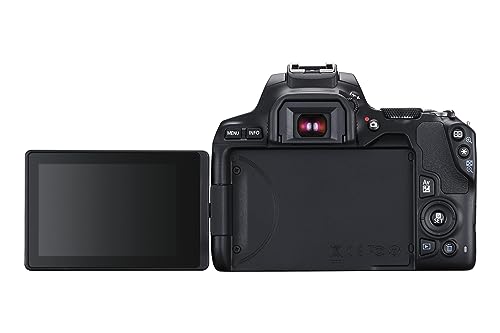
The Canon EOS 250D is recognized by ePHOTOzine as a lightweight, user-friendly DSLR featuring a 24.1-megapixel APS-C sensor, DIGIC 8 processor, and an impressive 1,070-shot battery life. It offers a 3-inch vari-angle touchscreen, reliable Dual Pixel CMOS AF in live view, and 4K video capabilities alongside built-in connectivity. However, the review notes significant limitations, including a heavy crop and lack of Dual Pixel AF in 4K mode, along with a modest 5fps burst rate. Other drawbacks include the lack of USB charging, polycarbonate construction, and an optical viewfinder that only provides 95% coverage.
The Canon EOS 250D is a lightweight, beginner-friendly DSLR designed as a step up for smartphone photographers, featuring a 24.2MP APS-C sensor, a highly flexible 3-inch vari-angle touchscreen, and an excellent Guided UI tutorial mode to assist novices. Its primary strengths lie in its ability to capture highly detailed, sharp stills with realistic colors that clearly outperform standard smartphone images, alongside an impressive battery life of around 1,000 shots per charge. Furthermore, when shooting via the rear screen in Live View mode, the camera utilizes an advanced Dual Pixel CMOS AF system with 3,975 focus points that provides rapid, accurate tracking and features an eye-focus option.
The Canon EOS Rebel SL3 (also known as the EOS 250D or EOS 200D II) is a highly capable, entry-level DSLR that features a 24.1MP APS-C sensor, a responsive 3-inch vari-angle touchscreen, and a DIGIC 8 processing engine. It is well-suited for beginners due to its lightweight, well-built body, excellent handling, and an EF mount that accepts an extensive collection of lenses. A major highlight of this model is its exceptional battery life, which is rated at an impressive 1,070 shots per charge when using the optical viewfinder. Additionally, the camera utilizes Canon’s fluid Dual Pixel CMOS AF system, which ensures fast and accurate autofocusing during live view shooting and Full HD video recording. However, the camera does come with several distinct drawbacks that mirror its entry-level positioning and older design framework. When shooting through the viewfinder, users are restricted to a heavily dated, basic 9-point autofocus system. The burst shooting speed is also capped at a modest 5fps, making it less than ideal for fast-moving action. While it introduced 4K video recording to this budget tier, the 4K mode...
The Canon EOS 250D is a lightweight, beginner-friendly DSLR designed to balance affordability with high-quality performance, making it an excellent entry point for aspiring photographers. Equipped with a 24.1-megapixel APS-C sensor and a DIGIC 8 processor, it delivers superb, reliable image quality with great fine detail and clean performance at lower ISO levels. Its standout features include a highly intuitive guided menu system that makes technical concepts accessible to newcomers, a 3-inch pivoting touchscreen, and an optical viewfinder that ensures a direct, detailed view of subjects. Most notably, its efficient electronics and use of the optical viewfinder allow for an impressive, industry-leading battery life of up to 1,070 shots per charge. However, the camera makes several trade-offs to maintain its budget-friendly price and compact dimensions. On the downside, the physical body sacrifices control dials and shortcuts on the direction pad, making manual adjustments slower, while the buttons themselves are cramped and difficult to operate with gloves. The camera is also less suited for ambitious video creation due to a restrictive video mode; it lacks log support and high-speed frame rates...
The Canon EOS Rebel SL3 / 250D stands out as an excellent, lightweight, and compact entry-level DSLR that uses a 24.1MP APS-C CMOS sensor paired with a DIGIC 8 processor to deliver highly sharp images and improved high ISO noise performance. It features an exceptionally fast and responsive Dual Pixel CMOS AF system in Live View mode, mimicking a mirrorless experience across 3,975 selectable AF points, alongside a crisp, fully articulating 3-inch vari-angle touchscreen. The camera offers user-friendly controls, including a Guided UI and Creative Assist mode to seamlessly teach beginners the fundamentals of photography. Additionally, it introduces 4K video recording to this budget tier and boasts a robust battery life superior to mirrorless rivals. However, the camera possesses several design trade-offs and functional limitations. For traditional shooting, its optical viewfinder relies on a basic 9-point phase-detection autofocus system, which restricts its capabilities when tracking fast-moving action. While compact for a DSLR, the body is noticeably thicker than mirrorless competitors, and it features a slightly small four-way control pad along with an inconveniently positioned memory card slot inside the bottom...
The Amateur Photographer review of the Canon EOS 250D / Rebel SL3 highlights the camera as an ultra-compact, lightweight DSLR ideal for beginners, featuring a 24.1-megapixel APS-C sensor, excellent JPEG color science, and an intuitive guided interface. Key strengths include exceptional battery life of up to 1,070 shots, a vari-angle screen, and fast Dual Pixel CMOS AF with eye detection in live view. However, the camera is limited by a heavily cropped, non-Dual Pixel 4K video mode and a basic 9-point AF system for viewfinder shooting. Other drawbacks include the lack of 24p in 1080p, no USB charging, and a hot shoe lacking a central X-sync pin for third-party flash compatibility.
Canon SL3 Review Overview The Canon SL3 (also known as the 250d) is a compact, entry-level DSLR equipped with a 24.1MP APS-C CMOS sensor and an upgraded DIGIC 8 image processor, yielding fast operational speeds and crisp images with excellent color science. For standard usage, it offers impressive performance upgrades, including a massively extended battery life rated for 1,070 shots per charge, eye-detection autofocus for both stills and video, and a fully articulating 3-inch touchscreen. Additional user-friendly features include a native in-camera 4K time-lapse movie mode, clean HDMI output suitable for livestreaming without framing overlays, and compatibility with the complete line of native Canon EF and EF-S lenses. Pros and Cons Breakdown Despite these strengths, the reviewer highlights several strange functional limitations imposed by Canon. Key Pros Superb Battery Life: Shoots up to 1,070 frames using the optical viewfinder. Advanced Autofocus: Uses Dual Pixel AF with added eye-detection capabilities. Upgraded Video Processing: Supports 4K time-lapse in-camera and outputs 10-bit 4:2:2 video externallycontextual(citationKey="0.1.1", source... * Physical Flexibility: Fully articulating touchscreen makes framing effortless at any angle. Key Cons Heavy 4K Crop:...
The Canon EOS 250D (marketed as the Rebel SL3 in the US) is a highly capable, compact entry-level DSLR designed specifically to offer newcomers a user-friendly introduction to photography. Despite its lightweight construction, the camera maintains a traditional DSLR layout with a comfortable grip and a responsive vari-angle touchscreen LCD. It is built around an APS-C CMOS sensor paired with a Digic 8 processor and Canon's Dual Pixel CMOS AF system. The camera produces vibrant, high-contrast images straight out of the box and features impressive battery longevity, capturing up to 1,070 shots per charge. It also marks a milestone for its price bracket by introducing 4K video recording, time-lapse capabilities, and Eye AF tracking. However, the 250D has notable limitations that may deter experienced users or those looking for premium build quality. The body exhibits a somewhat plastic-y feel, and the rear four-way directional pad is inconveniently small. While compact for a DSLR, it remains slightly bulkier than competing mirrorless alternatives. Performance-wise, the 9-point autofocus system is relatively basic compared to advanced models, and the separate on/off switch is poorly...
The Canon EOS Rebel SL3 (250D) is a compact, lightweight DSLR offering excellent JPEG colors, solid image quality, and a user-friendly "Guide Mode" for beginners. Its strengths include highly responsive Dual Pixel autofocus in live view, impressive 1,070-shot battery life, and comfortable ergonomics. However, the camera is limited by an antiquated 9-point autofocus system for viewfinder shooting, a small optical viewfinder, and the removal of the standard hot shoe center pin. Furthermore, 4K video recording suffers from a heavy 1.7x crop and lacks Dual Pixel autofocus, resulting in limited usability for video-focused users.
The Canon EOS Rebel SL3 (also known as the EOS 250D) balances portability with functional handling, claiming the title of the world's lightest DSLR featuring a moveable LCD screen. Weighing just 449g for the black model (including battery and card), its compact, slightly angular polycarbonate chassis provides a comfortable grip and thumb rest for average-sized hands. A major handling highlight is its highly responsive vari-angle touchscreen utilizing Dual Pixel CMOS AF, which grants access to an impressive 3,975 selectable focus areas and supports accurate Eye Detection AF. Additionally, the non-retractable EF-S 18-55mm kit lens allows users to begin shooting immediately upon power-up without an annoying unlock mechanism. However, the camera suffers from several design and performance omissions compared to its predecessor. In simplifying the body, Canon culled the dedicated flash button, depth-of-field preview button, and top-plate Wi-Fi button, which slightly hinders ease of operation. The power switch is also poorly positioned, making it too easy to accidentally overshoot "On" and engage movie mode. Performance-wise, the viewfinder autofocus system is highly restrictive, offering an outdated, 9-point diamond array where only one...
The RTINGS.com review identifies the Canon EOS Rebel SL3/250D as a compact, lightweight, and budget-friendly DSLR with good RAW image quality, high-resolution sensor, and exceptional battery life. Key advantages include a fully articulating, responsive touchscreen and reliable Dual Pixel autofocus in 1080p mode, making it suitable for beginners and casual shooters. However, the camera faces limitations, including a 1.7x crop and loss of Dual Pixel AF when shooting in 4K, alongside a lack of in-body image stabilization. Furthermore, the review notes mediocre low-light noise handling, a plasticky build quality, and an outdated 9-point AF system through the optical viewfinder. YouTube
The Canon EOS Rebel SL3 (also known as the 250D) is a highly capable, entry-level APS-C DSLR camera designed specifically to support beginner photographers. Touted as the world's lightest DSLR, its compact and lightweight 459g design offers a comfortable, deep hand grip that is portable enough for travel and accessible for smaller hands. It features a 24.1MP sensor, 4K video recording capability, and a versatile vari-angle touchscreen that simplifies shooting from awkward angles. A standout element for novices is the Guided UI and Creative Assist modes, which provide helpful diagrams on-screen and built-in creative filters like Grainy B/W and Fish-eye, eliminating the immediate need for complex external editing software. Performance-wise, the upgraded autofocus system includes reliable Eye Auto Focus for portraits, and the camera delivers a competent 5FPS burst speed suitable for basic action and everyday shooting. However, the camera has notable limitations that may deter more experienced users. In terms of pros, it excels with its highly intuitive beginner-friendly interface, excellent detail from its 24.1MP stills, dependable automatic exposure, an elegantly simple pop-up flash mechanism, and an extensive ISO...
Canon SL3 Review Summary The Canon SL3 (EOS 250D) is a highly compact and lightweight entry-level DSLR featuring a 24.1-megapixel APS-C sensor paired with a DIGIC 8 processor. In real-world testing, it delivers good daytime image quality with a film-like grain at higher ISOs, proving usable up to ISO 6400 or 12,800. A standout feature is the addition of the C-Raw file format, which reduces file sizes by nearly 40% with no discernible drop in image quality, significantly boosting raw buffer capacities. Furthermore, the camera introduces Live View eye-detection autofocus and a friendly Creative Assist mode to the EOS DSLR lineup. Its most impressive technical upgrade is its stellar battery life, which nearly doubles its predecessor's capacity to achieve an outstanding 1,070 shots per charge through the optical viewfinder using the exact same LP-E17 battery pack. However, the SL3 suffers from several frustrating compromises and feature subtractions intended to trim manufacturing costs. Its newly added 4K video recording mode is heavily flawed, introducing a severe 1.65x focal length crop (resulting in a total 2.64x crop factor) that heavily restricts wide-angle...
The Canon Rebel SL3 is described by Ken Rockwell as an ultra-lightweight, affordable DSLR offering exceptional image processing, excellent color rendition, and modern features like in-camera lens correction. Its compact, ergonomic design and flipping touch-screen make it an ideal, fun option for daily photography. Ken Rockwell Conversely, the review highlights inconsistent, unreliable autofocus performance, which often leads to soft images and missed shots compared to modern mirrorless alternatives. While the image quality is praised, the outdated 9-point viewfinder AF system is considered the camera's primary flaw. Ken Rockwell
The Canon EOS Rebel SL3 (250D) is reviewed as a highly capable, ultra-compact DSLR featuring an excellent 24MP APS-C sensor, DIGIC 8 processor, and a fully articulating touchscreen. Key strengths include great image quality, intuitive guide mode, 1,070-shot battery life via the optical viewfinder, and fast Dual Pixel autofocus in Live View. Conversely, significant limitations include a heavy 1.7x crop on 4K video, lack of Dual Pixel AF in 4K, a basic 9-point AF system through the viewfinder, and the removal of the hot shoe's central sync pin. Furthermore, the camera lacks USB charging and possesses a small, dim optical viewfinder, making it a mixed offering for advanced users compared to its competition. YouTube
The Photo Review Australia analysis highlights the Canon EOS 200D Mark II as a compact, entry-level DSLR featuring a 24.1-megapixel sensor, DIGIC 8 processor, and user-friendly Guided UI. Key advantages include the articulating touchscreen, fast Dual Pixel CMOS AF in Live View, and improved portrait capabilities, although the body feels plasticky and only offers a single control dial. Key compromises include a restrictive 1.6x crop factor when shooting 4K video and an outdated 9-point autofocus system when using the optical viewfinder. While performance is strong in Live View, the limited AF coverage and lack of robust, dual-dial controls make it more suitable for beginners than enthusiasts.
The Canon EOS 200D II is a portable, beginner-friendly entry-level DSLR featuring a compact, ergonomic design with a deep grip and a responsive, vari-angle touchscreen. It offers improved performance with a DIGIC 8 processor, faster Live View autofocus, Eye AF, and significantly better battery life over mirrorless alternatives when using the optical viewfinder. However, the 4K video mode is heavily limited by a substantial crop, which restricts wide-angle shooting, and it faces issues with rapid battery drain, lasting only 15 minutes in 4K. Additional drawbacks include a lack of power-bank charging via the MicroUSB port and an entry-level price point that competes with more capable mirrorless options.
The Canon EOS 250D is a compact and lightweight entry-level DSLR camera that offers high image quality through its 24-megapixel APS-C sensor and upgraded Digic 8 processor. It provides beginners with an easy-to-use experience thanks to an ergonomic grip, a fully automatic mode, and an intuitive, guide-assisted menu that can be switched to a professional mode for advanced users. The camera excels in autofocus speed when shooting photos through the viewfinder, registering lightning-fast capture times of 0.13 seconds in daylight and 0.16 seconds in low light. Additionally, its impressive battery life allows users to snap up to 4,800 images on a single charge when using the viewfinder. However, the review highlights several compromises made by Canon to keep the camera affordable and compact. While the EOS 250D introduces 4K video recording at 25 frames per second, its autofocus becomes noticeably slower in 4K and struggles to track fast-moving subjects. For action-heavy scenes, users must downgrade to Full HD to achieve responsive autofocus and up to 50 frames per second. Additional drawbacks include a notably small viewfinder and a restrictive autofocus...
The fotoMAGAZIN review evaluates the Canon EOS 250D as a highly compact, lightweight entry-level DSLR that delivers excellent value for money. Key strengths include its excellent battery life (reaching up to 1,070 shots per charge via the viewfinder), an intuitive guided user interface perfect for beginners, a fully articulating touchscreen, and the inclusion of 4K video recording. Furthermore, its Dual Pixel CMOS AF (DPAF) shines during Live View mode, bringing fast, quiet performance alongside accurate face and eye detection. On the downside, the review highlights notable limitations, particularly regarding its 4K video functionality, which suffers from a heavy 1.6x image crop and lacks Dual Pixel Autofocus, leaving users with a slower contrast-detection system. Low-light image quality is another weakness; while JPEG resolution is high up to ISO 1600, it drops heavily at ISO 3200 (down to an effective 9 megapixels) due to aggressive noise reduction software. Additionally, the traditional viewfinder autofocus relies on a dated, basic 9-point system, and Canon's controversial decision to remove the hotshoe's central sync contact severely limits the camera's compatibility with affordable, third-party manual flash systems....
The Canon EOS 250D is recognized as a lightweight, energy-efficient entry-level DSLR offering over 1,000 shots per charge when using the optical viewfinder, paired with fast UHS-I SD card write speeds up to 77 MB/s. It is praised for intuitive operation, featuring a specialized menu for beginners with guided, visual instructions. However, the camera features a relatively small optical viewfinder and lacks USB charging capabilities via its micro-USB port. Furthermore, the Dual Pixel CMOS AF system's, which provides rapid focusing in Full HD, becomes less effective and slower when recording in 4K resolution.
Summary The Canon EOS 250D is an entry-friendly, lightweight, and compact DSLR that features an intuitive user interface with graphical guides designed to mimic smartphone ease of use. It is equipped with a 24-megapixel APS-C sensor, a 3.0-inch multi-angle touchscreen display that flips up to 180 degrees, and a powerful LP-E17 battery capable of delivering up to 2,000 shots per charge when using the optical viewfinder. While the camera shoots limitless continuous JPEGs at 5 frames per second, its continuous RAW shooting is limited to just 13 images due to its slow UHS-I memory card slot. The camera's strengths lie in its high photo quality, very low image noise up to ISO 1,600, and excellent battery runtime. However, it suffers from major drawbacks when recording in UHD 4K resolution, where a severe digital crop (magnification) occurs—doubling the lens focal length if the digital image stabilizer is active. Additionally, the camera relies on a plastic body that lacks weather sealing, lacks an in-body image stabilizer, and has an expert-rated drop in image details once settings exceed ISO 3,200.
The Canon EOS 250D is a compact, lightweight entry-level DSLR equipped with a 24-megapixel APS-C sensor that delivers very good image quality and low noise up to ISO 1,600, remaining usable with minor detail loss at ISO 3,200. Performance testing shows a solid continuous shooting rate of 5 frames per second, which can be sustained indefinitely with JPEGs or extended up to 21 frames by using compressed RAW format. It exhibits highly responsive operation, boasting a rapid startup-to-capture time of 0.55 seconds and a swift phase-detection autofocus speed of 0.09 seconds when shooting through the viewfinder. Additional pros include its highly articulating, 3-inch touchscreen display, a deep and secure handgrip, built-in wireless connectivity (Wi-Fi, Bluetooth, NFC), and a helpful guide-based menu system designed to support beginners. However, the camera features notable limitations, particularly regarding its headline 4K video functionality. While 4K recording provides superior detail over Full-HD, it lacks 30fps support, forces a significant crop factor on the frame, and disables Canon's reliable Dual Pixel CMOS autofocus. Autofocus performance also slows down to a mediocre 0.29 seconds when using the...
The review from Speicherkarten.guru emphasizes that the Canon EOS 250D fundamentally requires SDHC and SDXC memory cards utilizing the UHS-I interface. A major pros of this setup is cost efficiency, as the review highlights that expensive UHS-II memory cards do not provide any increase in speed or performance for this specific camera model. For general photographers and budget-conscious users, standard UHS-I cards offer a highly reliable and economical choice. Additionally, the review notes that the Angelbird AV Pro SD (64 GB) serves as the fastest card for RAW burst shooting, while the SanDisk Extreme Pro 170 MB/s (128 GB) serves as the top price-to-performance recommendation. However, the review outlines specific cons regarding video recording limitations. Videographers must use memory cards featuring a minimum of a U3 or V30 classification. The main drawback of using standard or lower-tier cards is that 4K video recording can abruptly abort or fail to save if the sustained write speed is insufficient. Therefore, while the camera does not benefit from premium UHS-II tech, buyers must still pay close attention to internal speed classes if they...
The Stiftung Warentest review gives the Sony Cyber-shot DSC-RX100 VII a "Good" (1.9) rating, highlighting its fast autofocus, 20.1-megapixel 1-inch sensor, and 24-200mm zoom lens in a compact body. It is highly praised for its excellent 4K video, 180-degree tilting touchscreen, and robust build. However, the camera is criticized for its high price, difficult handling for larger hands, lack of weather-sealing, and limited battery life. Additionally, its maximum aperture is less bright than previous models to accommodate the longer zoom, and navigation can be complex.
of the Canon EOS 250D The Canon EOS 250D is a highly compact APS-C DSLR camera designed specifically for beginners looking to step up from smartphone photography without breaking the bank. It features a 24-megapixel sensor paired with a Digic 8 processor, which allows it to deliver excellent image quality and good exposure latitude up to ISO 1600. On the positive side, the camera stands out for its fast Dual Pixel hybrid autofocus in Live View (featuring face and eye detection), an intuitive fully-articulated touchscreen, strong battery life during optical shooting (over 1,000 shots), and built-in Wi-Fi and Bluetooth connectivity. Additionally, it offers a helpful "Guided" user interface that simplifies advanced photography settings for novice users. However, the camera suffers from notable limitations, particularly regarding its optical viewfinder and video capabilities. When shooting through the optical viewfinder, users are restricted to a cramped 95% field of view and an outdated, bare-minimum 9-point autofocus module. The biggest drawback is its poorly optimized video mode; despite marketing 4K capabilities at 30p, recording in 4K or Full HD incurs an extreme focal crop,...
The Canon EOS 250D is a highly balanced, all-in-one DSLR camera kit designed specifically for beginners entering the world of photography. It features a 24.1-megapixel sensor and a standard 18-55mm f/4-5.6 IS STM lens that delivers convincing, high-quality images with excellent sharpness across different focal ranges. The camera stands out for its flawless color reproduction, which captures realistic tones, and its highly intuitive, lightweight, and compact body that offers quick handling for newcomers. Lab testing confirms strong optical performance overall, scoring 9.6 out of 10 in managing optical defects like vignetting and chromatic aberrations. Despite its strengths, the camera suffers from severe image noise in low-light environments, specifically scoring a low 4 out of 10 when lighting drops below 90 lux. It also lacks the advanced refinements and physical lightness found in modern mirrorless competitors. Additionally, customer feedback points out practical limitations, such as a shoulder bag that lacks a secure zipper closure and the complete absence of a physical instruction manual in the box. Overall, it remains a heavily praised starter kit, though users must be cautious when shooting...
The Canon EOS 250D is a lightweight and budget-friendly APS-C DSLR camera (approximately €500) that performs exceptionally well in microscopy when paired with LMscope adapters. Equipped with a 24-megapixel CMOS sensor, it delivers high-resolution images, 4K video recording, and excellent light sensitivity up to ISO 51,200, making it suitable for low-light applications like fluorescence microscopy. One of its standout features for laboratory use is its fully articulating 3.0-inch TFT touchscreen monitor, which simplifies navigation and image framing without a computer. Additionally, it features a quiet focal-plane shutter that minimizes vibration blur, provides live view output through a HDMI Type-C connection for presentations, and supports tethered operations using the free Canon EOS Utility software or a smartphone app via Wi-Fi.
The Apprendre la photo review presents the Canon EOS R10 as a highly capable and versatile mid-range mirrorless camera released in 2022, tailored for both beginners and experts. A major pro of the R10 is its exceptional speed and responsiveness, boasting a rapid burst mode of up to 23 frames per second (or 20 fps in normal use) and a highly reactive autofocus tracking system for both stills and video. It also features a useful 2.36 Mpx electronic viewfinder and solid 4K UHD video performance up to 60 fps. However, its cons include a heavy image crop when recording in 4K at 60 fps, an aggressive JPEG image processing style, a limited RAW buffer capacity of only 21 frames, and a lack of built-in image stabilization or weather sealing. Additionally, it demands a much higher budget, priced at €969. In contrast, the review highlights the Canon EOS 250D (released in 2019) as a budget-friendly, user-friendly entry-level DSLR priced at a more affordable €429. Its main pros are its ultra-compact, lightweight frame (though heavier than the R10 at 449g), beginner-friendly simplified...
The Canon EOS 250D is an entry-level DSLR camera designed for beginners transitioning from smartphone photography. Positioned between the lower-tier EOS 2000D/4000D and the more advanced EOS 800D, it launched at a base price of €549 for the body only. Key specifications include a 24.1-megapixel CMOS sensor paired with a Digic 8 processor, bringing Dual Pixel autofocus technology to live-view shooting. Designed for portability, the camera is promoted as the world's lightest DSLR featuring a fully articulating screen, making it highly versatile for selfie shooting, vlogging, and assisted operations. It offers seamless connectivity via low-energy Bluetooth, Wi-Fi, and an integrated NFC chip for automated image transfers and remote control operation via Canon's Camera Connect app. The review highlights several distinct advantages and limitations. On the positive side (pros), the device boasts a fast and precise Dual Pixel autofocus system that achieves 100% vertical and 88% horizontal coverage in live view, alongside new continuous AF-C (Servo) support on the rear screen. Beginners benefit significantly from highly accessible assistant modes, built-in creative filters, and visual interface guides explaining settings. For video, it...
The Canon EOS 250D is a compact, lightweight APS-C DSLR camera designed for beginners and families seeking traditional camera handling in a portable format. Driven by an updated DIGIC 8 processor, it achieves an impressive, nearly endless continuous shooting burst in JPEG mode and introduces 4K video recording at up to 25 fps. The camera excels in image quality, delivering high detail, faithful color reproduction, and very low noise levels that remain perfectly usable even at high sensitivities like ISO 6,400. Additionally, its 3-inch vari-angle touchscreen utilizes Dual Pixel CMOS AF with 143 focus points, providing a fast and highly flexible shooting experience during Live View. However, the camera suffers from notable limitations, particularly for users wanting to learn manual photography, due to its restrictive single control wheel and scarce physical buttons. Its optical viewfinder is disappointingly small with a noticeable "tunnel effect" that falls behind modern mirrorless alternatives. Budget cuts are also apparent: the built-in flash no longer pops up automatically in auto modes, and dedicated hardware buttons for Wi-Fi and flash release have been removed. Ultimately, priced near...
Summary of Pros and Cons Pros: World's lightest DSLR with an articulating screen (449g). Crisp 24.1MP sensor paired with a responsive DIGIC 8 processor. Excellent Dual Pixel CMOS AF tracking in Live View and Full HD mode. Highly responsive 3-inch vari-angle touchscreen. Exceptional battery life sustaining around 1,070 shots. Seamless Wi-Fi and Bluetooth pairing via the Canon mobile app. Cons: No weather-sealing protection against environmental elements. Inconvenient bottom-placed SD card slot blocked by tripod plates. Outdated 9-point AF array through the optical viewfinder. High digital noise at ISO 6400 and completely unusable at ISO 12800+. Highly restrictive, heavily cropped 4K video capped at 24 fps. Inability to trigger or capture video files via the smartphone application. YouTube
However, the review highlights several major drawbacks (cons), many of which stem from cost-cutting measures that make the 250D feel downgraded compared to the older model. Crucially, the camera's highly anticipated 4K video is heavily cropped, and it lacks Dual Pixel autofocus during 4K recording, relying instead on slower contrast-detection autofocus,. Structurally, Canon removed multiple physical controls and features, including the dedicated Wi-Fi button, the red-eye reduction lamp, the built-in flash auto-pop-up mechanism, the flash preview button, and the depth-of-field preview button,. Connectivity was also downgraded by removing the NFC antenna. Lastly, while battery performance is excellent through the viewfinder, using the Live View or the touchscreen monitor drops the battery capacity drastically to just 320 shots.
The review by Pieter Dhaeze from EOSzine concludes that the Canon EOS 250D is an exceptional, highly responsive, and compactly designed APS-C DSLR entry model. It is highly recommended as a step-up camera for demanding smartphone photographers or an option for hobbyists due to its interesting retail price of approximately €550 (body only) and native compatibility with all Canon EF and EF-S lenses without needing an adapter. Pros and Cons from the Review Pros: Upgraded Performance: The inclusion of the DIGIC 8 processor ensures a very fast, responsive operation with zero lag when paired with a proper SD UHS-II memory card. Beginner-Friendly UI: Includes a helpful "guide" layer on top of the standard menu structure to teach beginners about aperture, shutter speed, and ISO before transitioning to advanced settings. Video Capabilities: Serves as an ideal Full-HD (1080p) vlog camera because of its Dual Pixel Autofocus (DPAF), flip screen, and dedicated microphone input. It also permits extracting 8.8-megapixel stills directly from 4K recordings. Cons: Limited 4K Utility: Recording video in 4K results in losing the fast Dual Pixel Autofocus mechanism and...
The Canon EOS 250D is identified as a lightweight, 449-gram entry-level DSLR featuring a 24.1-megapixel APS-C sensor and DIGIC 8 processor, delivering strong image quality. Key advantages highlighted include an impressive battery life of approximately 1,070 shots, a fully articulated 3-inch touchscreen, and 4K video recording capabilities. Conversely, the review notes significant limitations, including the absence of in-body image stabilization (IBIS) and a restricted 9-point autofocus system that struggles with moving subjects. Additionally, the body lacks weather sealing, making it less suitable for challenging outdoor conditions. FotografieBeginner.nl
The Consumentenbond review highlights the Canon EOS 250D (paired with the EF-S 18-55mm f/4.0-5.6 IS STM lens) as a good, highly portable, and lightweight DSLR camera packed with a generous variety of features. Designed with user comfort in mind, it is pleasant to hold, offers plenty of resting space for the thumb on the back, and features logically arranged buttons alongside a convenient dedicated Wi-Fi button. The camera includes an articulated touchscreen for versatile shooting angles. Additionally, users can expand its capabilities by attaching an optional GP-E2 receiver to embed GPS data into images, and the system maintains Eye-Fi compatibility. However, the review points out several design and operational limitations. A notable con is that the touchscreen remains completely active even while looking through the optical viewfinder, which can cause accidental inputs. Furthermore, the built-in flash performance degrades when shooting through the live-view screen compared to the better results achieved when using the traditional viewfinder. Structurally, despite being a traditional DSLR with a mirror mechanism, the platform uniquely classifies its compact form factor as a "large system camera" variant.
The Canon EOS 250D is a highly capable entry-level DSLR camera that offers great overall value and user-friendly operation. It stands out for its lightweight, compact body that fits comfortably in the hand and works with a fast, immediate response. Its strongest selling points include an excellent price-quality ratio, impressive ergonomics, and a fully flippable, rotating touchscreen display. Additionally, the camera delivers outstanding autofocus during video and Live View mode thanks to its integrated dual-pixel CMOS AF system. Beginners will also appreciate the clear menu settings with guided explanations, as well as an improved battery life that allows for more shots per charge. However, the reviewer highlights some specific drawbacks when pushing the camera's features to its limits. For landscape photographers, the camera has limited dynamic range, which leads to faded light colors in high-contrast scenes and visible noise in the shadows. While the addition of 4K video is a plus, it comes with a very heavy 2.46x image crop that eliminates wide-angle views, and the videos are slightly less sharp than those from higher-end Canon models. Furthermore, you cannot...
The Canon EOS 250D (also known as the Rebel SL3) stands out as an exceptionally lightweight and compact entry-level DSLR. Reviewers from platforms like dpreview.com and ePHOTOzine highlight its stellar 24.1-megapixel APS-C sensor and advanced DIGIC 8 processor, which deliver vibrant, natural colors and reliable low-light performance. Beginners are well-supported by a built-in Guided User Interface that breaks down photographic technicalities in real-time. One of the camera's largest selling points is its 3-inch vari-angle touchscreen paired with Canon's excellent Dual Pixel CMOS autofocus, offering fast eye-detection during Live View. Additionally, it boasts a phenomenal battery life of up to 1,070 shots per charge when composing through the bright optical viewfinder. YouTube · Despite these strengths, the review notes prominent engineering trade-offs. The highly marketed 4K video functionality is severely limited because it enforces a heavy 1.56x image crop and disables Dual Pixel AF, reverting instead to a sluggish, contrast-based focusing system. Traditionalists will find the optical viewfinder's basic 9-point autofocus layout to feel quite dated and restrictive compared to mirrorless alternatives. Reviewers from Amateur Photographer point out that the plastic...
The review by Studio Gert Jan Hermus highlights the Canon EOS 250D as an exceptional, budget-friendly digital SLR camera tailored for hobbyists. The reviewer notes that the camera is incredibly easy to operate, featuring a well-placed button layout that makes navigation intuitive. Its core performance features are highly rated, specifically its crisp 24.1-megapixel sensor, fast autofocus capabilities, and a responsive touchscreen LCD. Furthermore, it supports modern connectivity options like built-in Wi-Fi and Bluetooth, alongside a continuous shooting speed of 5 frames per second and 4K/UHD video recording capabilities. While the review delivers an overall enthusiastic recommendation based on positive student experiences, certain limitations are evident within the system's breakdown. A notable functional constraint is the maximum shutter speed, capped at 1/4000 of a second. Additionally, the standard 18-55mm f/3.5-5.6 III kit lens choice limits flexibility, requiring users who want closer subject framing to spend more on an alternative 18-135mm lens package. Buyers must also invest separately in a dedicated 50mm portrait lens if they wish to achieve specialized effects like soft, blurred backgrounds.
Compare