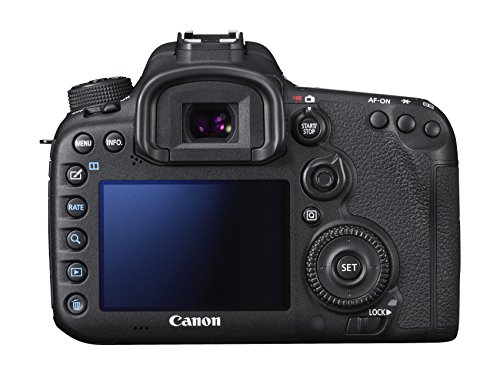
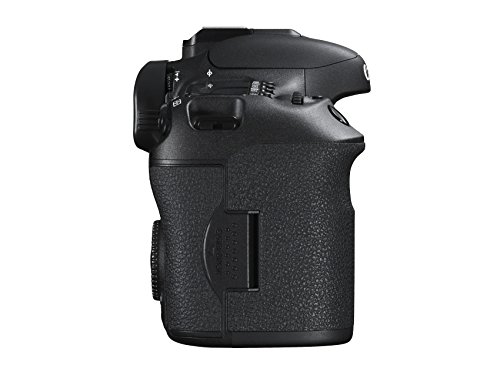
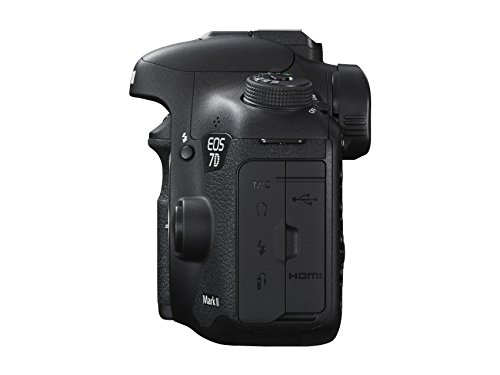
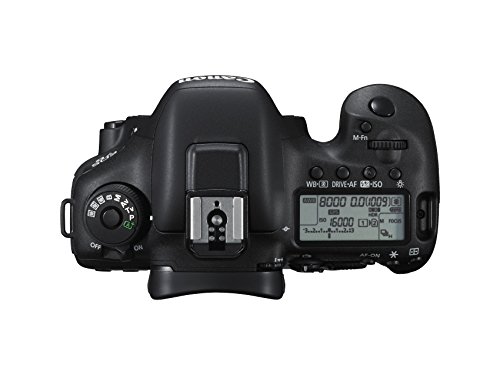
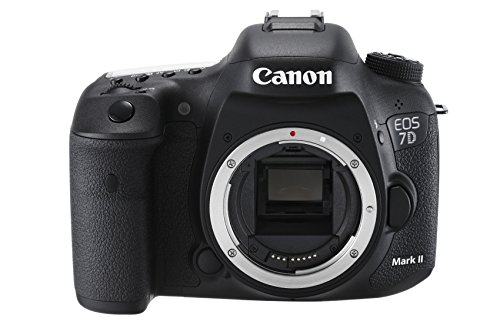
Canon EOS 7D Mark II review. Compare 108 technical specifications and user reviews to see how it ranks among cameras and if it is worth buying.
Overall score
What it is: An overall evaluation of the camera's quality, based on technical analyses and user reviews.
When it matters: When you need a quick reference to identify the best cameras on the market.
Score components:
90.0%
Technical Score
10.0%
User score
Technical Score
What it is: An assessment of the camera's technical performance, covering eight key areas: image quality, autofocus, video features, stabilization, lens compatibility, connectivity, battery, and design.
When it matters: When you want to compare cameras based on technical performance and available features.
Score components:
28.0%
Sensor & Image
25.0%
Photo Features
18.0%
Video & Audio
14.0%
Display & Design
8.0%
Battery & Power
7.0%
Connectivity & Storage
User score
What it is: A rating that combines user reviews and the total number of reviews received by the camera.
When it matters: When real-world owner satisfaction and review volume matter to your decision.
Score components:
70.0%
User reviews
30.0%
Popularity
Score components:
25.0%
Sensor size
20.0%
Main camera megapixels
20.0%
Dual card slots
15.0%
N. of focus points
10.0%
RAW photo capture
10.0%
Phase-detection autofocus (photos)
Score components:
35.0%
Weight
30.0%
Battery life (CIPA)
20.0%
Sensor-shift stabilization
15.0%
GPS
Score components:
30.0%
Price
20.0%
Weight
20.0%
AF tracking
20.0%
Battery life (CIPA)
10.0%
Touchscreen
Score components:
30.0%
Main camera megapixels
25.0%
Sensor size
20.0%
Main camera pixel size
15.0%
Sensor-shift stabilization
10.0%
RAW photo capture
Score components:
30.0%
Weight
25.0%
Thickness
20.0%
AF low-light sensitivity
15.0%
Sensor-shift stabilization
10.0%
Eye detection AF (human)
Score components:
30.0%
Sensor size
25.0%
Main camera pixel size
20.0%
Eye detection AF (human)
15.0%
Main camera megapixels
10.0%
Sensor-shift stabilization
Score components:
30.0%
Weight
25.0%
Battery life (CIPA)
20.0%
Min operating temperature
15.0%
Sensor-shift stabilization
10.0%
GPS
Available: ranking among products currently available (including other versions of this product).
All: ranking among all products in the database.
#9 in Best Canon DSLR Cameras
#19 in Best Cameras under £200
#21 in Best DSLR Cameras
#21 in Best SLR Cameras
#25 in Best Canon Digital Cameras
#25 in Best Canon EOS Cameras
#45 in Best Cameras under £300
#97 in Best Cameras
#97 in Best Digital Cameras
#136 in Best Travel Cameras
#177 in Best Cameras for Hiking
What it is: An assessment of the camera's technical performance, covering eight key areas: image quality, autofocus, video features, stabilization, lens compatibility, connectivity, battery, and design.
When it matters: When you want to compare cameras based on technical performance and available features.
Score components:
28.0%
Sensor & Image
25.0%
Photo Features
18.0%
Video & Audio
14.0%
Display & Design
8.0%
Battery & Power
7.0%
Connectivity & Storage
What it is: A rating that combines user reviews and the total number of reviews received by the camera.
When it matters: When real-world owner satisfaction and review volume matter to your decision.
Score components:
70.0%
User reviews
30.0%
Popularity
What it is: An indicator that combines the camera's overall rating with its cost.
When it matters: When you want to know how much overall quality you get for the price.
Score components:
60.0%
Overall score
40.0%
Price
Importance: HIGH
Good value: Full frame or larger
Importance: HIGH
Good value: At least 20 MP
Importance: HIGH
Good value: At least 3.5 µm
Importance: LOW
Importance: MEDIUM
Good value: At least ISO 25,600
Importance: MEDIUM
Importance: MEDIUM
Good value: At least 14-bit
Importance: LOW
Importance: LOW
Importance: LOW
Importance: LOW
Importance: LOW
Importance: LOW
Importance: LOW
Importance: LOW
Importance: MEDIUM
Importance: LOW
Importance: LOW
Importance: LOW
Importance: LOW
Importance: LOW
Importance: HIGH
Good value: At least 200 points
Importance: HIGH
Importance: MEDIUM
Importance: LOW
Importance: LOW
Importance: MEDIUM
Importance: MEDIUM
Importance: HIGH
Good value: At least 5 stops
Importance: LOW
Importance: MEDIUM
Good value: At least 10 fps
Importance: LOW
Importance: LOW
Importance: LOW
Importance: LOW
Importance: LOW
Importance: LOW
Importance: LOW
Importance: LOW
Importance: LOW
Importance: LOW
Importance: LOW
Importance: LOW
Importance: LOW
Importance: LOW
Importance: LOW
Importance: LOW
Good value: At least 200,000 actuations
Importance: LOW
Good value: At least 10x
Importance: HIGH
Good value: At least 3840 px
Importance: MEDIUM
Good value: At least 200 Mbps
Importance: MEDIUM
Good value: At least 10-bit
Importance: LOW
Importance: LOW
Importance: LOW
Importance: LOW
Importance: LOW
Importance: LOW
Importance: LOW
Good value: At least 30 min
Importance: LOW
Importance: LOW
Importance: LOW
Importance: LOW
Importance: LOW
Good value: At least 2 microphones
Importance: LOW
Importance: LOW
Importance: LOW
Importance: LOW
Importance: MEDIUM
Good value: 500 g or less
Importance: LOW
Importance: LOW
Importance: LOW
Importance: MEDIUM
Importance: MEDIUM
Good value: At least 2.36 million dots
Importance: LOW
Good value: 100%
Importance: LOW
Importance: LOW
Good value: At least 120 Hz
Importance: MEDIUM
Good value: At least 3 in
Importance: LOW
Importance: LOW
Importance: LOW
Importance: LOW
Importance: LOW
Importance: LOW
Importance: LOW
Good value: At least 10 m
Importance: LOW
Importance: LOW
Importance: LOW
Importance: LOW
Importance: MEDIUM
Good value: At least 400 shots
Importance: LOW
Good value: At least 1,500 mAh
Importance: LOW
Importance: LOW
Importance: LOW
Importance: LOW
Importance: LOW
Importance: LOW
Importance: LOW
Importance: LOW
Importance: LOW
Importance: LOW
Importance: LOW
Importance: LOW
Importance: LOW
Importance: LOW
Importance: LOW
Importance: LOW
Importance: LOW
Importance: LOW
Importance: HIGH
Importance: LOW
Importance: LOW
Importance: LOW
Importance: MEDIUM
Good value: At least 400 shots
Importance: MEDIUM
Good value: At least 10 fps
Importance: LOW
Importance: LOW
Importance: MEDIUM
Good value: 500 g or less
Importance: LOW
Good value: At least 2 microphones
Importance: LOW
Importance: LOW
Importance: MEDIUM
Importance: LOW
Importance: LOW
Importance: LOW
(Reviews last updated: July 2026)
The Canon EOS 7D Mark II is described by DPReview as a rugged, high-performance APS-C DSLR tailored for action, sports, and wildlife photography, featuring a 10 fps burst rate, a 200,000-cycle shutter, and robust weather sealing. It boasts a 65-point all-cross-type autofocus system and superior subject tracking, all within a durable magnesium-alloy body. However, the review notes significant limitations, including poor base ISO dynamic range, a lack of built-in Wi-Fi, and no touchscreen, which contributed to it receiving a Silver Award rather than Gold. Additionally, the 1080p video output is considered soft, and the Intelligent Tracking and Recognition (iTR) system can struggle with fast-moving subjects.
The Canon EOS 7D Mark II is a high-performance APS-C DSLR designed for action, sports, and wildlife photography, featuring a 10 fps shooting speed and a 65-point all-cross-type autofocus system. Key advantages include durable weather sealing, dual card slots (CF/SD), and advanced Dual Pixel CMOS AF for accurate tracking in live view and video modes. Conversely, the camera lacks an articulating or touchscreen LCD, relying on a fixed 3-inch display. Other limitations noted include the lack of built-in Wi-Fi and in-camera noise reduction that can diminish fine detail at higher ISOs.
The Canon EOS 7D Mark II is a highly capable APS-C DSLR designed for sports and wildlife photography, featuring a robust 65-point all-cross-type autofocus system and 10 FPS continuous shooting. Additional strengths noted include a 20.2 MP sensor, dual CF/SD card slots, and an improved 200,000-cycle shutter. Key disadvantages identified include a lower base ISO dynamic range compared to competitors and reduced color accuracy/shadow detail at higher ISO levels. Furthermore, the camera's battery life is rated lower than its predecessor, providing only 670 shots per charge.
The Canon EOS 7D Mark II is evaluated by Cameralabs as a highly robust and fast semi-professional APS-C DSLR tailored specifically for sports, wildlife, and event photography. Its primary pros include an incredibly tough, highly weather-sealed magnesium alloy body equivalent in build to the 5D Mark III, a rapid 10fps continuous shooting speed, and an advanced 65-point all-cross-type autofocus system that seamlessly tracks moving subjects even down to -3EV in dim light. Additionally, it features excellent ergonomics like the rear thumb wheel, dual memory card slots (Compact Flash and SD), integrated GPS, intelligent object tracking with face detection, and highly confident video focusing utilizing Canon's innovative Dual Pixel CMOS AF. Conversely, the camera suffers from several distinct cons that make it less versatile for general, landscape, or architectural photography. It completely lacks a touchscreen and an articulated or tilting display, forcing awkward framing at high or low angles and limiting rapid manual point-selection during video capture. Furthermore, it lacks built-in Wi-Fi—requiring an expensive external transmitter accessory—and does not support 4K video resolution, 1080p frame rates above 60p, focus peaking, or...
The Canon EOS 7D Mark II is a robust, dust- and weather-sealed magnesium alloy dSLR that delivers excellent photo and video quality, particularly appealing to action and sports photography enthusiasts. Built around a 20.2-megapixel Dual-Pixel CMOS sensor and dual Digic 6 processors, it can sustain a rapid continuous shooting burst of 9.5 frames per second for nearly unlimited JPEGs or up to 30 Raw images. The camera excels in performance due to its highly flexible and advanced 65-point all cross-type phase-detection autofocus system, which integrates Intelligent Tracking and Recognition (iTR) for enhanced subject tracking. Other notable upgrades over its predecessor include dual card slots (CF and SDXC), built-in GPS for automatic geotagging, a durable shutter mechanism rated for 200,000 cycles, and a bright optical viewfinder with 100% coverage. Despite these performance enhancements, the camera retains several frustrating design limitations that may deter certain creators, especially videographers. A major drawback is the fixed 3-inch LCD display, which lacks tilting, articulating, or touchscreen capabilities, making casual or odd-angle shooting highly annoying without an external monitor rig. Additionally, the camera lacks built-in Wi-Fi,...
The Canon EOS 7D Mark II is a rugged DSLR. It features a 20.2-megapixel APS-C sensor and dual processors. This setup enables 10fps continuous shooting. The autofocus system provides 65 cross-type points. Key pros include integrated GPS and exceptional weatherproofing. However, it lacks built-in Wi-Fi connectivity. Video recording is also limited to 1080p resolution. The 252-zone metering system delivers accurate exposures. Image noise remains well-controlled at high ISO settings. Major cons include a fixed rear LCD screen. The burst buffer holds only 31 raw files. One card slot relies on outdated CompactFlash media. The newer EOS 90D offers superior resolution. Still, this durable camera remains reliable for action.
The Amateur Photographer review highlights the Canon EOS 7D Mark II as a robust, pro-grade APS-C DSLR featuring a durable, weather-sealed magnesium alloy body. Key advantages include an advanced 65-point all-cross-type AF system, Dual Pixel CMOS AF, and dual DIGIC 6 processors that deliver a 10fps burst rate with a 31-frame RAW buffer. Conversely, the review notes significant limitations, including the lack of a touchscreen or articulating LCD screen and the omission of built-in Wi-Fi. While autofocus is top-tier through the viewfinder, live-view focusing is less decisive, and the complex menu system presents a steep learning curve for users. YouTube ·B&H Photo
The Canon EOS 7D Mark II is a highly robust and well-sealed DSLR priced under $1,800 that introduces significant physical and technical upgrades tailored for sports, wedding, and wildlife videographers. Physically, it introduces a dual CF and SD card slot configuration, a dedicated headphone jack for direct audio monitoring, uncompressed 1080p full HD output via HDMI, and a SuperSpeed USB 3.0 terminal. The camera's defining feature is its revolutionary 65-point all cross-type Dual Pixel autofocus system powered by dual DIGIC 6 processors, which provides highly customizable tracking sensitivity and transition speeds that virtually eliminate the need for manual focus during fast tracking or complex panning shots. Additionally, it incorporates excellent video performance enhancements, including smooth 60p recording in full HD for half-speed slow motion, and a complete absence of internal moiré or aliasing due to its advanced image processing. Despite these industry-leading features, the camera presents several distinct drawbacks that users should consider before purchasing. The initial video footage captured by the camera is slightly soft because it lacks built-in internal sharpening, requiring creators to manually fix and adjust image...
The Canon 7D Mark II is highly praised as an exceptional, weather-sealed choice for extreme adventure and landscape photography, dispelling the notion that it is strictly an action sports camera. The reviewer highlights several standout pros, including a built-in intervalometer featuring an "infinity" setting for continuous timelapse capture, and a programmable bulb exposure mode that automates precise long exposures beyond 30 seconds. Additionally, the camera boasts an incredibly low "thermal dark current" that eliminates long-exposure noise for up to 30 minutes, even on warm summer nights. Outdoor photographers will also benefit from its excellent battery life—capable of shooting three hours of continuous timelapses on a single charge—and flagship-style professional controls that allow for quick 100% image playback zooming and seamless ISO adjustments. However, the review points out clear limitations, particularly concerning the camera's dynamic range and physical design. The sensor delivers Canon’s standard 11.8 EVs of dynamic range, trailing roughly two stops behind comparable Nikon sensors at base ISOs and occasionally requiring exposure bracketing in high-contrast scenes. Another notable downside for landscape and adventure shooters is the lack of an...
Ken Rockwell hails the Canon EOS 7D Mark II as a superior high-speed DSLR for action, specifically noting its prowess in indoor/night sports due to an anti-flicker feature and 10 FPS shooting. Key performance strengths include a 65-point, highly precise autofocus system, built-in GPS, dual card slots, and pro-level construction. Conversely, the APS-C sensor size makes it less ideal for general, everyday use, and it lacks the superior shadow/highlight optimization found in full-frame models. Other limitations highlighted include the lack of a touch screen and a slightly lower battery capacity compared to its predecessor.
The Canon EOS 7D Mark II is a robust, speed-oriented APS-C DSLR featuring a weather-sealed magnesium-alloy body, dual card slots, built-in GPS, and an intervalometer. Evaluated highly for professional-grade performance, it excels in autofocus, video, and image quality for sports and wildlife photography. Limitations identified in the review include the lack of a tilting or touch-sensitive LCD screen, which is absent despite appearing on lower-tier models. Additionally, default out-of-camera JPEG images often appear soft, requiring adjustment in post-processing for optimal results. YouTube ·B&H Photo
The Canon EOS 7D Mark II is a pro-level APS-C DSLR that features a 20.2MP CMOS sensor, an upgraded 65-point all cross-type autofocus system, and Dual Pixel CMOS AF for live-view and video recording. In performance testing, the camera earned an "Excellent" rating for image quality from ISO 100 through 1600, showing strong color accuracy and resolving capabilities. Key advantages of this body include its robust, weather-sealed magnesium alloy chassis, an impressive 10 frames per second burst rate capable of handling up to 1090 JPEGs when paired with a UDMA 7 card, and highly responsive autofocus tracking that operates effectively down to EV -2. Additionally, it offers five selectable speed controls for its Dual Pixel video autofocus, producing clean 1080p60 footage with minimal artifacting. However, the camera does come with several distinct disadvantages. While its lower-range noise control is excellent, noise climbs into the "Unacceptable" range at ISO 6400 and above, performing slightly worse at that specific step than the original 7D. Canon also omitted a rear touchscreen and an articulating LCD display, limiting quick interface adjustments and flexible framing...
The Imaging Resource Field Test Part I highlights the Canon 7D Mark II as a durable, well-built APS-C DSLR featuring improved weather sealing, a 200,000-actuation shutter, and dual CF/SD card slots. Handling is comfortable, with highly customizable controls—including a useful AF selection lever—and a robust, secure grip for long shooting sessions. Furthermore, the camera introduces built-in GPS and a USB 3.0 port, while the Dual Pixel CMOS AF significantly improves Live View, offering fast, accurate phase-detection autofocus. Key performance features include specialized tools like in-camera lens distortion correction for JPEGs and an anti-flicker mode, which is particularly effective for consistent exposure under artificial arena lighting. While the CIPA battery rating is lower than its predecessor, the 7D Mark II excels in performance, offering a rugged, responsive design for demanding photographers.
I am assuming you want a summary specifically focused on the camera's real-world shooting performance, which covers autofocus, low-light handling, speed, and video capabilities as detailed in this specific field test. The Canon 7D Mark II excels as a high-speed sports and wildlife camera, driven by its dual DIGIC 6 processors that enable continuous shooting at 10 frames per second and an expanded buffer depth. Its upgraded autofocus system is a major strength, featuring 65 cross-type AF points, Intelligent Tracking and Recognition (iTR), and accurate tracking even in challenging low-light conditions down to -3 EV. The camera handles high ISO settings up to 3200 surprisingly well for an APS-C sensor, maintaining good contrast and color accuracy while offering customizable in-camera noise reduction. Additionally, the dual-pixel AF system ensures smooth, continuous autofocus during video recording, complemented by physical design pros like built-in GPS and a tactile ISO button easy to identify in the dark. However, the camera has notable limitations that restrict its versatility for certain workflows. A primary con is that spot metering is strictly restricted to the center of...
The Rangefinder review by Greg Scoblete highlights the Canon 7D Mark II as a powerful, high-performance APS-C DSLR priced at $1,799 (body). Designed to replace the original 7D after a five-year wait, this flagship crop-sensor camera features a robust body modeled after the 5D Mark III, complete with significantly upgraded weather sealing. Key pros include its exceptional, "sniper-like" autofocus overhaul, utilizing 65 all cross-type AF points alongside Dual Pixel CMOS AF for lightning-fast tracking during both stills and video tracking. Powered by dual DIGIC 6 processors, it achieves blazing burst speeds of up to 10 frames per second (fps) and boasts a massive buffer that can save 31 RAW files or up to 1,090 JPEGs continuously. Furthermore, image quality stands out in low-light environments up to an expanded native ISO of 12,800, and video shooters benefit from 1080p HD recording at 60 fps accompanied by a dedicated headphone jack for monitoring audio levels. Despite these stellar performance upgrades, the reviewer notes several prominent cons and missed opportunities. On the design side, the 3-inch display is completely fixed and lacks touchscreen...
The Canon 7D Mark II is a rugged, weatherproof DSLR featuring a 20.2-megapixel APS-C sensor, dual DIGIC 6 processors, and a durable shutter rated for 200,000 cycles. Weighing 1.8 pounds, it provides a solid, professional grip and handles portrait-oriented shooting with comfort. Photographers will benefit from a highly efficient 65-point all cross-type autofocus system that quickly locks onto targets even in low-light scenarios, paired with an iTR (Intelligent Tracking & Recognition) system for subject tracking. It excels in action and wildlife photography thanks to a blazing fast 10fps continuous burst mode, while a bright 3-inch LCD display makes outdoor viewing easy under direct sunlight. Additional high-utility features include a native ISO range of 100 to 16000 (expandable to 51,200), Full HD 1080p video recording at up to 60fps, dual card slots (Compact Flash and SD), and a built-in GPS for automatic image geotagging. The review highlights several distinct pros and cons regarding the camera's real-world usability. On the positive side, its major strengths lie in its extreme versatility, rapid autofocus precision, quick 10fps burst speed, exceptional image detail, and generous...
Henry's Note evaluates the Canon EOS 7D Mark II as a heavy, durable "hammer tool" for photography, highlighting its superior build quality and rugged, modern design that feels more premium than the original 7D. The review notes the camera shares a robust, comfortable architecture with the EOS 6D and 5D Mark III, making it a reliable option for demanding shooting conditions. However, the review notes the camera is heavy to carry and that its design closely mimics other Canon DSLRs, resulting in a somewhat generic aesthetic despite its structural improvements. The camera's standout feature remains its physical durability, rather than a unique visual identity.
The Canon EOS 7D Mark II is a high-speed DSLR designed primarily for speed and action photography, such as sports and wildlife. Built with a robust, weather-sealed magnesium body, it stands out for its exceptional performance, delivering continuous burst shooting of up to 9.5 frames per second with an unlimted buffer for JPEG files. Its revolutionary autofocus system boasts 65 cross-type sensor points, which provides exceptionally fast and precise tracking. Additionally, the camera features a crisp 100-percent optical viewfinder, a dual card slot for SD and CF cards, and an integrated GPS module for geotagging.
The Canon EOS 7D Mark II is described by digitalkamera.de as a robust DSLR designed for professionals, boasting excellent ergonomics and advanced video capabilities, but it lacks automatic scene modes, making it unsuitable for casual users. While praised for its performance, the camera is criticized for lacking a touchscreen and for its APS-C sensor's low-light performance, which results in limited usability at high ISO settings.
The Computer Bild review concludes that the Canon EOS 7D Mark II is a high-performing professional-tier DSLR designed primarily for sport and action photography. The camera earned an overall test score of 2.2 ("good") due to its exceptional speed and robust build. A key highlight is its redesigned professional autofocus system featuring 65 all-cross-type sensors, with a dual-cross center sensor capable of maintaining high-speed tracking even in extreme low-light conditions. The review praises its blistering burst shooting rate of 10.1 frames per second, supported by a massive buffer that can process over 200 JPEG or 30 RAW images continuously without slowing down, provided a fast CF or SD card is used. Additionally, its 20.2-megapixel Dual-Pixel CMOS sensor offers fast phase-detection autofocus in LiveView, while the new 150,000-pixel RGB+IR metering module provides highly accurate exposure and color tracking in tricky lighting scenarios. The review explicitly highlights several distinct advantages and a minor limitation for the camera. The pros include its remarkable burst shooting speed, ultra-fast autofocus response (clocked at 0.15 seconds in lab tests), and excellent overall image quality with well-controlled...
The dkamera.de review highlights the Canon EOS 7D Mark II as a high-performance, pro-grade APS-C DSLR designed for sports and wildlife, featuring dual DIGIC 6 processors that enable 10 frames-per-second shooting and a 65-point all cross-type autofocus system. Housed in a durable, weather-sealed magnesium alloy body, the camera offers robust functionality, including dual card slots and GPS, alongside capable Full HD 60p video recording. YouTube ·B&H Photo However, the review notes significant limitations, specifically the fixed 3-inch LCD screen, which lacks touch, tilt, or swivel capabilities, making, challenging shots difficult. Additionally, the camera omits built-in Wi-Fi and, while boasting improved high-ISO performance, the 20.2-megapixel sensor shows limited dynamic range at base ISO and relatively soft video output. YouTube ·B&H Photo
The Canon EOS 7D Mark II is a robust, professionally equipped APS-C camera designed with a durable magnesium alloy body and extensive weather sealing against dust and moisture. It features a 20.2-megapixel Dual Pixel CMOS sensor with a 1.6x crop factor, making it highly advantageous for telephoto photography as it tightly narrows the field of view. Key strengths highlighted in the review include its excellent ergonomics with a deep, textured handgrip, a bright pentaprism optical viewfinder with a customizable transparent LCD overlay, and dual memory card slots for CF and SD cards. Additionally, it offers impressive high-ISO performance, producing clean images up to ISO 6400, alongside extensive customizability, multi-shot noise reduction, an interval timer, and a built-in GPS receiver. Conversely, the review criticizes several design shortcomings that hinder the camera's overall versatility and ease of use. A major drawback is the 3-inch rear monitor, which is completely fixed and lacks touchscreen functionality—a frustrating omission given Canon's existing experience with articulating, touch-sensitive displays. The lack of a dedicated AF assist lamp is also noted as a negative, forcing users to rely...
The provided review from doctor-speed.de evaluates the Canon EOS 7D Mark II, focusing primarily on its high ISO and low-light performance for action photography. The author highlights the camera's key pros, which include a rapid continuous shooting speed of 10 frames per second, a highly advanced 65-point all-cross-type autofocus system with AI Servo III, a durable dual-slot card setup (CF and SD), and a customizable Auto-ISO feature that effectively handles environments with drastic lighting changes. Image quality is deemed exceptional and exceptionally sharp up to ISO 1600 or 2500, and the reviewer notes that the files remain highly usable for web publications up to ISO 6400. However, the review also notes a few specific cons and limitations. While the native ISO range reaches up to 16,000 (and is expandable up to 51,200), the reviewer warns that noise becomes noticeable in the unsharp areas of an image at higher settings, meaning you should avoid heavily cropping images or printing large-format posters at ISO 6400. Additionally, the reviewer observes a tendency for the Auto-ISO system to make images slightly too bright for...
In this practical review, the photographer evaluates the Canon 7D Mark II as a high-speed crop-sensor camera designed specifically for sports and wildlife photography. Stepping up from the original 7D (often critiqued as an unpredictable "diva"), the Mark II models a series of professional upgrades, including an advanced autofocus system boasting 65 cross-type AF fields, iTr subject tracking inherited from the flagship 1DX, and a fast burst rate of 10 frames per second. In real-world testing—ranging from youth football in low-light halls to capturing fine fur details on wolves—the camera demonstrated excellent target tracking and sharp image results. It provides a compelling, cost-effective alternative to professional 1-series bodies, successfully matching the weather-sealing of the 1D Mark IV while delivering a higher resolution of 20 megapixels and a greater 1.6x crop factor that extends telephoto reach without a converter. Key Pros & Cons Despite its overall performance as the new "queen" of crop sensors, the reviewer highlights specific advantages and operational limitations: Pros: Excellent 10 fps burst speed with a deep buffer that outperforms the 5D Mark III. Pros: Highly configurable,...
The Canon EOS 7D Mark II is a highly durable, magnesium-alloy APS-C DSLR designed specifically as a robust "workhorse" for sports and action photography. It introduces major performance upgrades over its 2009 predecessor, including a fast dual-motor shutter and mirror drive reaching 9.5 frames per second, a 100% coverage viewfinder, a built-in GPS module with a digital compass, and an integrated timer. Its core strength lies in its highly sophisticated, customizable iTR autofocus system featuring 65 cross-type sensors and face detection, which performs exceptionally well when tracking moving subjects like motorcycles. Additionally, the camera features an advanced 150,000-pixel RGB metering sensor with flicker detection to optimize exposures under neon lighting, alongside vastly improved weather-sealing against dust and water. However, the camera has notable drawbacks, primarily regarding its battery life; the battery drains rapidly overnight if left in the "On" position without a tight auto-shutdown timer, and overall battery performance is significantly shorter than the original 7D. The full 65 cross-type autofocus system is only accessible when paired with fast, wide-aperture lenses, and the camera experiences a minor shutter lag in...
The Photografix Magazin review details a sobering DxOMark sensor evaluation of the Canon EOS 7D Mark II, which earned a mediocre overall score of 70 points. This score places the camera significantly behind competing APS-C models like the Sony A77 II, which scored 82 points, and ranks it on par with the much older Nikon D300s. The primary con identified in the lab test is poor performance in normal and low ISO ranges, meaning users must make image quality compromises when shooting under standard lighting conditions. Despite the underwhelming sensor score, the review notes several technical pros when evaluating the camera as a complete package. The DxOMark data confirms that the sensor performs quite well at higher ISO sensitivities, matching the positive real-world impressions from initial field tests. Additionally, the camera body is highly praised for its exceptional build quality and robust environmental sealing, proving that it remains a compelling and durable tool for photographers outside of pure lab metrics.
The Canon EOS 7D Mark II is a high-speed, professional-grade APS-C DSLR camera that launched at a retail price of around 1,700 Euros for the body alone. This review highlights the camera's exceptional speed, specifically praising its world-class autofocus system and its ability to capture continuous bursts at an incredibly fast 10 frames per second. Built like a tank with a magnesium alloy body and significantly upgraded weather sealing, the DSLR is geared heavily toward action, sports, and wildlife photographers who require instant camera response and elite build reliability. YouTube ·B&H Photo A closer look at the camera's performance reveals distinct advantages and drawbacks. On the positive side, the pros include its top-tier 65-point all-cross-type autofocus system, dual card slots (CF and SD) for flexible file management, and the inclusion of a built-in GPS and an intervalometer. However, the cons are notable for multimedia creators: the 3-inch LCD screen is fixed and lacks touchscreen functionality, the video quality is relatively soft and lacks fine detail despite supporting 1080p at 60fps, and it completely lacks built-in Wi-Fi. Furthermore, its base ISO...
The Canon EOS 7D Mark II is a highly responsive APS-C camera built specifically for action and sports photography. Its primary pros include a rapid burst speed of 10 frames per second paired with an unlimited JPEG buffer. It features an advanced 65-point all-cross-type autofocus system that provides highly reliable subject tracking under challenging conditions. Additionally, it introduces professional-tier hardware upgrades like dual memory card slots, an exposure scale for flash coordination, and a dedicated headphone output for real-time audio monitoring. Conversely, the camera suffers from notable video and market limitations that serve as its main cons. The most significant drawback is the lack of 4K video resolution, capping capabilities at Full HD 60p. It also excludes professional filmmaking features such as 10-bit depth and 4:2:2 color subsampling. Finally, critics highlight its steep launch price of €1,700, which approaches the cost of superior full-frame camera alternatives.
The Canon EOS 7D Mark II is a highly durable APS-C DSLR camera designed specifically for sports and wildlife photographers who require speed and robust build quality. Built around a solid magnesium alloy chassis with weather sealing, the camera features an impressive 10 frames per second (fps) burst rate with full autofocus capabilities and a 65-all-cross-type point AF system inherited from professional bodies. Reviewers praise its excellent 100% coverage optical viewfinder, clean electronic noise management up to ISO 3200 or 6400, dual card slots (SD and CF), built-in GPS, and the inclusion of Dual Pixel CMOS AF technology for smooth focus tracking during video recording. However, the camera has notable limitations, particularly regarding its display screen and modern connectivity. The rear LCD screen is completely fixed and lacks touch functionality, and it surprisingly lacks built-in Wi-Fi functionality. Image quality tests revealed a somewhat restricted dynamic exposure latitude, and the AI Servo continuous focus can occasionally result in images that lack sharpness. For videographers, the camera lacks higher-end video features like 4K or 2.7K capture modes, does not support 50p recording...
for the Canon EOS 7D Mark II: Summary of the Canon EOS 7D Mark II Review The Canon EOS 7D Mark II is highly praised as an ideal APS-C sensor camera for wildlife and sports photographers, offering ergonomics nearly identical to the full-frame 5D Mark III. A standout pro is its heavily upgraded 65-point autofocus system, which allows deep customization of tracking sensitivity and acceleration to handle fast, unpredictable subjects like birds in flight. Additional strengths include a fast 10 frames-per-second burst rate, a dual Compact Flash and SD card slot setup, a highly informative intelligent viewfinder with a built-in electronic level, a quiet "silent mode" for skittish animals, and a physical joystick switch to quickly toggle between AF point clusters. Wildlife shooters will also love the ability to use exposure compensation while shooting in Manual mode with Auto ISO. However, the camera does have notable cons. While its high-ISO performance is a major improvement over the original 7D—producing clean, printable images at ISO 4000 and usable shots at ISO 6400—it still falls short of full-frame sensors like those in...
The Les Numériques review highlights the Canon EOS 7D Mark II as a highly capable and versatile APS-C expert DSLR that blends ergonomics from the 5D Mark III with the advanced autofocus lineage of the professional EOS-1D X. On the positive side, the camera excels with its excellent image quality up to ISO 3200 and 6400, a highly customizable body design, and a rapid 10 frames-per-second burst rate featuring a quiet shutter mechanism. Additionally, it offers a comfortable optical viewfinder, comprehensive weather sealing, built-in GPS, and highly responsive Dual Pixel autofocus during video recording. However, the reviewer points out several baffling design omissions that hold the camera back from being truly revolutionary. Major drawbacks include the lack of a tilting or touchscreen display and a somewhat limited dynamic exposure latitude. Video features are also restricted, missing both 4K resolution capabilities and continuous autofocus when shooting in 1080p at 50fps. Lastly, the body completely omits built-in Wi-Fi connectivity and lacks a dedicated low-light AF assist lamp, instead relying on the pop-up flash to find focus in the dark.
Based on the review, the Canon EOS 7D Mark II is a robust DSLR tailored strictly for experts and professionals who prioritize core performance over consumer-oriented gadgets. The author praises its ergonomic, heavy-built, and weather-sealed body that ensures excellent handheld stability outdoors. Key performance advantages include a highly reactive 65-point autofocus system that tracks fast-moving subjects by color and intensity, and an impressive burst mode ideal for wildlife and sports photography. Additionally, its 20.2-megapixel APS-C sensor provides a 1.6x magnification factor for telephoto lenses, and it boasts vastly improved low-light capabilities, delivering sharp, low-noise, and highly contrasted images above ISO 1600 compared to its predecessor. The reviewer also highlights the convenience of the dual memory card slots (one CF and one SD) for simultaneous RAW/JPEG storage, alongside the welcomed return of a multiple exposure feature.
The expert evaluation by Les Numériques outlines the Canon EOS 7D Mark II as a highly capable and rugged APS-C DSLR tailored strictly for performance-driven fields like sports and wildlife photography. Built around a highly robust magnesium alloy chassis, the body offers excellent handling alongside an impressive 100% coverage optical viewfinder boasting a 1x magnification that delivers clear shooting comfort. One of its standout pros is its blazing-fast 10 frames-per-second (fps) burst shooting speed coupled with an elite autofocus system that provides vast coverage and tracking capabilities. Additionally, the introduction of advanced autofocus tracking functions drastically improves subject accuracy and delivers an exceptionally dependable video autofocus experience. Reddit ·r/ However, the review indicates several cons related to the camera's aging sensor and heavy architecture. While low-light performance is generally solid at standard sensitivities, electronic luminance noise begins to creep into images above ISO 400 and can scale quite poorly at higher sensitivities, meaning users should aim to limit operations below ISO 2000. The camera also lacks modern convenience features, including integrated image stabilization, requiring photographers to rely heavily on stabilized...
Summary: The Canon 7D Mark II is a robust APS-C DSLR designed specifically for professional wildlife, action, and sports photography, featuring an autofocus system directly adapted from Canon's flagship 1D-X. Built with a rugged magnesium alloy chassis that offers three times the weather sealing of its predecessor, the camera provides exceptional ergonomics, a comfortable grip, an intuitive interface, a dedicated joystick for AF control, and a useful dual card slot (CF and SD). Its core strengths include a sublime 65-point cross-type autofocus system that functions brilliantly in low light, highly customisable tracking zones, an impressive buffer capacity capable of capturing high-speed continuous bursts at 10 frames per second, and anti-flicker detection technology. However, the reviewer notes that the camera leaves a slightly bittersweet impression due to several notable drawbacks. The primary disappointment lies in its 20.2-megapixel Dual Pixel CMOS sensor; while noise control is improved over the original 7D and provides acceptable dynamic range, the image quality offers only a minor leap forward compared to the mid-tier Canon 70D. Furthermore, its video capabilities feel outdated as it lacks modern features...
The Canon EOS 7D Mark II review highlights this camera as a robust, professional-grade APS-C DSLR that borrows heavily from the ergonomic and menu layout of the full-frame EOS 5D Mark III. Key strengths highlighted in the review include its highly durable magnesium alloy construction, which features comprehensive sealing against dust, moisture, and extreme cold. The camera excels in action photography thanks to an advanced, fast, and precise 65-point autofocus system that covers a wide effective area, paired with a rapid continuous shooting speed of 10 frames per second. Furthermore, its image quality from the 20.2-megapixel sensor and dual Digic 6 processors shows massive improvement over the original 7D, particularly at high ISO settings (delivering clean results up to ISO 3,200 and optimal print quality at ISO 6,400). Additional pros include its dual memory card slots (CompactFlash + SD) and a built-in GPS module. On the downside, the reviewer points out several notable weaknesses that hold the camera back. The 3-inch LCD screen is fixed and lacks touchscreen capabilities, and its resolution is somewhat dated at just over 1 million...
In his May 2016 review on Nadir Magazine, Rino Giardiello evaluates the Canon EOS 7D Mark II as a highly balanced, weather-sealed APS-C DSLR made of robust magnesium alloy. The camera's main advantages include its dual DIGIC 6 processors, a rapid and precise 65-point all-cross-type autofocus system, and a swift burst shooting rate of up to 10 frames per second. Giardiello highlights its reliable automatic exposure, built-in GPS, highly customisable viewfinder, and an excellent Live View experience that makes it smooth and efficient for video recording compared to rivals like the Nikon D7200. Additionally, it features a handy built-in flash capable of controlling wireless units and an exclusive, ultra-quiet silent shooting mode. On the downside, the review notes several limitations, particularly regarding high ISO digital noise performance, where it visually lags behind the Nikon D7200 and loses fine details in JPEG files starting at ISO 1600. While it introduces dual memory card slots, the reviewer dislikes that they require two different card types. The camera also lacks integrated Wi-Fi and features a rather subpar built-in microphone. Furthermore, its battery life...
The Canon EOS 7D Mark II is a highly anticipated professional-grade APS-C DSLR camera that heavily borrows high-end technology from Canon's flagship 1D X model. Built for speed and durability, the camera features a rugged magnesium alloy body with enhanced weather sealing, a brand-new shutter rated for 200,000 cycles, and a blazing continuous shooting speed of 10 frames per second. At its core is a 20-megapixel Dual Pixel CMOS sensor paired with dual Digic 6 processors, which together deliver improved dynamic range and lower noise at higher ISO sensitivities compared to its predecessor. For action and wildlife photography, it introduces a highly customizable 65-point all-cross-type autofocus system that functions brilliantly in low light (-3 EV) and supports f/8 lens combinations. Videographers also benefit from new hardware additions, including a long-awaited headphone jack for audio monitoring, an uncompressed HDMI 4:2:2 output, and the ability to shoot Full HD video at 60 fps. The camera boasts several notable strengths, yet it falls short in a few key areas. On the positive side, its predictive AI Servo autofocus system is incredibly precise and...
The Saggiamente review identifies the Canon EOS 7D Mark II as a top-tier professional APS-C DSLR, highlighting its robust construction, 65-point autofocus system, and impressive 10 fps burst rate. Key advantages include its excellent handling, superior Dual Pixel CMOS AF for video, and reliable weather sealing. Conversely, the 20.2MP sensor shows limited dynamic range compared to rivals, and the camera lacks a tilting screen and 4K video capabilities. It is deemed an ideal tool for sports and wildlife photographers prioritizing speed.
The review highlights distinct advantages and structural limitations of the body. On the pros side, the camera excels in overall operational speed, providing an exceptional burst frame rate alongside highly sophisticated sensor-level phase-detection autofocusing. Video functionalities are a massive strength, backed by higher progressive frame rates and extensive accessory support options. On the cons side, the physical 3-inch LCD monitor lacks an articulated structure and touch-sensitivity features found on rival models, making complex video rigging or low-angle compositions more restrictive. Additionally, despite improvements to noise reduction and a slightly cleaner high-ISO output over its predecessor, the raw dynamic range and shadow recovery under rigorous low-light pushing still trail slightly behind competitive full-frame sensors and class-leading APS-C alternatives from Sony or Nikon. YouTube ·B&H Photo
The reviewer compares the Canon EOS 7D and its successor, the 7D Mark II, after testing them side-by-side in real-world scenarios to see if the upgrade is justified. On the positive side, the 7D Mark II delivers significantly improved ergonomics, a highly customizable button layout, an updated "Intelligent Viewfinder" packed with display information like a digital level, and a practical dual card slot system (CompactFlash and high-speed SD). Landscape photographers will also appreciate its new built-in Bulb timer/intervalometer and a more accessible mirror lock-up menu. Additionally, the camera includes an integrated GPS and produces RAW files with less saturated, more natural colors and better detail in the shadows compared to the older model. However, the reviewer highlights several notable drawbacks, ultimately concluding that the 7D Mark II wins only "on points" due to software and ergonomics rather than raw image quality. The most disappointing con is the image sensor; despite five years of technological evolution, the high-ISO digital noise and overall low-ISO resolution show no major leap forward and fail to match the quality of full-frame bodies or rival Sony/Nikon...
Overview The Canon EOS 7D Mark II is a professional-grade APS-C DSLR camera designed for demanding photographers and independent filmmakers seeking a highly capable, lightweight production tool. Equipped with a 20.2 MP CMOS sensor and dual DIGIC 6 image processors, it delivers high-resolution imagery and rapid continuous shooting speeds of up to 10 frames per second. The camera's standout innovation is its revolutionary Dual Pixel CMOS AF system, which uses phase-detection pixel arrays to deliver remarkably fast, precise, and fluid autofocus tracking even during video capture or under low-light conditions. Video functionality is highly sophisticated, offering robust H.264 internal recording with an "All-I" compression mode that operates at an artifact-free 90 Mbit/s bitrate, alongside a clean HDMI 4:2:2 output complete with embedded timecode. Strengths and Limitations Reviewers highlight the exceptional speed, fluid tracking, and accuracy of the Dual Pixel autofocus system as its primary advantage. Other major pros include its broadcast-friendly HDMI 4:2:2 uncompressed output, a high-quality internal recording codec, clean low-light performance up to ISO 6400, and a weather-sealed, durable body layout that mirrors the 5D Mark III. However,...
for them. Additionally, depending on the photographer's personal preference, the crop sensor can be viewed as a negative due to the lack of a full-frame sensor, though the author personally favored the 1.6x crop factor because it gave her 70-200mm lens an extended reach. At a price point of €1,699, the review concludes that it requires a significant financial investment but is an exceptional, high-quality tool for serious hobbyists who regularly shoot fast-moving subjects and dim environments. If you'd like to dive deeper
The EOSzine review of the Canon EOS 7D Mark II (Part 1) highlights the camera as a high-performance APS-C DSLR, boasting 10 fps continuous shooting, a 65-point all-cross-type AF system, and a substantial buffer for sports and wildlife photography. Its 1.6x crop factor provides a distinct advantage for telephoto shooting, positioning it near professional-tier, full-frame models for action, notes. Conversely, the review identifies limitations in low-light, noting visible noise at ISO 1600 and above, which trails full-frame alternatives. Furthermore, it lacks a tilting screen and native Wi-Fi, making the EOS 70D a more flexible option for non-action photography, according to.
The Canon EOS 7D Mark II is an APS-C crop-sensor DSLR designed as a high-speed, durable upgrade, particularly for users stepping up from entry-level models like the 550D. Built with a robust, weather-sealed magnesium alloy body, it features an advanced 65-point all-cross-type autofocus system that offers six customizable tracking profiles to accurately follow moving subjects. The camera excels in action and wildlife photography due to its dual Digic 6 processors, which drive a fast continuous shooting rate of 10 frames per second. Additionally, it offers versatile dual card slots (SD and Compact Flash) allowing independent RAW and JPEG storage, highly effective low-light performance with minimal noise at high ISO settings, and smooth Full HD video recording at up to 60 fps using Dual Pixel CMOS AF. Despite its professional-tier capabilities, the reviewer highlighted several notable limitations. The camera completely lacks built-in Wi-Fi connectivity and does not feature an articulating or tilting touchscreen, which restricts flexible shooting angles and was considered a missed standard feature for its class. While it includes an integrated GPS module, leaving it active drains the battery...
The EOSzine review (Part 2) of the Canon EOS 7D Mark II by Pieter Dhaeze highlights the 20.2-megapixel APS-C sensor's exceptional low-light capabilities, delivering clean, sharp, and usable images up to ISO 6400. As a significant upgrade for action and wildlife photography, the camera manages noise well, with optimal performance noted up to ISO 3200. Conversely, the review identifies that image quality drops considerably at ISO 16,000 and above, with excessive noise and reduced dynamic range, rendering extreme settings largely unusable. Additionally, while the 10 fps burst and 65-point AF are strengths, the crop sensor cannot match the depth-of-field control found in full-frame alternatives.
The Canon EOS 7D Mark II is a highly capable APS-C DSLR camera that excels in speed, responsiveness, and build quality, making it a favourite among sports, wildlife, and action photographers. Reviewers consistently praise its exceptionally fast 10 frames-per-second burst rate and its intelligent, highly customisable 65-point cross-type autofocus system, which tracks moving subjects like birds and racing cars with incredible accuracy. The camera is constructed like a tank, boasting a magnesium alloy body with weather sealing on par with professional 1D-series models. Other major advantages include dual memory card slots, good high-ISO noise reduction performance, a comprehensive optical viewfinder, and built-in GPS functionality. Despite its strong performance, users highlighted several notable drawbacks regarding its hardware and image sensor. A primary complaint is the lack of built-in Wi-Fi and NFC, which require optional adapters or special memory cards to use. While the sensor performs well at higher ISO levels, multiple reviewers noted that its dynamic range and noise performance at low settings (like ISO 100) lag behind competitors, making it difficult to recover deep shadows. The physical design also compromises...
The review compares the Canon EOS 90D and the Canon EOS 7D Mark II, specifically testing their capabilities for fast-paced wildlife and bird photography using a 640mm focal length setup. The Canon EOS 90D, launched as a modern update with a high-resolution 32.5 MP APS-C sensor and 4K video, excels in ergonomics, menu intuition, and battery life (lasting up to 1,300 shots). Its 45-point cross-type autofocus performs exceptionally well in live-view and good lighting conditions. However, the author noted that the 90D struggles with autofocus accuracy in poor lighting conditions and exhibits noticeable image noise at ISO 6400 or higher. Crucially, its small 25-shot buffer means shooting at 10 frames per second fills the capacity in just 2.5 seconds, creating a significant bottleneck for action photographers. Seeking sharper results, the reviewer switched to the older but higher-tier Canon EOS 7D Mark II and achieved superior image quality with less noise. Despite its lower 20 MP resolution, the 7D Mark II features dual processors and a superior 65-point cross-type autofocus system that tracks fast-moving subjects reliably and locks focus in near-dark...
Compare