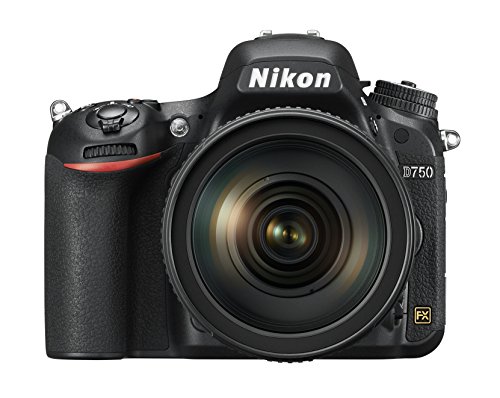
Nikon D750 review. Compare 108 technical specifications and user reviews to see how it ranks among cameras and if it is worth buying.
Overall score
What it is: An overall evaluation of the camera's quality, based on technical analyses and user reviews.
When it matters: When you need a quick reference to identify the best cameras on the market.
Score components:
90.0%
Technical Score
10.0%
User score
Technical Score
What it is: An assessment of the camera's technical performance, covering eight key areas: image quality, autofocus, video features, stabilization, lens compatibility, connectivity, battery, and design.
When it matters: When you want to compare cameras based on technical performance and available features.
Score components:
28.0%
Sensor & Image
25.0%
Photo Features
18.0%
Video & Audio
14.0%
Display & Design
8.0%
Battery & Power
7.0%
Connectivity & Storage
User score
What it is: A rating that combines user reviews and the total number of reviews received by the camera.
When it matters: When real-world owner satisfaction and review volume matter to your decision.
Score components:
70.0%
User reviews
30.0%
Popularity
Score components:
25.0%
Sensor size
20.0%
Main camera megapixels
20.0%
Dual card slots
15.0%
N. of focus points
10.0%
RAW photo capture
10.0%
Phase-detection autofocus (photos)
Score components:
35.0%
Weight
30.0%
Battery life (CIPA)
20.0%
Sensor-shift stabilization
15.0%
GPS
Score components:
30.0%
Price
20.0%
Weight
20.0%
AF tracking
20.0%
Battery life (CIPA)
10.0%
Touchscreen
Score components:
30.0%
Main camera megapixels
25.0%
Sensor size
20.0%
Main camera pixel size
15.0%
Sensor-shift stabilization
10.0%
RAW photo capture
Score components:
30.0%
Weight
25.0%
Thickness
20.0%
AF low-light sensitivity
15.0%
Sensor-shift stabilization
10.0%
Eye detection AF (human)
Score components:
30.0%
Sensor size
25.0%
Main camera pixel size
20.0%
Eye detection AF (human)
15.0%
Main camera megapixels
10.0%
Sensor-shift stabilization
Score components:
30.0%
Weight
25.0%
Battery life (CIPA)
20.0%
Min operating temperature
15.0%
Sensor-shift stabilization
10.0%
GPS
Available: ranking among products currently available (including other versions of this product).
All: ranking among all products in the database.
#11 in Best DSLR Cameras
#11 in Best SLR Cameras
#18 in Best Nikon Cameras
#27 in Best Cameras under £300
#73 in Best Cameras
#73 in Best Digital Cameras
#339 in Best Travel Cameras
#377 in Best Cameras for Hiking
What it is: An assessment of the camera's technical performance, covering eight key areas: image quality, autofocus, video features, stabilization, lens compatibility, connectivity, battery, and design.
When it matters: When you want to compare cameras based on technical performance and available features.
Score components:
28.0%
Sensor & Image
25.0%
Photo Features
18.0%
Video & Audio
14.0%
Display & Design
8.0%
Battery & Power
7.0%
Connectivity & Storage
What it is: A rating that combines user reviews and the total number of reviews received by the camera.
When it matters: When real-world owner satisfaction and review volume matter to your decision.
Score components:
70.0%
User reviews
30.0%
Popularity
What it is: An indicator that combines the camera's overall rating with its cost.
When it matters: When you want to know how much overall quality you get for the price.
Score components:
60.0%
Overall score
40.0%
Price
Importance: HIGH
Good value: Full frame or larger
Importance: HIGH
Good value: At least 20 MP
Importance: HIGH
Good value: At least 3.5 µm
Importance: LOW
Importance: MEDIUM
Good value: At least ISO 25,600
Importance: MEDIUM
Importance: MEDIUM
Good value: At least 14-bit
Importance: LOW
Importance: LOW
Importance: LOW
Importance: LOW
Importance: LOW
Importance: LOW
Importance: LOW
Importance: LOW
Importance: MEDIUM
Importance: LOW
Importance: LOW
Importance: LOW
Importance: LOW
Importance: LOW
Importance: HIGH
Good value: At least 200 points
Importance: HIGH
Importance: MEDIUM
Importance: LOW
Importance: LOW
Importance: MEDIUM
Importance: MEDIUM
Importance: HIGH
Good value: At least 5 stops
Importance: LOW
Importance: MEDIUM
Good value: At least 10 fps
Importance: LOW
Importance: LOW
Importance: LOW
Importance: LOW
Importance: LOW
Importance: LOW
Importance: LOW
Importance: LOW
Importance: LOW
Importance: LOW
Importance: LOW
Importance: LOW
Importance: LOW
Importance: LOW
Importance: LOW
Importance: LOW
Good value: At least 200,000 actuations
Importance: LOW
Good value: At least 10x
Importance: HIGH
Good value: At least 3840 px
Importance: MEDIUM
Good value: At least 200 Mbps
Importance: MEDIUM
Good value: At least 10-bit
Importance: LOW
Importance: LOW
Importance: LOW
Importance: LOW
Importance: LOW
Importance: LOW
Importance: LOW
Good value: At least 30 min
Importance: LOW
Importance: LOW
Importance: LOW
Importance: LOW
Importance: LOW
Good value: At least 2 microphones
Importance: LOW
Importance: LOW
Importance: LOW
Importance: LOW
Importance: MEDIUM
Good value: 500 g or less
Importance: LOW
Importance: LOW
Importance: LOW
Importance: MEDIUM
Importance: MEDIUM
Good value: At least 2.36 million dots
Importance: LOW
Good value: 100%
Importance: LOW
Importance: LOW
Good value: At least 120 Hz
Importance: MEDIUM
Good value: At least 3 in
Importance: LOW
Importance: LOW
Importance: LOW
Importance: LOW
Importance: LOW
Importance: LOW
Importance: LOW
Good value: At least 10 m
Importance: LOW
Importance: LOW
Importance: LOW
Importance: LOW
Importance: MEDIUM
Good value: At least 400 shots
Importance: LOW
Good value: At least 1,500 mAh
Importance: LOW
Importance: LOW
Importance: LOW
Importance: LOW
Importance: LOW
Importance: LOW
Importance: LOW
Importance: LOW
Importance: LOW
Importance: LOW
Importance: LOW
Importance: LOW
Importance: LOW
Importance: LOW
Importance: LOW
Importance: LOW
Importance: LOW
Importance: LOW
Importance: HIGH
Importance: HIGH
Good value: At least 3.5 µm
Importance: MEDIUM
Good value: At least 400 shots
Importance: LOW
Importance: LOW
Importance: LOW
Importance: MEDIUM
Importance: HIGH
Good value: At least 20 MP
Importance: MEDIUM
Good value: 500 g or less
Importance: LOW
Importance: MEDIUM
Importance: MEDIUM
Good value: At least 14-bit
Importance: LOW
Importance: LOW
Importance: LOW
(Reviews last updated: July 2026)
The DPReview evaluation of the Nikon D750 highlights it as a top-tier full-frame DSLR with a 24.3-megapixel sensor offering exceptional dynamic range and high ISO performance. The camera is praised for its advanced 51-point autofocus system capable of operating in low light (-3EV), a durable yet lighter body with a secure grip, and a versatile tilting LCD screen. However, the review points out cons including sluggish autofocus performance in Live View mode and a limited continuous shooting buffer. Additionally, the camera's wireless functionality is considered poor, and the rear eight-way controller has a sub-optimal, "mushy" feel.
Ken Rockwell describes the Nikon D750 as a remarkable, lightweight 24.3-megapixel full-frame DSLR boasting exceptional image quality up to ISO 12,800 and a highly advanced AF system capable of focusing in near-total darkness. Key features include a 6.5 frames-per-second burst rate, built-in Wi-Fi, and a versatile tilting LCD screen. While offering top-tier performance, the D750 utilizes consumer-style U1/U2 settings rather than pro-level memory banks and operates with a slightly louder, smaller, and less-damped shutter mechanism compared to the Nikon D810. It is aimed at, and designed for, intermediate users rather than professional studio photographers, providing excellent performance in a smaller form factor.
The Amateur Photographer review highlights the Nikon D750 as a versatile full-frame DSLR, praising its 24.3-megapixel sensor for delivering rich, punchy color rendition similar to higher-end models. Key strengths include accurate metering across its focus array, a deep grip, and useful live-view tools like spot white balance adjustment for videographers. However, the evaluation notes limitations, including a reduced autofocus coverage area compared to the D700, which may require more frequent recomposition. Other considerations mentioned include potential challenges achieving optimal colors from RAW files with non-native software and reduced external controls due to the compact body design. YouTube ·Uncommon Sense
The Nikon D750 is a highly recommended 24-megapixel full-frame DSLR that excels as an all-around camera, particularly for sports, action, and filmmaking. In terms of pros, the camera features an exceptional 51-point autofocus system imported from professional bodies like the D810, making it incredibly accurate for tracking objects in motion. It introduces an innovative "highlight priority metering" mode to prevent blown-out highlights, offers an upgraded bracketing system allowing up to 9 frames, and includes a welcome time-lapse improvement that supports up to 9,999 photos in a row. Ergonomically, its thinner body design provides a deeper, more comfortable handgrip, which is complemented by a bright, contrasty, articulating rear screen that aids low-angle photography. Additionally, the menu layout is greatly improved by separating movie and still photo settings into distinct sections, and a new live view depth-of-field preview tool helps photographers achieve critical focus during macro shooting. Despite its high praise, the reviewer notes several distinct cons that hold the camera back from perfection. The most significant drawback for sports and action shooters is the small buffer size, which caps out at...
The Nikon D750 is a highly capable full-frame DSLR that delivers professional-quality imagery at an affordable price point, making it exceptional for wedding, portrait, and product photography. The reviewer strongly praises its lightweight yet robust magnesium alloy body, excellent weatherproofing, and comfortable handling over long shooting days. Key operational advantages include dual SD card slots for an instant safety backup, built-in Wi-Fi for remote control and live viewing via external devices, a useful tilting LCD screen, and total recall memory bank settings for fast environment switching. Performance-wise, the camera shines in low-light environments due to an impressive 14.5 Ev dynamic range and a 24.3MP sensor that maintains a remarkably crisp, low-noise picture even when cranking up the ISO in dark settings like old churches. While the review is overwhelmingly positive, a few limitations and specific drawbacks are noted. The autofocus system features 51 phase-detection points—which excel at locking onto targets in pitch-black conditions—but only 15 of these are cross-type points, and contrast-detection is used for Live View and video modes. Some users might view the 24.3MP resolution as a downside...
The Nikon D750 is a highly capable 24-megapixel full-frame (FX) DSLR that effectively slots between the entry-level D610 and the professional D810, featuring a slimmer, lighter carbon-fibre front body with an excellent, deep handgrip for stable handling. On the positive side, it stands out for its exceptional performance in low-light environments, boasting a 51-point autofocus system that functions reliably down to -3EV and provides fast acquisition with less initial hesitation. It is also a premier choice for video shooters due to its tilting 1.3m-dot rear LCD screen, a dedicated video menu, uncompressed 8-bit HDMI output, and manual exposure controls during recording. Furthermore, its buffer capacity is robust, allowing for 15 raw or 87 JPEG shots in a single burst, paired with fast SD card write speeds that surpass older Nikon bodies. However, the camera makes several consumer-level compromises that may frustrate professionals accustomed to high-end bodies. Notable cons include layout limitations such as a Mode dial instead of a Mode button, the absence of dedicated white balance, ISO, or quality buttons, and the lack of a native AF-On button. Ergonomically,...
Page 4 of the Photography Life review highlights the Nikon D750's, featuring a superior, artifact-free 1:1 Live View mode, a robust 90-degree tilting LCD for flexible shooting angles, and integrated Wi-Fi, though the accompanying Wireless Mobile Utility app is considered bare-bones. While the camera’s contrast-detect autofocus in Live View restricts video/audio recording, its overall handling, especially for macro and landscape photography, is highly rated. Photography Life The review advises pairing the 24.3-megapixel sensor with lenses like the versatile Nikkor 20mm f/1.8G for travel, or the 14-24mm f/2.8G and 18-35mm f/3.5-4.5G for landscape, recommending the Tamron 150-600mm for budget-friendly telephoto needs. Despite excellent matrix metering performance, the D750's compact, lightweight body design can become unbalanced when paired with heavier professional lenses.
The Photography Life review deems the Nikon D750 an exceptional all-around full-frame DSLR, balancing features, performance, and price. Key pros include an outstanding 24.3-megapixel sensor with superb dynamic range and low-light ISO performance, alongside a highly praised 51-point autofocus system and a tilting LCD screen. Conversely, the review notes cons such as slow autofocus in Live View mode and a limited buffer capacity that fills too quickly, particularly for 14-bit RAW images. Despite these limitations, it is recommended as a versatile, comfortable, and well-performing tool for both enthusiasts and professionals.
The Nikon D750 is an exceptionally capable, full-frame DSLR that serves as a highly practical upgrade for professional wedding and action photographers migrating from heavier bodies like the D3s. In real-world environments, the camera stands out for its lightweight, ergonomic design and a next-level 51-point autofocus system that effortlessly locks onto targets even in challenging -3EV low-light conditions. Its 24-megapixel sensor delivers spectacular dynamic range and uniform noise distribution at high ISO settings, allowing for clean, extreme shadow recovery up to 5 stops in post-production without the ugly banding or chroma noise seen in competitors like the Canon 5D3. Furthermore, the dual SD card slots, outstanding battery life, and efficient 12-bit lossless compressed RAW storage make it an asset for long shooting days. Despite its stellar performance, the camera has minor limitations that prevent it from being entirely perfect. Live View functionality also leaves room for improvement, as it lacks automated exposure preview by default, double exposures do not work, and the LCD screen annoyingly activates every time the ISO is adjusted. Nevertheless, its competitive price point, featherlight build, and...
The Nikon D750 is a full-frame DSLR that successfully blends high-end performance with user-friendly accessibility, serving as a more affordable, flexible alternative to the pro-grade D810. Built from a durable mix of magnesium alloy and carbon fibre, the camera stands out for its stellar ergonomics, featuring a deeply curved, comfortable rubberised grip that surpasses the D810 in handling. Its 24.3-megapixel sensor delivers exceptional image quality with great dynamic range, vivid colour reproduction, and impressive low-light capabilities that keep photos remarkably clean even at a native ISO of 12800. Furthermore, it incorporates practical, high-value features missing from other top-tier Nikon bodies, such as built-in Wi-Fi, dual SD card slots, a secondary monochrome top display, and a flexible, battery-efficient 3.2-inch tilting RGBW rear screen. Performance is further bolstered by the fast Multi-CAM 3500FX II 51-point autofocus system and a rapid 6.5fps continuous burst mode. However, the camera does come with several distinct trade-offs, primarily regarding its bulk, video capabilities, and missing modern smart features. On the downside, the D750 is notably large and heavy, weighing over 1280g when paired with a standard...
The KEH Camera review identifies the Nikon D750 as a cost-effective, high-performance, full-frame DSLR featuring a 24.3-megapixel sensor with excellent low-light capabilities and high dynamic range. Its robust, weather-sealed construction includes a deep grip, dual SD slots, a tilting screen, and access to a vast, affordable lens ecosystem. However, the analysis notes limitations, including lack of 4K video, limited 1080p recording, and a 6.5 fps maximum burst rate. It also cites an aging autofocus system with a central cluster and a lack of modern features like a touch-sensitive interface.
The B&H eXplora review highlights the Nikon D750 as a versatile, high-performing 24.3MP full-frame DSLR featuring a 51-point AF system, built-in Wi-Fi, and a 3.2" tilting LCD screen, making it excellent for both stills and Full HD 1080p video at 60 fps. Key pros include exceptional low-light autofocus accuracy, great dynamic range, and a useful tilting screen for varied shooting angles. Cons identified in the review include a relatively modest 6.5 fps burst rate for action, slower contrast-detection autofocus during live view/video, and a screen that only tilts vertically rather than fully articulating. Despite these limitations, it is presented as a strong, balanced choice for multimedia shooters.
The Digitalkamera.de review highlights the Nikon D750 as a versatile full-frame DSLR featuring an excellent 24.3-megapixel sensor and a fast 51-point autofocus system inherited from higher-end models. Key advantages include its high-resolution 3.2-inch tilting LCD screen, dual SD card slots, and robust, weather-sealed construction. Conversely, the review notes that a slow memory storage bus limits continuous shooting capacity, making it unsuitable for professional sports photography. Further drawbacks include uneven illumination from the built-in flash and limited remote capabilities within the smartphone application.
The Nikon D750 is a mid-range full-frame DSLR that bridges the gap between the entry-level D610 and the high-resolution D810, featuring a newly developed 24-megapixel sensor with an optical low-pass filter. It delivers excellent image quality characterized by low baseline noise up to ISO 12,800 and high edge sharpness, capturing up to 1,860 line pairs per picture height at ISO 100. Designed for enthusiast and professional photographers, the camera introduces practical physical upgrades like a high-contrast 3.2-inch tilting display and integrated Wi-Fi for mobile file transfer and basic remote control. It also features robust burst shooting speeds of up to 6.8 frames per second, extensive Full HD video capabilities at 60 fps with stereo sound, and an impressive battery life capable of exceeding 3,100 shots per charge. Despite its strong all-round performance, the review highlights several specific drawbacks, particularly regarding its autofocus system. While the phase-detection autofocus is fast in daylight at 0.3 seconds, it slows down significantly to roughly 0.6 seconds in low light, and the contrast-detection autofocus in Live View suffers from a sluggish 1.1-second delay. Handling is...
The dkamera.de review concludes that the Nikon D750 is a highly convincing full-frame DSLR that successfully inherits premium technology from the higher-end D8xx series. Equipped with a newly developed 24.2-megapixel FX sensor, it offers major improvements in image quality and noise performance compared to the D610, delivering exceptionally clean, noise-free images up to ISO 1,600 and highly usable results even up to ISO 6,400 or ISO 12,800. Key pros highlighted in the review include its highly precise 51-point autofocus system—which features 15 cross-type sensors and performs exceptionally well down to -3 EV in low light—and its robust, weather-sealed magnesium alloy housing. The camera also stands out for its high-resolution 3.2-inch tilting LCD screen (a first for Nikon's full-frame lineup), dual SD card slots, built-in Wi-Fi, and very impressive Full HD video capabilities at 60 frames per second with on-the-fly aperture control. Despite its strong overall performance, the review identifies several notable cons and areas with room for improvement. A major limitation for action photography is the buffer depth, which allows for 61 JPEGs but restricts continuous RAW shooting to a...
The Nikon D750 represents a major evolutionary leap over the older D700 and subtly outpaces the D610 with its revised, robust monocoque chassis featuring a magnesium alloy and high-strength plastic build, sealed to the weather-resistant standards of the D810. Designed for tough outdoor professional use, it stands out as the first full-frame DSLR in its class to introduce a tilting 3.2-inch RGBW monitor, which vastly improves low-angle and high-angle composing despite being restricted to vertical tilting. The camera excels with its highly capable 24.3 MP full-frame sensor that yields excellent image clarity up to ISO 1600—with highly usable results stretching to ISO 12,800—alongside a fast 51-point phase-detection autofocus system containing 15 cross-type sensors that reliably tracks subjects during 6.5 frames-per-second continuous burst shooting. On the downside, the integrated Wi-Fi module is heavily bottlenecked by the restrictive functionality of the Wireless Mobile Utility application, limiting smartphone operations strictly to shutter release and focus point selection while locking out advanced settings adjustments. Additionally, actions performed in Live View suffer from a sluggish contrast-detection autofocus system that often takes over a second to...
In his review on Neunzehn72, photographer Patrick Ludolph shares a highly positive, practice-driven assessment of the Nikon D750. Originally bought as a practical, 24-megapixel companion to his high-resolution D810, the camera quickly won him over due to its superb ergonomics and exceptional handling. He highlights the 24MP full-frame image quality and dynamic range as "outstanding," noting that the sensor delivers incredibly clean results even at extreme sensitivities like ISO 51,200. Additionally, Ludolph appreciates the integration of a tilting LCD screen that shifts vertical angles without protruding sideways, and praises the utility of using the main display to visually guide complex settings like white balance fine-tuning. However, the review directly exposes a few notable design compromises. While the tilting display is highly useful, Ludolph notes that its mechanical construction feels somewhat flimsy and unstable. The built-in Wi-Fi functionality is a major disappointment; it is strictly limited to image transfers to mobile devices and suffers from an incredibly poor operational range, failing to maintain a stable connection even at a direct 10-meter line of sight inside a studio. Furthermore, because the button...
The Nikon D750 is highly praised in this forum review as a top-tier full-frame video DSLR, offering clean HDMI output, a flexible tilting screen, power iris control, real-time audio monitoring, and a specialized video menu. Reviewers highlight its superior image sharpness and overall "color science" compared to equivalent Canon cameras like the 5D Mark III. For photographers, the camera provides swift continuous shooting speeds of up to 6.5 frames per second, handling up to 100 JPEGs or 21 standard RAW files in a single burst with fast memory card write recovery times. Additionally, testing shows that the camera's internal H.264 8-bit 4:2:0 recording codec is so highly optimized that recording externally via HDMI to ProRes HQ yields no noticeable gain in image quality or grading flexibility. Despite these strengths, the review highlights several specific operational limitations. The biggest drawback for videographers is the strict continuous recording limit linked to selected frame rates and bitrates. When filming at "high quality" (around 38 Mbps), continuous recording is capped at just 10 minutes for 1080p at 50/60fps, and 20 minutes for 1080p at...
The Nikon D750 excels as a highly versatile travel camera, proving exceptionally capable under challenging field conditions in Peru like the dim, fast-paced environments of the rainforest and deep night photography. A major standout feature is its upgraded autofocus system using a 4-group autofocus area, which vastly outperformed the more expensive Nikon D810 by achieving an 80% hit rate when tracking fast-moving macaws against busy jungle backgrounds in low light. Users will find the ergonomic design highly comfortable due to a deep, secure handgrip, and the camera delivers impressive image quality with an excellent dynamic range that easily recovers deep shadow details in Lightroom. Additional practical highlights include an intuitive, robust tilting display that simplifies low-angle shooting, flawless built-in Wi-Fi connectivity for remote time-lapse management, and a noticeably quiet, gentle shutter release mechanism. Despite its stellar performance, the camera does have a few distinct limitations. The buffer depth acts as a bottleneck during continuous high-speed shooting at 6.5 frames per second, as it hits a wall and slows down to clear data after capturing only about 13 consecutive RAW images....
The Nikon D750 is reviewed as a highly capable and ergonomic all-round full-frame DSLR that delivers professional-grade image quality in a remarkably lightweight and compact body. Key advantages highlighted in the review include its deep, secure handgrip that offers excellent single-handed handling and a brilliant, high-resolution tilting monitor that simplifies shooting from creative angles. The camera's 24-megapixel sensor excels in low-light conditions, demonstrating an impressive dynamic range and manageable, film-like grain at high ISO settings, making it highly effective for handheld interior and night photography. Additionally, simple dedicated buttons next to the screen allow for quick zooming during live view or playback, and the compact viewfinder housing leaves enough clearance to comfortably use specialized tilt-shift lenses. However, the camera comes with several physical design drawbacks that compromise its professional utility. Its low body weight causes a front-heavy, unbalanced distribution when paired with heavy, high-end professional zoom lenses. The reviewer strongly criticizes the lack of a built-in eyepiece shutter for long exposures, forcing users to rely on an easily misplaced plastic clip (DK-5). The absence of a dedicated joystick makes shifting...
The Nikon D750 is a lightweight and compact full-frame reflex camera featuring a 24-megapixel sensor, an tilting LCD screen, and built-in Wi-Fi connectivity. The camera delivers excellent image quality up to ISO 6400, accurate tracking with a highly sensitive autofocus module in low light, and a fast burst rate of 6.5 frames per second. It is built with a weather-sealed magnesium alloy and carbon fiber chassis, offering comfortable handling with an optical viewfinder and prolonged battery life capable of over 1000 shots. However, the camera falls short due to an extremely slow autofocus during live view screen shooting and video mode, making it unusable for moving subjects. Additional drawbacks include a non-touch screen interface, a lack of built-in GPS and USB 3.0 ports, and a maximum shutter speed limited to 1/4000 second. Furthermore, the 1080p video capabilities are highly traditional, missing modern recording assist features like focus peaking or zebras, as well as 4K resolution options.
The Nikon D750 is a highly versatile and responsive full-frame FX DSLR that fits perfectly between the entry-level D610 and the high-performance D810. Built with an innovative carbon fibre and magnesium alloy structure, it offers a lighter weight without compromising durability, alongside a deeply re-designed grip that significantly improves ergonomics compared to older models like the D700. On the field, the camera is incredibly fast and responsive. Its standout features include a revamped, highly precise 51-point autofocus system that excels even in low-light environments, a robust 100% optical viewfinder, and a sturdy, tilting rear LCD screen that opens up creative angles without feeling mechanically weak. Additionally, its 24-megapixel sensor delivers exceptional image quality, showcasing impressive dynamic range and well-contained digital noise up to ISO 12,800. However, the D750 is not without its limitations, particularly regarding changes to legacy controls and hardware specifications. The removal of the traditional top-plate "cloverleaf" button cluster for direct ISO and White Balance adjustments may temporarily throw off users transitioning from pro-level bodies like the D700 or D800. Structurally, the tilting screen cannot swing forward to...
The Nikon D750 is a 24-megapixel full-frame DSLR. It sits perfectly between the D610 and D810. The lightweight monocoque body weighs only 750 grams. It combines magnesium alloy and carbon fibre materials. Build pros include a deeper grip and weather sealing<¢!contextual(citationKey="0.1.1", source="""une construction monocoque en alliage... et la poussière sont présentes.""", node=137)/>>. It features a 3.2-inch tilting screen and Wi-Fi. Ergonomic cons include a missing dedicated AF-ON button. The shutter click remains loud in quiet mode. The rectangular viewfinder lacks an integrated shutter shade. An Expeed 4A processor drives the system. Image quality shows exceptional contrast and dynamic range. Noise control performs brilliantly up to ISO 6400. Performance pros include a responsive 51-point autofocus. This autofocus system operates down to -3 EV. Battery life delivers an impressive 1,230 shots. Technical cons restrict action and video shooters. Shutter speeds max out at only 1/4000s. Continuous burst rates cap at 6.5 fps. Video lacks 4K resolution and focus peaking. Automatic white balance can also be inconsistent.
The Nikon D750 is presented as a highly competitive, enthusiast-to-professional level 24x36mm full-frame DSLR designed to sit perfectly between the D610 and D810 models. It introduces a brand new 24.3-megapixel CMOS sensor paired with an Expeed 4 processor, enabling an ISO range of 100 to 12,800 (expandable from 50 to 51,200). Architecturally, it stands out by using a carbon fiber front chassis that sheds 160 grams compared to its predecessor, creating a deeper, more ergonomic grip. Additionally, it marks a first for Nikon's full-frame lineup by incorporating built-in Wi-Fi and a tilting 8.1 cm LCD screen that can tilt 90° up and 75° down. The primary pros of the camera include its advanced Multi-CAM 3500 II 51-point autofocus system (sensitive down to -3 EV), a dedicated video menu tab that streamlines settings, and 1080p video recording at up to 60p with a clean 4:2:2 8-bit output. It also features dual SDXC card slots and an optimized shutter mechanism that slightly improves its burst shooting rate to 6.5 frames per second. On the downside, the review notes cons such as a...
In this field test of the Nikon D750 during a holiday in Brittany and subsequent wedding shoots, photographer Jérémy Guillaume explains why he replaced his heavy-file Nikon D800 with this camera to streamline his reportage workflow. Pairing the camera strictly with a Sigma 35mm f/1.4 Art lens for a lightweight travel setup, he highlights how the camera addresses the inefficiencies of higher-megapixel sensors without sacrificing professional performance. Over multiple years of continuous real-world use in challenging environments like rain, snow, and sand, the D750 proved to be a highly reliable workhorse that delivers clean, low-noise images and exceptional dynamic range, even when shooting at high ISO settings up to 6400. Key Pros and Cons The review highlights distinct professional advantages alongside a few functional limitations: Ergonomic Design: The camera is highly comfortable, lightweight, and handles exceptionally well. Articulating Screen: The tilting rear LCD screen is a standout feature for creative, low-angle framing. Storage Security: Dual SD card slots allow automatic real-time image duplication for peace of mind. Responsive Autofocus: The AF system locks quickly onto moving subjects and tracks reliably...
The Que Choisir review highlights the Nikon D750 bundled with the AF-S Nikkor 24-85 mm G ED VR lens as a highly reactive, responsive, and high-end full-frame reflex camera setup. The expert praise focuses on its excellent photo and video quality, particularly noting its impressive performance in low-light environments. Physical and technical layout advantages include a very high-quality viewfinder, a beautiful tilting screen, a weather-sealed (tropicalised) body, integrated Wi-Fi, a microphone jack, a headphone output, and a hot shoe for external flash units. Conversely, the tester points out a few specific drawbacks to this photographic combination. The primary operational complaint is that the autofocus becomes noticeably slower when using the Live View mode via the rear screen instead of the optical viewfinder. Additionally, from an optical performance standpoint, the accompanying 24-85 mm lens displays noticeable image distortion when shooting at its widest angle.
The Fnac Lab review awards the Nikon D750 a strong 4 out of 5 stars, highlighting it as a high-end, high-performance DSLR camera. Built from a lightweight yet robust magnesium alloy and carbon fibre blend, the weather-sealed body houses a 24.9-megapixel full-frame CMOS sensor with an ISO range extending up to 12,800. The testing emphasizes the camera's excellent overall responsiveness, citing a swift 0.2-second startup time and a rapid 51-point phase-detection autofocus system equipped with 15 cross-type sensors. Additionally, it achieves a burst rate of 6.5 frames per second and supports Full HD 1080p video recording at 60 fps, all rounded out by standard built-in Wi-Fi. In terms of performance variables, the review outlines clear pros and cons for the kit configuration: Pros: The camera delivers remarkable sharpness (piqué) and showcases excellent noise management at higher sensitivities, effectively preserving textures up to ISO 6,400. It also boasts superb color accuracy when shooting in natural daylight. Cons: On the downside, the overall colorimetry is deemed perfectible under certain conditions. The sensor's noise reduction tends to over-smooth fine details at ISO 12,800....
The Nikon D750 is a compact and lightweight full-frame camera that introduces significant advancements for videographers, bridging the gap between high-end professional tools and enthusiastic amateurs. Its key strengths include a highly ergonomic design featuring a new "i" button for direct access to crucial video settings (like picture profiles and audio levels), a high-resolution 3.2-inch tilting screen, and a highly sensitive 24.3 MP sensor backed by an Expeed 4 processor. This hardware combination delivers excellent sharpness and a massive expanded ISO range of 50 to 51,200 for low-light filming. Video flexibility is further boosted by uncompressed 8-bit 4:2:2 HDMI output, a motor-driven aperture for smooth exposure adjustments, built-in zebra highlights, and a dedicated "Flat" picture profile designed to streamline post-production color grading. However, the camera does suffer from notable limitations, particularly its contrast-detection autofocus system in video mode, which causes frequent "hunting" or focus-pumping and forces shooters to rely on manual focus. While the D750 offers built-in Wi-Fi, it is strictly limited to photo sharing and cannot be used to monitor or transfer video files. The lack of focus peaking...
Based on the provided review, assuming the reader requires a comprehensive breakdown of the Nikon D750's real-world usability and performance, here is the detailed summary: The Nikon D750 is a highly versatile, full-frame DSLR designed specifically for sports, nature, and social event photography. It features a 24.3-megapixel CMOS FX sensor and an Expeed 4 processor, packed inside a robust, weather-sealed body made of magnesium alloy and carbon fibre. The camera delivers impressive professional-grade image quality with massive dynamic range and an exceptionally clean ISO performance that yields highly usable, detailed images even when pushed up to ISO 6400. Its 14-bit lossless compressed RAW files store a vast amount of data, making highlight and shadow recovery effortless during post-processing. Additionally, it introduces an excellent 3.2-inch tilting TFT-LCD screen and useful software features, such as the ability to customize autofocus priorities and crop the sensor natively within the camera menus.
The Nikon D750 is a 24.3 MP full-frame DSLR originally launched in 2014 for the prosumer market. Although it has been discontinued and succeeded by the D780, it remains highly regarded for its excellent value, producing vibrant colors, sharp details, and low-noise images even at high ISO settings,,,. Designed with a robust yet lightweight weather-sealed body weighing 750 grams, it is comfortable for long shooting sessions. Key hardware strengths include an impressive native battery life of 1,230 shots (which can expand to 8,000 shots with a battery grip), a fast 1/4000s shutter speed, and a flexible 3.2-inch tilting screen that helps capture difficult angles,,. Furthermore, it incorporates an upgraded 51-point Multi-CAM 3500 II autofocus system that tracks subjects reliably and performs remarkably well down to -3EV in low-light environments. However, the camera exhibits significant limitations for hybrid and video-focused creators. Its video resolution maxes out at an outdated 1080p at 60fps, completely missing 4K capabilities required for modern commercial workflows. While the view-finder autofocus is excellent, switching to Live View mode renders the autofocus frustratingly slow and unreliable for moving...
The Nikon D750 is highly praised as a resolved, fast, and agile FX camera, making it a preferred choice for concert and event photography due to its outstanding performance in hostile lighting environments. Tested under changing venue lights, tungsten, and extreme intensities, its standout pros include an exceptionally precise 51-point dynamic and 3D autofocus system that locks onto moving subjects through smoke and crowd chaos. Additionally, its impressive ISO range from 100 to 12,800 provides spectacular, clean results even up to 5,200 ISO, proving to be a worthy successor to the popular D700 by controlling image noise beautifully. The reviewer also noted that despite online concerns regarding internal reflections when shooting directly into front lights, no such artifacts appeared during testing. However, the camera presents a few limitations regarding storage demands and battery endurance under intense use. Because the camera shoots high-speed bursts up to 6.5 frames per second paired with a 24.3-megapixel sensor, the dual SD card slots strictly demand very fast cards of at least 300MB/sec to avoid performance bottlenecks. Furthermore, the EN-EL15 battery can feel somewhat limited...
Overview of the Nikon D750 The Nikon D750 is highly praised as a remarkably balanced, full-frame (FX) "all-rounder" reflex camera that offers an excellent quality-to-price ratio. Built with a robust, weather-sealed monocoque body made of magnesium alloy and carbon fibre, it weighs 840 grams and features a deep, comfortable grip along with a tilting LCD screen. On the technical side, it is equipped with a 24.3-megapixel sensor, an Expeed 4 processor, a 51-point autofocus system, and dual memory card slots. It delivers exceptional image quality with a wide dynamic range, perfect white balance, and minimal noise at high ISO settings, making it highly accessible for both enthusiasts and professionals. Key Pros and Cons Pro: Outstanding low-light performance with minimal noise at high ISOs. Pro: Fast startup and shooting response time of under half a second. Pro: High-end features like dual card slots, built-in Wi-Fi, and a flexible tilting LCD screen. Pro: Beginner-friendly additions including a built-in flash, customisable buttons, and dedicated scene/effect modes. Con: Limited video capabilities capped at 1080/60p resolution compared to more modern rivals. Con: Maximum shutter speed...
The Nikon D750 and D810 are two of Nikon's most compelling full-frame DSLRs, but they target fundamentally different photography workflows. The Nikon D810 stands out for its robust, professional build quality and exceptionally well-arranged, dedicated physical controls that prevent accidental setting changes during high-pressure shoots. It delivers superior image detail at an ideal 64 ISO thanks to its 36-megapixel sensor, boasts a significantly deeper buffer despite handling larger 39MB files, and features an incredibly quiet electromagnetic shutter alongside a superior viewfinder. However, its major drawbacks include a 50% higher price tag than the D750, a larger and heavier body, and a slightly higher risk of color drifting toward magenta at extreme high ISO sensitivities like 25,600. In contrast, the Nikon D750 serves as an excellent, lightweight "single camera" solution that excels in low-light performance. Its main advantages include a more compact, redesigned slim grip, an imperceptibly faster and more condensed 51-point autofocus array, and cleaner, low-noise files at high ISO sensitivities (6400 and above) that produce smaller, easier-to-manage 25MB images. It also integrates a tilting rear LCD display that is...
The Nikon D750 is a highly capable 24.3Mpx full-frame DSLR that delivers an exceptional balance of price and performance, effectively filling the intermediate slot between entry-level bodies and professional flagships. Thanks to its modern image processor, it produces exceptionally clean, vibrant images with natural color reproduction and outstanding dynamic range, especially when pulling details out of deep shadows. The camera excels in low-light environments, showcasing very low noise levels up to 1600 ISO and utilizing an advanced 51-point autofocus system that successfully locks focus down to -3EV—even outperforming the more expensive D810 in speed and accuracy under challenging dark conditions. Furthermore, its physical design features a deep, secure handgrip on a lightweight, compact body that supports a 90° tilting display and an impressive battery life capable of exceeding 1,200 shots per charge. Despite its stellar versatility, the review highlights a few clear limitations that might discourage high-end professional or specialty users. On the downside, the camera's maximum shutter speed is restricted to 1/4000 of a second, and it features a limited buffer depth during its 6.5 fps continuous shooting mode,...
This article features a personal review of the Nikon D750 by photographer Fabrizio Paravisi, who chose this full-frame camera specifically for its lightweight, compact design suitable for long hikes and landscape travel photography. The reviewer heavily praises the camera's exceptional image quality, particularly its strong dynamic range for RAW file recovery and its impressive low-light performance at high ISO levels up to 6400. Additional highlights include a robust yet light carbon fibre and magnesium body, an improved deeper grip, excellent battery life (1230 shots), and a highly precise 51-point autofocus system that excels in dark conditions. Furthermore, the tilting LCD monitor proved highly practical for low and high-angle shooting over extended field testing. On the downside, the reviewer notes a few technical limitations compared to top-tier models, such as a maximum shutter speed restricted to 1/4000 of a second and a limited buffer capacity—though these did not negatively impact his single-shot landscape workflow. He also critiques minor omissions by Nikon, such as the lack of a bundled flash hot shoe cover. The article details long-term post-purchase updates, noting that while...
The review highlights distinct pros and cons regarding its overall design and execution. On the positive side (Pros), the camera boasts an incredibly rich functional equipment layout, immense customisation options across its buttons (like the Pv, Fn, and movie record buttons), an integrated Wi-Fi connection, and a highly versatile tilting display. Conversely, there are several drawbacks (Cons). Mechanically, its maximum shutter speed is capped at 1/4000s, and the tilting display lacks a physical locking mechanism. Ergonomically, the 'i' button on the back is poorly placed and prone to accidental presses throughout a day of carrying, which turns the display on and drains the battery. Finally, the camera suffers from a limited internal buffer during high-speed burst shooting (6.5 fps), causing the continuous frame rate to drop heavily to under 2 fps after just a dozen RAW frames or roughly 23 high-quality JPEGs.
The Nikon D750 is a highly versatile full-frame (FX) DSLR camera that features a 24.3-megapixel CMOS sensor paired with an advanced EXPEED 4 image processor. Designed as a powerful mid-range option, it bridges the gap between consumer and top-tier professional models by offering a fast 6.5 frames-per-second (fps) continuous shooting speed and a strong buffer depth that handles 10 to 14 frames in 14-bit lossless RAW. Key strengths include its upgraded Multi-CAM 3500 Mark II autofocus system, which boasts 51 focus points (15 cross-type) and exceptional low-light sensitivity down to -3EV. Additionally, it features a precise 91,000-pixel 3D Color Matrix III metering system and stands out as the first Nikon full-frame camera to incorporate built-in Wi-Fi for remote smartphone control and wireless sharing. While the review praises the camera as an exceptional compromise of technology and value, it also reveals a few limitations. On the positive side, its compact 840g body delivers improved high-ISO performance spanning a native 100-12,800 range, dual SD card slots for storage versatility, and a highly customizable center-weighted metering area. On the negative side, its mechanical...
The Nikon D750 review highlights a highly capable full-frame DSLR designed with a sturdy monoscocca structure made from magnesio alloy and carbon fiber, weighing 840g. It shares the same high level of dust and weather sealing as the higher-end D810, making it robust for field use. Performance-wise, the camera features an advanced Multi-CAM 3500 II autofocus system with 51 AF points (including 15 cross-type points) that performs exceptionally well even in dark conditions down to -3 EV, providing fast tracking when paired with quality lenses. Additionally, its composite Kevlar and carbon fiber shutter is rated for 150,000 shots and delivers a quiet, smoldering sound ideal for discreet event photography. However, the review points out several design and functional flaws. The layout closely mirrors the D610 but introduces some bizarre menu logic, specifically placing single-time customization options like "Assign Fn button" inside the quick-access 'i' menu instead of the main menu. There is also an unnecessary redundancy between the 'i' and 'Info' buttons; the reviewer notes that the 'Info' screen should have been made interactive to leave the 'i' button free...
The review highly praises the Nikon D750 as an exceptional professional DSLR that balances consumer needs with professional-tier functionality. Built with a magnesium alloy and carbon fibre body, it offers excellent image quality, clean RAW files, and standout low-light performance across both stills and video up to ISO 3200. Key design improvements over higher-end models like the D810 include a lightweight frame, an updated 51-point autofocus system that excels in dark environments, dual SD card slots, and a highly functional 90-degree tilting LCD display. Furthermore, its continuous shooting mode establishes a pricing class record by capturing JPEG files at 6.6 frames per second with an impressively deep buffer.
The Nikon D750 is a versatile, full-frame 24.3-megapixel camera that sits comfortably between the D610 and D810 models. Built from a sturdy magnesium and carbon composite body, it features an improved sensor design with a low-pass filter, a user-friendly button layout, and dual memory card slots that are highly practical for simultaneous JPEG and RAW shooting. The camera delivers exceptional low-light performance with clean image quality up to ISO 6400, superb battery life capable of lasting over 1,000 shots on a single charge, and an adjustable tilting rear screen. Despite its strong points, the review highlights a few notable drawbacks. The 51-point autofocus system concentrates its points mostly in the center, which requires sports and action photographers to keep moving subjects strictly centered. Additionally, the tilting screen lacks touchscreen capabilities, and the continuous shooting speed of 6 frames per second may feel too slow for dedicated sports photography. A final concern is the built-in Wi-Fi, which automatically creates an unsecured network by default, potentially exposing your photos to nearby users unless the security settings are manually updated.
Nikon D750 Review Summary Pros & Cons Pros: Excellent full-frame image quality with 24.3 megapixels and great RAW file processing. Robust, weather-resistant build featuring a durable kevlar shutter. Versatile tilting screen that simplifies shooting from awkward angles. Dual SD card slots for seamless backups or extra storage space. Built-in Wi-Fi for instant image sharing and remote control capabilities. Cons: Heavy and bulky body that weighs over 800 grams without a lens, which quickly crowds a daypack. Limited rain protection, as the review cautions against exposing the camera directly to a heavy downpour.
This review highlights the best lens choices for the full-frame Nikon D750 (and D610) camera, leaning heavily toward affordable prime lenses due to their superior image quality on high-resolution FX sensors. The author recommends the Nikon AF-S 24-85mm f/3.5-4.5 VR as the optimal, cost-effective standard kit lens, praising its excellent center sharpness, strong corner performance at f/5.6, and useful range for weddings and street photography. For specialized needs, the Nikon AF-S 85mm f/1.8G is strongly endorsed as an affordable, high-quality "bokeh king" for portraits, while the Nikon 105mm f/2.8G is identified as a perfect macro lens. To cover wider or longer perspectives, the Nikon 20mm f/1.8G ultra-wide prime and the lightweight, high-performance Nikon AF-S 70-200mm f/4 VR telezoom are highly recommended. Pros High Image Quality: Recommended primes (like the 50mm, 85mm, and 20mm f/1.8G series) provide exceptional, even edge-to-edge sharpness and beautifully soft background bokeh on full-frame sensors. Value for Money: Affordable primes and specific zooms, like the Tamron 70-300mm or Nikon 24-85mm, deliver pro-level results without the premium price tag. Portability: Fixed focal length lenses and the f/4 telezoom...
Review Overview The Nikon D750 is a 24.3 MP full-frame DSLR that remains popular among photo enthusiasts looking to transition to full-frame photography due to its steep price drop and high performance-to-value ratio. Its robust, weather-sealed magnesium alloy and carbon fibre body weighs only 750 grams, making it comfortable for long shoots like weddings. Key strengths include an impressive battery life of 1,230 shots (which can scale up to 8,000 shots with an MB-D16 battery grip), a 1/4000s shutter speed for action photography, a helpful 3.2-inch tilting screen, and excellent image quality with minimal noise even at high native ISOs. Furthermore, its Multi-CAM 3500 II autofocus system features 51 AF points and excels at tracking subjects in standard shooting scenarios and low-light environments down to -3EV. However, the camera has notable drawbacks, particularly regarding modern video and live view performance. It maxes out at a 1080p resolution at 60 fps, making it inadequate for current 4K commercial standards. While the physical body includes stereomicrophone and headphone ports, the autofocus system becomes frustratingly slow and fails to track moving subjects effectively...
Compare