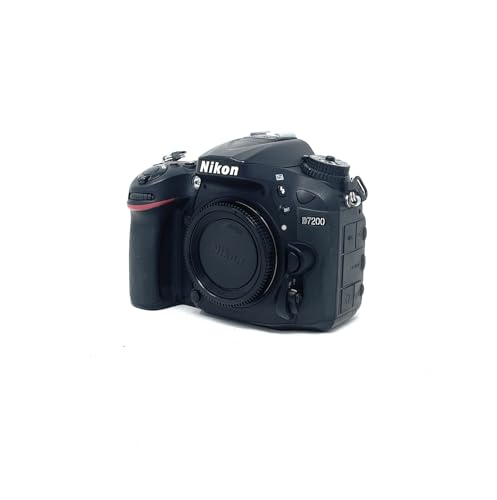
Nikon D7200 review. Compare 108 technical specifications and user reviews to see how it ranks among cameras and if it is worth buying.
Overall score
What it is: An overall evaluation of the camera's quality, based on technical analyses and user reviews.
When it matters: When you need a quick reference to identify the best cameras on the market.
Score components:
90.0%
Technical Score
10.0%
User score
Technical Score
What it is: An assessment of the camera's technical performance, covering eight key areas: image quality, autofocus, video features, stabilization, lens compatibility, connectivity, battery, and design.
When it matters: When you want to compare cameras based on technical performance and available features.
Score components:
28.0%
Sensor & Image
25.0%
Photo Features
18.0%
Video & Audio
14.0%
Display & Design
8.0%
Battery & Power
7.0%
Connectivity & Storage
User score
What it is: A rating that combines user reviews and the total number of reviews received by the camera.
When it matters: When real-world owner satisfaction and review volume matter to your decision.
Score components:
70.0%
User reviews
30.0%
Popularity
Score components:
25.0%
Sensor size
20.0%
Main camera megapixels
20.0%
Dual card slots
15.0%
N. of focus points
10.0%
RAW photo capture
10.0%
Phase-detection autofocus (photos)
Score components:
35.0%
Weight
30.0%
Battery life (CIPA)
20.0%
Sensor-shift stabilization
15.0%
GPS
Score components:
30.0%
Price
20.0%
Weight
20.0%
AF tracking
20.0%
Battery life (CIPA)
10.0%
Touchscreen
Score components:
30.0%
Main camera megapixels
25.0%
Sensor size
20.0%
Main camera pixel size
15.0%
Sensor-shift stabilization
10.0%
RAW photo capture
Score components:
30.0%
Weight
25.0%
Thickness
20.0%
AF low-light sensitivity
15.0%
Sensor-shift stabilization
10.0%
Eye detection AF (human)
Score components:
30.0%
Sensor size
25.0%
Main camera pixel size
20.0%
Eye detection AF (human)
15.0%
Main camera megapixels
10.0%
Sensor-shift stabilization
Score components:
30.0%
Weight
25.0%
Battery life (CIPA)
20.0%
Min operating temperature
15.0%
Sensor-shift stabilization
10.0%
GPS
Available: ranking among products currently available (including other versions of this product).
All: ranking among all products in the database.
#6 in Best Cameras under £200
#12 in Best DSLR Cameras
#12 in Best SLR Cameras
#19 in Best Nikon Cameras
#28 in Best Cameras under £300
#74 in Best Cameras
#74 in Best Digital Cameras
#247 in Best Travel Cameras
#268 in Best Cameras for Hiking
What it is: An assessment of the camera's technical performance, covering eight key areas: image quality, autofocus, video features, stabilization, lens compatibility, connectivity, battery, and design.
When it matters: When you want to compare cameras based on technical performance and available features.
Score components:
28.0%
Sensor & Image
25.0%
Photo Features
18.0%
Video & Audio
14.0%
Display & Design
8.0%
Battery & Power
7.0%
Connectivity & Storage
What it is: A rating that combines user reviews and the total number of reviews received by the camera.
When it matters: When real-world owner satisfaction and review volume matter to your decision.
Score components:
70.0%
User reviews
30.0%
Popularity
What it is: An indicator that combines the camera's overall rating with its cost.
When it matters: When you want to know how much overall quality you get for the price.
Score components:
60.0%
Overall score
40.0%
Price
Importance: HIGH
Good value: Full frame or larger
Importance: HIGH
Good value: At least 20 MP
Importance: HIGH
Good value: At least 3.5 µm
Importance: LOW
Importance: MEDIUM
Good value: At least ISO 25,600
Importance: MEDIUM
Importance: MEDIUM
Good value: At least 14-bit
Importance: LOW
Importance: LOW
Importance: LOW
Importance: LOW
Importance: LOW
Importance: LOW
Importance: LOW
Importance: LOW
Importance: MEDIUM
Importance: LOW
Importance: LOW
Importance: LOW
Importance: LOW
Importance: LOW
Importance: HIGH
Good value: At least 200 points
Importance: HIGH
Importance: MEDIUM
Importance: LOW
Importance: LOW
Importance: MEDIUM
Importance: MEDIUM
Importance: HIGH
Good value: At least 5 stops
Importance: LOW
Importance: MEDIUM
Good value: At least 10 fps
Importance: LOW
Importance: LOW
Importance: LOW
Importance: LOW
Importance: LOW
Importance: LOW
Importance: LOW
Importance: LOW
Importance: LOW
Importance: LOW
Importance: LOW
Importance: LOW
Importance: LOW
Importance: LOW
Importance: LOW
Importance: LOW
Good value: At least 200,000 actuations
Importance: LOW
Good value: At least 10x
Importance: HIGH
Good value: At least 3840 px
Importance: MEDIUM
Good value: At least 200 Mbps
Importance: MEDIUM
Good value: At least 10-bit
Importance: LOW
Importance: LOW
Importance: LOW
Importance: LOW
Importance: LOW
Importance: LOW
Importance: LOW
Good value: At least 30 min
Importance: LOW
Importance: LOW
Importance: LOW
Importance: LOW
Importance: LOW
Good value: At least 2 microphones
Importance: LOW
Importance: LOW
Importance: LOW
Importance: LOW
Importance: MEDIUM
Good value: 500 g or less
Importance: LOW
Importance: LOW
Importance: LOW
Importance: MEDIUM
Importance: MEDIUM
Good value: At least 2.36 million dots
Importance: LOW
Good value: 100%
Importance: LOW
Importance: LOW
Good value: At least 120 Hz
Importance: MEDIUM
Good value: At least 3 in
Importance: LOW
Importance: LOW
Importance: LOW
Importance: LOW
Importance: LOW
Importance: LOW
Importance: LOW
Good value: At least 10 m
Importance: LOW
Importance: LOW
Importance: LOW
Importance: LOW
Importance: MEDIUM
Good value: At least 400 shots
Importance: LOW
Good value: At least 1,500 mAh
Importance: LOW
Importance: LOW
Importance: LOW
Importance: LOW
Importance: LOW
Importance: LOW
Importance: LOW
Importance: LOW
Importance: LOW
Importance: LOW
Importance: LOW
Importance: LOW
Importance: LOW
Importance: LOW
Importance: LOW
Importance: LOW
Importance: LOW
Importance: LOW
Importance: HIGH
Importance: MEDIUM
Good value: At least ISO 25,600
Importance: MEDIUM
Good value: At least 400 shots
Importance: LOW
Importance: LOW
Importance: LOW
Importance: MEDIUM
Importance: MEDIUM
Good value: At least 3 in
Importance: MEDIUM
Good value: 500 g or less
Importance: LOW
Importance: MEDIUM
Importance: MEDIUM
Good value: At least 14-bit
Importance: LOW
Importance: LOW
(Reviews last updated: July 2026)
The Nikon D7200 is an evolutionary, high-end APS-C DSLR featuring a 24.2MP sensor without an anti-aliasing filter, delivering excellent image quality, sharp resolution, and high-ISO performance. Key strengths include a significantly improved continuous shooting buffer, a rugged, weather-sealed body with dual SD slots, and a 51-point AF system with strong low-light performance. Conversely, the camera has notable limitations, specifically a lack of focus peaking and slow autofocus in live view. Video capabilities are hindered by an inability to adjust aperture during movie mode, a 10-minute clip limit at 1080/60p, and a 1.3x crop factor. While a strong stills camera, it is considered a minor upgrade over the D7100, according to DPReview.
The Photography Life review characterizes the Nikon D7200 as a highly responsive, ergonomic DX-format DSLR featuring an exceptional 24.2-megapixel sensor and a superior Advanced Multi-CAM 3500 II autofocus system, making it a capable upgrade over the D7000. Key advantages include its improved weather-sealed construction, excellent LCD monitor, built-in Wi-Fi/NFC, and enhanced control flow, which features a dedicated video button for seamless ISO adjustments. Conversely, the review notes significant limitations for fast-action photography, citing a low frame rate and a small buffer that fails to match competitors like the Canon EOS 7D Mark II. Specifically, 14-bit lossless RAW shooting reduces the frame rate to a sluggish 5 fps, while minor issues include an easily lost eyepiece cover and a lack of a true continuous quiet-shutter mode.
The Nikon D7200 is a sturdy, weather-sealed DSLR camera that offers minor upgrades over its predecessor, the D7100, while delivering excellent overall image and video quality for the price. It exhibits solid performance speeds, powering on and focusing in 0.3 seconds. Furthermore, its continuous autofocus achieves a 90% hit rate during continuous shooting. Key technical improvements include better image noise handling at and above ISO 1600, a faster overall raw shooting rate of 5 frames per second, and a significantly expanded buffer capable of sustaining a raw burst for 20 frames compared to just 5 frames on the older model. However, the camera falls short on modern feature implementation, most notably retaining a rigid, fixed LCD display instead of an articulated touchscreen. While Nikon added Wi-Fi and NFC connectivity, the accompanying mobile app is highly restrictive and only allows for photo transfers or basic remote shutter control with focus point selection. Video shooters will also face a frustrating control layout, as manual settings like shutter speed and aperture cannot be adjusted while in Live View mode, forcing users to repeatedly...
The Nikon D7200 stands out as an exceptional enthusiast-level DSLR that serves as a highly capable upgrade from entry-level camera bodies. It is built around a sharp, 24.2-megapixel APS-C CMOS sensor that completely omits an anti-aliasing filter to maximize fine detail and crisp image resolution. Performance is significantly bolstered by the inclusion of the Expeed 4 internal processor, which dramatically improves the camera's buffering capacity over its predecessor, allowing it to capture up to 100 JPEGs or 27 raw files in a single burst. Furthermore, users benefit from a robust 51-point autofocus system that spans across the entire frame when utilizing the camera's 1.3x crop mode. This model also introduces convenient modern connectivity by integrating both Wi-Fi and NFC directly into its sturdy, durable body. Despite these impressive technical capabilities, the camera does feature a few notable design limitations. On the downside, the 3.2-inch rear LCD screen is entirely fixed and lacks touch-sensitivity, which restricts shooting angles and modern navigation convenience. Additionally, videographers may find that the autofocus performance is quite slow when capturing movies, even though the device supports...
The Shutterbug review highlights the Nikon D7200 as a refined 24.2-megapixel DX-format DSLR featuring an Expeed 4 processor, delivering exceptional image quality with a 11.5 f-stop dynamic range and 3,941 lines of resolution. Key pros include high-accuracy color reproduction, excellent low-light noise performance up to ISO 6400, 100% viewfinder coverage, and a 6 fps burst rate. Conversely, cons include a fixed, non-articulating rear screen and specific color inaccuracies, notably over-saturated dark blues. Furthermore, high-boosted ISO modes (up to 102,400) are limited to monochrome with excessive noise, and video performance suffers above ISO 3200.
Based on Thom Hogan's review, I have summarized the Nikon D7200 below, focusing on its specific upgrades, pros, and cons. Nikon D7200 Review Summary The Nikon D7200 stands out as a highly refined, mature 24-megapixel crop-sensor DSLR that delivers the best image quality in Nikon’s DX lineup. While its external body design is virtually identical to its predecessor, major internal upgrades include a tweaked sensor that eliminates shadow banding, better dynamic range, and an expanded high-ISO limit up to 25,600. Performance is significantly enhanced by the EXPEED 4 processor, which expands the raw buffer space by three times—allowing for 18 continuous raw shots instead of just 6—and improves battery longevity to an impressive 1,100 shots. Additionally, the autofocus system boasts improved sensitivity in low-light environments down to -3EV, and the camera integrates built-in Wi-Fi with NFC alongside a streamlined process to queue images for smartphone transfer. Key Pros and Cons Despite its strengths, the camera suffers from frustrating usability quirks and design choices.
According to the CHIP review, the Nikon D7200 is an impressive upper-tier APS-C DSLR, boasting 24-megapixel resolution and outstanding sharpness (2,078 line pairs) at ISO 100. The camera, which features a weather-sealed magnesium body, is highly commended for its improved low-noise performance, boasting significantly reduced noise up to ISO 6,400 compared to its predecessor, the D7100. Other strengths include an exceptionally long-lasting battery (up to 3,500 shots), dual SD card slots for instant backup, and a fast 51-point autofocus system, making it well-suited for action photography. While performance is high, the review notes some limitations, such as the absence of a tilting or swiveling screen, which limits versatility for certain shooting angles. Additionally, although it includes built-in Wi-Fi and NFC, the overall feature set is considered quite similar to the previous model. Despite these minor drawbacks, the D7200 remains a top-tier choice for photographers prioritizing image quality, speed, and robust construction in a DX-format camera.
The Digitalkamera.de review characterizes the Nikon D7200 as an optimized successor to the D7100, highlighting excellent image quality from its 24.2-megapixel APS-C sensor (lacking an optical low-pass filter) and strong performance up to ISO 1,600. Pros include a durable weather-sealed magnesium body, a robust 51-point autofocus system effective to -3 EV, and a greatly improved buffer for continuous shooting, complemented by built-in Wi-Fi and NFC. Conversely, the review identifies the lack of design innovation as a drawback, with a nearly identical body to the previous model. Key cons include the fixed 3.2-inch LCD screen lacking touch or tilt capabilities, a limited 6 frames-per-second burst rate, and 50p/60p Full HD video that requires a 1.3x crop, limiting overall versatility.
This specific camera review from the photography blog gwegner.de concludes that the Nikon D7200 is a highly capable and solid APS-C (DX) sensor DSLR, though it acts as a very minor and safe upgrade over its predecessor, the D7100. The reviewer notes that the camera keeps successful core features like a built-in autofocus motor for older lenses, dual SD memory card slots, and an identical 6 frames-per-second continuous shooting rate. On the positive side (pros), the model introduces built-in Wi-Fi and NFC, an expanded image buffer that now holds up to 16 RAW frames during high-speed bursts, a more sensitive low-light autofocus system, a highly useful "Flat" picture control style for expanded dynamic range previews, and a vastly improved interval timer that can capture more than 999 consecutive images. However, the review points out several significant downsides (cons), particularly regarding the lack of innovation and design stagnation. The camera body completely reuses the old D7100 design, making it feel klobig (clunky) and unergonomic compared to the deeper, more comfortable grip of the Nikon D750 or even the cheaper Nikon D5500....
The Nikon D7200 is a highly capable APS-C (DX-format) DSLR that excels in autofocus performance and low-light image quality, inheriting a professional 51-point autofocus system that functions effectively even in dim conditions down to -3 EV. Equipped with a 24-megapixel sensor and a fast Expeed 4 image processor, the camera delivers clean, usable images at high sensitivities like ISO 6400, and it captures high-speed continuous bursts at 5.75 frames per second (fps) at full resolution, or up to 7 fps in 1.3x crop mode. Key advantages highlighted in the review include its exceptionally fast daylight autofocus acquisition time of 0.17 seconds, a large and bright viewfinder, a generous buffer that holds up to 100 JPEGs or 32 RAW files, and the practical inclusion of built-in Wi-Fi with NFC for easy smartphone pairing. On the downside, the camera lacks a built-in GPS module for geotagging images. While it offers expanded video capabilities—such as a flat color profile for color grading and simultaneous recording to both a memory card and an external HDMI recorder—video performance has notable limitations. Recording Full HD 1080p...
Here is a summary of the Nikon D7200 review based on the provided text: Review Summary The Nikon D7200 delivers very impressive results, primarily driven by its 24-megapixel APS-C CMOS sensor that lacks an anti-aliasing filter to maximize fine detail resolution. In terms of pros, the camera offers excellent image quality with minimal noise up to ISO 1,600, remaining highly usable up to ISO 6,400. Nikon significantly improved upon its predecessor by expanding the RAW buffer memory, allowing for 19 consecutive 14-bit RAW shots at 5 frames per second. The phase-detection autofocus system is fast (0.28 seconds) and has been updated to focus reliably in low-light environments. Additional strengths include an exceptionally fast startup time (0.36 seconds), dual memory card slots for in-camera backups, integrated Wi-Fi and NFC, and a durable, weather-sealed magnesium alloy body. However, the DSLR displays several notable cons, particularly regarding its video and live view functionalities. Autofocus performance slows down drastically in Live View mode, taking a sluggish 1.55 seconds to lock onto a subject. Video recording also suffers from strict limitations: recording Full HD at...
The Nikon D7200 is an impressive APS-C flagship DSLR that features a 24-megapixel sensor without a low-pass filter, paired with the powerful Expeed-4 processor to deliver exceptionally sharp images and balanced, natural colour reproduction. A major highlight of this model is its upgraded Multi-CAM 3500 II autofocus system, which boasts 51 focus points and responds significantly faster than its predecessor, even under dim lighting conditions down to -3 EV. Additionally, the camera resolves previous performance bottlenecks by expanding its buffer memory, allowing users to shoot longer continuous bursts of up to 101 JPEGs or 20 RAW files in a row. It is highly praised for its robust, weather-sealed magnesium-alloy body, standard dual SD card slots, and the useful inclusion of a secondary shoulder status display alongside new modern connectivity options like built-in Wi-Fi and NFC. Despite these strong features, the review highlights several drawbacks that prevent the camera from being perfect. The 3.2-inch rear monitor is completely fixed and lacks touch-screen functionality, a design choice noted as outdated compared to contemporary smartphones and mirrorless competitors. Furthermore, autofocus speeds drop drastically...
The Nikon D7200 is a highly capable digital single-lens reflex (DSLR) camera designed for advanced users, offering a 24-megapixel DX-format CMOS sensor and dual SD card slots for simultaneous RAW and JPEG saving. The camera excels in handling and user navigation, featuring a sturdy design that fits securely in the hand, and an organized layout of buttons and control dials for quick exposure adjustments without feeling cluttered. It includes built-in Wi-Fi and NFC connectivity for easy smartphone remote control and file transfers, a powerful autofocus system, and Full HD video recording capabilities at up to 60 frames per second. Additionally, its 3.2-inch fixed screen delivers a remarkably sharp, high-resolution view of 1.23 million pixels. Despite these robust features, the review highlights notable downsides when using the camera paired with its 18-105mm kit lens, giving the system a mediocre overall test grade of 2.74 (satisfactory) and a rating of "too expensive". Image testing revealed disappointing noise management alongside mediocre input dynamic range, causing the camera to occasionally lose structural details in deep shadows and bright highlights. Furthermore, the kit lens introduces...
The Nikon D7200 is a robust and well-built APS-C (DX) format DSLR camera that delivers exceptional image quality, especially in low-light conditions, maintaining sharpness and minimal noise from ISO 100 up to ISO 3200, and remaining highly usable up to ISO 10000. Powered by the Expeed 4 processor and a 24.2-megapixel sensor, it features a highly precise and responsive 51-point Multi-Cam 3500 II autofocus system capable of operating down to -3 EV, making it excellent for tracking fast action like sports. Key ergonomic and functional upgrades include a dual SDXC card slot, a large and precise 8 cm rear display, a dedicated video sub-menu, and an automated ISO sensitivity setting that is finally easily accessible directly from the quick menu. Despite these performance strengths, the D7200 suffers from being overly similar to its predecessor, the D7100, and lacks modern physical design updates like a tilting or touchscreen display. The camera's built-in Wi-Fi and NFC functionalities feel anecdotal and highly restrictive, preventing users from changing camera settings or physically operating the device while connected to the Nikon WMU application. Furthermore, its...
The Nikon D7200 is a robust and highly capable APS-C DSLR camera that excels in still photography but falls short in video performance. Its key strengths include an exceptional autofocus system inherited from the D750, flawless build quality capable of enduring intensive use, and impressive high-ISO noise management allowing clean shots up to ISO 6400. Additionally, it offers practical features for enthusiasts like a dual memory card slot and an expanded intervalometer capable of capturing up to 9,999 images for timelapses. On the downside, the camera is heavily criticised for its severely limited video mode, which lacks focus peaking, lacks compression controls, and forces a mandatory image crop when shooting in 50p/60p. Reviewers also found the continuous burst shooting performance to be underwhelming and noted the inconvenient absence of a tilting or touchscreen display. Ultimately, while it is a fantastic investment for photographers already owning Nikon lenses, its conservative updates and poor video capability make it less appealing to those looking for a versatile hybrid camera.
The review of the Nikon D7200 highlights a highly capable but strictly iterative upgrade that closely mirrors its predecessor, the D7100. On the positive side, the camera introduces an updated 24.2 MP APS-C CMOS sensor without an optical low-pass filter, paired with the faster, latest-generation Expeed 4 processor. Its autofocus system receives a notable performance boost with the Multi-Cam 3500 II module, which retains 51 focus points (including 15 cross-type) but improves low-light sensitivity down to -3 EV, making it twice as sensitive as before. Other key advantages highlighted are the integration of built-in Wi-Fi and NFC, alongside the retention of well-regarded features like a 100% coverage viewfinder, a sharp 8 cm 1,229,000-dot display, dual UHS-I SDXC slots, and an uncompressed HDMI output.
The Xataka Foto review of the Nikon D7200 highlights it as a highly capable, rugged, and well-rounded DX-format DSLR that significantly builds upon the strengths of its predecessor, the D7100. Driven by a 24.2-megapixel APS-C CMOS sensor and the Expeed 4 image processor, the camera delivers an expanded image buffer that handles up to 27 RAW or 100 JPEG photos in a single burst. The absolute standout feature of the D7200 is its upgraded Multi-CAM 3500DX II 51-point autofocus system. By lowering focus-point sensitivity down to -3 EV, it ensures incredibly fast, precise focus tracking and rapid locking in challenging, low-light environments. Additionally, the reviewer praises its solid dust- and moisture-resistant build, exceptional battery performance of up to 1,110 shots per charge, built-in Wi-Fi and NFC connectivity, and clean, low-noise imagery at sensitivities extending up to ISO 6,400 and 8,000. However, the review points out several notable limitations, particularly regarding video capture and exposure handling. While the D7200 introduces progressive Full HD recording at up to 60 frames per second, it is criticized because this framerate can only be achieved...
The Nikon D7200 is a high-performance DX-format (APS-C) DSLR designed for advanced amateur and professional photographers seeking a compact and lightweight body without sacrificing image quality. Structurally, it retains the robust, weather-sealed magnesium alloy chassis of its predecessor, ensuring familiar and immediate handling through extensive dedicated physical buttons. The camera's standout feature is its 24.2-megapixel CMOS sensor completely devoid of an optical low-pass filter, which maximizes sharpness, tonal reproduction, and delivers a class-leading dynamic range of 14.6 EV. Furthermore, it boasts an upgraded 51-point autofocus system capable of locking focus down to a critical -3 EV for superior low-light performance, paired with an enhanced buffer that allows continuous shooting up to 6 fps (or 7 fps in 1.3x crop mode). Key Pros and Cons Pro: Industry-leading dynamic range (14.6 EV) and excellent image sharpness due to the omitted low-pass filter. Pro: Dual SD card slots allowing overflow, instant backups, or separate RAW/JPEG sorting. Pro: Comprehensive connectivity including both built-in Wi-Fi and NFC for easy mobile pairing. Pro: Upgraded video capabilities featuring a dedicated video menu, clean HDMI output with simultaneous...
The Nikon D7200 serves as a reliable DX-format camera update for photographers transitioning from older models like the D300s, delaying the need to jump to a Full Frame system. The reviewer praises the camera's exceptional high-ISO performance, noting that shooting at ISO 1600 produces clear images without the heavy noise artifacts that plagued older bodies at lower settings. Additionally, it introduces useful modern features like built-in Wi-Fi and NFC connectivity, while maintaining a lighter, more compact body weight. However, the review highlights notable downsides regarding its handling and continuous shooting capabilities. The smaller body design can feel somewhat awkward and uncomfortable to grip with the right hand compared to bulkier professional bodies, often requiring an external battery grip for a better hold. Furthermore, the continuous shooting speed proves disappointing; it only achieves its advertised maximum rate of 7 frames per second by forcing a 1.3x crop factor, rather than delivering that speed across the full DX sensor area.
The Radojuva review highlights the Nikon D7200 as a well-balanced, semi-professional DX camera featuring an excellent 24.2 MP APS-C sensor without an optical low-pass filter, delivering high sharpness and dynamic range. Key strengths include an advanced 51-point autofocus system, a robust weather-sealed body, and dual SD card slots. YouTube · Conversely, the review notes that the D7200 offers only minor improvements over the D7100, limiting the necessity of an upgrade, and it is hindered by a 6 frames-per-second burst rate, which is slow for action photography. Additional drawbacks include clunky Wi-Fi/NFC connectivity and the lack of an articulating, tilting screen for modern video needs.
The Nikon D7200 review by DigitalCamaraLens highlights the camera's high-utility features for handling changing lighting conditions and internal image processing. A major pro praised by the reviewer is the excellent Auto ISO system in Manual mode (M), which automatically selects the lowest possible ISO to achieve correct exposure, ensuring clean images and preserving sharpness during indoor or fast-paced sports events. The camera also offers flexible image processing versatility, allowing users to configure user profiles, extract shadow details through the sutil D-Lighting application, and natively process RAW (.NEF) files directly inside the camera to output optimized JPEGs. Conversely, the review exposes notable cons regarding automated adjustments and lens correction boundaries. A distinct disadvantage is the Auto White Balance (WB) system, which tends to shift heavily toward a yellowish tint, subsequently altering sky tones to turquoise. Additionally, while the camera can apply automatic optical fixes, the geometric distortion correction is only partial; it straightens lines at the extreme edges of the frame but fails to fix internal geometric warps on wide-angle zooms like the Nikkor 18-105mm. Lastly, in-camera noise reduction is criticized...
The Nikon D7200 is evaluated as a highly complete, semi-professional APS-C DSLR that effectively bridges the gap between entry-level cameras and full-frame models. The reviewer highlights its exceptional 24-megapixel CMOS sensor without an anti-aliasing filter, which delivers outstanding image sharpness, a wide dynamic range, and vibrant colours. Its standout features include a powerful Multi-CAM 3500DX II autofocus system with 51 focus points that tracks moving subjects brilliantly, superb high ISO performance that keeps noise virtually non-existent up to ISO 1600, and a long-lasting battery capable of exceeding 1,100 shots. Additionally, the camera boasts a weather-sealed, ergonomic body, dual SD card slots, built-in Wi-Fi and NFC, and a unique 1.3x sensor crop mode that extends the reach of lenses without needing a physical teleconverter. Despite its high quality, the reviewer notes several distinct drawbacks, particularly regarding video usage and interface layout. The Live View feature is described as disappointing due to low definition, susceptibility to fingerprint smudges, and high reflectivity under bright light, making it impractical for outdoor use. Additionally, the default layout of the buttons is somewhat illogical, which poses...
The Saggiamente review identifies the Nikon D7200 as a highly capable prosumer DSLR featuring a superior 24-megapixel APS-C sensor without an anti-aliasing filter, an upgraded 51-point Multi-CAM 3500DX II autofocus system, and an improved buffer size. While the camera offers excellent image quality, dynamic range, and added features like built-in Wi-Fi/NFC, it falls short of excellence due to an aging body design and limited innovations. Key cons include the lack of a tilting or touch-sensitive screen, a 1.3x crop factor when shooting at 1080p/60fps, and high ISO settings above 25,600 producing low-quality images.
The Nikon D7200 is a highly capable APS-C DSLR that delivers professional-grade photographic performance in a compact, weather-sealed magnesium alloy body. Key advantages include an excellent 24.3MP sensor that omits the anti-aliasing filter for superior sharpness, class-leading dynamic range, a highly effective 51-point autofocus system operating down to -3EV, and an impressive battery life exceeding 1,000 shots. Furthermore, it outperforms direct competitors like the Canon 7D Mark II and Sony A77 Mark II in low-light noise management, producing clean, sharp images up to ISO 1600, with highly manageable noise at ISO 3200.
The Nikon D7200 is an evolution of the D7100, bringing notable updates to the DX-format (APS-C) lineup, including an upgraded Multi-CAM 3500 II DX 51-point autofocus system that handles low light down to -3 EV, a fast Expeed 4 processor, and integrated Wi-Fi with NFC for easy sharing. The camera's 24.2-megapixel sensor works seamlessly up to ISO 25,600 (expandable to 102,400 in black and white), maintaining excellent image uniformities and low noise levels compared to its predecessor. Testing revealed a highly reactive performance with minimal shutter lag, and its expanded buffer memory allows the camera to continuously capture up to 42 compressed JPEG Fine images or 17 RAW shots (12-bit) before slowing down. Additionally, it features dual SD slots, an advanced Auto ISO mode that automatically pairs shutter limits to focal length, and deep menu customization with 53 distinct variables.
The Nikon D7200 is a solid and reliable entry-level DSLR camera designed for enthusiast photographers who enjoy outdoor, landscape, and nature photography. Built with a durable magnesium alloy skeleton and a polycarbonate front, the body is fully weather-sealed against dust and water, allowing users to safely shoot in rain or challenging outdoor conditions. Key strengths highlighted in the review include its impressive 24.2-megapixel APS-C sensor that produces marvelous image quality and a wide dynamic range, alongside an exceptional 51-point Advanced Multi-CAM 3500 II autofocus system capable of locking onto subjects even under moonlight (-3EV). Furthermore, performance speeds are boosted by an EXPEED 4 processor, allowing continuous burst depths of up to 27 RAW files or 100 JPEGs. It also introduces helpful Wi-Fi and NFC connectivity for wireless image transfers and remote control via smartphones. Despite these excellent photography credentials, the camera does have a few distinct limitations. The primary design drawback is the 3.2-inch LCD display, which is completely fixed and lacks both touch functionality and articulation, making awkward angles harder to shoot. Video recording capabilities are also somewhat constrained;...
Overview and Key Specifications The Nikon D7200 is an enthusiast-level DSLR featuring a 24.2-megapixel APS-C CMOS sensor paired with an EXPEED 4 image processor. It deliberately omits an anti-aliasing filter to maximize image sharpness and fine detail rendering. The camera offers a robust, weather-sealed magnesium alloy body weighing 765g with excellent ergonomics, dual SD card slots, and an improved battery life capable of reaching 1,100 shots per charge. It introduces built-in Wi-Fi and NFC connectivity, a native ISO range of 100–25,600, and a continuous shooting rate of 6fps at full resolution, which can increase to 7fps when using the 1.3x crop mode. Additionally, it features a 51-point autofocus system (including 15 cross-type sensors) that can focus down to -3 EV, making it highly effective for tracking subjects and shooting in low light. Pros and Cons A major advantage of the D7200 is its upgraded EXPEED 4 processor, which fixes the buffer limitations of its predecessor by allowing continuous capture of up to 50 JPEGs or 27 RAW files. Other strengths include its vibrant yet natural color reproduction, impressive detail retention...
The Nikon D500 offers professional-grade power and handling tailored for sports and wildlife photographers who need extreme performance. Built around the high-speed Expeed 5 processor, it delivers an impressive 10 frames per second burst rate, a nearly infinite buffer when using XQD cards, and a flagship-level 153-point autofocus system. Key advantages include its robust professional body, an excellent viewfinder, a tilting touchscreen display, 4K video recording, and compatibility with high-capacity EN-EL18a batteries. On the downside, the D500 carries a high price tag, suffered from initial market scarcity, and exhibits compatibility issues with certain Lexar UHS-II SD cards and third-party batteries. In contrast, the Nikon D7200 serves as a more affordable, consumer-oriented body that matches the D500 in terms of pure image quality. Both cameras utilize similar Sony-derived sensors that offer excellent ISO invarance, with the D7200 slightly outperforming the D500 at low ISO levels. The D7200's primary advantages are its highly accurate 51-point autofocus, a built-in pop-up flash, dual matching SD card slots, and an outstanding price-to-performance ratio. However, its drawbacks include a slower burst rate, a consumer-grade body layout,...
The review from Pf Fotografie Magazine highlights the Nikon D7200 as a highly capable, top-tier APS-C (DX-format) camera that successfully inherits several professional features from full-frame (FX) bodies like the D750. A major pro noted by the reviewer is its impressive 51-point autofocus system, which excels in low-light conditions down to -3 EV and covers a much larger portion of the viewfinder compared to full-frame models. Additionally, the 24-megapixel sensor lacks an anti-aliasing (AA) filter, yielding excellent sharpness and an outstanding dynamic range at lower ISO sensitivities, allowing photographers to pull deep shadow details from a single RAW (NEF) file. Built-in Wi-Fi is also praised for seamlessly adding GPS data and enabling remote smartphone control. On the downside, the review identifies several notable cons, particularly regarding extreme low-light performance and missing high-end features. While the camera can reach an expanded ISO of 100,000, these top two sensitivity settings restrict the user to shooting monochrome (black and white) JPEGs only, completely disabling RAW recording. Furthermore, activating the camera’s built-in noise reduction results in a significant loss of image sharpness. The reviewer...
The Nikon D7200 is an enthusiastic-tier APS-C digital SLR camera priced under €1,000 for the body or around €1,140 with an 18-105mm kit lens. Designed with a magnesium alloy skeleton, polycarbonate front, and extensive weather sealing, it serves as a robust outdoor workhorse for nature photographers willing to skip a full-frame sensor for a more budget-friendly alternative. Inside, it features a 24.2MP sensor without an anti-aliasing filter to maximize image detail, an updated Expeed 4 processor, and a highly advanced 51-point autofocus system inherited from the high-end Nikon D810. Key performance upgrades over its predecessor include an expanded native ISO range up to 25,600 and a radically improved buffer capacity capable of capturing 27 RAW images or 100 JPEGs in a single 6fps burst. Video features include 1080p recording at 60fps in a 1.3x crop mode and a "flat" picture profile optimized for post-production color grading. The review highlights distinct pros and cons regarding the camera's design and operation. On the positive side, the D7200 delivers outstanding image quality with solid dynamic range, quick and accurate autofocus even down to...
In this hands-on review, the author shares her experience transitioning from a basic, entry-level Nikon D3100 to the high-end APS-C Nikon D7200. Testing the camera across action-heavy scenarios like a football match and indoor photography, she highlights several significant performance leaps. On the positive side (pros), the D7200 offers a massively improved ISO range (100–25,600) with much cleaner low-light performance, where visible noise only starts appearing around ISO 3200 compared to the severe grain at ISO 1600 on her older model. It features a fast 6 frames-per-second burst rate, a dual SD card slot configuration, a larger 18-RAW image buffer size, an intuitive dual-dial control system, and a remarkably quiet shutter operation. Additionally, its advanced 51-point autofocus system reliably tracks subjects in dark environments down to -3 EV. However, the reviewer points out distinct workflow bottlenecks and hardware limitations (cons). The most frustrating omission is the lack of an articulating or tilting LCD screen, making ground-level or low-angle shooting highly inconvenient. She also encounters processing delays when attempting to review shots on the fly during fast-paced sports events, noting that...
The review by Patrick Mollema from Digitale Fotografie Vakantie describes the Nikon D7200 as an exceptionally complete budget camera that delivers high image quality, making full-frame alternatives feel largely unnecessary. Evaluated at a price of around €800 to €1049 depending on the configuration, the camera stands out primarily due to its massive 14.6-stop dynamic range (as measured by DXO), which outperforms equivalent competitors like the Canon 80D. The reviewer praises the camera’s 24-megapixel sensor for operating without a low-pass filter to generate highly sharp photos with vibrant, natural colours. Key software features such as Active D-Lighting and a first-time local contrast adjustment allow users to creatively fine-tune images on the go rather than relying on editing software like Photoshop. Additionally, its low image noise and the Creative Lighting System for wireless flash support are noted as strong positive features. Despite the overwhelming praise, the review highlights specific ergonomics and operational flaws. A major con is the worsened handling of the settings interface; while previous models allowed quick access to the main settings by pressing the info button twice, the D7200...
The Nikon D7200 is a top-end, weather-sealed APS-C camera built for heavy semi-professional use and ambitious amateurs. It features a 24-megapixel sensor without an anti-alias filter, an improved autofocus module sensitive down to -3 LW for exceptional low-light tracking, and built-in Wi-Fi with NFC for password-free smartphone sharing. A major upgrade over its predecessor is its expanded internal buffer, which resolves past processing bottlenecks by allowing the camera to shoot continuous bursts of up to 25 Large/Fine JPEGs or 11 14-bit RAW files at speeds up to 6.2 frames per second. In terms of pure performance, it delivers excellent resolution, a remarkably high dynamic range with minimal highlight clipping, and well-controlled noise up to ISO 25,600.
Despite these welcome upgrades, the D7200 falls short in several areas where its design and functionality remain stagnant. The physical magnesium-alloy body is virtually unchanged, missing out on a flexible tilt-screen or touchscreen display which limits its usability for live-view shooting and video production. Video recording is capped at 1080p, and unlocking the smoother 50/60 fps frame rates frustratingly requires activating a 1.3x crop mode that narrows the field of view. Furthermore, the aperture cannot be electronically adjusted while live view is active, forcing users to exit the mode just to change the setting. While the continuous shooting speed of 6 to 7 fps is decent, it lags behind premium competitors like the Canon 7D Mark II. Finally, the accompanying Wireless Utility mobile app is heavily limited, only allowing users to select a focus point and trigger the shutter without any control over core exposure settings like aperture or shutter speed.
Compare