Scored using Smartwatches Methodology v3.0
Smartwatches Methodology v3.0
Mathematical & Unbiased Scoring
Products in this category are scored under Frontum Smartwatches Methodology v3.0: the technical score from the specifications is the base, and independent expert and video reviews (up to ±0.5 points), owner opinions (up to ±0.3) and best-of lists (up to +0.3) move it up or down.
Explore Smartwatches Methodology v3.0

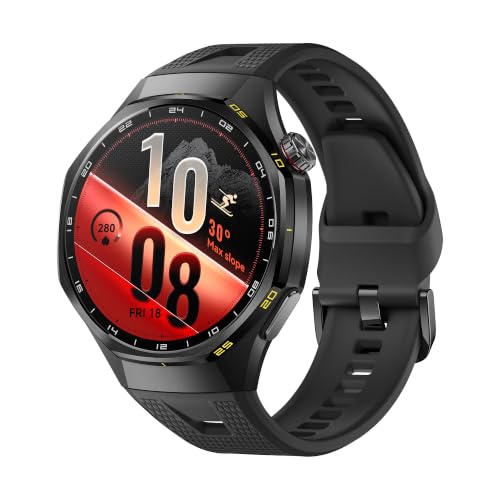
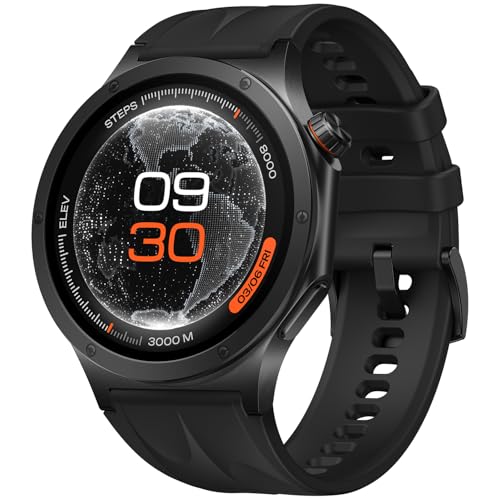
Mibro GS Pro2 review: 127 specs compared

Avg. price:~£?Screen size:1.43 inchBattery life:20 daysDisplay type:AMOLED

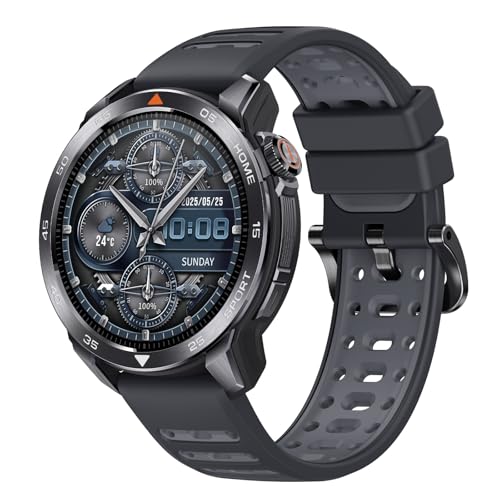
Mibro GS Pro2 Review: Compare 127 technical specifications and 23 expert and video reviews to see how this product ranks in the Smartwatches category and whether it is worth buying.

Mibro GS Pro2
7.8/10

Overall score

Score
7.8/ 10
✕
What it is
Our main score for this model, 1–10. It combines specs, best-of lists, expert reviews and owners.
How we count it
Parts: Technical score 35%, List score 30%, Reviews score 25%, Sentiment score 10%
Marks: Each part gets a mark out of 10. For reviews, lists and owners, a typical model in this category gets about 8 and the best one gets 10.
No data yet: A part with no data shows "?". It counts as the mark of a weaker model in this category (4 in 5 models with data score higher). This way, models with reviews, lists and owners usually come out ahead.
Score distribution
â–¼
<55-66-77-88-99-10
Score components

35%

7.7

Technical score

30%

?

List scoreNot enough data yet, so we use 7.5, the mark of a weaker model in this category

25%

8.6

Reviews score

10%

6.8

Sentiment score

â–²Better than 76% of smartwatches
?

Value for money

Value for money
✕
What it is
An indicator that combines the smartwatch's overall rating with its cost.
When it matters
When you are looking for a smartwatch with a good balance between quality and price.
Score distribution
â–¼
<55-66-77-88-99-10
Score components

70%

7.8

Overall score

30%

?

Price

Price not known yet
7.7

Technical score

Technical score
7.7/ 10
✕
What it is
How good the specs are compared with the other models in this category, 1–10.
How we count it
Areas: We rate the specs in each area against the other models in this category.
Weighting: The areas that matter most to buyers count more. The shares are shown under Score components.
Share: The technical score is 35% of the overall score.
Score distribution
â–¼
<55-66-77-88-99-10
Score components

24%

7.7

Health

21%

9.6

Fitness

16%

7.2

Battery

14%

6.9

Smart features

12%

7.2

Connectivity

9%

7.7

Display & Design

4%

4.7

Hardware

â–²Better than 77%
8.6

Reviews score

Reviews score
8.6/ 10
✕
What it is
Average grade from independent test sites, magazines and video reviewers, 1–10.
How we count it
Grades: Each review's own score is converted to 1–10; without one, we grade the review ourselves. Every review counts the same: written or video, short or full test.
Score: The average grade is 80% of the review mark; the number of reviews is the other 20% (1 review = 5, the typical number in this category = 8, the most-reviewed model = 10).
Enough data: With few reviews, the average grade is pulled toward the typical grade of this category. No reviews yet: 7.5 for now.
Share: Reviews count 25% of the overall score.
Score distribution
â–¼
<55-66-77-88-99-10

80%

8.7

Average grade

20%

8.4

Popularity

Grades by review (23)
4 reviews + 19 videos, average 8.9/10. Reviews count 25% of the overall score.
User ratings collected online are not part of this score.
★Better than 93%
?

List score

List score
7.5/ 10
✕
What it is
How often independent test sites, magazines and video reviewers put this model in their best-of lists for this category.
How we count it
Points: The model in the most lists of this category gets 10; the others get 8 to 10 in proportion. In no list yet: 7.5. Lists count 30% of the overall score.
Enough data: Every list counts, even a single one. With fewer than 5 best-of lists in the category, this part is left out.
Lists with this model (0)
Not in any best-of list yet, so this part counts as 7.5. Models in a list get 8 to 10.
Not in any best-of list yet
Loading...
Loading category ranking...

Smartwatches model ranking

Ranked #170 of 777 models in Smartwatches (Overall score)

Technical Specifications of smartwatch Mibro GS Pro2

Technical score
Technical score
7.7/ 10
✕
What it is
How good the specs are compared with the other models in this category, 1–10.
How we count it
Areas: We rate the specs in each area against the other models in this category.
Weighting: The areas that matter most to buyers count more. The shares are shown under Score components.
Share: The technical score is 35% of the overall score.
Score distribution
â–¼
<55-66-77-88-99-10
Score components:

24%

7.7

Health

21%

9.6

Fitness

16%

7.2

Battery

14%

6.9

Smart features

12%

7.2

Connectivity

9%

7.7

Display & Design

4%

4.7

Hardware

7.7
Reviews score
8.6
List score
?
Value for money
Value for money
8.5/ 10
✕
What it is
An indicator that combines the smartwatch's overall rating with its cost.
When it matters
When you are looking for a smartwatch with a good balance between quality and price.
Score distribution
â–¼
<55-66-77-88-99-10
Score components:

70%

7.8

Overall score

30%

?

Price

8.5
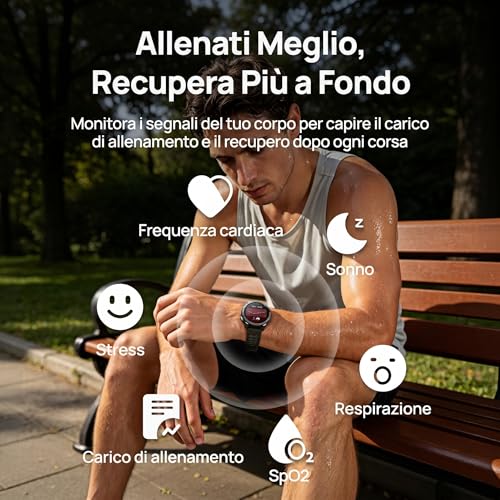
Heart rate monitor
yes
This smartwatch includes a heart rate monitor. 9.5% of smartwatches include a heart rate monitor.
Blood oxygen monitoring
yes
This smartwatch supports blood oxygen monitoring. 30.4% of smartwatches support blood oxygen monitoring.
ECG
no
This smartwatch does not support ECG. 18% of smartwatches support ECG.
Irregular heart rate warnings
?
HRV tracking
?
Show more
What reviewers say
Accelerometer
yes
This smartwatch includes an accelerometer. 0.5% of smartwatches include an accelerometer.
Barometer
yes
This smartwatch includes a barometer. 46.5% of smartwatches include a barometer.
Gyroscope
yes
This smartwatch includes a gyroscope. 28.9% of smartwatches include a gyroscope.
Cadence sensor
yes
This smartwatch includes a cadence sensor. 67.2% of smartwatches include a cadence sensor.
Distance tracking
yes
This smartwatch supports distance tracking. 3.7% of smartwatches support distance tracking.
Show more
What reviewers say
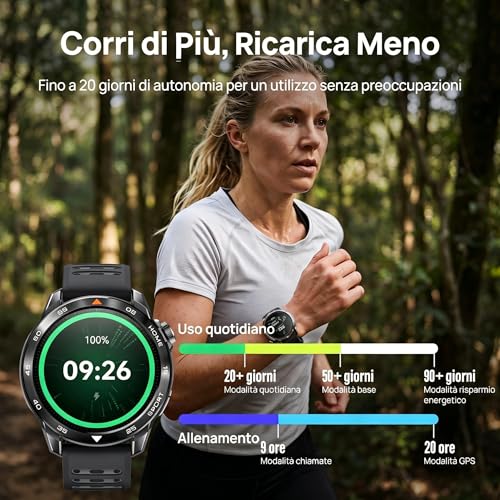
Battery life
20 days
This smartwatch lasts 20 days on a charge, which is longer than 90.1% of Smartwatches and the same as 1.4% of Smartwatches.
Battery life in training mode
?
Battery life with GPS on
20 h
This smartwatch lasts 20 h with GPS on, which is shorter than 52.5% of Smartwatches and the same as 6% of Smartwatches.
Battery power
460 mAh
This smartwatch has a 460 mAh battery, which is larger than 82.9% of Smartwatches and the same as 0.7% of Smartwatches.
Charge time
?
Show more
What reviewers say
Operating system
Proprietary OS
This smartwatch runs Proprietary OS, which is less advanced than the system in 54% of Smartwatches and equal to 42.1% of Smartwatches.
Software update frequency
?
Third-party app support
?
Notifications
yes
This smartwatch supports notifications. 0.3% of smartwatches support notifications.
Voice assistant support
?
Show more
What reviewers say
Cellular module
no
This smartwatch does not include a cellular module. 16.6% of smartwatches include a cellular module.
SIM cards
0
GPS
yes
This smartwatch supports GPS. 40.3% of smartwatches support GPS.
Galileo support
yes
This smartwatch supports Galileo navigation. 56.5% of smartwatches support Galileo navigation.
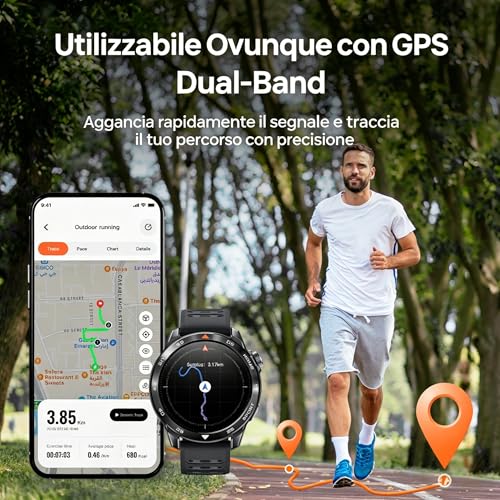
Dual-frequency GPS
yes
Mibro GS Pro2 supports dual-frequency GPS. 85% of Smartwatches offer this.
Show more
What reviewers say
Screen size
1.43 inch
This smartwatch has a 1.43 inch screen, which is larger than 56.3% of Smartwatches and the same as 8.6% of Smartwatches.
Display type
AMOLED
This smartwatch uses AMOLED, which is more advanced than the screen in 46.9% of Smartwatches and equal to 53.1% of Smartwatches.
Resolution
466x 466
This smartwatch has a display resolution of 466x466 which is higher than that of 84.3% of smartwatches and equal to that of 13.2% of smartwatches.
Pixel density
326 ppi
This smartwatch has a pixel density of 326 ppi, which is higher than 45% of Smartwatches and equal to 8.7% of Smartwatches.
Display brightness
1,200 nits
This smartwatch has a screen brightness of 1,200 nits, which is higher than 81.3% of Smartwatches and equal to 1% of Smartwatches.
Show more
What reviewers say
CPU speed
?
Processor model
?
RAM
?
Internal storage
1 GB
This smartwatch has 1 GB of internal storage, which is less than 63.3% of Smartwatches and equal to 0.5% of Smartwatches.
External memory slot
no
This smartwatch does not include an external memory slot. 0.3% of smartwatches include an external memory slot.
Show more

Mibro GS Pro2 vs the average smartwatch

246810TotalHealthFitnessBatteryConnectivityDisplay & DesignSmart featuresHardware
  • 13 days longer battery life
    This smartwatch runs longer per charge than the average smartwatch (20 days vs 7 days). The average smartwatch runs for 7 days on a charge.
    20 days vs 7 days
  • NFC functionality
    This smartwatch supports NFC, the average smartwatch does not. 45.6% of smartwatches support NFC.
  • Cadence tracking
    This smartwatch includes a cadence sensor, the average smartwatch does not. 32.9% of smartwatches include a cadence sensor.
  • Supports dual-frequency GPS
    Mibro GS Pro2 supports dual-frequency GPS, while the average smartwatch does not. 15.1% of Smartwatches support dual-frequency GPS.
  • Galileo satellite support
    This smartwatch supports Galileo navigation, the average smartwatch does not. 43.6% of smartwatches support Galileo navigation.
  • 22.9% higher review score
    Reviews score
    8.6/ 10
    ✕
    What it is
    Average grade from independent test sites, magazines and video reviewers, 1–10.
    How we count it
    Grades: Each review's own score is converted to 1–10; without one, we grade the review ourselves. Every review counts the same: written or video, short or full test.
    Score: The average grade is 80% of the review mark; the number of reviews is the other 20% (1 review = 5, the typical number in this category = 8, the most-reviewed model = 10).
    Enough data: With few reviews, the average grade is pulled toward the typical grade of this category. No reviews yet: 7.5 for now.
    Share: Reviews count 25% of the overall score.
    Score distribution
    â–¼
    <55-66-77-88-99-10

    80%

    8.7

    Average grade

    20%

    8.4

    Popularity

    Grades by review (23)
    4 reviews + 19 videos, average 8.9/10. Reviews count 25% of the overall score.
    User ratings collected online are not part of this score.
    8.6 vs 7.0
  • Rugged construction
    This smartwatch has a rugged design, the average smartwatch does not. 41.3% of smartwatches have a rugged design.
  • More current Bluetooth version
    This smartwatch uses a more current Bluetooth version than the average smartwatch (5.3 vs 5).
    5.3 vs 5.0
  • 22.9% higher review score
    Reviews score
    8.6/ 10
    ✕
    What it is
    Average grade from independent test sites, magazines and video reviewers, 1–10.
    How we count it
    Grades: Each review's own score is converted to 1–10; without one, we grade the review ourselves. Every review counts the same: written or video, short or full test.
    Score: The average grade is 80% of the review mark; the number of reviews is the other 20% (1 review = 5, the typical number in this category = 8, the most-reviewed model = 10).
    Enough data: With few reviews, the average grade is pulled toward the typical grade of this category. No reviews yet: 7.5 for now.
    Share: Reviews count 25% of the overall score.
    Score distribution
    â–¼
    <55-66-77-88-99-10

    80%

    8.7

    Average grade

    20%

    8.4

    Popularity

    Grades by review (23)
    4 reviews + 19 videos, average 8.9/10. Reviews count 25% of the overall score.
    User ratings collected online are not part of this score.
    8.6 vs 7.0
  • 8.9% better value for money
    Mibro GS Pro2 has a higher value-for-money score than the average smartwatch (8.46 vs 7.8).
    8.46 vs 7.76
  • Cadence tracking
    This smartwatch includes a cadence sensor, the average smartwatch does not. 32.9% of smartwatches include a cadence sensor.
  • 60 more exercise types
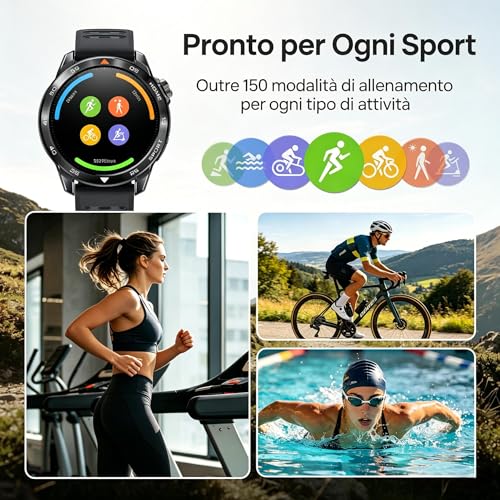
    This smartwatch includes more exercise types than the average smartwatch (150 vs 90). The average smartwatch includes 90 exercise types.
    150 vs 90
  • 13 days longer battery life
    This smartwatch runs longer per charge than the average smartwatch (20 days vs 7 days). The average smartwatch runs for 7 days on a charge.
    20 days vs 7 days
  • 155 mAh larger battery capacity
    This smartwatch has a larger battery than the average smartwatch (460 mAh vs 305 mAh). The average smartwatch has a 305 mAh battery.
    460 mAh vs 305 mAh
  • NFC functionality
    This smartwatch supports NFC, the average smartwatch does not. 45.6% of smartwatches support NFC.
  • Supports dual-frequency GPS
    Mibro GS Pro2 supports dual-frequency GPS, while the average smartwatch does not. 15.1% of Smartwatches support dual-frequency GPS.
  • Galileo satellite support
    This smartwatch supports Galileo navigation, the average smartwatch does not. 43.6% of smartwatches support Galileo navigation.
  • More current Bluetooth version
    This smartwatch uses a more current Bluetooth version than the average smartwatch (5.3 vs 5).
    5.3 vs 5.0
  • Rugged construction
    This smartwatch has a rugged design, the average smartwatch does not. 41.3% of smartwatches have a rugged design.
  • 450 nits brighter screen
    This smartwatch has a brighter screen than the average smartwatch (1200 nits vs 750 nits). The average smartwatch peaks at 750 nits.
    1,200 nits vs 750 nits
  • Higher resolution
    This smartwatch has a display resolution of 466x466, while the average smartwatch reaches 360x360.
    466x466 vs 360x360
  • Better case material
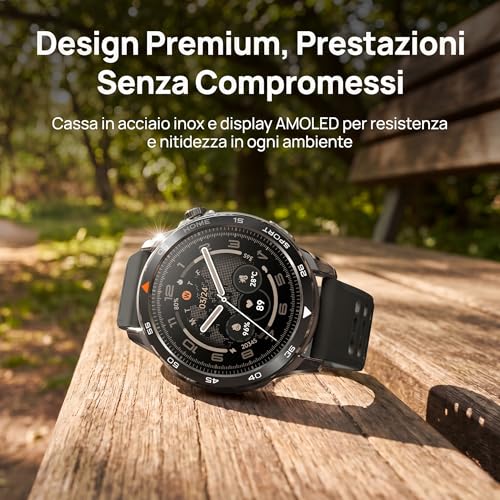
    This smartwatch uses stainless steel for the case material, while the average smartwatch uses polycarbonate.
    stainless steel vs polycarbonate
  • Basic battery type
    This smartwatch uses a Li-ion battery, while the average smartwatch uses Li-Po.
    Li-ion vs Li-Po
  • 17 g heavier
    This smartwatch is heavier than the average smartwatch (62 g vs 45 g). The average smartwatch weighs 45.0 g.
    62 g vs 45.0 g
  • 1.3 mm thicker
    This smartwatch is thicker than the average smartwatch (13 mm vs 11.7 mm). The average smartwatch is 11.7 mm thick.
    13 mm vs 11.7 mm
  • 5.5 mm wider case
    This smartwatch has a wider case than the average smartwatch (48 mm vs 42.5 mm). The average smartwatch measures 42.5 mm across.
    48 mm vs 42.5 mm
  • 3 mm taller case
    This smartwatch has a taller case than the average smartwatch (48 mm vs 45 mm). The average smartwatch is 45.0 mm tall.
    48 mm vs 45.0 mm
  • 9.3% lower sentiment score
    6.8 vs 7.5
  • 1 h shorter GPS battery life
    This smartwatch lasts less time with GPS on than the average smartwatch (20 h vs 21 h). The average smartwatch lasts 21 h with GPS on.
    20 h vs 21 h
  • 75% less internal storage
    This smartwatch has less internal storage than the average smartwatch (1 GB vs 4 GB). The average smartwatch has 4 GB of internal storage.
    1 GB vs 4 GB
  • 9.3% lower sentiment score
    6.8 vs 7.5
  • Basic battery type
    This smartwatch uses a Li-ion battery, while the average smartwatch uses Li-Po.
    Li-ion vs Li-Po
  • 1 h shorter GPS battery life
    This smartwatch lasts less time with GPS on than the average smartwatch (20 h vs 21 h). The average smartwatch lasts 21 h with GPS on.
    20 h vs 21 h
  • 17 g heavier
    This smartwatch is heavier than the average smartwatch (62 g vs 45 g). The average smartwatch weighs 45.0 g.
    62 g vs 45.0 g
  • 1.3 mm thicker
    This smartwatch is thicker than the average smartwatch (13 mm vs 11.7 mm). The average smartwatch is 11.7 mm thick.
    13 mm vs 11.7 mm
  • 5.5 mm wider case
    This smartwatch has a wider case than the average smartwatch (48 mm vs 42.5 mm). The average smartwatch measures 42.5 mm across.
    48 mm vs 42.5 mm
  • 3 mm taller case
    This smartwatch has a taller case than the average smartwatch (48 mm vs 45 mm). The average smartwatch is 45.0 mm tall.
    48 mm vs 45.0 mm
  • 75% less internal storage
    This smartwatch has less internal storage than the average smartwatch (1 GB vs 4 GB). The average smartwatch has 4 GB of internal storage.
    1 GB vs 4 GB

Video reviews

Hands-on testing, unboxing, and real-world video evaluations

9.0
Fit Dad Fabio
≈ estimated
23/03/2026
Long-term test · two months of daily use
Verdict
Mibro GS Pro2 is a good-value pick for budget buyers who want workout tracking, despite some accuracy issues.
9.0
Trent In The Sip
≈ estimated
11/02/2026
Unboxing and hands-on review · calls, running, app tour
Verdict
Mibro GS Pro2 looks great and handles most fitness and everyday needs, so it is a recommended buy.
9.0
Thomas Tan Ultra
≈ estimated
15/08/2026
Comparison review · running tests over hundreds of miles
Verdict
Mibro GS Pro2 suits most road runners, offering comfort, reliable GPS and battery life you rarely have to think about.
Not graded

What reviewers agree on

Based on 4 · 12

Reviewers like the sharp screen, accurate GPS and decent battery, but the software and extra features are widely seen as lacking.
Praised
Mixed views
Criticised
Pick a topic to see who said what

Expert reviews

In-depth analysis and verdict from leading tech publications

8.5
charlestech.fr
✓ explicit
16/06/2026
Hands-on test · Multisport watch
Verdict
The Mibro GS Pro2 is a light, sturdy multisport watch with dual-frequency GPS and a bright screen, though it has no blood pressure or leather strap option.
9.0
revista-gadget.es
≈ estimated
02/09/2025
Field test · Sports smartwatch
Verdict
The Mibro GS Pro2 is a comfortable, precise sports watch with a vivid screen and nearly two weeks of battery life, but its touchscreen is less responsive in water.
9.0
istintosportivo.com
≈ estimated
10/09/2026
Hands-on test · Multisport watch
Verdict
The Mibro GS Pro2 is a multisport watch with a bright screen and 18-day battery, and its triathlon mode switches sports automatically, but it has no built-in maps.
9.0
evosmart.it
≈ estimated
23/11/2025
Hands-on test · Outdoor sport watch
Verdict
The Mibro GS Pro2 is a light, bright outdoor watch with dual-frequency GPS and a 20-day battery, but its software is simpler than Garmin's and the translations feel rough.

Third-party reviews

What we like about Mibro GS Pro2

  • Dual-frequency GPS locks on quickly under trees and in cities.
  • The 1200 nits screen stays readable in direct sunlight.
  • Battery lasts about 18 days in tests with notifications and regular GPS workouts.
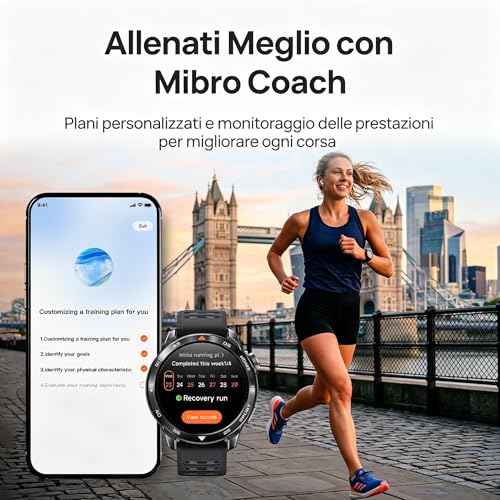
  • Triathlon mode switches between swim, bike and run automatically.
  • 150 sport modes cover a wide range of activities.
  • A 50 m water rating covers swimming and pool sessions.

What we don't like about Mibro GS Pro2

  • No built-in maps.
  • The always-on display cuts battery life to about 5 days.
  • Bluetooth calls only work with Android 6.0 or later.
  • At 62 g and 13 mm thick, it is noticeable on the wrist.
  • There is no ECG function.

Verdict

Dual-frequency GPS is the main reason to look at the Mibro GS Pro2, and it locks on quickly under trees and in busy cities. The 1200 nits AMOLED screen stays readable in strong summer sun. Battery life is rated at 20 days, and in tests about 18 days with notifications on and four GPS workouts a week. Triathlon mode switches between swim, bike and run on its own, and 150 sport modes cover a wide range of activities. The watch also has NFC, a 50 m water rating and a sleep breakdown into light, deep and REM stages. The trade-off is the lack of built-in maps. It suits a runner, cyclist or triathlete who wants strong GPS and a bright screen without paying for a top-end model.

Compare Mibro GS Pro2 with other Smartwatches

1Product to compare no. 1
VS
2Product to compare no. 2
VS
3Product to compare no. 3 (optional)

Graphic comparison of Mibro GS Pro2 and other Smartwatches

No results found