Scored using Smartwatches Methodology v3.0
Smartwatches Methodology v3.0
Mathematical & Unbiased Scoring
Products in this category are scored under Frontum Smartwatches Methodology v3.0: the technical score from the specifications is the base, and independent expert and video reviews (up to ±0.5 points), owner opinions (up to ±0.3) and best-of lists (up to +0.3) move it up or down.
Explore Smartwatches Methodology v3.0

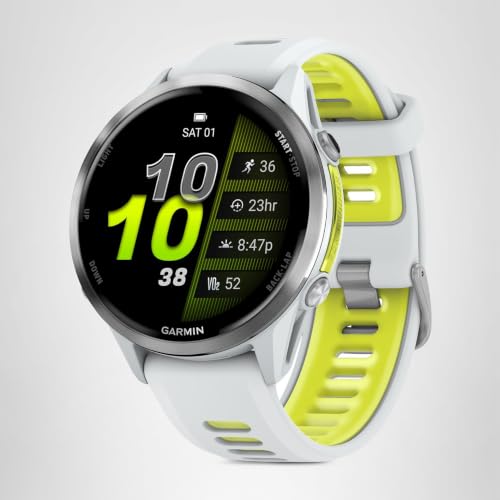
Garmin Forerunner 970 review: 127 specs compared

Avg. price:~£?Screen size:1.4 inchBattery life:15 daysDisplay type:AMOLED

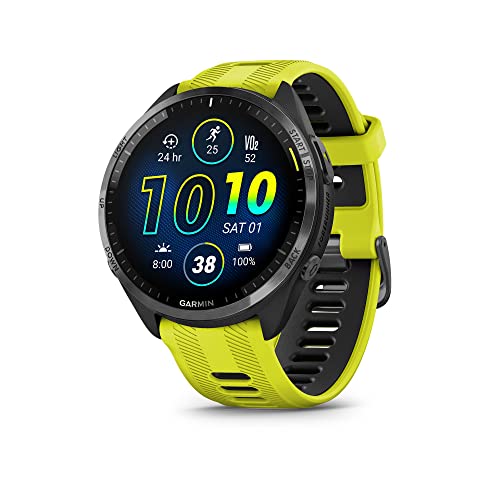
Garmin Forerunner 970 Review: Compare 127 technical specifications, 44 expert and video reviews and 23 best-of lists to see how this product ranks in the Smartwatches category and whether it is worth buying.

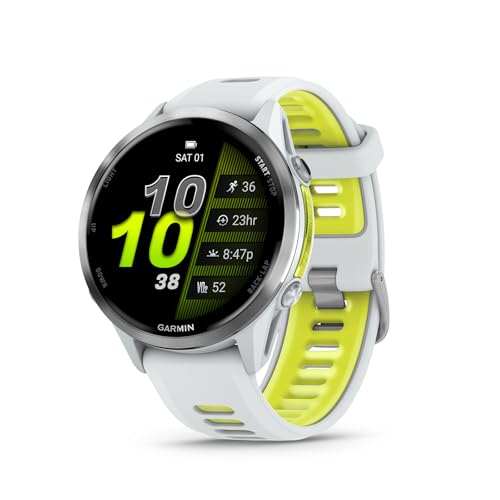
Garmin Forerunner 970
8.8/10

Overall score

Score
8.8/ 10
✕
What it is
Our main score for this model, 1–10. It combines specs, best-of lists, expert reviews and owners.
How we count it
Parts: Technical score 35%, List score 30%, Reviews score 25%, Sentiment score 10%
Marks: Each part gets a mark out of 10. For reviews, lists and owners, a typical model in this category gets about 8 and the best one gets 10.
No data yet: A part with no data shows "?". It counts as the mark of a weaker model in this category (4 in 5 models with data score higher). This way, models with reviews, lists and owners usually come out ahead.
Score distribution
▼
<55-66-77-88-99-10
Score components

35%

8.7

Technical score

30%

9.1

List score

25%

8.6

Reviews score

10%

9.0

Sentiment score

★Better than 98% of smartwatches
?

Value for money

Value for money
✕
What it is
An indicator that combines the smartwatch's overall rating with its cost.
When it matters
When you are looking for a smartwatch with a good balance between quality and price.
Score distribution
▼
<55-66-77-88-99-10
Score components

70%

8.8

Overall score

30%

?

Price

Price not known yet
8.7

Technical score

Technical score
8.7/ 10
✕
What it is
How good the specs are compared with the other models in this category, 1–10.
How we count it
Areas: We rate the specs in each area against the other models in this category.
Weighting: The areas that matter most to buyers count more. The shares are shown under Score components.
Share: The technical score is 35% of the overall score.
Score distribution
▼
<55-66-77-88-99-10
Score components

24%

8.9

Health

21%

9.8

Fitness

16%

7.4

Battery

14%

8.8

Smart features

12%

8.7

Connectivity

9%

8.3

Display & Design

4%

6.9

Hardware

★Better than 98%
8.6

Reviews score

Reviews score
8.6/ 10
✕
What it is
Average grade from independent test sites, magazines and video reviewers, 1–10.
How we count it
Grades: Each review's own score is converted to 1–10; without one, we grade the review ourselves. Every review counts the same: written or video, short or full test.
Score: The average grade is 80% of the review mark; the number of reviews is the other 20% (1 review = 5, the typical number in this category = 8, the most-reviewed model = 10).
Enough data: With few reviews, the average grade is pulled toward the typical grade of this category. No reviews yet: 7.5 for now.
Share: Reviews count 25% of the overall score.
Score distribution
▼
<55-66-77-88-99-10

80%

8.4

Average grade

20%

9.2

Popularity

Grades by review (44)
9 reviews + 35 videos, average 8.5/10. Reviews count 25% of the overall score.
User ratings collected online are not part of this score.
★Better than 93%
9.1

List score

List score
9.1/ 10
✕
What it is
How often independent test sites, magazines and video reviewers put this model in their best-of lists for this category.
How we count it
Points: The model in the most lists of this category gets 10; the others get 8 to 10 in proportion. In no list yet: 7.5. Lists count 30% of the overall score.
Enough data: Every list counts, even a single one. With fewer than 5 best-of lists in the category, this part is left out.
Lists with this model (23)
List score: in 23 of 125 lists (18%)
★Better than 98%
Loading...
Loading category ranking...

Smartwatches model ranking

Ranked #14 of 777 models in Smartwatches (Overall score)

Technical Specifications of smartwatch Garmin Forerunner 970

Technical score
Technical score
8.7/ 10
✕
What it is
How good the specs are compared with the other models in this category, 1–10.
How we count it
Areas: We rate the specs in each area against the other models in this category.
Weighting: The areas that matter most to buyers count more. The shares are shown under Score components.
Share: The technical score is 35% of the overall score.
Score distribution
▼
<55-66-77-88-99-10
Score components:

24%

8.9

Health

21%

9.8

Fitness

16%

7.4

Battery

14%

8.8

Smart features

12%

8.7

Connectivity

9%

8.3

Display & Design

4%

6.9

Hardware

8.7
Reviews score
8.6
List score
9.1
Value for money
Value for money
9.2/ 10
✕
What it is
An indicator that combines the smartwatch's overall rating with its cost.
When it matters
When you are looking for a smartwatch with a good balance between quality and price.
Score distribution
▼
<55-66-77-88-99-10
Score components:

70%

8.8

Overall score

30%

?

Price

9.2
Heart rate monitor
yes
This smartwatch includes a heart rate monitor. 9.5% of smartwatches include a heart rate monitor.
Blood oxygen monitoring
yes
This smartwatch supports blood oxygen monitoring. 30.4% of smartwatches support blood oxygen monitoring.
ECG
yes
This smartwatch supports ECG. 82.1% of smartwatches support ECG.
Irregular heart rate warnings
yes
This smartwatch supports irregular heart rate warnings. 49.5% of smartwatches support irregular heart rate warnings.
HRV tracking
yes
This smartwatch supports HRV tracking. 54.9% of smartwatches support HRV tracking.
Show more
What reviewers say
Accelerometer
yes
This smartwatch includes an accelerometer. 0.5% of smartwatches include an accelerometer.
Barometer
yes
This smartwatch includes a barometer. 46.5% of smartwatches include a barometer.
Gyroscope
yes
This smartwatch includes a gyroscope. 28.9% of smartwatches include a gyroscope.
Cadence sensor
?
Distance tracking
yes
This smartwatch supports distance tracking. 3.7% of smartwatches support distance tracking.
Show more
What reviewers say
Battery life
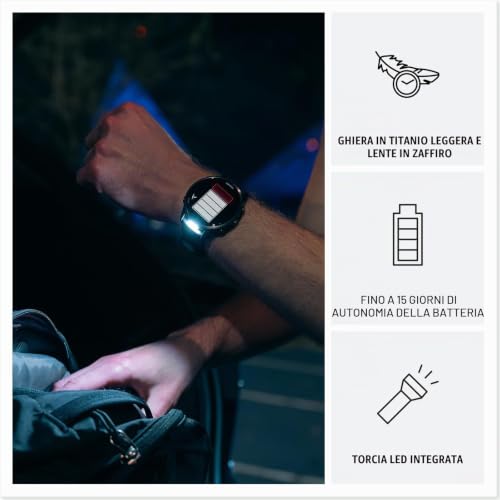
15 days
This smartwatch lasts 15 days on a charge, which is longer than 83% of Smartwatches and the same as 3.9% of Smartwatches.
Battery life in training mode
26 h
This smartwatch records workouts for 26 h on a charge, which is longer than 63.6% of Smartwatches and the same as 2% of Smartwatches.
Battery life with GPS on
26 h
This smartwatch lasts 26 h with GPS on, which is longer than 63.2% of Smartwatches and the same as 2.4% of Smartwatches.
Battery power
560 mAh
This smartwatch has a 560 mAh battery, which is larger than 95.5% of Smartwatches and the same as 0.1% of Smartwatches.
Charge time
95 min
This smartwatch charges from empty in 95 min, which is quicker than 64.2% of Smartwatches.
Show more
What reviewers say
Operating system
Garmin OS
This smartwatch runs Garmin OS, which is more advanced than the system in 70.8% of Smartwatches and equal to 9.2% of Smartwatches.
Software update frequency
occasional
This smartwatch has occasional software update support which is more active than that of 54% of smartwatches and equal to that of 40.2% of smartwatches.
Third-party app support
yes
This smartwatch supports third-party apps. 48.5% of smartwatches support third-party apps.
Notifications
yes
This smartwatch supports notifications. 0.3% of smartwatches support notifications.
Voice assistant support
yes
This smartwatch supports voice assistants. 30.8% of smartwatches support voice assistants.
Show more
What reviewers say
Cellular module
no
This smartwatch does not include a cellular module. 16.6% of smartwatches include a cellular module.
SIM cards
0
GPS
yes
This smartwatch supports GPS. 40.3% of smartwatches support GPS.
Galileo support
yes
This smartwatch supports Galileo navigation. 56.5% of smartwatches support Galileo navigation.
Dual-frequency GPS
yes
Garmin Forerunner 970 supports dual-frequency GPS. 85% of Smartwatches offer this.
Show more
What reviewers say
Screen size
1.4 inch
This smartwatch has a 1.4 inch screen, which is larger than 48.9% of Smartwatches and the same as 6.7% of Smartwatches.
Display type
AMOLED
This smartwatch uses AMOLED, which is more advanced than the screen in 46.9% of Smartwatches and equal to 53.1% of Smartwatches.
Resolution
454x 454
This smartwatch has a display resolution of 454x454 which is higher than that of 76.5% of smartwatches and equal to that of 7% of smartwatches.
Pixel density
459 ppi
This smartwatch has a pixel density of 459 ppi, which is higher than 78.7% of Smartwatches and equal to 1.2% of Smartwatches.
Display brightness
?
Show more
What reviewers say
CPU speed
?
Processor model
?
RAM
?
Internal storage
32 GB
This smartwatch has 32 GB of internal storage, which is more than 81.3% of Smartwatches and equal to 15% of Smartwatches.
External memory slot
no
This smartwatch does not include an external memory slot. 0.3% of smartwatches include an external memory slot.
Show more

Garmin Forerunner 970 vs the average smartwatch

246810TotalHealthFitnessBatteryConnectivityDisplay & DesignSmart featuresHardware
  • ECG support
    This smartwatch supports ECG, the average smartwatch does not. 18% of smartwatches support ECG.
  • 8 days longer battery life
    This smartwatch runs longer per charge than the average smartwatch (15 days vs 7 days). The average smartwatch runs for 7 days on a charge.
    15 days vs 7 days
  • Temperature sensing
    This smartwatch includes a temperature sensor, the average smartwatch does not. 31.9% of smartwatches include a temperature sensor.
  • Crash detection capability
    This smartwatch supports crash detection, the average smartwatch does not. 14% of smartwatches support crash detection.
  • Readiness score
    This smartwatch supports readiness scores, the average smartwatch does not. 19.8% of smartwatches support readiness scores.
  • HRV tracking
    This smartwatch supports HRV tracking, the average smartwatch does not. 45.2% of smartwatches support HRV tracking.
  • Stronger display glass
    This smartwatch uses sapphire display glass, while the average smartwatch uses mineral glass.
    sapphire vs mineral glass
  • Maps support
    This smartwatch supports maps, the average smartwatch does not. 34.4% of smartwatches support maps.
  • 22.9% higher review score
    Reviews score
    8.6/ 10
    ✕
    What it is
    Average grade from independent test sites, magazines and video reviewers, 1–10.
    How we count it
    Grades: Each review's own score is converted to 1–10; without one, we grade the review ourselves. Every review counts the same: written or video, short or full test.
    Score: The average grade is 80% of the review mark; the number of reviews is the other 20% (1 review = 5, the typical number in this category = 8, the most-reviewed model = 10).
    Enough data: With few reviews, the average grade is pulled toward the typical grade of this category. No reviews yet: 7.5 for now.
    Share: Reviews count 25% of the overall score.
    Score distribution
    ▼
    <55-66-77-88-99-10

    80%

    8.4

    Average grade

    20%

    9.2

    Popularity

    Grades by review (44)
    9 reviews + 35 videos, average 8.5/10. Reviews count 25% of the overall score.
    User ratings collected online are not part of this score.
    8.6 vs 7.0
  • 15.2% higher list score
    List score
    9.1/ 10
    ✕
    What it is
    How often independent test sites, magazines and video reviewers put this model in their best-of lists for this category.
    How we count it
    Points: The model in the most lists of this category gets 10; the others get 8 to 10 in proportion. In no list yet: 7.5. Lists count 30% of the overall score.
    Enough data: Every list counts, even a single one. With fewer than 5 best-of lists in the category, this part is left out.
    Lists with this model (23)
    List score: in 23 of 125 lists (18%)
    9.1 vs 7.9
  • 20.0% higher sentiment score
    9.0 vs 7.5
  • 18.1% better value for money
    Garmin Forerunner 970 has a higher value-for-money score than the average smartwatch (9.17 vs 7.8).
    9.17 vs 7.76
  • ECG support
    This smartwatch supports ECG, the average smartwatch does not. 18% of smartwatches support ECG.
  • Temperature sensing
    This smartwatch includes a temperature sensor, the average smartwatch does not. 31.9% of smartwatches include a temperature sensor.
  • Readiness score
    This smartwatch supports readiness scores, the average smartwatch does not. 19.8% of smartwatches support readiness scores.
  • HRV tracking
    This smartwatch supports HRV tracking, the average smartwatch does not. 45.2% of smartwatches support HRV tracking.
  • Calorie tracking
    This smartwatch supports calorie tracking, the average smartwatch does not. 48.7% of smartwatches support calorie tracking.
  • 4 years newer
    This smartwatch was released more recently than the average smartwatch (2025 vs 2021). The average smartwatch was released in 2021.
    2,025 vs 2,021
  • Weight tracking
    This smartwatch supports weight tracking, the average smartwatch does not. 41.9% of smartwatches support weight tracking.
  • Water intake tracking
    This smartwatch tracks water intake, the average smartwatch does not. 44.1% of smartwatches track water intake.
  • Perspiration monitoring
    This smartwatch tracks perspiration, the average smartwatch does not. 15.1% of smartwatches track perspiration.
  • External heart rate monitor support
    This smartwatch supports external heart rate monitor compatibility, the average smartwatch does not. 46.6% of smartwatches support external heart rate monitor compatibility.
  • 8 days longer battery life
    This smartwatch runs longer per charge than the average smartwatch (15 days vs 7 days). The average smartwatch runs for 7 days on a charge.
    15 days vs 7 days
  • 255 mAh larger battery capacity
    This smartwatch has a larger battery than the average smartwatch (560 mAh vs 305 mAh). The average smartwatch has a 305 mAh battery.
    560 mAh vs 305 mAh
  • 25 min quicker charging
    This smartwatch charges faster than the average smartwatch (95 min vs 120 min). The average smartwatch takes 120 min to charge from empty.
    95 min vs 120 min
  • 6 h longer training battery life
    This smartwatch lasts longer in training mode than the average smartwatch (26 h vs 20 h). The average smartwatch lasts 20 h in training mode.
    26 h vs 20 h
  • 5 h longer GPS battery life
    This smartwatch lasts longer with GPS on than the average smartwatch (26 h vs 21 h). The average smartwatch lasts 21 h with GPS on.
    26 h vs 21 h
  • Maps support
    This smartwatch supports maps, the average smartwatch does not. 34.4% of smartwatches support maps.
  • NFC functionality
    This smartwatch supports NFC, the average smartwatch does not. 45.6% of smartwatches support NFC.
  • Supports Wi-Fi
    This smartwatch supports Wi-Fi, the average smartwatch does not. 43.5% of smartwatches support Wi-Fi.
  • Supports ANT+
    This smartwatch supports ANT+, the average smartwatch does not. 13% of smartwatches support ANT+.
  • Supports dual-frequency GPS
    Garmin Forerunner 970 supports dual-frequency GPS, while the average smartwatch does not. 15.1% of Smartwatches support dual-frequency GPS.
  • Galileo satellite support
    This smartwatch supports Galileo navigation, the average smartwatch does not. 43.6% of smartwatches support Galileo navigation.
  • Stronger display glass
    This smartwatch uses sapphire display glass, while the average smartwatch uses mineral glass.
    sapphire vs mineral glass
  • 133 ppi sharper screen
    This smartwatch has a sharper screen than the average smartwatch (459 ppi vs 326 ppi). The average smartwatch has a pixel density of 326 ppi.
    459 ppi vs 326 ppi
  • Higher resolution
    This smartwatch has a display resolution of 454x454, while the average smartwatch reaches 360x360.
    454x454 vs 360x360
  • 15 °C higher heat tolerance
    This smartwatch tolerates a higher temperature than the average smartwatch (60 °C vs 45 °C). The average smartwatch is rated up to 45.0 °C.
    60 °C vs 45.0 °C
  • Crash detection capability
    This smartwatch supports crash detection, the average smartwatch does not. 14% of smartwatches support crash detection.
  • More advanced operating system
    This smartwatch runs a more advanced operating system than the average smartwatch (Garmin OS vs Proprietary OS).
    Garmin OS vs Proprietary OS
  • Emergency SOS
    This smartwatch includes Emergency SOS, the average smartwatch does not. 44.8% of smartwatches include Emergency SOS.
  • More frequent updates
    This smartwatch receives occasional software updates, while the average smartwatch receives ended updates.
    occasional vs ended
  • 8x more internal storage
    This smartwatch has more internal storage than the average smartwatch (32 GB vs 4 GB). The average smartwatch has 4 GB of internal storage.
    32 GB vs 4 GB
  • 1 fewer microphones
    This smartwatch has fewer microphones than the average smartwatch (0 vs 1). The average smartwatch has 1 microphones.
    0 vs 1
  • Basic battery type
    This smartwatch uses a Li-ion battery, while the average smartwatch uses Li-Po.
    Li-ion vs Li-Po
  • 60 fewer exercise types
    This smartwatch includes fewer exercise types than the average smartwatch (30 vs 90). The average smartwatch includes 90 exercise types.
    30 vs 90
  • 11 g heavier
    This smartwatch is heavier than the average smartwatch (56 g vs 45 g). The average smartwatch weighs 45.0 g.
    56 g vs 45.0 g
  • 1.2 mm thicker
    This smartwatch is thicker than the average smartwatch (12.9 mm vs 11.7 mm). The average smartwatch is 11.7 mm thick.
    12.9 mm vs 11.7 mm
  • No smart alarm
    This smartwatch does not support a smart alarm, the average smartwatch does. 50.6% of smartwatches support smart alarms.
  • 4.5 mm wider case
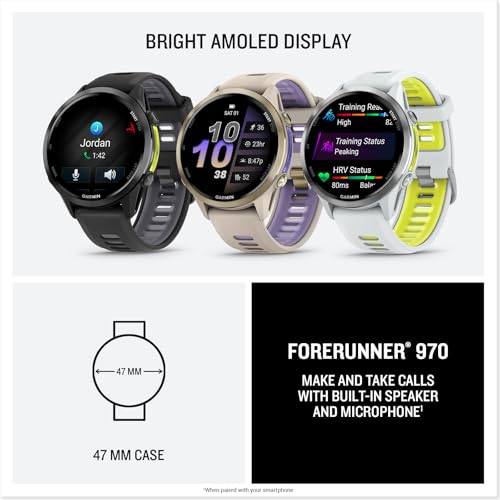
    This smartwatch has a wider case than the average smartwatch (47 mm vs 42.5 mm). The average smartwatch measures 42.5 mm across.
    47 mm vs 42.5 mm
  • 2 mm taller case
    This smartwatch has a taller case than the average smartwatch (47 mm vs 45 mm). The average smartwatch is 45.0 mm tall.
    47 mm vs 45.0 mm
  • 60 fewer exercise types
    This smartwatch includes fewer exercise types than the average smartwatch (30 vs 90). The average smartwatch includes 90 exercise types.
    30 vs 90
  • Basic battery type
    This smartwatch uses a Li-ion battery, while the average smartwatch uses Li-Po.
    Li-ion vs Li-Po
  • 1.2 mm thicker
    This smartwatch is thicker than the average smartwatch (12.9 mm vs 11.7 mm). The average smartwatch is 11.7 mm thick.
    12.9 mm vs 11.7 mm
  • 11 g heavier
    This smartwatch is heavier than the average smartwatch (56 g vs 45 g). The average smartwatch weighs 45.0 g.
    56 g vs 45.0 g
  • 4.5 mm wider case
    This smartwatch has a wider case than the average smartwatch (47 mm vs 42.5 mm). The average smartwatch measures 42.5 mm across.
    47 mm vs 42.5 mm
  • 2 mm taller case
    This smartwatch has a taller case than the average smartwatch (47 mm vs 45 mm). The average smartwatch is 45.0 mm tall.
    47 mm vs 45.0 mm
  • No smart alarm
    This smartwatch does not support a smart alarm, the average smartwatch does. 50.6% of smartwatches support smart alarms.
  • 1 fewer microphones
    This smartwatch has fewer microphones than the average smartwatch (0 vs 1). The average smartwatch has 1 microphones.
    0 vs 1

Video reviews

Hands-on testing, unboxing, and real-world video evaluations

8.0
Sportopia Picks
≈ estimated
16/10/2026
Hands-on review · battery and GPS performance
Verdict
Garmin Forerunner 970 performs strongly for serious runners, but its high price and shorter battery life are real drawbacks.
8.5
Mountaineer Journey
✓ explicit
26/09/2026
Full review · accuracy, heart rate and sleep tests
Verdict
Garmin Forerunner 970 is excellent for serious runners and multisport athletes, but casual users should save money by choosing a cheaper Garmin.
8.0
Pure Review Lab
≈ estimated
21/07/2026
Hands-on review · running, sleep and navigation use
Verdict
Garmin Forerunner 970 is a good choice for regular runners and triathletes who want detailed data, with battery and chest strap trade-offs.
9.0
DesFit
≈ estimated
03/06/2026
Long-term review · one year of daily use
Verdict
Garmin Forerunner 970 is used daily by the reviewer, who is happy with it, but the price is too high.
9.0
The Run Testers
≈ estimated
26/01/2026
Long-term test · six months of daily use
Verdict
Garmin Forerunner 970 is a top running watch for most runners, though its price and shorter battery life are drawbacks.
9.0
Clint Gibbs
≈ estimated
16/11/2025
Full review · comparison with Fenix 8 · daily use
Verdict
Garmin Forerunner 970 is a lighter, brighter option than the Fenix 8 and is now the everyday pick for most days.
7.0
The Quantified Scientist
≈ estimated
24/07/2025
Scientific test · heart rate, GPS and sleep data
Verdict
Garmin Forerunner 970 is enjoyable and accurate, but too expensive, since a cheaper Garmin gives nearly the same experience.
5.0
Mekawi
≈ estimated
24/07/2025
Returned after real use · personal verdict
Verdict
Garmin Forerunner 970 is a good watch, but not worth the price for someone who wants an all-in-one device.
4.0
Mekawi
≈ estimated
17/07/2025
Long-term test · 7 days of daily use
Verdict
Garmin Forerunner 970 was returned because its heart rate variability readings were far off daily, so recovery data could not be trusted.
9.0
The Run Testers
≈ estimated
07/07/2025
Multi-tester review · running tests, likes and dislikes
Verdict
Garmin Forerunner 970 is likely the best running watch overall if price is no issue, though it is very expensive.
9.5
Tommy Newell
≈ estimated
24/06/2025
Hands-on review · 8 x 1200 m track session test
Verdict
Garmin Forerunner 970 has very accurate GPS on the track, and the reviewer considers it the best running watch right now.
9.0
Active Ideas
≈ estimated
23/06/2025
Hands-on review · maps, navigation and weather features
Verdict
Garmin Forerunner 970 has very powerful navigation and weather features, with the breadcrumb return and radar view standing out.
More graded video reviews (10)
creator’s own scoreestimated by us

What reviewers agree on

Based on 9 · 12

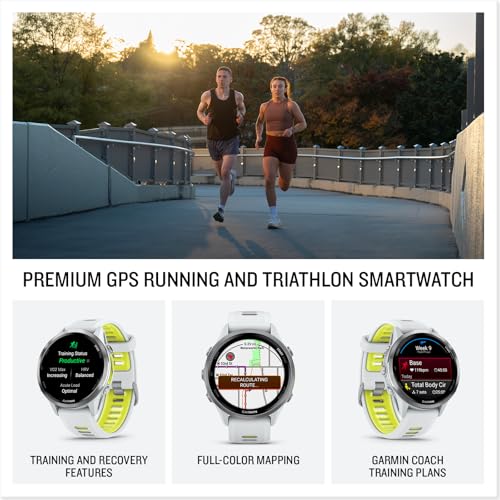
Reviewers praise the bright display, rich training metrics and handy flashlight, but most find it overpriced with disappointing battery life.
Praised
Mixed views
Criticised
Pick a topic to see who said what

Expert reviews

In-depth analysis and verdict from leading tech publications

9.5
irunfar.com
≈ estimated
14/04/2026
In-depth review · Trail running watch
Verdict
The Garmin Forerunner 970 suits daily training and most trail races, with maps and offline music, but its 26-hour GPS battery trails dedicated ultra-watches.
9.0
cyclingweekly.com
✓ explicit
01/09/2026
Hands-on review · Multisport watch
Verdict
The Garmin Forerunner 970 is a bright, easy-to-read multisport watch whose cycling support works best alongside a Garmin Edge head unit rather than replacing it.
8.5
mountaineerjourney.com
✓ explicit
27/07/2026
Year-long test · Running watch
Verdict
The Garmin Forerunner 970 suits runners, triathletes and hikers who want offline maps and balanced sport tracking, though round-trip routing can stumble.
8.0
newmontres.com
≈ estimated
13/06/2026
Full review · Triathlon watch
Verdict
The Garmin Forerunner 970 is excellent for triathletes and multisport athletes, but its menus are complex and it has no full HYROX profile.
9.0
global.techradar.com
✓ explicit
26/03/2026
Nine-month test · Running watch
Verdict
The Garmin Forerunner 970 is a serious running watch whose Running Tolerance helped avoid injury, though its thick case is uncomfortable to wear in bed.
9.0
meilleursvelos.fr
≈ estimated
31/03/2026
Full review · GPS sports watch
Verdict
The Garmin Forerunner 970 suits athletes who want turn-by-turn maps and dual-band GPS, though map scrolling lag takes getting used to.
9.0
nocorrasvuela.com
≈ estimated
24/04/2026
Detailed review · Running watch
Verdict
The Garmin Forerunner 970 suits daily trainers who want running and triathlon data, with 26 hours of GPS battery, though occasional runners will not need all of it.
9.5
therunningclub.it
≈ estimated
06/04/2026
Hands-on review · Running watch
Verdict
The Garmin Forerunner 970 is a full-featured running watch with an LED light and Impact Load metric, best for runners who use all its training data.

Third-party reviews

What we like about Garmin Forerunner 970

  • 15 days of battery life in smartwatch mode.
  • An ECG check can flag AFib when you start one by hand.
  • Offline maps, GPX routes and round-trip routes work on the watch.
  • Trail Run Auto Climb switches to a climb screen on ascents.
  • A built-in flashlight has a red mode that protects night vision.
  • Dual-frequency GPS keeps a steadier track near tall buildings and in woods.

What we don't like about Garmin Forerunner 970

  • Battery falls to 10 to 12 hours with every advanced option on.
  • Open-water swim tracking is shaky.
  • The new running metrics need a heart rate strap.
  • The 47 mm case may not fit all wrists.
  • The charging lead is proprietary, with a USB-C plug only at the power end.

Verdict

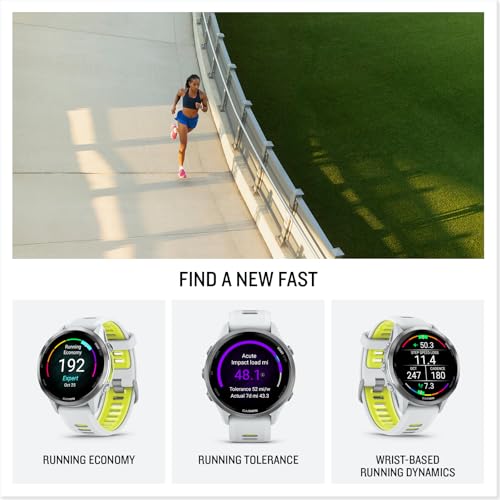
Battery life is where the Garmin Forerunner 970 gives ground, with 15 days in smartwatch mode and 26 h with GPS on. With every advanced option switched on, the battery falls to 10 to 12 hours in tests. The sports side is strong, with offline maps, a grade-adjusted pace and a flashlight on the trail. Running Tolerance sets a weekly mileage ceiling, which helps a runner build up without overdoing it. The 459 ppi screen is bright and easy to read in any light, and 32 GB of storage keeps music and maps on the watch. The 47 mm case and 12.9 mm thickness make it bulky for smaller wrists. It suits a runner or triathlete who wants detailed training data and navigation and is happy with a bigger watch.

Compare Garmin Forerunner 970 with other Smartwatches

1Product to compare no. 1
VS
2Product to compare no. 2
VS
3Product to compare no. 3 (optional)

Graphic comparison of Garmin Forerunner 970 and other Smartwatches

No results found