Scored using Smartwatches Methodology v2.0
Smartwatches Methodology v2.0
Mathematical & Unbiased Scoring
Products in this category are scored under Frontumo Smartwatches Methodology v2.0: technical specifications plus grades from 3,488 independent expert reviews and 5,192 video reviews, with 0% commercial bias.
Explore Smartwatches Methodology v2.0

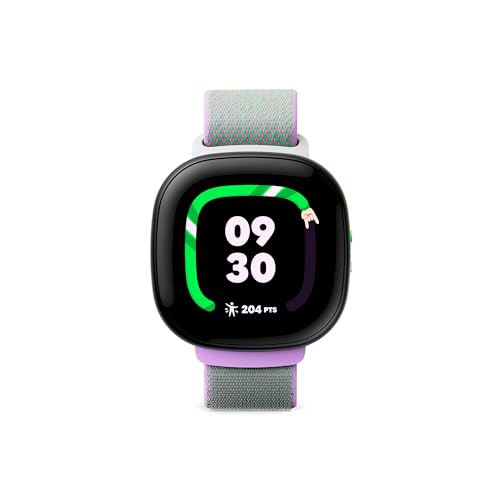
Fitbit Ace LTE Review | 126 Data compared

Avg. price:~£200Screen size:1.60 inchBattery life:0.75 daysDisplay type:OLED

Fitbit Ace LTE Review: Compare 126 technical specifications and 19 expert and video reviews to see how this product ranks in the Smartwatches category and whether it is worth buying.

6.7

Overall score

Score
6.7/ 10
✕
What it is
An overall evaluation of the smartwatch's quality, based on technical analyses and user reviews.
When it matters
When you need a quick reference to identify the best smartwatches on the market.
Score distribution
â–¼
<55-66-77-88-99-10
Score components

70%

6.1

Technical score

30%

8.1

Review score ( 10 · 9)

Review score 30% · 8.1 · based on 19 independent reviews
Every model in this category gets the same split: reviews 30%, technical score 70%. This model has enough reviews, so its review score is the weighted average of their grades. 2 more reviews are not scored yet.
â–²Better than 54% of smartwatches
6.1

Technical score

Technical score
6.1/ 10
✕
What it is
An assessment of the smartwatchx27s technical performance, covering seven key areas: health, fitness, display & design, hardware, battery, smart features and connectivity.
When it matters
When you want to compare smartwatches based on technical performance and available features.
Score distribution
â–¼
<55-66-77-88-99-10
Score components

24%

2.2

Health

21%

9.2

Fitness

16%

5.2

Battery

14%

5.9

Smart features

12%

7.6

Connectivity

9%

7.8

Display & Design

4%

9.0

Hardware

â–¼Worse than 53% of smartwatches
8.1

Review score

Review score
8.1/ 10
✕
What it is
Average grade from independent test sites, magazines and video reviewers, 1–10.
How we count it
Grades: Each review's own score is converted to 1–10; without one, we grade the review ourselves.
Weighting: Big test sites count more, short reviews half as much as full tests. A video review counts half.
Share: Reviews are 30% of the overall score for every model in this category; each of the 5 needed reviews that is missing counts as 7/10.
Score distribution
â–¼
<55-66-77-88-99-10
Grades by review (19)
10 reviews: 8 with a printed score, 2 estimated from the review. 9 video reviews, each counting half as much as a written test. Share in the overall score: 30%, the same for every model in this category.
Text reviews 10
✓ explicit
8
≈ estimated
2
Video reviews 7
estimated from the review
Shop star ratings are not part of this score.
â–²Better than 73% of smartwatches
Loading...
Loading category ranking...

Technical Specifications of smartwatch Fitbit Ace LTE

Technical score
Technical score
6.1/ 10
✕
What it is
An assessment of the smartwatchx27s technical performance, covering seven key areas: health, fitness, display & design, hardware, battery, smart features and connectivity.
When it matters
When you want to compare smartwatches based on technical performance and available features.
Score distribution
â–¼
<55-66-77-88-99-10
Score components:

24%

2.2

Health

21%

9.2

Fitness

16%

5.2

Battery

14%

5.9

Smart features

12%

7.6

Connectivity

9%

7.8

Display & Design

4%

9.0

Hardware

6.1
Review score
Review score
8.1/ 10
✕
What it is
Average grade from independent test sites, magazines and video reviewers, 1–10.
How we count it
Grades: Each review's own score is converted to 1–10; without one, we grade the review ourselves.
Weighting: Big test sites count more, short reviews half as much as full tests. A video review counts half.
Share: Reviews are 30% of the overall score for every model in this category; each of the 5 needed reviews that is missing counts as 7/10.
Score distribution
â–¼
<55-66-77-88-99-10
Grades by review (19)
10 reviews: 8 with a printed score, 2 estimated from the review. 9 video reviews, each counting half as much as a written test. Share in the overall score: 30%, the same for every model in this category.
Text reviews 10
✓ explicit
8
≈ estimated
2
Video reviews 7
estimated from the review
Shop star ratings are not part of this score.
8.1
Popularity
Popularity
8.3/ 10
✕
What it is
An indicator based on the number of reviews received by the smartwatch.
When it matters
When you prefer to purchase a product chosen and reviewed by many other consumers.
Score distribution
â–¼
<55-66-77-88-99-10
Popularity:
Fitbit Ace LTE has a popularity of 8.3 points, which is higher than 74.8% of smartwatches.
8.3
Value for money
Value for money
7.5/ 10
✕
What it is
An indicator that combines the smartwatch's overall rating with its cost.
When it matters
When you are looking for a smartwatch with a good balance between quality and price.
Score distribution
â–¼
<55-66-77-88-99-10
Score components:

60%

6.7

Overall score

40%

9.5

Price

7.5
Brand name
Fitbit
Heart rate monitor
yes
Heart rate monitor
yes
This smartwatch includes a heart rate monitor. 10.5% of smartwatches include a heart rate monitor.
Blood oxygen monitoring
no
Blood oxygen monitoring
no
This smartwatch does not support blood oxygen monitoring. 66.8% of smartwatches support blood oxygen monitoring.
ECG
no
ECG
no
This smartwatch does not support ECG. 16.6% of smartwatches support ECG.
Irregular heart rate warnings
no
Irregular heart rate warnings
no
This smartwatch does not support irregular heart rate warnings. 48.2% of smartwatches support irregular heart rate warnings.
Show more
Accelerometer
yes
Accelerometer
yes
This smartwatch includes an accelerometer. 0.6% of smartwatches include an accelerometer.
Barometer
yes
Barometer
yes
This smartwatch includes a barometer. 50.6% of smartwatches include a barometer.
Gyroscope
yes
Gyroscope
yes
This smartwatch includes a gyroscope. 30.2% of smartwatches include a gyroscope.
Cadence sensor
no
Cadence sensor
no
This smartwatch does not include a cadence sensor. 31.2% of smartwatches include a cadence sensor.
Distance tracking
yes
Distance tracking
yes
This smartwatch supports distance tracking. 4.1% of smartwatches support distance tracking.
Show more
Battery life
0.75 days
Battery life
0.75 days
This smartwatch offers a battery life of 0.75 days which is shorter than that of 98% of smartwatches and equal to that of 2% of smartwatches.
Converted from roughly 16-18 hours of battery life.
Battery life in training mode
?
Battery life with GPS on
16 h
Battery life with GPS on
16 h
This smartwatch lasts 16 h with GPS on which is shorter than 59.3% of smartwatches and equal to that of 1.2% of smartwatches.
Battery power
294 mAh
Battery power
294 mAh
This smartwatch has a battery capacity of 294 mAh which is smaller than the batteries in 56.4% of smartwatches and equal to those in 0.2% of smartwatches.
Charge time
70 min
Charge time
70 min
This smartwatch charges in 70 min which is faster than 79.7% of smartwatches and equal to the charge time of 1% of smartwatches.
Normalized from hour-based sources to 70 minutes.
Show more
What reviewers say
Operating system
Wear OS
Operating system
Wear OS
This smartwatch runs Wear OS which is more advanced than the operating system in 79% of smartwatches and the same as that in 16.6% of smartwatches.
Software update frequency
occasional
Software update frequency
occasional
This smartwatch has occasional software update support which is more active than that of 57.6% of smartwatches and equal to that of 36.2% of smartwatches.
Updates are typically released about every 3 months.
Third-party app support
no
Third-party app support
no
This smartwatch does not support third-party apps. 47.7% of smartwatches support third-party apps.
Notifications
yes
Notifications
yes
This smartwatch supports notifications. 0.3% of smartwatches support notifications.
Voice assistant support
no
Voice assistant support
no
This smartwatch does not support voice assistants. 67.8% of smartwatches support voice assistants.
Show more
What reviewers say
Cellular module
yes
Cellular module
yes
This smartwatch includes a cellular module. 82.2% of smartwatches include a cellular module.
SIM cards
1
SIM cards
1
This smartwatch uses 1 for cellular connectivity which is more advanced than that of 2% of smartwatches and the same as that of 98% of smartwatches.
eSIM
GPS
yes
GPS
yes
This smartwatch supports GPS. 43.9% of smartwatches support GPS.
Galileo support
no
Galileo support
no
This smartwatch does not support Galileo navigation. 38.5% of smartwatches support Galileo navigation.
Compass
yes
Compass
yes
This smartwatch includes a compass. 47.5% of smartwatches include a compass.
Show more
What reviewers say
Screen size
1.6 inch
Screen size
1.6 inch
This smartwatch has a screen size of 1.6 inch which is larger than the screens of 74.5% of smartwatches and equal to those of 1.7% of smartwatches.
Display type
OLED
Display type
OLED
This smartwatch uses a OLED display type which is less advanced than that of 50.3% of smartwatches and the same as that of 9.6% of smartwatches.
Resolution
320x 386
Resolution
320x 386
This smartwatch has a display resolution of 320x386 which is lower than that of 53.8% of smartwatches and equal to that of 0.3% of smartwatches.
Pixel density
313 ppi
Pixel density
313 ppi
This smartwatch has a pixel density of 313 ppi which is lower than that of 59.2% of smartwatches and equal to that of 0.3% of smartwatches.
Display brightness
?
Show more
What reviewers say
CPU speed
2x 1.7 GHz
CPU speed
2x 1.7 GHz
This smartwatch uses a CPU configuration of 2x1.7 GHz which is faster than that in 79.2% of smartwatches and equal to that in 0.4% of smartwatches.
Processor model
Snapdragon W5+ Gen 1
Processor model
Snapdragon W5+ Gen 1
This smartwatch uses the Snapdragon W5+ Gen 1 processor model.
RAM
2 GB
RAM
2 GB
This smartwatch has 2 GB of RAM which is larger than the RAM in 77.6% of smartwatches and equal to that of 21.4% of smartwatches.
Internal storage
32 GB
Internal storage
32 GB
This smartwatch uses 32 GB for internal storage which is larger than that of 84.7% of smartwatches and equal to that of 13.4% of smartwatches.
External memory slot
no
External memory slot
no
This smartwatch does not include an external memory slot. 0.3% of smartwatches include an external memory slot.
Show more

Fitbit Ace LTE vs the average smartwatch

246810TotalHealthFitnessBatteryConnectivityDisplay & DesignSmart featuresHardware
  • More advanced operating system
    Operating system
    Wear OS
    This smartwatch runs a more advanced operating system than the average smartwatch (Wear OS vs Proprietary OS).
    Wear OS vs Proprietary OS
  • Built-in cellular module
    Cellular module
    yes
    This smartwatch includes a cellular module, the average smartwatch does not. 17.9% of smartwatches include a cellular module.
  • 50 min shorter charge time
    Charge time
    70 min
    This smartwatch charges faster than the average smartwatch (70 min vs 120 min). The average smartwatch charges in 120 min.
    Normalized from hour-based sources to 70 minutes.
    70 min vs 120 min
  • Emergency SOS
    Emergency SOS
    yes
    This smartwatch includes Emergency SOS, the average smartwatch does not. 42.8% of smartwatches include Emergency SOS.
    alerts preset contacts only
  • NFC functionality
    NFC
    yes
    This smartwatch supports NFC, the average smartwatch does not. 43.4% of smartwatches support NFC.
  • More frequent updates
    Software update frequency
    occasional
    This smartwatch receives occasional software updates, while the average smartwatch receives ended updates.
    Updates are typically released about every 3 months.
    occasional vs ended
  • Barometer sensor included
    Barometer
    yes
    This smartwatch includes a barometer, the average smartwatch does not. 49.5% of smartwatches include a barometer.
  • Supports Wi-Fi
    Wi-Fi support
    yes
    This smartwatch supports Wi-Fi, the average smartwatch does not. 43.3% of smartwatches support Wi-Fi.
  • Barometer sensor included
    Barometer
    yes
    This smartwatch includes a barometer, the average smartwatch does not. 49.5% of smartwatches include a barometer.
  • Route support
    Route support
    yes
    This smartwatch supports route support, the average smartwatch does not. 50% of smartwatches support route support.
    Route support available via companion app.
  • 50 min shorter charge time
    Charge time
    70 min
    This smartwatch charges faster than the average smartwatch (70 min vs 120 min). The average smartwatch charges in 120 min.
    Normalized from hour-based sources to 70 minutes.
    70 min vs 120 min
  • Built-in cellular module
    Cellular module
    yes
    This smartwatch includes a cellular module, the average smartwatch does not. 17.9% of smartwatches include a cellular module.
  • NFC functionality
    NFC
    yes
    This smartwatch supports NFC, the average smartwatch does not. 43.4% of smartwatches support NFC.
  • Supports Wi-Fi
    Wi-Fi support
    yes
    This smartwatch supports Wi-Fi, the average smartwatch does not. 43.3% of smartwatches support Wi-Fi.
  • Stronger display glass
    Display glass type
    Corning Gorilla Glass 3
    This smartwatch uses Corning Gorilla Glass 3 display glass, while the average smartwatch uses mineral glass.
    Corning Gorilla Glass 3 vs mineral glass
  • Rugged construction
    Rugged design
    yes
    This smartwatch has a rugged design, the average smartwatch does not. 37.9% of smartwatches have a rugged design.
  • 17 g lighter weight
    Weight
    28.0 g
    This smartwatch is lighter than the average smartwatch (28 g vs 45 g). The average smartwatch weighs 45.0 g.
    Weight refers to watch case without strap/band.
    28.0 g vs 45.0 g
  • 0.2 inch larger screen size
    Screen size
    1.60 inch
    This smartwatch has a larger screen size than the average smartwatch (1.6 inch vs 1.4 inch). The average smartwatch screen is 1.40 inch.
    1.60 inch vs 1.40 inch
  • Kid-friendly design
    Kid-friendly design
    yes
    This smartwatch has a kid-friendly design, the average smartwatch does not. 1.6% of smartwatches have a kid-friendly design.
    Kid-focused model with child-specific controls/features.
  • Better case material
    Case material
    stainless steel
    This smartwatch uses stainless steel for the case material, while the average smartwatch uses polycarbonate.
    stainless steel vs polycarbonate
  • Better band material
    Band material
    fabric
    This smartwatch uses fabric for the band material, while the average smartwatch uses silicone.
    fabric vs silicone
  • More advanced operating system
    Operating system
    Wear OS
    This smartwatch runs a more advanced operating system than the average smartwatch (Wear OS vs Proprietary OS).
    Wear OS vs Proprietary OS
  • Emergency SOS
    Emergency SOS
    yes
    This smartwatch includes Emergency SOS, the average smartwatch does not. 42.8% of smartwatches include Emergency SOS.
    alerts preset contacts only
  • More frequent updates
    Software update frequency
    occasional
    This smartwatch receives occasional software updates, while the average smartwatch receives ended updates.
    Updates are typically released about every 3 months.
    occasional vs ended
  • 28 GB more storage
    Internal storage
    32 GB
    This smartwatch offers more internal storage than the average smartwatch (32 GB vs 4 GB). The average smartwatch provides 4 GB of storage.
    32 GB vs 4 GB
  • 1 GB more RAM
    RAM
    2 GB
    This smartwatch has more RAM than the average smartwatch (2 GB vs 1 GB). The average smartwatch includes 1 GB of RAM.
    2 GB vs 1 GB
  • Faster CPU speed
    CPU speed
    2 x 1.7 GHz
    This smartwatch uses a CPU configuration of 2x1.7 GHz, while the average smartwatch uses 1 GHz.
    2x1.7 GHz vs 1 GHz
  • 3 year/s newer release date
    Release date
    2024
    This smartwatch has a newer release date than the average smartwatch (2024 vs 2021). The average smartwatch was released in 2021.
    June 2024
    2024 vs 2021
  • More advanced processor model
    Processor model
    Snapdragon W5+ Gen 1
    This smartwatch uses the Snapdragon W5+ Gen 1 processor model, while the average smartwatch uses Silicon Labs EFM32 Giant Gecko.
    Snapdragon W5+ Gen 1 vs Silicon Labs EFM32 Giant Gecko
  • No blood oxygen monitoring
    Blood oxygen monitoring
    no
    This smartwatch does not support blood oxygen monitoring, the average smartwatch does. 66.7% of smartwatches support blood oxygen monitoring.
  • No stress monitoring
    Stress monitoring
    no
    This smartwatch does not support stress monitoring, the average smartwatch does. 65.4% of smartwatches support stress monitoring.
  • 49 m lower water resistance depth
    Waterproof depth rating
    1 m
    This smartwatch has a shallower waterproof rating than the average smartwatch (1 m vs 50 m). The average smartwatch reaches 50 m.
    Based on IP immersion rating (controlled lab conditions, not a swim/diving certification).
    1 m vs 50 m
  • 6.25 days day/s shorter battery life
    Battery life
    0.75 days
    This smartwatch offers 0.8 days of battery life, while the average smartwatch offers 7 days.
    Converted from roughly 16-18 hours of battery life.
    0.75 days vs 7 days
  • No sleep tracking
    Sleep tracking
    no
    This smartwatch does not support sleep tracking, the average smartwatch does. 93.1% of smartwatches support sleep tracking.
  • No music playback
    Music playback
    no
    This smartwatch does not support music playback, the average smartwatch does. 54.2% of smartwatches support music playback.
  • No voice assistant
    Voice assistant support
    no
    This smartwatch does not support voice assistants, the average smartwatch does. 67.7% of smartwatches support voice assistants.
  • No cycle tracking
    Menstrual cycle tracking
    no
    This smartwatch does not support menstrual cycle tracking, the average smartwatch does. 64.3% of smartwatches support menstrual cycle tracking.
  • 53.9% more expensive
    Fitbit Ace LTE is more expensive than the average smartwatch (£200 vs £130).
    £200 vs £130
  • No blood oxygen monitoring
    Blood oxygen monitoring
    no
    This smartwatch does not support blood oxygen monitoring, the average smartwatch does. 66.7% of smartwatches support blood oxygen monitoring.
  • No stress monitoring
    Stress monitoring
    no
    This smartwatch does not support stress monitoring, the average smartwatch does. 65.4% of smartwatches support stress monitoring.
  • No sleep tracking
    Sleep tracking
    no
    This smartwatch does not support sleep tracking, the average smartwatch does. 93.1% of smartwatches support sleep tracking.
  • No cycle tracking
    Menstrual cycle tracking
    no
    This smartwatch does not support menstrual cycle tracking, the average smartwatch does. 64.3% of smartwatches support menstrual cycle tracking.
  • No smart scale support
    Smart scale compatibility
    no
    This smartwatch does not support smart scale compatibility, the average smartwatch does. 53.7% of smartwatches support smart scale compatibility.
  • 3,534 m lower max altitude
    Maximum altitude
    5,000 m
    This smartwatch supports a lower maximum altitude than the average smartwatch (5000 m vs 8534 m). The average smartwatch reaches 8534 m.
    5,000 m vs 8,534 m
  • No exercise tagging
    Exercise tagging
    no
    This smartwatch does not support exercise tagging, the average smartwatch does. 93.6% of smartwatches support exercise tagging.
  • 6.25 days day/s shorter battery life
    Battery life
    0.75 days
    This smartwatch offers 0.8 days of battery life, while the average smartwatch offers 7 days.
    Converted from roughly 16-18 hours of battery life.
    0.75 days vs 7 days
  • Basic battery type
    Battery type
    Li-ion
    This smartwatch uses a Li-ion battery, while the average smartwatch uses Li-Po.
    Li-ion vs Li-Po
  • 4 h shorter GPS battery life
    Battery life with GPS on
    16 h
    This smartwatch lasts less with GPS on than the average smartwatch (16 h vs 20 h). The average smartwatch lasts 20 h.
    16 h vs 20 h
  • 49 m lower water resistance depth
    Waterproof depth rating
    1 m
    This smartwatch has a shallower waterproof rating than the average smartwatch (1 m vs 50 m). The average smartwatch reaches 50 m.
    Based on IP immersion rating (controlled lab conditions, not a swim/diving certification).
    1 m vs 50 m
  • Basic display type
    Display type
    OLED
    This smartwatch uses OLED display technology, while the average smartwatch features AMOLED.
    OLED vs AMOLED
  • 1.75 mm thicker watch body
    Thickness
    13.35 mm
    This smartwatch is thicker than the average smartwatch (13.4 mm vs 11.6 mm). The average smartwatch thickness is 11.6 mm.
    13.35 mm vs 11.6 mm
  • Less practical form
    Form
    rectangular
    This smartwatch uses a rectangular form, while the average smartwatch uses round.
    rectangular vs round
  • 10 °C lower max temperature
    Maximum operating temperature
    35.0 °C
    This smartwatch handles a lower maximum operating temperature than the average smartwatch (35 °C vs 45 °C). The average smartwatch reaches 45.0 °C.
    35.0 °C vs 45.0 °C
  • No music playback
    Music playback
    no
    This smartwatch does not support music playback, the average smartwatch does. 54.2% of smartwatches support music playback.
  • No voice assistant
    Voice assistant support
    no
    This smartwatch does not support voice assistants, the average smartwatch does. 67.7% of smartwatches support voice assistants.
  • No phone finder
    Phone finder
    no
    This smartwatch does not include phone finder, the average smartwatch does. 96% of smartwatches include phone finder.
  • No smart alarm
    Smart alarm
    no
    This smartwatch does not support a smart alarm, the average smartwatch does. 52.7% of smartwatches support smart alarms.
  • No camera remote
    Camera remote control
    no
    This smartwatch does not include built-in camera remote control, the average smartwatch does. 85.6% of smartwatches that are equipped with a camera include built-in camera remote control.

Video reviews

Hands-on testing, unboxing, and real-world video evaluations

8.0
GregglesTV
≈ estimated
01/03/2025
Hands-on review · walkthrough and daily use
Verdict
Fitbit Ace LTE is not perfect, but it is well built and inexpensive for young kids who need communication and location.
8.0
Android Authority
≈ estimated
25/07/2024
Hands-on review · games, tracking and battery tests
Verdict
Fitbit Ace LTE is a well-made kids' watch that keeps children active and safe, though the price and subscription are steep.
9.0
Tech with Jerad (How I Use This)
≈ estimated
16/07/2024
Hands-on review · daily use with kids and app tests
Verdict
Fitbit Ace LTE is great fun and offers a better parent experience than Apple Watch for kids up to 13, though it is fragile.
8.0
Tech With Brett
≈ estimated
29/05/2024
First look · unboxing and feature overview
Verdict
Fitbit Ace LTE is packed with features and impresses at first glance, though full hands-on testing is still to come.
Overview video
Not graded yet
Not graded yet
Brand video
Not graded yet
Overview video

What reviewers agree on

Based on 10 · 9

Kids love the games and parents value the location tracking, but the required subscription and short battery life draw frequent complaints.
Praised
Mixed views
Criticised
Pick a topic to see who said what

Expert reviews

In-depth analysis and verdict from leading tech publications

8.0
pcmag.com
✓ explicit
26/06/2024
Hands-on test · Kids smartwatch
Verdict
The Fitbit Ace LTE is a fun smartwatch for kids aged 7 to 11, with movement games and parent location tracking, but it can lag and doesn't track sleep.
8.8
purewow.com
✓ explicit
02/07/2024
Family test · Kids smartwatch
Verdict
The Fitbit Ace LTE gets kids moving and gives parents a safety net, though caring for the Eejie character can feel like a chore.
7.5
androidpolice.com
✓ explicit
23/07/2024
Real-life test · Kids' fitness watch
Verdict
The Fitbit Ace LTE is a fun fitness watch for kids, but it limits calls to approved contacts and its battery falls short of Google's claim.
8.5
engadget.com
✓ explicit
08/08/2024
Hands-on test · Kids' fitness game
Verdict
The Fitbit Ace LTE is a motivating kids' fitness watch with fun games and a pet-like companion, though it needs a subscription and charging every day.
7.0
tomsguide.com
≈ estimated
29/05/2024
Hands-on test · Parental controls
Verdict
The Fitbit Ace LTE suits parents who want to track and message kids without a phone, but it needs a subscription and charging every night.
7.4
cnet.com
✓ explicit
05/08/2024
Long-term test · Cellular kids' watch
Verdict
The Fitbit Ace LTE is a bright, sturdy kids' watch with calls, voice messages and games, but friends can't be added unless they also use the app.

Third-party reviews

What we like about Fitbit Ace LTE

  • Gamified fitness features (Fitbit Arcade) effectively motivate kids to stay active.
  • Accurate real-time GPS location tracking providing parental peace of mind.
  • Durable design featuring Corning Gorilla Glass 3 and included protective bumpers.
  • Clear audio quality for voice calls and responsive messaging through the app.
  • Water-resistant up to 50 meters, suitable for swimming and splashes.
  • Intuitive and kid-friendly user interface that is easy to navigate.

What we don't like about Fitbit Ace LTE

  • Short battery life that typically requires daily charging and often falls short of the advertised 16 hours.
  • Closed communication system requires all contacts to download the Fitbit Ace app and have a Google account.
  • Requires a mandatory monthly or annual subscription (Ace Pass) to access core features.
  • Lack of advanced health metrics like sleep tracking or detailed heart rate data.
  • No ability for kids to directly call or message other friends who also own the watch.
  • Occasional performance lag and sluggish load times, particularly in games.

Verdict

The Fitbit Ace LTE is a premium kid-focused smartwatch featuring a 1.6-inch OLED display (333 ppi) protected by Corning Gorilla Glass 3, a Qualcomm Snapdragon W5+ Gen 1 processor, and a durable 5 ATM water-resistant design. Its main characteristics include 4G LTE, Wi-Fi, and GPS connectivity for independent calling and location tracking, alongside a suite of sensors like an optical heart rate monitor and accelerometer to power movement-based 3D games and activity tracking. Pros include highly effective gamification that motivates children to exercise, robust parental controls through the Fitbit Ace app, and fast charging that provides an 11-hour boost in 30 minutes. However, notable cons include a relatively short 16-hour battery life that requires daily charging, the lack of sleep tracking and music services at launch, and the ongoing requirement of a paid Ace Pass subscription to access most features.

Compare Fitbit Ace LTE with other Smartwatches

1Product to compare no. 1
VS
2Product to compare no. 2
VS
3Product to compare no. 3 (optional)

Graphic comparison of Fitbit Ace LTE and other Smartwatches

No results found