Scored using Drones Methodology v3.0
Drones Methodology v3.0
Mathematical & Unbiased Scoring
Products in this category are scored under Frontum Drones Methodology v3.0: the technical score from the specifications is the base, and independent expert and video reviews (up to ±0.5 points), owner opinions (up to ±0.3) and best-of lists (up to +0.3) move it up or down.
Explore Drones Methodology v3.0

DJI Inspire 3 review: 97 specs compared

Avg. price:~£14,520Max flight time:28 minVideo resolution:8K/25 fpsMax transmission distance:15 km

DJI Inspire 3 Review: Compare 97 technical specifications, 24 expert and video reviews and 10 best-of lists to see how this product ranks in the Drones category and whether it is worth buying.
DJI Inspire 3
8.4/10

Overall score

Score
8.4/ 10
✕
What it is
Our main score for this model, 1–10. It combines specs, best-of lists, expert reviews and owners.
How we count it
Parts: Technical score 40%, List score 30%, Reviews score 25%, Sentiment score 5%
Marks: Each part gets a mark out of 10. For reviews, lists and owners, a typical model in this category gets about 8 and the best one gets 10.
No data yet: A part with no data shows "?". It counts as the mark of a weaker model in this category (4 in 5 models with data score higher). This way, models with reviews, lists and owners usually come out ahead.
Score distribution
▼
<55-66-77-88-99-10
Score components

40%

8.3

Technical score

30%

8.3

List score

25%

8.6

Reviews score

5%

8.4

Sentiment score

★Better than 92% of drones
6.2

Value for money

Value for money
6.2/ 10
✕
What it is
An indicator that combines the drone's overall rating with its cost.
When it matters
When you are looking for a drone with a good balance between flight quality, camera features, and price.
Score distribution
▼
<55-66-77-88-99-10
Score components

70%

8.4

Overall score

30%

1.0

Price

▼Worse than 95%
8.3

Technical score

Technical score
8.3/ 10
✕
What it is
How good the specs are compared with the other models in this category, 1–10.
How we count it
Areas: We rate the specs in each area against the other models in this category.
Weighting: The areas that matter most to buyers count more. The shares are shown under Score components.
Share: The technical score is 40% of the overall score.
Score distribution
▼
<55-66-77-88-99-10
Score components

26%

8.7

Flight

24%

8.3

Camera

20%

8.2

Safety

16%

8.9

Connectivity

14%

6.9

Battery & Design

▲Better than 88%
8.6

Reviews score

Reviews score
8.6/ 10
✕
What it is
Average grade from independent test sites, magazines and video reviewers, 1–10.
How we count it
Grades: Each review's own score is converted to 1–10; without one, we grade the review ourselves. Every review counts the same: written or video, short or full test.
Score: The average grade is 80% of the review mark; the number of reviews is the other 20% (1 review = 5, the typical number in this category = 8, the most-reviewed model = 10).
Enough data: With few reviews, the average grade is pulled toward the typical grade of this category. No reviews yet: 7.5 for now.
Share: Reviews count 25% of the overall score.
Score distribution
▼
<55-66-77-88-99-10

80%

8.6

Average grade

20%

8.4

Popularity

Grades by review (24)
7 reviews + 17 videos, average 8.8/10. Reviews count 25% of the overall score.
User ratings collected online are not part of this score.
▲Better than 83%
8.3

List score

List score
8.3/ 10
✕
What it is
How often independent test sites, magazines and video reviewers put this model in their best-of lists for this category.
How we count it
Points: The model in the most lists of this category gets 10; the others get 8 to 10 in proportion. In no list yet: 7.5. Lists count 30% of the overall score.
Enough data: Every list counts, even a single one. With fewer than 5 best-of lists in the category, this part is left out.
Lists with this model (10)
List score: in 10 of 115 lists (9%)
▲Better than 88%
  • dji-inspire-3
dji-inspire-3
Where to buy
    N/A~ £14,520

What reviewers say about the DJI Inspire 3

Based on 7 · 19

Reviewers praise the superb image quality and dual-operator mode, but the steep price and limited lens options draw criticism.
Praised
Mixed views
Criticised
Pick a topic to see who said what

What owners say about the DJI Inspire 3

Based on 49 owners sharing their experience in online comments

55%positive12%mixed33%negative

Owners praise image quality, lens options, and professional upgrades, while crashes, route accuracy, and poor service remain concerns.

What owners dislike

  • Owners say repeat flights from the same RTK base position often misalign, with camera pitch and yaw off by about 5 degrees, ruining timelapse takes.3
  • Owners report sudden crashes on a full battery, and one says the drone pitched forward and kept spinning, with no way to cut power in flight.3
  • Owners say DJI support is poor, with long runarounds on lost deliveries and refusals to pay shipping on warranty replacements.3
  • Owners say the new remote lacks a gimbal speed dial and SDI output, and auto exposure bracketing for photos is missing.3

Points mentioned by at least 3 owners, most mentioned first.

Loading...
Loading category ranking...

Technical Specifications of drone DJI Inspire 3

Technical score
Technical score
8.3/ 10
✕
What it is
How good the specs are compared with the other models in this category, 1–10.
How we count it
Areas: We rate the specs in each area against the other models in this category.
Weighting: The areas that matter most to buyers count more. The shares are shown under Score components.
Share: The technical score is 40% of the overall score.
Score distribution
▼
<55-66-77-88-99-10
Score components:

26%

8.7

Flight

24%

8.3

Camera

20%

8.2

Safety

16%

8.9

Connectivity

14%

6.9

Battery & Design

8.3
Reviews score
8.6
List score
8.3
Value for money
Value for money
6.2/ 10
✕
What it is
An indicator that combines the drone's overall rating with its cost.
When it matters
When you are looking for a drone with a good balance between flight quality, camera features, and price.
Score distribution
▼
<55-66-77-88-99-10
Score components:

70%

8.4

Overall score

30%

1.0

Price

6.2
Max flight time
28 min
This drone has a max flight time of 28 min, longer than 62% of drones and equal to 2.5% of drones.
Max flight distance
?
Max flight speed
26 m/s
This drone has a max flight speed of 26 m/s, faster than 98.1% of drones.
Max wind resistance
14 m/s
This drone has max wind resistance of 14 m/s, higher than 93.5% of drones and equal to 0.7% of drones.
Max service ceiling (ASL)
7,000 m
This drone has a max service ceiling of 7,000 m, higher than 94.8% of drones and equal to 5.2% of drones.
Show more
What reviewers say
Video resolution
8K/25 fps
This drone records video at 8K/25 fps, higher than 97% of drones and equal to 2% of drones.
4K camera
yes
This drone supports 4K video. 46% of drones support 4K video.
Sensor size
Full-frame
This drone has a sensor size of Full-frame, larger than 100% of drones.
Main camera megapixels
45 MP
This drone has a main camera resolution of 45 MP, higher than 75.3% of drones.
Max movie bitrate
?
Show more
What reviewers say
Obstacle detection
yes
This drone supports obstacle detection. 69.5% of drones support obstacle detection.
Return to Home (RTH)
yes
This drone supports Return-to-Home (RTH). 33% of drones support Return-to-Home (RTH).
GPS
yes
This drone supports GPS. 35.3% of drones support GPS.
GNSS systems supported
GPS, GLONASS, Galileo, BeiDou
This drone supports GPS, GLONASS, Galileo, BeiDou GNSS systems, which are more comprehensive than those of 82.4% and the same as those of 17.6%.
Obstacle sensing directions
omnidirectional
This drone senses obstacles in omnidirectional directions, which is more comprehensive than that of 83.4% and the same as that of 16.6%.
Show more
What reviewers say
Max transmission distance
15 km
This drone has a max transmission distance of 15 km, farther than 89.3% of drones and equal to 5.6% of drones.
Transmission latency
90 ms
This drone has transmission latency of 90 ms, lower than 93% of drones.
Video transmission system
O3
This drone uses O3 for video transmission, which is more advanced than the system used by 86.7% and the same as that used by 4.1%.
Live view quality
1080p@60 fps
This drone offers live view quality of 1080p@60 fps, higher-quality than 80.2% of drones and equal to 12.5% of drones.
Remote control
yes
This drone has a handheld remote controller. 5% of drones offer this.
Show more
What reviewers say
Battery capacity
4,280 mAh
This drone has a battery capacity of 4,280 mAh, larger than 83.4% of drones.
Battery energy
98.8 Wh
This drone has battery energy of 98.8 Wh, higher than 98.2% of drones.
Charging time
60 min
This drone charges in 60 min, faster than 80% of drones and equal to 8.8% of drones.
Weight
3,995 g
This drone weighs 3,995 g, heavier than 100% of drones.
Removable battery
yes
This drone has a removable battery. 0.5% of drones have a removable battery.
Show more
What reviewers say

DJI Inspire 3 vs the average drone

246810TotalFlightCameraSafetyConnectivityBattery & Design
  • Larger sensor size
    This drone has a larger sensor than the average drone (Full-frame vs 1/2.3"). The average drone uses a sensor of 1/2.3".
    Full-frame vs 1/2.3"
  • 14 km longer transmission range
    This drone has a longer max transmission distance than the average drone (15 km vs 1 km). The average drone reaches 1 km of transmission distance.
    15 km vs 1 km
  • 11 m/s faster flight speed
    This drone reaches a higher max flight speed than the average drone (26 m/s vs 15 m/s). The average drone reaches 15 m/s.
    26 m/s vs 15 m/s
  • Supports obstacle detection
    This drone supports obstacle detection, while the average drone does not.
  • More video codec options
    This drone supports H.264/AVC, H.265/HEVC, Apple ProRes 422 HQ, Apple ProRes 422, Apple ProRes 422 LT video codecs, while the average drone supports H.264/AVC.
    H.264/AVC, H.265/HEVC, Apple ProRes 422 HQ, Apple ProRes 422, Apple ProRes 422 LT vs H.264/AVC
  • 81.62 Wh more battery energy
    This drone has higher battery energy than the average drone (98.8 Wh vs 17.18 Wh). The average drone battery has 17.18 Wh of energy.
    98.8 Wh vs 17.18 Wh
  • 3.3 m/s higher wind resistance
    This drone handles stronger wind than the average drone (14 m/s vs 10.7 m/s). The average drone handles wind up to 10.7 m/s.
    14 m/s vs 10.7 m/s
  • 3 more gimbal axes
    This drone has more gimbal axes than the average drone (3 vs 0). The average drone has 0 gimbal axes.
    3 vs 0
  • 8.9% higher review score
    Reviews score
    8.6/ 10
    ✕
    What it is
    Average grade from independent test sites, magazines and video reviewers, 1–10.
    How we count it
    Grades: Each review's own score is converted to 1–10; without one, we grade the review ourselves. Every review counts the same: written or video, short or full test.
    Score: The average grade is 80% of the review mark; the number of reviews is the other 20% (1 review = 5, the typical number in this category = 8, the most-reviewed model = 10).
    Enough data: With few reviews, the average grade is pulled toward the typical grade of this category. No reviews yet: 7.5 for now.
    Share: Reviews count 25% of the overall score.
    Score distribution
    ▼
    <55-66-77-88-99-10

    80%

    8.6

    Average grade

    20%

    8.4

    Popularity

    Grades by review (24)
    7 reviews + 17 videos, average 8.8/10. Reviews count 25% of the overall score.
    User ratings collected online are not part of this score.
    8.6 vs 7.9
  • 11 m/s faster flight speed
    This drone reaches a higher max flight speed than the average drone (26 m/s vs 15 m/s). The average drone reaches 15 m/s.
    26 m/s vs 15 m/s
  • 3.3 m/s higher wind resistance
    This drone handles stronger wind than the average drone (14 m/s vs 10.7 m/s). The average drone handles wind up to 10.7 m/s.
    14 m/s vs 10.7 m/s
  • 3 m/s faster ascent speed
    This drone climbs faster than the average drone (8 m/s vs 5 m/s). The average drone climbs at 5 m/s.
    8 m/s vs 5 m/s
  • 3,500 m higher service ceiling
    This drone can fly at a higher max service ceiling than the average drone (7,000 m vs 3,500 m). The average drone reaches 3,500 m.
    7,000 m vs 3,500 m
  • 8 min longer flight time
    This drone offers longer max flight time than the average drone (28 min vs 20 min). The average drone offers 20 min of max flight time.
    28 min vs 20 min
  • 4 m/s faster descent speed
    This drone descends faster than the average drone (8 m/s vs 4 m/s). The average drone descends at 4 m/s.
    8 m/s vs 4 m/s
  • Larger sensor size
    This drone has a larger sensor than the average drone (Full-frame vs 1/2.3"). The average drone uses a sensor of 1/2.3".
    Full-frame vs 1/2.3"
  • More video codec options
    This drone supports H.264/AVC, H.265/HEVC, Apple ProRes 422 HQ, Apple ProRes 422, Apple ProRes 422 LT video codecs, while the average drone supports H.264/AVC.
    H.264/AVC, H.265/HEVC, Apple ProRes 422 HQ, Apple ProRes 422, Apple ProRes 422 LT vs H.264/AVC
  • 3 more gimbal axes
    This drone has more gimbal axes than the average drone (3 vs 0). The average drone has 0 gimbal axes.
    3 vs 0
  • Supports low-light mode
    This drone supports low-light mode, while the average drone does not.
  • More color profile options
    This drone supports Normal, D-Log, HLG color profiles, while the average drone supports Normal.
    Normal, D-Log, HLG vs Normal
  • Captures RAW photos
    This drone can capture RAW photos, while the average drone cannot.
  • More advanced stabilization
    This drone uses 3-Axis Mechanical image stabilization, while the average drone uses EIS (Digital).
    3-Axis Mechanical vs EIS (Digital)
  • Richer manual controls
    This drone offers full manual camera controls, while the average drone offers no.
    full vs no
  • More video format options
    This drone supports MP4, MOV video formats, while the average drone supports MP4.
    MP4, MOV vs MP4
  • Supports slow-motion mode
    This drone supports slow-motion mode, while the average drone does not.
  • 33 MP more camera resolution
    This drone has more main camera megapixels than the average drone (45 MP vs 12 MP). The average drone has 12 MP on the main camera.
    45 MP vs 12 MP
  • FPV camera
    This drone has an FPV camera, while the average drone does not.
  • Higher video resolution
    This drone offers higher video resolution than the average drone (8K/25 fps vs 4K/100 fps). The average drone offers a video resolution of 4K/100 fps.
    8K/25 fps vs 4K/100 fps
  • More capable focus system
    This drone uses manual focus for focusing, while the average drone uses fixed focus.
    manual focus vs fixed focus
  • Supports burst mode
    This drone supports burst mode, while the average drone does not.
  • Supports panorama mode
    This drone supports panorama mode, while the average drone does not.
  • Higher photo resolution
    This drone offers higher photo resolution than the average drone (8192x5456 px vs 4096x3072 px). The average drone offers a photo resolution of 4096x3072 px.
    8192x5456 px vs 4096x3072 px
  • Supports obstacle detection
    This drone supports obstacle detection, while the average drone does not.
  • Supports dual-band GPS
    This drone supports dual-band GPS, while the average drone does not.
  • 0.2 m tighter hover accuracy
    This drone has better horizontal hover accuracy than the average drone (0.1 m vs 0.3 m). The average drone has horizontal hover accuracy of 0.3 m.
    0.1 m vs 0.3 m
  • Supports waypoint flight
    This drone supports waypoint flight, while the average drone does not.
  • Remote ID
    This drone supports Remote ID, while the average drone does not.
  • 17.31x lower takeoff weight
    This drone has a lower max takeoff weight than the average drone (4,310 g vs 249 g). The average drone has a max takeoff weight of 249 g.
    4,310 g vs 249 g
  • 0.4 m tighter hover accuracy
    This drone has better vertical hover accuracy than the average drone (0.1 m vs 0.5 m). The average drone has vertical hover accuracy of 0.5 m.
    0.1 m vs 0.5 m
  • 1 more flight modes
    This drone offers more intelligent flight modes than the average drone (5 vs 4). The average drone offers 4 intelligent flight modes.
    5 vs 4
  • 14 km longer transmission range
    This drone has a longer max transmission distance than the average drone (15 km vs 1 km). The average drone reaches 1 km of transmission distance.
    15 km vs 1 km
  • 40 ms lower latency
    This drone has lower transmission latency than the average drone (90 ms vs 130 ms). The average drone has transmission latency of 130 ms.
    90 ms vs 130 ms
  • Built-in display
    This drone has a built-in display, while the average drone does not.
  • More polished companion app
    This drone uses the DJI Pilot 2 companion app, while the average drone uses HS FPV.
    DJI Pilot 2 vs HS FPV
  • Better live view quality
    This drone has better live view quality than the average drone (1080p@60 fps vs 1080p@25 fps). The average drone offers live view quality of 1080p@25 fps.
    1080p@60 fps vs 1080p@25 fps
  • More capable transmission system
    This drone uses O3 for video transmission, while the average drone uses SkyLink 2.0.
    O3 vs SkyLink 2.0
  • 81.62 Wh more battery energy
    This drone has higher battery energy than the average drone (98.8 Wh vs 17.18 Wh). The average drone battery has 17.18 Wh of energy.
    98.8 Wh vs 17.18 Wh
  • 2,080 mAh more battery capacity
    This drone has a larger battery capacity than the average drone (4,280 mAh vs 2,200 mAh). The average drone battery has a capacity of 2,200 mAh.
    4,280 mAh vs 2,200 mAh
  • 30 min shorter charging time
    This drone charges faster than the average drone (60 min vs 90 min). The average drone charges in 90 min.
    60 min vs 90 min
  • More modern charging port
    This drone uses proprietary for charging, while the average drone uses micro-USB.
    proprietary vs micro-USB
  • 16.24x higher weight
    This drone is heavier than the average drone (3,995 g vs 246 g). The average drone weighs 246 g.
    3,995 g vs 246 g
  • No subject tracking
    This drone cannot track subjects, while the average drone can.
  • 306 mm wider width
    This drone is wider than the average drone (547 mm vs 241 mm). The average drone width is 241 mm.
    547 mm vs 241 mm
  • 391.5 mm taller body height
    This drone is taller than the average drone (454 mm vs 62.5 mm). The average drone is 62.5 mm tall.
    454 mm vs 62.5 mm
  • 420 mm longer body length
    This drone is longer than the average drone (695 mm vs 275 mm). The average drone is 275 mm long.
    695 mm vs 275 mm
  • No memory card slot
    This drone does not have a memory card slot, while the average drone does.
  • 72.6x more expensive
    DJI Inspire 3 is more expensive than the average drone (£14,520 vs £200).
    £14,520 vs £200
  • Non-foldable design
    This drone does not have a foldable design, while the average drone does.
  • 72.6x more expensive
    DJI Inspire 3 is more expensive than the average drone (£14,520 vs £200).
    £14,520 vs £200
  • 23.4% worse value for money
    DJI Inspire 3 has worse value for money than the average drone (6.15 vs 7.6).
    6.15 vs 7.59
  • Non-foldable design
    This drone does not have a foldable design, while the average drone does.
  • No memory card slot
    This drone does not have a memory card slot, while the average drone does.
  • 128 GB lower memory card limit
    This drone supports less external storage than the average drone (0 GB vs 128 GB). The average drone supports up to 128 GB of external storage.
    0 GB vs 128 GB
  • No subject tracking
    This drone cannot track subjects, while the average drone can.
  • No headless mode
    This drone does not support headless mode, while the average drone does.
  • No beginner mode
    This drone does not support beginner mode, while the average drone does.
  • No wireless file transfer
    This drone does not support wireless file transfer, while the average drone does.
  • More basic controller
    This drone uses the RC Plus controller, while the average drone uses LiteRadio 4 SE.
    RC Plus vs LiteRadio 4 SE
  • 16.24x higher weight
    This drone is heavier than the average drone (3,995 g vs 246 g). The average drone weighs 246 g.
    3,995 g vs 246 g
  • 306 mm wider width
    This drone is wider than the average drone (547 mm vs 241 mm). The average drone width is 241 mm.
    547 mm vs 241 mm
  • 391.5 mm taller body height
    This drone is taller than the average drone (454 mm vs 62.5 mm). The average drone is 62.5 mm tall.
    454 mm vs 62.5 mm
  • 420 mm longer body length
    This drone is longer than the average drone (695 mm vs 275 mm). The average drone is 275 mm long.
    695 mm vs 275 mm

Video reviews

Hands-on testing, unboxing, and real-world video evaluations

8.0
Cole Hammontree
≈ estimated
24/07/2026
Field test · live concert shoot
Verdict
DJI Inspire 3 works well for live shoots, though battery changes can cost flying time.
8.0
Cole Hammontree
≈ estimated
06/02/2026
Ownership experience · five real-world takeaways after buying
Verdict
DJI Inspire 3 still excites me, but it's a pricey professional tool best suited to work that actually needs it.
9.0
Koala's Shots
≈ estimated
02/05/2025
Hands-on review · night FPV flight and feature tour
Verdict
DJI Inspire 3 is better than the Inspire 2 in almost every way; price is the main barrier.
9.0
Lucizen
≈ estimated
21/02/2025
Feature review · FPV camera, low light, dual operator
Verdict
DJI Inspire 3 is expensive and large, but its FPV camera, low-light performance and dual operator mode make the price worthwhile.
7.0
Thunderbird Creative
≈ estimated
12/11/2024
Long-term review · a year of flying and shooting
Verdict
DJI Inspire 3 is worth it for professionals doing paid aerial cinematography, despite its very high price.
8.0
Bestboy Adam
≈ estimated
13/10/2024
Long-term review · over a year of paid film work
Verdict
DJI Inspire 3 is a good investment for working filmmakers who can earn from it, though not for everyone.
9.0
Griffin Conway
≈ estimated
29/11/2023
Hands-on review · four professional productions
Verdict
DJI Inspire 3 is a high-end cinema drone for professional crews, but its price puts it out of reach for most buyers.
8.0
Andyax
≈ estimated
22/09/2023
Long-term test · four months of professional filming
Verdict
DJI Inspire 3 is flawed, with rolling shutter and modest flight time, but its image quality is unmatched for production crews, not solo pilots.
9.0
Jerad Hill Photographer
≈ estimated
22/06/2023
Hands-on review · several weeks of flying and buying tips
Verdict
DJI Inspire 3 is a costly all-in-one production platform that works solo but is best with a full team.
8.0
PetaPixel
≈ estimated
31/05/2023
Hands-on review · film-set use and who should buy
Verdict
DJI Inspire 3 suits professional film sets well, but the big cost step is more than many buyers need.
7.0
TMS Productions
≈ estimated
26/05/2023
Hands-on review · low-light flight and range notes
Verdict
DJI Inspire 3 is overkill for most creators and only worth it for high-end movie and TV production.
9.0
Benjamin Hardman
≈ estimated
17/05/2023
In-depth review · two months of professional shooting
Verdict
DJI Inspire 3 is excellent for professional cinematography, though many shooters won't need its power.
More graded video reviews (4)
creator’s own scoreestimated by us

Expert reviews

In-depth analysis and verdict from leading tech publications
9.0
digitalcameraworld.com
✓ explicit
21/06/2023
Expert review · Cinema drone
Verdict
The DJI Inspire 3 is a flying cinema camera for professional crews, with full-frame 8K and 360-degree camera pan, but it needs assembling every time it leaves its case.
10
techradar.com
✓ explicit
16/05/2023
Expert review · Pro filmmaking drone
Verdict
The DJI Inspire 3 is a precise, powerful drone for professional filmmakers and surveyors, with image quality far beyond smaller drones, but its bulky kit is slow to set up.
10
space.com
✓ explicit
16/05/2023
Expert review · Pro filmmaking drone
Verdict
The DJI Inspire 3 is a top-end tool for professional filming and surveying, with a full-frame 8K camera and 360-degree pan, but at nearly 4 kg it is no everyday drone.
9.0
pilotinstitute.com
≈ estimated
14/08/2023
Hands-on review · Professional cinema drone
Verdict
The DJI Inspire 3 is an 8K cinema drone built for dual-operator shoots, though some photo modes are missing at launch and flights last up to 28 minutes.
9.5
artistichive.com
≈ estimated
09/02/2024
Month-long test · Cinema drone
Verdict
The DJI Inspire 3 is a major upgrade over the Inspire 2 for film crews, with full-frame 8K, dual controllers and long-range live view, though its best flight modes need extra RTK gear.
9.0
drone-zone.de
✓ explicit
10/09/2023
Expert review · Cinema drone
Verdict
The DJI Inspire 3 is a superbly built 8.1K cinema drone for film and TV crews, but lenses, the ProRes RAW licence and DJI PROSSD media are all extra purchases.
9.5
slashcam.de
≈ estimated
05/07/2023
Hands-on test · 8K RAW cinema drone
Verdict
The DJI Inspire 3 gives 8K ProRes RAW footage with strong dynamic range, but RAW setup is fiddly on a Mac and DJI's own LUT handles skin tones poorly.

Third-party reviews

What customers like about DJI Inspire 3

  • Full-frame 45 MP Zenmuse X9-8K Air camera records 8K video at up to 25 fps
  • D-Log and HLG colour profiles fit professional grading pipelines
  • Dedicated FPV camera and dual-operator control for real film-crew workflows
  • Omnidirectional obstacle sensing and waypoint flight for repeatable cinematic moves
  • Top speed of 26 m/s and wind resistance of 14 m/s
  • Rated for temperatures from -20 °C to 40 °C

What customers don't like about DJI Inspire 3

  • Price is many times higher than any consumer camera drone
  • Almost 4 kg take-off weight means the EU specific category and trained pilots
  • Flight time of about 28 minutes is short for such a large aircraft
  • Not foldable, so transport needs a large dedicated case

Verdict

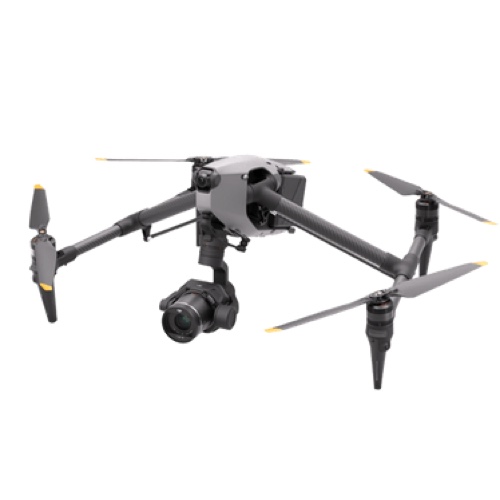
The DJI Inspire 3 is a professional cinema drone built for film crews rather than hobbyists. Its Zenmuse X9-8K Air gimbal camera uses a full-frame 45 MP sensor and records 8K video at up to 25 fps, with D-Log and HLG profiles for high-end grading. The aircraft weighs almost 4 kg, reaches 26 m/s and flies for about 28 minutes on a pair of TB51 batteries. Omnidirectional obstacle sensing, waypoint flight and a dedicated FPV camera support two-operator shoots, with one pilot flying and a second person on the camera. O3 transmission links it to the RC Plus controller over up to 15 km, and it copes with 14 m/s winds and -20 °C. The price is far beyond consumer drones. For productions that need cinema-grade aerial footage, it is the reference tool.

Compare DJI Inspire 3 with other drones

1Product to compare no. 1
VS
2Product to compare no. 2
VS
3Product to compare no. 3 (optional)

Graphic comparison of DJI Inspire 3 and other drones

No results found