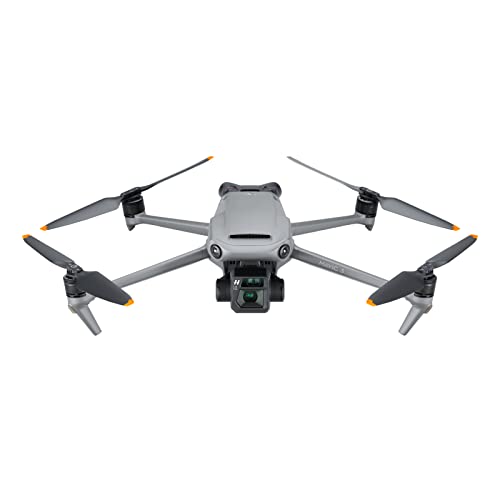
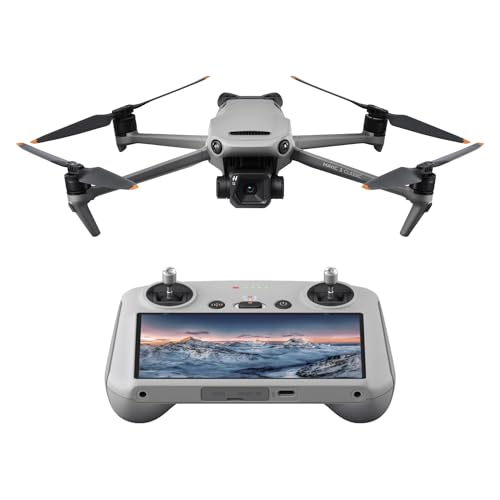
DJI Mavic 3 Review | 95 Data compared

double-arrow
  • Avg. price in UK: ~£1,850
  • Avg. price in US: ~$2,050
  • Max flight time: 46 min
  • Video resolution: 5.1K/50 fps
  • Max transmission distance: 15 km

DJI Mavic 3 review. Compare 95 technical specifications and user reviews to see how it ranks among drones and if it is worth buying.

8.6

Overall score

What it is: An overall evaluation of the drone's quality, based on technical analyses and user reviews.

When it matters: When you need a quick reference to identify the best drones on the market.

Score components:

90.0%

8.6

Technical Score

10.0%

8.4

User score

Excellent
8.6

Technical Score

What it is: An assessment of the drone's technical performance, covering key areas such as flight performance, camera quality, transmission, safety features, battery life, and design.

When it matters: When you want to compare drones based on technical performance and available features.

Score components:

26.0%

10

Flight

24.0%

8.0

Camera

20.0%

8.0

Safety

16.0%

8.7

Connectivity

14.0%

8.0

Battery & Design

Excellent
8.4

User score

What it is: A rating that combines user reviews and the total number of reviews received by the drone.

When it matters: When you want to know how a drone performs in real flights and how reliable it is for stability, video capture, and controls according to user feedback.

Score components:

70.0%

8.9

User reviews

30.0%

7.3

Popularity

User score:
United Kingdom
amazon
4.5
(150)
amazon
4.4
(128)
amazon
4.4
(42)
United States
Amazon_logo.png
4.5
(150)

(Reviews last updated: Apr 2026)

Excellent
    • dji-mavic-3
    • dji-mavic-3
    • dji-mavic-3
    • dji-mavic-3
    • dji-mavic-3
    • dji-mavic-3
    • dji-mavic-3
    • dji-mavic-3
    dji-mavic-3
    dji-mavic-3
    dji-mavic-3
    dji-mavic-3
    dji-mavic-3
    dji-mavic-3
    dji-mavic-3
    dji-mavic-3

    Best prices

    Best rankings

    ?

    Available: ranking among products currently available (including other versions of this product).
    All: ranking among all products in the database.

    Technical Specifications of drone DJI Mavic 3

    Technical Score

    What it is: An assessment of the drone's technical performance, covering key areas such as flight performance, camera quality, transmission, safety features, battery life, and design.

    When it matters: When you want to compare drones based on technical performance and available features.

    Score components:

    26.0%

    10

    Flight

    24.0%

    8.0

    Camera

    20.0%

    8.0

    Safety

    16.0%

    8.7

    Connectivity

    14.0%

    8.0

    Battery & Design

    8.6
    DJI Mavic 3 has a technical score of 8.64 points, which is higher than that of 94.8% of products in this category.
    User score

    What it is: A rating that combines user reviews and the total number of reviews received by the drone.

    When it matters: When you want to know how a drone performs in real flights and how reliable it is for stability, video capture, and controls according to user feedback.

    Score components:

    70.0%

    8.9

    User reviews

    30.0%

    7.3

    Popularity

    User score:
    United Kingdom
    amazon
    4.5
    (150)
    amazon
    4.4
    (128)
    amazon
    4.4
    (42)
    United States
    Amazon_logo.png
    4.5
    (150)

    (Reviews last updated: Apr 2026)

    8.4
    DJI Mavic 3 has a user score of 8.43 points, which is higher than that of 77.9% of products in this category.
    Popularity
    What it is: An indicator based on the number of reviews received by the drone.
    When it matters: When you prefer to choose a drone reviewed and selected by many other buyers.
    7.3
    DJI Mavic 3 has a popularity of 7.3 points, which is higher than 77.3% of smartphones.
    Ratio quality/price

    What it is: An indicator that combines the drone's overall rating with its cost.

    When it matters: When you are looking for a drone with a good balance between flight quality, camera features, and price.

    Score components:

    60.0%

    8.6

    Overall score

    40.0%

    1.0

    Price

    6.3
    DJI Mavic 3 has a quality-to-price ratio of 6.3 points, which is lower than 83.1% of smartphones.
    Brand name
    What it is: The manufacturer or brand of the product.
    When it matters: When you prefer a specific ecosystem, support network, or design philosophy.

    Importance: MEDIUM

    DJI
    Max flight time
    What it is: The quoted endurance shows how long the drone can stay airborne on one battery in ideal conditions.
    When it matters: When you want longer flights from each battery.

    Importance: HIGH

    Good value: >=30

    46 min
    DJI Mavic 3 has a max flight time of 46 min, longer than 95.3% of drones and equal to 2%.
    Max flight distance
    What it is: The range figure indicates how far the drone can travel while maintaining control and telemetry.
    When it matters: When you plan longer routes and want more range margin.

    Importance: HIGH

    Good value: >=10

    30 km
    DJI Mavic 3 has a max flight distance of 30 km, farther than 93.8% of drones and equal to 1.4%.
    Maximum range varies by region (for example FCC vs CE).
    Max flight speed
    What it is: The maximum horizontal speed defines how quickly the drone can move across a scene.
    When it matters: When you want quicker movement or smoother tracking of fast subjects.

    Importance: MEDIUM

    Good value: >=50

    21 km/h
    DJI Mavic 3 has a max flight speed of 21 km/h, faster than 86.2% of drones and equal to 8.1%.
    Top speed may be lower in EU/CE-regulated regions.
    Max wind resistance
    What it is: The wind resistance rating shows how much wind speed the drone can handle while staying controllable.
    When it matters: When you fly in windy conditions.

    Importance: HIGH

    Good value: >=10.5

    12 m/s
    DJI Mavic 3 has max wind resistance of 12 m/s, higher than 70.3% of drones and equal to 18.9%.
    Show more
    Video resolution
    What it is: The listed recording format states maximum capture resolution and frame rate.
    When it matters: When video quality matters for your footage.

    Importance: MEDIUM

    Good value: 4K+

    5.1K/50 fps
    DJI Mavic 3 records video at 5.1K/50 fps, higher than 89.3% of drones and equal to 2%.
    4K camera
    What it is: Indicates whether the drone supports 4K or higher video recording.
    When it matters: When you want a drone that can record in 4K or a higher video resolution.

    Importance: LOW

    yes
    DJI Mavic 3 supports 4K video, and 65.2% of drones do too.
    Sensor size
    What it is: The sensor format value describes the physical light-collecting area.
    When it matters: When you shoot in more difficult lighting.

    Importance: MEDIUM

    Good value: 1 inch or larger

    4/3"
    DJI Mavic 3 has a sensor size of 4/3", larger than 92.9% of drones and equal to 7.1%.
    Value reflects the main/largest visual camera sensor when multiple sensors are listed.
    Main camera megapixels
    What it is: The megapixel count states how many millions of pixels the main sensor captures per photo.
    When it matters: When you want more detail for photos or cropping.

    Importance: MEDIUM

    Good value: >=12

    20 MP
    DJI Mavic 3 has a main camera resolution of 20 MP, higher than 64.5% of drones and equal to 9.7%.
    Max movie bitrate
    What it is: The bitrate indicates how much video data is recorded each second, usually in Mbps.
    When it matters: When video quality matters for your footage.

    Importance: MEDIUM

    Good value: >=100

    200 Mbps
    DJI Mavic 3 has a max movie bitrate of 200 Mbps, higher than 91.6% of drones and equal to 5.6%.
    Show more
    Obstacle detection
    What it is: Indicates whether the drone can detect obstacles and warn the pilot or avoid them automatically.
    When it matters: When you fly near trees, buildings, or other obstacles.

    Importance: HIGH

    Good value: Omnidirectional

    yes
    DJI Mavic 3 includes obstacle detection, and 34.7% of drones offer it.
    Return to Home (RTH)
    What it is: Indicates whether the drone can automatically return to its takeoff point when needed.
    When it matters: When signal drops or the battery gets low.

    Importance: HIGH

    Good value: Smart RTH

    yes
    DJI Mavic 3 includes return-to-home (RTH), and 74.3% of drones provide it.
    GPS
    What it is: Indicates whether the drone can use GPS positioning for navigation and stabilisation.
    When it matters: When you want steadier flight and more reliable positioning.

    Importance: MEDIUM

    yes
    DJI Mavic 3 has GPS, and 69% of drones offer GPS navigation.
    GNSS systems supported
    What it is: Lists the satellite navigation systems the drone can use, such as GPS, Galileo, or GLONASS.
    When it matters: When this part of flying or filming matters to you.

    Importance: HIGH

    Good value: GPS+Galileo+GLONASS

    GPS, Galileo, BeiDou
    DJI Mavic 3 supports GPS, Galileo, BeiDou GNSS systems, which are more comprehensive than those of 59.8% of drones and the same as those of 13.4% of drones.
    Obstacle sensing directions
    What it is: The listed sensing coverage shows which directions the drone can monitor for obstacles.
    When it matters: When you fly near trees, buildings, or other obstacles.

    Importance: HIGH

    Good value: Omnidirectional

    omnidirectional
    DJI Mavic 3 senses obstacles in omnidirectional directions, which is more comprehensive than that of 82.8% of drones and the same as that of 17.2% of drones.
    Show more
    Max transmission distance
    What it is: The maximum transmission distance indicates the farthest stable control-and-video link under ideal conditions.
    When it matters: When you plan longer routes and want more range margin.

    Importance: HIGH

    Good value: >=10

    15 km
    DJI Mavic 3 has a max transmission distance of 15 km, farther than 88.9% of drones and equal to 5.2%.
    Maximum range varies by region; CE/SRRC/MIC limits can be lower.
    Transmission latency
    What it is: The transmission latency measures delay between camera capture, pilot view, and control response.
    When it matters: When you want the live view to feel more responsive.

    Importance: MEDIUM

    Good value: <=130

    130 ms
    DJI Mavic 3 has transmission latency of 130 ms, lower than 45.3% of drones and equal to 17.2%.
    Video transmission system
    What it is: The transmission system value identifies the radio-link technology used for control and live feed.
    When it matters: When video quality matters for your footage.

    Importance: HIGH

    Good value: Digital low-latency

    O3
    DJI Mavic 3 uses O3 for video transmission, which is more advanced than that of 84.5% of drones and the same as that of 4.7% of drones.
    Live view quality
    What it is: The live-view mode defines resolution and frame rate of the pilot feed.
    When it matters: When video quality matters for your footage.

    Importance: MEDIUM

    Good value: 1080p+

    1,080p@60 fps
    DJI Mavic 3 offers live view quality of 1080p@60 fps, higher-quality than 77.4% of drones and equal to 14.6%.
    Remote control
    What it is: Indicates whether a dedicated handheld remote controller is included or supported.
    When it matters: When you want easier control and monitoring in the field.

    Importance: LOW

    Good value: Dedicated controller

    yes
    DJI Mavic 3 includes a remote control, and 96.1% of drones ship with one.
    Show more
    Battery capacity
    What it is: The battery capacity shows how much electric charge the pack can store, commonly in mAh.
    When it matters: When you want longer sessions before changing batteries.

    Importance: HIGH

    Good value: >=3500

    5,000 mAh
    DJI Mavic 3 has a battery capacity of 5000 mAh, larger than 84.3% of drones and equal to 3.9%.
    Battery energy
    What it is: The battery energy figure, usually in Wh, describes total available energy in the pack.
    When it matters: When you want longer sessions before changing batteries.

    Importance: LOW

    Good value: >=40

    77 Wh
    DJI Mavic 3 has battery energy of 77 Wh, higher than 86.7% of drones and equal to 3.3%.
    Charging time
    What it is: The charging time measures how long a depleted battery needs to reach full charge.
    When it matters: When you want shorter turnaround between flights.

    Importance: MEDIUM

    Good value: <=90

    96 min
    DJI Mavic 3 charges in 96 min, slower than 56.5% of drones and equal to 2%.
    Weight
    What it is: The measured mass of the drone body and flight hardware, usually in grams.
    When it matters: When you want the drone to be easier to carry or pack.

    Importance: LOW

    Good value: <=900

    895 g
    DJI Mavic 3 weighs 895 g, heavier than 83.3% of drones and equal to 0.7%.
    Removable battery
    What it is: Indicates whether the flight battery can be removed and swapped by the user.
    When it matters: When you want to swap batteries quickly between flights.

    Importance: LOW

    yes
    DJI Mavic 3 has a removable battery, and 99.4% of drones include one.
    Show more

    DJI Mavic 3 vs the average drone

    • 28 km longer flight distance
      DJI Mavic 3 has a longer max flight distance than the average drone (30 km vs 2 km). The average drone can fly up to 2 km.
      Maximum range varies by region (for example FCC vs CE).
      What it is: The range figure indicates how far the drone can travel while maintaining control and telemetry.
      When it matters: When you plan longer routes and want more range margin.

      Importance: HIGH

      Good value: >=10

      DJI Mavic 3 has a longer max flight distance than the average drone (30 km vs 2 km). The average drone can fly up to 2 km.30 km vs 2 km
    • 23 min longer flight time
      DJI Mavic 3 offers longer max flight time than the average drone (46 min vs 23 min). The average drone offers 23 min of max flight time.
      What it is: The quoted endurance shows how long the drone can stay airborne on one battery in ideal conditions.
      When it matters: When you want longer flights from each battery.

      Importance: HIGH

      Good value: >=30

      DJI Mavic 3 offers longer max flight time than the average drone (46 min vs 23 min). The average drone offers 23 min of max flight time.46 min vs 23 min
    • 13.49 km longer transmission distance
      DJI Mavic 3 has a longer max transmission distance than the average drone (15 km vs 1,507 km). The average drone reaches 1,507 km of transmission distance.
      Maximum range varies by region; CE/SRRC/MIC limits can be lower.
      What it is: The maximum transmission distance indicates the farthest stable control-and-video link under ideal conditions.
      When it matters: When you plan longer routes and want more range margin.

      Importance: HIGH

      Good value: >=10

      DJI Mavic 3 has a longer max transmission distance than the average drone (15 km vs 1,507 km). The average drone reaches 1,507 km of transmission distance.15 km vs 1,507 km
    • Obstacle detection included
      DJI Mavic 3 includes obstacle detection, while the average drone does not.
      What it is: Indicates whether the drone can detect obstacles and warn the pilot or avoid them automatically.
      When it matters: When you fly near trees, buildings, or other obstacles.

      Importance: HIGH

      Good value: Omnidirectional

      DJI Mavic 3 includes obstacle detection, while the average drone does not.
    • 100 Mbps faster max movie bitrate
      DJI Mavic 3 supports a higher max movie bitrate than the average drone (200 Mbps vs 100 Mbps). The average drone supports 100 Mbps.
      What it is: The bitrate indicates how much video data is recorded each second, usually in Mbps.
      When it matters: When video quality matters for your footage.

      Importance: MEDIUM

      Good value: >=100

      DJI Mavic 3 supports a higher max movie bitrate than the average drone (200 Mbps vs 100 Mbps). The average drone supports 100 Mbps.200 Mbps vs 100 Mbps
    • Higher sensor size
      DJI Mavic 3 has a larger sensor than the average drone (4/3" vs 1/2"). The average drone uses a sensor of 1/2".
      Value reflects the main/largest visual camera sensor when multiple sensors are listed.
      What it is: The sensor format value describes the physical light-collecting area.
      When it matters: When you shoot in more difficult lighting.

      Importance: MEDIUM

      Good value: 1 inch or larger

      DJI Mavic 3 has a larger sensor than the average drone (4/3" vs 1/2"). The average drone uses a sensor of 1/2".4/3" vs 1/2"
    • 28 km longer flight distance
      DJI Mavic 3 has a longer max flight distance than the average drone (30 km vs 2 km). The average drone can fly up to 2 km.
    • 23 min longer flight time
      DJI Mavic 3 offers longer max flight time than the average drone (46 min vs 23 min). The average drone offers 23 min of max flight time.
    • 5 km/h faster flight speed
      DJI Mavic 3 reaches a higher max flight speed than the average drone (21 km/h vs 16 km/h). The average drone reaches 16 km/h.
    • 3 m/s faster ascent speed
      DJI Mavic 3 climbs faster than the average drone (8 m/s vs 5 m/s). The average drone climbs at 5 m/s.
    • 2,000 m higher max service ceiling
      DJI Mavic 3 can fly at a higher max service ceiling than the average drone (6,000 m vs 4,000 m). The average drone reaches 4,000 m.
    • 2 m/s faster descent speed
      DJI Mavic 3 descends faster than the average drone (6 m/s vs 4 m/s). The average drone descends at 4 m/s.
    • 1.3 m/s higher max wind resistance
      DJI Mavic 3 handles stronger wind than the average drone (12 m/s vs 10.7 m/s). The average drone handles wind up to 10.7 m/s.
    • 100 Mbps faster max movie bitrate
      DJI Mavic 3 supports a higher max movie bitrate than the average drone (200 Mbps vs 100 Mbps). The average drone supports 100 Mbps.
    • Higher sensor size
      DJI Mavic 3 has a larger sensor than the average drone (4/3" vs 1/2"). The average drone uses a sensor of 1/2".
    • Low-light mode
      DJI Mavic 3 includes low-light mode, while the average drone does not.
    • Better focus system
      DJI Mavic 3 uses vision detection AF (VDAF) + manual focus for focusing, while the average drone uses fixed focus.
    • More video codec options
      DJI Mavic 3 supports H.264/AVC, H.265/HEVC video codecs, while the average drone supports H.264/AVC.
    • Shoots RAW photos
      DJI Mavic 3 can shoot RAW photos, while the average drone cannot.
    • More video format options
      DJI Mavic 3 supports MP4, MOV video formats, while the average drone supports MP4.
    • More advanced manual controls
      DJI Mavic 3 offers full manual camera controls, while the average drone offers no.
    • 8 GB higher internal storage
      DJI Mavic 3 has more internal storage than the average drone (8 GB vs 0 GB). The average drone has 0 GB of internal storage.
    • Slow-motion mode
      DJI Mavic 3 includes slow-motion mode, while the average drone does not.
    • 2 axis higher gimbal axes
      DJI Mavic 3 has more gimbal axes than the average drone (3 axis vs 1 axis). The average drone has 1 axis gimbal axes.
    • Higher photo resolution
      DJI Mavic 3 supports higher photo resolution than the average drone (5,280x 3,956 MP vs 4,000x3,000 MP). The average drone supports 4,000x3,000 MP photo resolution.
    • 8 MP higher main camera megapixels
      DJI Mavic 3 has more main camera megapixels than the average drone (20 MP vs 12 MP). The average drone has 12 MP MP on the main camera.
    • 6,400 ISO higher max iso
      DJI Mavic 3 reaches a higher max ISO than the average drone (12,800 ISO vs 6,400 ISO). The average drone reaches 6,400 ISO ISO.
    • Burst mode included
      DJI Mavic 3 includes burst mode, while the average drone does not.
    • Panorama mode included
      DJI Mavic 3 includes panorama mode, while the average drone does not.
    • 384 GB higher max external memory supported
      DJI Mavic 3 supports more external storage than the average drone (512 GB vs 128 GB). The average drone supports up to 128 GB of external storage.
    • Wider tilt range
      DJI Mavic 3 offers a wider camera tilt range than the average drone (-90 to 35 ° vs -90 to 20 °). The average drone offers a camera tilt range of -90 to 20 °.
    • Higher video resolution
      DJI Mavic 3 supports higher video resolution than the average drone (5.1K/50 fps vs 4K/100 fps). The average drone supports 4K/100 fps video resolution.
    • Obstacle detection included
      DJI Mavic 3 includes obstacle detection, while the average drone does not.
    • ADS-B In included
      DJI Mavic 3 includes ADS-B In (AirSense), while the average drone does not.
    • QuickShots supported
      DJI Mavic 3 supports QuickShots, while the average drone does not.
    • Remote ID included
      DJI Mavic 3 includes Remote ID support, while the average drone does not.
    • 3 more intelligent flight mode/s
      DJI Mavic 3 has a higher n. of intelligent flight modes than the average drone (7 vs 4). The average drone value is 4.
    • 6 m/s higher max subject tracking speed
      DJI Mavic 3 can track subjects at a higher speed than the average drone (20 m/s vs 14 m/s). The average drone tracks subjects at 14 m/s.
    • Favorable EU class
      DJI Mavic 3 is rated as C1 under the EU drone class system, while the average drone is rated as None.
    • More GNSS systems
      DJI Mavic 3 supports GPS, Galileo, BeiDou GNSS systems, while the average drone supports GPS, GLONASS, BeiDou.
    • 3.59x lighter weight
      DJI Mavic 3 has a lower max takeoff weight than the average drone (895 g vs 249 g). The average drone has a max takeoff weight of 249 g.
    • 13.49 km longer transmission distance
      DJI Mavic 3 has a longer max transmission distance than the average drone (15 km vs 1,507 km). The average drone reaches 1,507 km of transmission distance.
    • Higher live view quality
      DJI Mavic 3 has better live view quality than the average drone (1,080p@60 fps vs 1,080p@25 fps). The average drone offers live view quality of 1,080p@25 fps.
    • Supports 4G / LTE
      DJI Mavic 3 supports 4G / LTE connectivity, while the average drone does not.
    • Better companion app
      DJI Mavic 3 uses the DJI Fly companion app, while the average drone uses FreeFlight Pro.
    • 2,770 mAh higher battery capacity
      DJI Mavic 3 has a larger battery capacity than the average drone (5,000 mAh vs 2,230 mAh). The average drone battery has a capacity of 2,230 mAh.
    • 59.68 Wh higher battery energy
      DJI Mavic 3 has higher battery energy than the average drone (77 Wh vs 17.32 Wh). The average drone battery has 17.32 Wh of energy.
    • 6 ° narrower field of view
      DJI Mavic 3 has a narrower field of view than the average drone (84 ° vs 90 °). The average drone has a field of view of 90 °.
    • No POI mode
      DJI Mavic 3 does not support POI mode, while the average drone does.
      POI listed in normalized intelligent flight modes.
    • No beginner mode
      DJI Mavic 3 does not include beginner mode, while the average drone does.
    • 10 °C higher min operating temperature
      DJI Mavic 3 can operate only at a higher minimum temperature than the average drone (-10 °C vs 0 °C). The average drone has a minimum operating temperature of 0 °C.
    • No smartphone control
      DJI Mavic 3 does not support smartphone remote control, while the average drone does.
    • 3.59x heavier weight
      DJI Mavic 3 is heavier than the average drone (895 g vs 249 g). The average drone weighs 249 g.
    • 42.7 mm larger height
      DJI Mavic 3 has a greater height than the average drone (107.7 mm vs 65 mm). The average drone height is 65 mm.
    • 62.5 mm larger length
      DJI Mavic 3 has a greater length than the average drone (347.5 mm vs 285 mm). The average drone length is 285 mm.
    • 6 min longer charging time
      DJI Mavic 3 charges more slowly than the average drone (96 min vs 90 min). The average drone charges in 90 min.
    • 36.5 mm larger width
      DJI Mavic 3 is wider than the average drone (283 mm vs 246.5 mm). The average drone width is 246.5 mm.
    • No POI mode
      DJI Mavic 3 does not support POI mode, while the average drone does.
      POI listed in normalized intelligent flight modes.
      What it is: Indicates whether the drone can orbit a selected subject or point automatically.
      When it matters: When you want the drone to orbit a subject automatically.

      Importance: MEDIUM

      Good value: POI mode available

      DJI Mavic 3 does not support POI mode, while the average drone does.
    • 3.59x heavier weight
      DJI Mavic 3 is heavier than the average drone (895 g vs 249 g). The average drone weighs 249 g.
      What it is: The measured mass of the drone body and flight hardware, usually in grams.
      When it matters: When you want the drone to be easier to carry or pack.

      Importance: LOW

      Good value: <=900

      DJI Mavic 3 is heavier than the average drone (895 g vs 249 g). The average drone weighs 249 g.895 g vs 249 g
    • No smartphone control
      DJI Mavic 3 does not support smartphone remote control, while the average drone does.
      What it is: Indicates whether the drone can be controlled directly from a smartphone.
      When it matters: When you want easier control and monitoring in the field.

      Importance: MEDIUM

      DJI Mavic 3 does not support smartphone remote control, while the average drone does.
    • 42.7 mm larger height
      DJI Mavic 3 has a greater height than the average drone (107.7 mm vs 65 mm). The average drone height is 65 mm.
      What it is: The physical height describes the drone's vertical size: the third H value in its Length x Width x Height (L x W x H) dimensions set.
      When it matters: When you care about overall size, packing clearance, or how tall the drone sits in storage or transport.

      Importance: LOW

      Good value: <=120

      DJI Mavic 3 has a greater height than the average drone (107.7 mm vs 65 mm). The average drone height is 65 mm.107.7 mm vs 65 mm
    • 62.5 mm larger length
      DJI Mavic 3 has a greater length than the average drone (347.5 mm vs 285 mm). The average drone length is 285 mm.
      What it is: The physical length describes the drone's front-to-back size: the first L value in its Length x Width x Height (L x W x H) dimensions set.
      When it matters: When you want a clearer picture of the drone's footprint and how much space it needs in use or in a case.

      Importance: LOW

      Good value: <=350

      DJI Mavic 3 has a greater length than the average drone (347.5 mm vs 285 mm). The average drone length is 285 mm.347.5 mm vs 285 mm
    • 7.4x more expensive
      DJI Mavic 3 is more expensive than the average drone (£1,850 vs £250).
      DJI Mavic 3 is more expensive than the average drone (£1,850 vs £250).£1,850 vs £250
    • No beginner mode
      DJI Mavic 3 does not include beginner mode, while the average drone does.
      What it is: Indicates whether the drone includes a beginner mode with reduced speed, range, or control sensitivity.
      When it matters: When you want a safer, more forgiving setup while learning to fly.

      Importance: LOW

      DJI Mavic 3 does not include beginner mode, while the average drone does.
    • 8.6% worse value for money
      DJI Mavic 3 has worse value for money than the average drone (6.33 vs 6,876).
      What it is: An indicator that combines the drone's overall rating with its cost.
      When it matters: When you are looking for a drone with a good balance between flight quality, camera features, and price.
      DJI Mavic 3 has worse value for money than the average drone (6.33 vs 6,876).6.33 vs 6.88

    Graphic comparison of DJI Mavic 3 and other drones

    Attribute category
    Attribute
    No results found

    Third-party reviews

    What customers like about DJI Mavic 3?

    • Superior image quality from the 4/3 CMOS Hasselblad main camera.
    • Exceptional flight time, averaging 30-36 minutes in real-world conditions.
    • Omnidirectional obstacle sensing provides high levels of flight safety.
    • Stable flight performance even in high wind conditions.
    • Versatile dual-camera system (triple-camera on Pro models) for various focal lengths.

    What customers dislike about DJI Mavic 3?

    • High premium price point compared to previous generations and mid-range alternatives.
    • Underwhelming image quality on the telephoto lens, which lacks RAW support.
    • Base model includes only 8GB of internal storage, which is insufficient for 5.1K video.
    • Sluggish software performance on the standard RC-N1 and DJI RC when switching cameras.
    • Heavy weight (over 900g) pushes it into stricter regulatory categories like EU C2.
    • Initial launch was missing many core software features like ActiveTrack and QuickShots.

    Expert reviews

    D
    dpreview.com
    29/01/2023

    Following significant firmware updates, the DJI Mavic 3 has matured from a promising to a definitive "must-have" tool, with the 46-minute flight time, Hasselblad 4/3 CMOS sensor, and new features like Waypoints and Cruise Control serving as major pros. The report praises the DJI RC Pro controller's ergonomic design and high-brightness screen, alongside the reliable APAS 5.0 obstacle...Read more

    P
    pcmag.com
    29/04/2022

    The PCMag review highlights the DJI Mavic 3 as a top-tier, professional-grade drone featuring a large Four Thirds Hasselblad sensor capable of 5.1K50 or 4K120 video, though the secondary telephoto zoom lens offers underwhelming image quality. Key strengths include advanced 360-degree obstacle avoidance and improved flight times, which, while not hitting the advertised 46 minutes,...Read more

    D
    dpreview.com
    09/05/2022

    The DPReview article details how comprehensive firmware updates, particularly v01.00.0700, transformed the DJI Mavic 3 from an incomplete launch product into a fully realized prosumer tool. Updates addressed major grievances by introducing RAW support for the 162mm telephoto lens, manual ISO/shutter controls, and missing intelligent flight modes like ActiveTrack 5.0 and MasterShots....Read more

    B
    bigladder.co.uk
    01/11/2021

    The DJI Mavic 3 is described as a game-changing drone featuring a 4/3 CMOS Hasselblad sensor for 20MP stills, which provides superior low-light performance. While the main camera excels, a significant limitation is the telephoto camera's restriction to JPEG-only, preventing RAW capture. Flight performance is highlighted as a major improvement, offering a quieter, more stable...Read more

    T
    techradar.com
    11/02/2022

    The TechRadar review identifies the DJI Mavic 3 as a top-tier folding drone featuring a 4/3 Hasselblad sensor, 5.1K video, and a versatile adjustable aperture (f/2.8-f/11). Key performance improvements include a 46-minute flight time, omnidirectional obstacle sensing, and upgraded ActiveTrack 5.0. However, drawbacks include a high price point compared to its predecessor, limited...Read more

    A
    amateurphotographer.com
    17/03/2025

    The DJI Mavic 3 is recognized as a professional-grade, portable drone featuring a large 4/3 CMOS Hasselblad L2D-20c camera, which delivers exceptional image quality, detail, and dynamic range for 20MP stills and 5.1K video. Key advantages include its superior low-light performance, robust omnidirectional obstacle avoidance, and impressive 46-minute flight time. While highly capable,...Read more

    W
    wedio.com
    02/12/2021

    The Wedio review highlights the DJI Mavic 3 as a professional-grade, foldable drone bridging the gap between consumer and high-end cinematic rigs. It features a primary 20MP Four Thirds Hasselblad camera with an adjustable aperture (f/2.8-f/11) and a 12MP telephoto lens, delivering 5.1K/50p video. Performance is defined by a 46-minute flight time and advanced obstacle avoidance,...Read more

    A
    all-things-photography.com
    21/11/2021

    The DJI Mavic 3 positions itself as a top-tier prosumer drone, featuring a dual-camera system with a 20MP 4/3 CMOS Hasselblad sensor for high-quality, low-light, and night photography. It boasts improved, quiet flight performance, APAS 5.0 360-degree obstacle avoidance, and up to 46 minutes of flight time (30-40 minutes in real-world conditions). Major drawbacks include a high price...Read more

    U
    uk.pcmag.com
    29/04/2022

    The DJI Mavic 3, reviewed by PCMag UK, represents a significant advancement in aerial cinematography, centered on its Four Thirds Hasselblad camera that supports 5.1K50 and 4K120 video. It boasts improved safety with 360-degree obstacle avoidance, a robust O3+ transmission system, and a practical 35- to 36-minute flight time, according to PCMag testing. Despite these advancements,...Read more

    D
    digitalcameraworld.com
    26/12/2021

    The DJI Mavic 3 is defined by its dual-camera system featuring a 4/3-inch Hasselblad sensor capable of 20MP stills and 5.1K video, delivering superior image quality and a 46-minute flight time. Key pros include an adjustable f/2.8-f/11 aperture, excellent low-light performance, and robust omnidirectional obstacle sensing. However, the drone carries a high price point, and initial...Read more

    P
    petapixel.com
    15/11/2021

    The PetaPixel review of the DJI Mavic 3 concludes that the drone's massive hardware upgrades, specifically its new imaging capabilities, fully justify the pre-launch hype. The standout feature is the Hasselblad main camera equipped with a 4/3-inch CMOS sensor, which allows for significantly improved low-light performance up to ISO 6400 and a high dynamic range of 12.8 stops. Flight...Read more

    C
    computerbild.de
    15/11/2022

    The DJI Mavic 3 is recognized as a top-tier, high-performance drone, featuring a dual-camera system with a large Four Thirds Hasselblad sensor and a secondary telephoto lens. It offers impressive flight capabilities, including a maximum speed of 75 km/h, up to 45 minutes of flight time, and omnidirectional collision protection. Key advantages highlighted in the Computer Bild review...Read more

    C
    chip.de
    28/12/2021

    According to the CHIP.de review, the DJI Mavic 3 stands out as a top-tier "prosumer" drone, featuring a 4/3 CMOS Hasselblad sensor that delivers exceptional image quality, particularly in low-light. Key technical improvements include 5.1K video recording, a 46-minute flight time, and enhanced omnidirectional obstacle sensing for increased safety. While praising its superior camera,...Read more

    D
    drohnen.de
    17/11/2021

    The DJI Mavic 3 features a dual-camera system with a 4/3 CMOS Hasselblad sensor for superior imaging and a 28x hybrid zoom lens, offering 5.1K video at 50fps and high color accuracy. Enhanced aerodynamics and a 5,000 mAh battery allow for up to 46 minutes of flight, supported by omnidirectional obstacle avoidance and the O3+ transmission system. Despite these advancements, the...Read more

    D
    drone-zone.de
    05/11/2021

    The Drone-Zone.de review highlights the DJI Mavic 3 as a top-tier consumer drone, largely driven by a main Hasselblad camera featuring a large 4/3 CMOS sensor that delivers 20MP stills and 5.1K video. This primary sensor provides excellent dynamic range and low-light performance. The drone also boasts an impressive 46-minute flight time and the stable O3+ transmission system. Flight...Read more

    H
    heise.de
    08/11/2021

    According to the heise.de review, the DJI Mavic 3 stands out as a premier drone for aerial imaging, featuring a 4/3 CMOS Hasselblad sensor that produces exceptional 20MP stills and 5.1K video. The aircraft demonstrates superior, stable flight performance with a real-world battery life of 35 to 41 minutes, supported by efficient aerodynamics and an omnidirectional obstacle-sensing...Read more

    B
    bienchoisirsondrone.fr
    26/02/2026

    The DJI Mavic 3 stands out as a high-end prosumer drone featuring a 4/3 CMOS Hasselblad sensor that delivers 5.1K video and exceptional image quality. Key advantages include an impressive 46-minute battery life and advanced omnidirectional obstacle avoidance for safer flights. However, limitations exist, specifically regarding the secondary telephoto camera's lower image quality and...Read more

    L
    lesnumeriques.com
    22/10/2022

    According to Les Numériques, the DJI Mavic 3 sets a new benchmark for foldable drones with its primary 4/3 CMOS Hasselblad sensor, offering exceptional image quality, 5.1K/50fps video, and a superior 46-minute theoretical flight time. Safety is a highlight due to an advanced omnidirectional obstacle avoidance system, complemented by the reliable O3+ transmission system providing...Read more

    F
    frandroid.com
    12/12/2024

    The DJI Mavic 3 redefines prosumer drones with a dual-camera system featuring a 4/3 CMOS Hasselblad sensor that delivers exceptional 5.1K image quality and natural color. The drone excels in performance, offering 30-35 minutes of real-world battery life, 360-degree obstacle detection, and robust O3+ transmission for stable flight. While offering superior technology, the drone's high...Read more

    M
    maisondudrone.com
    09/04/2022

    The Maison Du Drone review highlights the DJI Mavic 3 as a powerful foldable drone, largely due to its 4/3 CMOS Hasselblad camera that delivers superior image quality and low-light performance. Key advantages include a real-world flight time exceeding 30 minutes, improved agility, and robust safety features like OcuSync 3+ and APAS 5.0 for obstacle avoidance. However, the review...Read more

    E
    enontheroad.com
    14 Novembre 2021

    The DJI Mavic 3 features a 4/3 CMOS Hasselblad camera capturing 5.1K video, offering superior image quality, dynamic range, and an adjustable f/2.8-f/11 aperture. Pros include an impressive 46-minute battery life, 360-degree obstacle avoidance, and a 28x hybrid zoom telephoto lens for scouting. Drawbacks highlight a high price point, limited 8GB internal storage, and inferior image...Read more

    D
    dronewatch.nl
    03/12/2021

    The Dronewatch.nl review describes the DJI Mavic 3 as a powerful yet unfinished product at launch, balancing a superior 4/3 CMOS Hasselblad camera with delayed software features like ActiveTrack 5.0. Key advantages include exceptional 5.1K video quality, 10-bit D-Log, 46-minute flight time, and enhanced safety features like AirSense. Conversely, the review highlights the high cost,...Read more

    Video reviews

    Compare DJI Mavic 3 with other drones

    VS
    VS

    Compare