Scored using Drones Methodology v2.0
Drones Methodology v2.0
Mathematical & Unbiased Scoring
Products in this category are scored under Frontumo Drones Methodology v2.0: technical specifications plus grades from 1,110 independent expert reviews and 2,622 video reviews, with 0% commercial bias.
Explore Drones Methodology v2.0

DJI Lito 1 Review | 97 Data compared

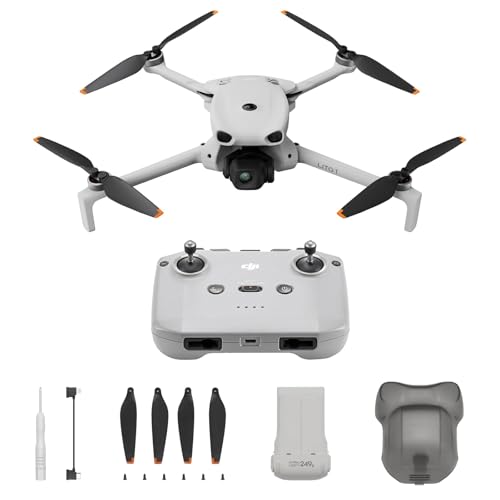
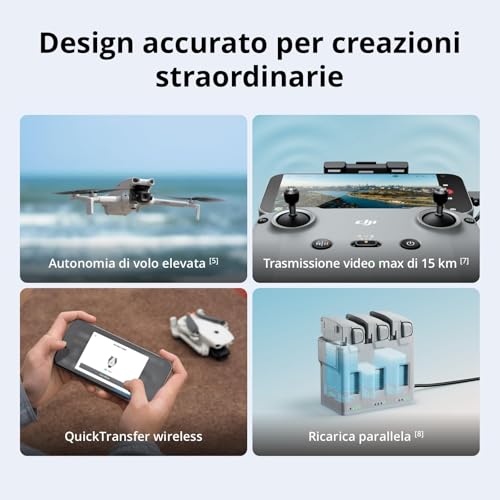
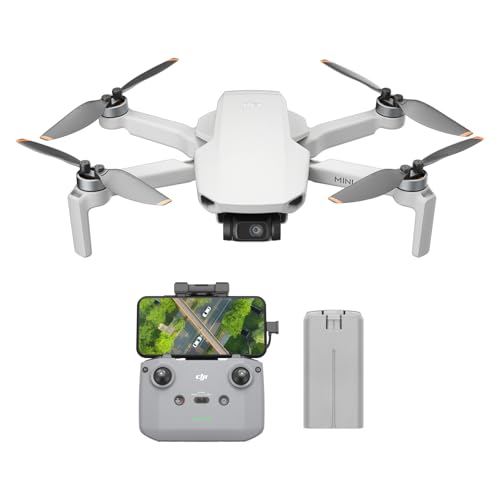
Avg. price:~£260Max flight time:36 minVideo resolution:4K/100 fpsMax transmission distance:15 km

DJI Lito 1 Review: Compare 97 technical specifications and 39 expert and video reviews to see how this product ranks in the Drones category and whether it is worth buying.

8.1

Overall score

Score
8.1/ 10
✕
What it is
An overall evaluation of the drone's quality, based on technical analyses and grades from independent expert reviews.
When it matters
When you need a quick reference to identify the best drones on the market.
Score distribution
▼
<55-66-77-88-99-10
Score components

75%

8.2

Technical Score

25%

7.8

Review score ( 11 · 28)

Based on 11 expert reviews and 28 video reviews
Experts count the full 25% of the overall score, because this model has at least 3 full tests. The technical score makes up the other 75%. A video review counts half as much as a written full test.
▲Better than 86% of drones
8.2

Technical Score

Technical score
8.2/ 10
✕
What it is
An assessment of the drone's technical performance, covering key areas such as flight performance, camera quality, transmission, safety features, battery life, and design.
When it matters
When you want to compare drones based on technical performance and available features.
Score distribution
▼
<55-66-77-88-99-10
Score components

26%

9.2

Flight

24%

7.1

Camera

20%

8.2

Safety

16%

8.8

Connectivity

14%

7.5

Battery & Design

▲Better than 86% of drones
7.8

Review score

Review score
7.8/ 10
✕
What it is
Average grade from independent test sites, magazines and video reviewers, 1–10.
How we count it
Grades: Each review's own score is converted to 1–10; without one, we grade the review ourselves.
Weighting: Big test sites count more, first looks half as much as full tests. A video review counts half.
Share: The review score is 25% of the overall score with 3+ full tests, less with fewer.
Score distribution
▼
<55-66-77-88-99-10
Grades by review (39)
11 reviews: 5 with a printed score, 6 estimated from the review. 28 video reviews, each counting half as much as a written test. Share in this model’s overall score: 25%.
Text reviews 4
✓ explicit
3
≈ estimated
1
Video reviews 10
estimated from the review
Shop star ratings are not part of this score.
▲Better than 71% of drones
  • dji-lito-1
  • dji-lito-1
  • dji-lito-1
  • dji-lito-1
  • dji-lito-1
  • dji-lito-1
  • dji-lito-1
  • dji-lito-1
  • dji-lito-1
dji-lito-1
dji-lito-1
dji-lito-1
dji-lito-1
dji-lito-1
dji-lito-1
dji-lito-1
dji-lito-1
dji-lito-1

Best prices

*As an Amazon Associate, we earn from qualifying purchases.
Loading...
Loading category ranking...

Technical Specifications of drone DJI Lito 1

Technical Score
Technical score
8.2/ 10
✕
What it is
An assessment of the drone's technical performance, covering key areas such as flight performance, camera quality, transmission, safety features, battery life, and design.
When it matters
When you want to compare drones based on technical performance and available features.
Score distribution
▼
<55-66-77-88-99-10
Score components:

26%

9.2

Flight

24%

7.1

Camera

20%

8.2

Safety

16%

8.8

Connectivity

14%

7.5

Battery & Design

8.2
Review score
Review score
7.8/ 10
✕
What it is
Average grade from independent test sites, magazines and video reviewers, 1–10.
How we count it
Grades: Each review's own score is converted to 1–10; without one, we grade the review ourselves.
Weighting: Big test sites count more, first looks half as much as full tests. A video review counts half.
Share: The review score is 25% of the overall score with 3+ full tests, less with fewer.
Score distribution
▼
<55-66-77-88-99-10
Grades by review (39)
11 reviews: 5 with a printed score, 6 estimated from the review. 28 video reviews, each counting half as much as a written test. Share in this model’s overall score: 25%.
Text reviews 4
✓ explicit
3
≈ estimated
1
Video reviews 10
estimated from the review
Shop star ratings are not part of this score.
7.8
Popularity
Popularity
10.0/ 10
✕
What it is
An indicator based on the number of reviews received by the drone.
When it matters
When you prefer to choose a drone reviewed and selected by many other buyers.
Score distribution
▼
<55-66-77-88-99-10
Popularity:
DJI Lito 1 has a popularity score of 10 points, which is higher than that of 88.1% of products in this category.
10
Ratio quality/price
Value for money
8.4/ 10
✕
What it is
An indicator that combines the drone's overall rating with its cost.
When it matters
When you are looking for a drone with a good balance between flight quality, camera features, and price.
Score distribution
▼
<55-66-77-88-99-10
Score components:

60%

8.1

Overall score

40%

9.2

Price

8.4
Max flight time
36 min
Max flight time
36 min
This drone has a max flight time of 36 min, longer than 83.5% of drones and equal to 1% of drones.
Max flight distance
20 km
Max flight distance
20 km
This drone has a max flight distance of 20 km, farther than 86.2% of drones and equal to 1.7% of drones.
Max flight speed
18 m/s
Max flight speed
18 m/s
This drone has a max flight speed of 18 m/s, faster than 68.4% of drones and equal to 8.2% of drones.
Max wind resistance
10.7 m/s
Max wind resistance
10.7 m/s
This drone has max wind resistance of 10.7 m/s, higher than 48.9% of drones and equal to 23.7% of drones.
Max service ceiling (ASL)
4,500 m
Max service ceiling (ASL)
4,500 m
This drone has a max service ceiling of 4,500 m, higher than 64.9% of drones and equal to 2.2% of drones.
Show more
Video resolution
4K/100 fps
Video resolution
4K/100 fps
This drone records video at 4K/100 fps, higher than 86.1% of drones and equal to 3.5% of drones.
4K camera
yes
4K camera
yes
This drone supports 4K video. 46% of drones support 4K video.
Sensor size
1/2"
Sensor size
1/2"
This drone has a sensor size of 1/2", larger than 48.2% of drones and equal to 17.6% of drones.
Main camera megapixels
48 MP
Main camera megapixels
48 MP
This drone has a main camera resolution of 48 MP, higher than 76% of drones and equal to 18% of drones.
Max movie bitrate
130 Mbps
Max movie bitrate
130 Mbps
This drone has a max movie bitrate of 130 Mbps, higher than 73.7% of drones and equal to 6.6% of drones.
Show more
Obstacle detection
yes
Obstacle detection
yes
This drone supports obstacle detection. 69.5% of drones support obstacle detection.
Return to Home (RTH)
yes
Return to Home (RTH)
yes
This drone supports Return-to-Home (RTH). 33% of drones support Return-to-Home (RTH).
GPS
yes
GPS
yes
This drone supports GPS. 35.3% of drones support GPS.
GNSS systems supported
GPS, Galileo, BeiDou
GNSS systems supported
GPS, Galileo, BeiDou
This drone supports GPS, Galileo, BeiDou GNSS systems, which are more comprehensive than those of 73.4% and the same as those of 8.5%.
Obstacle sensing directions
omnidirectional
Obstacle sensing directions
omnidirectional
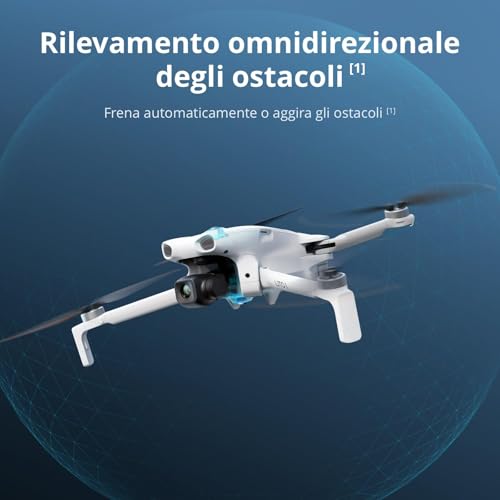
This drone senses obstacles in omnidirectional directions, which is more comprehensive than that of 83.4% and the same as that of 16.6%.
Show more
Max transmission distance
15 km
Max transmission distance
15 km
This drone has a max transmission distance of 15 km, farther than 89.3% of drones and equal to 5.6% of drones.
Transmission latency
120 ms
Transmission latency
120 ms
This drone has transmission latency of 120 ms, lower than 59.2% of drones and equal to 28.2% of drones.
Video transmission system
O4
Video transmission system
O4
This drone uses O4 for video transmission, which is more advanced than the system used by 92.3% and the same as that used by 6.7%.
Live view quality
1080p@60 fps
Live view quality
1080p@60 fps
This drone offers live view quality of 1080p@60 fps, higher-quality than 80.2% of drones and equal to 12.5% of drones.
Remote control
yes
Remote control
yes
This drone has a handheld remote controller. 5% of drones offer this.
Show more
Battery capacity
2,590 mAh
Battery capacity
2,590 mAh
This drone has a battery capacity of 2,590 mAh, larger than 65.3% of drones and equal to 1% of drones.
Battery energy
18.96 Wh
Battery energy
18.96 Wh
This drone has battery energy of 18.96 Wh, higher than 57.7% of drones and equal to 1.2% of drones.
Charging time
73 min
Charging time
73 min
This drone charges in 73 min, faster than 73.1% of drones and equal to 0.6% of drones.
Weight
249 g
Weight
249 g
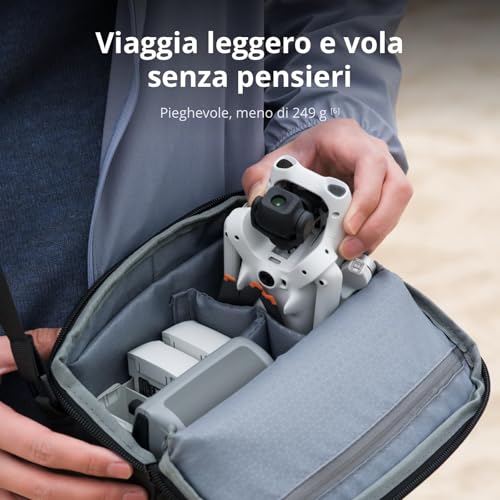
This drone weighs 249 g, heavier than 51% of drones and equal to 11.3% of drones.
Removable battery
yes
Removable battery
yes
This drone has a removable battery. 0.5% of drones have a removable battery.
Show more

DJI Lito 1 vs the average drone

246810TotalFlightCameraSafetyConnectivityBattery & Design
  • 19 km longer flight distance
    Max flight distance
    20 km
    This drone has a longer max flight distance than the average drone (20 km vs 1 km). The average drone can fly up to 1 km.
    20 km vs 1 km
  • 16 min longer flight time
    Max flight time
    36 min
    This drone offers longer max flight time than the average drone (36 min vs 20 min). The average drone offers 20 min of max flight time.
    36 min vs 20 min
  • 14 km longer transmission range
    Max transmission distance
    15 km
    This drone has a longer max transmission distance than the average drone (15 km vs 1 km). The average drone reaches 1 km of transmission distance.
    15 km vs 1 km
  • Supports obstacle detection
    Obstacle detection
    yes
    This drone supports obstacle detection, while the average drone does not.
  • 3 more gimbal axes
    Gimbal axes
    3
    This drone has more gimbal axes than the average drone (3 vs 0). The average drone has 0 gimbal axes.
    3 vs 0
  • More video codec options
    Video codecs supported
    H.264/AVC, H.265/HEVC
    This drone supports H.264/AVC, H.265/HEVC video codecs, while the average drone supports H.264/AVC.
    H.264/AVC, H.265/HEVC vs H.264/AVC
  • More modern charging port
    Charging interface
    USB-C
    This drone uses USB-C for charging, while the average drone uses micro-USB.
    USB-C vs micro-USB
  • 30 Mbps higher video bitrate
    Max movie bitrate
    130 Mbps
    This drone supports a higher maximum video bitrate than the average drone (130 Mbps vs 100 Mbps). The average drone supports a maximum video bitrate of 100 Mbps.
    130 Mbps vs 100 Mbps
  • 19.5% better value for money
    DJI Lito 1 has better value for money than the average drone (8.4 vs 7).
    8.4 vs 7.03
  • 54.5% more popular
    DJI Lito 1 is more popular than the average drone (10 vs 6.5).
    10 vs 6.47
  • 19 km longer flight distance
    Max flight distance
    20 km
    This drone has a longer max flight distance than the average drone (20 km vs 1 km). The average drone can fly up to 1 km.
    20 km vs 1 km
  • 16 min longer flight time
    Max flight time
    36 min
    This drone offers longer max flight time than the average drone (36 min vs 20 min). The average drone offers 20 min of max flight time.
    36 min vs 20 min
  • 3 m/s faster flight speed
    Max flight speed
    18 m/s
    This drone reaches a higher max flight speed than the average drone (18 m/s vs 15 m/s). The average drone reaches 15 m/s.
    18 m/s vs 15 m/s
  • 3 m/s faster descent speed
    Max descent speed
    7 m/s
    This drone descends faster than the average drone (7 m/s vs 4 m/s). The average drone descends at 4 m/s.
    7 m/s vs 4 m/s
  • 2 m/s faster ascent speed
    Max ascent speed
    7 m/s
    This drone climbs faster than the average drone (7 m/s vs 5 m/s). The average drone climbs at 5 m/s.
    7 m/s vs 5 m/s
  • 3 years newer release date
    Release date
    2026
    This drone is newer than the average drone (2026 vs 2023). The average drone was released in 2023.
    2026 vs 2023
  • 1,000 m higher service ceiling
    Max service ceiling (ASL)
    4,500 m
    This drone can fly at a higher max service ceiling than the average drone (4500 m vs 3500 m). The average drone reaches 3500 m.
    4,500 m vs 3,500 m
  • 3 more gimbal axes
    Gimbal axes
    3
    This drone has more gimbal axes than the average drone (3 vs 0). The average drone has 0 gimbal axes.
    3 vs 0
  • More video codec options
    Video codecs supported
    H.264/AVC, H.265/HEVC
    This drone supports H.264/AVC, H.265/HEVC video codecs, while the average drone supports H.264/AVC.
    H.264/AVC, H.265/HEVC vs H.264/AVC
  • 30 Mbps higher video bitrate
    Max movie bitrate
    130 Mbps
    This drone supports a higher maximum video bitrate than the average drone (130 Mbps vs 100 Mbps). The average drone supports a maximum video bitrate of 100 Mbps.
    130 Mbps vs 100 Mbps
  • Captures RAW photos
    RAW photo capture
    yes
    This drone can capture RAW photos, while the average drone cannot.
  • More advanced stabilization
    Image stabilization type
    3-Axis Mechanical
    This drone uses 3-Axis Mechanical image stabilization, while the average drone uses EIS (Digital).
    3-Axis Mechanical vs EIS (Digital)
  • Richer manual controls
    Manual camera controls
    full
    This drone offers full manual camera controls, while the average drone offers no.
    full vs no
  • Supports slow-motion mode
    Slow-motion mode
    yes
    This drone supports slow-motion mode, while the average drone does not.
  • 36 MP more camera resolution
    Main camera megapixels
    48 MP
    This drone has more main camera megapixels than the average drone (48 MP vs 12 MP). The average drone has 12 MP on the main camera.
    48 MP vs 12 MP
  • Larger sensor size
    Sensor size
    1/2"
    This drone has a larger sensor than the average drone (1/2" vs 1/2.3"). The average drone uses a sensor of 1/2.3".
    1/2" vs 1/2.3"
  • Wider aperture
    Aperture
    f/1.8
    This drone has a wider aperture than the average drone (f/1.8 vs f/2). The average drone uses an aperture of f/2.
    f/1.8 vs f/2
  • Supports burst mode
    Burst mode
    yes
    This drone supports burst mode, while the average drone does not.
  • Wider tilt range
    Camera tilt range
    -90 to 40 °
    This drone has a wider tilt range than the average drone (-90 to 40 ° vs -90 to 20 °).
    -90 to 40 ° vs -90 to 20 °
  • Higher photo resolution
    Photo resolution
    8000 x 6000 px
    This drone offers higher photo resolution than the average drone (8000x6000 px vs 4096x3072 px). The average drone offers a photo resolution of 4096x3072 px.
    8000x6000 px vs 4096x3072 px
  • Supports panorama mode
    Panorama mode
    yes
    This drone supports panorama mode, while the average drone does not.
  • 872 GB higher memory card limit
    Max external memory supported
    1,000 GB
    This drone supports more external storage than the average drone (1000 GB vs 128 GB). The average drone supports up to 128 GB of external storage.
    1,000 GB vs 128 GB
  • 6,400 ISO higher max ISO
    Max ISO
    12,800 ISO
    This drone reaches a higher max ISO than the average drone (12800 ISO vs 6400 ISO). The average drone reaches 6400 ISO.
    12,800 ISO vs 6,400 ISO
  • Supports obstacle detection
    Obstacle detection
    yes
    This drone supports obstacle detection, while the average drone does not.
  • Supports QuickShots
    QuickShots
    yes
    This drone supports QuickShots, while the average drone does not.
  • Remote ID
    Remote ID
    yes
    This drone supports Remote ID, while the average drone does not.
  • Less restrictive EU class
    EU class marking
    C0
    This drone is rated as C0 under the EU drone class system, while the average drone is rated as None.
    C0 vs None
  • 2 more flight modes
    N. of intelligent flight modes
    6
    This drone offers more intelligent flight modes than the average drone (6 vs 4). The average drone offers 4 intelligent flight modes.
    6 vs 4
  • 0.4 m tighter hover accuracy
    Hover accuracy (horizontal)
    0.1 m
    This drone has better vertical hover accuracy than the average drone (0.1 m vs 0.5 m). The average drone has vertical hover accuracy of 0.5 m.
    0.1 m vs 0.5 m
  • 14 km longer transmission range
    Max transmission distance
    15 km
    This drone has a longer max transmission distance than the average drone (15 km vs 1 km). The average drone reaches 1 km of transmission distance.
    15 km vs 1 km
  • More polished companion app
    Companion app
    DJI Fly
    This drone uses the DJI Fly companion app, while the average drone uses HS FPV.
    DJI Fly vs HS FPV
  • More frequency bands
    Operating frequency bands
    2.4 GHz, 5.2 GHz, 5.8 GHz
    This drone supports 2.4 GHz, 5.2 GHz, 5.8 GHz operating frequency bands, while the average drone supports 2.4 GHz, 5.8 GHz.
    2.4 GHz, 5.2 GHz, 5.8 GHz vs 2.4 GHz, 5.8 GHz
  • Better live view quality
    Live view quality
    1080p@60 fps
    This drone has better live view quality than the average drone (1080p@60 fps vs 1080p@25 fps). The average drone offers live view quality of 1080p@25 fps.
    1080p@60 fps vs 1080p@25 fps
  • More capable transmission system
    Video transmission system
    O4
    This drone uses O4 for video transmission, while the average drone uses SkyLink 2.0.
    O4 vs SkyLink 2.0
  • 10 ms lower latency
    Transmission latency
    120 ms
    This drone has lower transmission latency than the average drone (120 ms vs 130 ms). The average drone has transmission latency of 130 ms.
    120 ms vs 130 ms
  • More modern charging port
    Charging interface
    USB-C
    This drone uses USB-C for charging, while the average drone uses micro-USB.
    USB-C vs micro-USB
  • 17 min shorter charging time
    Charging time
    73 min
    This drone charges faster than the average drone (73 min vs 90 min). The average drone charges in 90 min.
    73 min vs 90 min
  • 92 mm shorter body length
    Length
    183 mm
    This drone is shorter than the average drone (183 mm vs 275 mm). The average drone is 275 mm long.
    183 mm vs 275 mm
  • 390 mAh more battery capacity
    Battery capacity
    2,590 mAh
    This drone has a larger battery capacity than the average drone (2590 mAh vs 2200 mAh). The average drone battery has a capacity of 2200 mAh.
    2,590 mAh vs 2,200 mAh
  • Fewer GNSS systems
    GNSS systems supported
    GPS, Galileo, BeiDou
    This drone supports GPS, Galileo, BeiDou GNSS systems, while the average drone supports GPS, GLONASS, Galileo, BeiDou.
    GPS, Galileo, BeiDou vs GPS, GLONASS, Galileo, BeiDou
  • No headless mode
    Headless mode
    no
    This drone does not support headless mode, while the average drone does.
  • 11 ° narrower field of view
    Field of view
    79 °
    This drone has a narrower field of view than the average drone (79 ° vs 90 °). The average drone has a field of view of 90 °.
    79 ° vs 90 °
  • 1.2% higher weight
    Weight
    249 g
    This drone is heavier than the average drone (249 g vs 246 g). The average drone weighs 246 g.
    249 g vs 246 g
  • 16.5 mm taller body height
    Height
    79 mm
    This drone is taller than the average drone (79 mm vs 62.5 mm). The average drone is 62.5 mm tall.
    79 mm vs 62.5 mm
  • 0.5 m/s slower tracking speed
    Max subject tracking speed
    12 m/s
    This drone can track subjects at a lower speed than the average drone (12 m/s vs 12.5 m/s). The average drone tracks subjects at 12.5 m/s.
    12 m/s vs 12.5 m/s
  • More basic controller
    Controller model
    RC-N3
    This drone uses the RC-N3 controller, while the average drone uses LiteRadio 4 SE.
    RC-N3 vs LiteRadio 4 SE
  • 11 ° narrower field of view
    Field of view
    79 °
    This drone has a narrower field of view than the average drone (79 ° vs 90 °). The average drone has a field of view of 90 °.
    79 ° vs 90 °
  • Fewer GNSS systems
    GNSS systems supported
    GPS, Galileo, BeiDou
    This drone supports GPS, Galileo, BeiDou GNSS systems, while the average drone supports GPS, GLONASS, Galileo, BeiDou.
    GPS, Galileo, BeiDou vs GPS, GLONASS, Galileo, BeiDou
  • No headless mode
    Headless mode
    no
    This drone does not support headless mode, while the average drone does.
  • 0.5 m/s slower tracking speed
    Max subject tracking speed
    12 m/s
    This drone can track subjects at a lower speed than the average drone (12 m/s vs 12.5 m/s). The average drone tracks subjects at 12.5 m/s.
    12 m/s vs 12.5 m/s
  • More basic controller
    Controller model
    RC-N3
    This drone uses the RC-N3 controller, while the average drone uses LiteRadio 4 SE.
    RC-N3 vs LiteRadio 4 SE
  • 1.2% higher weight
    Weight
    249 g
    This drone is heavier than the average drone (249 g vs 246 g). The average drone weighs 246 g.
    249 g vs 246 g
  • 16.5 mm taller body height
    Height
    79 mm
    This drone is taller than the average drone (79 mm vs 62.5 mm). The average drone is 62.5 mm tall.
    79 mm vs 62.5 mm

Video reviews

Hands-on testing, unboxing, and real-world video evaluations

8.0
Ariff Suffian
≈ estimated
01/07/2026
Hands-on review · two weeks of flying and feature tests
Verdict
DJI Lito 1 is a strong pick for a first drone or a budget buyer, despite some missing features.
6.0
CineD
≈ estimated
12/06/2026
Hands-on review · camera, lens and flight time tests
Verdict
DJI Lito 1 is a usable entry drone with full obstacle sensing, but its fixed 4 m focus is limiting and the Lito X1 is better.
8.0
CineMirage | SD
≈ estimated
07/06/2026
Hands-on review · full day of flying and feature check
Verdict
DJI Lito 1 is a strong beginner drone for the money, though it lacks advanced log profiles.
8.0
TechMishka
≈ estimated
03/05/2026
Hands-on review · flight time, safety and transmission tests
Verdict
DJI Lito 1 is easy to recommend for beginners, though battery life is good rather than great and vertical shooting relies on a crop.
7.0
ArmadilloTech
≈ estimated
23/04/2026
Hands-on review · beginner focus, flight and battery tests
Verdict
DJI Lito 1 is a good entry point for beginners; choose the X1 if image quality matters most.
9.0
Mads Tech
≈ estimated
23/04/2026
Hands-on review · flight footage and feature tour
Verdict
DJI Lito 1 is an incremental update, but it does what it is designed to do extremely well.
6.0
Jays Tech Vault
≈ estimated
05/03/2026
Unboxing and review · entry-level drone, clone and support concerns
Verdict
DJI Lito 1 is a reasonable entry-level trade-off if no DJI option is available, but support and company risk remain.
8.0
by diane
≈ estimated
29/06/2026
Unboxing and first impressions · feature overview, no flights
Verdict
DJI Lito 1 looks like a good beginner option based on the box and listed features; no flights were shown.
7.0
Fearless Drone Academy
≈ estimated
25/04/2026
Unboxing · package contents and first look at the build
Verdict
DJI Lito 1 looks like a solid mini drone from the unboxing alone, with no flights shown yet.
8.0
MW Technology
≈ estimated
23/04/2026
Review · Lito 1 and X1 with flight and battery tests
Verdict
DJI Lito 1 is a clear upgrade over the Mini series, with DJI's latest tech at this price.

Expert reviews

In-depth analysis and verdict from leading tech publications

10
trustedreviews.com
✓ explicit
23/04/2026
Multi-day test · Beginner drone
Verdict
The DJI Lito 1 is a stable, quiet beginner drone with up to 36 minutes of flight time and 4K60 video, but its digital zoom loses quality fast.
7.5
gadgetpilipinas.net
✓ explicit
03/06/2026
Overview · Entry-level drone
Verdict
The DJI Lito 1 is a sensible first drone for daytime flying and quick social sharing, though its small sensor struggles in dim light.
8.0
drohnen.de
≈ estimated
Not Dated
Feature overview · Beginner camera drone
Verdict
The DJI Lito 1 is a well-equipped beginner drone with ActiveTrack 360°, obstacle sensing and 4K60 video, suited to students, families and travellers.
7.6
outdoormonster.de
✓ explicit
26/05/2026
Family test · First drone
Verdict
The DJI Lito 1 flies steadily and suits families, but 8-bit video, sensing that fails in poor light and no storage make the Lito X1 the smarter buy.
8.0
flydrones.es
≈ estimated
Not Dated
Review · Beginner drone
Verdict
The DJI Lito 1 is one of the most complete beginner drones, bringing slow motion, tracking and full obstacle sensing, though low-light photos are weaker.
10
t3mag.lat
✓ explicit
07/09/2026
Review · Beginner drone
Verdict
The DJI Lito 1 is DJI's best beginner drone yet, steady and simple for holiday and family clips, though its camera isn't top-tier.
7.0
hwupgrade.it
≈ estimated
Not Dated
Camera review · Entry-level drone
Verdict
The DJI Lito 1 is a 249g entry-level drone that shoots 4K60 and slow-motion video with steady autofocus on close subjects, but lacks D-Log M and HDR for editing.
7.0
tech.everyeye.it
≈ estimated
23/04/2026
Review · Range comparison
Verdict
The DJI Lito 1 is the entry pick of the Lito range, with full obstacle sensing for newcomers, but it is less suited to evening flights than the X1.

Third-party reviews

What we like about DJI Lito 1

  • 249 g take-off weight with EU C0 class marking keeps paperwork and flight restrictions to a minimum
  • Omnidirectional obstacle sensing, a big safety step up from the Mini 4K it replaces
  • 4K video at up to 100 fps and 130 Mbps from a 1/2-inch 48 MP sensor with f/1.8 aperture
  • Three-axis mechanical gimbal gives smooth footage without digital cropping
  • O4 video transmission with up to 15 km range and 1080p/60 fps live view
  • Up to 36 minutes of flight time per battery and 10.7 m/s wind resistance

What we don't like about DJI Lito 1

  • No internal storage, so a microSD card is required before the first flight
  • Only the Normal colour profile, with no D-Log M or HLG for grading
  • The RC-N3 controller has no screen and relies on your phone
  • The 1/2-inch sensor is smaller than the 1/1.3-inch sensor in the Lito X1 and Mini 4 Pro, so low-light footage is noisier

Verdict

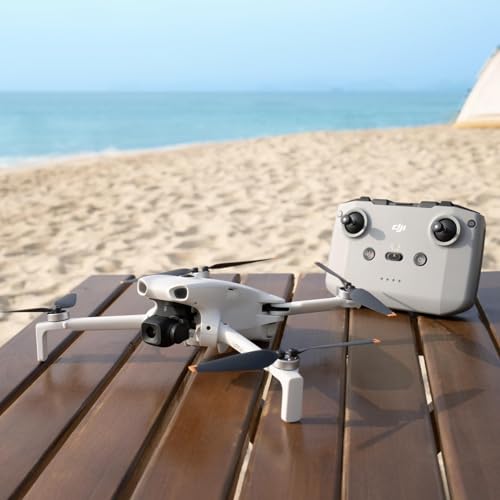
The DJI Lito 1 is DJI's 2026 entry-level camera drone and the successor to the Mini 4K. It stays at 249 g, so it carries the EU C0 class label and avoids most registration hassle. A 1/2-inch 48 MP sensor with an f/1.8 lens records 4K video at up to 100 fps and 130 Mbps, steadied by a three-axis mechanical gimbal. The bigger upgrade is safety: omnidirectional obstacle sensing and ActiveTrack subject tracking, features the Mini 4K never had. O4 transmission reaches 15 km, and one battery gives up to 36 minutes in the air. Wind resistance of 10.7 m/s keeps it steady on breezy days. There is no internal storage, colour profiles stay basic, and the RC-N3 needs a phone. For first-time pilots who want real safety features at a low price, it is the obvious pick.

Compare DJI Lito 1 with other drones

1Product to compare no. 1
VS
2Product to compare no. 2
VS
3Product to compare no. 3 (optional)

Graphic comparison of DJI Lito 1 and other drones

No results found