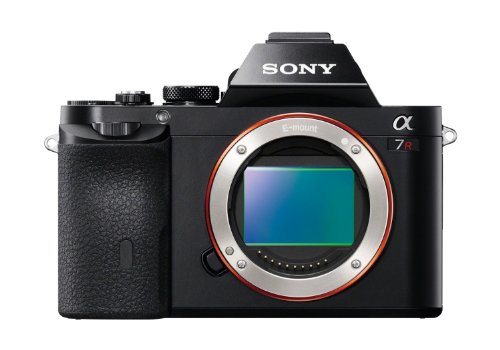
Sony Alpha 7R review. Compare 108 technical specifications and user reviews to see how it ranks among cameras and if it is worth buying.
Overall score
What it is: An overall evaluation of the camera's quality, based on technical analyses and user reviews.
When it matters: When you need a quick reference to identify the best cameras on the market.
Score components:
90.0%
Technical Score
10.0%
User score
Technical Score
What it is: An assessment of the camera's technical performance, covering eight key areas: image quality, autofocus, video features, stabilization, lens compatibility, connectivity, battery, and design.
When it matters: When you want to compare cameras based on technical performance and available features.
Score components:
28.0%
Sensor & Image
25.0%
Photo Features
18.0%
Video & Audio
14.0%
Display & Design
8.0%
Battery & Power
7.0%
Connectivity & Storage
User score
What it is: A rating that combines user reviews and the total number of reviews received by the camera.
When it matters: When real-world owner satisfaction and review volume matter to your decision.
Score components:
70.0%
User reviews
30.0%
Popularity
Score components:
25.0%
Sensor size
20.0%
Main camera megapixels
20.0%
Dual card slots
15.0%
N. of focus points
10.0%
RAW photo capture
10.0%
Phase-detection autofocus (photos)
Score components:
35.0%
Weight
30.0%
Battery life (CIPA)
20.0%
Sensor-shift stabilization
15.0%
GPS
Score components:
30.0%
Price
20.0%
Weight
20.0%
AF tracking
20.0%
Battery life (CIPA)
10.0%
Touchscreen
Score components:
30.0%
Main camera megapixels
25.0%
Sensor size
20.0%
Main camera pixel size
15.0%
Sensor-shift stabilization
10.0%
RAW photo capture
Score components:
30.0%
Weight
25.0%
Thickness
20.0%
AF low-light sensitivity
15.0%
Sensor-shift stabilization
10.0%
Eye detection AF (human)
Score components:
30.0%
Sensor size
25.0%
Main camera pixel size
20.0%
Eye detection AF (human)
15.0%
Main camera megapixels
10.0%
Sensor-shift stabilization
Score components:
30.0%
Weight
25.0%
Battery life (CIPA)
20.0%
Min operating temperature
15.0%
Sensor-shift stabilization
10.0%
GPS
Available: ranking among products currently available (including other versions of this product).
All: ranking among all products in the database.
#24 in Best Sony Cameras
#24 in Best Sony Mirrorless Cameras
#39 in Best Full-Frame Cameras
#55 in Best Low Light Cameras
#82 in Best Mirrorless Cameras
#85 in Best Cameras for Portraits
#128 in Best Cameras
#128 in Best Digital Cameras
#370 in Best Travel Cameras
#380 in Best Cameras for Hiking
What it is: An assessment of the camera's technical performance, covering eight key areas: image quality, autofocus, video features, stabilization, lens compatibility, connectivity, battery, and design.
When it matters: When you want to compare cameras based on technical performance and available features.
Score components:
28.0%
Sensor & Image
25.0%
Photo Features
18.0%
Video & Audio
14.0%
Display & Design
8.0%
Battery & Power
7.0%
Connectivity & Storage
What it is: A rating that combines user reviews and the total number of reviews received by the camera.
When it matters: When real-world owner satisfaction and review volume matter to your decision.
Score components:
70.0%
User reviews
30.0%
Popularity
What it is: An indicator that combines the camera's overall rating with its cost.
When it matters: When you want to know how much overall quality you get for the price.
Score components:
60.0%
Overall score
40.0%
Price
Importance: HIGH
Good value: Full frame or larger
Importance: HIGH
Good value: At least 20 MP
Importance: HIGH
Good value: At least 3.5 µm
Importance: LOW
Importance: MEDIUM
Good value: At least ISO 25,600
Importance: MEDIUM
Importance: MEDIUM
Good value: At least 14-bit
Importance: LOW
Importance: LOW
Importance: LOW
Importance: LOW
Importance: LOW
Importance: LOW
Importance: LOW
Importance: LOW
Importance: MEDIUM
Importance: LOW
Importance: LOW
Importance: LOW
Importance: LOW
Importance: LOW
Importance: HIGH
Good value: At least 200 points
Importance: HIGH
Importance: MEDIUM
Importance: LOW
Importance: LOW
Importance: MEDIUM
Importance: MEDIUM
Importance: HIGH
Good value: At least 5 stops
Importance: LOW
Importance: MEDIUM
Good value: At least 10 fps
Importance: LOW
Importance: LOW
Importance: LOW
Importance: LOW
Importance: LOW
Importance: LOW
Importance: LOW
Importance: LOW
Importance: LOW
Importance: LOW
Importance: LOW
Importance: LOW
Importance: LOW
Importance: LOW
Importance: LOW
Importance: LOW
Good value: At least 200,000 actuations
Importance: LOW
Good value: At least 10x
Importance: HIGH
Good value: At least 3840 px
Importance: MEDIUM
Good value: At least 200 Mbps
Importance: MEDIUM
Good value: At least 10-bit
Importance: LOW
Importance: LOW
Importance: LOW
Importance: LOW
Importance: LOW
Importance: LOW
Importance: LOW
Good value: At least 30 min
Importance: LOW
Importance: LOW
Importance: LOW
Importance: LOW
Importance: LOW
Good value: At least 2 microphones
Importance: LOW
Importance: LOW
Importance: LOW
Importance: LOW
Importance: MEDIUM
Good value: 500 g or less
Importance: LOW
Importance: LOW
Importance: LOW
Importance: MEDIUM
Importance: MEDIUM
Good value: At least 2.36 million dots
Importance: LOW
Good value: 100%
Importance: LOW
Importance: LOW
Good value: At least 120 Hz
Importance: MEDIUM
Good value: At least 3 in
Importance: LOW
Importance: LOW
Importance: LOW
Importance: LOW
Importance: LOW
Importance: LOW
Importance: LOW
Good value: At least 10 m
Importance: LOW
Importance: LOW
Importance: LOW
Importance: LOW
Importance: MEDIUM
Good value: At least 400 shots
Importance: LOW
Good value: At least 1,500 mAh
Importance: LOW
Importance: LOW
Importance: LOW
Importance: LOW
Importance: LOW
Importance: LOW
Importance: LOW
Importance: LOW
Importance: LOW
Importance: LOW
Importance: LOW
Importance: LOW
Importance: LOW
Importance: LOW
Importance: LOW
Importance: LOW
Importance: LOW
Importance: LOW
Importance: HIGH
Good value: At least 20 MP
Importance: MEDIUM
Good value: At least ISO 25,600
Importance: LOW
Importance: MEDIUM
Importance: LOW
Importance: LOW
Importance: HIGH
Good value: At least 3.5 µm
Importance: MEDIUM
Importance: MEDIUM
Importance: MEDIUM
Importance: LOW
Importance: MEDIUM
Good value: At least 10 fps
Importance: LOW
Importance: LOW
Good value: At least 1,500 mAh
(Reviews last updated: July 2026)
The DPReview field test of the Sony Alpha a7R highlights excellent studio performance, fast autofocus, and superior image quality, particularly when paired with sharp native Carl Zeiss FE lenses. Key advantages include accurate, rapid contrast-detect autofocus and the ability to resolve fine details for high-resolution portraits. Conversely, the camera presents workflow challenges, notably with an electronic viewfinder that goes dark when using strobe lights, necessitating the disabling of exposure simulation. Other limitations include autofocus difficulties in low-light situations and the need for careful processing to handle soft details at high ISO settings.
The ePHOTOzine review highlights the Sony Alpha 7R as a compact, durable, and weather-sealed camera featuring a 36.4-megapixel sensor without an optical low-pass filter, delivering exceptional detail and low-noise images up to ISO 6400. It also features an improved menu system and a high-resolution electronic viewfinder. Conversely, the review notes the contrast-detection autofocus is relatively slow, particularly in low light, and the battery life is limited to under 300 shots. Additionally, the camera lacks a built-in flash and comes without an external battery charger, making it best suited for studio or landscape work rather than fast-paced action.
The Sony Alpha 7R is an outstanding 36-megapixel full-frame mirrorless camera that prioritises pure image quality and resolution over absolute speed, earning it an Editors' Choice award. Its standout pros include a compact, weather-sealed body, a high-resolution tilting rear LCD, an excellent OLED electronic viewfinder (EVF), built-in Wi-Fi, and exceptional high ISO performance when shooting in Raw format. By omitting the optical low pass filter (OLPF), the camera captures incredible fine detail, making it highly appealing for landscape photographers. It also supports video recording up to 1080p60 with great depth-of-field control. Furthermore, the camera's short lens-mount distance allows users to adapt a wide range of third-party lenses. However, the camera has notable cons, including a hefty price tag, a loud shutter mechanism, and slower autofocus and burst rates (4fps) compared to its sister model, the Alpha 7. Because it relies purely on contrast detection rather than a hybrid focus system, focus times slow down significantly in dim light. The ultra-high resolution sensor also struggles with certain adapted wide-angle rangefinder lenses, causing blurry edges and noticeable purple color shifting. Other design...
The What Digital Camera review awards the Sony Alpha 7R (a7R) a 90% score, highlighting its 36.4MP full-frame sensor without an anti-aliasing filter as a key strength for capturing high-resolution images, rivaling pro-spec DSLRs. With a robust build, detailed electronic viewfinder (EVF), and strong video capabilities, the camera is lauded as a top choice for photographers prioritizing, image quality. Conversely, the review identifies limited native FE lens options at launch and a slower, 25-point contrast-detect autofocus system—unlike the standard Alpha 7—as significant drawbacks. Furthermore, to avoid aggressive noise reduction in JPEGs, shooting in raw is essential for maximum dynamic range and detail.
The first-generation Sony a7R is an innovative, ultra-portable full-frame mirrorless camera that challenges traditional DSLRs by packing a high-resolution 36.8-megapixel sensor into a remarkably lightweight, compact body. Tested under extreme global environments—ranging from -50°C Arctic winters to humid tropical rainstorms—the camera demonstrates impressive environmental resilience despite lacking official weather-sealing certifications. Its core strengths include an improved gapless on-chip sensor design with the anti-aliasing (AA) filter removed, which allows it to capture a massive dynamic range and fine, lifelike texture details in a single exposure. Additionally, it features a highly functional articulating rear LCD for easy low-angle tripod work, sharp low-light live view performance, and near-universal lens compatibility through the use of third-party adapters.
Sony a7R Review Summary The Sony a7R is an outstanding full-frame mirrorless camera that packs professional DSLR-level quality into a body that is four times smaller than a Nikon D4 and over twice as light as a Nikon D800. Photographers focused on art over rigid technical specs will appreciate its massive 36-megapixel sensor, which delivers incredible image detail and beautiful, buttery background bokeh. Its compact design and weather sealing make it highly portable for travel and landscape work. Key standouts include excellent low-light performance, a highly useful electronic viewfinder featuring focus peaking for effortless manual focusing with third-party lenses, an adaptable lens mount, and a highly competitive price tag under $2,000. However, the camera does suffer from some notable early-generation limitations. At launch, the native full-frame lens ecosystem was very limited, forcing users to rely on larger adapted lenses or cropped NEX lenses. Unlike its sibling, the a7II, the original a7R lacks in-body image stabilization, making it less ideal for handheld shooting in low light where a tripod isn't an option. Ergonomically, the physical zoom-in button is awkwardly placed and...
In a hands-on preview published on Medium, Martin highlights the Sony A7R’s solid, premium build, superb image quality, and a much-improved menu system compared to previous NEX models. The review praises the E-mount's versatility for using inexpensive legacy lens adapters. Conversely, the A7R is noted for an extremely loud shutter and a less substantial grip compared to the NEX-7, limiting its utility for discreet shooting. Other downsides include a high entry price and a lack of native FE lenses available at launch.
Sony A7R Hands-On Review Summary The Sony A7R is an innovative, highly compact 36-megapixel full-frame interchangeable lens hybrid camera that signals a major shift in the photography industry by merging the capabilities of large-sensor DSLR-style cameras with the small form factor of Compact System Cameras. It is praised for its robust build quality, excellent ergonomic grip, and user-friendly interface which includes customisable front, rear, and exposure compensation dials, alongside an articulated rear LCD and a bright, sharp central OLED electronic viewfinder (EVF). Performance-wise, the camera captures at a rate of 4 frames per second (FPS) and features impressive video capabilities including AVCHD at 24P and 60P, complete with dedicated audio inputs, a headphone jack, and settable zebras. Furthermore, its short flange distance makes it an excellent, cost-effective alternative body for adapting legacy retrofocus Leica M and Nikon lenses using separate adapters. However, the camera does feature a few notable compromises and design challenges, primarily stemming from its hybrid lens system and the physical laws of optics. Because it uses the new FE mount, existing Sony NEX APS-C lenses will cause...
The Sony A7 and A7R are groundbreaking full-frame mirrorless cameras that deliver class-leading image quality and spectacular resolution in remarkably small, solid bodies. While the A7 contains a 24.3MP sensor with fast hybrid autofocus, the A7R boasts a 36.4MP sensor with no optical low-pass filter for extreme detail extraction. The review highlights that both models serve as an incredibly high-value alternative to a Leica M body, specifically excelling when adapting third-party manual lenses from 28mm and up, such as the Zeiss ZM line and the Leica 50mm Noctilux. Additionally, the native Zeiss 35mm f/2.8 and 55mm f/1.8 lenses are praised for being exceptionally sharp, while the large, built-in EVF and intuitive physical manual dials provide high utility during steady, methodical shooting. However, the system suffers from distinct flaws that keep it from being perfect. On the downside, both cameras feel somewhat slow and clunky in overall response, making them a poor choice for sports or action photography. The physical shutter noise is notoriously loud—especially on the double-clicking A7R—and the poor battery life regularly requires shooters to carry multiple spares. Furthermore,...
The Sony Alpha A7r is a full-frame mirrorless camera praised for delivering medium-format-rivaling image quality and matching the Nikon D800e's high resolution in a body half the weight and significantly cheaper. Its standout pros include an exceptional, large electronic viewfinder, a vertically tilting 3-inch screen, built-in Wi-Fi with NFC, focus peaking, and handy USB charging. A unique advantage is its short flange distance, which allows photographers to use adapters to mount various third-party lenses (like Canon or Nikon) without experiencing any sensor crop. Furthermore, it features a weatherproof magnesium alloy body and supports 1080p video recording at up to 60p, making it highly attractive to landscape, architectural, and portrait photographers. However, the camera has notable limitations, particularly its sluggish and contrast-based autofocus system, which struggles significantly in dim light and renders it unsuitable for action or sports photography. Major cons include a relatively loud, clunky shutter sound with no silent electronic option, a lack of built-in image stabilisation, and a screen that is neither touch-sensitive nor fully articulating. Additionally, its ultra-high 36-megapixel resolution makes it an unforgiving camera that demands...
The Sony Alpha 7R is a groundbreaking, compact full-frame mirrorless camera featuring a 36-megapixel sensor without an optical low-pass filter to deliver exceptional, high-resolution image quality. Its, praised for a durable, weather-sealed body, a high-quality OLED viewfinder, and excellent low-light, high-ISO performance. The camera's main drawbacks include slower autofocus and a limited 4fps burst rate, alongside a loud shutter and lack of an included external charger. Despite these limitations and a high price point, its superior image clarity earned it an Editors' Choice award.
The Sony Alpha ILCE-7R (A7R) is a compact, full-frame interchangeable-lens camera that delivers some of the best photo quality available under $3,000. Boasting a 36.4-megapixel Exmor CMOS sensor with no anti-aliasing (AA) filter, it produces exceptionally sharp JPEGs through ISO 800 and pristine raw files capable of resolving clean details up to ISO 12800. The camera is beautifully designed with a sturdy, dust- and moisture-resistant magnesium alloy body, a substantial grip, a contrasty tilting LCD, and a large, bright electronic viewfinder. Additional pros include its upgraded Bionz X image processor, excellent dynamic range for recovering highlight and shadow detail, clean HDMI output for video, and built-in Wi-Fi/NFC connectivity. However, the camera suffers from significantly disappointing performance speeds and battery life. Key cons include a painfully slow startup time of 2.2 seconds, laggy contrast-based autofocus that drops performance to 0.9 seconds in dim light, and a poor continuous shooting speed of just 1.2fps with tracking AF. Furthermore, users must contend with an absurdly loud shutter mechanism and a highly restricted battery life of just 270 to 340 shots per charge. While...
The review on EOSHD.com rates the Sony A7R as a highly capable tool for still photography, awarding it an 8/10 for stills, but criticises it heavily as a video camera with a low 6/10 rating. On the positive side, the camera boasts a class-leading, full-frame 36-megapixel sensor with 14 stops of dynamic range and an exceptionally clear OLED electronic viewfinder (EVF). Its short, mirrorless lens mount makes it a "legacy lens user's dream," allowing filmmakers and photographers to easily adapt and use a vast half-century history of custom and vintage manual focus glass on its true full-frame format. Additional advantages include its highly compact physical size for a full-frame system, an articulated rear screen, and manual audio gain controls accompanied by dedicated microphone and headphone sockets. Conversely, the review highlights significant video flaws, noting that the image details are vastly surpassed by much cheaper competitors like the Nikon D5300 and Panasonic GH3. The A7R suffers from severe moire and aliasing patterns in video mode, and its weak AVCHD codec causes motion to turn into "mud" rather than smooth blur, particularly...
The Sony Alpha a7R offers exceptional raw image quality with immense detail and great color, housed in a compact, solid full-frame body with a sharp electronic viewfinder. Key advantages include high-performance low-light capabilities and convenient Wi-Fi/NFC connectivity, though the JPEG engine often applies heavy, detrimental noise reduction. Significant drawbacks highlighted in the review include poor battery life, slow startup times, and a clunky menu system that displays unhelpful error messages. Additionally, the camera suffers from ergonomics issues, specifically a overly sensitive rear scroll wheel and an exposure compensation dial that is easily turned by accident.
The Digitalkamera.de review highlights the Sony Alpha 7R as a groundbreaking, compact full-frame mirrorless camera offering exceptional, medium-format-level image quality and high-resolution, detailed performance. Key advantages include robust construction, excellent handling, and a high-resolution 36-megapixel sensor that excels in landscape, architecture, and studio photography, despite limitations in native lens options at the time of review. Conversely, the review notes a slow, contrast-only autofocus system and a low continuous shooting speed of only 4 frames per second, making it unsuitable for action photography. While offering superior detail, the camera’s slow performance and high cost make the standard Alpha 7 a better all-around value for users not requiring extreme resolution.
The reviewer provides a hands-on assessment of the mirrorless Sony a7r full-frame camera, testing it extensively alongside a Sony/Zeiss 55mm f/1.8 lens. A major standout feature is the 36-megapixel sensor, which delivers incredible resolution, dynamic range, and high sharpness, making it a great compact alternative to larger DSLRs like the Nikon D800. The camera provides massive editing flexibility in Lightroom, allowing users to aggressively brighten deep shadows without destroying image quality. Additionally, the loud and satisfying shutter sound is highlighted as an emotional bonus for photographers who appreciate tactile feedback. However, the camera falls short regarding its handling and technical speed when compared to other popular mirrorless options. The reviewer criticises the complex menu system and overall ergonomics, noting that they require a significant learning curve compared to established setups from Nikon or Olympus. Performance is further limited by a sluggish autofocus system. Furthermore, while the camera body itself is small, the full-frame lenses are bulky, meaning the overall system loses some of its compactness advantages. Coupled with a steep body price exceeding €2,000, it is framed as a niche...
High-End Image Quality & Technical Highlights The Sony a7R (Alpha 7R) is a ground-breaking full-frame mirrorless camera (DSLM) that delivers professional DSLR-level performance in a highly compact, 465-gram magnesium body. Boasting a 36-megapixel sensor designed without an optical low-pass filter, it achieves exceptional sharpness and an immense level of detail that surpasses even some medium-format competitors. Image noise is very well controlled, keeping photos clean and retaining strong detail clarity up to ISO 3,200, while the dynamic range peaks at an impressive twelve f-stops at base ISO. Furthermore, the camera comes equipped with a sharp, fluid OLED electronic viewfinder featuring over two million subpixels, a 135-degree tilting 3-inch display, a 1/8,000-second minimum shutter speed, and modern connectivity options including Wi-Fi and NFC. Notable Drawbacks & Limitations Despite its elite imaging capabilities, the camera has notable limitations when it comes to speed and low-light performance. Its contrast-detection autofocus system operates at an acceptable speed during the day but slows down significantly in dim environments, taking over 0.8 seconds to find focus. Continuous shooting is also relatively slow at roughly 3.6 frames...
Here is a summary of the Sony Alpha 7R camera review based on the provided text: Review Summary The Sony Alpha 7R stands out as a highly compact full-frame camera that delivers stellar image and video quality. Its 36.2-megapixel sensor lacks a low-pass filter, resulting in incredibly sharp details and spectacular performance in both daytime and low-light settings up to ISO 1,600. Built from tough magnesium, the body weighs less than 500 grams and offers dust and splash protection. Users will appreciate its highly customisable buttons, sharp 3.0-inch tilting screen, and large electronic viewfinder. Video features are also a major plus, with high-quality Full HD recording at 50 frames per second, clear stereo sound, and dedicated ports for both headphones and a microphone. It also includes modern connectivity tools like built-in Wi-Fi and NFC. However, the camera does show weakness when it comes to operating speed. Because it handles such massive file resolutions, the burst mode is capped at a slow four frames per second. Once the buffer memory fills up, the speed drops dramatically to around one frame per...
The avguide.ch test report reviews the Sony Alpha 7R (2014 model), crowning it a "solid pixel wonder" that is best suited for enthusiast amateurs and professional studio, architectural, or landscape photographers who demand ultimate sharpness. Priced at 2,450 CHF for the body, the camera features a 36.4-megapixel full-frame CMOS sensor engineered without an optical low-pass filter to maximize resolution. While it serves as a legitimate, compact alternative to medium-format systems for static high-resolution shooting, the reviewer notes that its sluggish performance makes it entirely unsuitable for sports and action photography. The review explicitly highlights several core strengths and weaknesses of the system: Pros: The camera delivers an extremely high usable sensor resolution and excellent overall image quality, which remains impressive even at high ISO settings. It is built into a high-quality, compact, and dust- and splash-protected housing featuring intuitive controls, integrated Wi-Fi, NFC, and a high-resolution XGA OLED viewfinder. Cons: On the downside, the camera suffers from a loud mechanical shutter, a relatively sluggish autofocus system (particularly in low-light environments), a modest continuous shooting speed, and poor battery performance. Furthermore,...
The review positions the Sony Alpha a7 and a7R full-frame mirrorless system as a revolutionary milestone in photography, successfully packing immense full-frame power into a body half the size of leading DSLRs like the Nikon D800 or Canon 5D Mark III. Tested heavily over 10 days and 15,000 shutter actuations, the Sony a7 (24MP) and a7R (36MP) are praised for delivering exceptional image quality, outstanding high-ISO performance up to ISO 3200, and a stunning dynamic range that prevents highlights from clipping even in harsh backlight. The reviewer heavily lauds the internal JPEG engine—noting beautiful bronze skin tones, clever built-in skin-smoothing features, and Dynamic Range Optimization (DRO)—as well as the sharpness of the Zeiss 55mm f/1.8 lens and the functional versatility of the digital electronic viewfinder (EVF) and tilting screen. However, the review details several prominent drawbacks, particularly pointing out that the native lens ecosystem is currently lacking a broad selection of wide-angle or telephoto lenses. Mechanically, the contrast-based autofocus struggles in low-contrast "gray-on-gray" conditions, and its speed falls slightly short for fast-paced action or tracking running children. Additionally, the reviewer...
This lab test evaluates the high-ISO digital noise performance of the 36-megapixel Sony Alpha 7R full-frame mirrorless camera. It compares direct JPEGs against RAW files processed through Lightroom 5, Capture One Pro 7, and DxO Optics Pro 9. Image quality remains completely flawless between 100 and 400 ISO. Up to 3200 ISO, the RAW files deliver remarkable, fine-grained results suitable for large-format A2 prints, while noise-reduced JPEGs remain clean with only minor processing artifacts. At 6400 ISO, JPEGs begin to suffer from heavy smoothing, but RAW files stay surprisingly clean. Image degradation becomes highly visible at 12800 ISO for JPEGs—limiting their use to A4 prints—whereas RAW files processed with DxO Optics Pro 9 (using Prime technology) still yield excellent results. The maximum setting of 25600 ISO is strictly a backup option; JPEGs are unusable, though DxO-processed RAW files can still squeeze out an acceptable A3+ print. Pros & Cons Pros: Excellent Full-Frame Performance: Gains 1 to 1.5 stops of noise advantage over smaller APS-C sensors and SLT translucent mirror cameras. Outstanding RAW Quality: Fine detail is remarkably well-preserved up to...
The Les Numériques review celebrates the Sony A7R as a highly capable, ground-breaking mirrorless camera. It is praised for packing a massive 36.4-megapixel full-frame sensor into an impressively compact and lightweight magnesium alloy body. Key strengths highlighted include its outstanding image quality with excellent electronic noise management and exceptional dynamic range. The camera also features a high-quality tilting screen, a sharp electronic viewfinder, and built-in Wi-Fi and NFC connectivity. For video, it offers complete manual controls alongside standard microphone and headphone ports. However, the review details several notable weaknesses that hold the camera back. The overall system speed is disappointingly slow, suffering from a sluggish startup time and high shutter lag. Its mechanical shutter is quite loud and vibrates twice per shot, yet lacks any built-in mechanical image stabilization. The autofocus system lags significantly in low light, and its continuous burst mode slows down to an anemic 1.6 frames per second with tracking active. Furthermore, testers found the recorded video quality to be disappointing due to a lack of precision and visible moiré effects. Other drawbacks include limited battery life,...
The Sony Alpha 7R (tested with a 28-70mm lens) features a magnesium body that is resistant to dust and moisture, housing a highly detailed 36.8-megapixel full-frame CMOS sensor with no low-pass filter. It is built with a 7.6 cm tilting touchscreen, a 2.3-million-dot electronic viewfinder allowing real-time previewing, and supports 1080p video recording up to 60 fps alongside Wi-Fi and NFC connectivity. Based on the lab evaluation and customer feedback, the camera excels in delivering excellent image resolution and color accuracy, high optical quality from its lens, and great sensitivity with very limited noise even at higher ISO ranges. Furthermore, users highly appreciate its exceptionally lightweight profile and portable form factor. On the downside, the system suffers from a lack of general body responsiveness and a slow 25-point contrast-detection autofocus system that lags behind in performance. High-sensitivity shooting also introduces slight texture loss once it scales past ISO 12,800. Additionally, customer reviews highlight practical limitations, such as a lack of optical stabilization when pairing the body with certain lenses like the SEL 16-50, which some buyers note can limit its...
The Sony Alpha 7R (A7R) is a mirrorless camera that stands out for its 36-megapixel full-frame sensor, delivering exceptional image quality with impressive sharpness and high ISO performance up to 6400 without issue. It features a compact and lightweight body, excellent AVCHD v2 1080p video recording, high-quality audio capture with optimally placed built-in microphones, a sharp 2.36-million-dot OLED electronic viewfinder, and wide compatibility with manual lenses. Additionally, its autofocus is responsive, its ergonomics are highly consistent, and it can automatically crop the view when using Nex APS-C lenses. However, the camera suffers from significantly weak battery life, lasting only around 240 images per charge, which is further worsened in cold outdoor temperatures. It is sold without an included AC battery charger, displays a painfully slow and inconsistent startup time of roughly 3 seconds, and generates very heavy files that demand robust computer hardware for processing. Other notable downsides include the lack of a touchscreen interface, the absence of a built-in flash, an overly sensitive eye detector for switching between the viewfinder and screen, and the missing ability to register focal...
The Sony ILCE-7R (A7R) is a groundbreaking, compact full-frame mirrorless camera featuring a 36.4-megapixel Exmor CMOS sensor without an anti-aliasing filter, resulting in exceptionally sharp, high-resolution imagery and strong dynamic range [1.1]. It is praised for its robust weather-sealed magnesium alloy body, excellent electronic viewfinder, and the ability to adapt almost any lens, making it a stellar tool for landscape or studio work [1.1]. However, the camera is severely limited for action photography by a loud mechanical shutter that causes "shutter shock" and a slow, hunting 25-point contrast-detection autofocus system [1.1]. Additional drawbacks include a sluggish 1.5–4 fps burst rate, significant operational lag when writing files, and very poor battery life, making it a specialized, rather than general-purpose, camera [1.1].
Sony Alpha 7R Review Summary The Sony Alpha 7R is a very small camera that packs a powerful 36-megapixel full-frame sensor without a low-pass filter, giving it image quality that rivals much larger and more expensive medium-format cameras like the Pentax 645D. Pros include its tough magnesium alloy build, a useful tilting screen, and an excellent electronic viewfinder (EVF) that stays bright and clear even in pitch-black conditions. Furthermore, the sensor handles noise beautifully, keeping pictures clean and highly usable up to ISO 3200 and even ISO 6400. However, the camera has several notable cons. The body is too small for photographers with large hands unless they buy a vertical grip. Battery life is quite poor because the sensor and EVF drain power constantly, and Sony does not include a separate wall charger in the box. The autofocus system can be inconsistent and sometimes causes slight focusing errors. Additionally, the lens selection is limited, the instruction manual is confusing, the mobile app lacks manual controls, and the 2-second timer can cause camera vibration due to how the shutter closes.
The Sony Alpha A7R is a compact, full-frame mirrorless camera distinguished by its 36.4-megapixel Exmor CMOS sensor, which removes the optical low-pass filter to maximize sharpness for landscape and studio work. The body features a robust, weather-sealed magnesium alloy construction, a high-resolution 2.4-million-dot EVF, a tilting rear screen, and high adaptability for third-party lenses. YouTube · However, the camera is limited by a slow 25-point contrast-detection autofocus system that often hunts, coupled with a 4 fps continuous shooting rate and a loud, clanky mechanical shutter. Additional drawbacks include a lack of 4K video capability, short battery life due to high power consumption, and the absence of a built-in flash. YouTube
The Sony A7 and A7R are ground-breaking full-frame mirrorless cameras that offer excellent build quality, robust magnesium alloy bodies, and a highly responsive OLED electronic viewfinder. The A7 serves as the more well-rounded, affordable option, featuring a 24.3-megapixel sensor and a fast hybrid autofocus system. Meanwhile, the higher-end A7R drops the optical low-pass filter to maximize sharpness and details from its massive 36.4-megapixel resolution. Both systems excel in image quality, maintaining low noise levels up to ISO 6400 and providing a broad dynamic range with accurate colour reproduction. However, the review highlights several performance bottlenecks that hold these models back. The A7R’s autofocus relies strictly on contrast detection, making it notably slower than its sibling. Both cameras suffer from slow startup times, and their autofocus speed decreases noticeably in low-light conditions. Furthermore, continuous shooting speeds are modest at 4 to 5 frames per second, and battery life is notably poor, requiring users to carry spares. Lastly, while the companion smartphone app enables useful remote functionality, its setting adjustments remain quite limited. If you need more specifics, let me know
The Xataka in-depth review outlines how the Sony A7 and A7R serve as a groundbreaking, serious alternative to full-frame DSLR cameras by packing a full-frame sensor into a mirrorless body. The reviewer is highly impressed by the sensor performance, calling it one of the absolute best options available on the market for photographers. The camera excels at managing demanding high-contrast scenes. Additionally, the review praises the physical design, highlighting that Sony successfully achieved a compact size and premium finish without compromising the advanced internal technology. Built-in connectivity features also stand out as a major benefit during testing. However, the review notes clear trade-offs despite these engineering achievements. The main drawback stems from the inherent compromises of mirrorless systems during this era, such as a limited native lens selection and shorter battery life compared to traditional DSLRs. Autofocus speeds are acceptable but slower than competitors, and the contrast-detection focus system on the A7R makes it less suitable for fast-moving action. Furthermore, the lack of an electronic front-curtain shutter on the A7R restricts its continuous shooting to 4 FPS, and its loud...
The Sony Alpha 7r is a full-frame mirrorless camera equipped with a 36.3-megapixel CMOS sensor and a Bionz X image processor, packed into a lightweight 465g magnesium alloy and composite body. The reviewer notes that while the camera has a minimalist and well-laid-out top plate featuring an excellent exposure compensation dial, its general ergonomics feel compromised due to a shallow handgrip and an awkwardly placed shutter button that forces the index finger to stretch backward. Key strengths include a highly intuitive menu system, an articulated 921,600-dot LCD screen with reliable anti-reflection properties, and highly effective manual focus aids like Focus Peaking combined with 7.2x and 14.4x magnification. However, the review highlights several distinct disadvantages, particularly regarding its power system and performance. The camera relies on an inconvenient in-camera micro-USB charging system that takes up to 5 hours to charge and prevents camera use during the process, making an external charger an essential secondary purchase. Furthermore, the real-world battery life is poor, yielding only around 225 shots per charge compared to its nominal 340-shot rating, and it can drop even further...
The Sony A7R is a groundbreaking full-frame mirrorless camera that packs a massive 36.4-megapixel sensor without an anti-aliasing (low-pass) filter into an ultra-compact, weather-sealed magnesium alloy body. It provides exceptional image quality with superb detail, rich contrast, and accurate colour fidelity, making it an outstanding tool for high-precision studio photography like product and jewelry imaging. Performance highlights include a high-quality electronic viewfinder, highly accurate autofocus precision, highly reliable automatic white balance, and an innovative multi-shot noise reduction feature that clean up high ISO images up to ISO 1,600 in JPEG format. It also features robust wireless connectivity through Wi-Fi and NFC, alongside capable Full HD video recording at 1080/50p. However, the camera falls short in its overall ergonomics and external interface, requiring users to rely too heavily on menus due to an insufficient number of dedicated dials and custom buttons compared to its rivals. Physical access to certain controls like the video record button and the front dial is notably awkward. Performance-wise, the autofocus system lacks top-tier speed, and the maximum burst rate of 4 frames per second makes it...
The primary pro of this feature is its ability to produce highly reasonable and balanced tonal ranges when kept at moderate levels, specifically levels 1, 2, and 3. However, the major cons emerge at higher settings (levels 4 and 5), where the camera suffers a significant and noticeable loss of overall image contrast. Additionally, an inevitable blue color cast appears in deep shadow regions when using these high levels, which requires users to perform manual post-processing and white balance corrections to fix the issue. If you'd like to explore further, let me know
The Sony Alpha A7 and A7r are pioneering full-frame mirrorless cameras that share an identical, highly ergonomic, and solid body design, with the 36-megapixel A7r holding the title of the world's lightest full-frame mirrorless camera due to its magnesium dials. The 24-megapixel A7 features a hybrid autofocus system with 117 phase-detection points, while the A7r relies on a highly responsive, redesigned 25-point contrast-detection system that omits the optical low-pass filter to maximise resolution. Both models deliver impressive handling speeds, an outstanding XGA OLED electronic viewfinder that eliminates latency and exposure mismatch, and seamless smartphone integration via Wi-Fi and NFC. However, at the time of launch, the system suffered from a very limited native lens selection and RAW files that were not yet supported by standard editing software. The cameras excel in image quality, showcasing exceptional dynamic range with clean shadow details, sharp texturing, and impressive high-ISO noise control even at extremes like ISO 25,600. Additional pros include a highly customizable user interface, effective focus peaking for manual lenses, and reliable optical stabilization when paired with kit lenses like the 28-70mm...
The Sony A7R is an innovative mirrorless camera featuring a 36.3-megapixel full-frame CMOS sensor with no low-pass filter, powered by the BIONZ X image processor to maximize fine detail and control diffraction. It provides wide structural customisation, a highly intuitive menu system, and an electronic "Tru-Finder" viewfinder that allows for depth-of-field previews and manual focus peaking. Key pros include its remarkably lightweight, weather-sealed magnesium alloy body—weighing just 435 grams—and its massive RAW file resolution (7360 x 4912 pixels) that enables incredible digital downsampling and flexible post-shot cropping. Additionally, Sony cleverly repositioned the sensor's peripheral pixels at an angle to counteract light-gathering loss caused by the short lens-to-sensor distance of its mirrorless design. However, the camera requires a slower, more deliberate workflow and presents notable drawbacks. The primary cons focus on its contrast-detection autofocus system, which can occasionally fail in tricky lighting, resulting in completely out-of-focus shots (occurring in roughly 1% of the reviewer's test images). Battery life is also significantly shorter than traditional DSLRs because of the continuous power required by the electronic viewfinder and rear display. Furthermore, handling the...
The Sony Alpha A7R is lauded for its professional-grade image quality, boasting exceptional dynamic range and color depth, packaged within a lightweight, portable body suitable for landscape and portrait photography. Key advantages include its high-resolution sensor, robust weather sealing, and a versatile tilting LCD screen. However, the camera's performance is limited by average burst rates and tracking speeds, making it less ideal for action, while its video capabilities lack the advanced features of modern competitors. Despite these drawbacks in speed and video, it remains a strong choice for photographers prioritizing image quality.
This field test and review by Rino Giardiello, Agostino Maiello, and Li Ying Hsin provides first impressions of the groundbreaking full-frame mirrorless Nadir Magazine cameras, the Sony A7 (24 MP) and Sony A7R (36 MP). The primary pros highlighted by the reviewers focus on the cameras' exceptionally compact, lightweight bodies (weighing just 470 grams), highly intuitive and customizable menu systems, and competitive pricing. Furthermore, the extremely short flange focal distance allows photographers to use vintage legacy lenses ranging from 28mm to 135mm via adapters with excellent results. Both cameras deliver outstanding overall image quality, with the standard A7 praised as a highly responsive general-purpose tool and the A7R commended for its staggering medium-format-like level of detail. Conversely, the review outlines several critical cons inherent to this first-generation mirrorless system, notably its short battery life (which can be mitigated by using airplane mode) and a limited selection of native FE lenses at launch. The autofocus lacks the speed of a modern DSLR, and neither camera features a built-in flash, GPS, or internal image stabilization. For the high-resolution A7R specifically, the reviewers...
Based on the 2014 review, the Sony A7R is a groundbreaking mirrorless camera featuring a 36-megapixel full-frame sensor packed into a compact, weatherproof body weighing under 500 grams. It delivers exceptional, professional-grade image quality with a high dynamic range of 12 stops for RAW files and stands out with outstandingly neutral and accurate color reproduction in both daylight and artificial lighting. Tested alongside the Sony FE 55mm f/1.8 Zeiss lens, it achieves fabulous resolution, rivaling heavy DSLRs like the Nikon D800E while being half the weight and significantly cheaper. Key structural pros include a high-quality, large electronic viewfinder, a convenient tiltable LCD screen, built-in Wi-Fi/NFC capabilities, and the modern convenience of USB-cable charging without needing a separate brick. However, the camera exhibits several distinct limitations that users must navigate. The most prominent cons include a noticeably loud, non-silent shutter and a modest battery life tracking at around 350 shots per charge. Additionally, its contrast-detection autofocus system is highly accurate but slow, especially in low-light conditions. When shooting handheld, photographers must watch the auto-ISO program mode closely, as it has a...
The Dutch photography website Shoot.be evaluated the original Sony Alpha a7R, praising it as a groundbreaking full-frame mirrorless camera that manages to squeeze immense imaging power into a body half the size of a standard DSLR. The review highlights its primary strength: a 36.4-megapixel full-frame sensor that eliminates the optical low-pass filter to maximize sharpness, dynamic range, and detail retrieval. Testers also lauded its exceptionally clear 2.4-million-dot electronic viewfinder (EVF), the integrated digital spirit level, and an intuitive manual focus-assist system featuring focus peaking. This combination makes it a highly compact, lightweight, and capable tool for landscape and studio photographers seeking maximum resolution. However, the review details several performance trade-offs resulting from this generation's early mirrorless design constraints. A significant drawback is its pure contrast-detection autofocus (AF) system, which is notably slower and less sophisticated than the phase-detection systems found in standard sibling models, causing it to struggle in low light or action tracking. Furthermore, processing its massive 36.4-megapixel files strains the internal BIONZ X processor, capping continuous burst speeds to a sluggish 2.5 frames per second. Other notable cons...
On the downside, the camera suffers from a noticeably loud shutter mechanism, making it less ideal for discreet street photography or wildlife shooting. Battery life is merely average, and because the battery charges directly inside the camera body, purchasing an external charger accessory is highly recommended for multi-battery workflows. Furthermore, the extreme 36-megapixel clarity means portrait photographers must spend extra time retouching skin blemishes, pores, and hairs. Finally, the reviewer points out a current lack of native full-frame E-mount lenses, creating a paradox where users must rely on bulky adapters and large third-party lenses, which compromises the camera's otherwise lightweight, compact design advantage.
Compare