Scored using Cameras Methodology v3.0
Cameras Methodology v3.0
Mathematical & Unbiased Scoring
Products in this category are scored under Frontum Cameras Methodology v3.0: the technical score from the specifications is the base, and independent expert and video reviews (up to ±0.5 points), owner opinions (up to ±0.3) and best-of lists (up to +0.3) move it up or down.
Explore Cameras Methodology v3.0

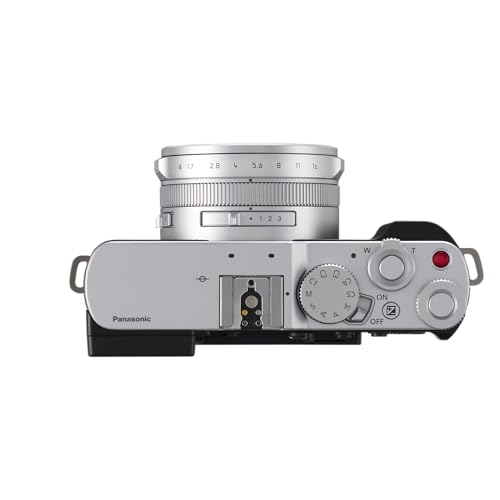
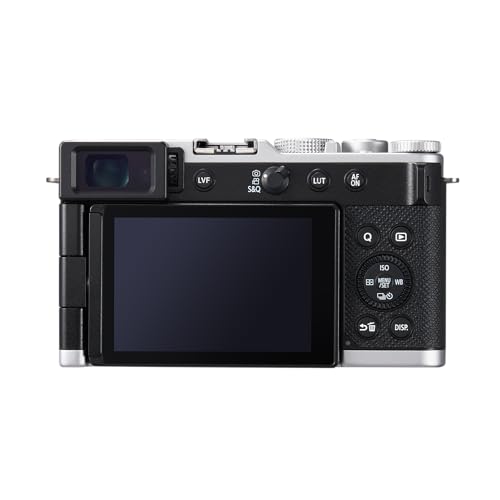
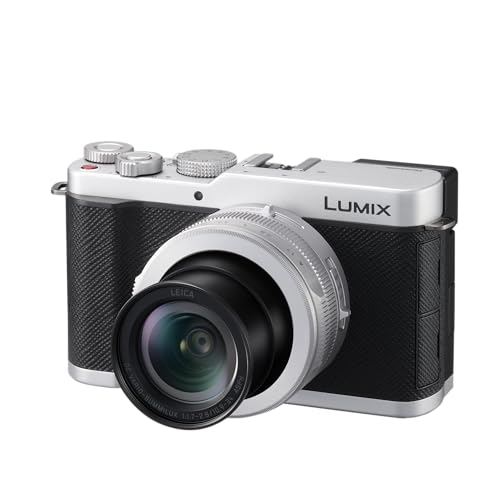
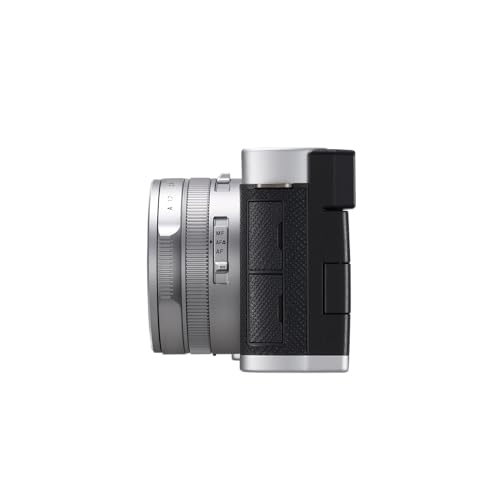
Panasonic LUMIX DC-L10 review: 112 specs compared

Avg. price:~£1,220Sensor size:four thirdsWeight:508 gBattery life (CIPA):410 shots

Panasonic LUMIX DC-L10 Review: Compare 112 technical specifications, 14 expert and video reviews and 2 best-of lists to see how this product ranks in the Cameras category and whether it is worth buying.
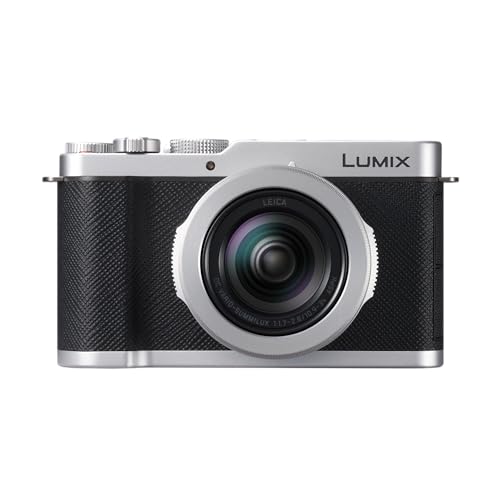
Panasonic LUMIX DC-L10
8.0/10

Overall score

Score
8.0/ 10
✕
What it is
Our main score for this model, 1–10. It combines specs, best-of lists, expert reviews and owners.
How we count it
Parts: Technical score 35%, List score 30%, Reviews score 25%, Sentiment score 10%
Marks: Each part gets a mark out of 10. For reviews, lists and owners, a typical model in this category gets about 8 and the best one gets 10.
No data yet: A part with no data shows "?". It counts as the mark of a weaker model in this category (4 in 5 models with data score higher). This way, models with reviews, lists and owners usually come out ahead.
Score distribution
▼
<55-66-77-88-99-10
Score components

35%

7.7

Technical score

30%

8.3

List score

25%

8.5

Reviews score

10%

7.3

Sentiment score

▲Better than 89% of cameras
6.9

Value for money

Value for money
6.9/ 10
✕
What it is
An indicator that combines the camera's overall rating with its cost.
When it matters
When you want to know how much overall quality you get for the price.
Score distribution
▼
<55-66-77-88-99-10
Score components

70%

8.0

Overall score

30%

4.1

Price

▼Worse than 52%
7.7

Technical score

Technical score
7.7/ 10
✕
What it is
How good the specs are compared with the other models in this category, 1–10.
How we count it
Areas: We rate the specs in each area against the other models in this category.
Weighting: The areas that matter most to buyers count more. The shares are shown under Score components.
Share: The technical score is 35% of the overall score.
Score distribution
▼
<55-66-77-88-99-10
Score components

28%

7.8

Sensor & Image

25%

7.8

Photo Features

18%

8.2

Video & Audio

14%

7.0

Display & Design

8%

8.6

Battery & Power

7%

6.6

Connectivity & Storage

★Better than 91%
8.5

Reviews score

Reviews score
8.5/ 10
✕
What it is
Average grade from independent test sites, magazines and video reviewers, 1–10.
How we count it
Grades: Each review's own score is converted to 1–10; without one, we grade the review ourselves. Big test sites count more, short reviews half as much as full tests. A video review counts half.
Score: The average grade is 80% of the review mark; the number of reviews is the other 20% (1 review = 5, the typical number in this category = 8, the most-reviewed model = 10).
Enough data: With few reviews, the average grade is pulled toward the typical grade of this category. No reviews yet: 7.5 for now.
Share: Reviews count 25% of the overall score.
Score distribution
▼
<55-66-77-88-99-10

80%

8.6

Average grade

20%

7.7

Popularity

Grades by review (14)
3 reviews: 3 with a printed score, 0 estimated from the review. 11 video reviews, each counting half as much as a written test. Reviews count 25% of the overall score.
User ratings collected online are not part of this score.
▲Better than 81%
8.3

List score

List score
8.3/ 10
✕
What it is
How often independent test sites, magazines and video reviewers put this model in their best-of lists for this category.
How we count it
Points: The model in the most lists of this category gets 10; the others get 8 to 10 in proportion. In no list yet: 7.5. Lists count 30% of the overall score.
Enough data: Every list counts, even a single one. With fewer than 5 best-of lists in the category, this part is left out.
Lists with this model (2)
List score: in 2 of 47 lists (4%)
▲Better than 87%

What reviewers say about the Panasonic LUMIX DC-L10

Based on 3 · 11

Reviewers like the hands-on controls, capable lens and well-made design, but find the feature set thin and stabilisation lacking.
Praised
Mixed views
Criticised
Pick a topic to see who said what
Loading...
Loading category ranking...

Technical Specifications of camera Panasonic LUMIX DC-L10

Technical score
Technical score
7.7/ 10
✕
What it is
How good the specs are compared with the other models in this category, 1–10.
How we count it
Areas: We rate the specs in each area against the other models in this category.
Weighting: The areas that matter most to buyers count more. The shares are shown under Score components.
Share: The technical score is 35% of the overall score.
Score distribution
▼
<55-66-77-88-99-10
Score components:

28%

7.8

Sensor & Image

25%

7.8

Photo Features

18%

8.2

Video & Audio

14%

7.0

Display & Design

8%

8.6

Battery & Power

7%

6.6

Connectivity & Storage

7.7
Reviews score
8.5
List score
8.3
Value for money
Value for money
6.9/ 10
✕
What it is
An indicator that combines the camera's overall rating with its cost.
When it matters
When you want to know how much overall quality you get for the price.
Score distribution
▼
<55-66-77-88-99-10
Score components:

70%

8.0

Overall score

30%

4.1

Price

6.9
Sensor size
four thirds
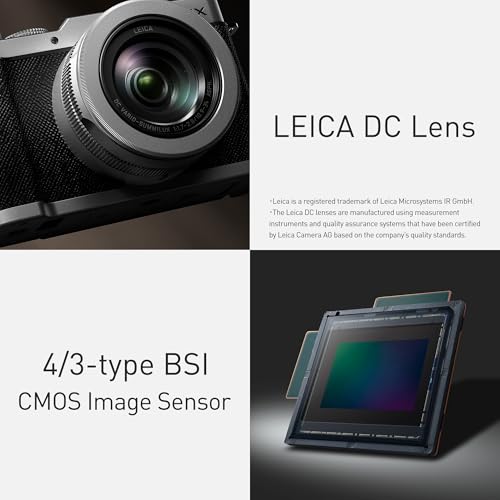
This camera has a sensor size of four thirds, which is larger than 50.4% of cameras and the same as 7.9% of cameras.
Sensor resolution
20.4 MP
This camera captures images at 20.4 MP, which is higher than 71.3% of cameras and equal to 1.7% of cameras.
Sensor pixel size
3.3 µm
This camera has sensor pixels measuring 3.3 µm, which are larger than those in 50.7% of cameras.
Base ISO
100
This camera has a base ISO of 100, which is lower than 26.7% of cameras and equal to 53.4% of cameras.
Max ISO
ISO 25600 ISO
This camera reaches ISO 25,600, which is higher than 75.3% of cameras and equal to 12.3% of cameras.
Show more
What reviewers say
Lens mount
N/A
Built-in focus motor
N/A
N. of focus points
779
This camera has a focus-point count of 779, which is higher than 96.5% of cameras and equal to 1% of cameras.
Phase-detection autofocus (photos)
yes
This camera supports phase-detection autofocus for photos. 36.5% of cameras support phase-detection autofocus for photos.
AF tracking
yes
This camera supports AF tracking. This feature is available on 87.4% of cameras.
Show more
What reviewers say
Max video resolution
5,184 px
This camera records at 5,184 px, which is higher than the resolution in 95.5% of cameras.
Video bitrate
?
Video bit depth
10 bit
This camera records in 10 bit, which is higher than the colour depth in 88.1% of cameras and the same as in 7.9% of cameras.
Video chroma subsampling
4:2:2
This camera records with 4:2:2, which is better than the chroma sampling in 78.2% of cameras and the same as in 21.7% of cameras.
Video codecs
H.264, H.265
Show more
Type
compact
Weight
508 g
This camera weighs 508 g, which is heavier than 64.8% of cameras and equal to 0.4% of cameras.
Width
127.1 mm
This camera is 127.1 mm wide, which is wider than 66.7% of cameras and equal to 0.1% of cameras.
Height
73.9 mm
This camera is 73.9 mm tall, which is taller than 50.1% of cameras and equal to 0.2% of cameras.
Thickness
66.9 mm
This camera is 66.9 mm thick, which is thicker than 61.6% of cameras.
Show more
What reviewers say
Battery life (CIPA)
410 shots
This camera lasts for 410 shots per charge, which is longer than 70.8% of cameras and equal to 1.9% of cameras.
Battery capacity
2,200 mAh
This camera has 2,200 mAh battery capacity, which is larger than 90% of cameras and equal to 2.8% of cameras.
Removable battery
yes
This camera has a removable battery, and 97.8% of cameras include one.
USB Power Delivery (PD)
yes
This camera supports USB Power Delivery. 10.5% of cameras support USB Power Delivery.
What reviewers say
Wi-Fi connectivity
yes
This camera supports Wi-Fi. This feature is available on 48.1% of cameras.
Wi-Fi version
Wi-Fi 5 (802.11ac)
This camera uses Wi-Fi 5 (802.11ac), which is more advanced than the Wi-Fi in 89.5% of cameras and the same as in 9.9% of cameras.
Bluetooth connectivity
yes
This camera has Bluetooth. 24% of cameras support Bluetooth.
Bluetooth version
5
This camera has Bluetooth 5, which is newer than 95.3% of cameras and the same as 3.6% of cameras.
USB Type-C
yes
This camera features USB Type-C. 16.3% of cameras use USB-C ports.
Show more
What reviewers say

Panasonic LUMIX DC-L10 vs the average camera

246810TotalDisplay & DesignSensor & ImagePhoto FeaturesVideo & AudioBattery & PowerConnectivity & Storage
  • 756 more focus points
    This camera has a higher focus-point count than the average camera (779 vs 23). The average camera has a count of 23.
    779 vs 23
  • Phase-detect AF for photos
    This camera supports phase-detection autofocus for photos, the average camera does not.
  • Higher video resolution
    This camera records at higher resolution than the average camera (5,184 px vs 1920 px). The average camera records at 1920 px.
    5184 px vs 1920 px
  • Human eye AF
    This camera supports human eye-detection AF, the average camera does not.
  • 19,200 ISO higher maximum sensitivity
    This camera reaches a higher maximum ISO than the average camera (25,600 ISO vs 6,400 ISO). The average camera's maximum ISO is 6,400 ISO.
    25,600 ISO vs 6,400 ISO
  • 5.4 fps faster mechanical burst
    This camera has a faster mechanical burst than the average camera (11 fps vs 5.6 fps). The average camera reaches 5.6 fps.
    11 fps vs 5.6 fps
  • Animal eye AF
    This camera supports animal eye-detection AF, the average camera does not.
  • More advanced viewfinder
    This camera has a more advanced viewfinder than the average camera (electronic vs none).
    electronic vs none
  • 30.8% higher review score
    Reviews score
    8.5/ 10
    ✕
    What it is
    Average grade from independent test sites, magazines and video reviewers, 1–10.
    How we count it
    Grades: Each review's own score is converted to 1–10; without one, we grade the review ourselves. Big test sites count more, short reviews half as much as full tests. A video review counts half.
    Score: The average grade is 80% of the review mark; the number of reviews is the other 20% (1 review = 5, the typical number in this category = 8, the most-reviewed model = 10).
    Enough data: With few reviews, the average grade is pulled toward the typical grade of this category. No reviews yet: 7.5 for now.
    Share: Reviews count 25% of the overall score.
    Score distribution
    ▼
    <55-66-77-88-99-10

    80%

    8.6

    Average grade

    20%

    7.7

    Popularity

    Grades by review (14)
    3 reviews: 3 with a printed score, 0 estimated from the review. 11 video reviews, each counting half as much as a written test. Reviews count 25% of the overall score.
    User ratings collected online are not part of this score.
    8.5 vs 6.5
  • 15.3% higher list score
    List score
    8.3/ 10
    ✕
    What it is
    How often independent test sites, magazines and video reviewers put this model in their best-of lists for this category.
    How we count it
    Points: The model in the most lists of this category gets 10; the others get 8 to 10 in proportion. In no list yet: 7.5. Lists count 30% of the overall score.
    Enough data: Every list counts, even a single one. With fewer than 5 best-of lists in the category, this part is left out.
    Lists with this model (2)
    List score: in 2 of 47 lists (4%)
    8.3 vs 7.2
  • More advanced viewfinder
    This camera has a more advanced viewfinder than the average camera (electronic vs none).
    electronic vs none
  • Fully articulated screen
    This camera has a fully articulated screen, the average camera does not.
  • Has a touchscreen
    This camera has a touchscreen, the average camera does not. 36.7% of cameras support touchscreen input.
  • 60 Hz faster refresh
    This camera refreshes its viewfinder faster than the average camera (120 Hz vs 60 Hz). The average camera refreshes at 60 Hz.
    120 Hz vs 60 Hz
  • 19,200 ISO higher maximum sensitivity
    This camera reaches a higher maximum ISO than the average camera (25,600 ISO vs 6,400 ISO). The average camera's maximum ISO is 6,400 ISO.
    25,600 ISO vs 6,400 ISO
  • Uses a BSI sensor
    This camera uses a BSI sensor, the average camera does not. 35.7% of cameras use a BSI sensor.
  • Supports HEIF photos
    This camera supports HEIF photos, the average camera does not.
  • 12 years newer
    This camera was released more recently than the average camera (2026 vs 2014). The average camera was released in 2014.
    2,026 vs 2,014
  • More megapixels
    This camera has more megapixels than the average camera (20.4 MP vs 16.2 MP). The average camera's sensor resolution is 16.2 MP.
    20.4 MP vs 16.2 MP
  • Larger image sensor
    This camera has a larger sensor than the average camera (four thirds vs 2/3"). The average camera's sensor size is 2/3".
    four thirds vs 2/3"
  • 756 more focus points
    This camera has a higher focus-point count than the average camera (779 vs 23). The average camera has a count of 23.
    779 vs 23
  • Phase-detect AF for photos
    This camera supports phase-detection autofocus for photos, the average camera does not.
  • Human eye AF
    This camera supports human eye-detection AF, the average camera does not.
  • 5.4 fps faster mechanical burst
    This camera has a faster mechanical burst than the average camera (11 fps vs 5.6 fps). The average camera reaches 5.6 fps.
    11 fps vs 5.6 fps
  • Animal eye AF
    This camera supports animal eye-detection AF, the average camera does not.
  • Supports touch autofocus
    This camera supports touch autofocus, the average camera does not. 34.6% of cameras support touch autofocus.
  • Supports focus bracketing
    This camera supports focus bracketing, the average camera does not.
  • Has anti-flicker mode
    This camera includes an anti-flicker mode, the average camera does not. 19.9% of cameras include it.
  • Better low-light focus
    This camera has a better low-light focus rating than the average camera (-5 vs -4). The average camera has a rating of -4.
    -5 vs -4
  • Higher video resolution
    This camera records at higher resolution than the average camera (5,184 px vs 1920 px). The average camera records at 1920 px.
    5184 px vs 1920 px
  • 30 fps faster 4K recording
    This camera records 4K at a higher frame rate than the average camera (60 fps vs 30 fps). The average camera records 4K at 30 fps.
    60 fps vs 30 fps
  • Has microphone input
    This camera has microphone input, the average camera does not.
  • Supports slow-motion video
    This camera supports slow-motion video, the average camera does not.
  • Phase-detect AF in video
    This camera supports phase-detection autofocus in video, the average camera does not.
  • Richer chroma sampling
    This camera records with richer chroma sampling than the average camera (4:2:2 vs 4:2:0). The average camera records with 4:2:0.
    4:2:2 vs 4:2:0
  • Deeper colour depth
    This camera records in deeper colour than the average camera (10 bit vs 8 bit). The average camera records in 8 bit.
    10 bit vs 8 bit
  • Supports live streaming
    This camera supports live streaming, the average camera does not.
  • Supports log profiles
    This camera supports log profiles, the average camera does not.
  • Supports 24p cinema mode
    This camera supports 24p cinema mode, the average camera does not. 43.1% of cameras support this mode.
  • Built-in timelapse
    This camera includes timelapse capture, the average camera does not.
  • 1,080 mAh more battery capacity
    This camera has a larger battery than the average camera (2,200 mAh vs 1,120 mAh). The average camera has 1,120 mAh battery capacity.
    2,200 mAh vs 1,120 mAh
  • USB Power Delivery
    This camera supports USB Power Delivery, the average camera does not.
  • 80 shots longer battery life
    This camera lasts longer per charge than the average camera (410 shots vs 330 shots). The average camera lasts for 330 shots.
    410 shots vs 330 shots
  • Has USB Type-C
    This camera has a USB Type-C port, the average camera does not. 16.4% of cameras use USB-C.
  • Has Bluetooth
    This camera supports Bluetooth, the average camera does not. 24.1% of cameras support Bluetooth.
  • Supports Wi-Fi connectivity
    This camera supports Wi-Fi, the average camera does not. 48.1% of cameras support Wi-Fi.
  • Smartphone remote control
    This camera supports smartphone remote control, the average camera does not. 46.2% of cameras support smartphone remote control.
  • Faster USB connection
    This camera transfers data faster than the average camera (USB 3.2 Gen 2 vs USB 2). The average camera uses USB 2.0.
    USB 3.2 Gen 2 vs USB 2.0
  • Supports USB webcam mode
    Panasonic LUMIX DC-L10 supports USB webcam mode, while the average camera does not. 42.1% of cameras support USB webcam mode.
  • No RAW photo capture
    This camera does not support RAW photo capture, the average camera does. 61% of cameras support RAW formats.
  • No HDMI output
    This camera does not support HDMI output, the average camera does. 77.7% of cameras support HDMI output.
  • No flash
    This camera does not have a built-in flash, the average camera does. 73.1% of cameras have a flash.
  • 118.5 g heavier
    This camera is heavier than the average camera (508 g vs 389.5 g). The average camera weighs 389.5 g.
    508 g vs 389.5 g
  • 4.21x more expensive
    Panasonic LUMIX DC-L10 is more expensive than the average camera (£1,220 vs £290).
    £1,220 vs £290
  • 0.04 x smaller view
    This camera has a smaller viewfinder image than the average camera (0.7 x vs 0.78 x). The average camera has a magnification of 0.78 x.
    0.74 x vs 0.78 x
  • 8.1 mm wider
    This camera is wider than the average camera (127.1 mm vs 119 mm). The average camera is 119 mm wide.
    127.1 mm vs 119 mm
  • 21 mm thicker
    This camera is thicker than the average camera (66.9 mm vs 45.9 mm). The average camera is 45.9 mm thick.
    66.9 mm vs 45.9 mm
  • 4.21x more expensive
    Panasonic LUMIX DC-L10 is more expensive than the average camera (£1,220 vs £290).
    £1,220 vs £290
  • No flash
    This camera does not have a built-in flash, the average camera does. 73.1% of cameras have a flash.
  • 118.5 g heavier
    This camera is heavier than the average camera (508 g vs 389.5 g). The average camera weighs 389.5 g.
    508 g vs 389.5 g
  • 0.04 x smaller view
    This camera has a smaller viewfinder image than the average camera (0.7 x vs 0.78 x). The average camera has a magnification of 0.78 x.
    0.74 x vs 0.78 x
  • 8.1 mm wider
    This camera is wider than the average camera (127.1 mm vs 119 mm). The average camera is 119 mm wide.
    127.1 mm vs 119 mm
  • 21 mm thicker
    This camera is thicker than the average camera (66.9 mm vs 45.9 mm). The average camera is 45.9 mm thick.
    66.9 mm vs 45.9 mm
  • No RAW photo capture
    This camera does not support RAW photo capture, the average camera does. 61% of cameras support RAW formats.
  • No HDMI output
    This camera does not support HDMI output, the average camera does. 77.7% of cameras support HDMI output.

Video reviews

Hands-on testing, unboxing, and real-world video evaluations

9.0
Kirk Lepiten
≈ estimated
31/10/2026
Real-world review · Iceland trip use and value
Verdict
Panasonic LUMIX DC-L10 is boring in the best way: a reliable daily camera the creator plans to keep.
9.0
Tech to Remember
≈ estimated
12/08/2026
Hands-on review · real street samples and settings tests
Verdict
Panasonic LUMIX DC-L10 is a strong street camera for everyday use and good image quality, despite a few drawbacks.
9.0
Mikel Sigler
≈ estimated
29/06/2026
Hands-on review · photo and video tests, macro, LUTs
Verdict
Panasonic LUMIX DC-L10 is a compact, enjoyable camera that suits most casual photographers, though its video stabilization is weaker.
9.0
Lok Cheung
≈ estimated
18/06/2026
Hands-on review · shooting impressions and feature tour
Verdict
Panasonic LUMIX DC-L10 earns praise for its large sensor, EVF and zoom, despite less-than-ideal autofocus tracking.
9.0
The Art of Photography
≈ estimated
12/06/2026
Personal use · journal camera impressions over several weeks
Verdict
Panasonic LUMIX DC-L10 is a very versatile compact that suits everyday journal photography, though it has a few setup quirks.
9.5
The Hybrid Shooter
≈ estimated
31/05/2026
Hands-on review · handling, viewfinder and battery
Verdict
Panasonic LUMIX DC-L10 is stylish, quick to handle and enjoyable to shoot; a joystick and a slimmer screen are its only wishes, but it's highly recommended.
9.0
Xploring Light
≈ estimated
12/05/2026
Hands-on review · several days of use
Verdict
Panasonic LUMIX DC-L10 is one of the best-balanced compact cameras Panasonic makes, aimed at creators who shoot on the move.
8.0
Richard Wong
≈ estimated
12/05/2026
First impressions · quick hands-on and photo walk
Verdict
Panasonic LUMIX DC-L10 is a striking compact with solid autofocus, but it's limited for long video recording.
Not graded
Brand video
Shop video
Shop video

Expert reviews

In-depth analysis and verdict from leading tech publications

9.0
whatdigitalcamera.com
✓ explicit
02/07/2026
Opinion review · Premium compact
Verdict
The Lumix DC-L10 is a premium compact with a fast zoom, color styles and a flip-out screen that suit street and travel shooting, but it lacks in-body stabilization.
9.0
photoreview.com.au
✓ explicit
25/06/2026
Full review · Large-sensor compact
Verdict
The Lumix DC-L10 is a versatile compact for stills and video, though it is not quite small enough to fit a normal pocket.
9.2
chip.de
✓ explicit
26/09/2026
Lab test · Premium compact
Verdict
The Lumix DC-L10 is a well-built compact with a large sensor, fast zoom and fast bursts, though it has no built-in flash.

Third-party reviews

What customers like about Panasonic LUMIX DC-L10

  • 779 autofocus points with eye detection keep moving subjects sharp.
  • At 508 g it is light enough for a full day of walking.
  • 11 fps with the shutter catches quick action.
  • The viewfinder covers the full frame, so framing is accurate.
  • USB-C with Power Delivery charges from the same kind of charger a phone uses.
  • The flip-out screen makes low angles and self-portraits easy.

What customers don't like about Panasonic LUMIX DC-L10

  • There is no HDMI output for a monitor or external recorder.
  • There is no built-in flash.
  • The 3.1 x optical zoom does not reach far for distant subjects.
  • Without sensor-shift or combined stabilization, handheld video needs a steady hand.
  • There is no weather sealing, so rain and dust need care.

Verdict

Fast focus in a body of 508 g is the main draw of the Panasonic LUMIX DC-L10. Its 779 autofocus points with eye detection lock onto people and animals. The shutter runs at 11 fps, quick enough for kids and pets. The viewfinder covers 100 % of the frame, so the picture you see is what you get. USB-C with Power Delivery charges from the same kind of charger a phone uses. The flip-out screen helps with low angles and self-portraits. The trade-offs are the missing HDMI output and the lack of a built-in flash, two extras many cameras include. It suits a traveler who wants good stills and video in a light body, and does not need a flash or a live feed to a monitor.

Compare Panasonic LUMIX DC-L10 with other products in the Cameras category

1Product to compare no. 1
VS
2Product to compare no. 2
VS
3Product to compare no. 3 (optional)

Graphic comparison of Panasonic LUMIX DC-L10 and other products in the Cameras category

No results found