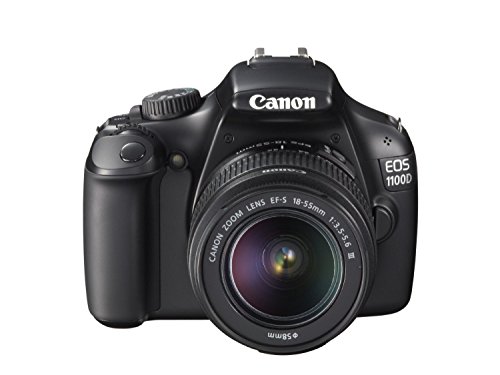
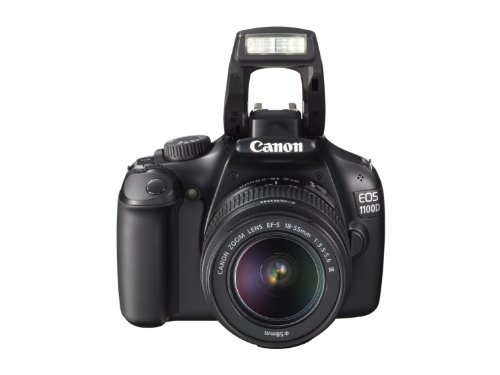
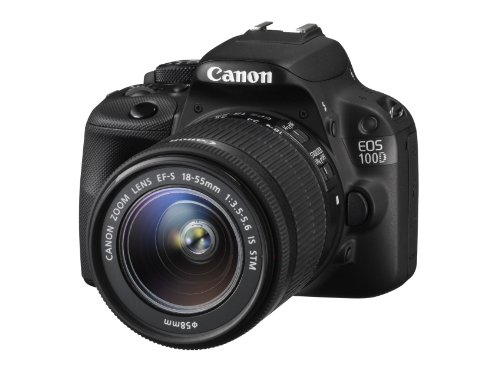
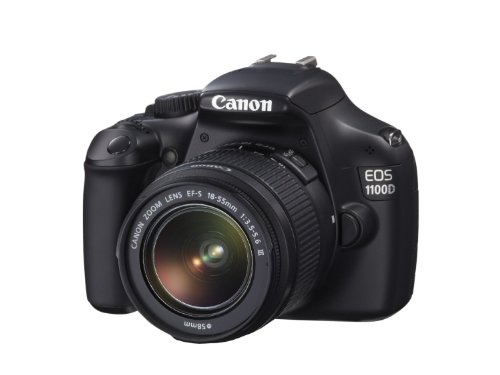
Canon EOS 1100D review. Compare 108 technical specifications and user reviews to see how it ranks among cameras and if it is worth buying.
Overall score
What it is: An overall evaluation of the camera's quality, based on technical analyses and user reviews.
When it matters: When you need a quick reference to identify the best cameras on the market.
Score components:
90.0%
Technical Score
10.0%
User score
Technical Score
What it is: An assessment of the camera's technical performance, covering eight key areas: image quality, autofocus, video features, stabilization, lens compatibility, connectivity, battery, and design.
When it matters: When you want to compare cameras based on technical performance and available features.
Score components:
28.0%
Sensor & Image
25.0%
Photo Features
18.0%
Video & Audio
14.0%
Display & Design
8.0%
Battery & Power
7.0%
Connectivity & Storage
User score
What it is: A rating that combines user reviews and the total number of reviews received by the camera.
When it matters: When real-world owner satisfaction and review volume matter to your decision.
Score components:
70.0%
User reviews
30.0%
Popularity
Score components:
25.0%
Sensor size
20.0%
Main camera megapixels
20.0%
Dual card slots
15.0%
N. of focus points
10.0%
RAW photo capture
10.0%
Phase-detection autofocus (photos)
Score components:
35.0%
Weight
30.0%
Battery life (CIPA)
20.0%
Sensor-shift stabilization
15.0%
GPS
Score components:
30.0%
Price
20.0%
Weight
20.0%
AF tracking
20.0%
Battery life (CIPA)
10.0%
Touchscreen
Score components:
30.0%
Main camera megapixels
25.0%
Sensor size
20.0%
Main camera pixel size
15.0%
Sensor-shift stabilization
10.0%
RAW photo capture
Score components:
30.0%
Weight
25.0%
Thickness
20.0%
AF low-light sensitivity
15.0%
Sensor-shift stabilization
10.0%
Eye detection AF (human)
Score components:
30.0%
Sensor size
25.0%
Main camera pixel size
20.0%
Eye detection AF (human)
15.0%
Main camera megapixels
10.0%
Sensor-shift stabilization
Score components:
30.0%
Weight
25.0%
Battery life (CIPA)
20.0%
Min operating temperature
15.0%
Sensor-shift stabilization
10.0%
GPS
Available: ranking among products currently available (including other versions of this product).
All: ranking among all products in the database.
#19 in Best Cheap DSLR Cameras
#24 in Best Canon DSLR Cameras
#46 in Best Canon EOS Cameras
#58 in Best DSLR Cameras
#58 in Best SLR Cameras
#62 in Best Cheap Cameras
#63 in Best Canon Digital Cameras
#72 in Best Cameras under £1000
#97 in Best Cameras for Hiking
#101 in Best Travel Cameras
#113 in Best Cameras under £500
#168 in Best Cameras under £200
#220 in Best Cameras under £300
#285 in Best Cameras
#285 in Best Digital Cameras
What it is: An assessment of the camera's technical performance, covering eight key areas: image quality, autofocus, video features, stabilization, lens compatibility, connectivity, battery, and design.
When it matters: When you want to compare cameras based on technical performance and available features.
Score components:
28.0%
Sensor & Image
25.0%
Photo Features
18.0%
Video & Audio
14.0%
Display & Design
8.0%
Battery & Power
7.0%
Connectivity & Storage
What it is: A rating that combines user reviews and the total number of reviews received by the camera.
When it matters: When real-world owner satisfaction and review volume matter to your decision.
Score components:
70.0%
User reviews
30.0%
Popularity
What it is: An indicator that combines the camera's overall rating with its cost.
When it matters: When you want to know how much overall quality you get for the price.
Score components:
60.0%
Overall score
40.0%
Price
Importance: HIGH
Good value: Full frame or larger
Importance: HIGH
Good value: At least 20 MP
Importance: HIGH
Good value: At least 3.5 µm
Importance: LOW
Importance: MEDIUM
Good value: At least ISO 25,600
Importance: MEDIUM
Importance: MEDIUM
Good value: At least 14-bit
Importance: LOW
Importance: LOW
Importance: LOW
Importance: LOW
Importance: LOW
Importance: LOW
Importance: LOW
Importance: LOW
Importance: MEDIUM
Importance: LOW
Importance: LOW
Importance: LOW
Importance: LOW
Importance: LOW
Importance: HIGH
Good value: At least 200 points
Importance: HIGH
Importance: MEDIUM
Importance: LOW
Importance: LOW
Importance: MEDIUM
Importance: MEDIUM
Importance: HIGH
Good value: At least 5 stops
Importance: LOW
Importance: MEDIUM
Good value: At least 10 fps
Importance: LOW
Importance: LOW
Importance: LOW
Importance: LOW
Importance: LOW
Importance: LOW
Importance: LOW
Importance: LOW
Importance: LOW
Importance: LOW
Importance: LOW
Importance: LOW
Importance: LOW
Importance: LOW
Importance: LOW
Importance: LOW
Good value: At least 200,000 actuations
Importance: LOW
Good value: At least 10x
Importance: HIGH
Good value: At least 3840 px
Importance: MEDIUM
Good value: At least 200 Mbps
Importance: MEDIUM
Good value: At least 10-bit
Importance: LOW
Importance: LOW
Importance: LOW
Importance: LOW
Importance: LOW
Importance: LOW
Importance: LOW
Good value: At least 30 min
Importance: LOW
Importance: LOW
Importance: LOW
Importance: LOW
Importance: LOW
Good value: At least 2 microphones
Importance: LOW
Importance: LOW
Importance: LOW
Importance: LOW
Importance: MEDIUM
Good value: 500 g or less
Importance: LOW
Importance: LOW
Importance: LOW
Importance: MEDIUM
Importance: MEDIUM
Good value: At least 2.36 million dots
Importance: LOW
Good value: 100%
Importance: LOW
Importance: LOW
Good value: At least 120 Hz
Importance: MEDIUM
Good value: At least 3 in
Importance: LOW
Importance: LOW
Importance: LOW
Importance: LOW
Importance: LOW
Importance: LOW
Importance: LOW
Good value: At least 10 m
Importance: LOW
Importance: LOW
Importance: LOW
Importance: LOW
Importance: MEDIUM
Good value: At least 400 shots
Importance: LOW
Good value: At least 1,500 mAh
Importance: LOW
Importance: LOW
Importance: LOW
Importance: LOW
Importance: LOW
Importance: LOW
Importance: LOW
Importance: LOW
Importance: LOW
Importance: LOW
Importance: LOW
Importance: LOW
Importance: LOW
Importance: LOW
Importance: LOW
Importance: LOW
Importance: LOW
Importance: LOW
Importance: HIGH
Importance: HIGH
Good value: At least 3.5 µm
Importance: MEDIUM
Good value: At least 400 shots
Importance: LOW
Importance: MEDIUM
Importance: LOW
Importance: MEDIUM
Importance: HIGH
Good value: At least 20 MP
Importance: MEDIUM
Good value: At least 3 in
Importance: LOW
Good value: 100%
Importance: LOW
Importance: LOW
Importance: HIGH
Good value: At least 3840 px
Importance: MEDIUM
Good value: At least 10 fps
(Reviews last updated: July 2026)
The DPReview analysis of the Canon EOS 1100D describes an aggressively engineered, budget-conscious entry-level DSLR delivering reliable performance on core photographic needs through a 12.2-megapixel sensor. Key pros include excellent image detail at base ISO, accurate 9-point autofocus, reliable 63-area iFCL metering, an intuitive "Q-Menu," and competitive pricing. Conversely, the review highlights that to meet budget goals, the camera features a cheap, plasticky build lacking comfortable grips, alongside a small viewfinder. Notable cons include limited 720p-only video recording, slow Live View autofocus, and sluggish continuous RAW shooting performance.
The Canon EOS 1100D delivers excellent image quality with rich color reproduction, strong contrast, and impressive noise control up to ISO 3200. It provides a high-quality imaging experience for entry-level photographers, boasting a 12.2-megapixel sensor that produces punchy, usable photos in varied lighting conditions. However, the camera is hampered by a notably cheap, slick plastic body and significantly slow autofocus performance when using Live View. Additionally, shooting in RAW+JPEG formats severely limits the continuous shooting rate, dropping to 2 frames per second.
The Amateur Photographer review of the Canon EOS 1100D describes it as an accessible, entry-level DSLR with a lightweight (495g) design, featuring highly intuitive ergonomics and a quick menu designed for ease of use. It provides reliable metering and solid image quality for beginners, offering a convenient, portable solution for casual shooting. However, the review highlights significant compromises in build quality, specifically the smooth, cheap-feeling plastic construction that lacks a textured grip. Additionally, the camera falls behind competitors regarding sluggish continuous shooting speeds and slow autofocus performance in Live View mode.
The Canon EOS 1100D is a welcome entry-level SLR upgrade over the older 1000D, featuring a larger 2.7-inch LCD screen, a 9-point autofocus sensor, and significantly improved battery life capable of delivering 700 shots. Its primary strength lies in its exceptional 12-megapixel CMOS sensor, which produces gorgeous, impeccably exposed photos with rich colors and low noise levels that remain usable up to ISO 6400. The camera offers excellent standard performance, taking just 0.5 seconds to turn on and shoot, alongside well-organized controls and a logical menu layout. Additionally, it introduces 720p video capture with an HDMI socket, providing high-quality video clips with a beautiful shallow depth of field. However, the camera comes with notable downsides, particularly regarding video capture and continuous shooting. The 720p video mode is highly limited by essentially locked autofocus during recording, large file sizes, a maximum clip duration of 18 minutes, and the lack of manual exposure controls or an external microphone input. Furthermore, continuous RAW photo performance is poor, dropping from 2fps to 0.8fps after just three frames. Minor design regressions include the lack of...
The Canon EOS Rebel T3 (1100D) is an ultra-budget, lightweight, entry-level DSLR featuring a 12.2-megapixel CMOS sensor and DIGIC 4 processor, designed for beginners transitioning from point-and-shoot cameras. Key benefits include an intuitive Quick (Q) menu interface, solid low-light performance, and extensive compatibility with EF/EF-S lenses at an accessible price point. Conversely, the camera features a plastic body that lacks grip, alongside significant performance compromises, including a slow 3 frames per second (fps) continuous shooting rate. Additional limitations noted are 720p-only video recording, lack of an external microphone jack, and slow contrast-detect autofocus in Live View.
The Canon EOS 1100D is an entry-level DSLR that functions primarily as a modest spec-sheet update to the older EOS 1000D, offering a higher-resolution sensor, 14-bit per pixel coding, and newly added video recording capability. In terms of performance pros, the camera delivers solid image quality between ISO 400 and ISO 800, where it successfully overtakes the Sony SLT A33 by producing less noise and better colors due to the light-blocking limitations of Sony's translucent mirror technology. It also achieves a respectable low-light Sports score of 755 ISO and matches the overall sensor performance of its predecessor, earning a DxOMark sensor score of 62. However, the camera suffers from notable performance cons, particularly its restricted dynamic range and constant noise in dark zones at low ISO settings below ISO 400. It struggles to remain competitive against rival systems; the slightly more expensive Nikon D3100 beats it across almost all testing metrics (including a superior 919 ISO low-light score and better video functions), while the Sony Alpha 33 boasts a vastly superior dynamic range at base ISOs. Furthermore, mirrorless alternatives like...
The camera's primary advantages include its affordable price point, impressive image quality for the value, and built-in systems that help guide novice photographers. However, the review highlights several distinct drawbacks, most notably its limited video capabilities, which cap resolution at 1280×720 pixels, lack autofocus during filming, and prohibit snapping still images while recording. Furthermore, it lacks advanced features like a vari-angle LCD screen and spot metering, places the memory card slot inconveniently at the bottom of the camera, and limits RAW continuous shooting to a maximum of five frames.
The Canon EOS 1100D (Rebel T3) is praised by What Digital Camera as a top-tier budget DSLR, featuring a 12.2MP CMOS sensor and DIGIC 4 processor that deliver excellent image quality. Key advantages include a fast 9-point autofocus system and accurate 63-zone iFCL metering, producing rich colors across an ISO 100-6400 range. Conversely, the review notes a smooth, untextured plastic body and a small grip that feels less premium than competitors. Other drawbacks include an inconveniently placed SD card slot, sluggish live-view autofocus, and a restrictive video mode initiation process.
Canon EOS 1100D The Canon 1100D (released as a successor to the 1000D) is an affordable, lightweight starter DSLR engineered for amateur photographers transitioning from compact cameras. Lab measurements and real-world testing reveal that its 12-megapixel sensor yields image sharpness and daylight color reproduction on par with more expensive 16-megapixel models like the Canon 60D. Its autofocus system is equally accurate and snappy, tracking oncoming cars well in bright lighting, provided users shoot exclusively in JPG format due to a highly restrictive buffer limit. Low-light shooting is highly capable, producing clean ISO 6400 JPG files suitable for large A3 printing thanks to efficient in-camera noise reduction, though high-ISO RAW files experience a dramatic reduction in usable dynamic range down to a single stop. Key Pros & Cons Pro: Delivers an exceptional price-to-quality ratio with image resolution matching pricier EOS models. Pro: Offers an lightweight, easy-to-use form factor with highly accurate and speedy autofocus performance. Con: Features a cheap, slippery plastic body finish that offers less grip and comfort than higher-end bodies. Con: Limits video capabilities to HD (720p at 25...
The Radojuva review highlights the Canon EOS 1100D as a lightweight, user-friendly, and budget-friendly 12.2-megapixel APS-C DSLR suitable for beginners, offering practical features like intuitive controls and decent performance for everyday photography. Notable advantages include its compact, under-500-gram build and reliable metering, though it utilizes a, all-plastic construction without rubberized grips. However, the analysis identifies significant drawbacks, including exceptionally slow autofocus in Live View mode and a reduced 2 frames per second burst rate when shooting in RAW. Additionally, the camera generates large RAW file sizes and lacks premium materials, positioning it as a strictly entry-level device, according to the review.
The Trusted Reviews evaluation of the Canon EOS 1100D defines it as a highly competent, user-friendly, and affordable entry-level DSLR that serves as a solid gateway into the Canon ecosystem. Key advantages highlighted include the consistently good image quality produced by its 12.2-megapixel CMOS sensor and its straightforward, intuitive operation. Conversely, the review identifies significant compromises made to achieve this price point, including a low-quality, shiny plastic construction that lacks a premium feel. Additionally, the 2.7-inch LCD screen is criticized for its small size and low resolution, which hinders the experience of reviewing images and navigating menus.
Canon Rebel T3 Review Summary The Canon Rebel T3 is a budget-friendly, entry-level DSLR that features a 12.2-megapixel APS-C sensor, a DIGIC 4 image processor, a 9-point autofocus system, and 720p HD movie recording. Designed for novices stepping up from compact cameras, it offers a solid plastic body with a comfortable grip, reliable battery life (up to 700 shots per charge), and a helpful built-in Feature Guide. The camera delivers strong low-light performance with an ISO range of 100 to 6,400, producing clean, printable images even at higher sensitivities, alongside accurate color rendering and useful creative tools like Peripheral Illumination Correction and Highlight Tone Priority. However, the T3 makes several notable compromises to maintain its entry-level price point. Its continuous shooting capabilities are highly restrictive, maxing out at 3 frames per second in JPEG mode and dropping to a glacial performance in RAW or RAW+JPEG due to a severely limited buffer. Additionally, the camera lacks a mechanical sensor-cleaning system and spot metering, has a relatively weak built-in flash, and produces a very warm auto white balance under indoor lighting. Eyeglass...
The Canon EOS Rebel T3 is a basic entry-level DSLR that delivers excellent photo quality and color reproduction for its price point, particularly standing out with strong midrange sensitivity performance between ISO 400 and 3,200. Equipped with a 12.2-megapixel CMOS sensor and a Digic 4 processor, the camera features a straightforward control layout and includes a helpful "Feature Guide" alongside a "Creative Auto" mode to assist beginners. Its JPEG processing is highly effective, rendering very sharp images when paired with its 18-55mm kit lens. Additional pros include stable metering and exposure, as well as exposure bracketing capabilities for users looking to experiment with basic HDR photography. However, the camera falls short due to an uninspiring feature set, average performance, and a clunky, cheap-feeling plastic body. Significant cons include a mediocre continuous shooting speed of just 2.9 frames per second—making it difficult to capture fast-moving subjects—and a highly restrictive, claustrophobic viewfinder with low magnification. The 2.7-inch LCD screen is relatively small, low-resolution, and difficult to see in direct sunlight. Furthermore, video capture is strictly limited to 720p with no autofocus functionality,...
The Canon 1100D (Rebel T3) offers impressive image quality that rivals more expensive models like the Canon 60D and 7D, despite having a lower 12-megapixel resolution. Its sensor delivers a solid maximum dynamic range of 10 stops at ISO 100 and maintains excellent color reproduction in daylight, with a tendency toward warmer, slightly more saturated reds that enhance portraits. While it produces clean JPEG images up to ISO 6400 due to effective internal processing, RAW files offer even better flexibility for those willing to optimize sharpening and noise reduction manually. However, the camera has notable limitations, particularly regarding its usable dynamic range, which drops significantly from 6 stops at lower ISOs to just 1 stop at ISO 6400. The aggressive noise reduction required at high ISO settings also results in an approximately 30% loss of resolution, which may impact fine detail in low-light shots. Additionally, while daylight performance is strong, artificial lighting can introduce an orange color cast that requires post-capture white balance correction to fix. Are you considering buying this camera used, or do you need tips on the...
The Unique Photo Photo Insider review highlights the Canon Rebel T3 as an ideal, lightweight entry-level DSLR for casual photographers, praised for its excellent auto mode, comfortable ergonomics, and strong, colorful image output. Key benefits include the effective ETTL-II flash system and an, easy-to-use, "green square" automatic setting that ensures high-quality results without complex adjustments. However, the evaluation notes that the camera's light weight comes from a fully plastic body that could benefit from better, rubberized grip surfaces. Additionally, the built-in flash offers slightly lower power than typical DSLRs, and users should manage expectations regarding high-end features, recognizing the device as a capable, budget-friendly option for its target demographic.
The Canon EOS Rebel T3 is a beginner-friendly, entry-level digital SLR camera that improves upon its predecessor, the XS, by introducing a 12-megapixel sensor, a DIGIC 4 processor, and an extended battery life capable of capturing 700 to 800 shots per charge when using the optical viewfinder. Designed specifically for novice photographers, it features an on-board Feature Guide and intuitive, non-technical Creative Auto modes, such as a "background blur" slider and simplified "ambience" settings. Testing revealed superior color and exposure accuracy alongside strong high-ISO performance, keeping noise well under control up to ISO 800. The camera's plastic body remains comfortable to hold and provides a highly practical layout, accommodating standard SD memory cards and offering seamless compatibility with Canon's extensive EF and EF-S lens catalog. Despite these clear advantages, the Rebel T3 exhibits several notable feature omissions and performance limitations. Its video recording capabilities are heavily restricted, offering only basic 720p capture with no 1080p or VGA options, and requiring the user to physically toggle the mode dial to the movie setting to operate. Furthermore, the camera completely lacks spot...
The Photo Review assessment highlights the Canon EOS 1100D as a capable, budget-friendly DSLR with a 12.2-megapixel sensor and intuitive "Basic+" controls tailored for beginners. Key advantages include its lightweight build, consistent 9-point autofocus, accurate metering, and an accessible price point for entry-level photographers. Conversely, the review notes limitations such as a smooth plastic body, sluggish live-view autofocus, and slow continuous shooting in RAW format. Additionally, video is restricted to 720p, and out-of-camera JPEGs may appear soft, requiring post-processing.
The Canon EOS Rebel T3 is a 12.2-megapixel entry-level DSLR designed with a straightforward, simple, and uncomplicated body construction. Structurally, its greatest assets are its lightweight design, a chunky battery offering excellent longevity, and tight overall construction. The camera excels at still photography, delivering excellent image quality, precise metering, sharp dynamic range, and punchy, natural color reproduction. Furthermore, its simple menu layout and highly capable manual control settings make it an ideal learning tool for students, hobbyists, or even professionals seeking a lightweight backup body. However, the Rebel T3 compromises on several physical features and video capabilities to achieve its $500 price point. On the outside, it suffers from a "ho-hum" aesthetic featuring a glossy plastic finish and a complete lack of a rubberized handgrip. The 2.7-inch LCD screen is also restricted by a low 230k resolution. In terms of performance, the camera produces JPEGs that are slightly soft out of the box, requiring users to manually apply in-camera sharpening or shoot in RAW. Finally, its movie mode is heavily limited to 1280×720 HD resolution, making it unsuitable for creators...
The Canon EOS 1100D is a budget-friendly entry-level DSLR that brings notable image quality enhancements over its predecessor, the 1000D. Built around a 12-megapixel CMOS sensor and the DIGIC 4 processor, the camera delivers outstanding detail retention and exceptionally low image noise up to ISO 1,600, even outperforming its primary competitor, the Nikon D3100, in low-light environments. It features a swift startup time of just 0.3 seconds and offers versatile shooting aids like manual controls, explanation texts for beginners, and white balance bracketing. Additionally, its impressive battery life allows users to capture up to 1,530 shots or record more than two hours of video on a single charge. Despite its stellar image performance, the camera suffers from obvious cost-cutting measures that impact usability. Its physical construction relies on cheap, smooth plastic that lacks any rubberized grip, and the SD card slot is awkwardly located at the bottom next to the battery rather than on the side. The device is further limited by a small 2.7-inch display with standard resolution, an underpowered built-in flash, a complete lack of a sensor-cleaning mechanism,...
The Canon EOS 1100D is an entry-level DSLR camera that replaces its predecessor, the EOS 1000D, and offers several notable performance improvements. A key benefit is its upgraded APS-C sensor, which provides a moderate resolution boost from 10 to 12 megapixels. This change delivers significantly better overall image quality, high resolution, wide dynamic range, and accurate colors via a highly functional white balance system. Additionally, the camera keeps digital noise low at higher ISO speeds and features a fast shutter lag of 0.44 seconds and a decent continuous shooting rate of 3.1 frames per second. It is highly practical for extended sessions, boasting a great battery capacity that supports over 3,700 shots on a single charge. Despite these strengths, the review highlights several critical design and functional limitations. For instance, the camera adds video capability, but it is limited to HD (1280x720 pixels) rather than Full-HD, and it lacks continuous autofocus while filming—meaning users must manually lock focus or re-focus using the shutter button. From an ergonomics perspective, the camera body features a slick, slippery grip that makes handling uncomfortable...
The Digitalkamera.de review concludes that the Canon EOS 1100D serves as an affordable, entry-level DSLR offering a rich feature set, fast phase-detection autofocus, and sound image quality from its 12-megapixel sensor. However, the analysis highlights significant compromises, including a cheap, plastic-heavy body construction that lacks a non-slip grip. Performance drawbacks include a low-resolution screen, basic 720p video, slow Live View autofocus, and a kit lens that produces visible distortion and edge softness.
The Canon EOS 1100D is an entry-level digital SLR camera designed for beginners, featuring a 12.2-megapixel APS-C CMOS sensor and a DIGIC-4 image processor that can produce high-quality prints up to A3 size. Its standout strengths include a fast and precise 9-point wide-area autofocus system, an iFCL exposure system that accurately measures color and brightness across 63 zones, and a lightweight body. The camera offers an impressive ISO range of 100 to 6400, delivering low-noise, brilliant images even in low-light conditions without a flash. Additionally, it provides intuitive user guidance, "Basic+" creative filters, wireless connectivity via "Eye-Fi-connected" functions, and compatibility with the extensive EOS system of over 60 lenses. However, the review notes several significant limitations that seem intentionally downscaled by Canon to justify the price gap with more expensive models. A notable drawback is the lack of a built-in image stabilizer in the camera body itself, meaning stabilization relies entirely on the attached lens. The video mode is highly limited, shooting only in 720p HD resolution (1280 x 720 at 30 fps) rather than Full HD. Furthermore, the 2.7-inch...
The FOCUS online review evaluates the Canon EOS 1100D as a highly budget-friendly, entry-level DSLR priced around €350, though it ultimately judges the camera as "not entirely recommendable" due to heavy cost-cutting features. Equipped with a 12.2-megapixel APS-C CMOS sensor, a 2.7-inch display (230,000 pixels), a 95% field-of-view optical viewfinder, and a 9-point autofocus system, it stands as Canon's first budget entry-level model to feature HD video recording (720p in QuickTime MOV format via H.264). While it serves price-conscious beginners looking to invest in their first system camera, the review notes that many features fell victim to corporate red-lining, prompting the testers to suggest spending a bit extra for the superior sister model, the Canon EOS 600D. In terms of performance, the camera shines with excellent image quality, strong detail retention, and remarkably low image noise, retaining 99% of image details at ISO 100 and 90% at ISO 1600—even outperforming the pricier EOS 600D in this specific metric. However, these strong sensor capabilities are offset by severe structural and performance drawbacks. The camera suffers from a cheap-feeling plastic body that...
The CHIP review highlights the Canon EOS 1100D as a modern, budget-friendly entry-level DSLR designed to replace the aging EOS 1000D. A major advantage of this model is its upgraded 12-megapixel image resolution and an expanded light sensitivity that reaches a maximum of ISO 6,400. To help beginners learn the fundamentals of DSLR photography, Canon integrated short, helpful guide texts directly into the camera's system. Furthermore, the camera inherits an advanced exposure metering system from Canon's significantly more expensive high-end models, providing high technical value for its tier. Users can also shoot video and immediately view their photos and clips on a television using the integrated HDMI port. However, the review notes several compromises made to achieve its highly competitive, low price point compared to its main rival, the Nikon D3100. On the downside, the camera's video capabilities are limited exclusively to a small 720p HD format, lacking full 1080p Full HD resolution. Physically, the camera's body gives off a cheap, plain plastic feel, and it completely lacks a rubberized handgrip for secure handling. Additionally, its 2.7-inch display offers less...
The Canon EOS 1100D is an entry-level DSLR camera that features a 12.17-megapixel CMOS sensor and delivers surprisingly strong image performance for its budget price tier. Testing revealed a high dynamic range that preserves details in both highlights and shadows, alongside exemplary, negligible noise levels across all ISO settings. The camera operates with very fast speeds and offers user-friendly handling, utilizing accessible rear buttons and a dedicated Q-button for quick adjustments to core shooting parameters. Additionally, it achieves a high resolution efficiency equivalent to 7.0 megapixels, keeping sharpness relatively constant across medium and long focal lengths. However, to hit its affordable launch price of 549 Euro (including the EF-S 18-55mm IS II kit lens), Canon made clear compromises in build hardware and features. The body is constructed entirely from a basic plastic material rather than metal, giving it a distinct texture and feel. Functionally, it is limited to a basic 1280 x 720 HD video mode at 30 fps, lacks built-in sensor-shift image stabilization, and features a rigid, low-resolution 0.23-megapixel display. Edge sharpness also noticeably drops off when shooting at...
Review Overview The Canon EOS 1100D (tested with the 18-55 mm f/3.5-5.6 IS II lens) is an entry-level DSLR that scores a 3 out of 5 rating from Les Numériques. Upgraded with a 12-megapixel APS-C CMOS sensor, it introduces long-awaited features like direct Live View screen access and a 720p HD video mode. The camera's main strengths lie in its excellent everyday responsiveness—featuring near-instant startup times and rapid autofocus under 0.3 seconds—alongside simple, intuitive controls like the "Creative Auto" (CA) mode, which translates complex settings like aperture into a user-friendly "background blur" adjustment. Image quality is highly commendable, showing clean noise management up to ISO 1600 and remaining perfectly usable at ISO 3200. Furthermore, the kit's version II stabilized lens delivers impressive sharpness in the center and well-controlled homogeneity across the frame. Notable Drawbacks However, the DSLR displays obvious limitations due to its budget-friendly positioning. A major drawback is its cheap, plasticky build quality, which features a smooth grip that lacks adherence and becomes slippery during summer use. While JPEG burst shooting is modest at 3 frames per second, performance...
The Canon EOS 1100D is an entry-level DSLR evaluated as a budget-friendly option for general use and astrophotography. On the positive side, the €400 retail package delivers high value by including a stabilized 18-55mm II kit lens, essential software, and a highly intuitive user guide suitable for beginners. Users praise its lightweight design—weighing nearly 100g less than the 600D—which reduces the structural load on telescope mounts. It features an expandable ISO range up to 6400, functional 720p video, excellent battery autonomy, and a helpful simultaneous RAW and JPEG capture mode. Furthermore, its modest 12-megapixel sensor is preferred by some astrophotographers over dense 20-megapixel options because it avoids oversampling risks and lowers PC processing demands during image stacking. Conversely, the camera suffers from several distinct hardware and performance limitations. The body and grip feature a rigid, all-plastic finish lacking comfortable rubberized surfaces, and the internal optical viewfinder is criticized for being notably small and dark. Performance drawbacks include a slow 3 frames-per-second burst rate, a low-resolution 200,000-pixel screen, and an excessively sluggish autofocus when operating in Live View mode. Most critically...
The Canon EOS 1100D is a lightweight, 495-gram entry-level DSLR camera designed specifically to offer an intuitive and easy photography experience for beginners. Priced attractively at €229.90, this 12-megapixel camera features a 2.7-inch screen, a built-in mono microphone, and compatibility with Canon EF and EF-S lenses. It provides five creative shooting modes alongside standard automated and manual settings, allowing novice users to easily transition into personalized photography. Reviewers note that the bundled 18-55mm IS II standard lens is highly effective for learning the basics, and the camera body performs reliably under low-light conditions thanks to a decent resistance to high ISO levels. However, the review highlights several technological limitations stemming from the camera's age, earning it an overall editorial rating of 16/20. On the positive side, its primary strengths are its great value for money, user-friendly interface, and solid image quality when shooting in automatic mode. On the downside, the camera features outdated technology, lacks built-in Wi-Fi, does not include basic accessories like a data transfer cable, and is limited to HD-Ready video recording instead of full Full HD capability....
The review from Les Numériques highlights the testing of Canon's entry-level DSLR lineup, specifically focusing on the Canon EOS 600D and Canon EOS 1100D. The Canon EOS 600D stands out as a highly capable amateur option featuring an articulating screen, good overall image quality, and manual control over video capture. However, the publication notes its major downsides include a sluggish, noisy autofocus system in video mode and an underwhelming burst mode that quickly slows down when shooting in RAW. YouTube · On the other hand, the Canon EOS 1100D serves as the brand's ultra-budget starter model, praised for its fast autofocus performance for an entry-level camera and a very accessible, beginner-friendly interface. Its primary limitations stem from its cheap-feeling, smooth plastic body that lacks a rubberized grip, making it slippery to handle. Additionally, its video capabilities are heavily restricted compared to the 600D, as it is only capable of recording at 720p HD resolution rather than Full HD.
The Canon EOS 1100D review highlights it as a highly accessible, lightweight, and budget-friendly DSLR tailored specifically for beginners and amateur photographers. Weighing only 495 grams, this 12.2-megapixel camera delivers impressive image sharpness and clarity suitable for prints up to A3 format. Prominent technical advantages include its exceptional battery life, a reactive autofocus under standard shooting scenarios, and a highly intuitive user interface that allows seamless shifting between automatic and manual modes via the mode dial. Furthermore, its compatibility with Canon’s extensive EF and EF-S lens catalog yields great long-term creative flexibility at an unbeatable price point. Despite its high value, the review notes several technical drawbacks that compromise its overall versatility. The autofocus system struggles with speed and precision under challenging or complex environmental conditions. Users may also find the camera's external build quality lacking, as the plastic body feels less premium and slightly unpleasant to touch. Additionally, the menu layout can be frustrating, particularly when trying to navigate the convoluted flash settings. Despite these limitations, the review concludes that it remains a solid entry-level choice that delivers reliable...
The Radojuva review characterizes the Canon EOS 1100D as a competent, beginner-friendly DSLR featuring an accessible, right-side button layout for easy handling. Key pros highlighted include reliable exposure metering, support for modern memory card formats, and useful image customization software. Conversely, the review notes significant drawbacks, including exceptionally slow autofocus in Live View mode and excessively large, unoptimized JPEG and RAW file sizes. Despite these performance limitations, the camera is considered a solid, budget-friendly choice for amateur photography.
The Canon EOS 1100D is a lightweight and flexible entry-level DSLR camera designed for beginners entering the world of digital photography. It features a 12MP CMOS APS-C sensor with an ISO range of 100 to 6400, powered by a DIGIC 4 chip that enables 14-bit RAW image capture. Built with a rigid polycarbonate resin body over a stainless steel frame, the camera feels comfortable in the hand and offers a fast 9-point autofocus system alongside three tailored focus modes (One-Shot, AI Servo, and AI Focus). While its 2.7-inch rear LCD screen has a low resolution of 230,000 dots, it includes a helpful "Basic+" creative mode, an integrated 9.2m flash, and the capability to record 720p high-definition video at 30fps. The main advantages of this camera include its highly affordable price point, which comes under 400 euros when bundled with an EF-S 18-55mm IS II f/3.5 lens, as well as its user-friendly interface and good overall image quality. The camera delivers excellent image detail up to ISO 1600 and remains acceptable at ISO 3200. However, there are notable drawbacks to consider....
The Canon EOS 1100D is an entry-level DSLR camera designed for beginners transitioning from compact cameras to interchangeable lens photography. It features a 12-megapixel CMOS sensor, 9-point autofocus, and 720p HD video capability, packaged in a lightweight, compact plastic body with an ergonomic grip. The camera emphasizes user friendliness by offering on-screen feature guides alongside Creative Auto and Basic+ modes to help novices learn photographic controls progressively. The primary advantages highlighted in the review are its highly competitive pricing and an appropriate image quality for beginners, supplemented by included software and a Spanish digital manual. However, its disadvantages include a performance profile that feels closer to an advanced compact camera than a full-fledged DSLR, the lack of an included memory card or carrying case, and a physical manual available only in German, French, and English. Ultimately, the review concludes that while it is a decent budget option for starting out, Nikon offers more interesting entry-level alternatives with better performance in the same price range.
The Canon EOS 1100D is reviewed by Arkady Shapoval on Radojuva as a highly capable, lightweight, and budget-friendly amateur DSLR, serving as an excellent upgrade from point-and-shoot cameras. Key advantages include its ergonomic design for one-handed operation, a practical 12.2 MP APS-C sensor, and effective, simple handling of manual lenses. Conversely, the review highlights drawbacks, primarily sluggish autofocus in Live View mode and large file sizes that eat up memory card space. Furthermore, the camera suffers from fully automated, restricted video capabilities and a modest 3-frame-per-second burst rate, cementing its status as a basic entry-level model.
Conversely, the review outlines several prominent cons that reflect the camera's modest placement underneath models like the 18-megapixel EOS 600D. A primary drawback is its external build quality, as the body is constructed entirely from plastic. Performance speeds are also heavily limited, particularly when shooting in higher-quality formats; the continuous burst rate drops from a standard 3 frames per second down to 2 frames per second in RAW, and plummets to less than a single frame per second when capturing simultaneous RAW and JPEG files. Additionally, the display hardware is quite basic, restricted to a fixed 2.7-inch LCD with a low resolution of 230,000 pixels. Finally, its video capabilities are outdated by modern standards, capping resolution at 720p HD rather than Full HD.
The Spider-Mac review highlights the Canon EOS 1100D as a highly user-friendly, entry-level DSLR camera built around a 12-megapixel sensor and a DIGIC 4 processor. It provides beginners with helpful onboarding features like an integrated "Feature Guide" and a simplified "Creative Auto" mode that explains photographic terms like depth-of-field in non-technical language. The camera delivers excellent, natural color reproduction, solid exposure accuracy, and impressive battery life capable of capturing 700 to 800 shots per charge through the optical viewfinder. Additionally, it maintains great noise control at higher ISO levels up to ISO 800, making it a competent starting option for novice photographers. However, the review points out several design limitations and functional cutbacks to keep the camera's price affordable. The camera's video capabilities are limited to 720p HD with no options for 1080p Full HD or VGA formats, and users must awkwardly rotate the main mode dial to access the film setting. Performance-wise, it falls behind competitors with a slow continuous shooting speed of just 3 frames per second, which drops even further under 1 frame per second when shooting...
The Emmegì Passions review highlights the Canon EOS 1100D (also known as the Rebel T3) as a highly intuitive, powerful, and budget-friendly entry-level DSLR. Key pros outlined in the analysis include its 12MP APS-C CMOS sensor, the inclusion of a fast DIGIC 4 image processor, and an advanced 9-point autofocus system paired with 63-zone iFCL exposure metering. Beginners benefit heavily from user-friendly features like the on-screen Feature Guide, Creative Auto, and Basic+ modes that adapt settings based on environmental lighting. Additionally, the review notes excellent noise control, confirming that images remain perfectly clean and manageable up to ISO 1600. Conversely, the review highlights several distinct cons, particularly regarding its construction and video limitations. The camera body is built entirely out of smooth polycarbonate plastic, which gives it a budget feel, and the built-in flash has a lower guide number (9.2) compared to its predecessor. While it introduces 720p HD video recording, the review strongly advises against it for serious videomakers due to its fixed 2.7-inch LCD screen and a total lack of advanced manual video adjustments. Performance constraints are also...
The Canon EOS 1100D is an entry-level DSLR camera designed for beginners on a budget who want to achieve high-quality digital photography without complex operations. It features a 12.2-megapixel CMOS sensor paired with a 14-bit DIGIC 4 image processor, enabling a continuous shooting speed of up to 3 frames per second for JPEGs and a native ISO range of 100 to 6400. The camera includes a 9-point autofocus system with a central cross-type sensor, a 63-zone TTL metering system, and an on-screen Feature Guide displayed on its 2.7-inch, 230k-dot LCD screen to guide new users through various shooting modes. For video, it is limited to high-definition recording at 1280 x 720 pixels at either 25 or 30 frames per second, requiring manual focus adjustment during filming due to the lack of continuous autofocus in video mode. The review highlights several distinct strengths and weaknesses of the device. On the positive side, the camera delivers excellent image quality on par with more expensive Canon models, accurate color reproduction, reliable automatic white balance, and clear high-ISO performance up to 1600. It is...
The Canon EOS 1100D is highlighted as an entry-level digital SLR designed primarily for beginners transitioning from compact cameras. The review praises the camera for delivering very good image quality despite its modest and uninnovative technical specifications, which largely reuse parts from older Canon models. On the positive side, its tab-based menu system is exceptionally clear and structured. The camera is also highly beginner-friendly, featuring an on-screen guide that explains the functions and effects of different automatic modes while shooting. Additionally, its body is light and compact, making it highly portable. However, the review details several prominent drawbacks regarding the camera's ergonomics and display hardware. The body lacks a rubber coating on the grip, giving it a cheap, plastic, and slippery feel that is too small for average-sized hands. Operating the camera is less fluid than higher-end models because it lacks a rear scroll wheel, requiring users to hold down a button while spinning the main dial to modify exposure adjustments. Furthermore, the 2.7-inch LCD screen is criticized for being small, non-articulating, and limited to a low resolution of 230,000...
Pros & Cons Pros: Excellent value: Offers a great price-to-quality ratio. High image quality: Sharpness rivaling pricier EOS bodies. Beginner-friendly: Includes a helpful on-screen manual. Accurate autofocus: Quick AF performance on par with the 600D. Cons: Build quality: Features a slick, cheap plastic finish. Video limitations: Lacks Full-HD resolution, maxing out at 720p. Poor SD placement: Slot is underneath next to the battery, requiring tripod removal to swap cards. Basic display: Screen is small, low-res, and does not tilt. Limited controls: Fewer direct buttons compared to higher-end models.
The review by Pieter Dhaeze on EOSzine positions the Canon EOS 1100D as a highly recommended entry-level DSLR specifically tailored for smartphone and compact camera users looking to elevate their photography. It is light, compact, and delivers a major leap forward in speed and image quality without overwhelming beginners with excessive features. The standout pro of the camera is its impressive high-ISO noise reduction performance; despite having a 12.2-megapixel APS-C sensor, the larger pixel surface combined with a high-end DIGIC 4 processor produces remarkably detailed, clean images even at ISO 1600 or 3200. Additionally, it boasts fast startup and autofocus speeds, a 3 frames-per-second continuous burst mode, 720p HD video recording, and a physical grip with a comfortable rubberized texture. Conversely, the review highlights several distinct cons to consider. A major design annoyance is the integration of the SD memory card slot inside the battery compartment at the bottom, which makes changing memory cards highly inconvenient when the camera is mounted on a tripod. The camera's exterior body is also predominantly made of slick, smooth plastic that can feel cheap....
The user reviews on Tweakers rate the Canon EOS 1100D highly, averaging 4.2 out of 5 stars across 12 reviewers, who heavily praise it as an exceptional, budget-friendly entry point into DSLR photography. Reviewers consistently highlight its excellent price-to-quality ratio, clear and well-structured menu layout, and the comprehensive, beginner-friendly Quick Control screens. Users appreciate how easy it is to operate, noting that its standard automatic controls combined with an accessible manual guide make it simple to learn. Additionally, owners are highly satisfied with the camera's excellent battery longevity, crisp photo output, easy upgradeability within Canon's lens ecosystem, and the inclusion of helpful bundled software and a standard HDMI port. Despite the strong praise, users point out several notable design and functional drawbacks. A major complaint focuses on the physical hardware, specifically the small, 2.7-inch low-resolution built-in display which can make photos look slightly blurry and unsharp when reviewing them directly on the camera. On the technical side, the video recording performance is criticized for being limited and restricted, with files that are remarkably large and consume roughly 250MB of space...
Compare