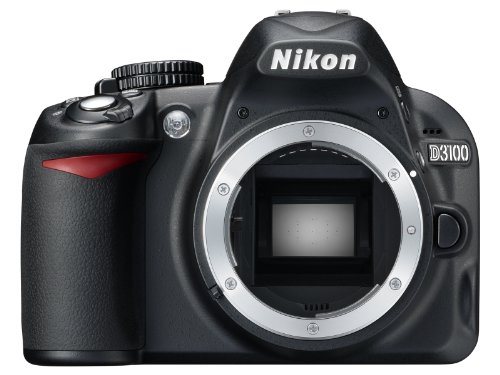
Nikon D3100 review. Compare 108 technical specifications and user reviews to see how it ranks among cameras and if it is worth buying.
Overall score
What it is: An overall evaluation of the camera's quality, based on technical analyses and user reviews.
When it matters: When you need a quick reference to identify the best cameras on the market.
Score components:
90.0%
Technical Score
10.0%
User score
Technical Score
What it is: An assessment of the camera's technical performance, covering eight key areas: image quality, autofocus, video features, stabilization, lens compatibility, connectivity, battery, and design.
When it matters: When you want to compare cameras based on technical performance and available features.
Score components:
28.0%
Sensor & Image
25.0%
Photo Features
18.0%
Video & Audio
14.0%
Display & Design
8.0%
Battery & Power
7.0%
Connectivity & Storage
User score
What it is: A rating that combines user reviews and the total number of reviews received by the camera.
When it matters: When real-world owner satisfaction and review volume matter to your decision.
Score components:
70.0%
User reviews
30.0%
Popularity
Score components:
25.0%
Sensor size
20.0%
Main camera megapixels
20.0%
Dual card slots
15.0%
N. of focus points
10.0%
RAW photo capture
10.0%
Phase-detection autofocus (photos)
Score components:
35.0%
Weight
30.0%
Battery life (CIPA)
20.0%
Sensor-shift stabilization
15.0%
GPS
Score components:
30.0%
Price
20.0%
Weight
20.0%
AF tracking
20.0%
Battery life (CIPA)
10.0%
Touchscreen
Score components:
30.0%
Main camera megapixels
25.0%
Sensor size
20.0%
Main camera pixel size
15.0%
Sensor-shift stabilization
10.0%
RAW photo capture
Score components:
30.0%
Weight
25.0%
Thickness
20.0%
AF low-light sensitivity
15.0%
Sensor-shift stabilization
10.0%
Eye detection AF (human)
Score components:
30.0%
Sensor size
25.0%
Main camera pixel size
20.0%
Eye detection AF (human)
15.0%
Main camera megapixels
10.0%
Sensor-shift stabilization
Score components:
30.0%
Weight
25.0%
Battery life (CIPA)
20.0%
Min operating temperature
15.0%
Sensor-shift stabilization
10.0%
GPS
Available: ranking among products currently available (including other versions of this product).
All: ranking among all products in the database.
#14 in Best Cheap DSLR Cameras
#31 in Best Cheap Cameras
#39 in Best Cameras under £1000
#51 in Best DSLR Cameras
#51 in Best SLR Cameras
#61 in Best Nikon Cameras
#68 in Best Cameras under £500
#104 in Best Travel Cameras
#104 in Best Cameras for Hiking
#111 in Best Cameras under £200
#158 in Best Cameras under £300
#220 in Best Cameras
#220 in Best Digital Cameras
What it is: An assessment of the camera's technical performance, covering eight key areas: image quality, autofocus, video features, stabilization, lens compatibility, connectivity, battery, and design.
When it matters: When you want to compare cameras based on technical performance and available features.
Score components:
28.0%
Sensor & Image
25.0%
Photo Features
18.0%
Video & Audio
14.0%
Display & Design
8.0%
Battery & Power
7.0%
Connectivity & Storage
What it is: A rating that combines user reviews and the total number of reviews received by the camera.
When it matters: When real-world owner satisfaction and review volume matter to your decision.
Score components:
70.0%
User reviews
30.0%
Popularity
What it is: An indicator that combines the camera's overall rating with its cost.
When it matters: When you want to know how much overall quality you get for the price.
Score components:
60.0%
Overall score
40.0%
Price
Importance: HIGH
Good value: Full frame or larger
Importance: HIGH
Good value: At least 20 MP
Importance: HIGH
Good value: At least 3.5 µm
Importance: LOW
Importance: MEDIUM
Good value: At least ISO 25,600
Importance: MEDIUM
Importance: MEDIUM
Good value: At least 14-bit
Importance: LOW
Importance: LOW
Importance: LOW
Importance: LOW
Importance: LOW
Importance: LOW
Importance: LOW
Importance: LOW
Importance: MEDIUM
Importance: LOW
Importance: LOW
Importance: LOW
Importance: LOW
Importance: LOW
Importance: HIGH
Good value: At least 200 points
Importance: HIGH
Importance: MEDIUM
Importance: LOW
Importance: LOW
Importance: MEDIUM
Importance: MEDIUM
Importance: HIGH
Good value: At least 5 stops
Importance: LOW
Importance: MEDIUM
Good value: At least 10 fps
Importance: LOW
Importance: LOW
Importance: LOW
Importance: LOW
Importance: LOW
Importance: LOW
Importance: LOW
Importance: LOW
Importance: LOW
Importance: LOW
Importance: LOW
Importance: LOW
Importance: LOW
Importance: LOW
Importance: LOW
Importance: LOW
Good value: At least 200,000 actuations
Importance: LOW
Good value: At least 10x
Importance: HIGH
Good value: At least 3840 px
Importance: MEDIUM
Good value: At least 200 Mbps
Importance: MEDIUM
Good value: At least 10-bit
Importance: LOW
Importance: LOW
Importance: LOW
Importance: LOW
Importance: LOW
Importance: LOW
Importance: LOW
Good value: At least 30 min
Importance: LOW
Importance: LOW
Importance: LOW
Importance: LOW
Importance: LOW
Good value: At least 2 microphones
Importance: LOW
Importance: LOW
Importance: LOW
Importance: LOW
Importance: MEDIUM
Good value: 500 g or less
Importance: LOW
Importance: LOW
Importance: LOW
Importance: MEDIUM
Importance: MEDIUM
Good value: At least 2.36 million dots
Importance: LOW
Good value: 100%
Importance: LOW
Importance: LOW
Good value: At least 120 Hz
Importance: MEDIUM
Good value: At least 3 in
Importance: LOW
Importance: LOW
Importance: LOW
Importance: LOW
Importance: LOW
Importance: LOW
Importance: LOW
Good value: At least 10 m
Importance: LOW
Importance: LOW
Importance: LOW
Importance: LOW
Importance: MEDIUM
Good value: At least 400 shots
Importance: LOW
Good value: At least 1,500 mAh
Importance: LOW
Importance: LOW
Importance: LOW
Importance: LOW
Importance: LOW
Importance: LOW
Importance: LOW
Importance: LOW
Importance: LOW
Importance: LOW
Importance: LOW
Importance: LOW
Importance: LOW
Importance: LOW
Importance: LOW
Importance: LOW
Importance: LOW
Importance: LOW
Importance: HIGH
Importance: HIGH
Good value: At least 3.5 µm
Importance: MEDIUM
Good value: At least 400 shots
Importance: LOW
Importance: MEDIUM
Importance: LOW
Importance: MEDIUM
Importance: LOW
Good value: 100%
Importance: LOW
Importance: MEDIUM
Good value: At least 14-bit
Importance: MEDIUM
Good value: At least 10 fps
Importance: LOW
Good value: At least 2 microphones
Importance: HIGH
Good value: At least 20 MP
Importance: LOW
(Reviews last updated: July 2026)
The DPReview evaluation of the 14.2-megapixel Nikon D3100 characterizes it as an intuitive entry-level DSLR offering excellent image quality and strong high-ISO performance up to ISO 3200. Key strengths include a sophisticated 11-point autofocus system, helpful Guide Mode for beginners, and a dedicated drive-mode lever. Additionally, the camera is praised for its straightforward, accessible controls and in-camera RAW processing capabilities. Conversely, the review highlights significant limitations in video mode, specifically "buggy" aperture control requiring a still photo to lock in settings, and ineffective autofocus during video recording. Further drawbacks noted include a lower-resolution 230k-dot LCD screen, a tendency toward overexposure, and lack of an internal autofocus motor for older lenses.
The Nikon D3100, as reviewed by ePHOTOzine, is a user-friendly 14.2-megapixel entry-level DSLR praised for delivering excellent image quality, low noise at low ISOs, and featuring a helpful Guide Mode, with a lightweight construction. Key strengths include bright, saturated colors and an efficient 11-point autofocus system, making it an ideal choice for beginners. However, the review notes some limitations, including a flimsy memory card cover, wobbly buttons, and a menu-heavy interface that can feel restrictive to advanced users. Furthermore, the D3100 lacks professional-level features such as exposure bracketing. ePHOTOzine
The Nikon D3100 features a 14.2-megapixel DX CMOS sensor, the EXPEED 2 image processor, and full 1080p HD video capability. It is recognized for its compact design, 11-point autofocus system, and strong low-to-high ISO performance with clean image noise. Key limitations highlighted include a lack of environmental sealing and no manual exposure controls during video recording. Additionally, the camera requires navigating menus for certain settings due to a lack of dedicated external buttons.
The Nikon D3100 is an incredibly user-friendly entry-level DSLR camera designed for novice photographers transitioning from compact digicams to more advanced gear. Weighing roughly 500 grams with its battery and memory card, the camera features a stocky yet compact body and a 14.2 megapixel CMOS sensor capable of producing large prints up to 39x26cm. Key strengths highlighted in the review include its highly responsive startup time of barely a second, full HD video recording at 1080p with continuous autofocus, and in-camera video editing capabilities. Furthermore, it stands out for its built-in interactive "Guide" setting that rotates 90 degrees with the camera, offering beginners on-screen lessons for creative techniques like softening backgrounds and freezing motion. While the camera delivers an impressive, sharp low-light performance up to ISO 1600, image noise does become progressively noticeable at higher sensitivities like ISO 3200 and above. A notable physical disadvantage is the fixed 7.5cm LCD screen, meaning users who prefer a tilting or swivelling display for difficult angles will be disappointed. Additionally, the review points out that live view mode is restricted to a brief...
Ken Rockwell’s review highlights the Nikon D3100 as an exceptionally quiet, lightweight, and capable entry-level DSLR with a solid build and precise, zoom-responsive image histograms. It is recommended as an ideal family or travel camera for its superior usability and quiet operation. Conversely, the review notes the D3100's 3-inch LCD screen is somewhat grainy compared to higher-end models. Additionally, its entry-level, motorless design requires AF-S or AF-I lenses for autofocus, limiting compatibility with older, non-motorized glass.
The Amateur Photographer review highlights the Nikon D3100 as a robust, lightweight entry-level DSLR featuring a secure, rubberized grip and enhanced, user-friendly handling, often producing natural tones via its reliable auto white balance. The camera excels with intuitive in-camera editing tools and solid build quality, though it is limited to AF-S lenses for autofocus. Key drawbacks include overly warm, yellow-toned results when using the "shade" or "cloudy" white balance presets. Furthermore, the editing process is hampered by a feature that saves a new file for every individual tweak, resulting in rapid memory card clutter, as noted in the analysis.
The Trusted Reviews evaluation of the Nikon D3100 highlights it as a highly capable, budget-friendly entry-level DSLR that bridges the gap for beginners with a solid build, high responsiveness, and sharp, vibrant image quality. It is praised for its shallow learning curve and user-friendly features that guide novices without limiting performance. Trusted Reviews Conversely, the review notes drawbacks including a low-resolution, fixed rear screen and limited physical controls that may frustrate more experienced users. Despite these limitations, the camera is recommended for its value as an entry-level option.
Nikon D3100 Review Overview The Nikon D3100 is an entry-level, starter DSLR designed for beginners, students, or photographers looking for a lightweight backup body. It features a 14.2-megapixel DX-format CMOS sensor, an 11-point autofocus system, an easy-to-use "Guide Mode," and 1080p HD video capabilities at 24 fps—a major feature that was entirely missing on its predecessor, the D3000. While it maintains a nearly identical small and light plastic form factor to the D3000, it introduces physical control improvements such as an angled top dial, a release-mode switch, and a dedicated live view lever with a movie recording button. The reviewer tested the camera alongside a massive, $1,000 full-frame Nikon 28-300mm lens, noting that while the combo was front-heavy and versatile, the glass produced slightly soft results with unpleasantly nervous bokeh. Key Strengths and Weaknesses Pros: It stands out as Nikon's smallest and most affordable DSLR, providing great battery life, fast autofocus, and a clean viewfinder display. The physical layout is vastly superior to the D3000, allowing shooters to quickly change drive settings or jump into live view without digging through...
The Nikon D3100 features a 14.2-megapixel sensor that delivers excellent detail retention in RAW, with top-tier, noise-free performance between ISO 100 and 200. While in-camera JPEG processing can result in softened textures, overall image quality remains high at lower sensitivities. Regarding high-ISO performance, images remain good up to ISO 800, with usable but softer results up to ISO 3200 due to noise reduction. The review highlights that the extended Hi1 and Hi2 (ISO 12,800) settings are of low practical value, suffering from extreme noise and severe detail loss. For the full, original review, visit What Digital Camera. What Digital Camera
The Nikon D3100 is a highly capable entry-level DSLR that delivers exceptional image quality through its 14-megapixel APS-C sensor, making it an excellent option for beginners upgrading from fixed-lens cameras. The camera excels in performance with a reliable, conservative exposure system that preserves highlights, very accurate custom and automatic white balance, and impressive noise control up to ISO 800 (and highly usable up to ISO 3200). Operationally, it is incredibly responsive with nearly instant power-on and shutter-lag times. It also introduces Full 1080p HD video recording at 24 FPS withsmooth motion and sharp details, utilizing an efficient H.264 codec. However, the camera suffers from notable performance bottlenecks, primarily revolving around its autofocus system and bundled kit lens. The 11-point phase-detection autofocus moves at a leisurely pace in low light, often taking over a second to lock focus, while contrast-detect autofocus during video recording is slow and introduces a distracting back-and-forth movement. Furthermore, the internal microphone is highly sensitive and records the annoying screech of the kit lens's autofocus mechanism, with no external mic input available to bypass the issue. The...
The Nikon D3100 is a highly successful entry-level DSLR that features a 14-megapixel CMOS sensor and the Expeed-2 image processor, delivering solid overall image quality and a native sensitivity range of ISO 100 to 3,200 (expandable to 12,200). Key advantages of this camera include its well-built, comfortable plastic body with ergonomic rubber grips, an integrated helpful guide mode for beginners, and impressive battery performance capable of capturing up to 1,370 photos per charge. Additionally, it introduces full HD video recording (1080p) using the efficient H.264 codec and a Live View feature on its 3-inch display, which operates with rapid autofocus through the classic viewfinder. On the downside, the camera suffers from a noticeable loss of fine details and textures in low-contrast areas, which worsens at higher ISO levels. The autofocus during Live View is slow and takes about 2.55 seconds to focus, while the continuous autofocus pumps noticeably during video recording. Advanced photographers will also miss features like exposure or white balance bracketing, an infrared remote trigger option, and a depth-of-field preview button. Furthermore, using Live View drains the battery...
The digitalkamera.de review highlights the Nikon D3100 as a capable entry-level DSLR featuring a 14.2-megapixel CMOS sensor and EXPEED 2 processor, which delivers excellent image quality, low noise, and a versatile ISO range up to 12,800. Key pros include the inclusion of Full HD (1080p) video recording and a user-friendly Guide Mode designed for beginners transitioning from point-and-shoot cameras. However, the review notes drawbacks, specifically a slow, often inaccurate contrast-detection autofocus system during Live View and video recording. Additionally, the fixed 3-inch LCD screen is criticized for its relatively low resolution of 230,000 dots, which can make it difficult to verify critical focus.
The Nikon D3100 is an entry-level DSLR camera praised by NETZWELT for its high value to beginners. Its primary pros include good overall image quality driven by a 14.2-megapixel DX-format CMOS sensor and the capability to record Full-HD videos. Reviewers highlighted its beginner-friendly layout, which features a 3-inch screen supporting real-time Live View, intuitive controls on the top plate, and flexible storage capabilities that handle SD, SDHC, and SDXC memory cards. The camera also offers great flexibility through its Nikon-F lens mount, making it ready for a wide range of interchangeable lenses. On the other hand, the review and testing notes point out a few clear weaknesses. One notable con is that the battery is confined to the base handle, which can limit physical accessory flexibility compared to higher-end models. While the physical build is solid, the reliance on basic external toggles for lens and side connections means users have to manually flip sliders on the side of the lenses to manage hardware functions. Additionally, as an older entry-level model, the screen resolution is standard rather than high-definition, and continuous...
The review of the Nikon D3100 by Holger on SWQUADRAT.DE concludes that despite being a 15-year-old model, this entry-level DSLR remains a highly capable, incredibly budget-friendly option for photography beginners. Testing it with an 18-70mm Nikkor lens under ample daylight, the reviewer praises its lightweight, robust plastic body and pronounced grip, which ensure a secure and comfortable hold. The camera's 14.2-megapixel APS-C CMOS sensor delivers impressive, natural color accuracy. Additional strong points include an intuitive, user-friendly menu system with automatic scene modes for novices, Full-HD video recording, and a phenomenal battery life capable of delivering around 500 shots per charge. Finally, the camera body's current used price (ranging from €71 to €109 on MPB) combined with cheap F-mount lenses creates a highly accessible financial entry point into photography. YouTube · However, the reviewer highlights several critical limitations stemming from the camera's age. The fixed 3-inch LCD screen is a major drawback, as it does not tilt or rotate, making low-angle shots difficult; furthermore, its low resolution of 230,000 dots makes it nearly unreadable in bright sunlight. Ergonomically, the layout forces...
The Nikon D3100 is an entry-level digital SLR camera aimed at ambitious hobbyists stepping up from compact point-and-shoots for better image quality and manual settings. In terms of advantages, the review highlights its good overall image quality and harmonious results using the 14-megapixel sensor, alongside standard Full HD (1080i) video recording capabilities. It features a dedicated video shutter button for immediate recording and an HDMI port for direct TV playback. Physically, the camera handles well due to its weight and secure, non-slip rubber grip at critical holding points. It also supports external GPS receivers for saving location data and features a Live-View mode on the rear monitor. On the downside, a major criticism is the camera's slow shutter lag, which takes nearly a second to capture a picture. Additionally, image sharpness drops at the edges of the frame, though this can be improved with higher-quality lenses. The menu navigation requires a learning curve, meaning users will need the physical manual close by, especially since the built-in "Guide" help mode lacks comprehensive topics. Furthermore, because image stabilisation is built into the...
The Nikon D3100 is a classic entry-level DSLR camera featuring a 14-megapixel CMOS sensor, an integrated sensor cleaning system, and Full-HD video capabilities via a practical live-view lever and recording button combination. In terms of pros, the camera stands out for its high-quality compact body, strong image quality with superior kurtosis values that outperform the Canon EOS 500D in texturing, and a highly intuitive, solution-oriented "Guide Mode" tailored to help beginners adjust settings easily. Additionally, its data monitor adjusts information layout when switching between landscape and portrait orientations. However, the camera has notable cons, primarily its sluggish shutter lag and slow autofocus time (0.52 to 0.74 seconds depending on lighting), which ultimately placed it behind its competitors in overall ranking. The 3-inch TFT monitor also suffers from a low resolution of 76,700 RGB pixels compared to Canon's much sharper display, and the interface lacks a live histogram and quick-adjust command wheel for submenus. Ultimately, the reviewer notes that the new 14-megapixel sensor fails to beat the image quality of Nikon's older, cheaper D5000 model, making the D5000 or the Canon...
The CHIP review highlights the Nikon D3100 as a highly attractive and convincing entry-level DSLR designed specifically for beginners entering the world of reflex photography. The camera is praised for its convincing image quality, driven by a 14-megapixel resolution sensor that delivers excellent results for high-quality photos. Key advantages noted in the review include its high-quality, non-slip chassis, which feels exceptionally premium for a camera in this price tier. Furthermore, the system incorporates a well-engineered "Help/Guide Mode" that provides on-screen explanations to help newcomers learn camera functions, an adequately large display screen, and comprehensive shooting programs supporting both manual and automated photography. It also boasts full-HD video recording capabilities and sells at a very fair market price of roughly €460 for the standalone body or €500 when bundled as a kit with a lens. On the downside, the review outlines specific technical compromises that limit the camera's utility for advanced action or long-form recording. A primary limitation is the burst shooting speed, which is capped at a modest 3 frames per second when capturing continuous imagery to the SD memory...
The review evaluates the high ISO capabilities of the entry-level Nikon D3100 digital SLR camera through handheld real-world night photography taken from a ferry deck. Testing the camera at extreme settings of ISO 3200, 6400, and 12800 with standard kit zoom lenses (the Nikkor DX 18-55mm and 55-300mm VR) and the built-in noise reduction turned off, the author notes that the results show what modern entry-level gear can achieve outside of a laboratory environment. A major pro highlighted is that the images are highly usable, with ISO 6400 remaining "absolutely usable" at full 14-megapixel resolution. Even at the maximum ISO 12800 setting, the quality remains functional and practical for general use when scaled down to a 2-megapixel (1800×1200 pixels) resolution. However, the review and its subsequent community discussion reveal several notable cons and performance limitations. At extreme ISO settings, the camera suffers from prominent color noise (chrominance noise), loss of contrast, and reduced color dynamics. The automatic white balance struggles under tricky artificial night lighting, leading to inaccurate and less pleasing color reproduction. Additionally, when forced to pair high ISOs...
The Nikon D5000 and D3100 serve as entry-level DSLR options that offer strong image quality for their price bracket, though they differ significantly in features and handling. The D5000 stands out with its articulating 2.7-inch display, a continuous shooting speed of 3.9 frames per second, and built-in gridlines in the viewfinder. It also features exposure bracketing and performs noticeably better at ISO 400 and above due to lower texture loss. However, the D5000 has a smaller screen, lacks modern autofocus support during video recording, and is limited to 720p HD resolution. In contrast, the Nikon D3100 targets true beginners with a dedicated "Guide Mode" built into the interface to assist with settings like background blur, along with a larger 3-inch fixed display. Video creators will prefer the D3100 as it records in Full HD (1080p), includes full-time autofocus while filming, and features a physical drive-mode lever on the top dial. On the downside, the D3100 suffers from higher texture loss at elevated ISO levels, lacks bracketing options, and is slower in continuous shooting at only 2.8 frames per second.
The 01net review highlights the Nikon D3100 as a well-balanced, beginner-friendly entry-level DSLR camera designed for the general public. The reviewer praises several key upgrades from its predecessor, including a newly integrated 14.2-megapixel CMOS image sensor and an upgraded image processor that significantly enhances overall image processing. Notably, the camera introduces Full HD video recording paired with a helpful, albeit slightly slow, automatic focus system. Ergonomically, the device has been improved with a quality rubber grip on the handle and back panel, making it secure and comfortable for users with smaller hands. Novices will benefit from the optimized "Guide mode" that helps configure settings while offering real-time photography advice, as well as a convenient physical drive mode selector switch stolen from Panasonic’s design playbook. The review identifies prominent drawbacks that potential buyers should consider, particularly regarding hardware limitations. The 7.5 cm rear display is broad but heavily criticized for its low resolution of just 230,000 pixels, which limits on-screen detail and diminishes the photo-reviewing experience. Action shooters will find the burst shooting rate sluggish at just 3 frames per second....
The Nikon D3100 is an entry-level DSLR camera that scores a 4 out of 5 rating, praised for introducing major electronic upgrades to Nikon's baseline range, including a brand new 14-megapixel APS-C CMOS sensor. The camera delivers exceptional, flawless image quality up to ISO 1600, remains very usable at ISO 3200, and exhibits fast, near-instantaneous general responsiveness and autofocus performance. Additionally, it marks a significant milestone for Nikon by offering Full HD 1080p video recording at 24 frames per second with highly detailed results, wrapped in an improved body design that features ergonomic rubber grips and a dedicated Live View switch. However, the D3100 is held back by several notable limitations, most notably its low-resolution 3-inch screen capped at just 230,000 dots, which hinders its usefulness as a Live View framing tool. The review highlights a frustrating, non-intuitive Auto ISO management system that displays contradictory information to users. Audio recording is also a weak point, capturing only mediocre mono sound with noticeable background hiss and lacking an external microphone jack. Finally, full autofocus capabilities are strictly limited to AF-S lenses,...
Based on the head-to-head review from Les Numériques, the Sony Alpha 55 and Nikon D3100 represent a clash between traditional DSLR architecture and modern, high-performance innovation. The Nikon D3100 acts as a classic entry-level evolution, updating its older CCD sensor to a modern CMOS chip that provides impeccable, low-noise image quality up to ISO 1600. In contrast, the Sony Alpha 55 reinvents the format by replacing the moving mirror and optical viewfinder with a fixed, semi-transparent translucent mirror and an electronic viewfinder. This design milestone allows the Sony to achieve an exceptional burst rate of 7 frames per second (fps) with full, uninterrupted autofocus tracking. Both cameras offer Full HD video modes, but their pros and cons heavily depend on their technological approaches. The Nikon D3100 wins on traditional shooting, offering a reliable optical viewfinder and progressive 24 fps recording in H.264 format, resulting in precise and detailed video resolution. However, its video mode is hindered by slower contrast-detection autofocus and average-quality mono audio that easily picks up operational noise. Conversely, the Sony Alpha 55 excels in video and action...
Arkady Shapoval’s review characterizes the Nikon D3100 as a lightweight, budget-friendly 14.2 MP APS-C DSLR suitable for beginners, featuring an Expeed 2 processor and a helpful "GUIDE" mode. Key strengths include an ISO range up to 12,800, 1080p video with autofocus, and a capable buffer, though it lacks an internal focus motor for older lenses and has a limited 3 fps shooting speed. Engineered for affordability, the D3100 sacrifices features like a top LCD screen, exposure bracketing, and metering with AI-S lenses. Despite these limitations, the camera is recommended for delivering high-quality images in an accessible package.
The Nikon D3100 is a lightweight and highly portable entry-level APS-C DSLR camera that is praised for delivering great build quality and featuring a highly functional, auto-rotating information screen. It fixes the heavy image noise problems of its predecessor, the D3000, and includes helpful built-in tools like a powerful "D-Lighting" HDR feature and an impressive distortion control mode to clean up low-quality lens distortions. The review highly recommends it for beginners because it covers all essential aspects of the photography triangle (ISO, shutter speed, and aperture) in a simple, user-friendly package at an affordable price. However, the camera has several physical and technical limitations. Its compact body makes the handgrip too small for users with larger hands, and its 3-inch LCD screen is noticeably weak in resolution compared to its competitors. On the performance side, the autofocus system feels a bit slow when paired with standard kit lenses. Finally, the camera lacks an internal autofocus motor, meaning it requires more expensive AF-S lenses to use autofocus, and it omits advanced physical controls like custom user buttons, direct memory card formatting...
The Nikon D3100 is a highly capable entry-level digital SLR that delivers excellent photo quality and impressive low-light performance. It features a 14.2-megapixel DX-format CMOS sensor alongside an updated EXPEED 2 image processor. CNET praises its streamlined, compact, and lightweight design, making it exceptionally comfortable for beginners or daily travel. It stands out with useful physical upgrades like a dedicated Live View lever, a direct movie recording button, and an integrated drive mode switch that minimizes constant menu digging. Novices will especially benefit from its unique Guide Mode, which utilizes on-screen interactive assistance and sample pictures to easily teach manual photography controls. However, the camera is not without its limitations. The headline feature of Full HD 1080p video recording is plagued by a clunky, half-baked full-time autofocus implementation that struggles to track subjects smoothly. CNET reviewers also find the Guide Mode occasionally frustrating, noting that certain controls switch behaviors inside the guide compared to standard shooting. Furthermore, while the camera boasts a solid 11-point autofocus matrix for normal viewfinder photography, it feels limited by a restrictive fixed LCD screen that...
The Nikon D3100 is highly rated as an affordable and reliable entry-level DSLR camera, especially for beginners learning manual exposure through its intuitive built-in Guide Mode. Equipped with a 14.2-megapixel CMOS sensor and an EXPEED 2 processor, it delivers detailed image quality and reliable low-light performance up to ISO 1600, making it capable of shooting in demanding conditions like concerts. Its standout real-world advantages include a natural, comfortable ergonomic grip for long sessions, a robust battery life capable of capturing 550 to 650 images per charge, and excellent autofocus responsiveness that proves effective for sports photography. Additionally, it offers a Full HD video mode with responsive tracking autofocus, and it maintains compatibility with over 30 tested lenses, presenting an unbeatable value at a 2026 market price of around €199. Despite these strengths, the review notes several limitations when the camera is evaluated under modern or professional standards. A major drawback is the fixed rear screen, which makes capturing low-angle or high-angle shots difficult. The lack of built-in Wi-Fi prevents quick wireless file transfers, forcing users to rely on physical card...
The Alpha Photo review evaluates the Nikon D3100 bundle (featuring the 18-55 mm VR lens) as a highly cost-effective, high-performing, and compact DSLR ideal for beginners and semi-professionals alike. Equipped with a 14.2-megapixel sensor and an expanded sensitivity up to ISO 3200, the camera earns strong praise for delivering exceptional image quality even in low-light environments. The reviewer highlights its effective built-in image stabilisation, intuitive user handling reminiscent of vintage film cameras, and versatility provided by the Full HD 1080p video recording and Live View mode. Ultimately, it receives an overall score of 16/20 from the editorial staff and a 4.5/5 rating from online users, solidifying its place as a reliable and accessible option. Despite these strengths, the review notes several structural and technical trade-offs to keep in mind. On the downside, the camera features a primarily plastic body, lacks an articulated screen, and omits a stereo microphone, which significantly limits its appeal for video-heavy creators. Additionally, the absence of a built-in autofocus motor inside the camera body restricts the selection of compatible lenses to those with internal motors. Nevertheless,...
The DXOMARK lab evaluation for the Nikon D3100 awards the entry-level DSLR an overall camera sensor score of 67. Breaking down its specific technical performance metrics, the sensor earns a Portrait score of 22.5 bits for colour depth, a Landscape score of 11.3 Evs for dynamic range, and a Sports score of 919 ISO for low-light capabilities. The testing highlights that while the 14.2-megapixel CMOS sensor delivers very respectable, clean images in optimal lighting, it falls noticeably behind newer equivalents, such as the successor Nikon D3400 which registers a substantially higher overall sensor score of 86. YouTube · The core pros identified from this data and testing center around its solid value as a beginner camera, offering pleasant, well-saturated colours and an excellent price-to-performance ratio for those transitioning into manual photography. It also boasts a highly accessible interface with dedicated help modes that streamline operation for casual users. Conversely, the major cons of the Nikon D3100 lie in its outdated technical limits, particularly its low-light capability (limited to 919 ISO by DXOMARK standards) and a restricted dynamic range that compromises...
The Nikon D3100 is an entry-level DSLR camera designed for beginners seeking high-quality photography without needing deep technical knowledge. Built around a 14.2-megapixel DX-format CMOS sensor, it features an intuitive Guide Mode that provides step-by-step assistance and photographic tips directly on its 3-inch LCD screen. The lightweight and compact body introduces direct physical controls like a drive-mode lever and a dedicated Live View switch. Key positive features include a dependable 11-point autofocus system with 3D tracking, permanent servo autofocus (AF-F) during video capture, Full HD 1080p recording at 24 fps, and an active D-Lighting system to preserve highlight and shadow details. The camera provides a native ISO range of 100 to 3200 (expandable up to 12,800) and offers built-in in-camera retouching tools and a decent battery life rated for approximately 550 shots per charge. However, the review highlights several limitations that restrict the camera's performance for advanced setups. A major drawback is its compatibility with older Nikon lenses: the D3100 lacks an integrated autofocus motor, meaning it can only autofocus with newer AF-S or AF-I NIKKOR lenses. When paired with...
The Nikon D3100 is an entry-level DSLR camera released in 2010 that strikes an excellent balance between professional-tier capabilities and beginner-friendly operation. Equipped with a 14.2-megapixel DX-format CMOS sensor, it delivers outstanding image quality and features a 3-inch LCD screen, an advanced 11-point autofocus system with 3D tracking, and Full HD 1080p video recording at 24fps. The camera includes a distinct "Guide" mode on the selector dial, acting as a step-by-step tutorial for novice photographers. Sold in a kit with an 18-55mm VR lens, it represents an outstanding price-to-performance option for amateur photographers looking to dive into serious digital photography. Key Takeaways The Pros: Excellent overall image quality, a fast and advanced autofocus system, and post-processing tools built directly into the camera interface. It is lightweight, compact, and provides HDMI output. The Cons: A tendency to overexpose certain automatic shots and an erratic Auto-ISO feature that often spikes values up to 12,800, ruining images with digital noise. Design Flaws: No dedicated ISO button or exposure information within the viewfinder, forcing users to take their eyes off the frame to change...
The Nikon D3100 review on Fotografi Digitali, titled "Nikon D3100: sotto il vestito molto" (Nikon D3100: much beneath the clothing), evaluates the camera as a highly capable entry-level DSLR that punches above its weight class. Published by Roberto Colombo, the review highlights that underneath its basic, novice-friendly design lies a suite of surprisingly advanced features. A major focal point of the review and community discussion is its newly integrated video capabilities, offering a budget-friendly 1080p cinematic video experience that can compete with high-end camcorders when using proper manual technique. Users praise the new CMOS sensor's low-light performance, noting a massive ISO capability jump over previous entry-level models like the D40.
The Saggiamente review identifies the Nikon D3100 as a top entry-level DSLR, highlighting its user-friendly design, fast autofocus, and the helpful Guide Mode for beginners. Key advantages include the 14.2 MP sensor, Full HD video capabilities, and the Expeed 2 processor enabling simultaneous RAW+JPEG shooting. Conversely, the review notes limitations such as a tendency toward overexposure in bright conditions and the lack of weather sealing. Additionally, the camera is restricted to a 3 frames-per-second burst rate, and the body construction feels less robust compared to higher-end models.
The Nikon D3100 is an entry-level DSLR featuring a 14.2-megapixel APS-C CMOS sensor paired with an EXPEED 2 image processor. The review emphasizes that while the camera wears an "entry-level suit," it hides highly interesting, advanced performance capabilities underneath. A major pro highlighted in the field test is its excellent RAW (.NEF) file quality, which preserves high resolution and allows superior recovery of shadows and fine grain fine-tuning during post-processing. Furthermore, its low-light usability is commendable, allowing confident handheld shooting at ISO 800 completely compromise-free, and producing very manageable, thin-grained noise at ISO 1600 and 3200. Conversely, the review details several notable cons stemming from its entry-level market positioning. The camera's standard JPEG compression is overly conservative, resulting in "soft" images that lack impact unless users manually adjust sharpness and contrast settings via Picture Controls. Additionally, the camera's out-of-the-box performance is severely bottlenecked by the basic 18-55mm kit lens, meaning users must purchase higher-tier optics to unlock the sensor's true potential. Finally, firmware restrictions artificially limit fine-tuning controls; the noise reduction filter can only be toggled strictly on or off,...
The Nikon D3100 is a discontinued APS-C (1.5x multiplication factor) entry-level DSLR camera equipped with a 14.2-megapixel sensor, produced between 2010 and 2012. According to user reviews on JuzaPhoto, it stands out as an exceptionally lightweight (500g), compact, and highly budget-friendly option for beginners looking to learn photography manually rather than relying on automated smartphones. Users praise its long battery life—powered by the EN-EL14a battery—and note that when paired with a good prime lens (like a 35mm f/1.8 or 50mm), it delivers surprisingly sharp daylight image quality and solid colour reproduction for landscape, family, and casual street photography. However, reviewers highlight several technical shortcomings due to its age. The primary constraint is its poor high ISO performance, with visible digital noise disrupting image quality starting between 800 and 1600 ISO, limiting its effectiveness in low-light and night-time settings without software noise reduction or a tripod. Physically, the camera features only a single control dial (ghiera), making immediate, manual adjustments to both aperture and shutter speed somewhat slow and clunky. Furthermore, the body lacks an internal autofocus motor (presa di forza),...
The Nikon D3100 lab test review from the FotografiaStore.it digital catalog details a comprehensive evaluation conducted by the Centro Studi Progresso Fotografico. Introduced in 2010, this entry-level DSLR features an APS-C DX sensor with a 14-megapixel resolution. The lab analysis focuses deeply on mechanical and optical parameters including shutter speed, battery autonomy, sensitometric curves, MTF sharpening, image noise, actual resolution, and exposure latitude. The evaluation highlights several key pros and cons of the camera system: Pros: It introduces a significantly upgraded CMOS sensor over its predecessor, delivering excellent color accuracy, improved high-ISO noise control up to 1600/3200, strong dynamic range, and a refined compact body design with an intuitive user interface. Cons: It suffers from a relatively low-resolution 230k-dot rear LCD screen, a complete lack of an internal autofocus motor for older "screw-drive" lenses, and strict video limitations such as a 10-minute clip ceiling, slow contrast-detect autofocus during live view, and no external microphone jack.
The Nikon D3100 is an entry-level DSLR camera featuring a newly designed 14.2-megapixel APS-C CMOS sensor, a departure from the CCD sensors used in its predecessors like the D3000. It is equipped with the Expeed 2 image processor and offers full 1080p video recording at 24fps with continuous autofocus (AF-F), marking a significant technological leap for Nikon's entry-level lineup. The camera body is physically improved with a secure rubberised grip, a helpful hardware drive-mode ring surrounding the main mode dial, and a distinct live view/video toggle lever. It retains a reliable 11-point autofocus system with 3D tracking but lacks an internal autofocus motor, meaning it requires lenses with built-in motors (such as Nikon AF-S) for autofocus functionality. The review highlights several key strengths and weaknesses of the device. Among its pros, the D3100 delivers good, gradual noise control and solid dynamic range up to ISO 1600, exceptional daylight white balance, and clear 1080p video resolution. It also features extensive in-camera graphic effects and RAW image processing tools. On the downside, the camera suffers from a low-resolution 3-inch LCD screen (230,000...
However, the review points out clear cons, particularly regarding the camera's display hardware. Although the 3-inch rear screen is comfortably large and well-organized, its low resolution of just 230,000 dots leaves the panel lacking in sharp detail. The reviewer also notes that some underlying hardware did not change, such as the exact same autofocus module from the previous generation, though it still outperforms its rivals. Ultimately, with a highly aggressive budget price point of around 350 euros (when bundled with a kit lens), the reviewer concludes that the camera offers immense value for entry-level photographers despite its minor display shortcomings.
The Nikon D3100 is a highly compact and lightweight entry-level DSLR camera designed primarily for families and beginners, yet it delivers image quality capable of satisfying creative hobbyists. Equipped with a brand-new 14-megapixel CMOS sensor and an integrated "Guide" mode, the camera excels at teaching newcomers how to adjust settings through intuitive menus and real-time visual simulations, such as demonstrating how altering the aperture impacts background blur. Its performance in low-light conditions is exceptionally strong, producing sharp, detailed, and virtually noise-free images up to ISO 3200, backed by a highly precise 11-point autofocus system that locks onto subjects effortlessly even in dim environments without an AF-assist light. Additionally, the inclusion of Live View with face detection and Full HD video capabilities makes it a highly versatile everyday camera.
Compare