Scored using Smartwatches Methodology v3.0
Smartwatches Methodology v3.0
Mathematical & Unbiased Scoring
Products in this category are scored under Frontum Smartwatches Methodology v3.0: the technical score from the specifications is the base, and independent expert and video reviews (up to ±0.5 points), owner opinions (up to ±0.3) and best-of lists (up to +0.3) move it up or down.
Explore Smartwatches Methodology v3.0

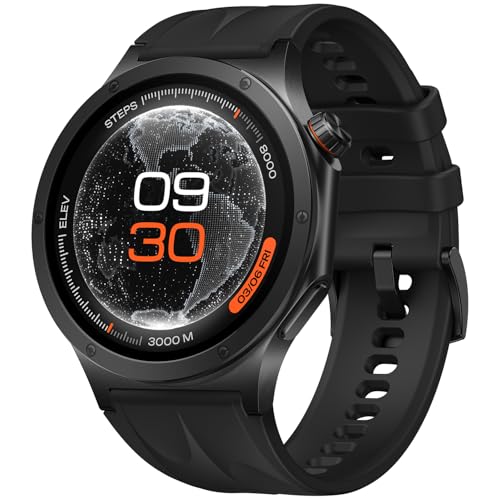
Mibro GS Explorer review: 127 specs compared

Avg. price:~£?Screen size:1.32 inchBattery life:20 daysDisplay type:AMOLED

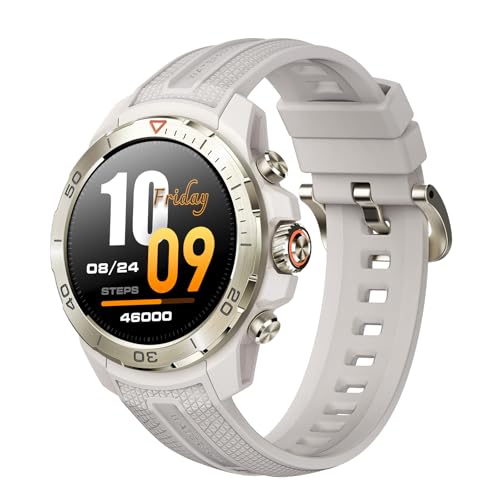
Mibro GS Explorer Review: Compare 127 technical specifications and 26 expert and video reviews to see how this product ranks in the Smartwatches category and whether it is worth buying.

Mibro GS Explorer
8.0/10

Overall score

Score
8.0/ 10
✕
What it is
Our main score for this model, 1–10. It combines specs, best-of lists, expert reviews and owners.
How we count it
Parts: Technical score 35%, List score 30%, Reviews score 25%, Sentiment score 10%
Marks: Each part gets a mark out of 10. For reviews, lists and owners, a typical model in this category gets about 8 and the best one gets 10.
No data yet: A part with no data shows "?". It counts as the mark of a weaker model in this category (4 in 5 models with data score higher). This way, models with reviews, lists and owners usually come out ahead.
Score distribution
▼
<55-66-77-88-99-10
Score components

35%

8.4

Technical score

30%

?

List scoreNot enough data yet, so we use 7.5, the mark of a weaker model in this category

25%

8.4

Reviews score

10%

6.9

Sentiment score

▲Better than 83% of smartwatches
?

Value for money

Value for money
✕
What it is
An indicator that combines the smartwatch's overall rating with its cost.
When it matters
When you are looking for a smartwatch with a good balance between quality and price.
Score distribution
▼
<55-66-77-88-99-10
Score components

70%

8.0

Overall score

30%

?

Price

Price not known yet
8.4

Technical score

Technical score
8.4/ 10
✕
What it is
How good the specs are compared with the other models in this category, 1–10.
How we count it
Areas: We rate the specs in each area against the other models in this category.
Weighting: The areas that matter most to buyers count more. The shares are shown under Score components.
Share: The technical score is 35% of the overall score.
Score distribution
▼
<55-66-77-88-99-10
Score components

24%

8.8

Health

21%

9.4

Fitness

16%

7.6

Battery

14%

7.6

Smart features

12%

9.2

Connectivity

9%

7.7

Display & Design

4%

6.3

Hardware

★Better than 94%
8.4

Reviews score

Reviews score
8.4/ 10
✕
What it is
Average grade from independent test sites, magazines and video reviewers, 1–10.
How we count it
Grades: Each review's own score is converted to 1–10; without one, we grade the review ourselves. Every review counts the same: written or video, short or full test.
Score: The average grade is 80% of the review mark; the number of reviews is the other 20% (1 review = 5, the typical number in this category = 8, the most-reviewed model = 10).
Enough data: With few reviews, the average grade is pulled toward the typical grade of this category. No reviews yet: 7.5 for now.
Share: Reviews count 25% of the overall score.
Score distribution
▼
<55-66-77-88-99-10

80%

8.4

Average grade

20%

8.5

Popularity

Grades by review (26)
8 reviews + 18 videos, average 8.5/10. Reviews count 25% of the overall score.
User ratings collected online are not part of this score.
▲Better than 84%
?

List score

List score
7.5/ 10
✕
What it is
How often independent test sites, magazines and video reviewers put this model in their best-of lists for this category.
How we count it
Points: The model in the most lists of this category gets 10; the others get 8 to 10 in proportion. In no list yet: 7.5. Lists count 30% of the overall score.
Enough data: Every list counts, even a single one. With fewer than 5 best-of lists in the category, this part is left out.
Lists with this model (0)
Not in any best-of list yet, so this part counts as 7.5. Models in a list get 8 to 10.
Not in any best-of list yet
Loading...
Loading category ranking...

Smartwatches model ranking

Ranked #127 of 777 models in Smartwatches (Overall score)

Technical Specifications of smartwatch Mibro GS Explorer

Technical score
Technical score
8.4/ 10
✕
What it is
How good the specs are compared with the other models in this category, 1–10.
How we count it
Areas: We rate the specs in each area against the other models in this category.
Weighting: The areas that matter most to buyers count more. The shares are shown under Score components.
Share: The technical score is 35% of the overall score.
Score distribution
▼
<55-66-77-88-99-10
Score components:

24%

8.8

Health

21%

9.4

Fitness

16%

7.6

Battery

14%

7.6

Smart features

12%

9.2

Connectivity

9%

7.7

Display & Design

4%

6.3

Hardware

8.4
Reviews score
8.4
List score
?
Value for money
Value for money
8.6/ 10
✕
What it is
An indicator that combines the smartwatch's overall rating with its cost.
When it matters
When you are looking for a smartwatch with a good balance between quality and price.
Score distribution
▼
<55-66-77-88-99-10
Score components:

70%

8.0

Overall score

30%

?

Price

8.6
Heart rate monitor
yes
This smartwatch includes a heart rate monitor. 9.5% of smartwatches include a heart rate monitor.
Blood oxygen monitoring
yes
This smartwatch supports blood oxygen monitoring. 30.4% of smartwatches support blood oxygen monitoring.
ECG
?
Irregular heart rate warnings
?
HRV tracking
?
Show more
What reviewers say
Accelerometer
yes
This smartwatch includes an accelerometer. 0.5% of smartwatches include an accelerometer.
Barometer
yes
This smartwatch includes a barometer. 46.5% of smartwatches include a barometer.
Gyroscope
yes
This smartwatch includes a gyroscope. 28.9% of smartwatches include a gyroscope.
Cadence sensor
?
Distance tracking
yes
This smartwatch supports distance tracking. 3.7% of smartwatches support distance tracking.
Show more
What reviewers say
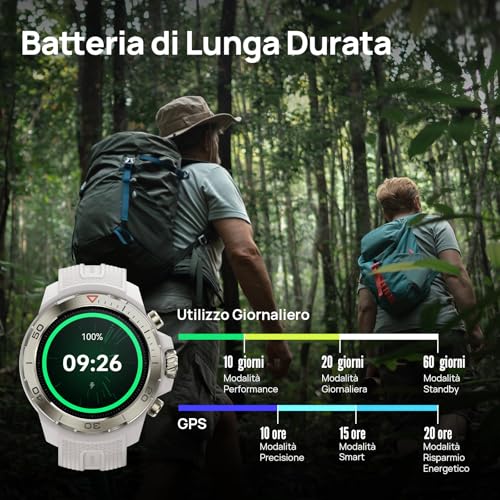
Battery life
20 days
This smartwatch lasts 20 days on a charge, which is longer than 90.1% of Smartwatches and the same as 1.4% of Smartwatches.
Battery life in training mode
?
Battery life with GPS on
15 h
This smartwatch lasts 15 h with GPS on, which is shorter than 66.1% of Smartwatches and the same as 2.9% of Smartwatches.
Battery power
460 mAh
This smartwatch has a 460 mAh battery, which is larger than 82.9% of Smartwatches and the same as 0.7% of Smartwatches.
Charge time
?
Show more
What reviewers say
Operating system
AsteroidOS
This smartwatch runs AsteroidOS, which is less advanced than the system in 53.9% of Smartwatches.
Software update frequency
?
Third-party app support
?
Notifications
yes
This smartwatch supports notifications. 0.3% of smartwatches support notifications.
Voice assistant support
?
Show more
What reviewers say
Cellular module
?
SIM cards
?
GPS
yes
This smartwatch supports GPS. 40.3% of smartwatches support GPS.
Galileo support
yes
This smartwatch supports Galileo navigation. 56.5% of smartwatches support Galileo navigation.
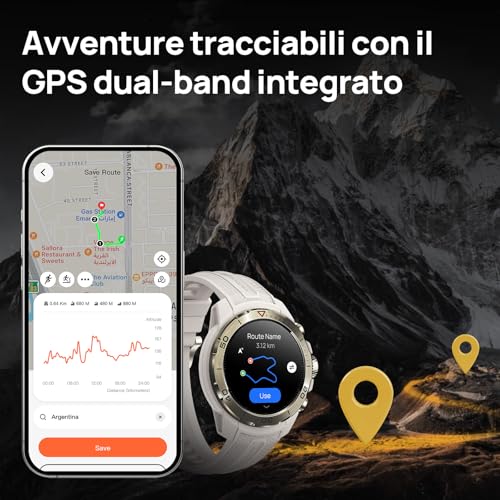
Dual-frequency GPS
yes
Mibro GS Explorer supports dual-frequency GPS. 85% of Smartwatches offer this.
Show more
What reviewers say
Screen size
1.32 inch
This smartwatch has a 1.32 inch screen, which is smaller than 63.2% of Smartwatches and the same as 3.7% of Smartwatches.
Display type
AMOLED
This smartwatch uses AMOLED, which is more advanced than the screen in 46.9% of Smartwatches and equal to 53.1% of Smartwatches.
Resolution
466x 466
This smartwatch has a display resolution of 466x466 which is higher than that of 84.3% of smartwatches and equal to that of 13.2% of smartwatches.
Pixel density
353 ppi
This smartwatch has a pixel density of 353 ppi, which is higher than 62.8% of Smartwatches and equal to 0.4% of Smartwatches.
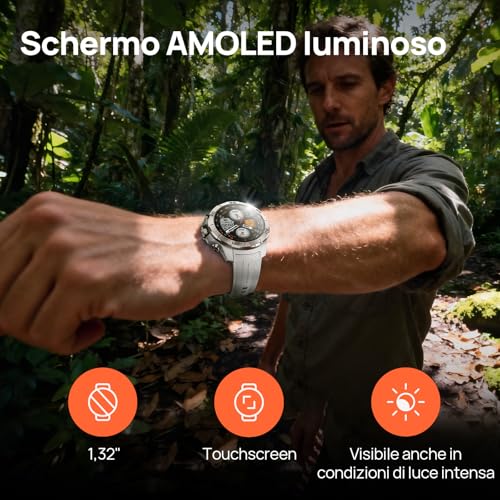
Display brightness
1,500 nits
This smartwatch has a screen brightness of 1,500 nits, which is higher than 82.6% of Smartwatches and equal to 2% of Smartwatches.
Show more
What reviewers say
CPU speed
?
Processor model
?
RAM
?
Internal storage
1 GB
This smartwatch has 1 GB of internal storage, which is less than 63.3% of Smartwatches and equal to 0.5% of Smartwatches.
External memory slot
?
Show more

Mibro GS Explorer vs the average smartwatch

246810TotalHealthFitnessBatteryConnectivityDisplay & DesignSmart featuresHardware
  • 13 days longer battery life
    This smartwatch runs longer per charge than the average smartwatch (20 days vs 7 days). The average smartwatch runs for 7 days on a charge.
    20 days vs 7 days
  • NFC functionality
    This smartwatch supports NFC, the average smartwatch does not. 45.6% of smartwatches support NFC.
  • Supports dual-frequency GPS
    Mibro GS Explorer supports dual-frequency GPS, while the average smartwatch does not. 15.1% of Smartwatches support dual-frequency GPS.
  • Galileo satellite support
    This smartwatch supports Galileo navigation, the average smartwatch does not. 43.6% of smartwatches support Galileo navigation.
  • Rugged construction
    This smartwatch has a rugged design, the average smartwatch does not. 41.3% of smartwatches have a rugged design.
  • Stronger display glass
    This smartwatch uses Corning Gorilla Glass 3 display glass, while the average smartwatch uses mineral glass.
    Corning Gorilla Glass 3 vs mineral glass
  • 750 nits brighter screen
    This smartwatch has a brighter screen than the average smartwatch (1500 nits vs 750 nits). The average smartwatch peaks at 750 nits.
    1,500 nits vs 750 nits
  • 20.0% higher review score
    Reviews score
    8.4/ 10
    ✕
    What it is
    Average grade from independent test sites, magazines and video reviewers, 1–10.
    How we count it
    Grades: Each review's own score is converted to 1–10; without one, we grade the review ourselves. Every review counts the same: written or video, short or full test.
    Score: The average grade is 80% of the review mark; the number of reviews is the other 20% (1 review = 5, the typical number in this category = 8, the most-reviewed model = 10).
    Enough data: With few reviews, the average grade is pulled toward the typical grade of this category. No reviews yet: 7.5 for now.
    Share: Reviews count 25% of the overall score.
    Score distribution
    ▼
    <55-66-77-88-99-10

    80%

    8.4

    Average grade

    20%

    8.5

    Popularity

    Grades by review (26)
    8 reviews + 18 videos, average 8.5/10. Reviews count 25% of the overall score.
    User ratings collected online are not part of this score.
    8.4 vs 7.0
  • 10.7% better value for money
    Mibro GS Explorer has a higher value-for-money score than the average smartwatch (8.59 vs 7.8).
    8.59 vs 7.76
  • 60 more exercise types
    This smartwatch includes more exercise types than the average smartwatch (150 vs 90). The average smartwatch includes 90 exercise types.
    150 vs 90
  • 13 days longer battery life
    This smartwatch runs longer per charge than the average smartwatch (20 days vs 7 days). The average smartwatch runs for 7 days on a charge.
    20 days vs 7 days
  • 155 mAh larger battery capacity
    This smartwatch has a larger battery than the average smartwatch (460 mAh vs 305 mAh). The average smartwatch has a 305 mAh battery.
    460 mAh vs 305 mAh
  • NFC functionality
    This smartwatch supports NFC, the average smartwatch does not. 45.6% of smartwatches support NFC.
  • Supports dual-frequency GPS
    Mibro GS Explorer supports dual-frequency GPS, while the average smartwatch does not. 15.1% of Smartwatches support dual-frequency GPS.
  • Galileo satellite support
    This smartwatch supports Galileo navigation, the average smartwatch does not. 43.6% of smartwatches support Galileo navigation.
  • More current Bluetooth version
    This smartwatch uses a more current Bluetooth version than the average smartwatch (5.3 vs 5).
    5.3 vs 5.0
  • Stronger display glass
    This smartwatch uses Corning Gorilla Glass 3 display glass, while the average smartwatch uses mineral glass.
    Corning Gorilla Glass 3 vs mineral glass
  • Rugged construction
    This smartwatch has a rugged design, the average smartwatch does not. 41.3% of smartwatches have a rugged design.
  • 750 nits brighter screen
    This smartwatch has a brighter screen than the average smartwatch (1500 nits vs 750 nits). The average smartwatch peaks at 750 nits.
    1,500 nits vs 750 nits
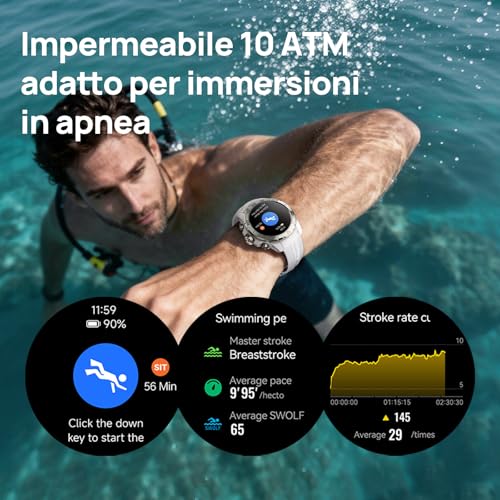
  • 50 m deeper water rating
    This smartwatch is rated for deeper water than the average smartwatch (100 m vs 50 m). The average smartwatch is rated to 50 m.
    100 m vs 50 m
  • Higher resolution
    This smartwatch has a display resolution of 466x466, while the average smartwatch reaches 360x360.
    466x466 vs 360x360
  • 25 °C higher heat tolerance
    This smartwatch tolerates a higher temperature than the average smartwatch (70 °C vs 45 °C). The average smartwatch is rated up to 45.0 °C.
    70 °C vs 45.0 °C
  • Better case material
    This smartwatch uses stainless steel, fiber-reinforced polymer for the case material, while the average smartwatch uses polycarbonate.
    stainless steel, fiber-reinforced polymer vs polycarbonate
  • More advanced operating system
    This smartwatch runs a more advanced operating system than the average smartwatch (AsteroidOS vs Proprietary OS).
    AsteroidOS vs Proprietary OS
  • No call answering
    This smartwatch does not support call answering, the average smartwatch does. 60% of smartwatches support call answering.
  • 23 g heavier
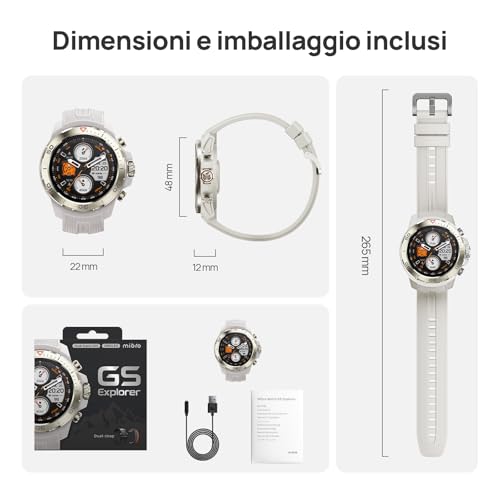
    This smartwatch is heavier than the average smartwatch (68 g vs 45 g). The average smartwatch weighs 45.0 g.
    68 g vs 45.0 g
  • Basic battery type
    This smartwatch uses a Li-ion battery, while the average smartwatch uses Li-Po.
    Li-ion vs Li-Po
  • No call controls
    This smartwatch does not offer call control, the average smartwatch does. 91.2% of smartwatches offer call control.
  • 6 h shorter GPS battery life
    This smartwatch lasts less time with GPS on than the average smartwatch (15 h vs 21 h). The average smartwatch lasts 21 h with GPS on.
    15 h vs 21 h
  • 1.4 mm thicker
    This smartwatch is thicker than the average smartwatch (13.1 mm vs 11.7 mm). The average smartwatch is 11.7 mm thick.
    13.1 mm vs 11.7 mm
  • 0.08 inch smaller display
    This smartwatch has a smaller screen than the average smartwatch (1.3 inch vs 1.4 inch). The average smartwatch has a 1.4 inch screen.
    1.32 inch vs 1.4 inch
  • 5.3 mm wider case
    This smartwatch has a wider case than the average smartwatch (47.8 mm vs 42.5 mm). The average smartwatch measures 42.5 mm across.
    47.8 mm vs 42.5 mm
  • 8.0% lower sentiment score
    6.9 vs 7.5
  • Basic battery type
    This smartwatch uses a Li-ion battery, while the average smartwatch uses Li-Po.
    Li-ion vs Li-Po
  • 6 h shorter GPS battery life
    This smartwatch lasts less time with GPS on than the average smartwatch (15 h vs 21 h). The average smartwatch lasts 21 h with GPS on.
    15 h vs 21 h
  • 23 g heavier
    This smartwatch is heavier than the average smartwatch (68 g vs 45 g). The average smartwatch weighs 45.0 g.
    68 g vs 45.0 g
  • 1.4 mm thicker
    This smartwatch is thicker than the average smartwatch (13.1 mm vs 11.7 mm). The average smartwatch is 11.7 mm thick.
    13.1 mm vs 11.7 mm
  • 0.08 inch smaller display
    This smartwatch has a smaller screen than the average smartwatch (1.3 inch vs 1.4 inch). The average smartwatch has a 1.4 inch screen.
    1.32 inch vs 1.4 inch
  • 5.3 mm wider case
    This smartwatch has a wider case than the average smartwatch (47.8 mm vs 42.5 mm). The average smartwatch measures 42.5 mm across.
    47.8 mm vs 42.5 mm
  • 2.8 mm taller case
    This smartwatch has a taller case than the average smartwatch (47.8 mm vs 45 mm). The average smartwatch is 45.0 mm tall.
    47.8 mm vs 45.0 mm
  • No call answering
    This smartwatch does not support call answering, the average smartwatch does. 60% of smartwatches support call answering.
  • No call controls
    This smartwatch does not offer call control, the average smartwatch does. 91.2% of smartwatches offer call control.
  • 75% less internal storage
    This smartwatch has less internal storage than the average smartwatch (1 GB vs 4 GB). The average smartwatch has 4 GB of internal storage.
    1 GB vs 4 GB

Video reviews

Hands-on testing, unboxing, and real-world video evaluations

9.0
Fix64
≈ estimated
02/03/2026
Hands-on review · drop, freezer and app tests
Verdict
Mibro GS Explorer is highly recommended for the money, with plenty of features and a sturdy build.
9.0
GADGET CRUNCH
≈ estimated
14/11/2024
Hands-on review · two weeks of mixed use
Verdict
Mibro GS Explorer is an excellent fitness smartwatch, especially considering its price.
9.0
One Man and His Whippet
≈ estimated
25/10/2024
Hands-on review · setup, sports and sleep tests
Verdict
Mibro GS Explorer is easy to set up and feature-rich, with a short learning curve for its three buttons.
9.0
PreTriathlon
≈ estimated
25/10/2024
Hands-on review · sport tests, battery and GPS
Verdict
Mibro GS Explorer is good value, especially for sport and battery life, with only minor drawbacks in notifications.
9.0
Mr. Wild Wales
≈ estimated
14/11/2024
First impressions · setup, app and feature walkthrough
Verdict
Mibro GS Explorer is impressive for the money so far, though long-term use is still untested.
Brand video
Not graded
Not graded

What reviewers agree on

Based on 8 · 9

Reviewers praise the bright display and rugged reliability, but notifications and calls disappoint, and opinions split on the app and GPS.
Praised
Mixed views
Criticised
Pick a topic to see who said what

Expert reviews

In-depth analysis and verdict from leading tech publications

5.0
wareable.com
≈ estimated
14/01/2025
Full review · Rugged adventure watch
Verdict
The Mibro GS Explorer offers many sports modes and long battery life, but inaccurate GPS and heart rate readings make it unreliable for serious outdoor use.
7.0
techradar.com
✓ explicit
21/01/2025
Real-world test · Rugged smartwatch
Verdict
The Mibro GS Explorer is a tough, bright watch with plenty of features, but its GPS drifts off route, so it suits casual users more than serious athletes.
7.0
advnture.com
✓ explicit
22/04/2025
Field test · Outdoor sports watch
Verdict
The Mibro GS Explorer suits runners and hikers wanting many sports modes and a bright display, but off-route GPS and clunky Bluetooth hold it back.
7.4
chinamobilemag.de
✓ explicit
25/10/2024
Hands-on test · Large outdoor watch
Verdict
The Mibro GS Explorer is a sturdy, bright outdoor watch with a 51.1mm-wide case, so it suits wider wrists best.
7.0
fabionieddu.com
≈ estimated
25/10/2024
Hands-on review · Rugged sports watch
Verdict
The Mibro GS Explorer is a sturdy, good-looking sports watch with accurate step and heart rate readings, but clock lags and restarts during workouts are real drawbacks.
9.0
outofbit.it
≈ estimated
30/10/2024
Hands-on review · Classic-style smartwatch
Verdict
The Mibro GS Explorer has a classic watch look and solid battery life, but its immature software and missing message replies hold it back.
8.0
evosmart.it
≈ estimated
15/11/2024
Hands-on test · Outdoor smartwatch
Verdict
The Mibro GS Explorer is a sturdy, bright outdoor watch with accurate health tracking and fast GPS, but its machine-translated app is hard to read.
9.0
hwupgrade.it
≈ estimated
Not Dated
Hands-on test · Adventure smartwatch
Verdict
The Mibro GS Explorer is a sturdy outdoor watch with a bright screen, precise GPS and about five days of battery, but it can't reply to messages.

Third-party reviews

What we like about Mibro GS Explorer

  • 20 days of battery life in daily mode covers a long trip.
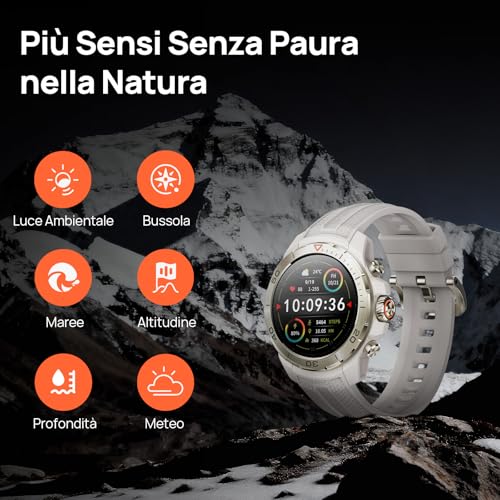
  • The 1500 nits screen stays readable in direct sunshine.
  • A 100 m water rating covers swimming and rain.
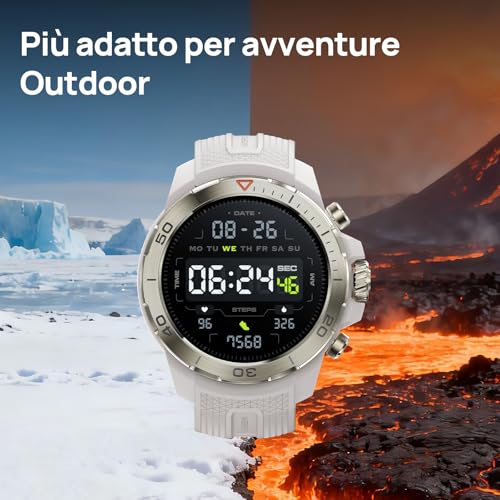
  • An operating range from -30 to 70 °C suits extreme cold and heat.
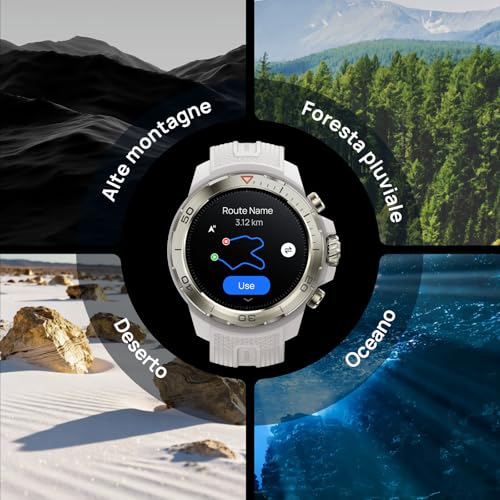
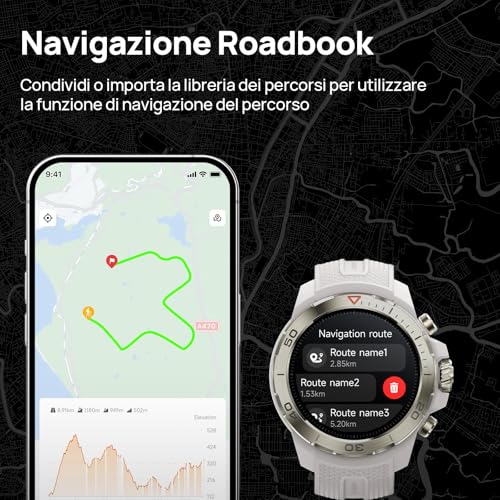
  • Dual-frequency GPS is built in for route tracking.
  • The watch works with iPhone.

What we don't like about Mibro GS Explorer

  • No call control, so calls cannot be answered from the wrist.
  • At 68 g and 13.1 mm thick, the watch feels bulky on the wrist.
  • The 47.8 mm case is too large for slim wrists.
  • The magnetic charger is flimsy and can be knocked out of place.
  • Buttons feel stiff, which slows down ending a workout.

Verdict

A 1500 nits screen and a 100 m water rating make the Mibro GS Explorer a practical pick for people who train outdoors in rough weather. The battery is rated at 20 days, and it runs 15 hours with GPS on, enough for a long hike. In testing the watch survived a drop, a freezer and a swim without trouble. Dual-frequency GPS, a barometer and 150 sport modes give it a full set of tools for training. Corning Gorilla Glass 3 covers the 1.32 inch screen. It works with iPhone and plays music from the watch itself. Sleep, heart rate and blood oxygen are tracked from the wrist. The trade-off is call control: calls cannot be answered from the wrist. It suits an iPhone owner who wants a rugged, bright watch for outdoor sport.

Compare Mibro GS Explorer with other Smartwatches

1Product to compare no. 1
VS
2Product to compare no. 2
VS
3Product to compare no. 3 (optional)

Graphic comparison of Mibro GS Explorer and other Smartwatches

No results found