Scored using Drones Methodology v3.0
Drones Methodology v3.0
Mathematical & Unbiased Scoring
Products in this category are scored under Frontum Drones Methodology v3.0: the technical score from the specifications is the base, and independent expert and video reviews (up to ±0.5 points), owner opinions (up to ±0.3) and best-of lists (up to +0.3) move it up or down.
Explore Drones Methodology v3.0

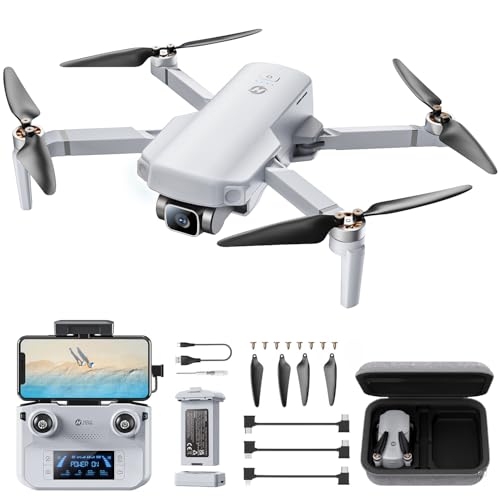
Holy Stone HS175D Plus review: 97 specs compared

Avg. price:~£180Max flight time:30 minVideo resolution:4KMax transmission distance:0.5 km

Holy Stone HS175D Plus Review: Compare 97 technical specifications to see how this product ranks in the Drones category and whether it is worth buying.
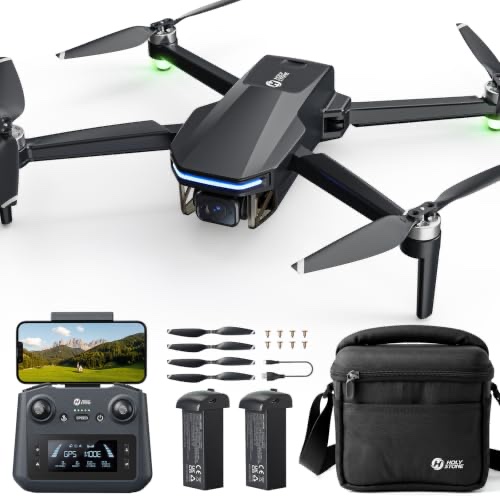
Holy Stone HS175D Plus
6.8/10

Overall score

Score
6.8/ 10
✕
What it is
Our main score for this model, 1–10. It combines specs, best-of lists, expert reviews and owners.
How we count it
Parts: Technical score 40%, List score 30%, Reviews score 25%, Sentiment score 5%
Marks: Each part gets a mark out of 10. For reviews, lists and owners, a typical model in this category gets about 8 and the best one gets 10.
No data yet: A part with no data shows "?". It counts as the mark of a weaker model in this category (4 in 5 models with data score higher). This way, models with reviews, lists and owners usually come out ahead.
Score distribution
<55-66-77-88-99-10
Score components

40%

6.0

Technical score

30%

?

List scoreNot enough data yet, so we use 7.5, the mark of a weaker model in this category

25%

?

Reviews scoreNot enough data yet, so we use 7.5, the mark of a weaker model in this category

5%

?

Sentiment scoreNot enough data yet, so we use 6.0, the mark of a weaker model in this category

â–¼Worse than 57% of drones
7.7

Value for money

Value for money
7.7/ 10
✕
What it is
An indicator that combines the drone's overall rating with its cost.
When it matters
When you are looking for a drone with a good balance between flight quality, camera features, and price.
Score distribution
<55-66-77-88-99-10
Score components

70%

6.8

Overall score

30%

9.6

Price

â–²Better than 57%
6.0

Technical score

Technical score
6.0/ 10
✕
What it is
How good the specs are compared with the other models in this category, 1–10.
How we count it
Areas: We rate the specs in each area against the other models in this category.
Weighting: The areas that matter most to buyers count more. The shares are shown under Score components.
Share: The technical score is 40% of the overall score.
Score distribution
<55-66-77-88-99-10
Score components

26%

5.0

Flight

24%

5.7

Camera

20%

7.3

Safety

16%

6.2

Connectivity

14%

6.3

Battery & Design

â–¼Worse than 52%
?

Reviews score

Reviews score
✕
What it is
Average grade from independent test sites, magazines and video reviewers, 1–10.
How we count it
Grades: Each review's own score is converted to 1–10; without one, we grade the review ourselves. Every review counts the same: written or video, short or full test.
Score: The average grade is 80% of the review mark; the number of reviews is the other 20% (1 review = 5, the typical number in this category = 8, the most-reviewed model = 10).
Enough data: With few reviews, the average grade is pulled toward the typical grade of this category. No reviews yet: 7.5 for now.
Share: Reviews count 25% of the overall score.
Score distribution
<55-66-77-88-99-10
Grades by review (0)
We have not found an independent test of this model yet. Until we do, its review part counts as 7.5.
User ratings collected online are not part of this score.
No expert tests yet
?

List score

List score
7.5/ 10
✕
What it is
How often independent test sites, magazines and video reviewers put this model in their best-of lists for this category.
How we count it
Points: The model in the most lists of this category gets 10; the others get 8 to 10 in proportion. In no list yet: 7.5. Lists count 30% of the overall score.
Enough data: Every list counts, even a single one. With fewer than 10 best-of lists in the category, this part is left out.
Lists with this model (0)
Not in any best-of list yet, so this part counts as 7.5. Models in a list get 8 to 10.
Not in any best-of list yet
  • holy-stone-hs175d-plus
holy-stone-hs175d-plus
Where to buy
    N/A~ £180
Loading...
Loading category ranking...

Technical Specifications of drone Holy Stone HS175D Plus

Technical score
Technical score
6.0/ 10
✕
What it is
How good the specs are compared with the other models in this category, 1–10.
How we count it
Areas: We rate the specs in each area against the other models in this category.
Weighting: The areas that matter most to buyers count more. The shares are shown under Score components.
Share: The technical score is 40% of the overall score.
Score distribution
<55-66-77-88-99-10
Score components:

26%

5.0

Flight

24%

5.7

Camera

20%

7.3

Safety

16%

6.2

Connectivity

14%

6.3

Battery & Design

6.0
Reviews score
7.5
List score
?
Value for money
Value for money
7.7/ 10
✕
What it is
An indicator that combines the drone's overall rating with its cost.
When it matters
When you are looking for a drone with a good balance between flight quality, camera features, and price.
Score distribution
<55-66-77-88-99-10
Score components:

70%

6.8

Overall score

30%

9.6

Price

7.7
Max flight time
30 min
This drone has a max flight time of 30 min, longer than 65% of drones and equal to 6% of drones.
Max flight distance
0.5 km
This drone has a max flight distance of 0.5 km, shorter-range than 59.7% of drones and equal to 3.9% of drones.
Max flight speed
7 m/s
This drone has a max flight speed of 7 m/s, slower than 65.2% of drones and equal to 5.7% of drones.
Max wind resistance
7.9 m/s
This drone has max wind resistance of 7.9 m/s, lower than 69.1% of drones and equal to 10.1% of drones.
Max service ceiling (ASL)
100 m
This drone has a max service ceiling of 100 m, lower than 91% of drones and equal to 6% of drones.
Show more
Video resolution
4K
This drone records video at 4K, higher than 45.5% of drones and equal to 10.4% of drones.
4K camera
yes
This drone supports 4K video. 46% of drones support 4K video.
Sensor size
?
Main camera megapixels
8 MP
This drone has a main camera resolution of 8 MP, lower than 66% of drones and equal to 8.7% of drones.
Max movie bitrate
?
Show more
Obstacle detection
no
This drone does not support obstacle detection. 31% of drones support obstacle detection.
Return to Home (RTH)
yes
This drone supports Return-to-Home (RTH). 33% of drones support Return-to-Home (RTH).
GPS
yes
This drone supports GPS. 35.3% of drones support GPS.
GNSS systems supported
GPS, GLONASS, Galileo, BeiDou
This drone supports GPS, GLONASS, Galileo, BeiDou GNSS systems, which are more comprehensive than those of 82.4% and the same as those of 17.6%.
Obstacle sensing directions
N/A
Show more
Max transmission distance
0.5 km
This drone has a max transmission distance of 0.5 km, shorter-range than 57.1% of drones and equal to 3.1% of drones.
Transmission latency
?
Video transmission system
Wi-Fi
This drone uses Wi-Fi for video transmission, which is more advanced than the system used by 8.2% and the same as that used by 47.7%.
Live view quality
1080p@30 fps
This drone offers live view quality of 1080p@30 fps, higher-quality than 60.9% of drones and equal to 18.8% of drones.
Remote control
yes
This drone has a handheld remote controller. 5% of drones offer this.
Show more
Battery capacity
1,700 mAh
This drone has a battery capacity of 1,700 mAh, smaller than 60.1% of drones and equal to 1.6% of drones.
Battery energy
12.9 Wh
This drone has battery energy of 12.9 Wh, lower than 59.4% of drones and equal to 0.6% of drones.
Charging time
150 min
This drone charges in 150 min, slower than 76.9% of drones and equal to 6.9% of drones.
Weight
215 g
This drone weighs 215 g, lighter than 56.7% of drones and equal to 0.5% of drones.
Removable battery
yes
This drone has a removable battery. 0.5% of drones have a removable battery.
Show more

Holy Stone HS175D Plus vs the average drone

246810TotalFlightCameraSafetyConnectivityBattery & Design
  • 10 min longer flight time
    This drone offers longer max flight time than the average drone (30 min vs 20 min). The average drone offers 20 min of max flight time.
    30 min vs 20 min
  • Supports waypoint flight
    This drone supports waypoint flight, while the average drone does not.
  • Supports TapFly
    This drone supports TapFly, while the average drone does not.
  • Supports smartphone control
    This drone supports smartphone control, while the average drone does not.
  • 3 years newer release date
    This drone is newer than the average drone (2026 vs 2023). The average drone was released in 2023.
    2026 vs 2023
  • 30 ° wider field of view
    This drone has a wider field of view than the average drone (120 ° vs 90 °). The average drone has a field of view of 90 °.
    120 ° vs 90 °
  • More modern charging port
    This drone uses proprietary for charging, while the average drone uses micro-USB.
    proprietary vs micro-USB
  • Better live view quality
    This drone has better live view quality than the average drone (1080p@30 fps vs 1080p@25 fps). The average drone offers live view quality of 1080p@25 fps.
    1080p@30 fps vs 1080p@25 fps
  • 10 min longer flight time
    This drone offers longer max flight time than the average drone (30 min vs 20 min). The average drone offers 20 min of max flight time.
    30 min vs 20 min
  • 3 years newer release date
    This drone is newer than the average drone (2026 vs 2023). The average drone was released in 2023.
    2026 vs 2023
  • 30 ° wider field of view
    This drone has a wider field of view than the average drone (120 ° vs 90 °). The average drone has a field of view of 90 °.
    120 ° vs 90 °
  • Supports panorama mode
    This drone supports panorama mode, while the average drone does not.
  • Supports waypoint flight
    This drone supports waypoint flight, while the average drone does not.
  • Supports TapFly
    This drone supports TapFly, while the average drone does not.
  • Supports smartphone control
    This drone supports smartphone control, while the average drone does not.
  • Better live view quality
    This drone has better live view quality than the average drone (1080p@30 fps vs 1080p@25 fps). The average drone offers live view quality of 1080p@25 fps.
    1080p@30 fps vs 1080p@25 fps
  • More modern charging port
    This drone uses proprietary for charging, while the average drone uses micro-USB.
    proprietary vs micro-USB
  • 2.8 m/s lower wind resistance
    This drone handles weaker wind than the average drone (7.9 m/s vs 10.7 m/s). The average drone handles wind up to 10.7 m/s.
    7.9 m/s vs 10.7 m/s
  • More basic transmission system
    This drone uses Wi-Fi for video transmission, while the average drone uses SkyLink 2.0.
    Wi-Fi vs SkyLink 2.0
  • Lower video resolution
    This drone offers lower video resolution than the average drone (4K vs 4K/100 fps). The average drone offers a video resolution of 4K/100 fps.
    4K vs 4K/100 fps
  • 8 m/s slower flight speed
    This drone reaches a lower max flight speed than the average drone (7 m/s vs 15 m/s). The average drone reaches 15 m/s.
    7 m/s vs 15 m/s
  • 60 min longer charging time
    This drone charges more slowly than the average drone (150 min vs 90 min). The average drone charges in 90 min.
    150 min vs 90 min
  • Fewer photo format options
    This drone supports JPEG photo formats, while the average drone supports JPEG, DNG (RAW).
    JPEG vs JPEG, DNG (RAW)
  • 3,400 m lower service ceiling
    This drone can fly at a lower max service ceiling than the average drone (100 m vs 3,500 m). The average drone reaches 3,500 m.
    100 m vs 3,500 m
  • More basic stabilization
    This drone uses None (Fixed) image stabilization, while the average drone uses EIS (Digital).
    None (Fixed) vs EIS (Digital)
  • 2.8 m/s lower wind resistance
    This drone handles weaker wind than the average drone (7.9 m/s vs 10.7 m/s). The average drone handles wind up to 10.7 m/s.
    7.9 m/s vs 10.7 m/s
  • 8 m/s slower flight speed
    This drone reaches a lower max flight speed than the average drone (7 m/s vs 15 m/s). The average drone reaches 15 m/s.
    7 m/s vs 15 m/s
  • 3,400 m lower service ceiling
    This drone can fly at a lower max service ceiling than the average drone (100 m vs 3,500 m). The average drone reaches 3,500 m.
    100 m vs 3,500 m
  • 0.5 km shorter flight distance
    This drone has a shorter max flight distance than the average drone (0.5 km vs 1 km). The average drone can fly up to 1 km.
    0.5 km vs 1 km
  • Lower video resolution
    This drone offers lower video resolution than the average drone (4K vs 4K/100 fps). The average drone offers a video resolution of 4K/100 fps.
    4K vs 4K/100 fps
  • Fewer photo format options
    This drone supports JPEG photo formats, while the average drone supports JPEG, DNG (RAW).
    JPEG vs JPEG, DNG (RAW)
  • More basic stabilization
    This drone uses None (Fixed) image stabilization, while the average drone uses EIS (Digital).
    None (Fixed) vs EIS (Digital)
  • Narrower tilt range
    This drone has a narrower tilt range than the average drone (-90 to 0 ° vs -90 to 20 °).
    -90 to 0 ° vs -90 to 20 °
  • 4 MP less camera resolution
    This drone has fewer main camera megapixels than the average drone (8 MP vs 12 MP). The average drone has 12 MP on the main camera.
    8 MP vs 12 MP
  • More basic transmission system
    This drone uses Wi-Fi for video transmission, while the average drone uses SkyLink 2.0.
    Wi-Fi vs SkyLink 2.0
  • 0.5 km shorter transmission range
    This drone has a shorter max transmission distance than the average drone (0.5 km vs 1 km). The average drone reaches 1 km of transmission distance.
    0.5 km vs 1 km
  • 60 min longer charging time
    This drone charges more slowly than the average drone (150 min vs 90 min). The average drone charges in 90 min.
    150 min vs 90 min
  • 500 mAh less battery capacity
    This drone has a smaller battery capacity than the average drone (1,700 mAh vs 2,200 mAh). The average drone battery has a capacity of 2,200 mAh.
    1,700 mAh vs 2,200 mAh
  • 60 mm longer body length
    This drone is longer than the average drone (335 mm vs 275 mm). The average drone is 275 mm long.
    335 mm vs 275 mm
  • 4.28 Wh less battery energy
    This drone has lower battery energy than the average drone (12.9 Wh vs 17.18 Wh). The average drone battery has 17.18 Wh of energy.
    12.9 Wh vs 17.18 Wh

Third-party reviews

What customers like about Holy Stone HS175D Plus

  • About 30 minutes per battery, around an hour with two
  • Light 215 g foldable body
  • GPS return-to-home, follow-me and waypoints
  • Brushless motors for steady flight
  • Headless mode for beginners

What customers don't like about Holy Stone HS175D Plus

  • Short control range of about 500 m
  • 8 MP sensor limits image detail
  • The hour of flight needs two batteries
  • Few user reviews so far

Verdict

The Holy Stone HS175D Plus is a foldable GPS drone that targets one thing above all: long flying sessions for little money. Each battery is rated for about 30 minutes, and the bundle with two batteries promises around an hour in total, more than most drones at this price. At 215 g it stays well under the 250 g threshold, and brushless motors give it steady, durable flight. GPS adds return-to-home, follow-me tracking and waypoint flights, while headless mode helps beginners keep their bearings. The camera records 4K from an 8 MP sensor, which suits holiday clips rather than detailed photography. The control range is short at about 500 m, so it is best for flying close by. As a brand-new model it has few user reviews so far, but it promises very good endurance for its price.

Compare Holy Stone HS175D Plus with other drones

1Product to compare no. 1
VS
2Product to compare no. 2
VS
3Product to compare no. 3 (optional)

Graphic comparison of Holy Stone HS175D Plus and other drones

No results found