Scored using Drones Methodology v2.0
Drones Methodology v2.0
Mathematical & Unbiased Scoring
Products in this category are scored under Frontumo Drones Methodology v2.0: technical specifications plus grades from 1,023 independent expert reviews and 2,622 video reviews, with 0% commercial bias.
Explore Drones Methodology v2.0

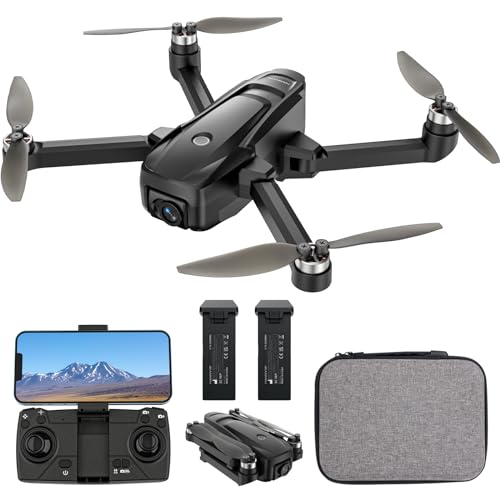
Wipkviey B12 Review | 97 Data compared

Avg. price:~£140Max flight time:25 minVideo resolution:4KMax transmission distance:0.5 km

Wipkviey B12 Review: Compare 97 technical specifications and 1 expert and video reviews to see how this product ranks in the Drones category and whether it is worth buying.

6.3

Overall score

Score
6.3/ 10
✕
What it is
An overall evaluation of the drone's quality, based on technical analyses and grades from independent expert reviews.
When it matters
When you need a quick reference to identify the best drones on the market.
Score distribution
â–¼
<55-66-77-88-99-10
Score components

85%

6.2

Technical score

15%

7.1

Review score ( 0 · 1)

Review score 15% · 7.1 · based on 1 video
1 video counts as 0.3 of the 4 needed; the rest counts as 7/10. Every model in this category gets the same split: reviews 15%, technical score 85%. A video or a short review counts less than a full test.
â–²Better than 50% of drones
6.2

Technical score

Technical score
6.2/ 10
✕
What it is
An assessment of the drone's technical performance, covering key areas such as flight performance, camera quality, transmission, safety features, battery life, and design.
When it matters
When you want to compare drones based on technical performance and available features.
Score distribution
â–¼
<55-66-77-88-99-10
Score components

26%

5.8

Flight

24%

6.2

Camera

20%

6.6

Safety

16%

5.8

Connectivity

14%

6.5

Battery & Design

â–²Better than 50% of drones
7.1

Review score

Review score
7.1/ 10
✕
What it is
Average grade from independent test sites, magazines and video reviewers, 1–10.
How we count it
Grades: Each review's own score is converted to 1–10; without one, we grade the review ourselves.
Weighting: Big test sites count more, short reviews half as much as full tests. A video review counts half.
Share: Reviews are 15% of the overall score for every model in this category; each of the 4 needed reviews that is missing counts as 7/10.
Score distribution
â–¼
<55-66-77-88-99-10
Grades by review (1)
1 video review, counting half as much as a written test. Share in the overall score: 15%, the same for every model in this category.
Video reviews 1
estimated from the review
Shop star ratings are not part of this score.
â–¼Worse than 87% of drones
  • wipkviey-b12
  • wipkviey-b12
  • wipkviey-b12
  • wipkviey-b12
  • wipkviey-b12
  • wipkviey-b12
  • wipkviey-b12
wipkviey-b12
wipkviey-b12
wipkviey-b12
wipkviey-b12
wipkviey-b12
wipkviey-b12
wipkviey-b12

Best prices

*As an Amazon Associate, we earn from qualifying purchases.
Loading...
Loading category ranking...

Technical Specifications of drone Wipkviey B12

Technical score
Technical score
6.2/ 10
✕
What it is
An assessment of the drone's technical performance, covering key areas such as flight performance, camera quality, transmission, safety features, battery life, and design.
When it matters
When you want to compare drones based on technical performance and available features.
Score distribution
â–¼
<55-66-77-88-99-10
Score components:

26%

5.8

Flight

24%

6.2

Camera

20%

6.6

Safety

16%

5.8

Connectivity

14%

6.5

Battery & Design

6.2
Review score
Review score
7.1/ 10
✕
What it is
Average grade from independent test sites, magazines and video reviewers, 1–10.
How we count it
Grades: Each review's own score is converted to 1–10; without one, we grade the review ourselves.
Weighting: Big test sites count more, short reviews half as much as full tests. A video review counts half.
Share: Reviews are 15% of the overall score for every model in this category; each of the 4 needed reviews that is missing counts as 7/10.
Score distribution
â–¼
<55-66-77-88-99-10
Grades by review (1)
1 video review, counting half as much as a written test. Share in the overall score: 15%, the same for every model in this category.
Video reviews 1
estimated from the review
Shop star ratings are not part of this score.
7.1
Popularity
Popularity
4.6/ 10
✕
What it is
An indicator based on the number of reviews received by the drone.
When it matters
When you prefer to choose a drone reviewed and selected by many other buyers.
Score distribution
â–¼
<55-66-77-88-99-10
Popularity:
Wipkviey B12 has a popularity score of 4.6 points, which is lower than that of 63.4% of products in this category.
4.6
Value for money
Value for money
7.3/ 10
✕
What it is
An indicator that combines the drone's overall rating with its cost.
When it matters
When you are looking for a drone with a good balance between flight quality, camera features, and price.
Score distribution
â–¼
<55-66-77-88-99-10
Score components:

60%

6.3

Overall score

40%

9.8

Price

7.3
Max flight time
25 min
Max flight time
25 min
This drone has a max flight time of 25 min, longer than 54.5% of drones and equal to 4.5% of drones.
Max flight distance
0.5 km
Max flight distance
0.5 km
This drone has a max flight distance of 0.5 km, shorter-range than 59.7% of drones and equal to 3.9% of drones.
Limited by the controller range.
Max flight speed
?
Max wind resistance
7.9 m/s
Max wind resistance
7.9 m/s
This drone has max wind resistance of 7.9 m/s, lower than 69.1% of drones and equal to 10.1% of drones.
Derived from the drone's Level 4 wind-resistance rating.
Max service ceiling (ASL)
?
Show more
Video resolution
4K
Video resolution
4K
This drone records video at 4K, higher than 45.5% of drones and equal to 10.4% of drones.
4K camera
yes
4K camera
yes
This drone supports 4K video. 46% of drones support 4K video.
Sensor size
?
Main camera megapixels
12.58 MP
Main camera megapixels
12.58 MP
This drone has a main camera resolution of 12.58 MP, higher than 60.7% of drones and equal to 0.7% of drones.
Max movie bitrate
?
Show more
Obstacle detection
no
Obstacle detection
no
This drone does not support obstacle detection. 31% of drones support obstacle detection.
Return to Home (RTH)
yes
Return to Home (RTH)
yes
This drone supports Return-to-Home (RTH). 33% of drones support Return-to-Home (RTH).
GPS
yes
GPS
yes
This drone supports GPS. 35.3% of drones support GPS.
GNSS systems supported
GPS
GNSS systems supported
GPS
This drone supports GPS GNSS systems, which are less comprehensive than those of 50.8% and the same as those of 14.6%.
Obstacle sensing directions
N/A
Show more
Max transmission distance
0.5 km
Max transmission distance
0.5 km
This drone has a max transmission distance of 0.5 km, shorter-range than 57.1% of drones and equal to 3.1% of drones.
Transmission latency
?
Video transmission system
Wi-Fi
Video transmission system
Wi-Fi
This drone uses Wi-Fi for video transmission, which is more advanced than the system used by 8.2% and the same as that used by 47.7%.
Live view quality
1080p@25 fps
Live view quality
1080p@25 fps
This drone offers live view quality of 1080p@25 fps, higher-quality than 50% of drones and equal to 10.4% of drones.
Remote control
yes
Remote control
yes
This drone has a handheld remote controller. 5% of drones offer this.
Show more
Battery capacity
1,200 mAh
Battery capacity
1,200 mAh
This drone has a battery capacity of 1,200 mAh, smaller than 72% of drones and equal to 4.2% of drones.
Battery energy
8.88 Wh
Battery energy
8.88 Wh
This drone has battery energy of 8.88 Wh, lower than 64.1% of drones and equal to 0.6% of drones.
Charging time
120 min
Charging time
120 min
This drone charges in 120 min, slower than 65% of drones and equal to 11.3% of drones.
Weight
185 g
Weight
185 g
This drone weighs 185 g, lighter than 63.4% of drones and equal to 1.6% of drones.
Removable battery
yes
Removable battery
yes
This drone has a removable battery. 0.5% of drones have a removable battery.
Show more

Wipkviey B12 vs the average drone

246810TotalFlightCameraSafetyConnectivityBattery & Design
  • More modern charging port
    Charging interface
    USB-C
    This drone uses USB-C for charging, while the average drone uses micro-USB.
    USB-C vs micro-USB
  • Captures RAW photos
    RAW photo capture
    yes
    This drone can capture RAW photos, while the average drone cannot.
    Supports DNG RAW photos.
  • Supports TapFly
    TapFly
    yes
    This drone supports TapFly, while the average drone does not.
  • Supports smartphone control
    Smartphone control
    yes
    This drone supports smartphone control, while the average drone does not.
  • 47 x higher digital zoom
    Digital zoom
    50 x
    This drone offers more digital zoom than the average drone (50 x vs 3 x). The average drone offers 3 x of digital zoom.
    50 x vs 3 x
  • 121 mm narrower width
    Width
    120 mm
    This drone is narrower than the average drone (120 mm vs 241 mm). The average drone width is 241 mm.
    120 mm vs 241 mm
  • 5 min longer flight time
    Max flight time
    25 min
    This drone offers longer max flight time than the average drone (25 min vs 20 min). The average drone offers 20 min of max flight time.
    25 min vs 20 min
  • 24.8% lower weight
    Weight
    185 g
    This drone is lighter than the average drone (185 g vs 246 g). The average drone weighs 246 g.
    185 g vs 246 g
  • 5 min longer flight time
    Max flight time
    25 min
    This drone offers longer max flight time than the average drone (25 min vs 20 min). The average drone offers 20 min of max flight time.
    25 min vs 20 min
  • Captures RAW photos
    RAW photo capture
    yes
    This drone can capture RAW photos, while the average drone cannot.
    Supports DNG RAW photos.
  • 47 x higher digital zoom
    Digital zoom
    50 x
    This drone offers more digital zoom than the average drone (50 x vs 3 x). The average drone offers 3 x of digital zoom.
    50 x vs 3 x
  • Supports TapFly
    TapFly
    yes
    This drone supports TapFly, while the average drone does not.
  • Supports smartphone control
    Smartphone control
    yes
    This drone supports smartphone control, while the average drone does not.
  • More modern charging port
    Charging interface
    USB-C
    This drone uses USB-C for charging, while the average drone uses micro-USB.
    USB-C vs micro-USB
  • 121 mm narrower width
    Width
    120 mm
    This drone is narrower than the average drone (120 mm vs 241 mm). The average drone width is 241 mm.
    120 mm vs 241 mm
  • 24.8% lower weight
    Weight
    185 g
    This drone is lighter than the average drone (185 g vs 246 g). The average drone weighs 246 g.
    185 g vs 246 g
  • 12.5 mm lower body height
    Height
    50 mm
    This drone is shorter than the average drone (50 mm vs 62.5 mm). The average drone is 62.5 mm tall.
    50 mm vs 62.5 mm
  • Fewer GNSS systems
    GNSS systems supported
    GPS
    This drone supports GPS GNSS systems, while the average drone supports GPS, GLONASS, Galileo, BeiDou.
    GPS vs GPS, GLONASS, Galileo, BeiDou
  • 2.8 m/s lower wind resistance
    Max wind resistance
    7.9 m/s
    This drone handles weaker wind than the average drone (7.9 m/s vs 10.7 m/s). The average drone handles wind up to 10.7 m/s.
    Derived from the drone's Level 4 wind-resistance rating.
    7.9 m/s vs 10.7 m/s
  • More basic transmission system
    Video transmission system
    Wi-Fi
    This drone uses Wi-Fi for video transmission, while the average drone uses SkyLink 2.0.
    Wi-Fi vs SkyLink 2.0
  • Lower video resolution
    Video resolution
    4K
    This drone offers lower video resolution than the average drone (4K vs 4K/100 fps). The average drone offers a video resolution of 4K/100 fps.
    4K vs 4K/100 fps
  • 1,000 mAh less battery capacity
    Battery capacity
    1,200 mAh
    This drone has a smaller battery capacity than the average drone (1200 mAh vs 2200 mAh). The average drone battery has a capacity of 2200 mAh.
    1,200 mAh vs 2,200 mAh
  • 30 min longer charging time
    Charging time
    120 min
    This drone charges more slowly than the average drone (120 min vs 90 min). The average drone charges in 90 min.
    120 min vs 90 min
  • Fewer frequency bands
    Operating frequency bands
    2.4 GHz, 5 GHz
    This drone supports 2.4 GHz, 5 GHz operating frequency bands, while the average drone supports 2.4 GHz, 5.8 GHz.
    2.4 GHz, 5 GHz vs 2.4 GHz, 5.8 GHz
  • Narrower tilt range
    Camera tilt range
    -90 to 0 °
    This drone has a narrower tilt range than the average drone (-90 to 0 ° vs -90 to 20 °).
    -90 to 0 ° vs -90 to 20 °
  • 42.1% less popular
    Wipkviey B12 is less popular than the average drone (4.55 vs 6.5).
    4.55 vs 6.47
  • 2.8 m/s lower wind resistance
    Max wind resistance
    7.9 m/s
    This drone handles weaker wind than the average drone (7.9 m/s vs 10.7 m/s). The average drone handles wind up to 10.7 m/s.
    Derived from the drone's Level 4 wind-resistance rating.
    7.9 m/s vs 10.7 m/s
  • 0.5 km shorter flight distance
    Max flight distance
    0.5 km
    This drone has a shorter max flight distance than the average drone (0.5 km vs 1 km). The average drone can fly up to 1 km.
    Limited by the controller range.
    0.5 km vs 1 km
  • Lower video resolution
    Video resolution
    4K
    This drone offers lower video resolution than the average drone (4K vs 4K/100 fps). The average drone offers a video resolution of 4K/100 fps.
    4K vs 4K/100 fps
  • Narrower tilt range
    Camera tilt range
    -90 to 0 °
    This drone has a narrower tilt range than the average drone (-90 to 0 ° vs -90 to 20 °).
    -90 to 0 ° vs -90 to 20 °
  • Fewer GNSS systems
    GNSS systems supported
    GPS
    This drone supports GPS GNSS systems, while the average drone supports GPS, GLONASS, Galileo, BeiDou.
    GPS vs GPS, GLONASS, Galileo, BeiDou
  • 1 fewer flight modes
    N. of intelligent flight modes
    3
    This drone offers fewer intelligent flight modes than the average drone (3 vs 4). The average drone offers 4 intelligent flight modes.
    Follow Me, POI, TapFly
    3 vs 4
  • 25.8% higher takeoff weight
    Max takeoff weight
    184.84 g
    This drone has a higher max takeoff weight than the average drone (184.8 g vs 249 g). The average drone has a max takeoff weight of 249 g.
    184.84 g vs 249 g
  • More basic transmission system
    Video transmission system
    Wi-Fi
    This drone uses Wi-Fi for video transmission, while the average drone uses SkyLink 2.0.
    Wi-Fi vs SkyLink 2.0
  • Fewer frequency bands
    Operating frequency bands
    2.4 GHz, 5 GHz
    This drone supports 2.4 GHz, 5 GHz operating frequency bands, while the average drone supports 2.4 GHz, 5.8 GHz.
    2.4 GHz, 5 GHz vs 2.4 GHz, 5.8 GHz
  • Basic companion app
    Companion app
    TYH Fly
    This drone uses the TYH Fly companion app, while the average drone uses HS FPV.
    TYH Fly vs HS FPV
  • 0.5 km shorter transmission range
    Max transmission distance
    0.5 km
    This drone has a shorter max transmission distance than the average drone (0.5 km vs 1 km). The average drone reaches 1 km of transmission distance.
    0.5 km vs 1 km
  • 1,000 mAh less battery capacity
    Battery capacity
    1,200 mAh
    This drone has a smaller battery capacity than the average drone (1200 mAh vs 2200 mAh). The average drone battery has a capacity of 2200 mAh.
    1,200 mAh vs 2,200 mAh
  • 30 min longer charging time
    Charging time
    120 min
    This drone charges more slowly than the average drone (120 min vs 90 min). The average drone charges in 90 min.
    120 min vs 90 min
  • 8.3 Wh less battery energy
    Battery energy
    8.88 Wh
    This drone has lower battery energy than the average drone (8.9 Wh vs 17.18 Wh). The average drone battery has 17.18 Wh of energy.
    8.88 Wh vs 17.18 Wh
  • 29.8 mm longer body length
    Length
    304.8 mm
    This drone is longer than the average drone (304.8 mm vs 275 mm). The average drone is 275 mm long.
    304.8 mm vs 275 mm

Video reviews

Hands-on testing, unboxing, and real-world video evaluations

9.0
Die Wahrheit Rezensionen
≈ estimated
24/08/2024
Short overview · spec rundown, no flights shown
Verdict
Wipkviey B12 is a strong pick for beginners and adults, offering good value for money.

Third-party reviews

What we like about Wipkviey B12

  • Beginner-friendly with easy-to-use features like one-key takeoff and landing
  • Lightweight design (under 249g) eliminates the need for FAA registration in many regions
  • Impressive 4K footage and stable GPS positioning for its price point
  • Includes two batteries that provide a combined flight time of up to 40-50 minutes
  • Brushless motors offer quieter and more durable performance than standard brushed motors
  • Portable foldable design makes it easy to carry in the included storage bag

What we don't like about Wipkviey B12

  • Long battery charging times can interrupt long flying sessions
  • Setup and syncing with the controller can be complicated for some users
  • Flight stability is significantly reduced in windy conditions
  • App connectivity and video transmission range can be inconsistent or limited
  • Some reports of build quality issues, specifically with the controller feeling flimsy
  • Risk of fly-away incidents if not properly calibrated before takeoff

Verdict

The Wipkviey B12 is a lightweight, beginner-friendly foldable drone weighing just 185g (6.52 oz), featuring 1503 brushless motors and an integrated GPS system for stable outdoor flight. It is equipped with a 4K HD camera that offers a 120° wide-angle lens and 90° motorized adjustment, supported by 5GHz FPV transmission for a range of up to 500m. Its primary pros include a dual-battery setup providing approximately 44–50 minutes of total flight time, 50x digital zoom, and safety features like automatic return-to-home and optical flow positioning for stable hovering. However, notable cons include a relatively long battery charging time of about 2 hours and reports of poor instruction manual clarity.

Compare Wipkviey B12 with other drones

1Product to compare no. 1
VS
2Product to compare no. 2
VS
3Product to compare no. 3 (optional)

Graphic comparison of Wipkviey B12 and other drones

No results found