Scored using Drones Methodology v3.0
Drones Methodology v3.0
Mathematical & Unbiased Scoring
Products in this category are scored under Frontum Drones Methodology v3.0: the technical score from the specifications is the base, and independent expert and video reviews (up to ±0.5 points), owner opinions (up to ±0.3) and best-of lists (up to +0.3) move it up or down.
Explore Drones Methodology v3.0

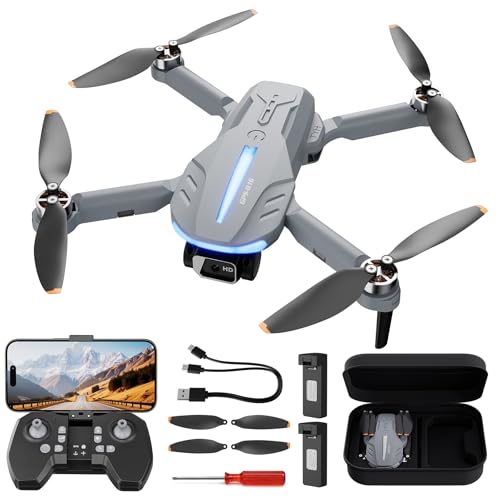
DEERC D35 Pro review: 97 specs compared

Avg. price:~£130Max flight time:20 minVideo resolution:4KMax transmission distance:0.3 km

DEERC D35 Pro Review: Compare 97 technical specifications to see how this product ranks in the Drones category and whether it is worth buying.
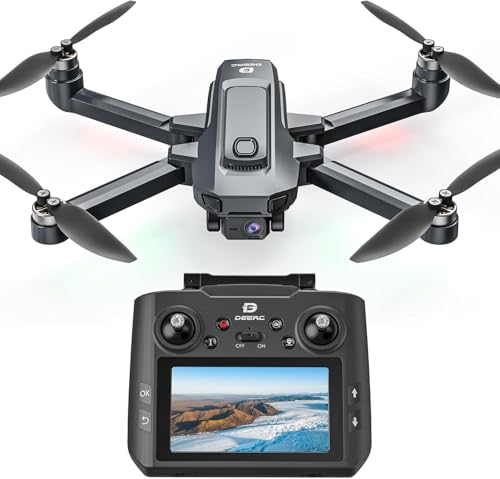
DEERC D35 Pro
6.9/10

Overall score

Score
6.9/ 10
✕
What it is
Our main score for this model, 1–10. It combines specs, best-of lists, expert reviews and owners.
How we count it
Parts: Technical score 40%, List score 30%, Reviews score 25%, Sentiment score 5%
Marks: Each part gets a mark out of 10. For reviews, lists and owners, a typical model in this category gets about 8 and the best one gets 10.
No data yet: A part with no data shows "?". It counts as the mark of a weaker model in this category (4 in 5 models with data score higher). This way, models with reviews, lists and owners usually come out ahead.
Score distribution
â–¼
<55-66-77-88-99-10
Score components

40%

6.1

Technical score

30%

?

List scoreNot enough data yet, so we use 7.5, the mark of a weaker model in this category

25%

?

Reviews scoreNot enough data yet, so we use 7.5, the mark of a weaker model in this category

5%

?

Sentiment scoreNot enough data yet, so we use 6.1, the mark of a weaker model in this category

â–¼Worse than 56% of drones
7.8

Value for money

Value for money
7.8/ 10
✕
What it is
An indicator that combines the drone's overall rating with its cost.
When it matters
When you are looking for a drone with a good balance between flight quality, camera features, and price.
Score distribution
â–¼
<55-66-77-88-99-10
Score components

70%

6.9

Overall score

30%

9.8

Price

â–²Better than 70%
6.1

Technical score

Technical score
6.1/ 10
✕
What it is
How good the specs are compared with the other models in this category, 1–10.
How we count it
Areas: We rate the specs in each area against the other models in this category.
Weighting: The areas that matter most to buyers count more. The shares are shown under Score components.
Share: The technical score is 40% of the overall score.
Score distribution
â–¼
<55-66-77-88-99-10
Score components

26%

5.7

Flight

24%

5.8

Camera

20%

6.1

Safety

16%

6.3

Connectivity

14%

6.8

Battery & Design

â–¼Worse than 51%
?

Reviews score

Reviews score
✕
What it is
Average grade from independent test sites, magazines and video reviewers, 1–10.
How we count it
Grades: Each review's own score is converted to 1–10; without one, we grade the review ourselves. Every review counts the same: written or video, short or full test.
Score: The average grade is 80% of the review mark; the number of reviews is the other 20% (1 review = 5, the typical number in this category = 8, the most-reviewed model = 10).
Enough data: With few reviews, the average grade is pulled toward the typical grade of this category. No reviews yet: 7.5 for now.
Share: Reviews count 25% of the overall score.
Score distribution
â–¼
<55-66-77-88-99-10
Grades by review (0)
We have not found an independent test of this model yet. Until we do, its review part counts as 7.5.
User ratings collected online are not part of this score.
No expert tests yet
?

List score

List score
7.5/ 10
✕
What it is
How often independent test sites, magazines and video reviewers put this model in their best-of lists for this category.
How we count it
Points: The model in the most lists of this category gets 10; the others get 8 to 10 in proportion. In no list yet: 7.5. Lists count 30% of the overall score.
Enough data: Every list counts, even a single one. With fewer than 5 best-of lists in the category, this part is left out.
Lists with this model (0)
Not in any best-of list yet, so this part counts as 7.5. Models in a list get 8 to 10.
Not in any best-of list yet
  • deerc-d35-pro
  • deerc-d35-pro
  • deerc-d35-pro
  • deerc-d35-pro
  • deerc-d35-pro
  • deerc-d35-pro
  • deerc-d35-pro
  • deerc-d35-pro
  • deerc-d35-pro
deerc-d35-pro
deerc-d35-pro
deerc-d35-pro
deerc-d35-pro
deerc-d35-pro
deerc-d35-pro
deerc-d35-pro
deerc-d35-pro
deerc-d35-pro
Where to buy
*As an Amazon Associate, we earn from qualifying purchases.
Best rankings
Available: ranking among products currently available (including other versions of this product).All: ranking among all products in the database.
Loading...
Loading category ranking...

Technical Specifications of drone DEERC D35 Pro

Technical score
Technical score
6.1/ 10
✕
What it is
How good the specs are compared with the other models in this category, 1–10.
How we count it
Areas: We rate the specs in each area against the other models in this category.
Weighting: The areas that matter most to buyers count more. The shares are shown under Score components.
Share: The technical score is 40% of the overall score.
Score distribution
â–¼
<55-66-77-88-99-10
Score components:

26%

5.7

Flight

24%

5.8

Camera

20%

6.1

Safety

16%

6.3

Connectivity

14%

6.8

Battery & Design

6.1
Reviews score
7.5
List score
?
Value for money
Value for money
7.8/ 10
✕
What it is
An indicator that combines the drone's overall rating with its cost.
When it matters
When you are looking for a drone with a good balance between flight quality, camera features, and price.
Score distribution
â–¼
<55-66-77-88-99-10
Score components:

70%

6.9

Overall score

30%

9.8

Price

7.8
Max flight time
20 min
This drone has a max flight time of 20 min, longer than 45.5% of drones and equal to 4.5% of drones.
Max flight distance
0.3 km
This drone has a max flight distance of 0.3 km, shorter-range than 65.2% of drones and equal to 6.1% of drones.
Max flight speed
15 m/s
This drone has a max flight speed of 15 m/s, faster than 50% of drones and equal to 2.5% of drones.
Max wind resistance
?
Max service ceiling (ASL)
?
Show more
Video resolution
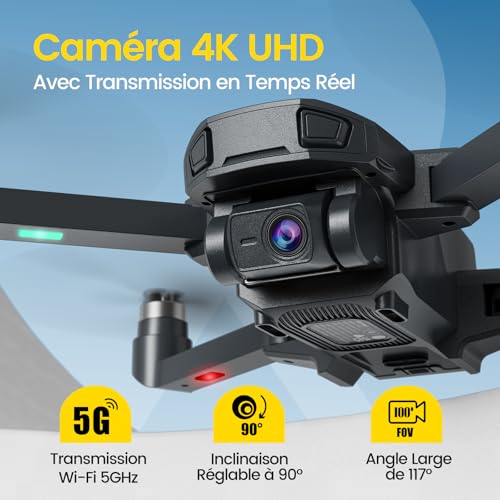
4K
This drone records video at 4K, higher than 45.5% of drones and equal to 10.4% of drones.
4K camera
yes
This drone supports 4K video. 46% of drones support 4K video.
Sensor size
?
Main camera megapixels
?
Max movie bitrate
?
Show more
Obstacle detection
no
This drone does not support obstacle detection. 31% of drones support obstacle detection.
Return to Home (RTH)
yes
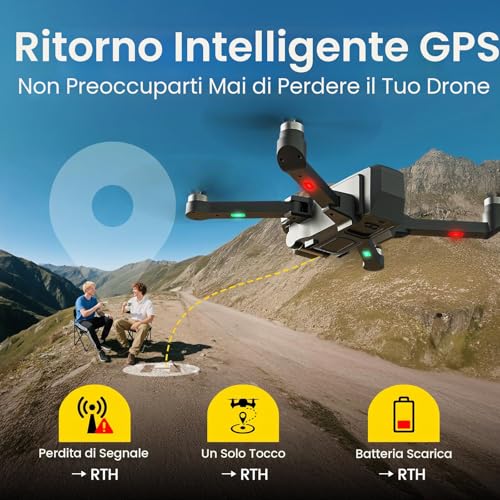
This drone supports Return-to-Home (RTH). 33% of drones support Return-to-Home (RTH).
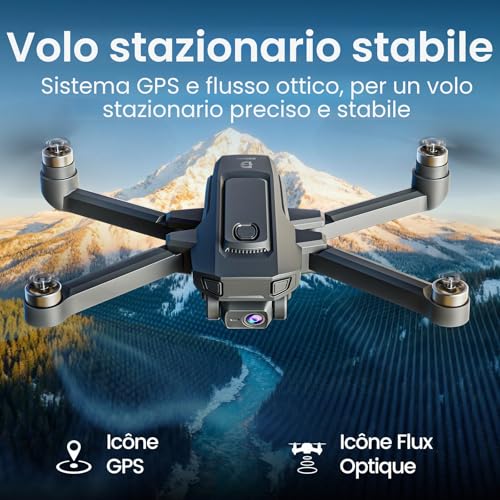
GPS
yes
This drone supports GPS. 35.3% of drones support GPS.
GNSS systems supported
GPS
This drone supports GPS GNSS systems, which are less comprehensive than those of 50.8% and the same as those of 14.6%.
Obstacle sensing directions
N/A
Show more
Max transmission distance
0.3 km
This drone has a max transmission distance of 0.3 km, shorter-range than 62.2% of drones and equal to 6.1% of drones.
Transmission latency
?
Video transmission system
Wi-Fi
This drone uses Wi-Fi for video transmission, which is more advanced than the system used by 8.2% and the same as that used by 47.7%.
Live view quality
2048x1152@? fps
This drone offers live view quality of 2048x1152@? fps, higher-quality than 96.9% of drones and equal to 0.5% of drones.
Remote control
yes
This drone has a handheld remote controller. 5% of drones offer this.
Show more
Battery capacity
2,200 mAh
This drone has a battery capacity of 2,200 mAh, larger than 49.7% of drones and equal to 4.2% of drones.
Battery energy
8.14 Wh
This drone has battery energy of 8.14 Wh, lower than 66.5% of drones and equal to 1.2% of drones.
Charging time
120 min
This drone charges in 120 min, slower than 65% of drones and equal to 11.3% of drones.
Weight
210 g
This drone weighs 210 g, lighter than 58.3% of drones and equal to 0.5% of drones.
Removable battery
yes
This drone has a removable battery. 0.5% of drones have a removable battery.
Show more

DEERC D35 Pro vs the average drone

246810TotalFlightCameraSafetyConnectivityBattery & Design
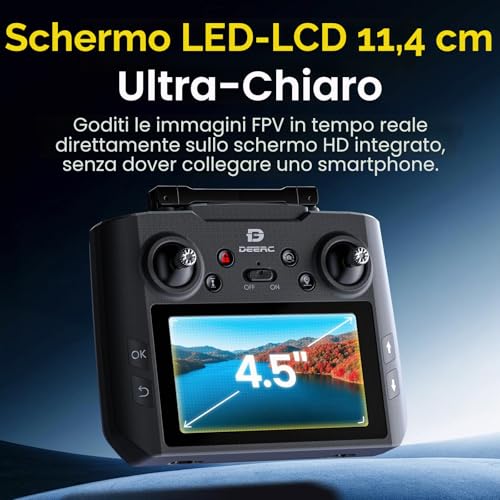
  • Built-in display
    This drone has a built-in display, while the average drone does not.
  • Better live view quality
    This drone has better live view quality than the average drone (2048x1152@? fps vs 1080p@25 fps). The average drone offers live view quality of 1080p@25 fps.
    2048x1152@? fps vs 1080p@25 fps
  • More modern charging port
    This drone uses USB-C for charging, while the average drone uses micro-USB.
    USB-C vs micro-USB
  • Supports waypoint flight
    This drone supports waypoint flight, while the average drone does not.
  • 3 years newer release date
    This drone is newer than the average drone (2026 vs 2023). The average drone was released in 2023.
    2026 vs 2023
  • 27 ° wider field of view
    This drone has a wider field of view than the average drone (117 ° vs 90 °). The average drone has a field of view of 90 °.
    117 ° vs 90 °
  • 12.5 mm lower body height
    This drone is shorter than the average drone (50 mm vs 62.5 mm). The average drone is 62.5 mm tall.
    50 mm vs 62.5 mm
  • 2.5 m/s faster tracking speed
    This drone can track subjects at a higher speed than the average drone (15 m/s vs 12.5 m/s). The average drone tracks subjects at 12.5 m/s.
    15 m/s vs 12.5 m/s
  • 3 years newer release date
    This drone is newer than the average drone (2026 vs 2023). The average drone was released in 2023.
    2026 vs 2023
  • 27 ° wider field of view
    This drone has a wider field of view than the average drone (117 ° vs 90 °). The average drone has a field of view of 90 °.
    117 ° vs 90 °
  • Supports waypoint flight
    This drone supports waypoint flight, while the average drone does not.
  • 2.5 m/s faster tracking speed
    This drone can track subjects at a higher speed than the average drone (15 m/s vs 12.5 m/s). The average drone tracks subjects at 12.5 m/s.
    15 m/s vs 12.5 m/s
  • Built-in display
    This drone has a built-in display, while the average drone does not.
  • Better live view quality
    This drone has better live view quality than the average drone (2048x1152@? fps vs 1080p@25 fps). The average drone offers live view quality of 1080p@25 fps.
    2048x1152@? fps vs 1080p@25 fps
  • More modern charging port
    This drone uses USB-C for charging, while the average drone uses micro-USB.
    USB-C vs micro-USB
  • 12.5 mm lower body height
    This drone is shorter than the average drone (50 mm vs 62.5 mm). The average drone is 62.5 mm tall.
    50 mm vs 62.5 mm
  • 14.6% lower weight
    This drone is lighter than the average drone (210 g vs 246 g). The average drone weighs 246 g.
    210 g vs 246 g
  • Fewer GNSS systems
    This drone supports GPS GNSS systems, while the average drone supports GPS, GLONASS, Galileo, BeiDou.
    GPS vs GPS, GLONASS, Galileo, BeiDou
  • More basic transmission system
    This drone uses Wi-Fi for video transmission, while the average drone uses SkyLink 2.0.
    Wi-Fi vs SkyLink 2.0
  • Lower video resolution
    This drone offers lower video resolution than the average drone (4K vs 4K/100 fps). The average drone offers a video resolution of 4K/100 fps.
    4K vs 4K/100 fps
  • 1.2 m worse hover accuracy
    This drone has worse horizontal hover accuracy than the average drone (1.5 m vs 0.3 m). The average drone has horizontal hover accuracy of 0.3 m.
    1.5 m vs 0.3 m
  • Fewer photo format options
    This drone supports JPEG photo formats, while the average drone supports JPEG, DNG (RAW).
    JPEG vs JPEG, DNG (RAW)
  • Basic companion app
    This drone uses the Deerc GPS companion app, while the average drone uses HS FPV.
    Deerc GPS vs HS FPV
  • 30 min longer charging time
    This drone charges more slowly than the average drone (120 min vs 90 min). The average drone charges in 90 min.
    120 min vs 90 min
  • Narrower tilt range
    This drone has a narrower tilt range than the average drone (-90 to 0 ° vs -90 to 20 °).
    -90 to 0 ° vs -90 to 20 °
  • 0.7 km shorter flight distance
    This drone has a shorter max flight distance than the average drone (0.3 km vs 1 km). The average drone can fly up to 1 km.
    0.3 km vs 1 km
  • Lower video resolution
    This drone offers lower video resolution than the average drone (4K vs 4K/100 fps). The average drone offers a video resolution of 4K/100 fps.
    4K vs 4K/100 fps
  • Fewer photo format options
    This drone supports JPEG photo formats, while the average drone supports JPEG, DNG (RAW).
    JPEG vs JPEG, DNG (RAW)
  • Narrower tilt range
    This drone has a narrower tilt range than the average drone (-90 to 0 ° vs -90 to 20 °).
    -90 to 0 ° vs -90 to 20 °
  • Lower photo resolution
    This drone offers lower photo resolution than the average drone (3840x2160 px vs 4096x3072 px). The average drone offers a photo resolution of 4096x3072 px.
    3840x2160 px vs 4096x3072 px
  • 3 x lower digital zoom
    This drone offers less digital zoom than the average drone (0 x vs 3 x). The average drone offers 3 x of digital zoom.
    0 x vs 3 x
  • Fewer GNSS systems
    This drone supports GPS GNSS systems, while the average drone supports GPS, GLONASS, Galileo, BeiDou.
    GPS vs GPS, GLONASS, Galileo, BeiDou
  • 1.2 m worse hover accuracy
    This drone has worse horizontal hover accuracy than the average drone (1.5 m vs 0.3 m). The average drone has horizontal hover accuracy of 0.3 m.
    1.5 m vs 0.3 m
  • 1 fewer flight modes
    This drone offers fewer intelligent flight modes than the average drone (3 vs 4). The average drone offers 4 intelligent flight modes.
    3 vs 4
  • More basic transmission system
    This drone uses Wi-Fi for video transmission, while the average drone uses SkyLink 2.0.
    Wi-Fi vs SkyLink 2.0
  • Basic companion app
    This drone uses the Deerc GPS companion app, while the average drone uses HS FPV.
    Deerc GPS vs HS FPV
  • 0.7 km shorter transmission range
    This drone has a shorter max transmission distance than the average drone (0.3 km vs 1 km). The average drone reaches 1 km of transmission distance.
    0.3 km vs 1 km
  • 30 min longer charging time
    This drone charges more slowly than the average drone (120 min vs 90 min). The average drone charges in 90 min.
    120 min vs 90 min
  • 9.04 Wh less battery energy
    This drone has lower battery energy than the average drone (8.1 Wh vs 17.18 Wh). The average drone battery has 17.18 Wh of energy.
    8.14 Wh vs 17.18 Wh
  • 25 mm longer body length
    This drone is longer than the average drone (300 mm vs 275 mm). The average drone is 275 mm long.
    300 mm vs 275 mm

Third-party reviews

What customers like about DEERC D35 Pro

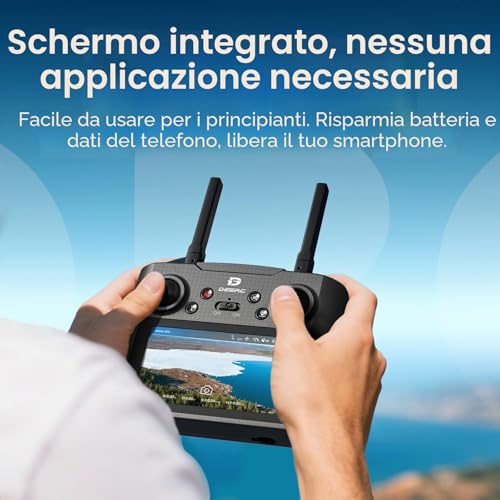
  • Remote with a built-in screen, no phone needed
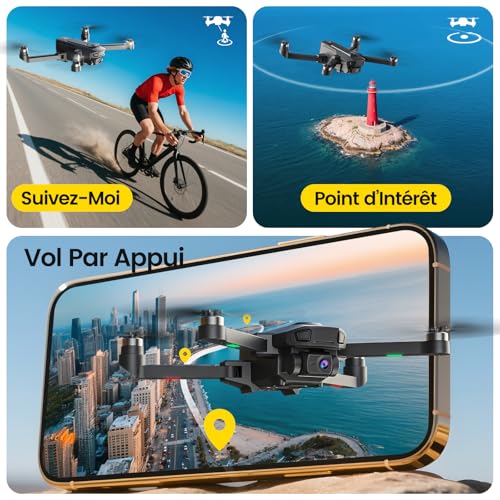
  • GPS return-to-home and follow-me
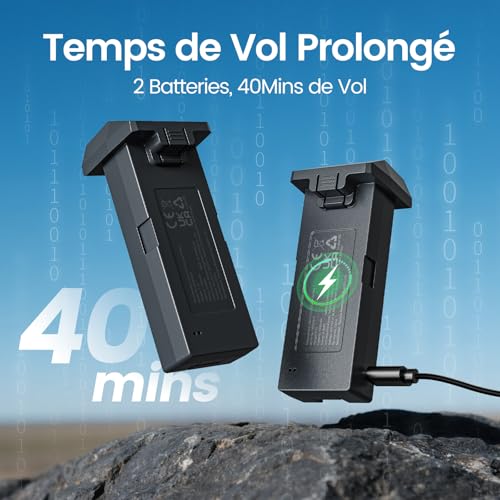
  • About 20 minutes per battery, around 40 with two
  • Brushless motors for steadier flight
  • Foldable 210 g body

What customers don't like about DEERC D35 Pro

  • Short Wi-Fi range of about 300 m
  • No gimbal stabilisation
  • 40-minute figure needs two batteries
  • Not suited to long-distance flights

Verdict

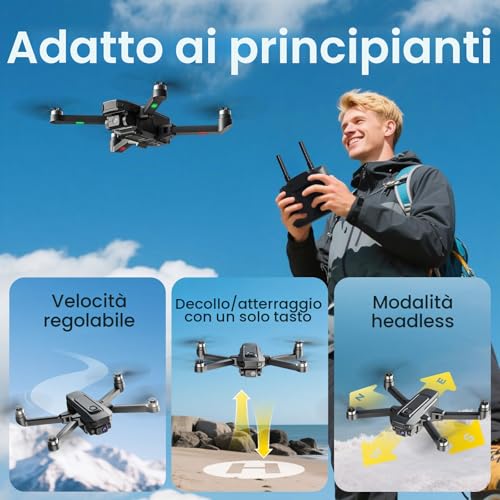
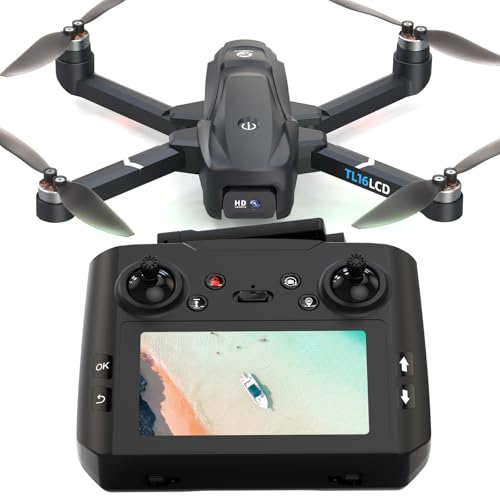
The DEERC D35 Pro is a budget GPS drone that adds a screen to the remote, so pilots can see the live view without a phone. It weighs 210 g and folds for travel, and brushless motors give steadier and longer-lasting flight than brushed toys. Each battery is rated for about 20 minutes, and the bundle with two batteries is marketed as offering around 40 minutes in total. GPS supports return-to-home and follow-me tracking, which takes some stress out of flying outdoors. The camera records 4K, though footage is not gimbal-stabilised, and the Wi-Fi link reaches only about 300 m, so this is a drone for flying nearby rather than exploring far away. For beginners who want GPS safety, a screen remote and decent flight time at a low price, it is a well-equipped choice.

Compare DEERC D35 Pro with other drones

1Product to compare no. 1
VS
2Product to compare no. 2
VS
3Product to compare no. 3 (optional)

Graphic comparison of DEERC D35 Pro and other drones

No results found