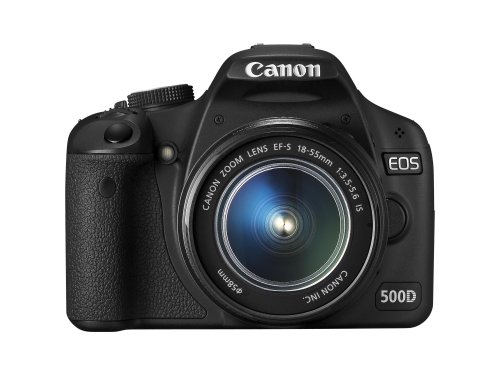
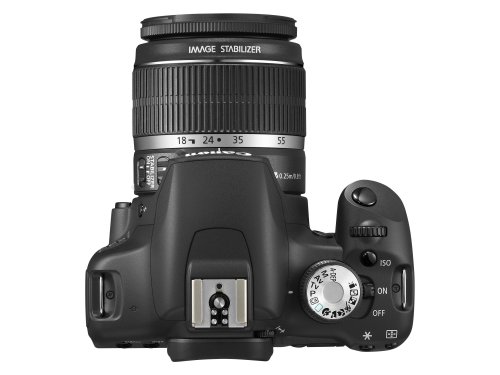
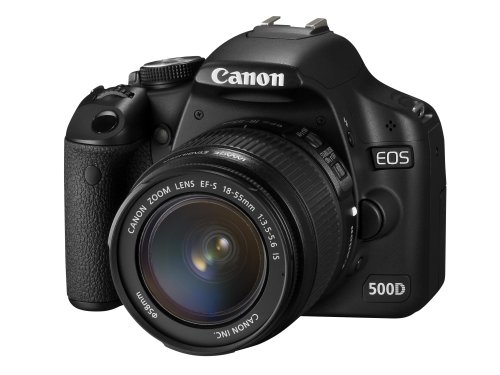
Canon EOS 500D review. Compare 108 technical specifications and user reviews to see how it ranks among cameras and if it is worth buying.
Overall score
What it is: An overall evaluation of the camera's quality, based on technical analyses and user reviews.
When it matters: When you need a quick reference to identify the best cameras on the market.
Score components:
90.0%
Technical Score
10.0%
User score
Technical Score
What it is: An assessment of the camera's technical performance, covering eight key areas: image quality, autofocus, video features, stabilization, lens compatibility, connectivity, battery, and design.
When it matters: When you want to compare cameras based on technical performance and available features.
Score components:
28.0%
Sensor & Image
25.0%
Photo Features
18.0%
Video & Audio
14.0%
Display & Design
8.0%
Battery & Power
7.0%
Connectivity & Storage
User score
What it is: A rating that combines user reviews and the total number of reviews received by the camera.
When it matters: When real-world owner satisfaction and review volume matter to your decision.
Score components:
70.0%
User reviews
30.0%
Popularity
Score components:
25.0%
Sensor size
20.0%
Main camera megapixels
20.0%
Dual card slots
15.0%
N. of focus points
10.0%
RAW photo capture
10.0%
Phase-detection autofocus (photos)
Score components:
35.0%
Weight
30.0%
Battery life (CIPA)
20.0%
Sensor-shift stabilization
15.0%
GPS
Score components:
30.0%
Price
20.0%
Weight
20.0%
AF tracking
20.0%
Battery life (CIPA)
10.0%
Touchscreen
Score components:
30.0%
Main camera megapixels
25.0%
Sensor size
20.0%
Main camera pixel size
15.0%
Sensor-shift stabilization
10.0%
RAW photo capture
Score components:
30.0%
Weight
25.0%
Thickness
20.0%
AF low-light sensitivity
15.0%
Sensor-shift stabilization
10.0%
Eye detection AF (human)
Score components:
30.0%
Sensor size
25.0%
Main camera pixel size
20.0%
Eye detection AF (human)
15.0%
Main camera megapixels
10.0%
Sensor-shift stabilization
Score components:
30.0%
Weight
25.0%
Battery life (CIPA)
20.0%
Min operating temperature
15.0%
Sensor-shift stabilization
10.0%
GPS
Available: ranking among products currently available (including other versions of this product).
All: ranking among all products in the database.
#23 in Best Cheap DSLR Cameras
#26 in Best Canon DSLR Cameras
#48 in Best Canon EOS Cameras
#62 in Best DSLR Cameras
#62 in Best SLR Cameras
#69 in Best Cheap Cameras
#69 in Best Canon Digital Cameras
#79 in Best Cameras under £1000
#123 in Best Cameras under £500
#182 in Best Cameras under £200
#235 in Best Cameras under £300
#275 in Best Travel Cameras
#297 in Best Cameras for Hiking
#301 in Best Cameras
#301 in Best Digital Cameras
What it is: An assessment of the camera's technical performance, covering eight key areas: image quality, autofocus, video features, stabilization, lens compatibility, connectivity, battery, and design.
When it matters: When you want to compare cameras based on technical performance and available features.
Score components:
28.0%
Sensor & Image
25.0%
Photo Features
18.0%
Video & Audio
14.0%
Display & Design
8.0%
Battery & Power
7.0%
Connectivity & Storage
What it is: A rating that combines user reviews and the total number of reviews received by the camera.
When it matters: When real-world owner satisfaction and review volume matter to your decision.
Score components:
70.0%
User reviews
30.0%
Popularity
What it is: An indicator that combines the camera's overall rating with its cost.
When it matters: When you want to know how much overall quality you get for the price.
Score components:
60.0%
Overall score
40.0%
Price
Importance: HIGH
Good value: Full frame or larger
Importance: HIGH
Good value: At least 20 MP
Importance: HIGH
Good value: At least 3.5 µm
Importance: LOW
Importance: MEDIUM
Good value: At least ISO 25,600
Importance: MEDIUM
Importance: MEDIUM
Good value: At least 14-bit
Importance: LOW
Importance: LOW
Importance: LOW
Importance: LOW
Importance: LOW
Importance: LOW
Importance: LOW
Importance: LOW
Importance: MEDIUM
Importance: LOW
Importance: LOW
Importance: LOW
Importance: LOW
Importance: LOW
Importance: HIGH
Good value: At least 200 points
Importance: HIGH
Importance: MEDIUM
Importance: LOW
Importance: LOW
Importance: MEDIUM
Importance: MEDIUM
Importance: HIGH
Good value: At least 5 stops
Importance: LOW
Importance: MEDIUM
Good value: At least 10 fps
Importance: LOW
Importance: LOW
Importance: LOW
Importance: LOW
Importance: LOW
Importance: LOW
Importance: LOW
Importance: LOW
Importance: LOW
Importance: LOW
Importance: LOW
Importance: LOW
Importance: LOW
Importance: LOW
Importance: LOW
Importance: LOW
Good value: At least 200,000 actuations
Importance: LOW
Good value: At least 10x
Importance: HIGH
Good value: At least 3840 px
Importance: MEDIUM
Good value: At least 200 Mbps
Importance: MEDIUM
Good value: At least 10-bit
Importance: LOW
Importance: LOW
Importance: LOW
Importance: LOW
Importance: LOW
Importance: LOW
Importance: LOW
Good value: At least 30 min
Importance: LOW
Importance: LOW
Importance: LOW
Importance: LOW
Importance: LOW
Good value: At least 2 microphones
Importance: LOW
Importance: LOW
Importance: LOW
Importance: LOW
Importance: MEDIUM
Good value: 500 g or less
Importance: LOW
Importance: LOW
Importance: LOW
Importance: MEDIUM
Importance: MEDIUM
Good value: At least 2.36 million dots
Importance: LOW
Good value: 100%
Importance: LOW
Importance: LOW
Good value: At least 120 Hz
Importance: MEDIUM
Good value: At least 3 in
Importance: LOW
Importance: LOW
Importance: LOW
Importance: LOW
Importance: LOW
Importance: LOW
Importance: LOW
Good value: At least 10 m
Importance: LOW
Importance: LOW
Importance: LOW
Importance: LOW
Importance: MEDIUM
Good value: At least 400 shots
Importance: LOW
Good value: At least 1,500 mAh
Importance: LOW
Importance: LOW
Importance: LOW
Importance: LOW
Importance: LOW
Importance: LOW
Importance: LOW
Importance: LOW
Importance: LOW
Importance: LOW
Importance: LOW
Importance: LOW
Importance: LOW
Importance: LOW
Importance: LOW
Importance: LOW
Importance: LOW
Importance: LOW
Importance: HIGH
Importance: LOW
Importance: HIGH
Good value: At least 3.5 µm
Importance: MEDIUM
Importance: LOW
Importance: MEDIUM
Good value: At least 400 shots
Importance: MEDIUM
Importance: MEDIUM
Importance: LOW
Good value: 100%
Importance: LOW
Importance: LOW
Importance: LOW
Good value: At least 2 microphones
Importance: MEDIUM
Good value: At least 10 fps
Importance: HIGH
Good value: At least 20 MP
(Reviews last updated: July 2026)
The DPReview Canon EOS 500D review characterizes the DSLR as a responsive entry-level camera, highlighting its 15.1-megapixel sensor for excellent detail, a high-resolution 3.0-inch LCD, and pioneering 720p HD video functionality. While offering extensive ISO sensitivity up to 12800, the camera is noted for its "plasticy" construction, a small grip, and higher noise levels at maximum ISO compared to its predecessor. Specific limitations include a jerky 20fps 1080p video mode and the lack of an external microphone input.
The Canon EOS 500D is a highly capable 15-megapixel digital SLR that serves as an excellent entry point for novice photographers or those upgrading from older models like the 400D or 450D. The camera stands out for its responsive performance, featuring a rapid 0.1-second start-up time and a shooting speed of 3.4 frames per second. It is equipped with a stunning, high-resolution 3-inch LCD screen boasting 920,000 dots, making it a joy to use for framing, reviewing great-quality photos, and operating the built-in Live View mode. Additionally, it introduces full 1080p high-definition video capabilities to the lineup and features a highly efficient Digic 4 processor that provides solid noise reduction for clean shots up to ISO 1600. Despite these strong features, the camera has notable limitations regarding its video performance and physical ergonomics. The high-definition video quality is not particularly impressive, showing grainy details and lost shadows in low-light environments, while recording at only 20 frames per second limits its smoothness. Audio recording is also a weak spot because the built-in mono microphone picks up loud, disruptive lens autofocus noises...
The Canon EOS 500D earns a Gold Award from What Digital Camera for being a refined entry-level DSLR featuring a detailed 15.1-megapixel sensor, a high-resolution 3-inch LCD, and swift 9-point autofocus. Performance is further boosted by the DIGIC 4 engine, which ensures fast file writing and efficient raw image processing. However, the review highlights significant limitations, specifically a choppy 20fps 1080p video mode, missing external microphone input, and noisy autofocus that ruins audio recording. Other drawbacks include restricted raw continuous shooting, inconsistent metering in bright scenes, and an autofocus layout that lags behind competitors.
The-Digital-Picture.com review of the Canon EOS Rebel T1i / 500D highlights a compact, low-priced entry-level DSLR offering exceptional image quality via a 15.1-megapixel sensor, DIGIC 4 processor, and superior low-noise performance. Key pros include a high-resolution LCD, reliable 9-point autofocus, and Full HD capability, positioning it competitively against higher-tier models. Conversely, the review notes compromises such as reduced Diffraction Limited Aperture (DLA) due to specific sensor architecture and a moderate 3.4 fps shooting speed. Additionally, while 1080p video is included, the 20 fps limit creates choppy footage, with 720p recommended for smoother results. YouTube
The Trusted Reviews analysis describes the Canon EOS 500D as a user-friendly, high-performance, entry-level DSLR offering professional features like a 15.1-megapixel sensor and a sharp 3.0-inch VGA monitor. Pros include an effective dust reduction system, responsive handling, and high-definition video capabilities. However, the review highlights significant drawbacks in video functionality, specifically noting that 1080p recording is limited to a choppy 20fps and that the autofocus produces loud noise, worsened by the lack of an external microphone input. Additionally, performance issues are noted in RAW shooting depth and overall dynamic range.
The OpticalLimits (formerly PhotoZone) review highlights the Canon EOS 500D (Rebel T1i) as a lightweight and compact consumer DSLR packed with powerful core features. Powered by a 15.1-megapixel CMOS sensor and the DIGIC 4 processor, the camera delivers great image resolution and sharp image quality, capturing up to 3.4 frames per second. Users benefit from highly effective handling thanks to an adequate layout of physical buttons, an integrated sensor cleaning system to prevent dust buildup, and a large, remarkably bright 3-inch LCD screen boasting 920,000 dots. The inclusion of standard High Definition (720p) video recording further adds to its versatility as a recommendable camera for mainstream hobbyists. However, the review details several prominent drawbacks, particularly regarding its highly anticipated but flawed Full HD (1080p) movie mode, which only records at a choppy 20 frames per second. This frame rate is insufficient for fluid motion, and video shooting is further hindered by manual zooming constraints and stepped aperture control. Additionally, despite marketing an expanded ISO sensitivity up to 12,800, sensor noise becomes visually disruptive starting at just ISO 1600. The camera's...
The Canon EOS 500D is a highly capable and portable DSLR featuring a 15-megapixel sensor that produces exceptional image quality, along with high-quality video recording capabilities. Despite these strengths, the camera suffers from noticeable noise even at low ISO settings, significant image degradation at 12,800 ISO, and "CMOS wobble" during fast panning.
Ken Rockwell calls the Canon Digital Rebel T1i a top-performing, lightweight DSLR with exceptional ergonomics, featuring a sharp 3-inch screen and a user-friendly design that allows for one-handed operation. While praising the intuitive "SET" button interface, he highlights the robust, albeit plastic, construction, noting its excellent durability despite the budget-friendly material. Ken Rockwell The main drawbacks stem from its lightweight plastic construction, which lacks the premium feel of metal bodies, and a design that forces heavy reliance on the rear screen for settings rather than dedicated physical buttons. Overall, the review emphasizes that the T1i offers professional-level image quality in a highly accessible package, making its minor structural limitations insignificant.
In this camera review hosted on Digital Photography School, author Barrie Smith evaluates the Canon EOS T1i (also known as the Canon EOS 500D) as a mid-tier option positioned to fulfill the needs of passionate amateur photographers and cost-conscious semi-professionals. Tested alongside the 18-55mm and 55-250mm stabilized kit lenses, the camera setup features a 22.3×14.9mm CMOS sensor. Because of the camera's 1.6x crop factor multiplier, these two lenses combine to offer a highly versatile effective SLR focal range of 29mm to 400mm, making the kit package an nearly ideal, well-rounded bundle for general photography. The review highlights distinct pros and cons regarding the camera's system and lens ecosystem. A major pro is the overall versatility of the bundled stabilized kit lenses, which deliver an expansive zoom range capable of handling most day-to-day shooting scenarios without requiring frequent lens swaps. On the flip side, a notable con identified by the reviewer is that the 29mm effective focal length at the wide end can feel too restrictive for expansive landscape or architectural work. To overcome this limitation, users would need to purchase...
Canon Rebel T1i Review Summary However, the reviewer highlights several prominent drawbacks, particularly regarding the camera's ergonomics, menu system, and video performance. The kit lens features an annoyingly thin, poorly located manual focusing ring at the very front of the barrel, making it easy to accidentally smudge the front element, while its rotating front element renders circular polarizers impractical. System navigation is hindered by complex menus, excessive confirmation steps (such as pressing the Set button), and cursor buttons that can work at cross-purposes with the control dial. Performance limitations include slow Live View autofocus, unreliable continuous AF tracking due to having only 9 AF points, and a restricted internal memory buffer that stalls after just 4 consecutive RAW+JPEG bursts. Finally, the HD video mode is disappointing due to a lack of advanced camcorder functionality and an internal microphone that easily picks up loud ambient camera-handling noise.
The Canon EOS 500D (released in 2009 for $800) is a compact, 15.10-megapixel APS-C DSLR praised for its impressive still-image capabilities and introduction of video functionality. In terms of pros, the camera delivers extraordinary, precise detail when paired with good lenses, clearly outperforming older models like the 350D. Its high ISO performance is surprisingly strong for an APS-C sensor with small photosites; images up to ISO 1600 retain good usability with minor noise reduction, even slightly besting the more expensive Canon 50D. Furthermore, using customized, low-contrast Picture Styles allows users to maximize dynamic range and bypass aggressive in-camera sharpening, creating a flatter profile that acts as a "video RAW" for better post-processing control. However, the camera has notable cons, particularly regarding its low-light performance and video implementation. The 500D appears to read only a fraction of its pixel rows rather than resizing the full sensor on the fly, which severely limits video crispness, introduces prominent aliasing ("jaggies") artifacts, and causes low-light footage to look muddy and noisy. Compensating for this poor low-light video performance requires expensive, bright lenses (such as...
The Canon EOS Rebel T1i (also known as the EOS 500D) is an entry-level digital SLR camera featuring a 15-megapixel CMOS sensor, a DIGIC 4 image processor, and a highly detailed 3-inch LCD screen with 920,000 pixels. It delivers exceptional image quality with clean, low-noise results up to ISO 3200. Performance is a major strength, highlighted by a rapid 1-second startup time, fast shot-to-shot speeds, and a continuous shooting rate of 3.4 frames per second. The camera introduces HD video capabilities—recording at 720p at 30 FPS and 1080p resolution—while allowing users to capture full-resolution still photos during recording. Additionally, it features an effective custom menu system, good battery life of up to 500 shots per charge, and compatibility with a wide selection of EF/EF-S lenses and accessories. Despite these strong features, the camera has notable limitations in ergonomics, live view, and video performance. The physical right-hand grip is narrow and cramped, making it difficult to balance when attached to larger, heavier lenses. The 15-megapixel sensor is highly demanding, mercilessly exposing softness and flaws in lower-grade lenses unless the aperture is...
The Canon EOS Rebel T1i (EOS 500D) is a 15.1-megapixel consumer digital SLR featuring a DIGIC 4 image processor, an impressive 3-inch, 920,000-dot high-resolution LCD screen, and an expanded ISO range stretching from 100 up to 12,800. It is highly praised for delivering outstanding still image quality and superb detail that easily rivals the more expensive Canon 50D, packaged alongside an optically excellent, image-stabilized 18-55mm kit lens. Standout professional features include the addition of an HD movie mode (capturing 720p at 30fps and 1080p at 20fps), effective dust reduction technology, Peripheral Illumination Correction to fix lens vignetting, and highly capable low-light performance with clean prints even at ISO 3,200. However, the camera has notable limitations, particularly for enthusiast videographers and aggressive burst shooters. The video functionality suffers from a lack of continuous autofocus and manual exposure controls, alongside the omission of an external microphone jack or a wind filter. When shooting still images, users will quickly hit a restrictive buffer limitation that slows down operation when capturing RAW data, and high ISO noise suppression can struggle with low-contrast details, particularly...
The Cameralabs review highlights the Canon EOS 500D (Rebel T1i) as a compelling mid-entry DSLR that borrows key features from higher-end models like the 50D. A major standout feature is its 15.1 Megapixel APS-C sensor and the inclusion of HD video recording, offering users a choice between 1080p and 720p modes. The camera's physical usability is substantially enhanced by a spectacular 3-inch, 920k-dot VGA screen that delivers exceptional clarity for Live View composition and image playback. Additionally, an integrated HDMI port provides a convenient way to output high-definition slideshows directly to modern televisions. However, the review notes several design compromises and performance limitations to keep in mind. On the downside, the heavily marketed 1080p video mode is limited to an un-smooth 20fps, forcing most users to step down to 720p at 30fps for standard video needs. In terms of performance, the camera suffers from a slower continuous shooting speed (3.4fps) compared to its older predecessor, and it completely lacks advanced physical hardware upgrades such as the 50D's gapless micro-lenses or a fluorine anti-dust sensor coating. Finally, the real-world resolution benefits...
The Canon EOS 500D offers a well-balanced, fast-performing entry-level DSLR experience, highlighted by excellent, vibrant image quality directly from the camera and a reliable autofocus system. Its design features a secure grip for smaller hands, precise assembly, and user-friendly battery compartments, making it a strong contender for beginners. However, the, camera is constrained by a cheaply finished plastic body that lacks a premium feel compared to rivals and a shallow grip that may feel uncomfortable to some. Furthermore, testers found the integrated video mode unconvincing, and the lack of a dedicated direct power adapter port necessitates using a dummy battery solution.
However, the review highlights several distinct drawbacks, particularly concerning the physical handling during video mode, as zooming via the lens ring creates shaky, jerky footage, and the autofocus operates quite slowly and imprecisely while filming. Furthermore, the upgrade to 15 megapixels from the previous 12-megapixel model offers no measurable real-world improvement in image detail, likely limited by the low-cost kit lens used in testing. Finally, the menu navigation and control concept remain identical to its predecessor, meaning users will struggle with a non-user-friendly interface and have to spend significant time digging through menus to find basic features like exposure bracketing or face detection.
The Canon EOS 500D digital SLR camera delivers high-quality images even at high light sensitivities up to ISO 1,600, while maintaining excellent color accuracy. Despite utilizing a kit lens that lacks a USM motor, the camera achieves fast focusing speeds and is ready to shoot immediately after being powered on. For continuous shooting, it captures up to 3.4 frames per second at its full 15.1-megapixel resolution, handling approximately 63 consecutive JPEG images before slowing down to a still acceptable 2.6 frames per second. Additional pros include generally simple and good overall handling, a well-coordinated system concept, an affordable purchase price, and a built-in HDMI interface that flawlessly outputs movies and photos to Full HD displays. On the downside, the camera's video mode fails to impress because recording at the highest Full HD resolution (1,920 x 1,080 pixels) is limited to just 20 frames per second, which does not look smooth to the human eye. Furthermore, autofocus performance is weak during filming and in Live View photo mode; using the live autofocus during video recording causes sluggish focusing speeds and the...
The Canon EOS 500D is a digital SLR camera that delivers good image quality and minimal noise at higher sensitivities up to ISO 1,600, with very accurate, vivid color reproduction and instantaneous startup times. It shoots continuously at 3.4 frames per second at full 15.1-megapixel resolution, handling around 63 consecutive JPEGs before slowing down slightly. Operating the camera is generally straightforward and simple, though the shutter button positioning feels less than optimal for users with larger hands. The camera features a high-resolution, 3.0-inch display with excellent viewing angles and a live histogram, alongside an integrated HDMI output for seamless external playback. Included remote-control software further extends its utility by allowing users to adjust manual and autofocus settings at no extra cost. However, the camera has notable limitations, particularly regarding its video and autofocus capabilities. While it records video at multiple resolutions, the maximum 1,080p Full HD mode is restricted to a choppy 20 frames per second, and its live autofocus system operates quite slowly, introduces significant lens noise into recordings, and causes temporary image overexposure. Additional drawbacks include the lack...
The review by Patrick Ludolph on Neunzehn72 provides a practical, real-world comparison of the entry-level Canon EOS 500D after a full day of testing at a photography workshop in Hamburg. While acknowledging that comparing it to the higher-tier Nikon D90 is somewhat unfair due to their different price classes, the reviewer notes that both cameras deliver excellent, technically comparable image quality in RAW format. The Canon 500D shines with its beginner-friendly features, extensive scene modes, and an impressive "Quick Mode" autofocus in Live View that quickly drops the mirror to focus via standard focus points, heavily outperforming the D90's sluggish Live View system. Additionally, while its Full HD video quality is praised as excellent, the camera's video autofocus is criticized for being slow and highly impractical during active filming. The review heavily highlights the stark differences in ergonomics and interface design between the two bodies. The main downsides of the Canon 500D stem from its compact, lightweight build and plastic haptics, which make the grip too small for users with large hands. Furthermore, its physical interface lacks dedicated buttons for...
The Canon EOS 500D is an entry-level digital SLR camera tailored for beginners and hobbyists who want manual control without being overwhelmed by excessive features. Weighing 700 grams with the battery and kit lens, its body offers an ergonomic design with buttons that feature distinct tactile profiles, enabling seamless, blind, single-handed operation. Performance-wise, it boasts a rapid 0.2-second startup time, an intuitive customizable menu, and a vibrant, crisp 3-inch Live-View display. Priced around €800 at launch, this 15-megapixel camera delivers outstanding image quality with rich colors, excellent high-contrast handling under backlight, and exceptionally low image noise up to ISO 1600. It also features highly effective automated sensor dust removal and an automated A-DEP exposure mode to assist beginners in easily adjusting background blur. Despite these strong capabilities, the reviewer highlighted several significant drawbacks. A major missing feature is the lack of an in-body image stabilizer, forcing users to buy more expensive and heavier stabilized lenses. Furthermore, the otherwise excellent 3-inch screen is fixed and cannot be tilted or swiveled. While the camera can technically shoot Full HD videos (1080p), the...
The Canon EOS 500D (18-55mm IS kit) is a versatile and user-friendly mid-range DSLR featuring a 15-megapixel CMOS sensor, a bright 3-inch VGA LCD screen with 920,000 dots, and a maximum burst rate of 3,4 frames per second. The camera offers excellent image quality with highly manageable electronic noise up to ISO 1600, remaining perfectly usable even at ISO 3200. It is well-built with a comfortable, revised grip coating and features a highly efficient optical stabilization system via its kit lens. Additionally, it includes a helpful HD video mode capable of shooting 1280x720p footage at 30 frames per second. Despite its strengths, the camera suffers from notable limitations, particularly in its video and control functionalities. The highly anticipated Full HD (1080p) video mode is quite disappointing, as it is restricted to a jerky 20 frames per second, records only in mono sound, and completely lacks an external microphone input. Performance flaws include a very slow and loud autofocus during Live View (contrast-detection) mode, alongside occasional focus inaccuracies on specific test scenes. Ergonomically, the camera lacks a second rear adjustment dial,...
The Canon EOS 500D stands out by offering Full HD video recording with a resolution of 1920x1080 pixels, which allows it to outclass its main competitors like the Nikon D5000. This high-definition capability is the main strength of the camera's video mode. However, the video mode has some noticeable downsides. The autofocus system is slow, loud, and does not perform well while recording. Additionally, the camera only shoots at a frame rate of 20 frames per second (i/s) in Full HD, which raises questions about whether the footage is smooth enough.
The Canon EOS 500D is positioned at the top of Canon's entry-level lineup, designed to compete with models like the Nikon D5000, Olympus E620, and Sony Alpha 380. It comes equipped with a 15-megapixel sensor and a DIGIC 4 image processor, offering an impressive native ISO range of 100 to 3,200. Image quality remains high across this standard range due to effective electronic noise management and well-controlled grain. While the sensor shares the same resolution as the mid-range EOS 50D, it utilizes a standard microlens grid and only two readout channels, making it slightly less advanced than its higher-tier sibling. A key highlight of the camera is its high-definition 3-inch LCD screen, which features a crisp 920,000-dot VGA resolution that makes reviewing images, navigating menus, and using Live View very comfortable. The camera presents clear advantages alongside a few functional drawbacks. On the positive side, its screen provides excellent brightness for daytime viewing, and it features proximity sensors that automatically turn off the display to save power and eliminate glare when looking through the viewfinder. Low-light flexibility is another strong...
The Canon EOS 500D is highly praised in this review as a lightweight, compact, and efficient DSLR that offers exceptional image quality, making it an excellent lightweight option or a complementary backup body for professional photographers using larger full-frame cameras like the EOS 5D Mark II. The reviewer heavily emphasizes the camera's fantastic 15-megapixel APS-C sensor, which performs on par with the more robust EOS 50D, and notes that the crop sensor format serves as a cost-effective focal length multiplier for telephoto lenses. Additional praised features include the high-resolution rear screen, direct-access control buttons suitable for professional workflows, and the inclusion of video recording capabilities. Despite his overall enthusiasm, the reviewer points out several notable drawbacks, particularly Canon's frustrating logistical decision to enforce three different types of batteries, chargers, and grips across the contemporaneous EOS 5D, 50D, and 500D lineups. In contrast to rival Nikon—where standard batteries are shared across multiple bodies—the 500D forces multi-body users into carrying separate charging gear. Comments from the community further highlight limitations such as unreadable RAW files in then-current versions of Lightroom, a burst...
The Photoexposition.fr review highlights the Canon EOS 500D (also known as the Digital Rebel T1i) as a practical, solid DSLR that delivers everything a photographer fundamentally needs. The reviewer praises the camera's excellent ergonomics and user-friendliness, specifically noting the smart repositioning of the playback button to the bottom right, which allows for convenient one-handed thumb operation. Additional pros include its lightweight 480g plastic body that makes it ideal for long day trips, a sharp 3-inch 920,000-dot LCD screen, and an intelligent sensor that saves battery life by turning off the screen when your eye meets the viewfinder. Performance-wise, the camera boasts highly versatile lens compatibility with all EF and EF-S lenses since 1987, a built-in "shoot and forget" flash, and seamless access to core manual controls like ISO and exposure. On the downside, the reviewer notes several performance limitations, particularly criticizing the camera's sluggish burst rate of 3.4 frames per second, which fails to improve upon older models due to the Digic 4 processor lagging under increased pixel data. The autofocus is noted to be incredibly fast but lacks 100%...
The Les Numériques review of the definitive retail version of the Canon EOS 500D confirms that it functions identically to the pre-production model, delivering the same high-quality images with minor structural updates. A key highlight of the final production unit is a firmware update that partially fixes previous autofocus inconsistencies, resulting in a more precise and reliable focusing system. The camera features a 15.1-megapixel CMOS sensor paired with a DIGIC 4 processor, which performs exceptionally well by maintaining clean, usable images with well-managed electronic noise up to ISO 1600 and 3200. Additionally, its 3-inch high-resolution VGA screen (920,000 dots) offers an incredibly bright, comfortable experience for navigating menus, image playback, and using Live View. However, the review notes several technical and physical limitations that hold the DSLR back. On the downside, the camera's autofocus remains somewhat slow despite the firmware patch, and the unit introduces a completely new LP-E5 battery pack, breaking compatibility for users upgrading from older Canon bodies. While the addition of Full HD video recording is a major selling point, it comes with strict compromises: shooting at...
The Canon EOS 500D, launched in March 2009, achieved an overall sensor score of 63 according to DXOMARK’s testing. The camera shows its strongest performance in Portrait (Color Depth) with a score of 21.7 bits and Landscape (Dynamic Range) at 11.5 Ev. However, it struggles significantly in low-light conditions, receiving a Sports (Low-Light ISO) score of only 663, which is considerably lower than modern mirrorless and DSLR counterparts. When compared to other models of its era and subsequent generations, the EOS 500D sits in a lower-tier performance bracket. While it narrowly outperforms the entry-level Canon EOS 1000D (score of 62), it falls behind competitors like the Nikon D5100 (80) and more recent mirrorless options such as the Sony A6300 (85). The primary pros include its balanced performance for portraiture and landscape photography for its time, whereas the cons are its aging sensor technology and weak low-light ISO capabilities compared to newer industry standards. Are you looking to buy a used EOS 500D, or are you comparing it against a newer model you already own?
The Canon EOS 500D is a compact and lightweight digital SLR camera designed for users transitioning from advanced compact models, featuring a high-quality 15-megapixel APS-C CMOS sensor and the DIGIC 4 processor. Its standout features include a high-resolution 3-inch Clear View LCD screen borrowed from professional models and an impressive ISO range of 100 to 12,800, which delivers excellent, low-noise low-light photography and highly detailed RAW images. Additionally, it introduces Full HD 1080p video recording and utilizes an accessible SDHC storage system, making it an appealing, feature-rich option for novice photographers. However, the camera has notable limitations, starting with its plasticky, downsized body that makes handling uncomfortable and poorly balanced when paired with heavy, professional lenses or high-end flashes. While it features video recording, the functionality is hindered by a choppy 20 fps frame rate at 1080p, lack of manual video adjustments, poor audio quality, and the absence of an external microphone input. Finally, its higher price tag places it uncomfortably close to the more durable, magnesium-alloy EOS 50D, which lacks video but offers vastly superior ergonomics, an auxiliary LCD...
The Canon EOS 500D review praises the DSLR for its impressive daylight video quality and versatility in capturing high-resolution photos and video without needing multiple devices. Users gain creative control through manual focus, making it a capable tool for filmmaking, as highlighted in this account of using it on a trip to Japan. However, the camera suffers from significant drawbacks, including a lack of continuous autofocus during recording that requires manual adjustment, according to the review. Additionally, the 1080p mode is limited to a choppy 20 frames per second, leading the author to recommend 720p at 30 fps for smoother results.
The Radojuva review highlights the Canon 500D as a capable, entry-level DSLR featuring a 15.1-megapixel sensor borrowed from the 50D, delivering 4752x3168 pixel images and a detailed 3-inch 920k-dot screen. Key strengths include a functional Live View for manual focusing, ISO capabilities up to 12,800, and built-in image enhancement tools like Peripheral Illumination Correction. Performance limitations, or cons, include a slow 3.4 frames-per-second burst rate and a small buffer that fills quickly, alongside a basic 9-point autofocus system. While introducing video functionality to its class, the 500D suffers from poor low-light video performance, lack of continuous autofocus in video, and a 1600 ISO cap when using Auto-ISO.
The Fotografi Digitali review positions the Canon EOS 500D as a "middle-ground" entry-level DSLR designed to bridge consumer ease-of-use with manual experimentation. Key strengths highlighted include its lightweight body, an improved 9-point autofocus module that is faster and more precise in low light than its predecessor, and an expanded ISO sensitivity extending up to 12,800. The camera boasts advanced processing algorithms, including vignette compensation and custom noise reduction settings. Furthermore, it introduces Full HD (1080p) video recording at 20 fps, a sharp 3-inch LCD screen with 920,000 dots, and an integrated "Creative Auto" mode that serves as a useful virtual shooting assistant for beginners. However, the reviewer details notable disadvantages, stating that the bundled EF-S 18-55mm IS kit lens fails to keep pace with the 15.1 MP sensor, introducing significant blue color fringing and chromatic aberrations. Image noise is effectively handled up to ISO 800, but a fine grain emerges at ISO 1600, while ISO 12,800 remains strictly for emergencies due to coarse grain and phantom color artifacts. The camera's dynamic range maxes out at 8.6 EV, which causes highlights...
The Canon EOS 500D review highlights the camera's impressive 15.1-megapixel APS-C sensor, which provides sharp details and surprisingly good high-ISO performance for photography. The reviewer notes that its image quality at higher ISO levels matches or even exceeds more expensive cameras like the 50D, delivering usable shots up to ISO 1600 and acceptable results for small prints even at expanded extremes like ISO 12800. To maximize video quality, the reviewer recommends utilizing custom Picture Styles with minimized contrast and sharpening to emulate a cleaner "video RAW" workflow. However, the 500D features distinct limitations, particularly concerning its video functionality. The reviewer points out that video performance is subpar in low light compared to dedicated camcorders because the camera skips lines on the sensor instead of scaling the full image down. This line-skipping method results in a loss of sharpness and creates distracting aliasing artifacts like jagged edges. To counter the weak low-light video performance, users must rely heavily on fast prime lenses (such as f/1.8 or wider) to let in enough light. Additionally, getting accurate video colors requires setting the white...
The Canon EOS 500D (also known as the Digital Rebel T1i), originally introduced in 2009, is an upper-entry-level DSLR featuring a 15.1-megapixel APS-C CMOS sensor paired with a DIGIC 4 image processor. The technical lab test report evaluated by the Centro Studi Progresso Fotografico breaks down the device's essential hardware metrics, focusing on key performance areas including operational speed, battery autonomy, sensitometric response curves, MTF sharpening parameters, noise management, overall resolution, and exposure latitude. Equipped with a high-resolution 3.0-inch 920,000-dot fixed LCD screen and a 9-point wide-area autofocus system, the body offers a broad sensitivity range spanning from ISO 100 up to an expandable 12,800. Pros & Cons Summary Pros: The camera delivers excellent JPEG resolution and overall image quality at base ISO, making highly efficient use of its 15.1 MP sensor. It provides a reliable metering system, clean ergonomics tailored for live-view operations, and an integrated sensor-cleaning system. Additionally, it introduces an early iteration of high-definition movie capture (720p at 30fps) and incorporates a convenient mini-HDMI port for direct HDTV connection. Cons: Its highly anticipated 1080p video recording is...
The Canon EOS 500D is an entry-level DSLR designed for beginners and amateurs seeking a compact, lightweight body that bridges the gap between automatic simplicity and manual experimentation. Key specifications reveal significant technical upgrades over its predecessor, the EOS 450D, including a bump to a 15.1-megapixel sensor, the integration of a faster DiGiC IV processor, and an expanded maximum sensitivity range reaching up to ISO 12800. Notably, the 500D introduces Full HD video recording capability in the H.264 (.MOV) format, making it an attractive multi-functional tool for consumer-driven creators who want all-around multimedia entertainment from their camera. The primary pros of the camera include its high-resolution 3-inch TFT LCD screen boasting 920,000 dots for much sharper image review, adjustable 4-level peripheral illumination (vignetting) correction, and advanced multi-level high ISO noise reduction. On the other hand, the cons lie mostly in its video implementation and physical build; despite offering Full HD capture, the video mode is heavily limited by a low frame rate of just 20 frames per second and records only in internal mono audio. Additionally, its small, compact body—inherited...
The Canon EOS 500D is an amateur-focused DSLR featuring a 15.1-megapixel APS-C CMOS sensor, a maximum ISO of 12,800, and a Digic 4 image processor that minimizes noise even at ISO 1600. While it maintains a compact body size identical to its predecessor, it introduces an upgraded plastic exterior that improves handling, alongside a continuous shooting speed of 3.4 frames per second. As the first budget-friendly model in its segment to include a video feature, the camera allows users to shoot in both Full HD (1080p) and True HD (720p), and includes a standard HDMI output for viewing content directly on external screens.
from the magazine, including specific pros and cons: The Canon EOS 5D Mark II is a groundbreaking full-frame digital SLR camera designed for professionals and advanced enthusiasts, combining exceptional image quality with high-resolution 21.1-megapixel capabilities. Powered by the highly responsive DIGIC 4 processor, the camera features an expansive ISO range of 100–6,400 (expandable from 50 up to 25,600) that ensures remarkably low-noise images even in low-light environments. A major highlight of this model is its exceptionally bright, high-quality optical viewfinder alongside a brilliant 3-inch VGA LCD screen (640x480 resolution) that facilitates precise pixel-level framing via Live View. It stands out as the first digital SLR capable of recording High Definition video at 1080p and 30 frames per second, complete with a dedicated stereo microphone input for high-quality audio recording. Despite its overwhelming performance, the review highlights several distinct drawbacks and heavy infrastructure requirements. On the functional side, the innovative HD video feature operates primarily in an unrefined, automated state; users lack manual control over the shutter speed, ISO, and aperture—which can force an undesirable small aperture like f/22 in bright...
Canon EOS 500D Review Summary The Canon EOS 500D is an entry-level DSLR camera designed for beginner photographers, introducing Full HD 1080p video recording capabilities to amateur users for the first time. In terms of performance, it delivers high image quality with natural colors and lower noise than its predecessor, the 450D, thanks to its 15.1 Megapixel CMOS sensor. Notable pros include a large 3.0-inch LCD screen that automatically turns off when using the viewfinder, a built-in flash that pops up automatically in low-light conditions, and a mini HDMI connection. Additionally, it features a Live View mode with face recognition and swaps traditional Compact Flash cards for more common SD/SDHC memory cards. However, the camera suffers from significant practical limitations, particularly regarding its highly anticipated video and Live View functions. Video recording is highly inconvenient due to awkward button placement, a complete lack of autofocus while filming, and the absence of in-body image stabilization—making a tripod essential for steady shots. Similarly, the Live View mode is slow, requires a separate button to focus, and is practically useless for moving subjects....
The Radojuva review of the Canon EOS 500D highlights it as a solid entry-level DSLR featuring a 15.1 MP sensor, a high-quality 3.0-inch LCD, and Full HD video capabilities, making it an approachable choice for beginners. Key pros include the detailed, bright screen for improved live view shooting and a lightweight, ergonomic design. However, the review points out notable cons, such as significant image noise above ISO 3200, a slow 3.4 fps burst rate, and a 9-point autofocus system that struggles with fast action. Additionally, the 1080p video mode is limited to only 20 fps, producing choppy footage compared to higher-end models.
Compare