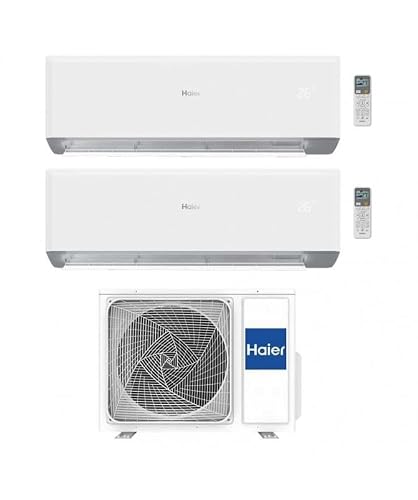
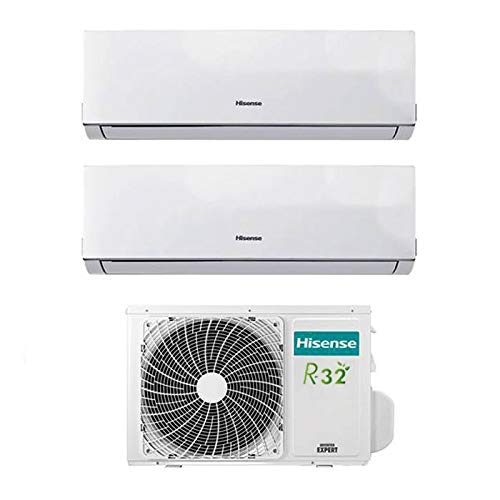
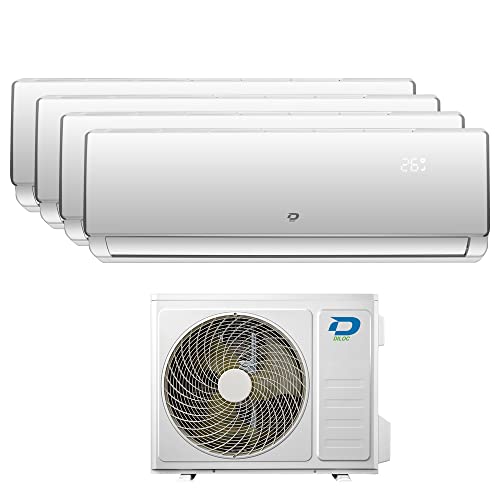
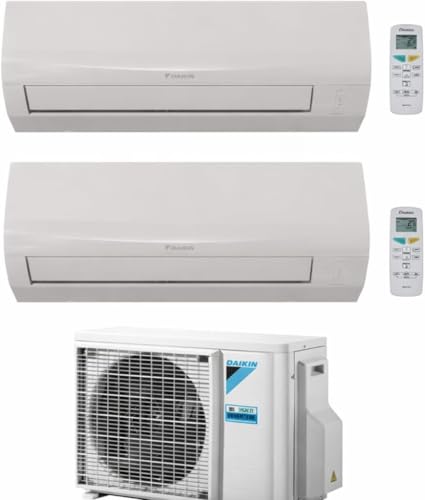
Which brands make the best multi-split air conditioners?
The brands with the highest average scores among multi-split air conditioners are as follows.
- Hisense (Average overall score: 8.1)
- Belvit AUX (Average overall score: 7.8)
- Mitsubishi (Average overall score: 7.7)
The chart below ranks brands by average overall score for multi-split air conditioners.
[horizontal-chart-13422835276872284511110575147989943361412167631426]
When should you choose a multi-split air conditioner?
Choose a multi-split air conditioner when three or more rooms need regular cooling, or when the building allows only one outdoor unit. It suits several bedrooms, a living area plus offices, or a façade where separate outdoor units would be impractical.
The system keeps outdoor equipment compact and allows zone control, but its refrigerant network and capacity planning are more complex. A fault in the outdoor unit can affect every connected room, and simultaneous heating or cooling may be restricted.
Use multi-split when the rooms have a coherent pipe route and similar seasonal needs. Choose separate mono-splits when the zones are independent, pipe runs are difficult, or one room must remain operational during service.
How many indoor units can a multi-split air conditioner support?
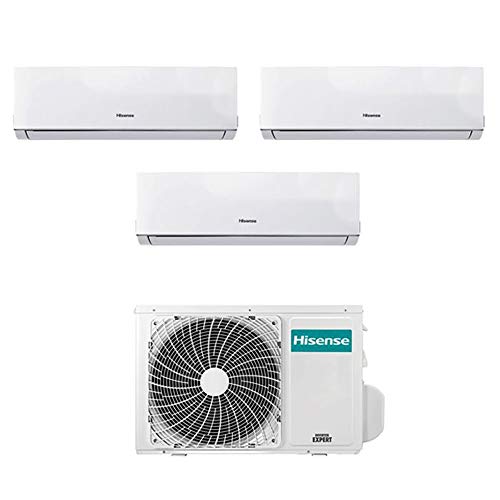
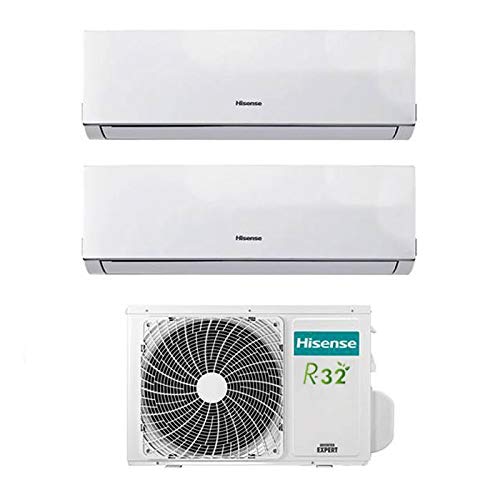
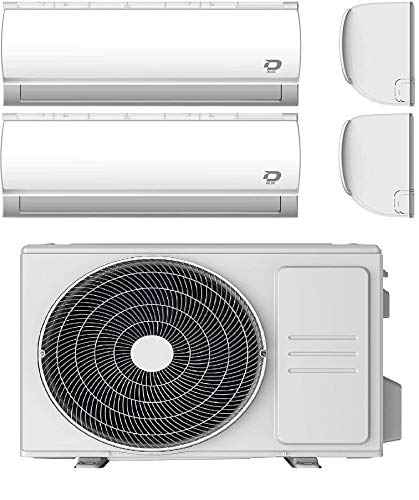
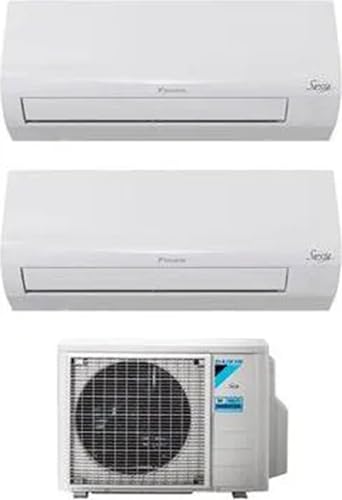
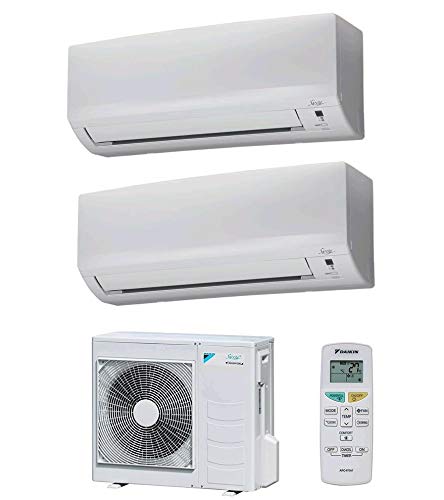
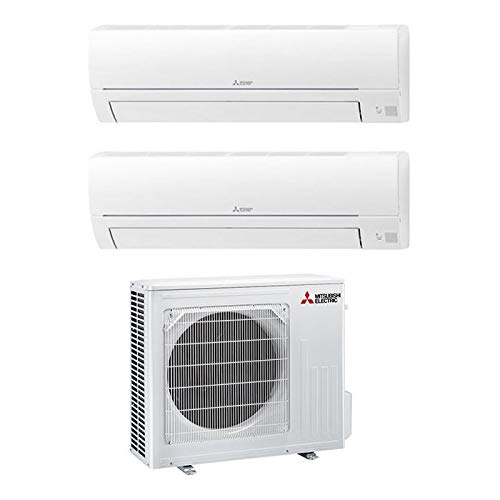
A multi-split air conditioner commonly supports two to five indoor units, depending on the outdoor series and its connection board. Dual-, triple-, quad-, and penta-split layouts are different combinations, not interchangeable labels.
Confirm the maximum ports, connected-capacity ratio, permitted indoor families, pipe length, height difference, drain routes, and simultaneous mode limits. A five-zone system does not necessarily deliver maximum cooling to every room at the same time, so the outdoor unit and room loads must be checked together.
What cooling capacity and room coverage should a multi-split system provide?
A multi-split system should be sized from the combined heat load of its zones, commonly around 5–10 kW for several rooms. Individual units may be around 2.5–3.5 kW for bedrooms and 4–5 kW for a larger living space, but the outdoor unit must support the required simultaneous load.
As a broad reference, a 5 kW-class system may serve two or three moderate rooms, while 7–10 kW is more suitable for several rooms or high solar loads. Open doors should not replace room-by-room sizing because closed bedrooms still need their own capacity.
Have the installer verify output at the design temperature, combination ratio, pipe losses, drainage, and indoor-unit throw. A published maximum area is not a guarantee for a poorly insulated or highly glazed building.
How energy-efficient are multi-split air conditioners?
Multi-split air conditioners can use energy efficiently when one inverter outdoor unit modulates across several occupied zones. A++ or A+++ cooling class is a strong starting point, but seasonal SEER and part-load behaviour matter more than the label alone.
Efficiency falls when only one small indoor unit calls against a large outdoor unit, when several rooms demand maximum output, or when filters and heat exchangers are dirty. Long pipe runs and low set temperatures also change the result. If heating matters, compare SCOP and cold-weather output separately.
For frequent use, look for a documented seasonal rating, independent scheduling, low standby consumption, and careful commissioning. Multi-split is not automatically more efficient than several mono-splits in every usage pattern.
How much do multi-split air conditioners cost?
Multi-split air conditioners generally cost about £900-£3,400 for the equipment, with installation and long refrigerant runs extra. Two-zone systems can begin near £900-£1,500, while three- to five-zone packages, premium controls, and larger outdoor units can reach £1,700-£3,400 or more.
The final quote depends on the number and capacity of indoor units, efficiency, pipe length, wall access, condensate drainage, electrical work, and commissioning. Request an installed price listing every indoor unit, bracket, pipe run, drain, warranty, and startup test. The chart below shows the new-product price distribution for multi-split air conditioners.
The chart below shows the new-product price distribution for multi-split air conditioners.
[vertical-chart-07956604764722992386086177537942370647580323004247]
What should you check before buying a multi-split air conditioner?
Before buying a multi-split air conditioner, check the following factors:
- Zone load: Calculate each room separately and verify outdoor output when the zones run together.
- Port count: Confirm whether the outdoor unit supports two, three, four, or five indoor units.
- Combination rules: Check allowed unit sizes, total capacity, simultaneous modes, and low-load modulation.
- Pipe engineering: Measure lengths, height differences, bends, insulation, drainage, and service access.
- Noise and placement: Compare indoor and outdoor sound figures and isolate bedrooms from vibration.
- Seasonal efficiency: Compare SEER for cooling and SCOP for heating, not only the A++ or A+++ label.
- Controls and warranty: Verify independent timers, app support, fault diagnostics, filter access, parts, and commissioning.