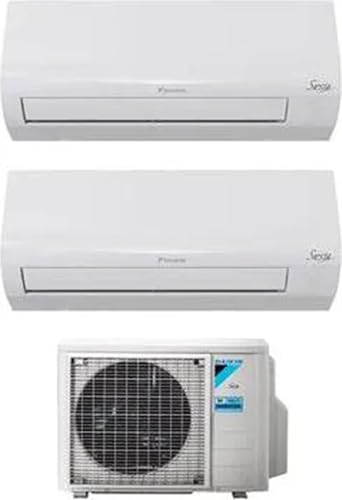
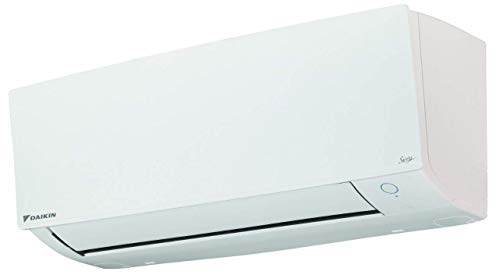
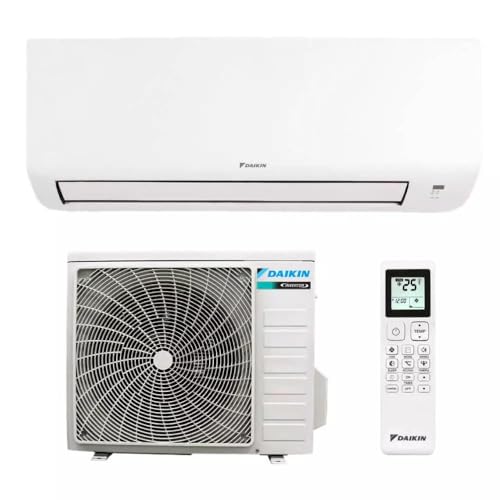
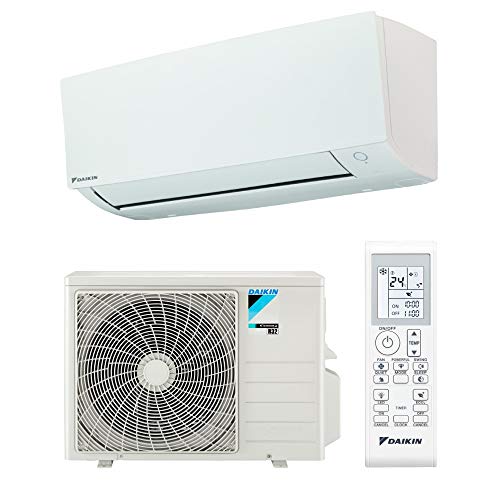
Are Daikin air conditioners good?
Daikin air conditioners have an average overall score of 7.6, ranking #6 among comparable air-conditioner brands, and a user rating of 9.1, placing them at #3 based on user reviews.
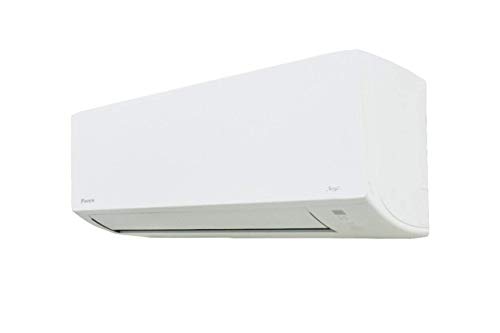
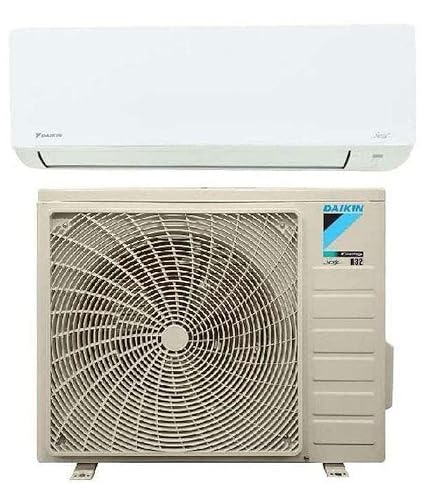
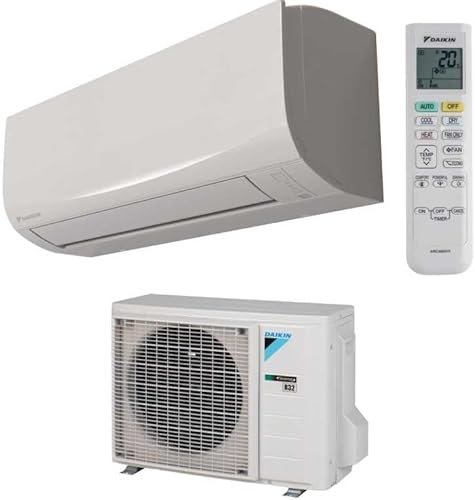
Daikin air conditioners are a strong choice for quiet, efficient split systems. Sensira provides a practical entry point, while Perfera adds stronger seasonal efficiency, air-quality functions, and broader comfort control; Emura and Stylish target buyers who also care about the indoor unit's design.
Daikin air conditioners suit buyers who want a mature R32 inverter platform and a broad mono-split or multi-split range. The main limitations are higher prices than basic brands and model-specific differences in Wi-Fi, filtration, and heating performance, so the exact indoor and outdoor unit combination matters.
The chart below compares Daikin with other air-conditioner brands by average overall score.
[horizontal-chart-13782642858724717326170086352293977270441647134287]
What are the main advantages of Daikin air conditioners?
The main advantages of Daikin air conditioners are as follows:
- Seasonal efficiency: Many Sensira and Perfera systems use inverter control with strong SEER and SCOP values, which helps reduce cycling and electricity use. Compare the exact class and seasonal ratings rather than assuming every Daikin model has the same performance.
- Quiet comfort: Well-sized indoor units can run quietly at low fan speed, making the range suitable for bedrooms and living rooms. Maximum sound levels still vary by model and mode, so check the night setting and the indoor-unit specification.
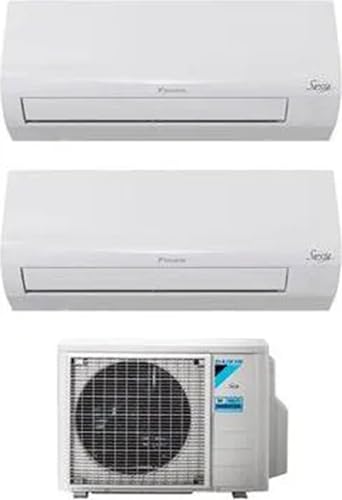
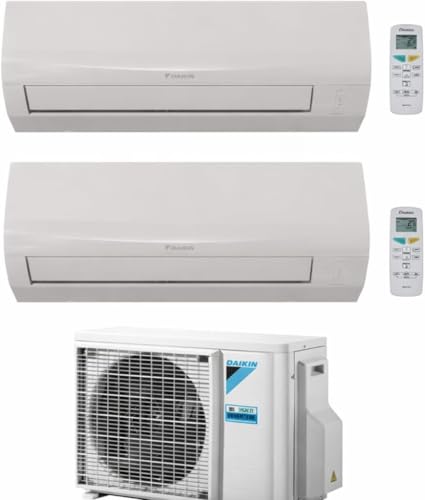
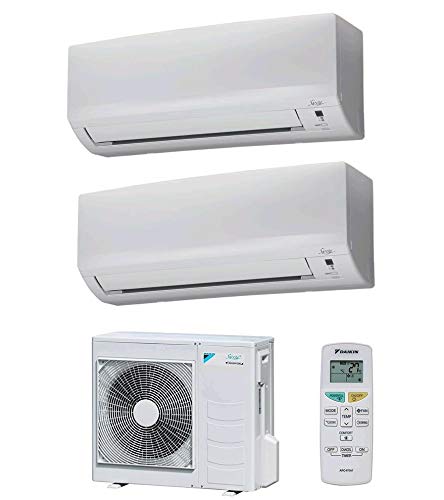
- Broad system choice: Daikin covers compact mono-split units, premium wall-mounted models, and multi-split combinations for several rooms. The outdoor unit must support the selected number and capacity of indoor units.
- Air treatment: Selected Perfera and Ururu Sarara models add filtration, humidity management, or air-quality functions. These features improve comfort but add cost and may require regular filter cleaning.
- Heating capability: Many current systems provide useful heat as well as cooling, extending the installation's value into spring and autumn. Cold-weather output depends on the model's rated operating range and outdoor temperature.
What are the main disadvantages of Daikin air conditioners?
The main disadvantages of Daikin air conditioners are as follows:
- Purchase price: Daikin usually costs more than entry-level split systems, especially in Perfera, Emura, and Stylish ranges. The extra spend is most defensible when quiet operation, heating, or long daily use matters.
- Model differences: Wi-Fi, air treatment, sound level, and heating output are not identical across the range. Read the full indoor/outdoor combination specification instead of buying by series name alone.
- Installation complexity: A multi-split installation requires correct pipe lengths, drain routing, and outdoor-unit capacity for every room. Poor sizing or installation can erase the comfort and efficiency advantage.
- Premium design cost: Emura and Stylish can make a visible indoor unit easier to live with, but their design premium does not automatically mean better cooling for every room. Pay for the appearance only when it matters in the installation location.
- Service and parts: Specialised functions and multi-split combinations can make servicing more dependent on a qualified installer. Confirm local support and replacement-filter availability before committing to a complex system.
What are the main Daikin air conditioner series?
The main Daikin air conditioner families are as follows:
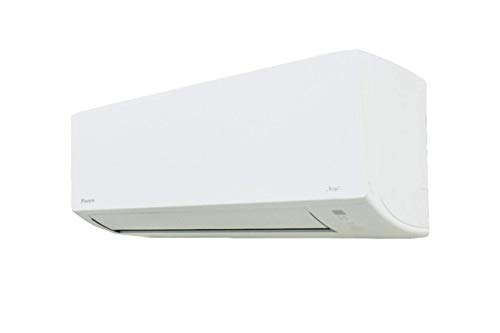
- Sensira: Sensira is the practical entry range for straightforward wall-mounted cooling and heating. It suits bedrooms and living rooms where price matters, but selected comfort and air-treatment features may be simpler than on Perfera.
- Perfera: Perfera is the main comfort and efficiency range, with stronger seasonal performance and more extensive air-quality and control features. It is a good fit for frequent use when the higher purchase price can be justified.
- Emura: Emura combines Daikin's inverter platform with a more design-led indoor unit. Choose it when the visible wall unit matters, while checking that the selected capacity and sound mode fit the room.
- Stylish: Stylish focuses on a compact, premium-looking indoor unit and refined comfort control. Its value depends on the room layout and design priority rather than cooling capacity alone.
- Ururu Sarara: Ururu Sarara is Daikin's specialist comfort range with more advanced humidity and ventilation-related functions. It is aimed at buyers who will use those functions regularly, because the system costs more and needs careful installation.
How much do Daikin air conditioners cost?
Daikin air conditioners cost about £300-£1,500 for equipment, with installation normally priced separately. Entry Sensira systems are commonly around £300-£600, mid-range Perfera systems around £600-£1,000, and premium Emura, Stylish, or specialist systems roughly £1,000-£1,500.
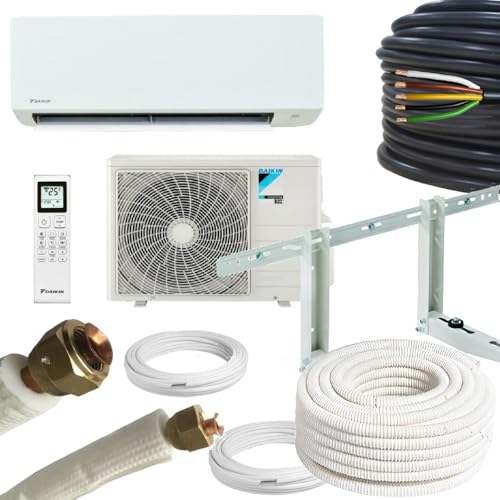
Budget separately for pipework, brackets, electrical work, condensate drainage, commissioning, and multi-split capacity. The complete installed project matters more than the appliance price; the chart below shows the price distribution of Daikin air conditioners.
The chart below shows the price distribution of Daikin air conditioners.
[vertical-chart-06128958983427723469024155885911315509941994913117]
How do Daikin air conditioners compare with Mitsubishi models?
Daikin and Mitsubishi both make strong inverter air conditioners, but Daikin offers a particularly broad mix of entry, premium, humidity-control, and multi-split systems. Mitsubishi models are often compelling when very quiet operation, compact indoor units, or a simpler premium range is the priority.
Daikin's Sensira gives buyers a clearer lower-cost entry point, while Perfera, Emura, and Ururu Sarara cover more specialised comfort needs. Mitsubishi's MSZ-HR, MSZ-AY, and MSZ-EF families provide a similarly broad step-up path, with model availability varying by market.
Choose Daikin when its installer network, air-treatment functions, or multi-room configuration matches the project. Choose Mitsubishi when the exact indoor-unit sound level, dimensions, heating behaviour, or control system is better for the room; compare full model codes rather than brand reputation alone.
What should you consider while choosing the best Daikin air conditioner?
Before choosing a Daikin air conditioner, consider the following factors:
- Capacity and room load: Match the cooling capacity to room area, insulation, glazing, ceiling height, and solar gain rather than choosing the largest unit. An oversized system can cycle frequently, while an undersized unit may run loudly without reaching the target temperature.
- Sensira or Perfera: Use Sensira for straightforward value and Perfera when daily use, seasonal efficiency, filtration, or quieter comfort justifies more spend. Emura and Stylish add design value but should still be sized by the same heat-load logic.
- Indoor-unit noise: Check the rated indoor sound level in the low and normal modes; a figure around 20–25 dB is useful for a bedroom, but maximum sound can be much higher. Make sure the quiet setting still provides enough airflow for the room.
- SEER and SCOP: Compare seasonal ratings within the same capacity and climate assumptions. A high SEER helps with summer electricity use, while SCOP matters when the system will provide regular heating.
- Wi-Fi and air treatment: Confirm whether Wi-Fi, humidity control, filtration, or air-quality features are included or optional. These functions can differ between apparently similar indoor units and may add maintenance.
- Mono-split or multi-split: A mono-split is usually simpler for one room, whereas a multi-split can serve several rooms from one outdoor unit. Confirm simultaneous capacity, pipe limits, drain routes, and the indoor-unit combinations approved by Daikin.
- Installer and service: Use a qualified installer and confirm warranty conditions, commissioning, local service, and filter availability. The best specification is not useful if the installation cannot achieve the required pipework, drainage, or outdoor clearances.