Which brands make the best air conditioners for large rooms?
Among air conditioners rated for rooms of at least 50 m², the brands with the highest average scores are as follows.
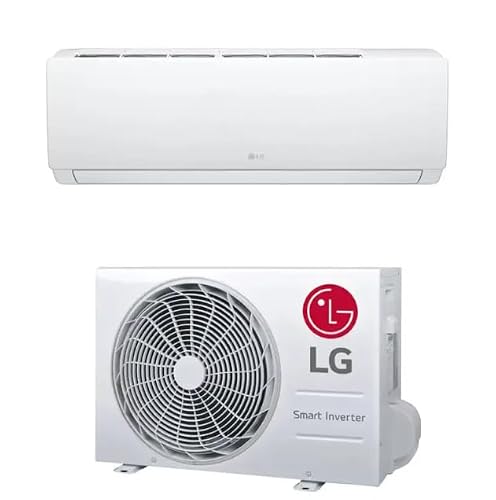
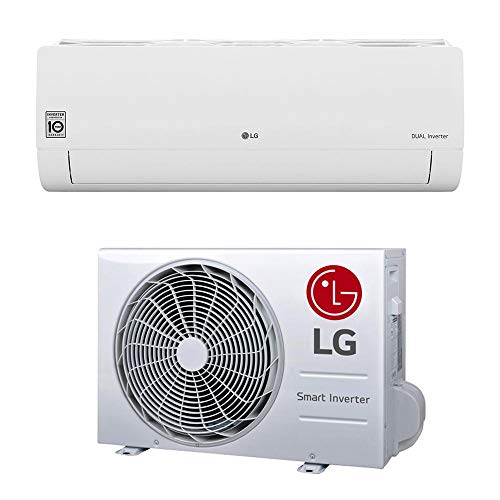
- LG (Average overall score: 8)
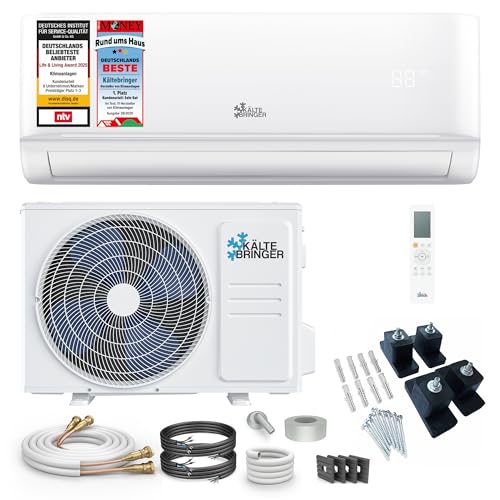
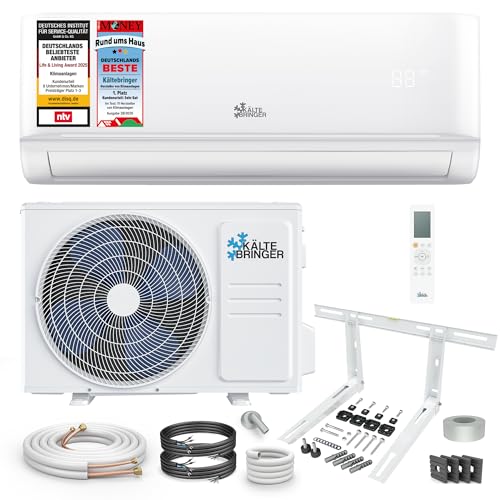
- Kältebringer (Average overall score: 7.9)
- Midea (Average overall score: 7.9)
The chart below ranks brands by average overall score among air conditioners rated for rooms of at least 50 m².
[horizontal-chart-15385257055430740734087311203732326907663047938286]
What room area is considered large for an air conditioner?
A room or open-plan zone of about 50 m² or more is commonly considered large for air-conditioner planning, but the heat load matters more than the floor-area label.
High ceilings, extensive glazing, a top-floor position, direct sun, several occupants, and connected spaces can make a 50 m² room need substantially more output. A shaded well-insulated room may need less than a smaller glass-heavy space.
Assess the airflow path and whether doors remain open between zones. One high-capacity wall unit may cool the area near it while leaving distant spaces warm, so distribution and zoning are as important as nominal kW.
What cooling capacity can an air conditioner for a large room provide?
An air conditioner for a large room can provide roughly 5–7 kW from one high-capacity system, or an equivalent total through several indoor units serving separate zones. A 5.3 kW 18,000 BTU class system may suit a large ordinary room, while about 7.0 kW or more can be needed for a high-heat open plan.
These are starting bands rather than universal rules. Compare total capacity, minimum output, airflow, sound, and how air reaches the far side of the room; a large label is not enough if the unit cannot distribute air without draughts or high fan noise.
How many indoor units or zones help cool a large room?
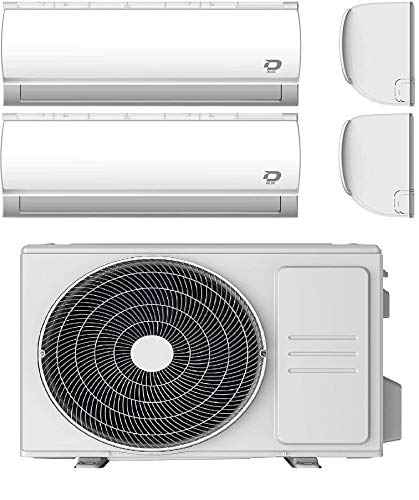
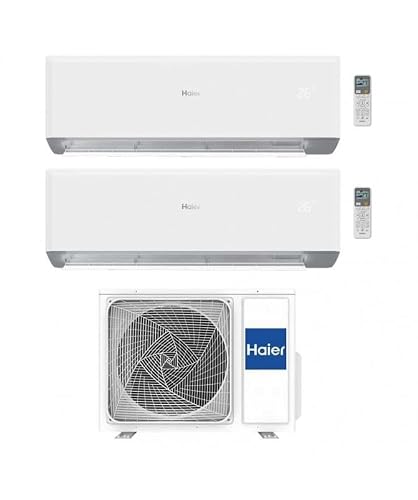
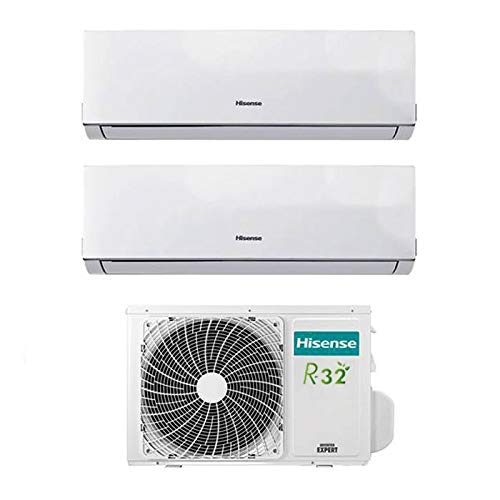
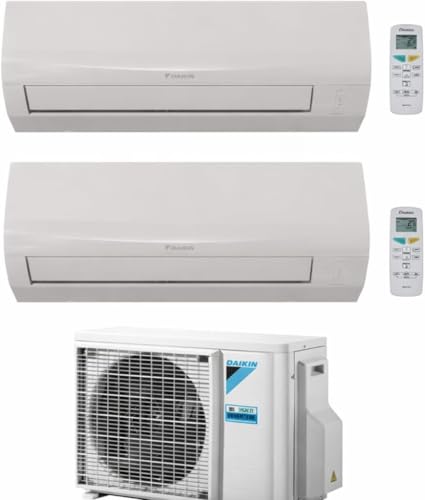
A large room often benefits from two indoor units or clearly separated zones when one wall unit cannot distribute air evenly across the space.
Two smaller units can reduce hot and cold spots, serve an L-shaped layout, and allow different temperatures in separate areas. One high-capacity unit may be simpler and cheaper for a compact open room with a clear airflow path.
Compare multi-split capacity, simultaneous output, controls, pipe routes, drainage, and service access before choosing. Two indoor units do not double the available output automatically if the outdoor unit or pipework is the limiting component.
How energy-efficient are air conditioners for large rooms?
Air conditioners for large rooms can be efficient when inverter output, seasonal ratings, zoning, and insulation match the building's heat load. Compare SEER and SCOP within the relevant capacity class, then check minimum output and part-load behaviour.
A large system can cycle in a well-insulated room if it cannot reduce output, while a weak system may run at high fan speed through every hot period. Closed doors between zones, shaded glazing, clean filters, and sensible set points help the rated efficiency appear in everyday use.
How much do air conditioners for large rooms cost?
Air conditioners for large rooms cost about £700-£2,200 for equipment, with professional installation priced separately. A single 18,000 BTU-class system often sits around £700-£1,300, while 24,000 BTU systems, premium models, and multi-zone combinations can reach roughly £1,300-£2,200 or more.
Add stronger brackets, electrical work, longer pipe runs, drainage, commissioning, lifting, and service access. Several indoor units can cost more than one wall unit but may deliver better coverage and lower fan noise across an irregular room.
The chart below shows the price distribution of air conditioners rated for rooms of at least 50 m².
[vertical-chart-14617900902515898450117348535672594583960622670958]
What should you check before buying an air conditioner for a large room?
Before buying an air conditioner for a large room, check the following factors:
- Heat-load calculation: Include area, insulation, glazing, ceiling height, solar gain, occupants, appliances, and connected spaces. A 50 m² threshold is only a broad scope marker, not a final capacity rule.
- Total capacity: Compare about 5–7 kW single-system options with multi-unit alternatives against the calculated load. Do not solve several closed rooms with one oversized indoor unit.
- Air distribution: Assess airflow direction, far corners, ceiling height, hot spots, and draught risk. A second indoor unit may improve coverage more than a larger compressor.
- Zones and controls: Check simultaneous output, independent set points, schedules, and approved indoor-unit combinations. Multi-split capacity can be limited when every room demands full power at once.
- SEER and SCOP: Compare seasonal cooling and heating ratings within the high-capacity class. SCOP matters when the system will heat a large area rather than only cool it.
- Sound and placement: Large systems move more air and can be louder at high fan speed. Check indoor and outdoor sound, vibration, wall location, and distance to bedrooms or neighbours.
- Installation and running cost: Plan electrical supply, pipework, drainage, access, filters, service, and expected hours. The cheapest equipment can be poor value if installation or energy use is much higher.